
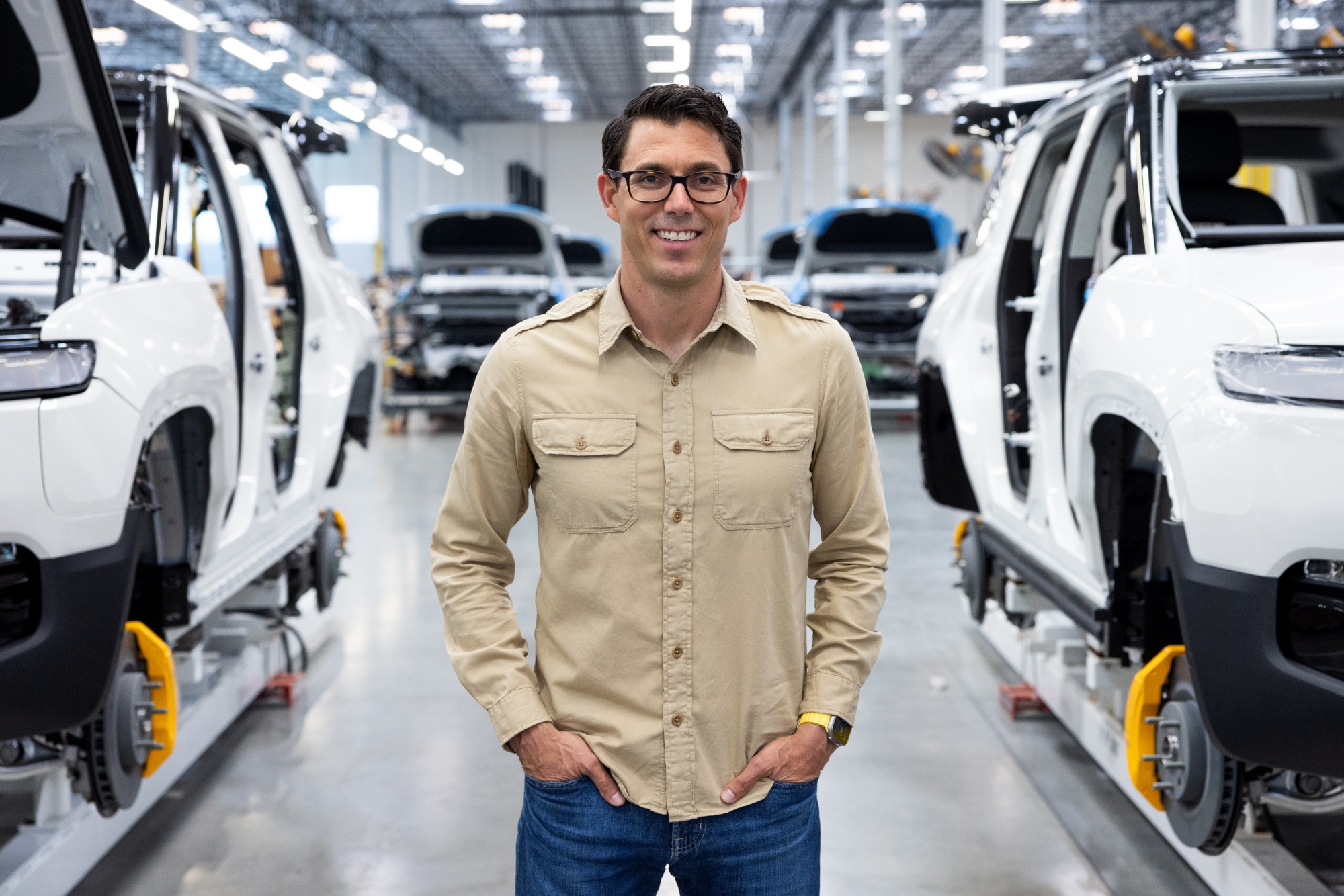
The race to bring humanoid robots into automoRivian CEO RJ Scaringe Launches Mind Robotics, Betting on Humanoid Robots for the Factory Floortive manufacturing is gaining momentum, and Rivian CEO RJ Scaringe is positioning himself at the forefront of the movement.
Scaringe has launched a new robotics venture called Mind Robotics, a company focused on developing artificial intelligence-powered humanoid robots designed to work alongside human employees in manufacturing facilities.
According to Automotive News, Rivian is not only investing in the startup but is also expected to become its launch customer, allowing the company to test and deploy the technology within its own production operations.
The initiative reflects a broader trend sweeping through the automotive industry as manufacturers search for new ways to improve productivity, lower costs, and address labor challenges.
While industrial robots have been a fixture in vehicle manufacturing for decades, humanoid robots represent a far more ambitious vision: machines capable of performing a variety of tasks in environments originally designed for human workers.
If successful, Mind Robotics could help redefine how future vehicle factories operate. But it also places Rivian in the middle of one of the most closely watched technological experiments in modern manufacturing.
Also Read: UAW Approves New Contract, Bringing American Axle Strike to an End
Why Humanoid Robots Are Attracting Industry Attention
Automotive factories are already among the most automated workplaces in the world. Traditional industrial robots weld vehicle bodies, paint components, move heavy materials, and perform countless repetitive operations.
Yet despite these advances, many manufacturing tasks still rely heavily on human labor because they require adaptability, dexterity, and decision-making capabilities that conventional robots struggle to match. Humanoid robots are designed to address that limitation.
Unlike fixed industrial machines, humanoid systems are intended to move through facilities, use tools, manipulate parts, and perform multiple jobs within environments built for people.
The concept has attracted growing interest as advances in artificial intelligence, machine vision, sensors, and computing power make such capabilities increasingly realistic.
According to Automotive News, Scaringe believes the technology is approaching the point at which humanoid robots can begin delivering practical value in manufacturing settings rather than remaining confined to research laboratories and demonstration videos.
The timing is significant because automakers are under tremendous pressure to improve efficiency while managing the costs associated with electrification and technological transformation.
Mind Robotics Emerges as a New Venture
While Scaringe remains Rivian’s chief executive, Mind Robotics represents a separate venture focused specifically on humanoid automation.
According to Automotive News, the company aims to develop AI-powered robots capable of operating in industrial environments and working alongside existing factory employees. Rivian’s involvement as both an investor and anticipated customer gives the startup a real-world testing environment that many robotics companies struggle to secure.
This arrangement could provide significant advantages. Many robotics startups spend years attempting to move from prototype demonstrations to commercial deployments.
Having immediate access to an automotive manufacturing operation allows engineers to evaluate their systems under actual production conditions, identify limitations, and refine software and hardware more quickly.
For Rivian, the partnership offers early access to technology that could eventually improve factory productivity and lower manufacturing costs.
The relationship effectively creates a development ecosystem in which both companies benefit from the other’s progress.
Rivian’s Manufacturing Challenges Make Automation Attractive
The move comes as Rivian continues working toward higher production volumes and improved profitability.
Like many electric vehicle manufacturers, Rivian faces the difficult task of scaling manufacturing while controlling costs. Building vehicles efficiently remains one of the company’s most important challenges as it prepares for future growth and the launch of more affordable models.
According to Rivian’s financial reports, reducing production expenses has become a central priority. The company has made progress toward improving gross margins, but competition within the EV market remains intense.
Every percentage point of manufacturing efficiency matters. This reality helps explain why Rivian is showing advanced automation technologies.
Humanoid robots could assist with material handling, component transportation, inspection procedures, assembly support, and other repetitive tasks that consume significant labor. If the technology proves reliable, it could help reduce operating costs while increasing production flexibility.
Scaringe has repeatedly emphasized the importance of innovation throughout Rivian’s operations, and Mind Robotics appears to represent an extension of that philosophy.
The Auto Industry Is Increasingly Focused on Robotics
Rivian is far from the only automaker showing humanoid robotics. Tesla has invested heavily in the development of its Optimus robot, with CEO Elon Musk frequently describing humanoids as a future multitrillion-dollar opportunity.
Tesla has already demonstrated prototype robots performing basic factory tasks and continues to expand development efforts. Other manufacturers and suppliers are pursuing similar initiatives.
According to industry analysts, companies throughout the automotive sector increasingly view robotics as a potential solution to workforce shortages, rising labor costs, and production inefficiencies.
Advances in generative AI and machine learning have accelerated interest by improving robots’ ability to understand instructions, adapt to changing conditions, and interact with complex environments.
Automakers are particularly attracted to humanoid designs because factories already exist in forms optimized for human workers.
Rather than redesigning entire facilities around new machines, manufacturers may eventually deploy robots capable of navigating existing workplaces. That possibility has generated significant excitement across the industry.
Working Alongside Humans, Not Replacing Them
One of the most important aspects of Mind Robotics’ strategy is its emphasis on collaboration rather than replacement.
According to Automotive News, Scaringe expects humanoid robots to work alongside factory employees instead of completely replacing them. The approach reflects a growing industry belief that the most effective manufacturing environments will combine human judgment with robotic efficiency.
Many production tasks still require problem-solving abilities, quality assessment, and adaptability that humans perform exceptionally well. Robots, meanwhile, excel at repetitive activities, heavy lifting, and physically demanding operations.
Combining those strengths could improve productivity without eliminating the need for human workers.
This perspective also helps address concerns frequently raised whenever new automation technologies emerge.
Labor organizations and workforce advocates often worry that increased automation could reduce employment opportunities.
Companies developing collaborative robotics systems argue that automation can instead enhance productivity while allowing employees to focus on higher-value activities. Whether that balance can be achieved remains a subject of ongoing debate.
The technology still faces significant obstacles.
Despite the enthusiasm surrounding humanoid robotics, substantial challenges remain. Creating a robot capable of reliably functioning in a dynamic manufacturing environment is extraordinarily difficult.
Systems must detect obstacles, recognize objects, manipulate components, maintain balance, and operate safely around people. Reliability is especially critical in automotive manufacturing environments.
Assembly lines depend on consistent performance. A robot that works effectively 90 percent of the time may still create unacceptable disruptions if failures repeatedly interrupt production.
Cost is another major consideration. Current humanoid robots remain expensive to develop and deploy. For manufacturers to embrace the technology at scale, robots must deliver meaningful productivity gains that justify the investment.
Industry experts frequently note that the path from prototype demonstrations to widespread commercial adoption is often much longer than initial projections suggest.
Mind Robotics will need to demonstrate that its systems can provide practical, measurable benefits in real-world factory environments.
AI Is Changing What Robots Can Do
One reason interest in humanoid robotics has accelerated so rapidly is the recent advancement of artificial intelligence.
Previous generations of industrial robots typically required extensive programming and operated within tightly controlled environments. Modern AI systems are increasingly capable of learning from experience, interpreting instructions, and responding to unexpected situations.
According to robotics researchers, this flexibility represents a breakthrough. AI-powered robots can potentially perform a broader range of tasks without requiring extensive reprogramming for every new assignment. Machine-learning systems also allow robots to improve performance over time as they encounter new scenarios.
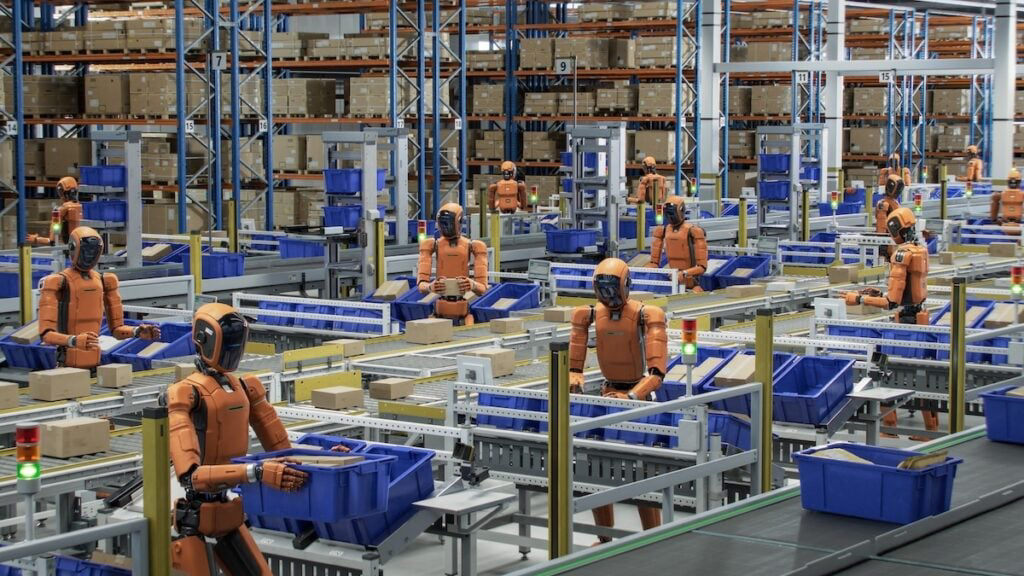
Mind Robotics appears to be building its strategy around these developments. The company’s focus on AI-powered humanoids reflects a belief that software advances are finally catching up with the hardware required to make versatile robots commercially viable.
A Long-Term Bet on the Future of Manufacturing
The launch of Mind Robotics ultimately represents more than a robotics startup. It is a strategic bet on how manufacturing may evolve during the coming decades.
Automakers face increasing pressure to reduce costs, improve efficiency, and remain competitive in a rapidly changing industry. Electrification, software-defined vehicles, autonomous technologies, and global competition are all reshaping how vehicles are designed and produced.
Humanoid robots may eventually become another part of that transformation. According to Automotive News, Rivian’s role as both investor and launch customer allows the company to influence the development of technology that could play a significant role in future production operations.
Whether Mind Robotics succeeds remains uncertain. The history of robotics includes many ambitious projects that struggled to meet commercial expectations.
Yet the growing interest from industry leaders suggests that humanoid robots are moving beyond science fiction and into serious business planning.
The Bottom Line
RJ Scaringe’s decision to launch Mind Robotics signals a growing belief that humanoid robots could become a meaningful part of the future manufacturing workforce.
Backed by Rivian as both an investor and anticipated customer, the startup aims to develop AI-powered robots capable of working alongside human employees in factory environments.
According to Automotive News, the goal is not simply automation for its own sake but the creation of flexible robotic systems that can improve productivity and support manufacturing operations.
The initiative places Rivian among a growing group of automakers showing advanced robotics as a way to address production challenges and control costs. While significant technical and economic hurdles remain, the industry’s interest in humanoid systems continues to accelerate.
For now, Mind Robotics represents an early-stage experiment. But if the technology delivers on its promise, the robots helping build tomorrow’s vehicles may increasingly look and move a lot like the people working beside them.
Also Read: UAW Presses for Tougher US Manufacturing Rules Ahead of USMCA Talks
