
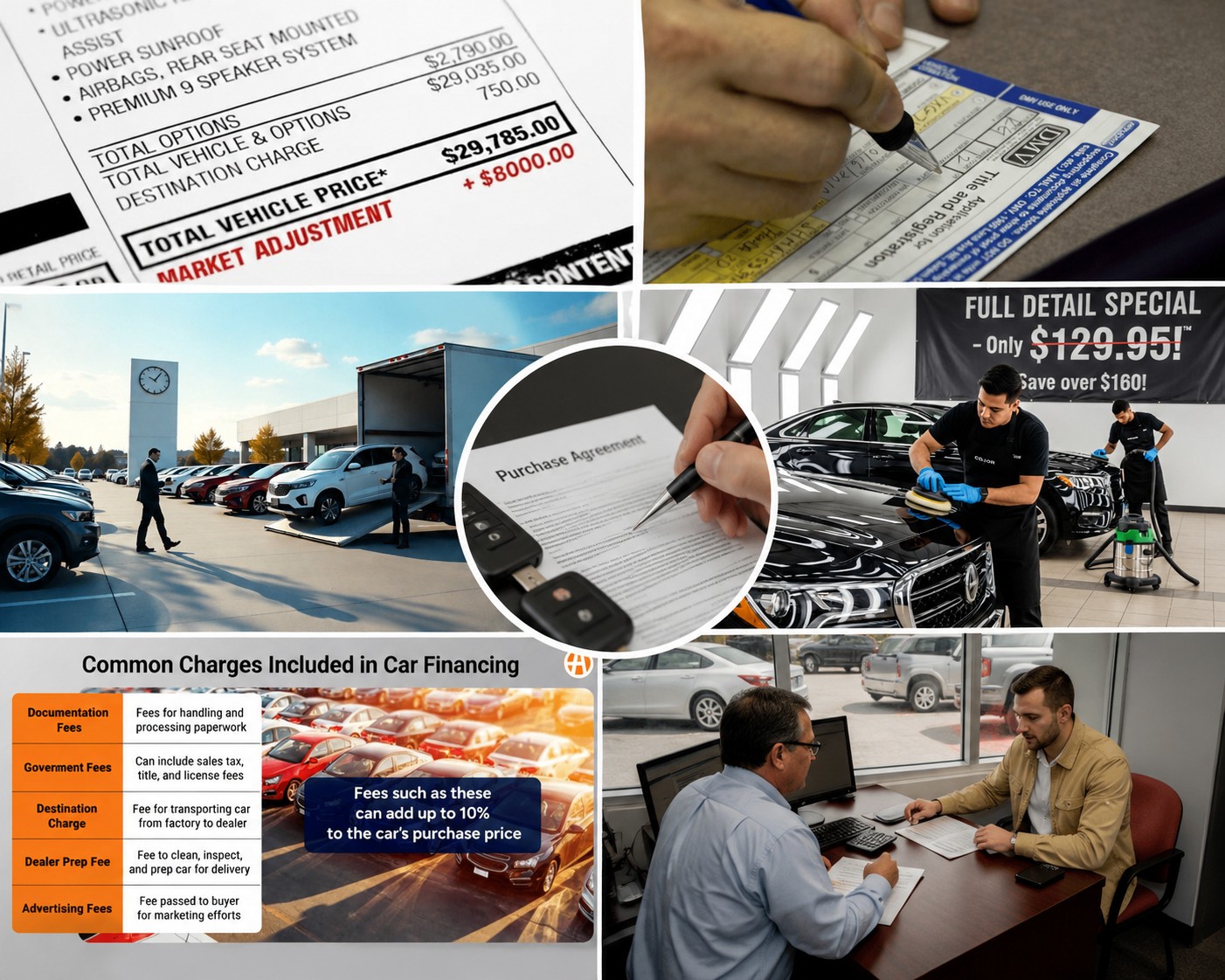
Buying a car rarely ends at the sticker price. By the time you reach the finance office, a dozen new line items can appear on the contract. Some of these charges are set by the government. They cannot be changed, no matter how good a negotiator you are.
Others are set entirely by the dealership. These exist to add profit, and many buyers pay them without question. The challenge is that dealers often present every fee the same way. They use confident language and call everything “standard.”
This makes it hard to tell a legitimate cost from padding. Many buyers simply accept the total without asking what each fee covers. Knowing the difference changes the entire negotiation. It tells you where your effort will actually save money.
This guide breaks down six common dealer fees. Three of them are negotiable, and three of them are fixed by law. For each fee, you’ll learn what it covers and why it exists. You’ll also learn the language to use when you push back.
By the end, you’ll be able to read a contract with confidence. You’ll know exactly which numbers are worth questioning. That knowledge is often worth more than haggling over the car price. A few smart questions can save you hundreds of dollars.
1. Documentation (Doc) Fee, Negotiable
The doc fee is one of the most debated charges in car buying. It’s meant to cover the cost of preparing your paperwork. This includes drafting the sales contract and processing the title transfer. It also covers the staff time spent on these tasks.
Nationally, the average doc fee has climbed significantly in recent years. Recent industry data puts the national average at $490, though fees range from $0 to over $2,000 depending on the dealer and state.
The gap between states is enormous. California averages just $85, while Florida averages $999. This wide range exists because most states don’t regulate the fee. Dealers in uncapped states can essentially charge whatever the market will bear.
In states with no legal limit, the fee is set entirely by the dealership. In uncapped states, dealers typically charge between $400 and $900, with some pushing past $1,000.
A handful of states do cap the amount by law. These caps range from $85 in California to $599 in Virginia. Where a cap exists, you don’t need to negotiate. The dealer must charge the same fee to every customer and cannot legally exceed the cap.
Where there’s no cap, the story is different. Dealers will almost always insist that the fee is fixed by company policy. That claim is usually technically true. Many dealers apply the doc fee uniformly to avoid discrimination liability between customers.
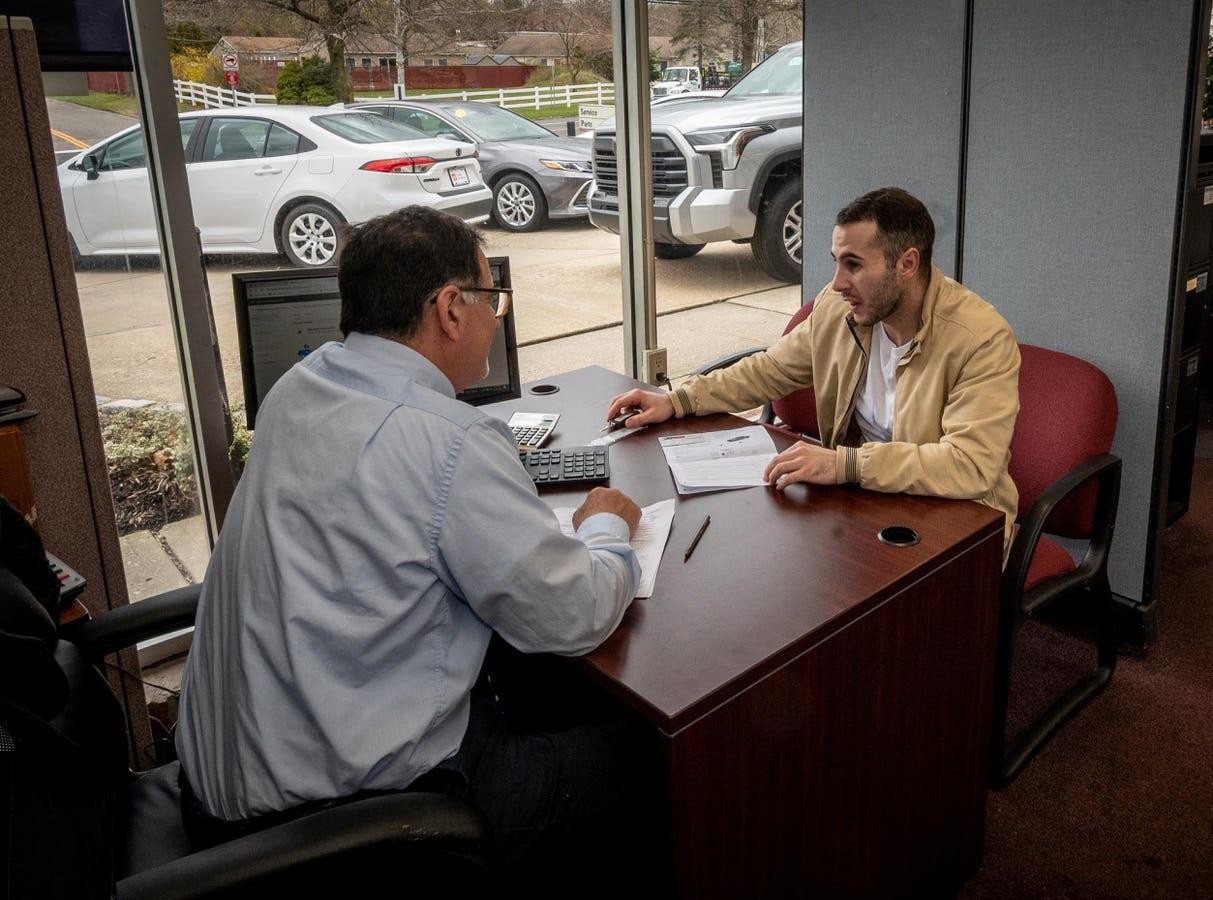
But uniformity on the fee doesn’t mean the total price is fixed. The real leverage is in the deal, not the line item itself. The most effective approach is to negotiate around it. If the dealer won’t reduce the fee, ask them to lower the vehicle price by the same amount instead.
This keeps their “uniform fee” policy intact on paper. Meanwhile, you still get the discount you wanted. Experts also recommend a specific phrase at the negotiating table. Ask the dealer to confirm that the agreed total price already includes all dealer fees.
This reframes the conversation around the out-the-door number. That number is where your real negotiating power lives. It’s also worth shopping the fee itself before you negotiate the price. Doc fees vary by dealership, so comparing a few in your area can reveal real savings.
Don’t assume every dealer near you charges the same amount. A short phone call to two or three dealerships can save real money. If a fee looks unusually high, ask why directly. A reputable dealer should be able to explain which administrative tasks the fee actually covers.
A vague or defensive answer is itself useful information. It tells you something about how transparent that dealership tends to be. It also helps to understand why this fee exists at all. Real administrative work does happen behind the scenes on every sale.
Dealers handling hundreds of transactions a month do carry genuine overhead. That overhead is a legitimate part of running a dealership. The issue isn’t that the fee exists. The issue is when the charge drifts far past what that paperwork actually costs.
A useful benchmark is comparing the fee to nearby competitors. If a fee is triple what another dealer charges for the same paperwork in the same state, something beyond cost recovery is happening.
One detail catches many buyers off guard. Sales tax is typically applied on top of the doc fee itself. Doc fees also apply regardless of how you’re paying. They apply even to cash purchases, since the paperwork burden doesn’t change based on financing.
If you’re financing the vehicle, there’s an added wrinkle. The doc fee usually gets rolled into your total loan amount, so you end up paying interest on it too. For that reason, it’s worth negotiating before financing terms are finalized. Once it’s baked into the loan, it’s much harder to separate out.
2. Dealer Advertising Fee, Negotiable
This fee is less familiar to most buyers than the doc fee. It often hides under a regional or manufacturer-sounding name. The fee is meant to fund dealer participation in regional ad co-ops. These cooperatives are typically run by the manufacturer to support brand advertising in a local market.
Manufacturers sometimes build the cost directly into pricing. Honda, for example, may add the advertising fee to the factory invoice price itself.
Other manufacturers list it as a separate, disguised line item. Toyota and Ford sometimes use initials like TDA or FDAF to label the charge. This labeling makes it easy to miss during a quick review. Many buyers don’t realize they’re paying it at all.
The actual cost to the dealer is usually modest. It typically runs $100 to $400 per vehicle, though some dealers inflate the charge to $500 or $800. That gap between cost and charge is exactly where negotiation matters. A fee inflated well past its real cost is pure dealer profit.
Unlike the doc fee, this one is rarely capped by state law. That makes it almost entirely up to dealer discretion. There’s also a distinction worth understanding here. Regional advertising fees are separate from a dealer’s own in-house advertising expenses.
A dealership’s internal marketing costs should never be passed to you as a line item. If you see something resembling that, question it directly. Some buyers assume this fee is non-negotiable because dealers say so. In practice, persistence often pays off here.
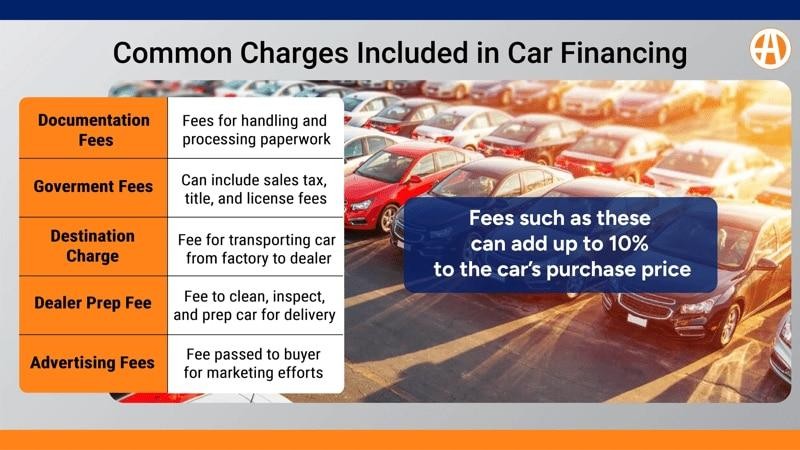
Industry guidance is fairly blunt about pushing back. Most dealers won’t budge, but it’s still worth making a direct attempt, especially if the dealer is eager to move that particular vehicle.
A good test is to ask for an itemized fee breakdown before signing anything. Separating government charges from dealer charges is the cleanest way to spot inflated advertising fees.
If the advertising fee isn’t listed on the manufacturer invoice but appears in your final price, be cautious. This is a sign the dealer may be passing off in-house costs as a standard charge.
The best leverage is comparison shopping again. If a competing dealer doesn’t charge this fee, mention that directly. Dealers are far more flexible when they know you’re cross-shopping. Silence about your other options removes your strongest card.
It also helps to understand how this fee differs by manufacturer. Some brands fold the cost into the invoice automatically before the dealer even sees it.
Other brands leave it as a visible charge on your paperwork. Confusing acronyms like “TDA” or “FDAF” make this harder to catch at a glance. Don’t hesitate to ask the finance person to translate any acronym. If they can’t explain it clearly, that’s a signal worth noting.
It’s also worth remembering that this fee isn’t tied to your specific car. It funds a broader regional marketing budget, not anything related to your individual transaction.
That distinction makes the charge easier to challenge than something like a title transfer. There’s no service being performed exclusively for you. The key is knowing the fee exists before you agree to anything. A fee you don’t notice is a fee you can’t negotiate.
3. Dealer Prep / Add-On Fees, Negotiable
This category covers a wide range of charges. Most are easy to spot once you know what to look for. A standard prep fee covers washing, detailing, and pre-delivery inspection. It’s meant to ensure the car is clean and mechanically sound before handover.
This is one of the easiest fees to challenge. Dealer prep fees are commonly waived once a buyer simply asks. Beyond basic prep, dealers often add physical products to the deal. These typically appear without much explanation on the worksheet.
Common examples include VIN etching, nitrogen tire fill, and paint protection. Industry data shows these add-ons are widespread. Recent analysis found a meaningful share of dealers attach these charges. 43% of dealers include add-ons on their quotes, averaging $1,188 in extra products and coverage when present.
Most of these products carry very little real value. VIN etching is a clear example of inflated pricing. It’s often sold for hundreds of dollars at the dealership. In reality, it’s roughly a $30 do-it-yourself kit, and insurers no longer offer meaningful discounts for having it.
Paint sealant follows a similar pattern. The product applied is usually just wax, and its protective effect fades within a few months. The good news is these charges are almost always optional. Unlike government fees, nothing legally requires you to accept them.
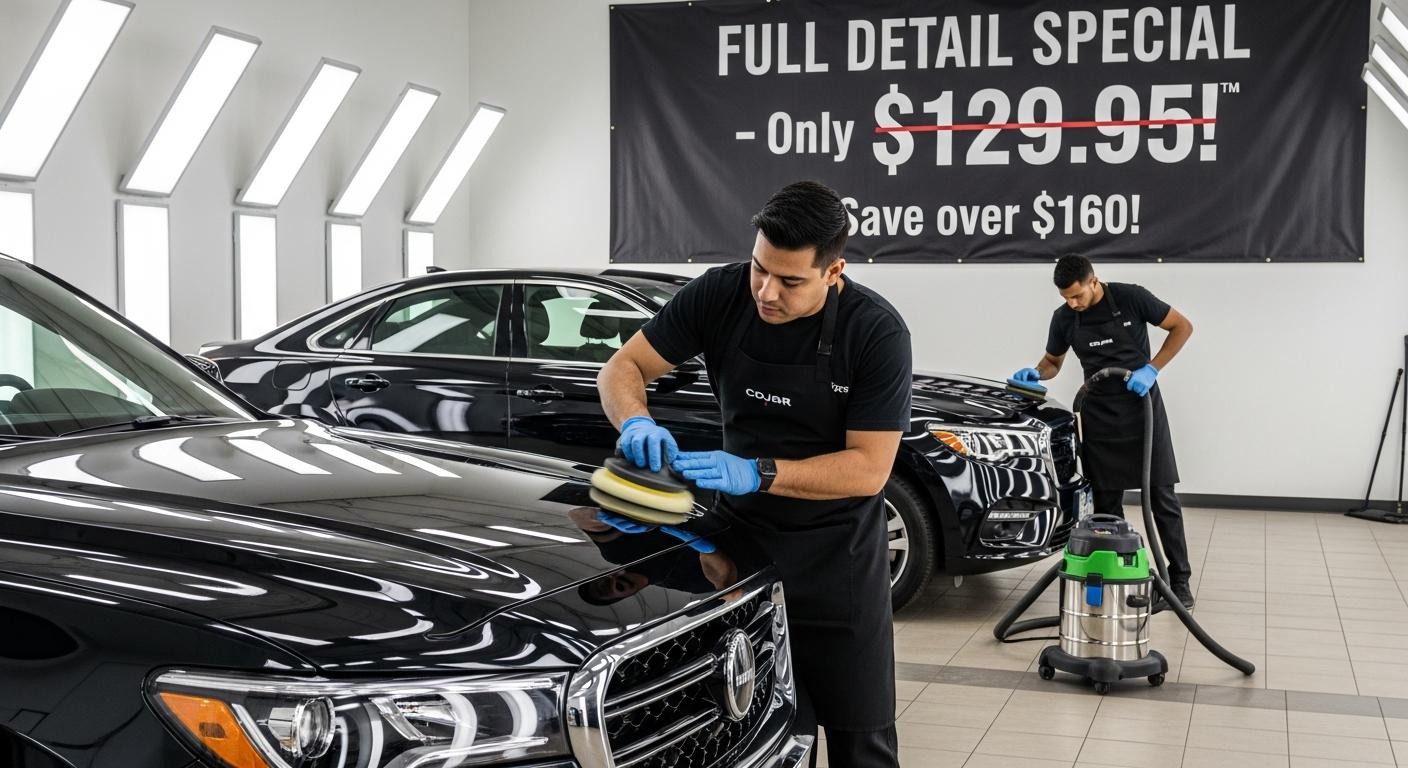
The clearest strategy is simple refusal. If a dealer won’t remove a junk fee, the recommended move is to take your business to another dealer who will.
This same logic applies to dealer-sold protection products. Extended warranties are a common example worth scrutinizing. Markups on these products can be substantial. Dealer-sold extended warranties are often marked up 50% to 200% above their actual cost.
You don’t have to decide on the spot, either. A warranty can be purchased later, directly from the manufacturer or a third party, any time before the factory warranty expires.
Gap insurance deserves the same scrutiny. Dealer-sold gap insurance often costs $500 to $1,000, while the same coverage from your own auto insurer runs $20 to $50 a year.
Before accepting any add-on, ask your own insurer for a quote. In most cases, you’ll find dramatically cheaper coverage outside the dealership. It also helps to know how these charges typically get introduced. They’re rarely announced upfront, and tend to appear later once you’ve emotionally committed to the car.
By the time you reach the finance office, you’ve usually spent hours at the dealership. Fatigue makes buyers far more likely to accept charges they’d normally question.
A useful habit is asking for the complete worksheet early. Request it before you move into final paperwork, not after. Some add-ons do have legitimate value for certain buyers. Extended warranties can make sense for someone keeping a car well past its factory coverage.
The problem isn’t the product itself in those cases. The problem is paying dealer markup instead of shopping for the same coverage elsewhere. Third-party warranty providers often offer comparable coverage at a lower price.
The same logic extends to tire and wheel protection plans, which are frequently sold with significant markup. Treat every add-on as optional until proven otherwise. None of these products is required to legally complete your purchase.
4. Destination / Freight Charge, Not Negotiable
This fee covers the cost of getting a vehicle from the factory to the dealer’s lot. It’s one of the most misunderstood charges on a contract. Many buyers assume it’s a dealer markup. In reality, it comes from the manufacturer, not the dealership.
The fee covers real logistics work. It accounts for transport by ship, train, and truck, plus quality inspections to catch and repair cosmetic damage from shipping.
Because it’s a manufacturer charge, the dealer has no control over it. This charge is included in the car’s MSRP and is typically not negotiable. The amount also doesn’t depend on your specific dealer. It typically runs $1,000 to $1,800, depending on the brand and where the vehicle is manufactured.
It’s printed directly on the window sticker. Every dealer charges the same destination fee for the same model, so there’s nothing to negotiate here.
This consistency holds true nationwide, with very limited exceptions. The fee is the same regardless of where you live, aside from possible exceptions in Alaska and Hawaii.

It even applies if you pick up the car yourself. You’ll pay the destination fee even if you collect the vehicle directly from the factory. Don’t waste negotiating energy trying to remove this line item. The dealer simply isn’t the one setting it.
Instead, redirect your effort toward the vehicle’s actual selling price. That’s where dealer-controlled margin actually exists. If a salesperson claims this fee is flexible, be skeptical. Every franchised dealer for that brand pays the same wholesale destination cost.
Removing it would mean the dealer absorbing a real, fixed expense. That almost never happens in practice. It’s reasonable to confirm the number matches the window sticker. Compare it against the manufacturer’s published figure if you’re unsure.
If the number is higher than the sticker, ask why immediately. Any unexplained markup here is worth questioning directly. It also helps to understand who actually benefits from this charge. The destination fee goes to the manufacturer, not the local dealership selling you the car.
Knowing that changes how you approach the conversation. There’s no point pressuring a salesperson over a cost they don’t control and can’t adjust. It’s also worth checking the destination fee against the manufacturer’s official materials. Most brands publish this number publicly alongside MSRP information for each model.
A quick comparison confirms you’re not being charged something extra. This step takes only a minute and adds real peace of mind. Remember that this fee reflects real transportation costs.
Vehicles travel significant distances from assembly plants to dealer lots across the country. The smarter move is accepting it and focusing elsewhere. Your negotiating energy is far better spent on the vehicle price and dealer-controlled fees.
Also Read: Why a $400 Wheel Bearing Job Now Costs $1,200 With Recalibration
5. Government Taxes, Title, and Registration Fees, Not Negotiable
This group covers some of the largest charges in any car deal. They’re also the most rigid, since they come from state and local government, not the dealer.
Sales tax is calculated based on your home state’s rate. Some states also apply additional county or city tax on top. These percentages can vary widely. Some states, like Montana and Oregon, charge no sales tax at all, while others can exceed 10 percent.
Title fees are another fixed cost in this category. They cover the legal transfer of vehicle ownership into your name. Registration fees follow a similar government-set structure. The amount typically scales with the vehicle’s price, so a more expensive car usually means a higher registration fee.
None of these charges can be negotiated with your salesperson. Vehicle registration fees are not negotiable and are set entirely by state law. The dealer’s role here is purely administrative. By handling title and registration paperwork for you, the dealership saves you a separate trip to the DMV.
It’s worth remembering that these payments don’t stay with the dealer. Government fees are fixed and non-negotiable, unlike dealer fees, which are variable and can be discussed.
This is an important contrast to keep in mind. A pushy negotiation over your title fee will go nowhere because the dealer has zero pricing power here.
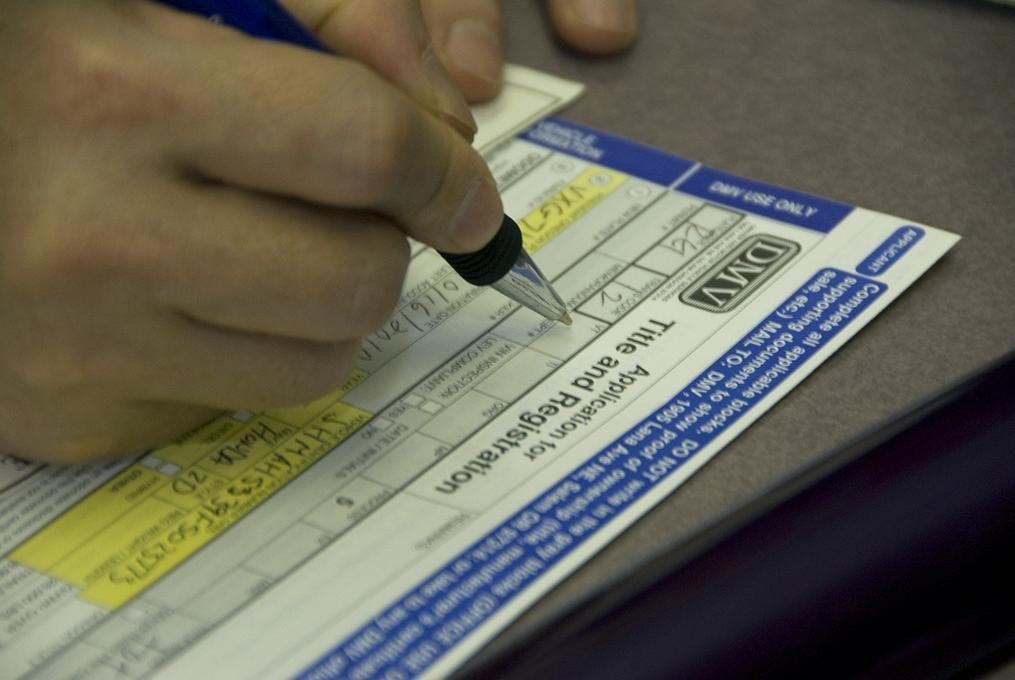
If you ever want to verify these amounts, your state’s DMV website is the most reliable source. It will list the current registration and title schedule.
One rare opportunity exists around timing or promotions. A dealer may occasionally run a special where these fees get rolled into the deal, though this is the exception, not something to expect or request directly.
Outside of that, treat this entire category as fixed math. Your job is simply to confirm the numbers are accurate, not to haggle them down. It also helps to understand how these fees actually get paid out. The dealer is essentially acting as a collection agent on behalf of the state.
Pass-through fees that go straight to your state DMV don’t carry any markup. The dealer just collects them with nothing added on top. This is fundamentally different from the fees the dealership keeps for itself. That distinction is exactly why dealer-controlled charges deserve more scrutiny than government fees do.
If you’re buying out of state, an added wrinkle appears. Registration fees and taxes are generally paid in the state where you reside and where the vehicle will be titled.
Many dealers can collect your home state’s taxes and fees during the sale. This saves you the hassle of registering the vehicle yourself later. It’s worth double-checking these numbers against your state’s published rate. A quick look at your state DMV’s website confirms you’re being charged correctly.
If something looks off, a documentation error is far more likely than intentional overcharging. Politely ask the finance person to recheck the calculation if a number seems unusually high.
6. Market Adjustment / Additional Dealer Markup (ADM), Sometimes Negotiable
This fee behaves differently from the others on this list. It isn’t tied to paperwork, shipping, or government rules at all. An ADM appears when a vehicle is in short supply. It’s the dealership’s way of charging extra profit because demand for that specific vehicle currently exceeds availability.
The size of this markup can vary enormously. It can range anywhere from $1,000 to upward of $50,000 on certain highly anticipated models. Unlike government fees, there’s no legal requirement to pay this. You don’t have to pay an ADM, but the dealer also isn’t obligated to sell you that vehicle at MSRP.
This creates a standoff that depends heavily on supply. Hot, low-inventory models give the dealer almost all the leverage. In those situations, negotiating the ADM down is difficult. The dealer can simply wait for another buyer willing to pay for it.
A frequently cited example is the Honda Civic Type R. High-demand models like this are common targets for additional dealer markup. Land Cruiser models have shown the same pattern. Both models have seen consistent additional markup due to strong demand and limited supply.
However, this fee is far from universal. Plenty of dealerships choose not to charge it at all. The most practical strategy is comparison shopping before you visit. If one dealer is charging an ADM, simply try the next dealer, since plenty still sell at sticker price.
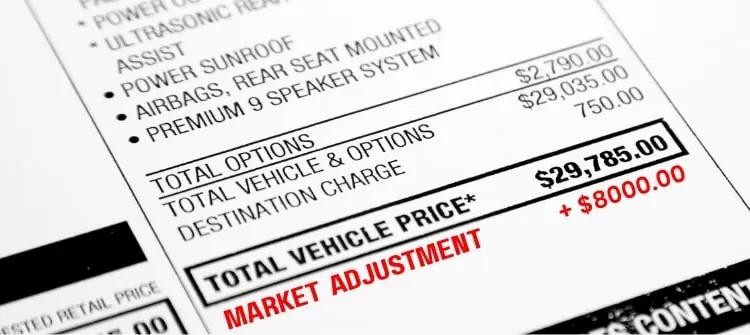
Calling ahead saves you a wasted trip. Ask directly whether any markup has been applied to the specific vehicle you want. If a dealer confirms there’s no markup, get that in writing if possible. Verbal promises can change once you’re sitting in the finance office.
When a vehicle isn’t in short supply, an ADM has little justification. In that case, it becomes much easier to negotiate away or refuse outright. The presence or absence of real scarcity is the deciding factor. Know the actual supply situation for your specific model before you negotiate.
It also helps to understand why this fee differs so much from the rest of this list. ADM is purely a function of supply and demand, not paperwork or government rules. A useful first step is checking national inventory levels before you shop.
Online research can tell you whether a model is genuinely scarce or simply being treated that way locally. If inventory is healthy nationwide, a markup at your local dealer has little justification. That’s a strong position from which to negotiate or simply walk away.
If inventory is genuinely tight everywhere, your options narrow considerably. Waiting a few months often allows supply to catch up with demand and markups to shrink. It also helps to separate ADM from legitimate dealer-installed options.
Some dealers add real accessories, like upgraded wheels or tinted windows, and charge for the actual product and labor. That’s different from a markup charged simply because a vehicle is popular.
Ask the dealer directly whether the additional charge reflects an actual product or pure demand-based pricing. Always get any markup or its removal confirmed in writing. A verbal agreement at the sales desk can change once you reach the finance office.
Also Read: Why Hybrid Battery Replacement Runs $3,000 to $6,500 in 2026
