
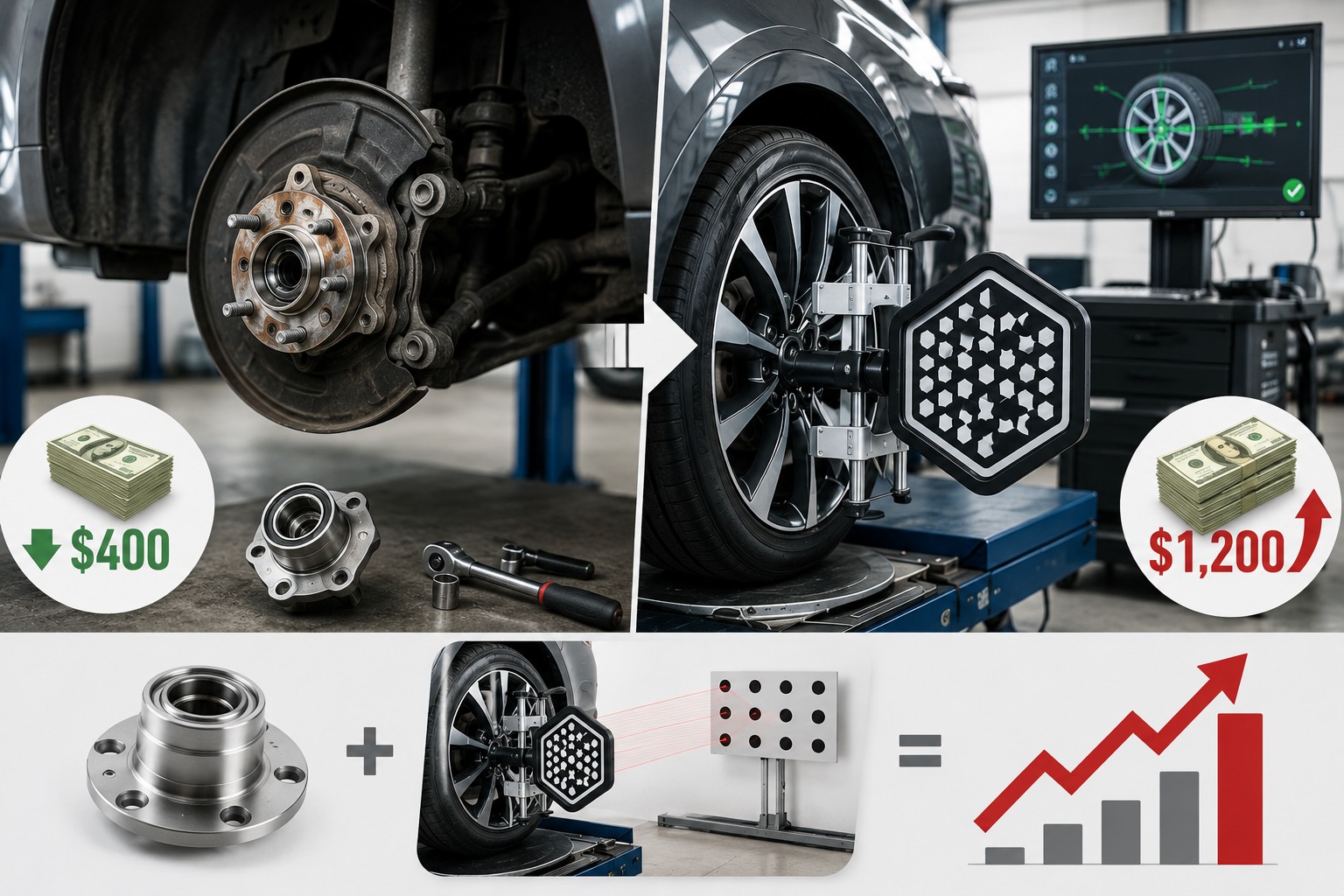
A simple wheel bearing replacement used to be one of the most straightforward jobs in automotive repair. You booked the car in, paid around $400, and drove home the same day.
But something changed. Modern vehicles come loaded with sensors, cameras, and driver assistance systems. A simple bearing swap suddenly became a multi-step electronic procedure.
Today, shops charge between $1,000 and $1,400 for the same job. The labor time has doubled. The equipment required has tripled in cost.
Most car owners are genuinely shocked when they see the invoice. They feel like they are being charged for something they did not ask for.
The truth is more complicated. The sensors mounted on and near your wheel hub are deeply connected to critical safety systems. Disturbing them even slightly triggers mandatory recalibration procedures.
This article breaks down exactly why the price jumped. It explains what recalibration actually means. It shows you where every dollar of that $1,200 bill is going. Understanding this will not lower your bill. But it will help you ask the right questions and avoid being overcharged.
The Wheel Bearing of 20 Years Ago
Two decades ago, a wheel bearing served a simple mechanical purpose. Its sole function was to minimize friction between the wheel and axle, with no additional capabilities or responsibilities.
The part itself costs between $40 and $80. Labor was simple and took under two hours. A good mechanic could do the job with basic press tools. There were no sensors attached to the hub assembly. There were no calibration steps in the repair manual. The mechanic pressed out the old bearing and pressed in the new one.
Shops charged between $150 and $400, depending on the vehicle. A front-wheel-drive car was slightly harder to drive than a rear-wheel-drive car. A truck hub took longer because of its size.
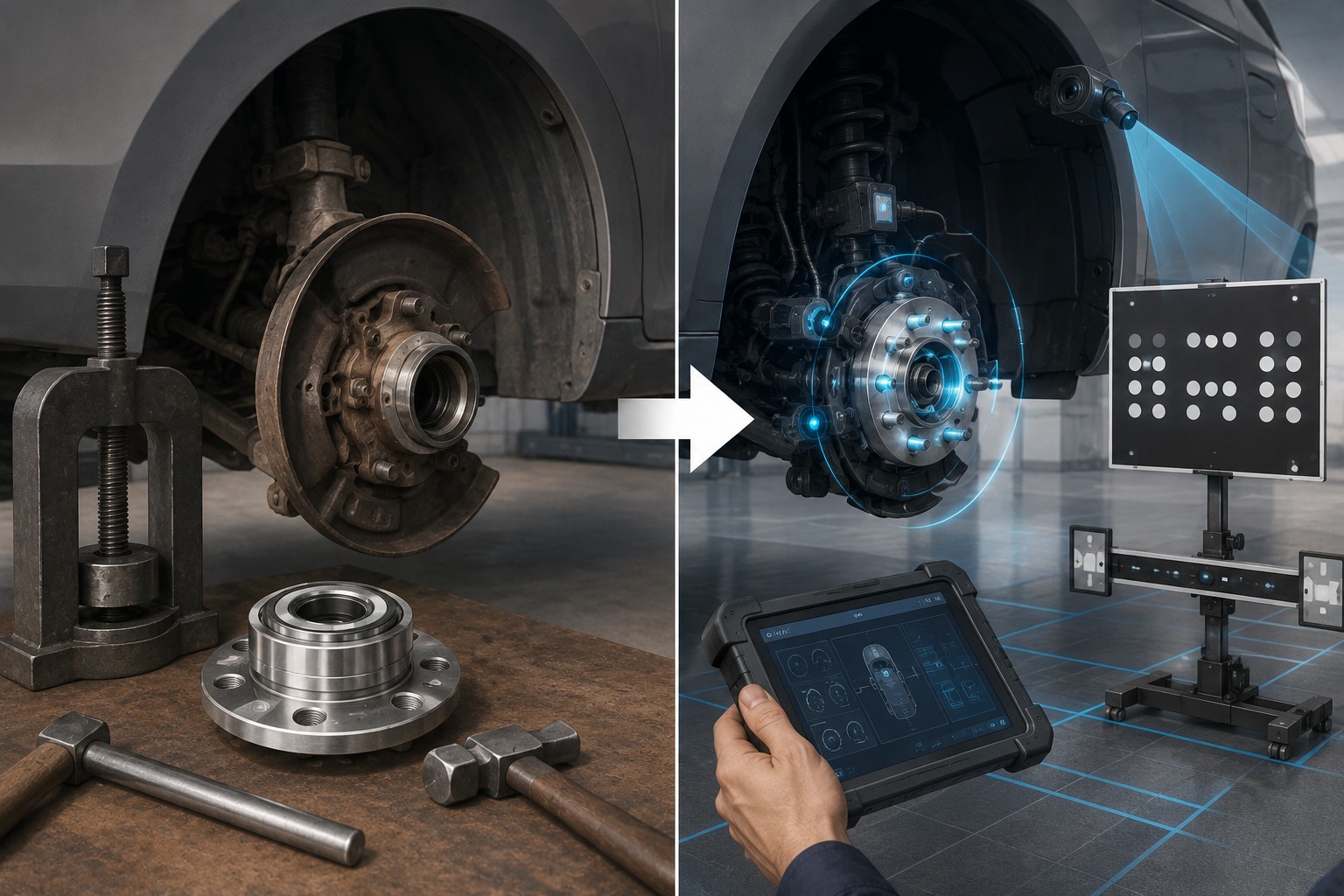
The job required mechanical skills but no computer equipment. A shop with a hydraulic press and basic tools could handle it completely. The price reflected honest labor and a reasonable parts markup.
Customers understood the bill. The math was visible parts plus labor plus a small overhead charge. There was nothing hidden and nothing confusing.
That version of the repair still exists on older vehicles. If you drive a 2005 pickup truck or an older sedan, you will still get a price close to that original range.
The moment you step into a 2018 or newer vehicle with ADAS features, the entire calculation changes. The bearing is still mechanical. Everything around it is not.
What Changed Inside the Wheel Hub
Modern vehicles turned the wheel hub into an electronic command center. Sensors now live inside the hub, around the bearing, and across the entire corner assembly.
The wheel speed sensor is the most well-known addition. It feeds data to the ABS system and traction control. It tells the car exactly how fast each individual wheel is spinning at any moment.
But newer vehicles went much further. Many now integrate the wheel speed sensor directly into the bearing unit itself. You cannot replace the bearing without replacing the sensor. They are a single sealed component.
Beyond wheel speed, the hub area also carries yaw sensors, steering angle sensors, and ride height sensors on air suspension vehicles. All of these interact with the bearing and the surrounding hardware.
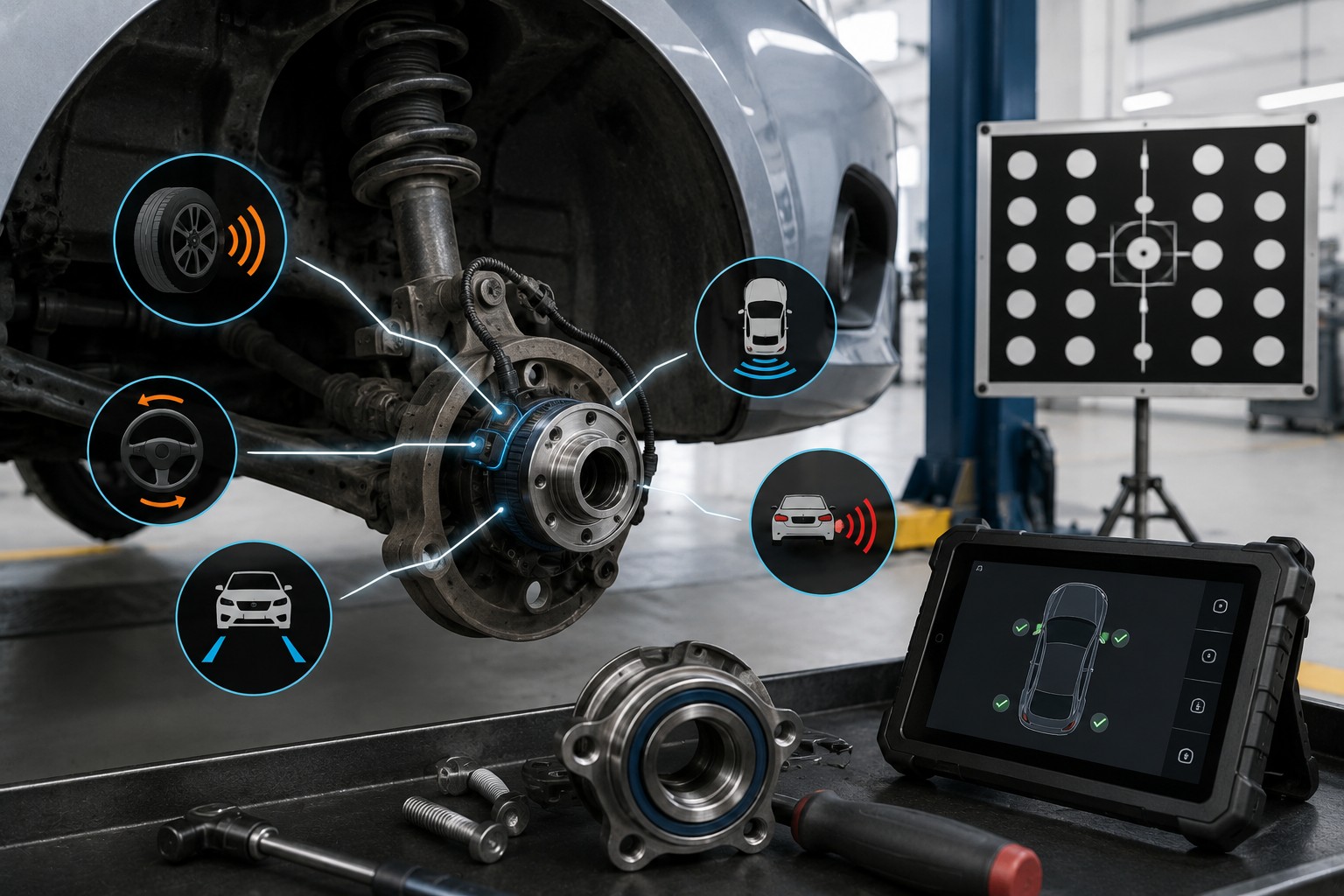
ADAS systems depend on all of these inputs. Adaptive cruise control, lane keeping assist, automatic emergency braking, and blind spot monitoring all require precise data from the wheel area.
When the bearing is removed, the sensor cluster is disturbed. The mounting position shifts by fractions of a millimeter. That tiny shift is enough to create errors in the ADAS calibration.
The car’s onboard computer notices the change. It flags a calibration fault. The safety systems partially disable themselves until a proper recalibration is performed. This is not a shop trying to upsell you. This is the vehicle’s own self-diagnostic system demanding a procedure before releasing full functionality.
What Recalibration Actually Involves
Recalibration is a technical process that restores sensor accuracy after physical work has been done. It is not simply clearing a fault code from the computer.
There are two types of recalibration used in modern shops. Static calibration is done with the vehicle parked on a flat surface using calibration targets placed at precise distances. Dynamic calibration requires the vehicle to be driven at specific speeds while the system relearns sensor positions.
Many wheel bearing jobs now require both. The static calibration sets the baseline. The dynamic calibration confirms accuracy under real driving conditions.
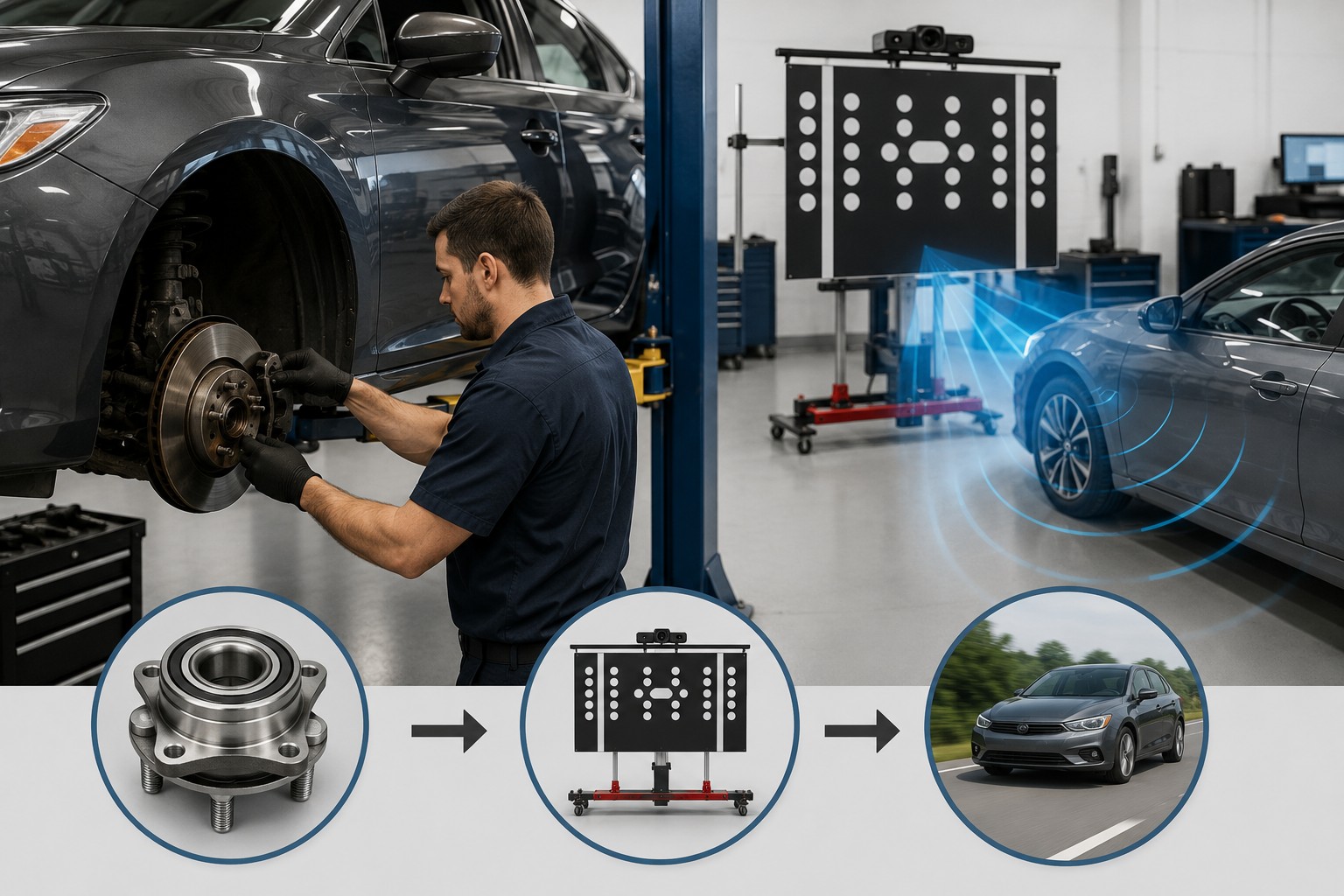
The equipment required for this work is expensive. A proper ADAS calibration rig costs between $15,000 and $60,000, depending on the manufacturer and coverage. Not every shop has invested in this equipment.
Shops that own the equipment must recoup that investment. The calibration fee of $200 to $400 that appears on your invoice partly reflects the machine cost, the technician training, and the time involved.
The calibration itself typically takes between one and two hours. That is time on a hoist or a calibration bay that cannot be used for other work. Dealerships often use factory-specific calibration tools that cost even more. Independent shops may use aftermarket systems that cover multiple brands but require more setup time.
There is no shortcut that produces a safe result. A bearing job completed without recalibration leaves the ADAS system operating on incorrect data.
The Hidden Labor That Doubled the Time
Labor time is where most of the price increase is hiding. The mechanical work itself has not changed dramatically. The surrounding procedures have exploded in time requirements.
Before the job begins, the technician must scan the vehicle for existing fault codes. This baseline scan protects the shop from being blamed for pre-existing problems. It also identifies any sensor issues that need to be flagged before disassembly.
During disassembly, the technician must handle sensors with extreme care. The wheel speed sensor connector is fragile. Snapping the clip during removal adds parts cost and labor time.
After the new bearing is installed, the technician runs a second scan. This confirms that no new faults were introduced during the mechanical work. Any new codes must be investigated before moving forward.
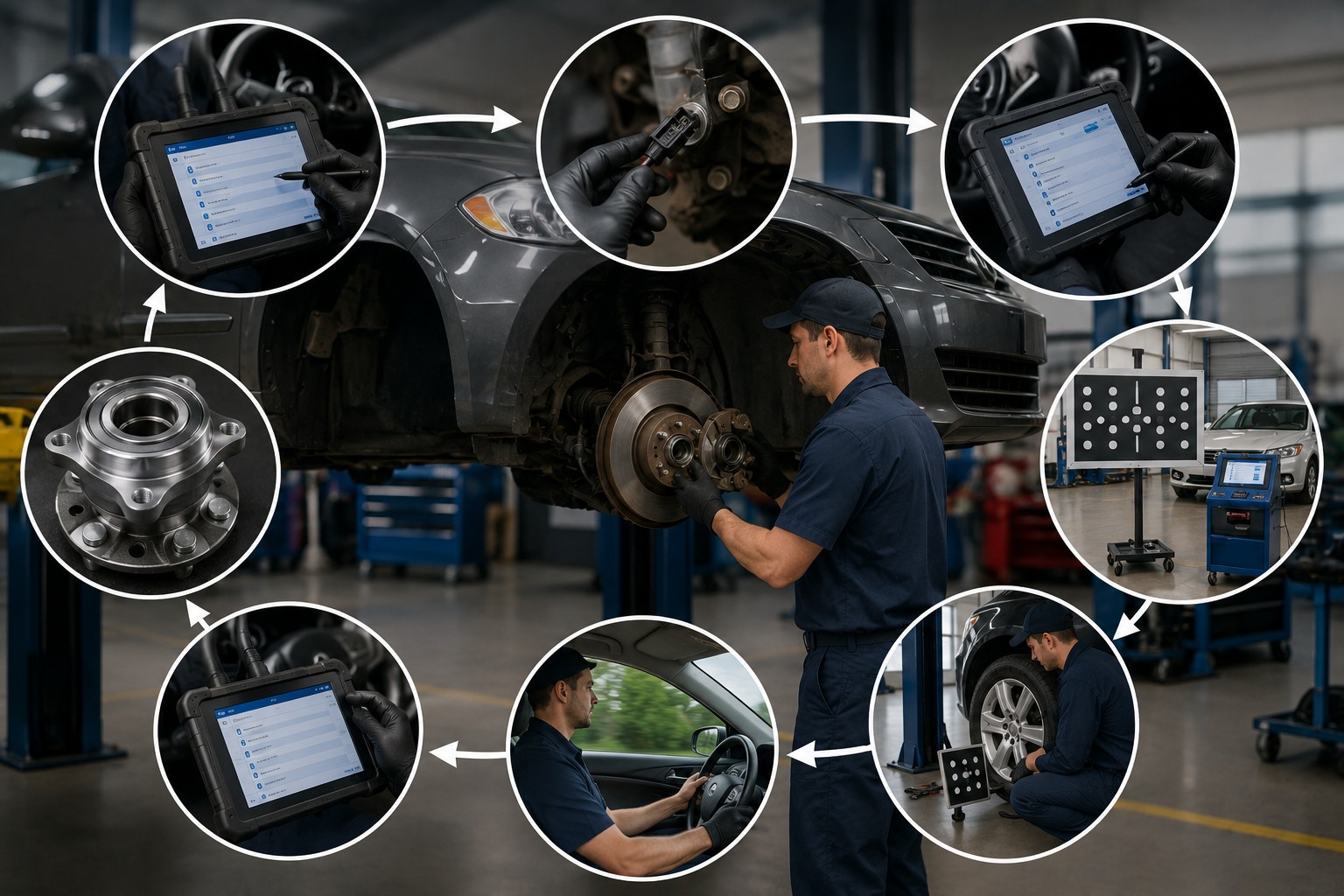
Then the calibration procedure begins. Depending on the system, the technician may need to enter VIN information, confirm vehicle ride height, and position calibration targets with millimeter accuracy.
After calibration, the vehicle is test-driven. The technician verifies that all ADAS systems are functioning normally. A third scan is often done after the test drive to confirm clean results.
This entire process can take four to five hours on a modern vehicle. At a shop rate of $150 per hour, that is $600 to $750 in labor alone. Add the part and the calibration equipment fee, and you are sitting comfortably at $1,200.
Why Parts Costs Also Rose Significantly
The mechanical bearing itself has not changed much in price. A quality aftermarket wheel bearing still costs between $60 and $120 for most passenger cars.
What changed is the integrated hub assembly. Many modern vehicles no longer sell the bearing as a standalone component. The entire hub unit bearing, sensor, ABS ring, and sometimes the knuckle adapter must be replaced as one assembly.
That integrated assembly costs between $180 and $400, depending on the vehicle brand. A German luxury vehicle hub assembly can reach $600 or more. The individual bearing inside that assembly might be worth $80, but you cannot buy it separately.
Sensor connectors, wiring pigtails, and mounting hardware have also added to parts costs. If the sensor wiring harness is damaged during removal, the replacement harness is an additional line item.
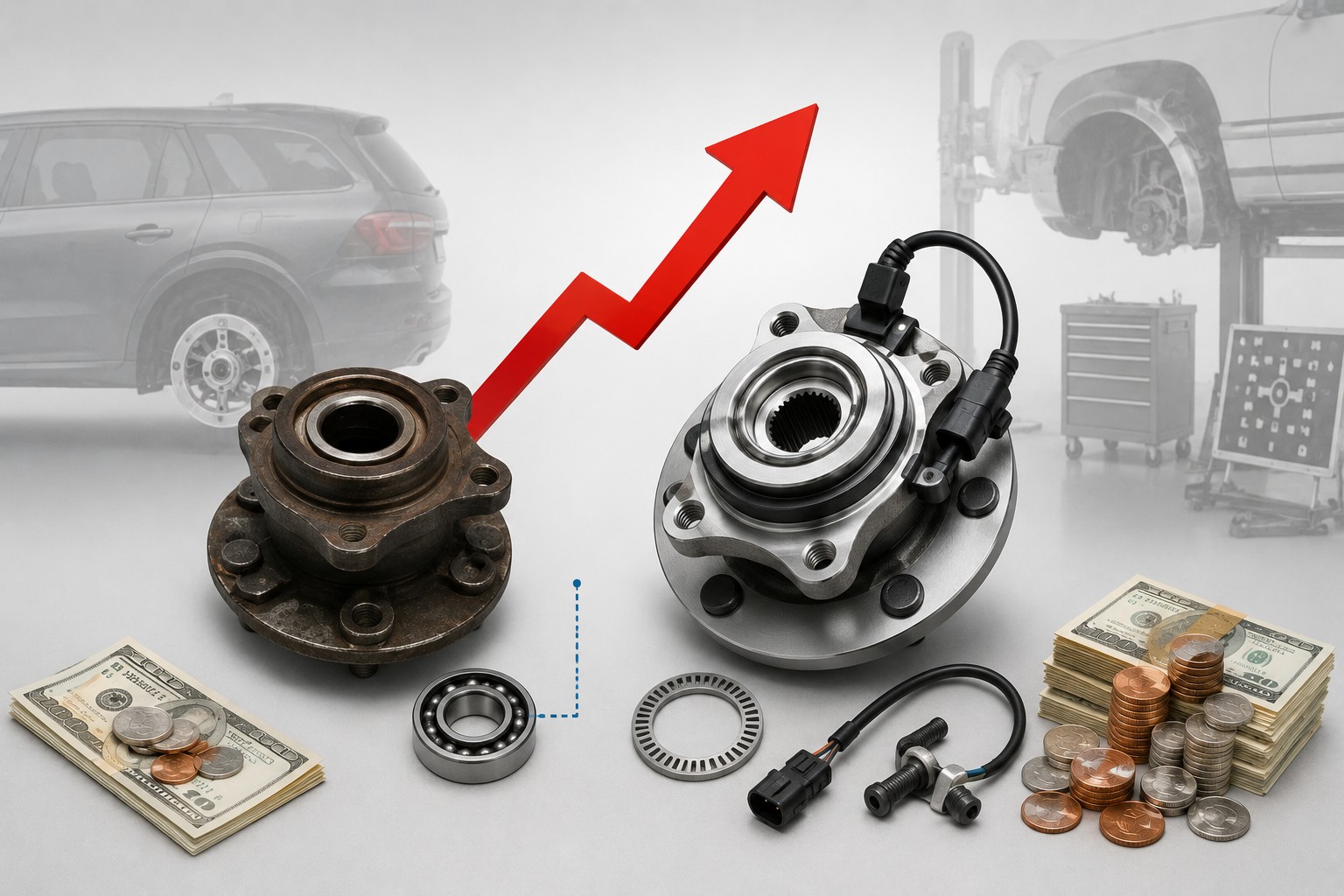
Some manufacturers have made sensor replacement even more complex by routing the wiring through the steering knuckle. A clean removal requires special tools that independent shops must purchase or borrow.
Parts suppliers have also raised prices across the board since 2021. Supply chain disruptions pushed component costs up by 20 to 35 percent on many chassis parts. Those increases were never fully reversed.
Fleet buyers and professional mechanics negotiated some pricing back. The average consumer paying retail parts pricing absorbed the full increase. That difference appears quietly in the parts line of your invoice.
Dealerships vs. Independent Shops on This Job
The price gap between dealerships and independent shops on a recalibrated wheel bearing job has narrowed significantly. This surprises many customers who expect independent shops to always be cheaper.
Dealerships have factory tools and factory calibration equipment already paid for. The technicians are trained specifically on that brand. The calibration procedure is often more streamlined because the tools speak directly to the vehicle’s software.
A dealer may complete the entire job in three hours because their tools are purpose-built. An independent shop using aftermarket equipment may take four and a half hours for the same result. More hours mean a higher labor bill, even at a lower hourly rate.
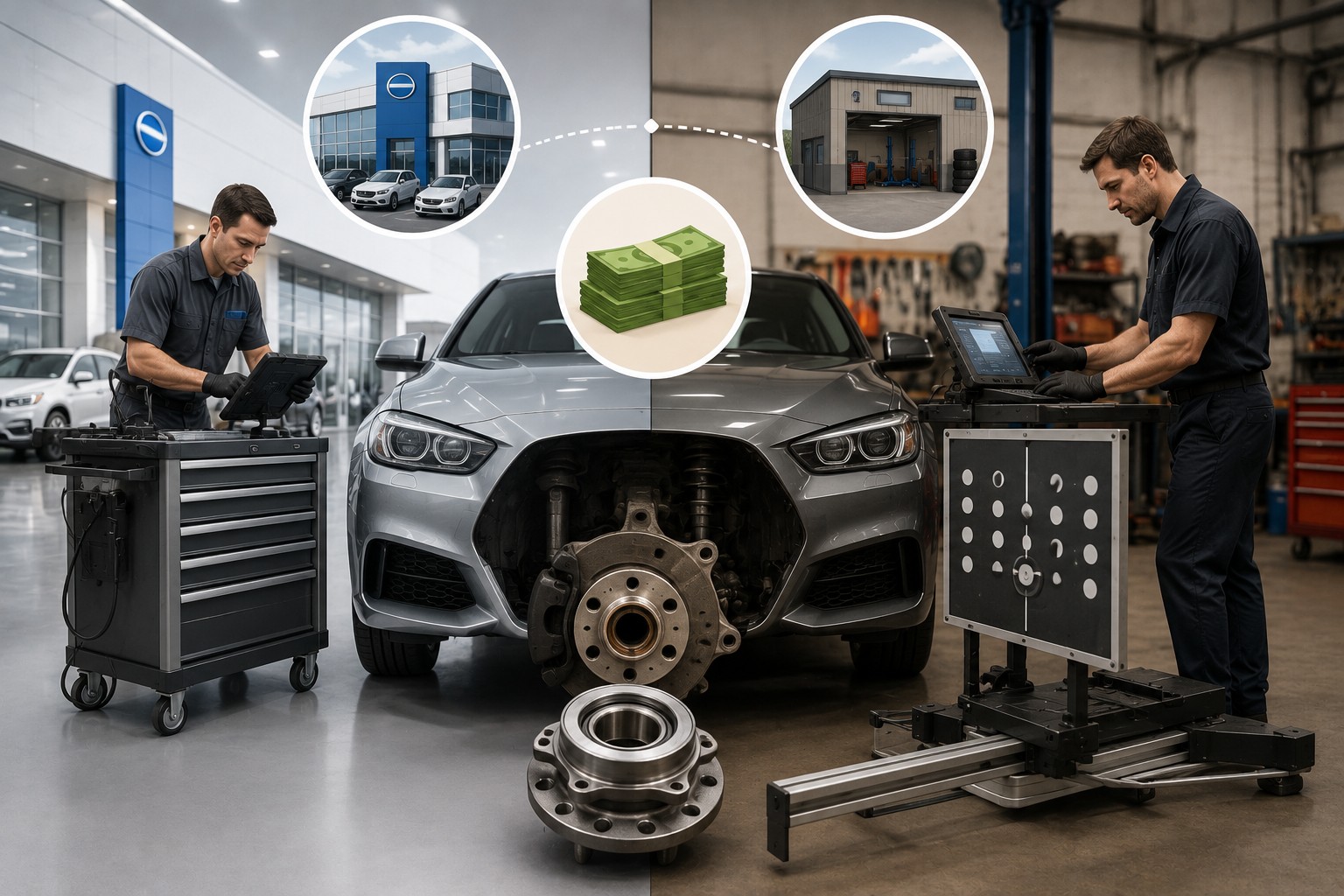
Independent shops also carry more risk of calibration liability. If an ADAS system malfunctions after its calibration, the legal exposure is significant. Many shops now carry additional insurance for ADAS work. That cost is folded into the labor rate.
Some independent shops have chosen not to invest in calibration equipment at all. They perform the mechanical work and then send the vehicle to a nearby calibration specialist. That adds a transportation step and a subcontractor fee, typically $150 to $250.
The customer ends up paying that fee either way. The difference is whether it shows as one line item or two separate invoices. Getting three quotes is still worthwhile. But compare the full scope of work across all three quotes, not just the headline number.
How To Verify You Are Not Being Overcharged
Understanding the bill is your best protection against paying for work that was never done. Ask specific questions before you approve the repair. Request a pre-repair scan report. Any shop doing this job correctly will have one. It should show the existing fault codes before any work begins.
Ask specifically which calibration procedure the vehicle requires. The answer should match the manufacturer’s service information. Static only, dynamic only, or both, your shop should know immediately.
Ask what calibration equipment they are using. A legitimate answer will include a brand name and the vehicle coverage that the system supports. Vague answers about “our diagnostic system” are a warning sign.
Request the post-calibration report as well. This document proves the system was actually calibrated to manufacturer’s specifications. It should show before and after sensor values.
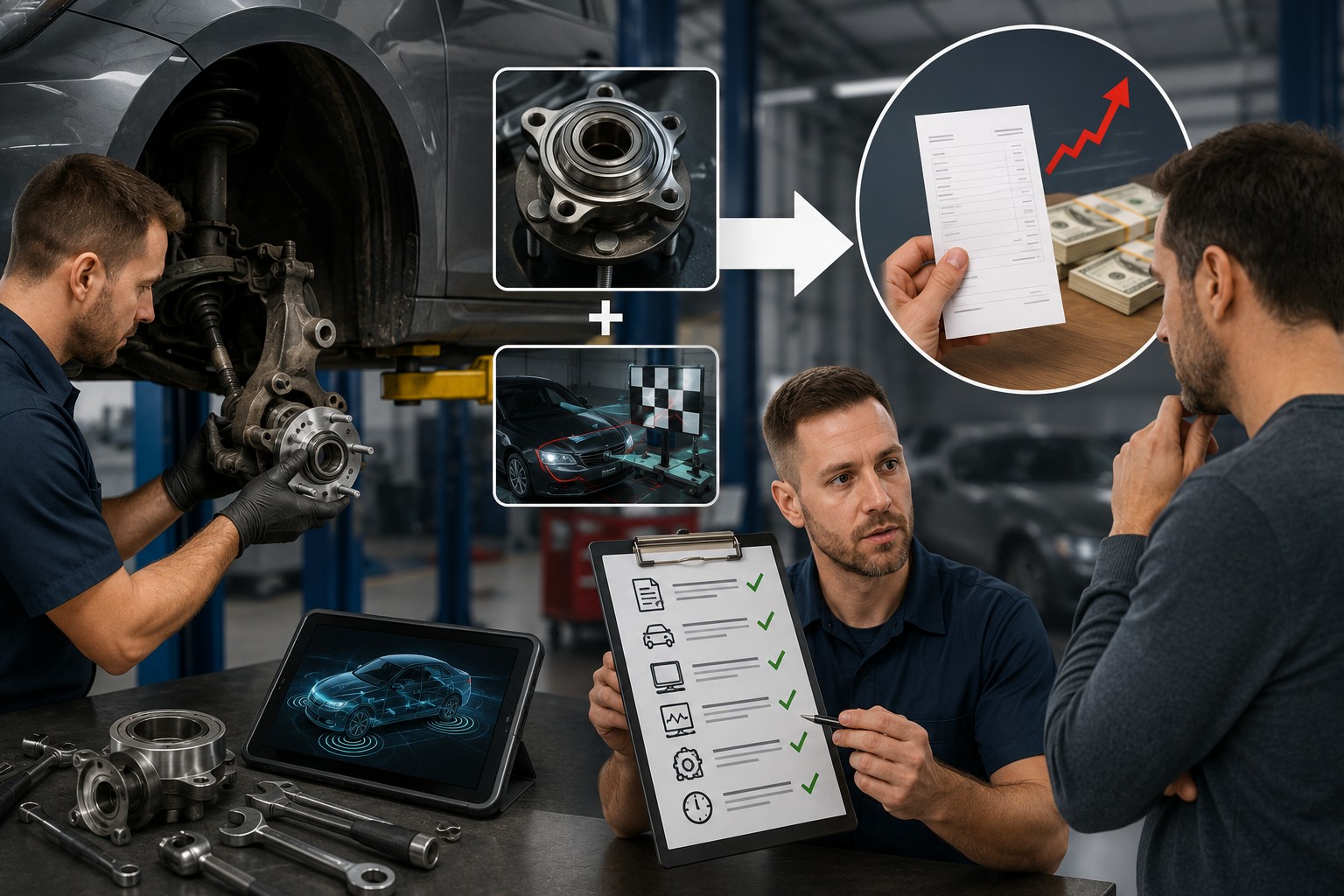
Check the parts invoice line carefully. If you are being charged for an integrated hub assembly, verify that your vehicle actually requires one. Some shops charge for the full assembly when only the bearing needs replacement on older hub designs.
Labor time should be explainable in detail. Ask for the breakdown diagnosis, mechanical removal, installation, and calibration hours listed separately. A shop doing the work correctly will have no trouble explaining each phase.
The $1,200 price on a modern vehicle is often legitimate. But you deserve full transparency on exactly what you are paying for and why each step was necessary.
Also Read: 10 Best Sedans With Least Depreciations After 10 Years
