
Buying a family vehicle is one of the biggest financial decisions a household can make. The sticker price, however, is just the beginning of the story.
Over five years of ownership, a car’s true cost is shaped by fuel expenses, insurance premiums, routine maintenance, depreciation, and unexpected repair bills. These combined figures can vary dramatically between models, sometimes by tens of thousands of dollars. Choosing wisely at the dealership can therefore save a family a substantial sum over the life of the vehicle.
Families have particular demands when shopping for a car. They need room for passengers and cargo, strong safety ratings, and technology that keeps everyone entertained and connected.
But they also need a vehicle that won’t become a financial burden month after month. Thankfully, today’s market offers several models that strike an impressive balance between practicality and long-term affordability.
The vehicles on this list were selected based on a combination of factors: projected five-year ownership costs including fuel, insurance, and maintenance; reliability ratings from trusted organizations; resale value projections; and family suitability.
Whether you need a spacious three-row SUV, a fuel-sipping hybrid minivan, or a versatile crossover, these eight vehicles represent the smartest long-term investments for families in 2025.
1. Toyota Sienna Hybrid
The Toyota Sienna stands alone in the minivan segment as the only model offered exclusively as a hybrid. This commitment to efficiency gives it a remarkable long-term cost advantage over every rival in the class.
The Sienna’s hybrid powertrain delivers an outstanding 36 mpg combined a figure that is roughly 40 percent better than the V6-powered Honda Odyssey.
Over five years of typical family driving, that gap translates to thousands of dollars in fuel savings that stay in your pocket. Fuel costs are one of the largest ongoing expenses of vehicle ownership, and the Sienna handles this better than any other minivan on sale today.
Toyota’s legendary reliability also keeps maintenance costs impressively low. The Sienna benefits from Toyota’s ToyotaCare program, which provides two years or 25,000 miles of complimentary maintenance, a genuine advantage that its rivals simply do not offer.
Scheduled oil changes, tire rotations, and multi-point inspections are covered at no additional cost during this period. Depreciation is another critical area where the Sienna performs well.
Toyota vehicles consistently hold their value better than many competitors, and the Sienna’s hybrid exclusivity makes it particularly sought after on the used market. A strong resale value at the end of five years further reduces the total cost of ownership compared to vehicles that depreciate more steeply.
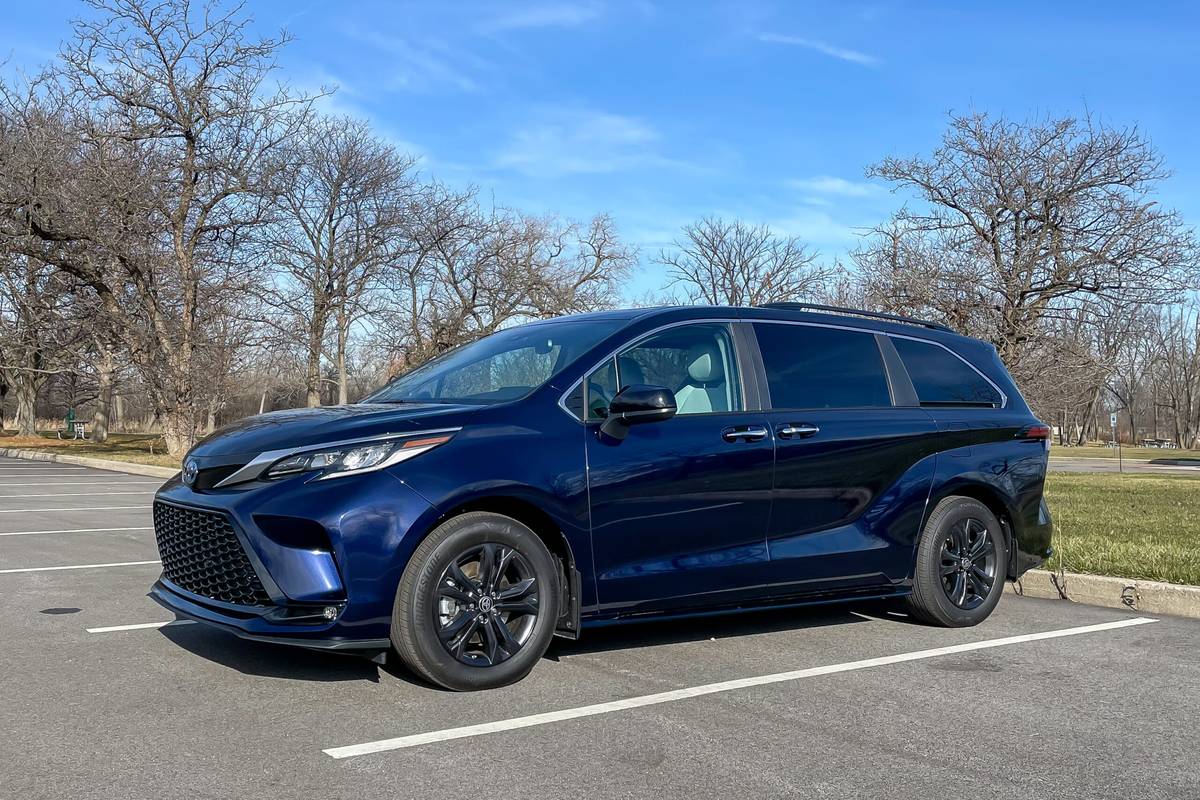
The Sienna seats up to eight passengers comfortably, with nearly 39 inches of third-row legroom. It also benefits from Toyota’s comprehensive warranty, including a 10-year or 150,000-mile hybrid battery guarantee that provides enormous peace of mind for long-term owners.
Insurance costs for the Sienna are also competitive within its class. Minivans generally attract lower premiums than SUVs of similar size, making the Sienna a smart choice from an insurance standpoint as well.
Specifications
- Engine: 2.5L Atkinson-cycle Inline-4 + dual electric motors (Hybrid Synergy Drive)
- Horsepower: 245 hp (combined system output)
- Torque: 176 lb-ft (gas engine) + electric motor assistance (combined output not officially rated)
- Length: 203.7 inches
- Width: 78.1 inches
2. Kia Telluride
The Kia Telluride has established itself as one of the most celebrated family SUVs on the American market. Its combination of value, reliability, and equipment makes it a standout when calculating five-year running costs.
One of the most significant cost advantages of the Telluride is its generous standard equipment. Unlike many competitors that charge for features as options, Kia packs the Telluride with technology and safety systems from the very base trim. This means families get a well-equipped vehicle without paying upgrade premiums that inflate the purchase price and subsequent financing costs.
The Kia powertrain warranty is industry-leading: 10 years or 100,000 miles on the drivetrain. This extraordinary coverage virtually eliminates the risk of expensive engine or transmission repair bills during the first decade of ownership. For a family vehicle expected to accumulate high mileage, this warranty alone can represent thousands of dollars in potential savings.
Maintenance costs for the Telluride are straightforward and competitive. The naturally aspirated 3.8-liter V6 is a proven, simple design with a strong track record of reliability. It requires standard oil changes and routine servicing without the complexity of turbocharged systems, which can be more expensive to maintain over time.
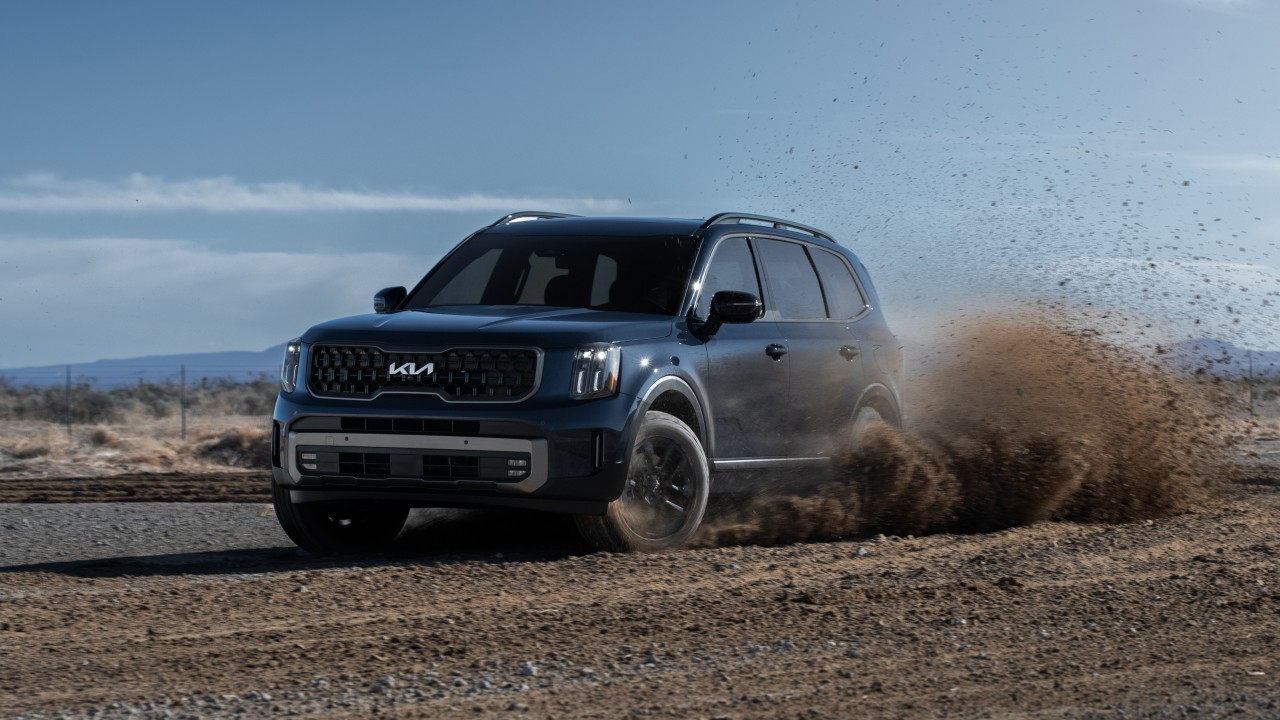
The Telluride also holds its resale value exceptionally well. Consumer demand for the model has remained consistently high since its introduction, ensuring that owners recoup a strong percentage of their purchase price when it comes time to sell or trade. Strong residuals are a key factor in reducing total five-year ownership costs.
Fuel economy of around 20 mpg city and 26 mpg highway is competitive for a three-row, eight-passenger SUV. While not as efficient as a hybrid, the Telluride’s relatively modest running costs in other areas compensate effectively.
Specifications
- Engine: 3.8L Lambda II V6
- Horsepower: 291 hp
- Length: 196.9 inches
- Torque: 262 lb-ft
- Width: 78.3 inches
3. Honda Odyssey
The Honda Odyssey is one of the most enduring names in the family vehicle space. Decades of refinement have made it one of the most practical and cost-effective large family vehicles available.
Honda’s reputation for long-term mechanical reliability is a core reason the Odyssey appears on this list. The 3.5-liter V6 engine is a robust, time-tested unit that rarely requires major unscheduled repairs. Owners who follow the recommended maintenance schedule can typically drive for many years without facing significant unexpected bills.
The Odyssey’s Magic Slide second-row seats allow the interior to be reconfigured in ways that maximize cargo space and passenger comfort. This versatility means families are less likely to need a second vehicle for cargo-heavy tasks, which represents a real reduction in household transportation costs. Fewer vehicles mean lower insurance, registration, and maintenance spending.
Honda has built a broad and competitive parts and service network across the country. This keeps routine maintenance and repair labor costs highly competitive. Families are never far from affordable, qualified service, regardless of where they live.
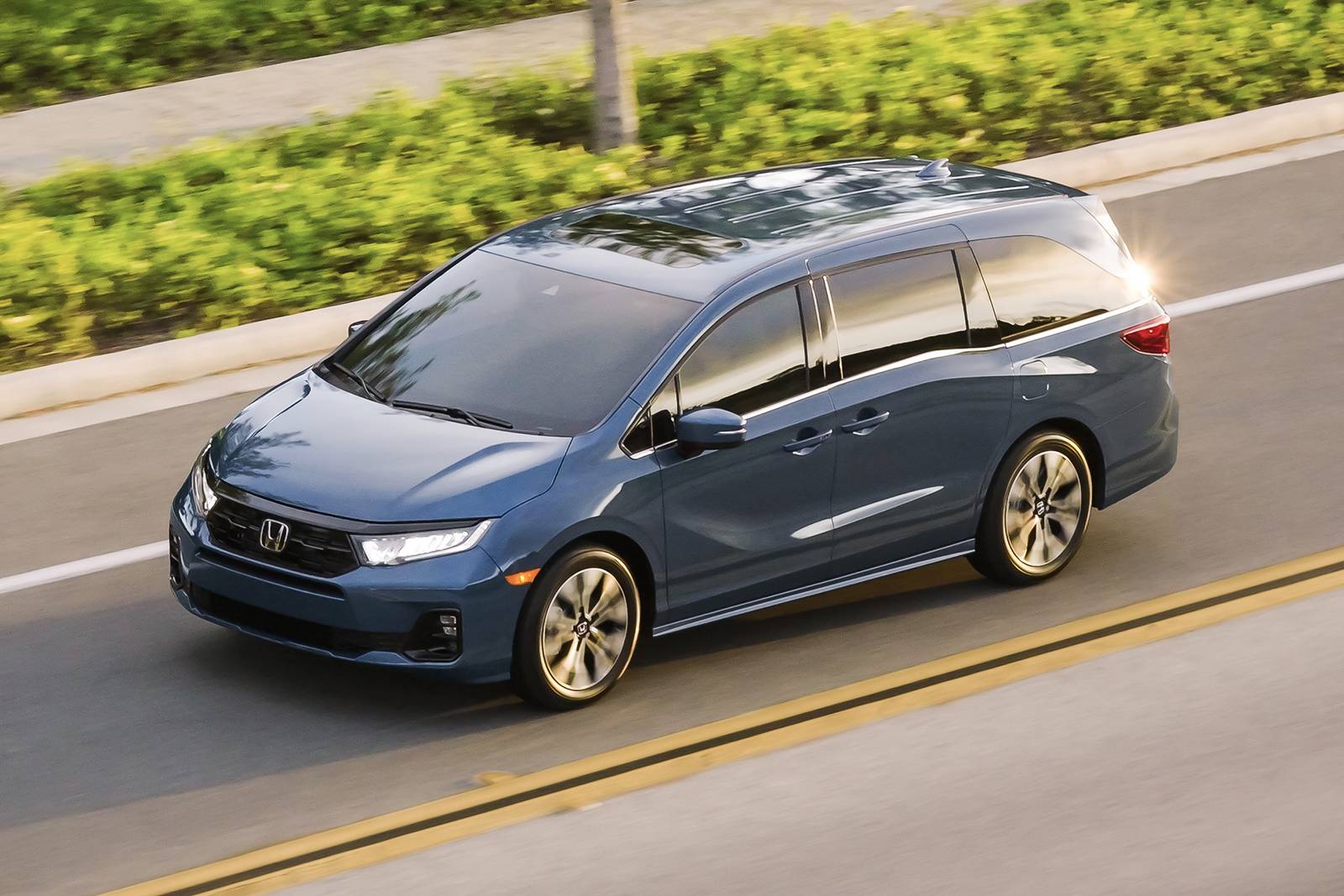
The Odyssey seats up to eight passengers more than any minivan in its class. Its long wheelbase provides a smooth, stable ride that reduces fatigue on extended family road trips. The 10-speed automatic transmission also contributes to comparatively efficient fuel consumption for a non-hybrid V6.
Insurance costs are typically favorable for the Odyssey. As a minivan rather than an SUV, it benefits from lower actuarial risk classifications in many markets. Combined with Honda’s solid safety ratings, premiums tend to be modest relative to similarly sized three-row SUVs.
Specifications
- Engine: 3.5L Earth Dreams Technology V6
- Horsepower: 280 hp
- Length: 205.2 inches
- Width: 78.5 inches
- Torque: 262 lb-ft
4. Toyota Highlander Hybrid
The Toyota Highlander Hybrid offers three-row SUV practicality with hybrid efficiency that gives it a significant edge over conventional SUVs in five-year cost calculations. It is one of the smartest long-term buys in the mid-size SUV segment.
The Highlander Hybrid’s fuel economy figures are among the best in the three-row SUV class. Delivering approximately 35–36 mpg combined in its hybrid configuration, it leaves its non-hybrid competitors far behind. A family driving 15,000 miles annually will save hundreds of dollars in fuel costs each year compared to rivals powered by conventional V6 or V8 engines.
Toyota’s quality and reliability scores consistently rank among the highest in the industry. The Highlander Hybrid has a proven track record spanning more than a decade, giving buyers confidence that the powertrain will perform without costly surprises. Toyota’s hybrid batteries have demonstrated exceptional longevity, and the 10-year hybrid battery warranty provides additional reassurance.
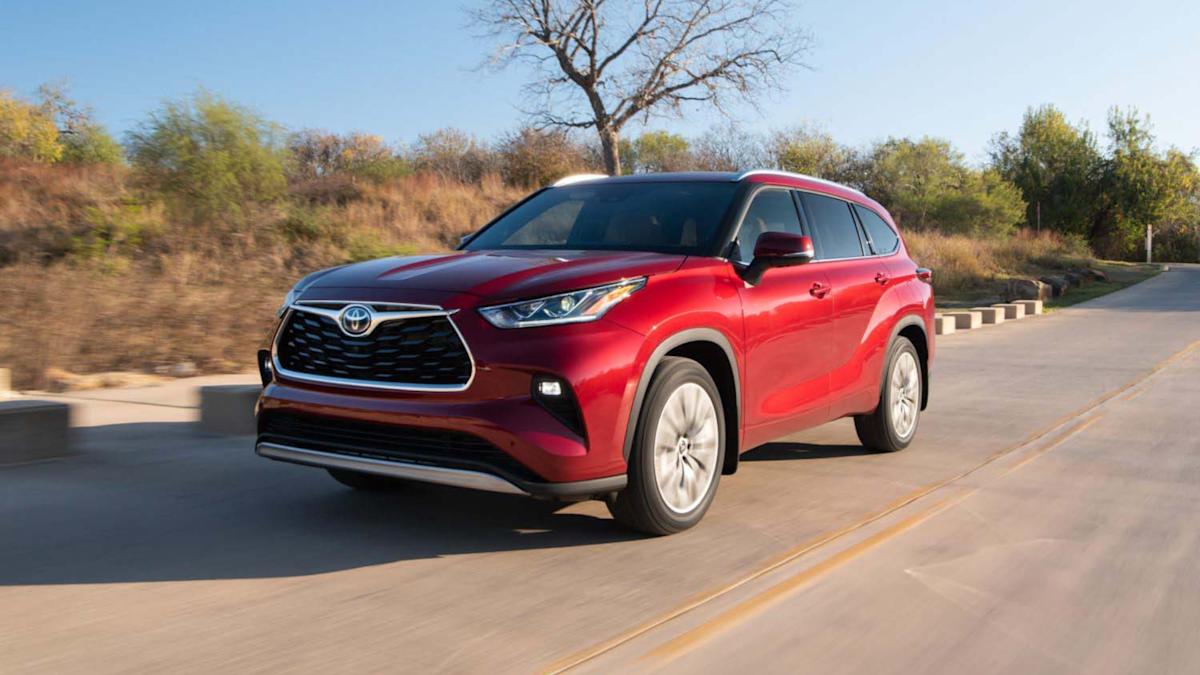
Routine maintenance on the Highlander Hybrid is simplified by regenerative braking, which reduces wear on the conventional brake pads. Brake jobs, one of the more frequent and moderately expensive routine maintenance items, are needed far less often on hybrid vehicles. This saving accumulates meaningfully over five years.
The Highlander Hybrid benefits from ToyotaCare, which includes two years of complimentary scheduled maintenance. Combined with its excellent resale value, the total five-year cost picture is very attractive. Toyota vehicles consistently depreciate slowly compared to many rivals.
The Highlander Hybrid seats up to eight passengers in three rows, with 84.3 cubic feet of cargo space available with rear seats folded. Available all-wheel drive adds capability without the fuel economy penalty seen in conventional AWD SUVs.
Specifications
- Engine: 2.5L Inline-4 Hybrid + electric motors
- Horsepower: 265 hp (combined system output)
- Length: 194.9 inches
- Width: 76.0 inches
- Torque: 175 lb-ft (gas engine) + hybrid system assistance
Also Read: 8 SUVs With the Worst Safety Ratings for Rear Seats
5. Subaru Ascent
The Subaru Ascent brings standard all-wheel drive to every trim level, a feature competitors charge extra for, making it one of the most comprehensively equipped and cost-effective three-row SUVs available. Its total five-year cost of ownership is competitive with vehicles that cost less at the point of sale.
Standard Symmetrical All-Wheel Drive on every Ascent trim means buyers do not pay upgrade fees to access genuine all-weather capability. In comparable vehicles, adding AWD can cost anywhere from $1,500 to $2,500 more. Getting it as standard equipment represents immediate savings that improve the Ascent’s value equation considerably.
Subaru’s Boxer engine design is known for its inherent mechanical balance, which reduces vibration and wear compared to inline engine configurations. This contributes to the engine’s long service life. The 2.4-liter turbocharged four-cylinder delivers strong performance while remaining straightforward to maintain.
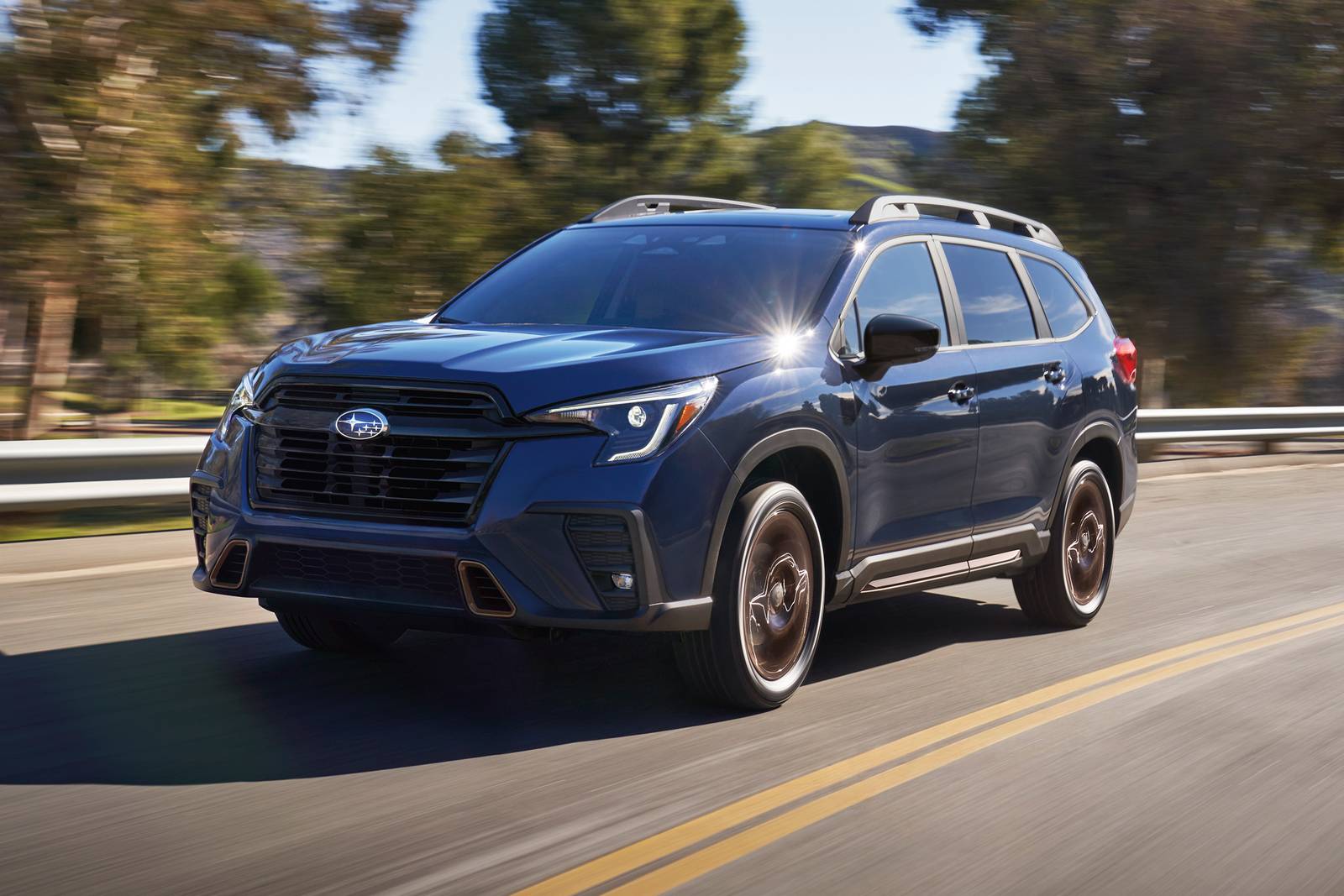
The Ascent received the IIHS Top Safety Pick+ award for 2024, one of the highest safety designations available. Strong safety credentials translate into competitive insurance premiums. Lower monthly insurance costs accumulate into meaningful savings over a five-year ownership period.
Subaru offers a competitive 3-year or 36,000-mile bumper-to-bumper warranty and a 5-year or 60,000-mile powertrain warranty. While these terms are not the most generous in the class, Subaru vehicles have a strong reputation for durability that tends to minimize out-of-warranty costs.
The Ascent seats up to eight passengers with a cabin that provides 17.8 cubic feet of cargo space behind the third row, slightly more than the Highlander. Its 11.6-inch Subaru Starlink touchscreen is standard across all trims, meaning families do not need to pay for technology upgrades.
Specifications
- Engine: 2.4L Turbocharged SUBARU BOXER® Inline-4
- Horsepower: 260 hp
- Length: 196.8 inches
- Width: 76.0 inches
- Torque: 277 lb-ft
6. Chrysler Pacifica Hybrid (PHEV)
The Chrysler Pacifica Hybrid is the only plug-in hybrid minivan currently available in the United States. For families with access to home charging, it represents one of the lowest-cost propositions in any vehicle category.
The Pacifica Plug-in Hybrid can travel up to 32 miles on pure electric power before the gasoline engine activates. For families whose daily school runs, grocery trips, and commutes fall within that range, the majority of driving can be done entirely on inexpensive home electricity. This dramatically reduces weekly fuel expenditure for qualifying households.
When the gasoline engine does engage, the Pacifica PHEV is still highly efficient. Its total driving range of approximately 520 miles on a full tank plus a full charge is exceptional for a family vehicle. Families on longer journeys can enjoy extended range without range anxiety, while daily driving remains largely electric-powered.
The Pacifica Hybrid is eligible for a federal EV tax credit of $7,500, which significantly reduces the effective purchase price. A lower upfront cost, combined with reduced fuel bills, creates a compelling five-year cost case that few conventional vehicles can match. The effective out-of-pocket cost after the tax credit brings it into a price range competitive with non-hybrid alternatives.
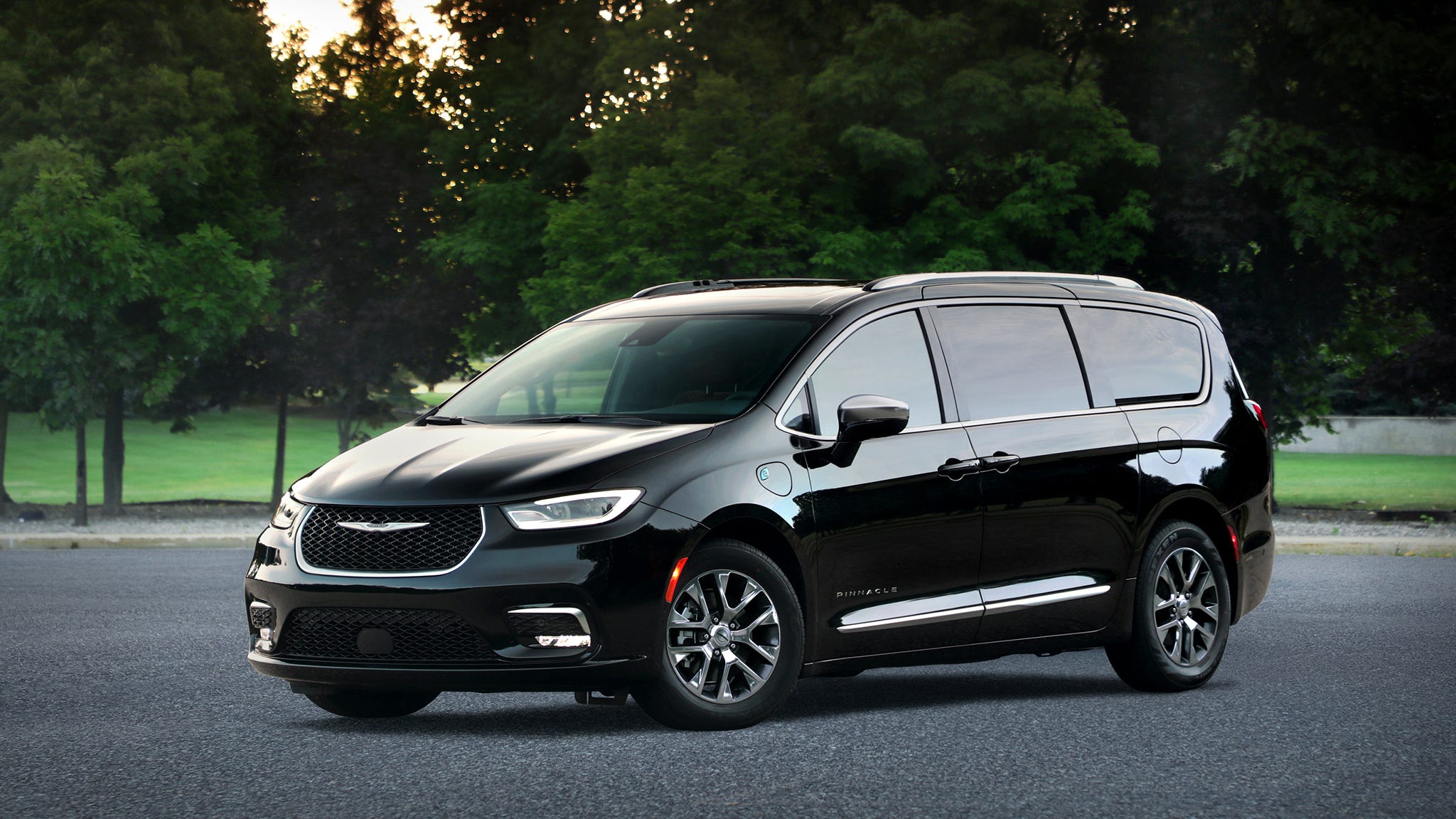
Chrysler’s Stow ‘n Go seating system, unique to Pacifica models without the PHEV battery, is not available on the plug-in variant due to the battery positioned under the floor.
However, the second row can still be removed to create an expansive cargo area. The vehicle provides up to 140.5 cubic feet of maximum cargo space with both rear rows removed.
The Pacifica includes five years or 60,000 miles of complimentary roadside assistance. Its hybrid battery carries a 10-year or 100,000-mile warranty, providing owners with long-term peace of mind against potentially expensive battery replacement costs.
Specifications
- Engine: 3.6L Pentastar V6 + 12.5 kWh battery (PHEV)
- Horsepower: 260 hp (combined system output)
- Length: 203.8 inches
- Width: 79.6 inches
- Torque: 262 lb-ft
7. Hyundai Palisade
The Hyundai Palisade is the Kia Telluride’s sibling, built on the same platform and powered by the same engine. It brings a slightly more upscale interior presentation while maintaining competitive running costs that make it one of the best value propositions in the three-row family SUV segment.
Like the Telluride, the Palisade benefits from Hyundai’s class-leading 10-year or 100,000-mile powertrain warranty. This warranty coverage is the most generous in the mainstream automotive industry and provides families with exceptional protection against unexpected drivetrain costs. It is a significant advantage that lowers the financial risk of long-term ownership considerably.
The 3.8-liter V6 shared with the Telluride is a proven and highly dependable unit. Fuel economy of approximately 19 mpg city and 26 mpg highway is competitive for a vehicle of its size and passenger-carrying capability. While not hybrid-level efficiency, it is in line with the best conventional V6 three-row SUVs on the market.
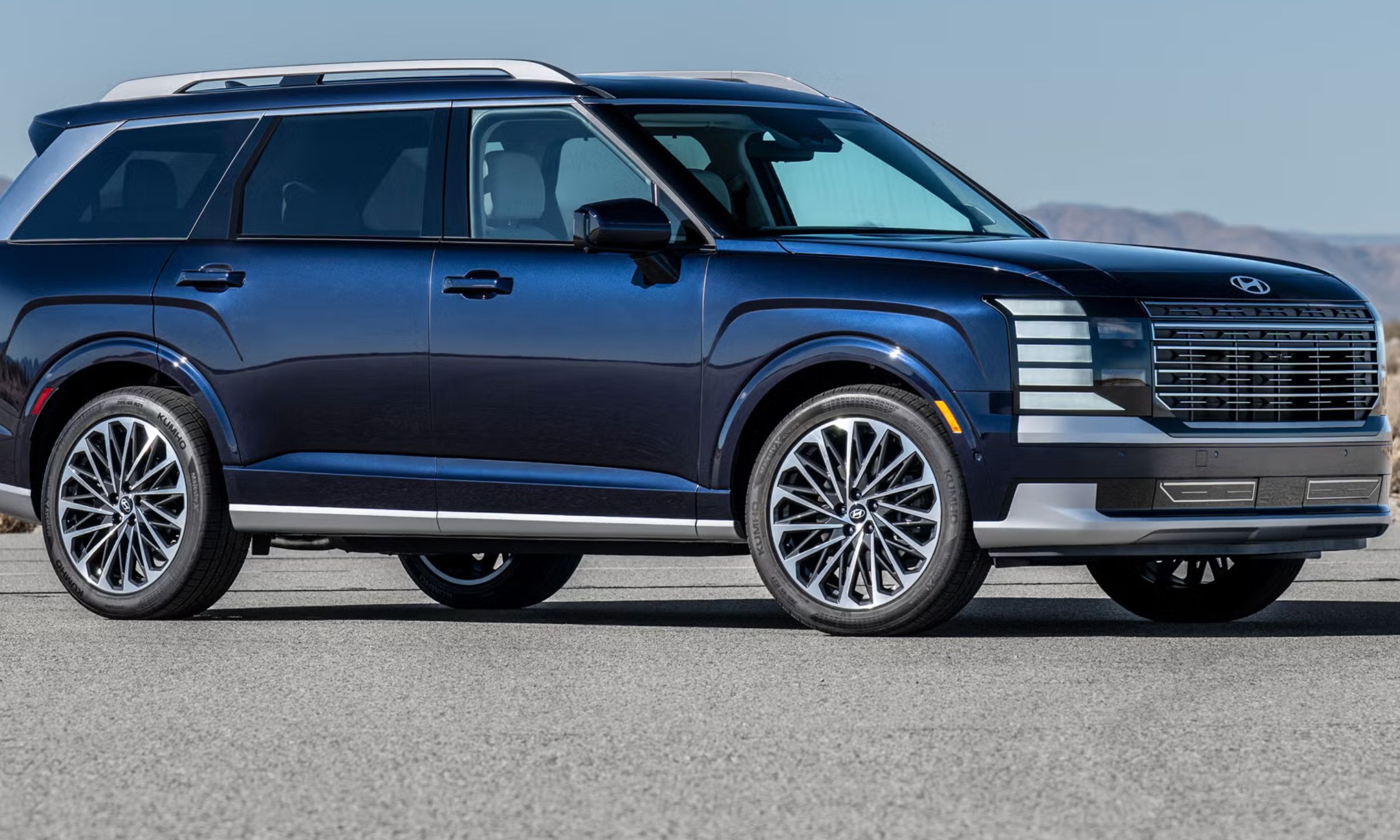
Hyundai’s extensive dealer and service network keeps routine maintenance affordable and accessible. The brand has invested heavily in customer satisfaction, and maintenance costs for the Palisade are straightforward. Predictable service intervals make it easy for families to budget for upkeep with confidence.
The Palisade offers generous standard equipment across all trim levels, reducing the need to spend money on option packages to access desired features. Ventilated front seats, a large touchscreen display, and advanced driver assistance systems are available on mid-range trims without significant price jumps.
With a cabin that comfortably accommodates up to eight passengers and a well-appointed interior that feels premium without luxury pricing, the Palisade offers exceptional value per dollar across a five-year ownership window. Its strong resale value also means families recoup a solid portion of their investment when the time comes to move on.
Specifications
- Engine: 3.8L Lambda II V6
- Horsepower: 291 hp
- Length: 196.9 inches
- Width: 78.0 inches
- Torque: 262 lb-ft
8. Kia Carnival Hybrid
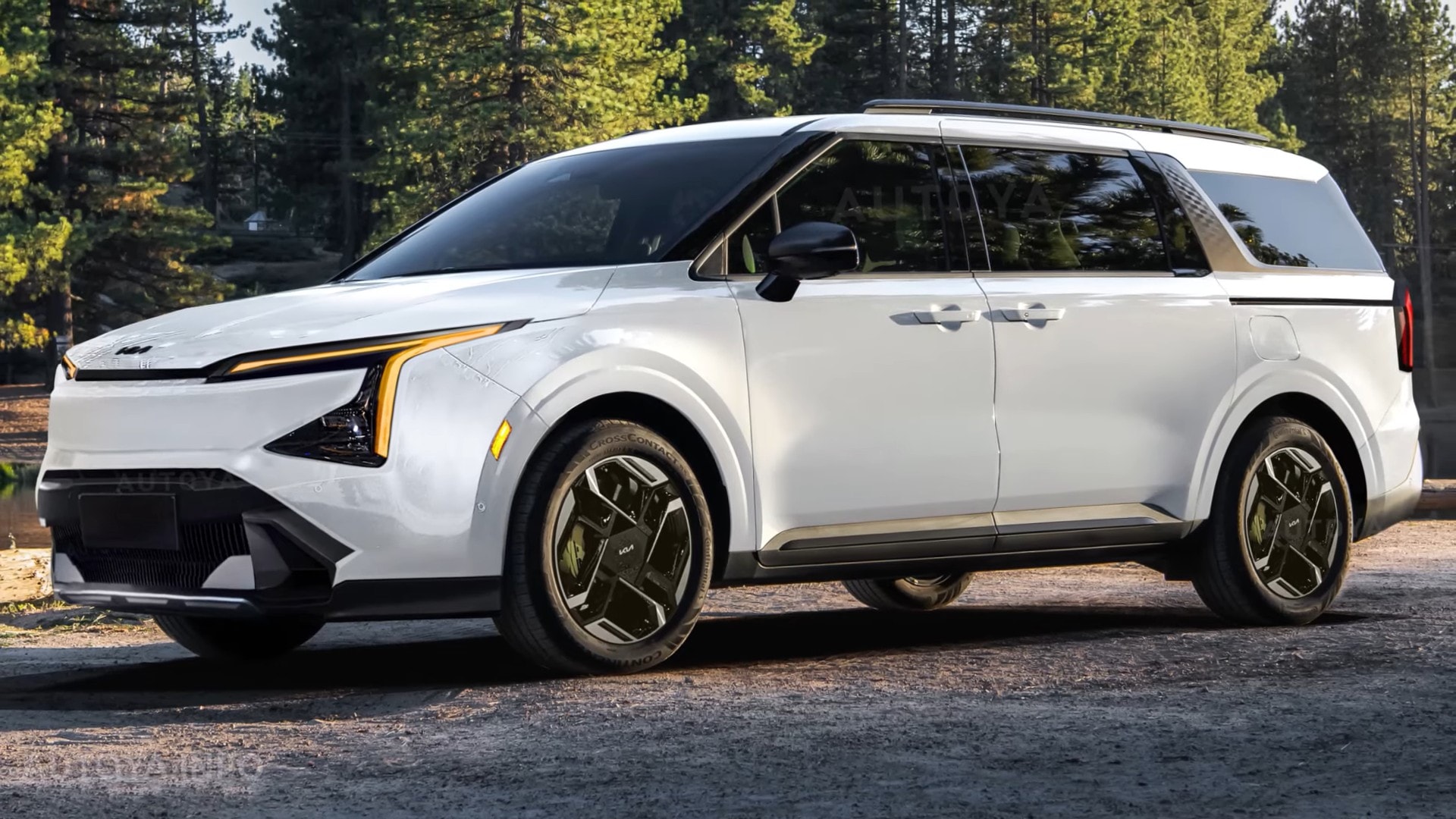
The Kia Carnival Hybrid represents one of the newest and most compelling entries in the family vehicle market. Combining a hybrid powertrain with Kia’s signature value proposition and class-leading warranty, it is rapidly becoming one of the most economical family haulers available in 2025 and 2026.
The Carnival Hybrid’s new electrified powertrain offers significantly improved fuel efficiency compared to the standard V6 model. By blending electric assistance with a conventional engine, it achieves fuel economy figures that reduce annual fuel spending meaningfully for families who log heavy mileage. This makes it particularly appealing for households where the family vehicle serves as the primary daily driver.
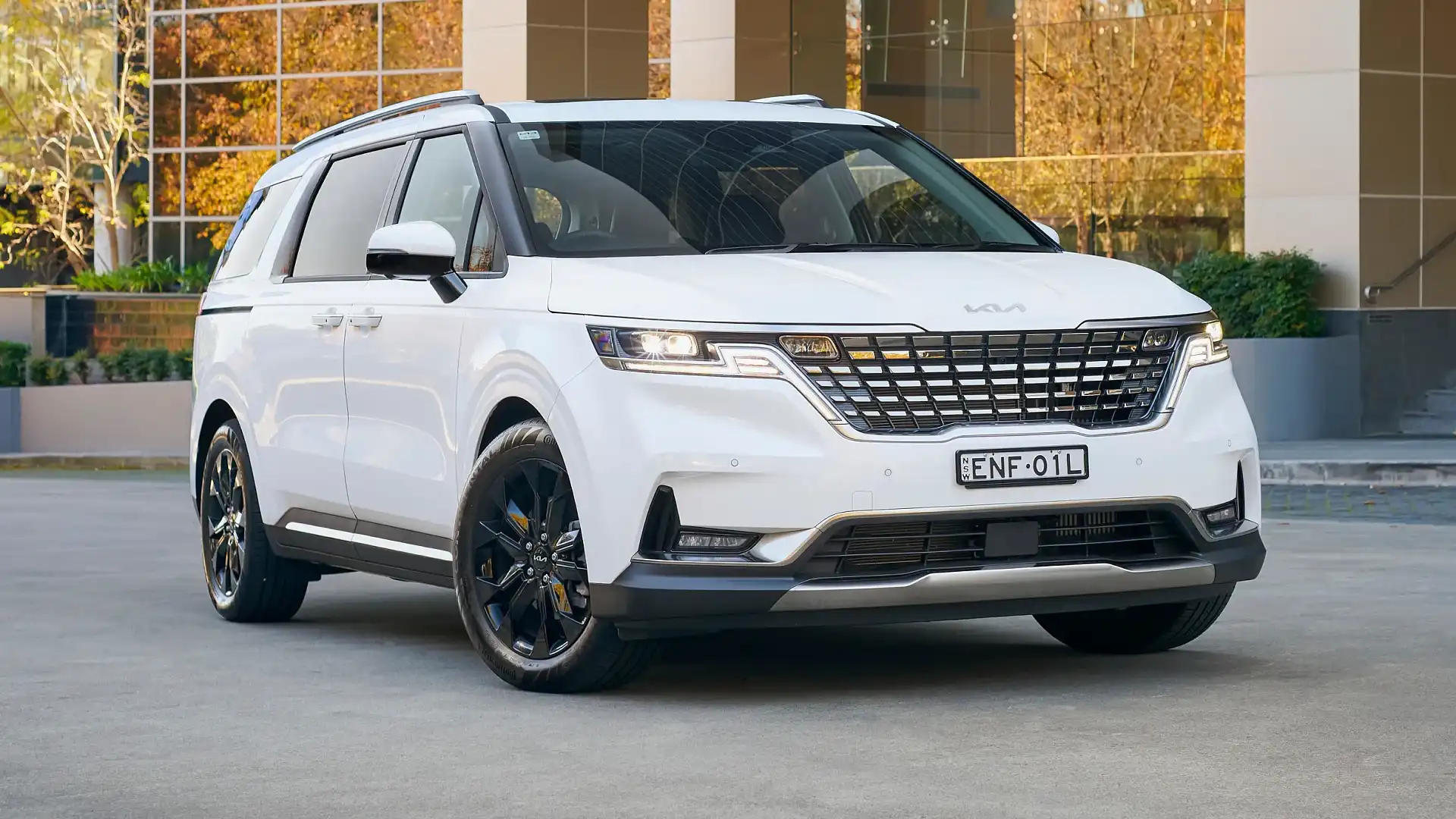
Kia’s 10-year or 100,000-mile powertrain warranty covers the Carnival Hybrid’s drivetrain components. This guarantee, the best in the minivan segment, protects against repair bills that could otherwise destabilize a family budget. Peace of mind over the full ownership period is one of the Carnival Hybrid’s most financially important attributes.
The Carnival is the largest minivan in its class by cargo volume, offering up to 145.1 cubic feet of space with all seats folded. This massive utility means families are unlikely to need a supplementary vehicle for larger loads, reducing the household transportation cost footprint. One versatile vehicle can replace two with more careful planning.
Kia has equipped the Carnival with dual 14.6-inch rear entertainment screens on higher trim levels, the largest in the minivan segment. This level of technology as standard equipment reduces the need to purchase add-ons and aftermarket entertainment systems. The included technology supports connected services that keep the vehicle functional and desirable longer into ownership.
Insurance costs for the Carnival are favorable due to its minivan classification. Like all vehicles in this body style, it benefits from lower risk ratings compared to trucks and large SUVs. Combined with Kia’s competitive pricing and strong resale trajectory, the Carnival Hybrid builds a strong financial case for family buyers focused on five-year running costs.
Specifications
- Engine: 1.6L Turbocharged Inline-4 Hybrid + electric motor
- Horsepower: ~245 hp (estimated combined system output)
- Length: 201.4 inches
- Width: 78.1 inches
- Torque: 271 lb-ft (estimated combined output
Also Read: 7 Cars With Built-In Features Made For Camping And Overlanding
