
The 1990s were the golden decade for Japanese performance cars. Engineers chased horsepower with real passion. Tuners turned showroom models into street legends almost overnight.
Japan’s economy was booming in the late 1980s. Car makers used that wealth to fund daring engineering. Turbochargers, all-wheel drive, and rotary engines all flourished.
A “gentlemen’s agreement” capped official horsepower at 276 bhp. Manufacturers quietly built engines well above that mark. This created a generation of underrated, overpowered machines.
Pop culture cemented their legendary status. Movies, anime, and racing games made these cars household names worldwide. The Fast and Furious franchise alone introduced millions to JDM culture.
Each car on this list represents a different philosophy. Some chased raw power through turbos. Others bet on lightweight precision and naturally aspirated revs.
Today, these cars are full-blown collector’s items. Prices have climbed into six figures for clean, original examples. What once sold for $25,000 now sells for $150,000 or more.
This list covers eight icons that defined an era. Each one still inspires car enthusiasts decades later. Buckle up for a ride through Japan’s supercar golden age.
1. Toyota Supra MK4 (A80)
The Toyota Supra MK4 is arguably the most famous Japanese car of the decade. Its sleek, curved body broke away from the boxy third generation entirely.
The Supra got a complete redesign in 1993, moving away from sharp edges toward smoother, more organic styling. Toyota wanted a genuine grand tourer that could also embarrass European exotics.
At its heart sat the legendary 2JZ-GTE engine. This twin-turbocharged six-cylinder produced 276 horsepower and 318 pound-feet of torque from the factory.
Real-world output was always higher than advertised. Twin-turbo versions reached up to 326 horsepower depending on the export market. Japan’s gentlemen’s agreement kept official figures artificially low.
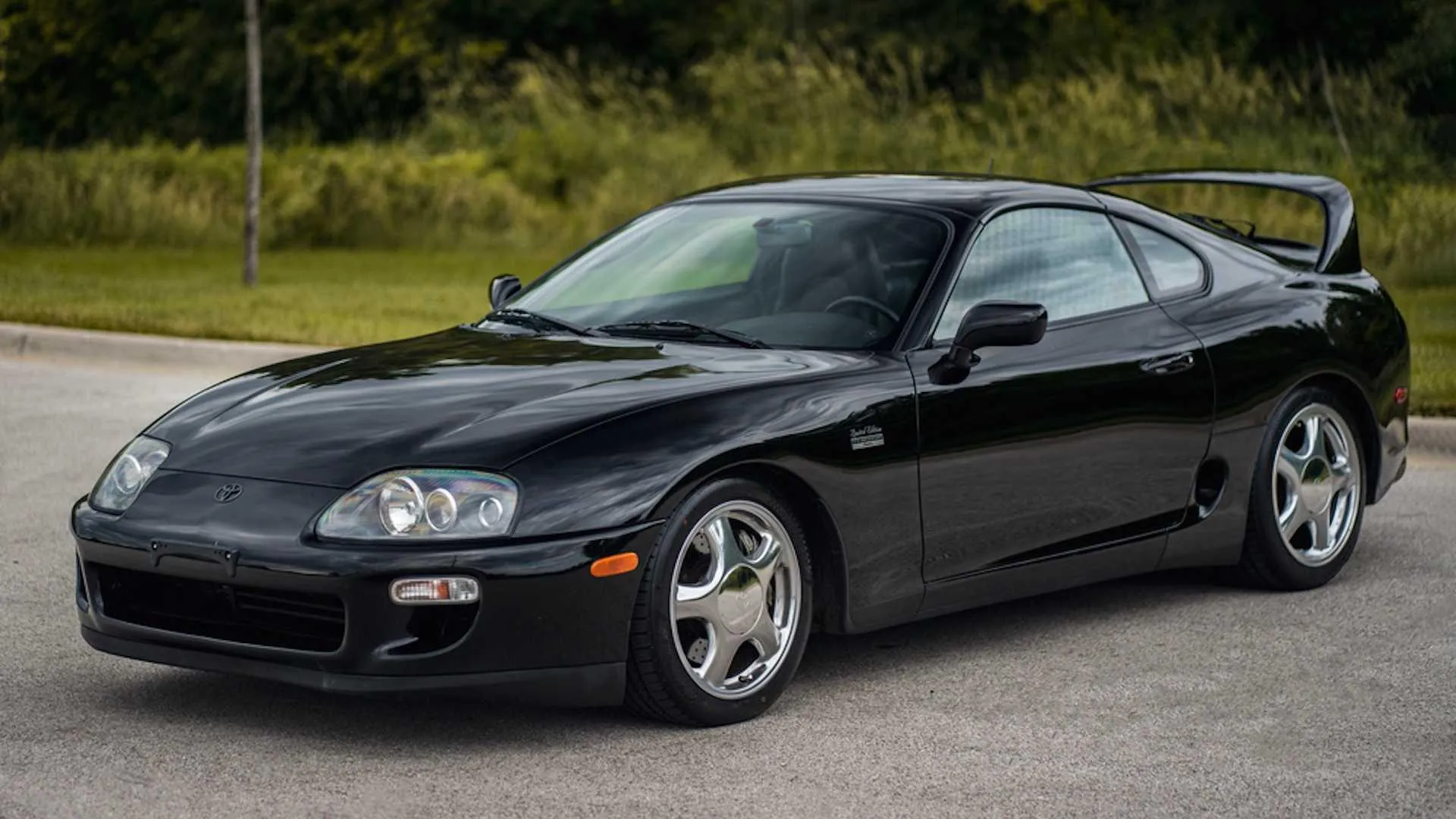
The sequential turbo system was genuinely clever engineering. One turbocharger delivered near-maximum torque from as low as 1,800 rpm, while the second engaged around 4,000 rpm for a smooth, linear power curve.
Toyota also focused heavily on cutting weight. The coupe received an aluminum hood, front cross member, and control arms to shed unnecessary mass. This brought the Supra down by over a hundred pounds compared to its predecessor.
Performance numbers were staggering for the era. It could sprint to 60 mph in just 4.6 seconds, quicker than every major rival by nearly half a second.
Top speed was electronically limited for most markets. The factory cap sat around 160 mph, though Toyota claimed an unrestricted Supra could approach 180 mph.
The transmission choices suited serious drivers. Buyers could choose a robust Getrag V160 six-speed manual or a four-speed automatic, depending on trim level.
Inside, the cabin felt purpose-built for the driver. The cockpit angled controls toward the driver’s seat, creating a true sports-car feel. Hollywood gave the Supra global fame beyond car culture. Its starring role in The Fast and the Furious turned it into a symbol of street racing.
The 2JZ engine’s tuning potential became legendary in its own right. Stock internals can handle massive power increases with the right supporting modifications.
Builders worldwide have pushed this engine far past stock limits. Fully built versions have exceeded 1,000 horsepower while remaining streetable and reliable. Collector demand has sent prices skyrocketing in recent years. Pristine, low-mileage Supras now command well over six figures at auction.
Specifications:
- Engine: 3.0L twin-turbo inline-six (2JZ-GTE)
- Horsepower: 276–326 hp (region dependent)
- Length: 177.8 inches
- Width: 71.3 inches
2. Nissan Skyline GT-R R34
Nicknamed “Godzilla,” the R34 GT-R remains one of the most worshipped Japanese cars ever built. It carried four decades of Skyline heritage into a single, focused package.
Nissan built only 11,578 R34 GT-Rs between 1999 and 2002, a much shorter production run than its R32 and R33 predecessors. This rarity only adds to its mystique today.
The engine was a continuation of a proven legend. At its core sat the RB26DETT, a 2.6-liter twin-turbocharged inline-six that Nissan had refined since the late 1980s.
Power figures followed the same gentlemen’s agreement that everyone else obeyed. Official output was capped at 276 horsepower, though independent testers often measured real figures well above 320 horsepower.
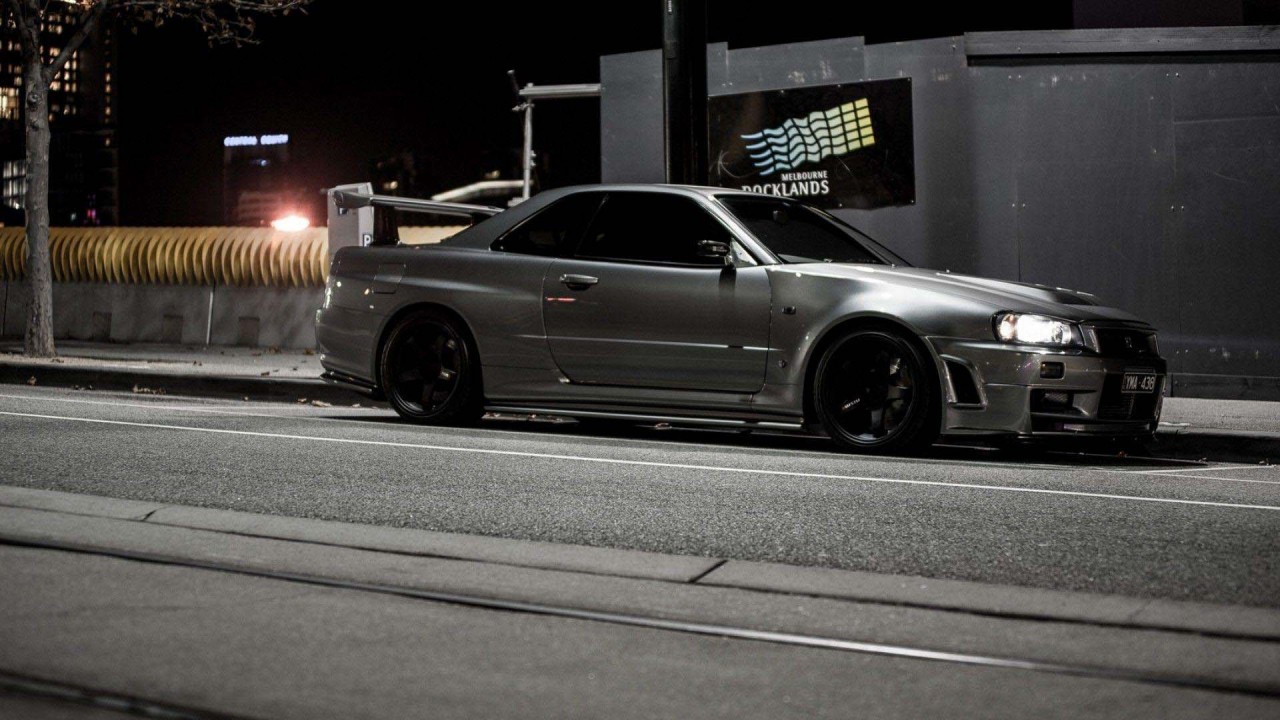
The turbo hardware was genuinely advanced for its time. Upgraded ball-bearing turbochargers gave the R34 sharp throttle response, avoiding the lag that plagued many rivals.
All-wheel drive set the GT-R apart from most Japanese rivals. The ATTESA ET-S Pro system splits torque intelligently between axles, helping average drivers feel like seasoned professionals behind the wheel.
This drivetrain added meaningful weight versus rear-drive competitors. The R34 tipped the scales at over 3,400 pounds, noticeably heavier than something like a Mazda RX-7.
Every single R34 GT-R came with a manual gearbox. All cars used six-speed manual transmissions, a feature that disappeared once the R35 generation arrived.
Special editions pushed the car’s racing pedigree further. Nissan built V-Spec II Nür and M-Spec Nür variants to celebrate the car’s Nürburgring testing history.
The V-Spec trim added visual and mechanical upgrades. It featured extra front air intakes, hood scoops, fender vents, and a carbon-fiber adjustable rear wing.
Tuning potential on the RB26 engine is enormous. Reports suggest the block can safely handle upgrades to 500 or even 600 horsepower without major reliability concerns.
The R34’s fame exploded internationally through movies and video games. Gran Turismo and the Fast and Furious franchise introduced it to an entire generation outside Japan. Import restrictions in the US kept the R34 rare for years. This scarcity has driven values into extraordinary territory for clean examples.
Specifications:
- Engine: 2.6L twin-turbo inline-six (RB26DETT)
- Horsepower: 276 hp (officially), 320+ hp (real-world)
- Length: Approximately 182.7 inches
- Width: Approximately 70.6 inches
3. Mazda RX-7 FD3S
The third-generation RX-7 took a completely different engineering path. While rivals leaned on turbocharged pistons, Mazda bet everything on the rotary engine.
Mazda was the only manufacturer still committed to the Wankel rotary, and it kept refining that formula into something even more efficient.
The styling matched the engine’s unconventional spirit. Born during an era obsessed with organic shapes, the FD featured rounded curves, pop-up headlights, and a long, sloped rear windscreen.
That distinctive low nose wasn’t just for looks. The compact rotary engine allowed a slim, low engine bay that a conventional inline engine simply couldn’t match.
Power came from a complex twin-turbo system. The 13B-REW was the first mass-produced sequential twin-turbo engine ever exported from Japan, eventually reaching 276 horsepower in later Japanese models.
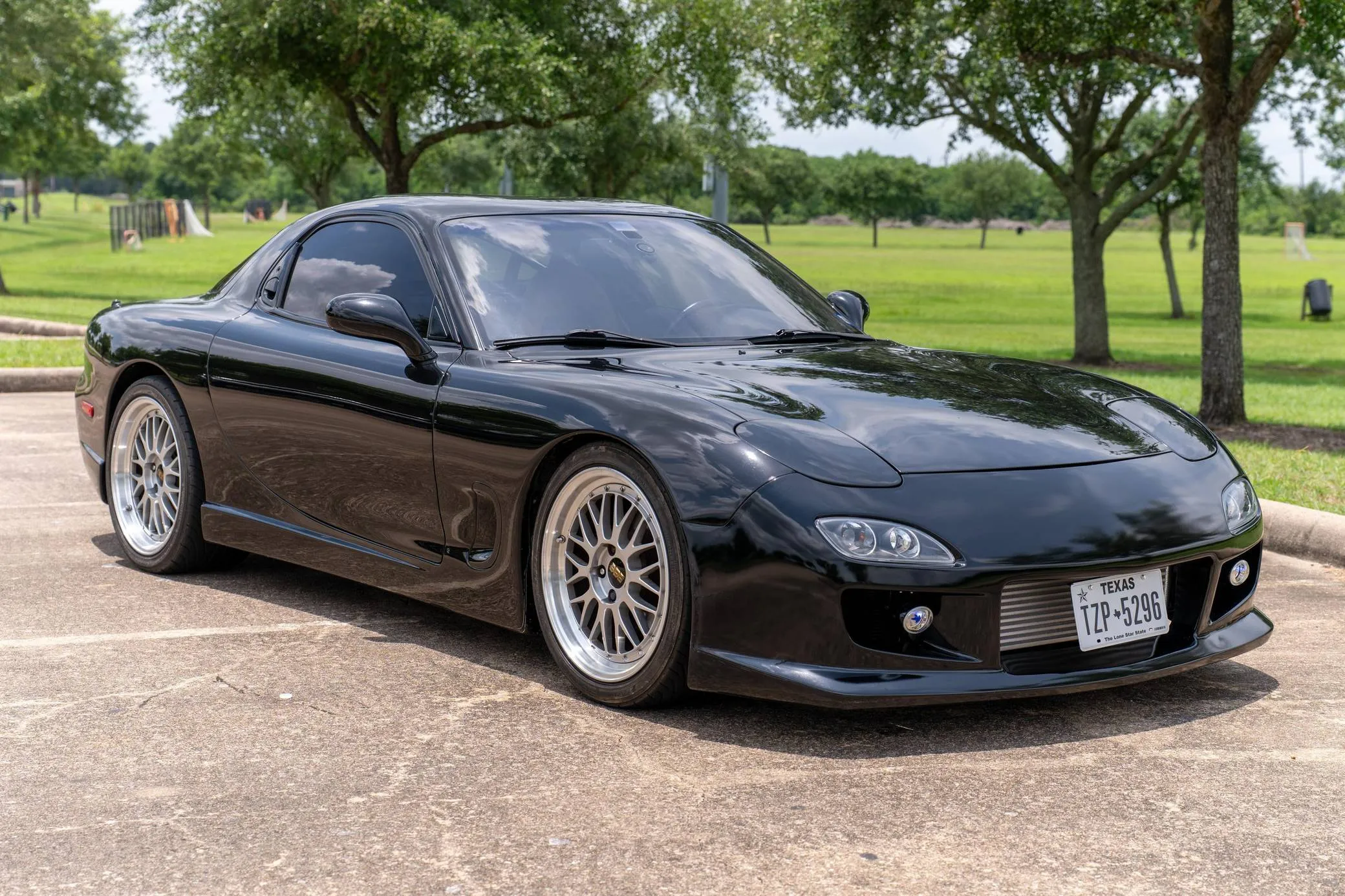
The sequential turbo setup was engineering wizardry for 1992. One turbo provided 10 psi of boost from just 1,800 rpm, while the second activated higher in the rev range for stronger top-end power.
This handoff between turbos required careful tuning. The changeover happened around 4,500 rpm, briefly dipping boost before delivering a surge of extra power that could catch drivers off guard.
US-market cars used slightly different power figures. American Series 8 turbo models produced around 255 to 276 horsepower, depending on model year and transmission.
Weight was the RX-7’s secret weapon. The rotary engine’s compact size allowed Mazda to achieve a near-perfect, lightweight chassis balance.
This translated directly into razor-sharp handling. Curb weight stayed under 2,900 pounds for most versions, far lighter than turbocharged rivals from Toyota or Nissan.
Limited editions appeared throughout its production run. Mazda built nine special editions, including the Type RZ and several Bathurst-badged variants celebrating Australian racing success.
Reliability concerns have always shadowed the rotary design. Apex seals and cooling systems demand careful maintenance that many owners historically neglected.
European sales never matched Japan or America. Only 1,152 examples officially reached Europe, with Germany, the UK, and Greece as the top markets. Despite slow original sales, the FD has become a design icon. Its silhouette remains instantly recognizable among car enthusiasts worldwide.
Specifications:
- Engine: 1.3L twin-turbo rotary (13B-REW)
- Horsepower: 252–276 hp (depending on model year)
- Length: Approximately 168.5 inches
- Width: Approximately 68.9 inches
4. Acura NSX (Honda NSX)
The NSX proved Japan could build a genuine supercar rival to Ferrari and Porsche. Honda treated it as a rolling showcase for Formula 1-derived engineering.
The NSX is a two-seater, mid-engine sports car that Honda manufactured in Japan from 1990 until 2006, marketed as the Acura NSX in North America and Hong Kong.
Its origin traces back to an unusual experiment. Honda engineers tested mid-engine layouts using a Honda City cut in half, with the engine mounted behind the driver.
The chassis broke new ground for production cars. It featured Honda’s first all-aluminum monocoque body, paired with double-wishbone suspension at both ends.
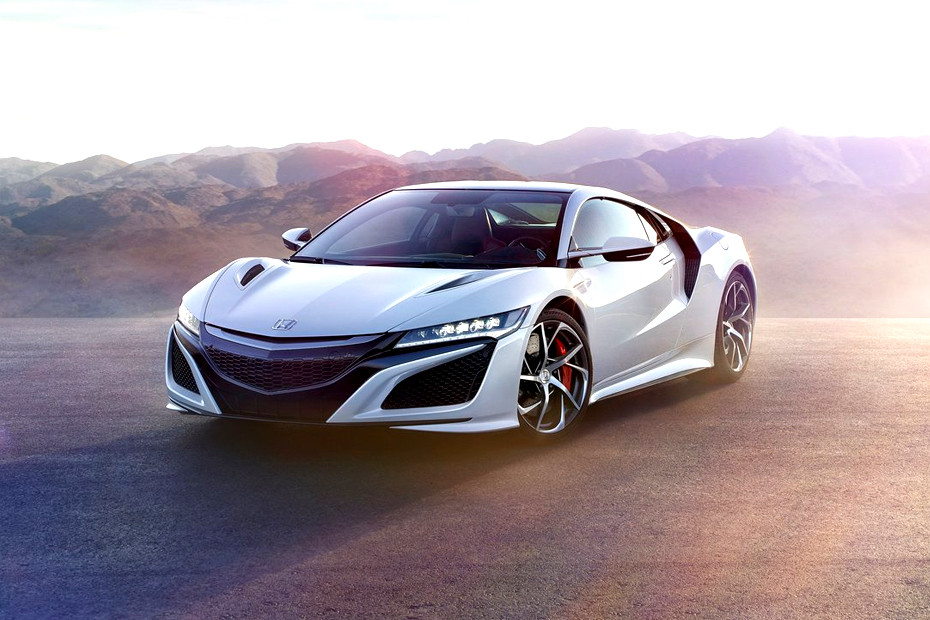
Power came from a high-revving naturally aspirated V6. The 3.0-liter VTEC engine produced 270 horsepower and 210 pound-feet of torque, using titanium connecting rods and forged pistons.
Performance felt closer to Italian exotics than typical Japanese sports cars. Road & Track recorded a 0-60 mph sprint in 5.7 seconds, calling it deserving of a place among elite performance cars.
Famous racing input shaped its handling character. Ayrton Senna personally influenced the chassis and suspension development before his tragic death in 1994.
Safety technology was ahead of its competitors. The NSX offered ABS brakes and traction control as standard equipment, both rare features at the time.
Despite being a true supercar, it remained shockingly practical. The trunk could hold two golf bags, and the cabin stayed quiet at cruising speed. Later years brought a larger, more powerful engine. A revised 3.2-liter engine arrived for manual transmission models, boosting the power-to-weight ratio significantly.
Special performance variants pushed things further. The NSX-R and Type S stripped weight and sharpened handling for serious track use. Production numbers stayed deliberately low throughout its run. This scarcity, combined with Honda’s reputation for reliability, has made the NSX hugely collectible today.
Unlike Italian rivals, the NSX never demanded constant maintenance. Owners could drive it daily without worrying about temperamental electronics or fragile components.
This blend of usability and performance redefined what a supercar could be. It forced established manufacturers to rethink their approach to everyday drivability.
Specifications:
- Engine: 3.0L naturally aspirated V6 (C30A, VTEC)
- Horsepower: 270 hp
- Length: 173.4 inches
- Width: 71.3 inches
Also Read: How Average Repair Costs Jumped 30% Since 2020
5. Mitsubishi 3000GT VR-4
The 3000GT VR-4 never achieved the fame of its rivals, but its technology was arguably more advanced than anything else on this list. It packed nearly every available gadget into one car.
The VR-4, standing for Viscous Realtime 4WD, came equipped with a twin-turbocharged 3.0-liter DOHC V6 engine producing 300 horsepower at 5,500 rpm.
Later facelift models pushed output even higher. By 1994, the VR-4 reached 320 horsepower and 315 pound-feet of torque, figures that rivaled the segment’s best.
This was no simple turbocharged engine swap. The VR-4 featured full-time all-wheel drive, four-wheel steering, and active aerodynamics, all working together.
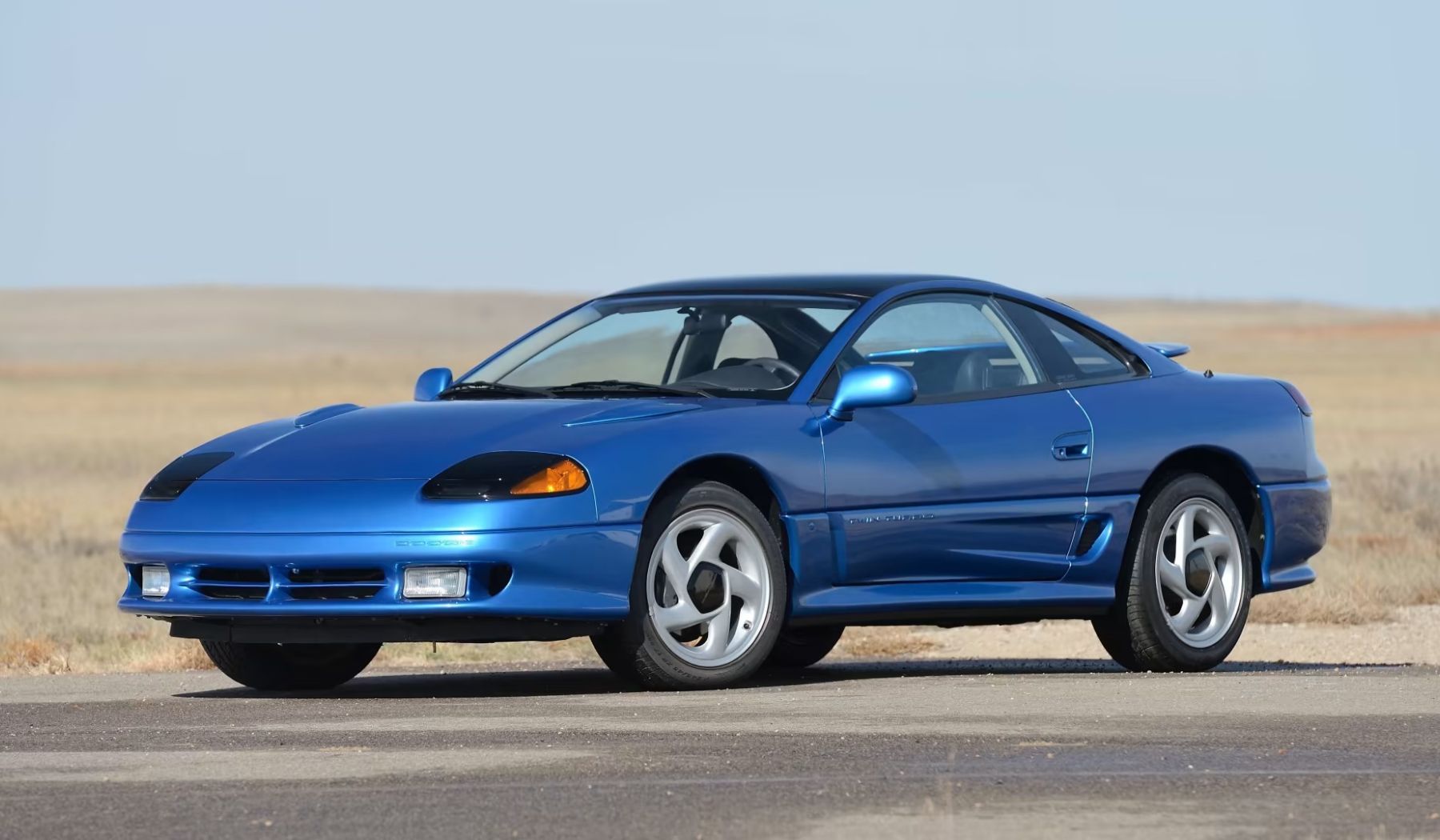
Performance comparisons embarrassed pricier competitors. In a 1991 AutoWeek test, the VR-4 hit 60 mph in 5.1 seconds, beating the significantly more expensive Acura NSX in the same test.
Acceleration figures stayed strong throughout production. Independent testing measured 0-60 mph in roughly 4.8 to 5.4 seconds, depending on model year and conditions.
Braking received real attention during the mid-cycle update. Facelift models gained two-piston rear calipers and larger front brakes that resisted fade better than earlier versions.
The VR-4 wasn’t a lightweight machine by any means. Curb weight reached approximately 3,760 pounds, noticeably heavier than rear-drive rivals like the RX-7.
A six-speed manual transmission handled all that power. This gearbox paired well with the torque output, allowing strong acceleration from a standing start.
Mitsubishi also sold a badge-engineered twin through Chrysler. The Dodge Stealth shared mechanicals with the 3000GT but featured different styling cues designed by Chrysler.
Despite its impressive spec sheet, the VR-4 never reached cult status like the Supra or GT-R. Heavier weight and complex electronics held back its reputation among purists.
Modern enthusiasts have started reassessing the car more favorably. Its blend of luxury, technology, and genuine performance feels ahead of its time.
Today, clean examples remain relatively affordable compared to their 1990s rivals. This makes it one of the more attainable entries on this entire list.
Specifications:
- Engine: 3.0L twin-turbo V6
- Horsepower: 300–320 hp
- Length: 181.1 inches
- Width: 72.4 inches
6. Subaru Impreza 22B-STi
The 22B-STi exists because of rally racing glory. Subaru built it purely to celebrate a major motorsport milestone, with little concern for profit. Subaru created the 22B to celebrate three consecutive manufacturers’ titles in the FIA World Rally Championship, alongside the company’s 40th anniversary.
Rarity was baked into the car from day one. Only 424 units were ever produced, with 400 staying in Japan, 16 going to the UK, 5 to Australia, and 3 built as prototypes.
Demand instantly outpaced that tiny supply. All Japanese-market units sold out within 30 minutes to 48 hours of going on sale, depending on the dealership.
The engine was specially enlarged for this model alone. A 2.2-liter EJ22G turbocharged flat-four replaced the standard 2.0-liter unit, built specifically to boost low-end torque.
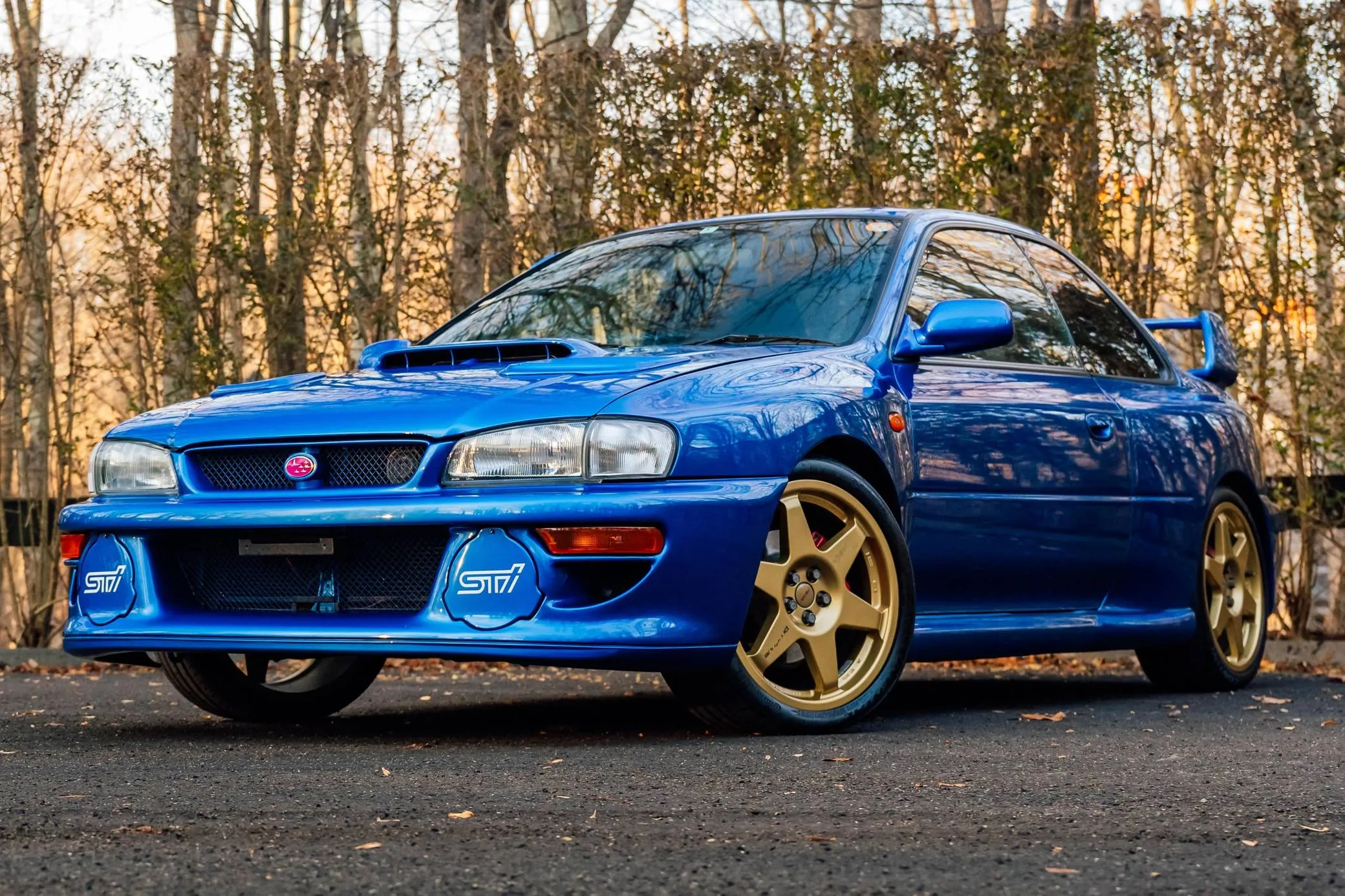
Official output followed Japan’s usual horsepower restrictions. The engine was rated at 276 horsepower and 268 pound-feet of torque, though actual output was widely believed to exceed those figures.
Acceleration matched its rally-bred reputation. The 22B reached 60 mph in approximately 4.7 seconds, an impressively quick time for 1998.
Its wide-body styling wasn’t just for aggressive looks. The fender flares were taken from the WRC car designed by Peter Stevens, widening the body by 80 millimeters.
Suspension came from a renowned European supplier. Bilstein dampers provided the suspension tuning, paired with upgraded brakes for serious driving demands.
The drivetrain reflected Subaru’s rally know-how directly. All-wheel drive with a limited-slip rear differential gave the car incredible all-weather traction.
Weight stayed impressively low for an all-wheel-drive performance car. The 22B tipped the scales at just 1,270 kilograms, roughly 2,800 pounds. Some commemorative units went to genuine rally legends. Drivers Colin McRae and Nicky Grist each received special #000-plaqued cars, with a third going to Prodrive’s David Lapworth.
Today, the 22B sits among the most valuable Japanese cars ever produced. Its tiny production numbers and racing pedigree push auction prices into rarefied territory.
Specifications:
- Engine: 2.2L turbocharged flat-four (EJ22G)
- Horsepower: 276 hp (officially)
- Length: 171.9 inches
- Width: 69.7 inches
7. Honda Civic Type R EK9
The EK9 proved that a hot hatchback could be just as thrilling as a dedicated sports car. Honda stripped away comfort and chased pure driving engagement instead.
The Honda Civic Type R debuted in September 1997, becoming the third model to receive Honda’s Type R badge after the NSX and Integra.
This wasn’t a turbocharged engine like most rivals on this list. The B16B engine produced 182 horsepower at 8,200 rpm from just 1.6 liters of displacement, an extraordinary figure for a naturally aspirated engine.
That output per liter was genuinely class-leading. At 116 horsepower per liter, it represented one of the highest specific outputs of any naturally aspirated production engine of its time.
The engine itself was hand-built with serious attention to detail. It featured a hand-ported cylinder head, lightweight valves, custom high-lift camshafts, and a fully balanced custom crankshaft.
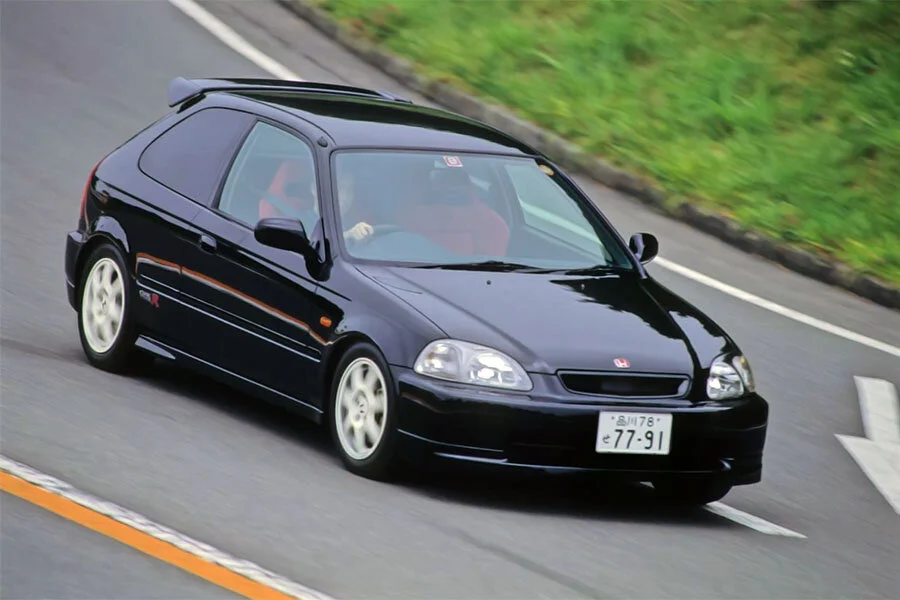
Weight reduction was the EK9’s defining philosophy. Curb weight came in at just 1,050 kilograms, around 2,315 pounds, thanks to lightweight panels and a stripped interior.
Drivers connected to the road through a precise gearbox. Power went through a close-ratio five-speed manual transmission and a front helical limited-slip differential.
Body rigidity received special engineering attention as well. The pressed steel monocoque was extensively seam-welded to improve chassis stiffness for serious handling performance.
This was a Japan-only model from the very beginning. Unlike the international Integra Type R, the Civic Type R was sold exclusively in the Japanese domestic market.
Interior changes reinforced its track-focused intentions. Red Recaro seats, a titanium shift knob, and a leather Momo steering wheel set the cabin apart from regular Civics.
Total production remained tightly limited throughout its run. Honda built just 16,241 units across the EK9’s full production span from 1997 to 2000.
The B16B’s redline encouraged genuinely aggressive driving. The engine redline extended to 8,400 rpm, rewarding drivers who kept revs high through corners.
This car established the template every future Type R would follow. Its formula of light weight, high revs, and sharp handling defined Honda performance for decades.
Specifications:
- Engine: 1.6L naturally aspirated inline-four (B16B)
- Horsepower: 182–185 hp
- Length: 164.6 inches
- Width: 66.7 inches
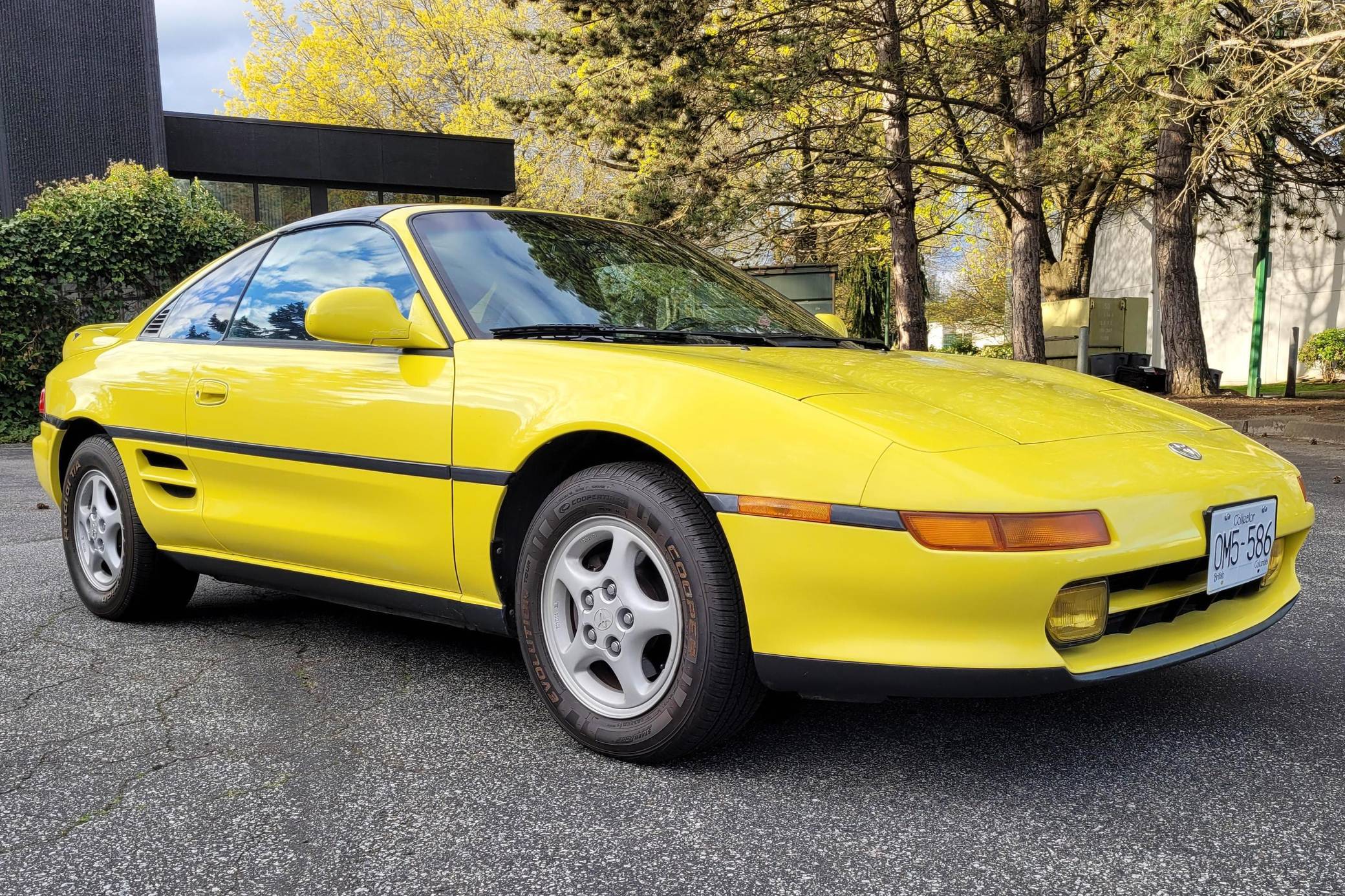
8. Toyota MR2 Turbo (SW20)
The MR2 Turbo gave everyday enthusiasts a taste of mid-engine handling at a fraction of supercar prices. Its Ferrari-inspired styling only added to the appeal.
The MR2 underwent a complete redesign in 1989, growing larger and gaining weight compared to its predecessor due to a more spacious cabin and sturdier components.
This new shape drew obvious comparisons to Italian exotics. Some called the SW20 a “baby Ferrari” thanks to design cues resembling the Ferrari 308 GTB or 348.
Toyota offered multiple engine options across the lineup. The turbocharged GT-S trim used a 2.0-liter 3S-GTE engine producing 218 horsepower, with manual transmission as the only choice.
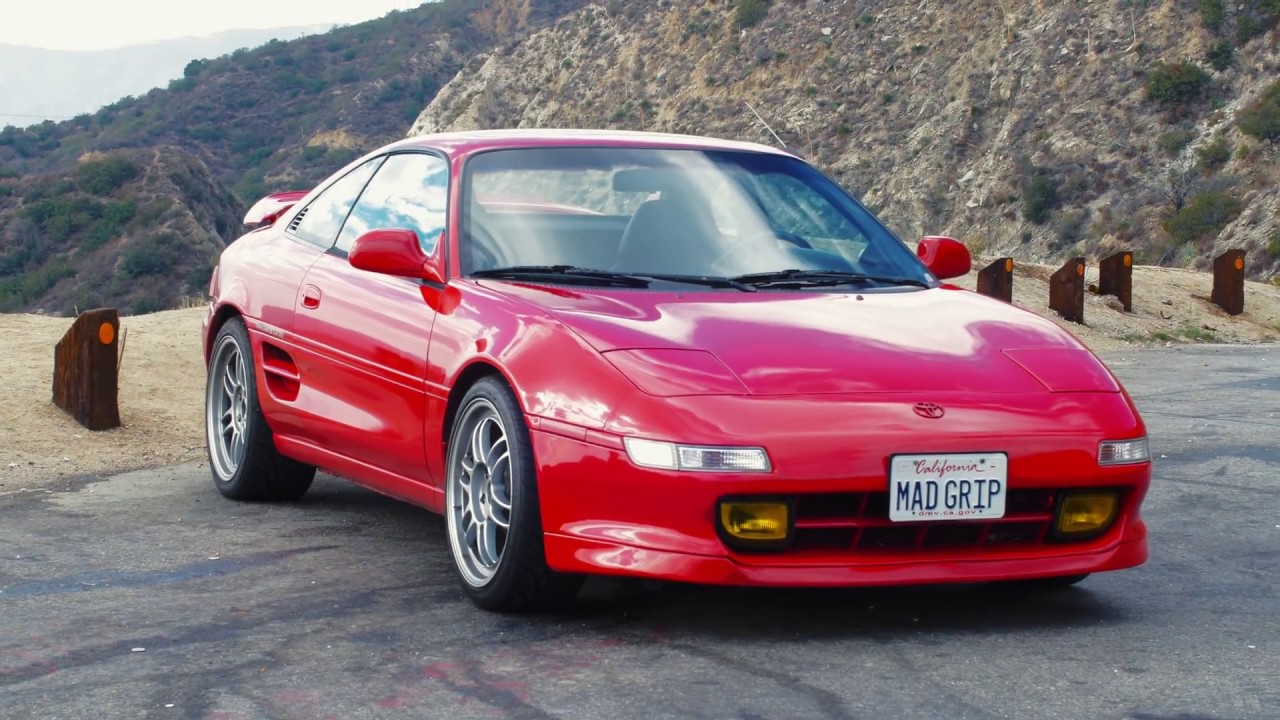
US-market turbo versions had slightly adjusted performance figures. American buyers could hit 60 mph in 6.1 seconds and complete the quarter mile in 14.7 seconds.
Handling benefited from genuine professional racing input. Toyota consulted Formula One, NASCAR, and Le Mans veteran Dan Gurney to fine-tune the chassis dynamics.
Mechanical differences separated turbo models from naturally aspirated versions. Turbo cars used a stronger E153 gearbox, a larger fuel pump, a bigger radiator, and an air-to-air intercooler system.
Braking hardware also varied based on engine choice. Models equipped with the 3S-GTE or 3S-GE engines received twin-piston front calipers for improved stopping power.
Cornering grip was a genuine strength of the chassis. Revision 1 turbo cars pulled 0.89g on the skidpad, with later revisions improving to between 0.90g and 0.94g.
Television proved the MR2’s competitiveness against serious rivals. Japanese show Best Motoring raced a stock GT-S Turbo against other domestic contemporaries at Tsukuba Circuit, with the MR2 winning the comparison.
Tire technology played a role in its sharp handling reputation. Later revisions used special Yokohama A022 tires, the same compound variant fitted to the Honda NSX.
Aftermarket support extended the car’s racing legacy further. Toyota Racing Development offered an official wide-body conversion kit in 1998, widening the car by 100 millimeters total.
Some owners pushed the platform into serious motorsport territory. Toyota’s works team, SARD, built a heavily modified, lengthened MR2 with a twin-turbo V8 producing 600 horsepower for Le Mans competition.
Reputation-wise, the SW20 earned a slightly dangerous nickname in its early form. The original suspension geometry could catch inexperienced drivers off guard mid-corner.
Despite that early reputation, the MR2 Turbo remains one of the most affordable mid-engine sports cars from the entire decade. It offers a genuine taste of exotic handling without exotic ownership costs.
Specifications:
- Engine: 2.0L turbocharged inline-four (3S-GTE)
- Horsepower: 218 hp
- Length: 164.2 inches
- Width: 66.9 inches
Also Read: The 10 Most Expensive Car Repairs and What Triggers Them
