
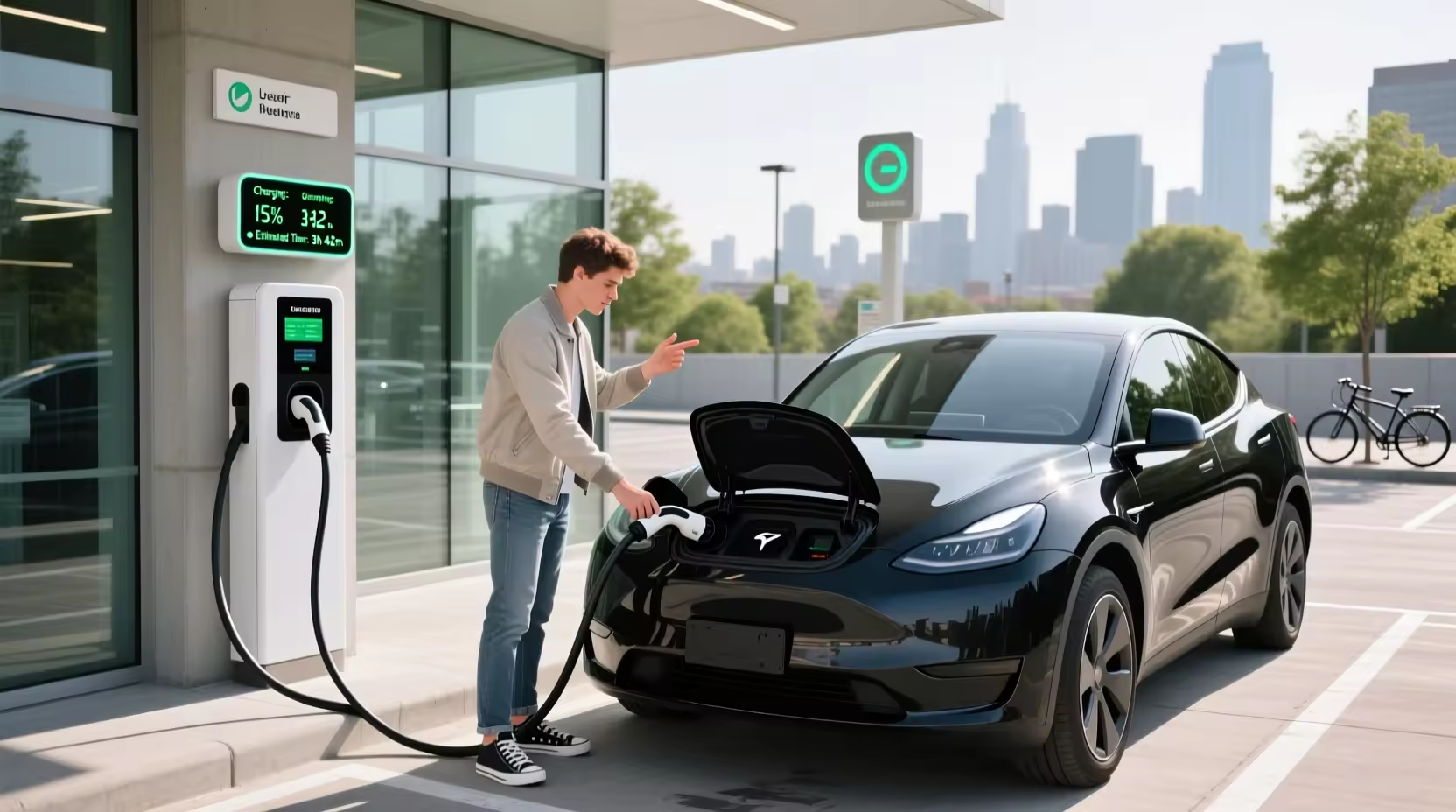
Electric vehicles are often marketed as cheaper to fuel than gasoline-powered cars, and in many cases, that is true. But the real cost of charging an EV depends heavily on where and when the vehicle is charged, the local electricity rate, the vehicle’s efficiency, and the type of public charger used.
A driver who charges mostly at home can spend a fraction of what another EV owner spends on public fast chargers each week.
Two people driving the same vehicle, covering the same number of miles, can have dramatically different monthly energy bills simply because one plugs in overnight at home while the other relies on DC fast charging stations.
That difference is becoming increasingly important as more buyers consider electric vehicles without access to private garages or home charging equipment.
The U.S. Department of Energy says about 80% of EV charging happens at home, which helps explain why home charging remains central to the ownership experience for many drivers.
Public charging is useful, and it is essential for road trips, apartment residents, and drivers without home access. But convenience has a price. A fast charger can cost several times more per kilowatt-hour than residential electricity, especially in expensive electricity markets or at stations with premium pricing.
The simplest way to understand EV charging costs is to stop thinking in terms of filling a tank. EV owners buy electricity by the kilowatt-hour, or kWh. The price per kWh determines the bill, while the vehicle’s efficiency determines how far that electricity will take it.
Also Read: 10 SUVs Ranked by Number of Luxury Features
The Basic Math Behind EV Charging
Every EV battery stores electricity in kilowatt-hours. A smaller EV may have a usable battery capacity of around 50 kWh. A midsize electric sedan or crossover may have 70 to 85 kWh available. Larger electric trucks and luxury SUVs can carry battery packs well above 100 kWh.
To estimate the cost of charging, multiply the electricity price by the amount of energy added to the battery. For example, if an EV needs 60 kWh to recharge and electricity costs $0.15 per kWh, the energy cost is the following:
60 kWh × $0.15 = $9
If that same vehicle uses a public fast charger costing $0.45 per kWh, the same 60 kWh charge costs the following:
60 kWh × $0.45 = $27
The vehicle did not change. The battery did not change. Only the electricity source changed. The U.S. Department of Energy uses a similar example, noting that a 54-kWh battery charged at $0.11 per kWh would cost roughly $6 to recharge from empty.
In real life, drivers rarely charge from zero to 100%. Most EV owners plug in periodically, often keeping the battery between roughly 20% and 80% for daily use. But the math remains the same.
The important figure is not the percentage shown on the dashboard. It is the number of kilowatt-hours delivered and the rate paid for each one.
Home Charging Is Usually the Cheapest Option
For most EV owners, charging at home is the lowest-cost way to power the vehicle. Residential electricity rates vary widely by state, city, utility company, and time of day. Some households pay close to $0.10 per kWh, while others, particularly in high-cost electricity markets, may pay $0.25 per kWh or more.
Even with those differences, home charging usually costs less than public charging because homeowners pay their utility rate rather than a commercial charging provider’s rate.
According to Edmunds, charging a 65-kWh EV battery at home would cost about $11 at an electricity price of $0.17 per kWh.
Using that same $0.17 rate, an EV that consumes 30 kWh per 100 miles would cost about $5.10 per 100 miles to drive. That is a major advantage compared with gasoline in many markets.
A driver covering 1,000 miles per month in that EV would use roughly 300 kWh of electricity. At $0.17 per kWh, the monthly charging cost would be about $51 before accounting for minor charging losses.
For households with lower electricity prices or special overnight EV rates, the savings can be even greater.
Time-of-Use Plans Can Make Home Charging Much Cheaper
The home-charging equation becomes even more attractive when a utility offers time-of-use pricing.
Under these plans, electricity costs more during high-demand hours and less during overnight periods when full demand falls. An EV owner who schedules charging after midnight may pay substantially less than someone who plugs in during the early evening.
This is one reason many EVs include charging schedules in their mobile apps and dashboard menus. The owner can tell the vehicle to begin charging at a specific time rather than immediately drawing electricity when it is plugged in.
A household paying $0.25 per kWh during peak hours but $0.10 per kWh overnight can reduce charging costs by 60% simply by changing the charging schedule.
For a vehicle using 300 kWh per month, that difference can mean paying $75 at the higher rate or only $30 at the overnight rate.
The savings become more meaningful for drivers with long commutes, larger battery packs, or multiple EVs in the same household.
The U.S. Department of Energy notes that EV electricity costs can range from roughly $0.03 to $0.10 per mile, depending on the vehicle and electricity price.
That wide range shows why owners should examine their local utility bill before assuming every EV will cost the same amount to operate.
Level 1 Charging Costs the same per kWh but takes longer.
Many EVs can charge from a standard 120-volt household outlet using a Level 1 charging cord.
Level 1 charging is slow. It may add only a few miles of driving range per hour, making it impractical for some high-mileage drivers. But the electricity itself does not cost more simply because the charger is slower.
If a homeowner pays $0.15 per kWh, Level 1 charging still uses electricity priced at $0.15 per kWh. The difference is time.
For drivers who travel fewer than 40 or 50 miles per day, Level 1 charging may be enough to recover daily driving needs overnight. That can eliminate the need to purchase and install a Level 2 charger immediately.
However, Level 1 charging can be less efficient because energy is used to operate the vehicle’s charging electronics over a longer period. Temperature also matters. Charging in cold weather can increase energy use because the vehicle may need to warm the battery.
Still, for low-mileage drivers with access to a safe household outlet, Level 1 charging can be one of the cheapest EV ownership strategies.
Level 2 Charging Adds Upfront Installation Costs
Level 2 charging uses a 240-volt circuit, similar to the electrical connection used by many dryers, ovens, or workshop equipment. It can add much more range per hour than a standard household outlet and is the preferred home-charging solution for many EV owners.
The electricity rate remains the same as the household utility rate. The additional cost comes from buying and installing the equipment.
A Level 2 charging unit can cost several hundred dollars, while installation costs vary depending on the home’s electrical panel, distance from the garage, permit requirements, wiring needs, and local labor rates.
Edmunds estimates that a home charging unit can cost from roughly $200 to more than $1,000, while installation may cost around $800 to $1,300 in typical cases.
Some homes require only a simple outlet and modest wiring work. Others need panel upgrades, trenching, longer cable runs, or more extensive electrical work. Those situations can raise the total considerably.
The installation cost should be viewed as part of EV ownership, not part of every charging session. A driver who keeps an EV for many years and charges frequently can spread that cost over thousands of miles. A driver leasing an EV for two or three years may need to consider whether the convenience justifies the investment.
Public Level 2 Charging Can Be Cheap, but It Is Not Always Free
Public Level 2 chargers are common at shopping centers, offices, hotels, parking garages, apartment buildings, and municipal locations.
Some are free because businesses use them as an amenity. Others charge by the kWh, by the hour, or through a combination of connection fees and parking charges.
Free public charging sounds ideal, but it often comes with limitations. The charger may be slow, occupied, restricted to customers, or located somewhere the driver would not otherwise visit. Some stations also charge idle fees if the vehicle remains connected after charging is complete.
Paid Level 2 charging can still be cheaper than DC fast charging, but the price varies widely. A workplace charger may offer low-cost electricity. A hotel may charge for an overnight stay. A commercial parking garage may charge both for parking and electricity.
Drivers should always check whether the station bills by energy or by time. A vehicle that charges slowly may be a poor fit for time-based pricing because it could spend longer connected while receiving the same amount of energy as a faster-charging vehicle.
DC Fast Charging Is Convenient, but It Can Be Expensive
DC fast charging is what makes long-distance EV travel possible. These chargers can add substantial range in a short time, depending on the vehicle, battery temperature, charger output, and charging curve.
Modern EVs with 800-volt systems can add meaningful range quickly under ideal conditions, although real charging speed varies significantly by model. The convenience comes at a higher price.
Public fast-charging rates often fall between roughly $0.30 and $0.50 per kWh, although pricing can be higher in expensive electricity markets or lower for members using subscription plans.
For a 77-kWh battery, Recurrent estimates that a full DC fast charge can cost roughly $23 to $33, while charging a similar battery at average residential rates may cost around $8 to $12.
That means public fast charging can cost four to six times more than home charging. For occasional road trips, the difference may be acceptable. For an owner who depends on public fast charging every week, it can change the entire financial case for owning an EV.
Fast-Charging Costs Can Rival Gasoline
One of the biggest misconceptions about EV ownership is that electric driving is always dramatically cheaper than gasoline. That is not always true.
A highly efficient EV may still be economical on public fast charging. But a heavy electric truck or large SUV consuming 40 to 50 kWh per 100 miles can become expensive to operate when charging costs approach $0.50 per kWh.
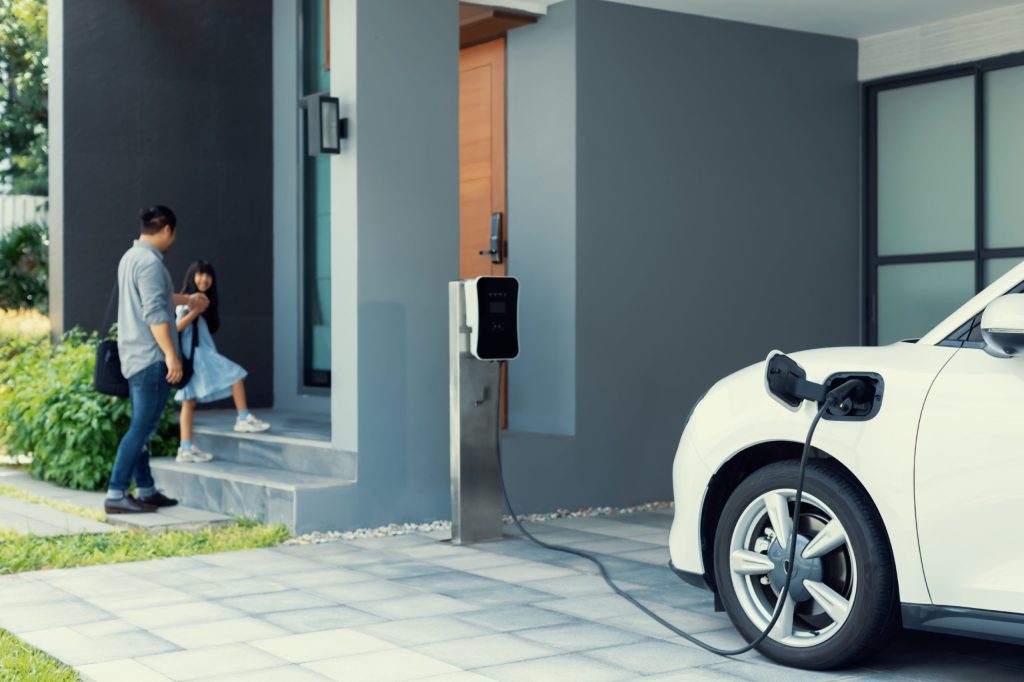
At 45 kWh per 100 miles and $0.50 per kWh, electricity costs $22.50 per 100 miles. That can be similar to, or even higher than, the fuel cost of an efficient gasoline hybrid, depending on local fuel prices.
This does not mean EVs are a poor choice. It means the charging mix matters. An EV owner who charges 85% of the time at home and 15% at fast chargers will have a very different operating cost from someone who uses public fast chargers for nearly every session.
The cheapest EV ownership experience is usually built around home or workplace charging, with fast charging used primarily for travel and occasional convenience.
Charging Losses Are a Small but Real Cost
The battery does not receive every kilowatt-hour pulled from the wall. Some electricity is lost during the charging process as heat and through the operation of the vehicle’s onboard charger, battery cooling system, and related electronics. The amount varies by vehicle, charging speed, temperature, and battery condition.
That means a 70-kWh battery may require more than 70 kWh from the utility meter to move from empty to full.
For a simple estimate, owners can add a modest buffer to their calculations. If the battery receives 60 kWh, the charging session may draw several additional kWh from the wall.
This is another reason electricity bills may not match the exact battery capacity listed in a vehicle’s specifications.
The difference is usually not large enough to erase home-charging savings, but it should be considered when calculating long-term costs.
Apartment Residents Face a Different Equation
EV ownership becomes more complicated for drivers who rent apartments, live in condominiums, or lack dedicated parking.
Without home charging, the owner may rely on public Level 2 stations, workplace charging, or DC fast charging. That can reduce convenience and increase operating costs.
The Department of Energy has emphasized that most charging happens at home, which means access to residential charging remains a major advantage for EV owners.
For apartment residents, the best solution may be a workplace charger or a nearby Level 2 station where the vehicle can sit for several hours while the driver works, shops, or sleeps.
Relying only on DC fast charging is possible, but it is usually the most expensive and least convenient ownership pattern. It also requires planning around charger availability, station reliability, charging speed, and potential idle fees.
Before buying an EV, drivers without home charging should map nearby stations and compare their posted prices. The decision should be based on real local charging access, not assumptions.
Charging an EV at home is usually far cheaper than using public stations because residential electricity rates are generally lower than commercial charging prices. A typical home charge may cost roughly $8 to $12 for a midsize EV battery, while a comparable DC fast charge can cost $23 to $33 or more.
The difference becomes especially important over time. A driver who charges overnight at home, takes advantage of lower time-of-use rates, and uses public fast charging mainly for road trips can enjoy some of the lowest energy costs in the automotive market.
A driver who relies on fast chargers for everyday charging may still benefit from EV ownership, but the savings compared with gasoline can shrink substantially.
The real question is not simply whether an EV is cheaper to charge. It is where you will charge it most often.
Also Read: 10 Cars Faster Than a Lamborghini for Under $50,000
