
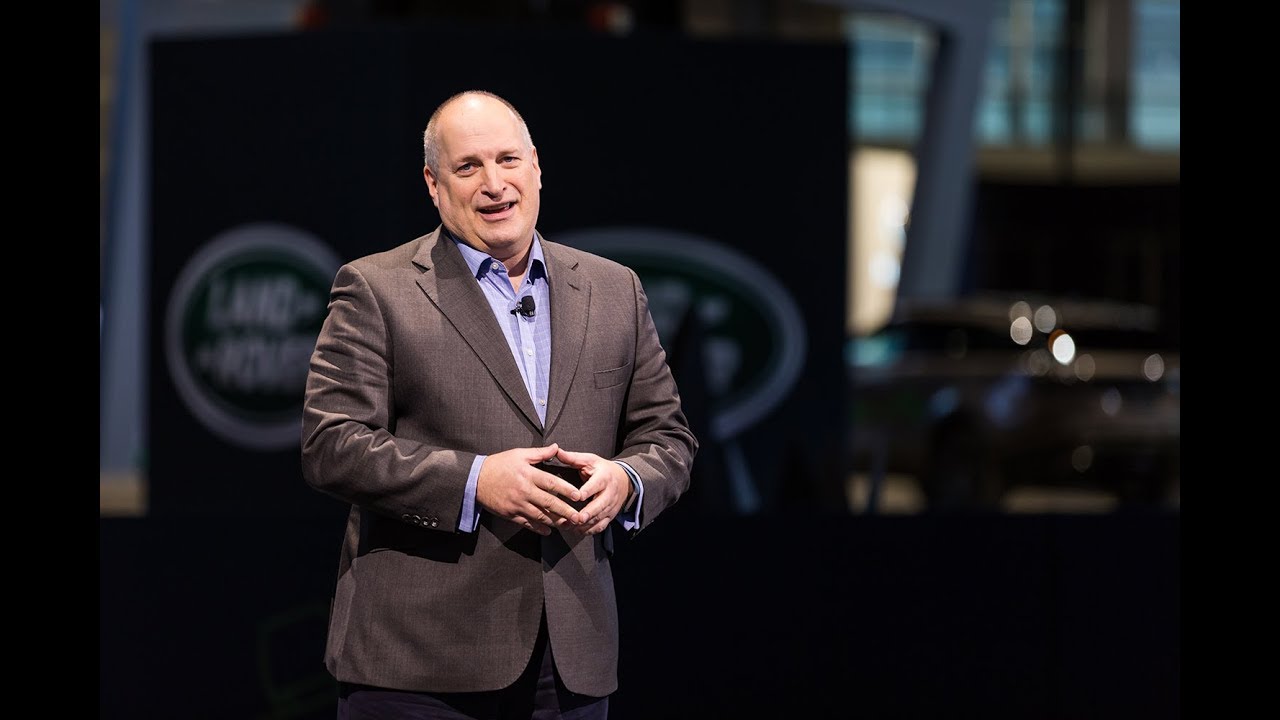
Jaguar Land Rover is entering a major transition period in the United States as Joe Eberhardt steps down after leading the company’s North American operations for more than 13 years.
His departure comes at a sensitive time for JLR, which is managing the relaunch of Jaguar as an electric luxury brand, sustaining Land Rover’s momentum in the premium SUV market, and preparing for a new technical collaboration with Stellantis.
Eberhardt has been one of the longest-serving senior executives in JLR’s modern North American history. He joined the company in December 2013 as president and chief executive officer of Jaguar Land Rover North America, taking responsibility for sales, service, and marketing across the United States and Canada.
JLR’s official announcement at the time described him as an executive with extensive experience in luxury sales, dealer relations, marketing, and global automotive operations.
The company has not yet provided full details about its successor or the exact structure of the transition. Still, the timing places his departure alongside a wider reshaping of JLR’s business.
The manufacturer is moving into a new phase in which it must balance its traditional luxury and off-road identity with the demands of electrification, software development, supply-chain control, and stricter emissions regulations.
At the same time, JLR has confirmed a collaboration with Stellantis, the automotive group behind Jeep, Ram, Dodge, Chrysler, Fiat, Alfa Romeo, Peugeot, Citroën, and Maserati.
The partnership is expected to give JLR access to selected technology, engineering resources, or supply-chain opportunities as both companies work through the high costs of electrification.
Also Read: 10 Trucks That Held Their Value Better Than Most Over the Last Decade
Joe Eberhardt’s 13-Year Run at JLR North America
Joe Eberhardt arrived at Jaguar Land Rover North America at a crucial point for both brands. Land Rover was gaining traction in the United States with the Range Rover, Range Rover Sport, and Evoque, while Jaguar was attempting to rebuild its position in the luxury market with the F-Type, XE, and later the F-Pace SUV.
JLR confirmed in its December 2013 leadership announcement that Eberhardt had previously held executive roles at Chrysler Group, DaimlerChrysler UK, Mercedes-Benz USA, and Daimler-Benz AG. He also had experience in consulting, retail, and technology businesses.
That background was particularly useful for a company that needed to strengthen its retailer network while competing against much larger luxury manufacturers.
When he took the job, JLR had just recorded strong growth in the United States. Land Rover sales were up 15 percent in 2013, Jaguar sales rose 41 percent, and the two brands combined for nearly 67,000 deliveries, according to JLR’s North American release.
Eberhardt’s challenge was to build on that momentum without allowing the brands to lose their distinctive identities.
His leadership period included the expansion of the Land Rover lineup, the return of the Defender to the U.S. market, and the transformation of Range Rover into a broader luxury sub-brand.
The Defender was especially important because it filled a long-standing gap in the company’s lineup. JLR had not sold the iconic off-road vehicle in the United States for more than two decades before the modern Defender arrived.
In a 2020 interview with MotorTrend, Eberhardt said the Defender would help clarify the purpose of Land Rover’s three main product families: Range Rover, Discovery, and Defender.
He described Range Rover as the luxury flagship, Discovery as the practical and versatile range, and Defender as the most durable and off-road-focused part of the business. That strategy helped Land Rover give each model family a clearer identity in a crowded premium SUV market.
Land Rover Became the Center of JLR’s U.S. Business
During Eberhardt’s time in charge, Land Rover became the dominant force within JLR’s North American business. The Range Rover, Range Rover Sport, Defender, and Discovery Sport helped the brand benefit from the continuing shift toward SUVs and luxury crossovers.
The Defender’s arrival was one of the most consequential launches of his tenure. The vehicle had a loyal following in the United States even during the years when it was not officially sold there. Its modern replacement had to satisfy traditional enthusiasts while also meeting contemporary expectations for safety, comfort, connectivity, and premium design.
JLR used the Defender to attract buyers who wanted something more rugged than a conventional luxury SUV. The model became a key part of the company’s U.S. sales strategy because it appealed to outdoor-oriented customers without abandoning the premium image associated with the Land Rover name.
Eberhardt also had to manage the continued growth of Range Rover as a luxury brand within the larger Land Rover organization. Range Rover models moved further into the high-end market, competing not only with other SUVs but also with luxury sedans, sports cars, and high-priced electric vehicles.
That positioning was not accidental. JLR understood that it could not compete directly with the production scale of companies such as BMW, Mercedes-Benz, Toyota, or Volkswagen. Instead, it focused on heritage, design, and premium pricing.
In comments reported by Car and Driver in 2024, Eberhardt said competing in the center of the mainstream luxury market required scale that JLR did not possess.
He argued that the company needed to focus on the part of the market that valued heritage, brand pedigree, and distinctive design. That view became increasingly important as JLR began planning its next generation of electric vehicles.
Jaguar Faces Its Most Difficult Reinvention Yet
While Land Rover gained momentum, Jaguar faced a much more difficult period. The brand’s sedan and sports-car lineup struggled to match the sales volumes of established German luxury competitors.
Jaguar attempted to expand through SUVs such as the F-Pace, E-Pace, and I-Pace, but its U.S. sales declined sharply after reaching a high point earlier in the previous decade.
Jaguar’s situation became even more complicated when JLR decided to end production of its existing lineup and prepare the brand for a complete relaunch.
The company has said Jaguar will return as an all-electric luxury manufacturer, positioned at a higher price point and focused on distinctive design rather than direct competition with mass-market premium brands.
The transition has left Jaguar dealers with limited new-product availability during a difficult period. Industry reports have noted that Jaguar’s U.S. sales fell to 8,284 vehicles in 2023, down sharply from the brand’s 2017 peak. The company is betting that a clean break from its previous strategy will give Jaguar a stronger long-term identity.
Eberhardt publicly supported that direction. He said Jaguar needed to reconnect with the qualities that made its most admired historic models special: individuality, design, and a willingness to avoid copying competitors. That philosophy is central to the company’s planned relaunch.
The challenge for JLR’s next U.S. leader will be managing the gap between Jaguar’s outgoing lineup and the arrival of its first new electric models. The brand must keep retailers engaged, maintain customer interest, and protect its reputation while it waits for products that will define its future.
The Stellantis Collaboration Could Reduce Pressure
JLR’s newly confirmed collaboration with Stellantis arrives at a time when automakers are increasingly sharing technology and development costs. Building electric vehicles is expensive, particularly for companies that need new battery systems, software platforms, charging solutions, and dedicated manufacturing processes.
Stellantis has scale that JLR does not. The group operates multiple global brands and has invested heavily in electric-vehicle platforms, battery supply chains, and software architecture. Its STLA Medium, STLA Large, and STLA Frame platforms are intended to support a wide range of electric cars, crossovers, SUVs, and trucks.
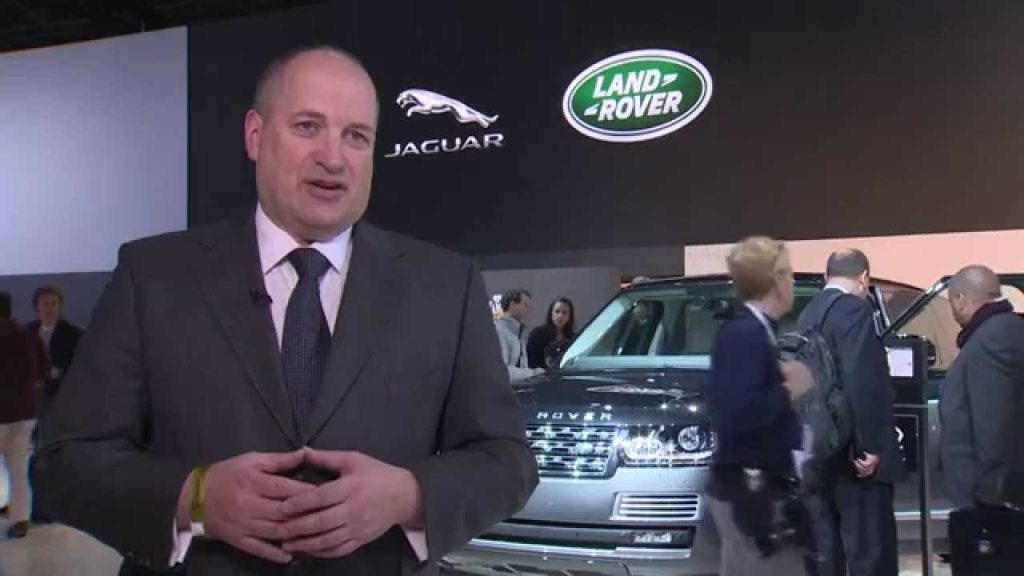
The exact details of the JLR-Stellantis collaboration have not been fully disclosed. It is not yet clear whether the companies will share vehicle platforms, battery technology, electric motors, software systems, or supply-chain resources. What is clear is that both sides have reason to cooperate.
JLR needs access to technology and purchasing scale without sacrificing its product identity. Stellantis, meanwhile, can benefit from partnerships that increase the use of its engineering resources and potentially spread development costs across a wider group of vehicles.
A collaboration does not necessarily mean that future Jaguars or Land Rovers will become rebadged Stellantis products. JLR has strong incentives to maintain the unique character of Range Rover, Defender, Discovery, and Jaguar.
However, sharing invisible components such as battery cells, electronic systems, motors, or software modules could make financial sense.
The partnership may also be relevant to JLR’s North American strategy. Stellantis has a large manufacturing and dealer presence in the United States, particularly through Jeep and Ram.
JLR operates in a different part of the market, but the two companies could find areas where logistics, supplier relationships, or technology development overlap.
A Changing EV Market Raises the Stakes
JLR’s leadership transition comes during a period of uncertainty for the electric-vehicle market. Demand continues to grow in some segments, but automakers have also faced slower-than-expected adoption in certain regions, changing government incentives, and rising pressure from Chinese manufacturers.
For JLR, the issue is not simply whether to launch electric vehicles. The company must make sure its EVs remain profitable and preserve the premium character that customers expect.
Range Rover buyers will demand luxury, quietness, towing ability, and long-distance usability. Defender buyers will expect rugged capability. Jaguar buyers will expect a design-led experience that feels different from conventional electric sedans and SUVs.
The Stellantis collaboration could help JLR manage those costs, but it will not remove the need for strong products. The next generation of electric luxury vehicles will be judged on range, charging speed, software quality, interior technology, and driving character. A recognizable badge alone will not be enough.
Eberhardt leaves JLR North America after guiding the company through growth, product expansion, a global pandemic, supply-chain disruption, and the beginning of its electric transition. His tenure helped establish Land Rover as the company’s most reliable U.S. business while Jaguar prepared for a much riskier rebirth.
The incoming leadership team will inherit a business with strong Land Rover products, a challenging Jaguar relaunch, and a new relationship with Stellantis that could influence future technology decisions.
How JLR manages those three priorities will determine whether the company can remain a meaningful player in the American luxury market during the electric era.
Also Read: 10 Cars Worth More Used Today Than Their Original MSRP
