
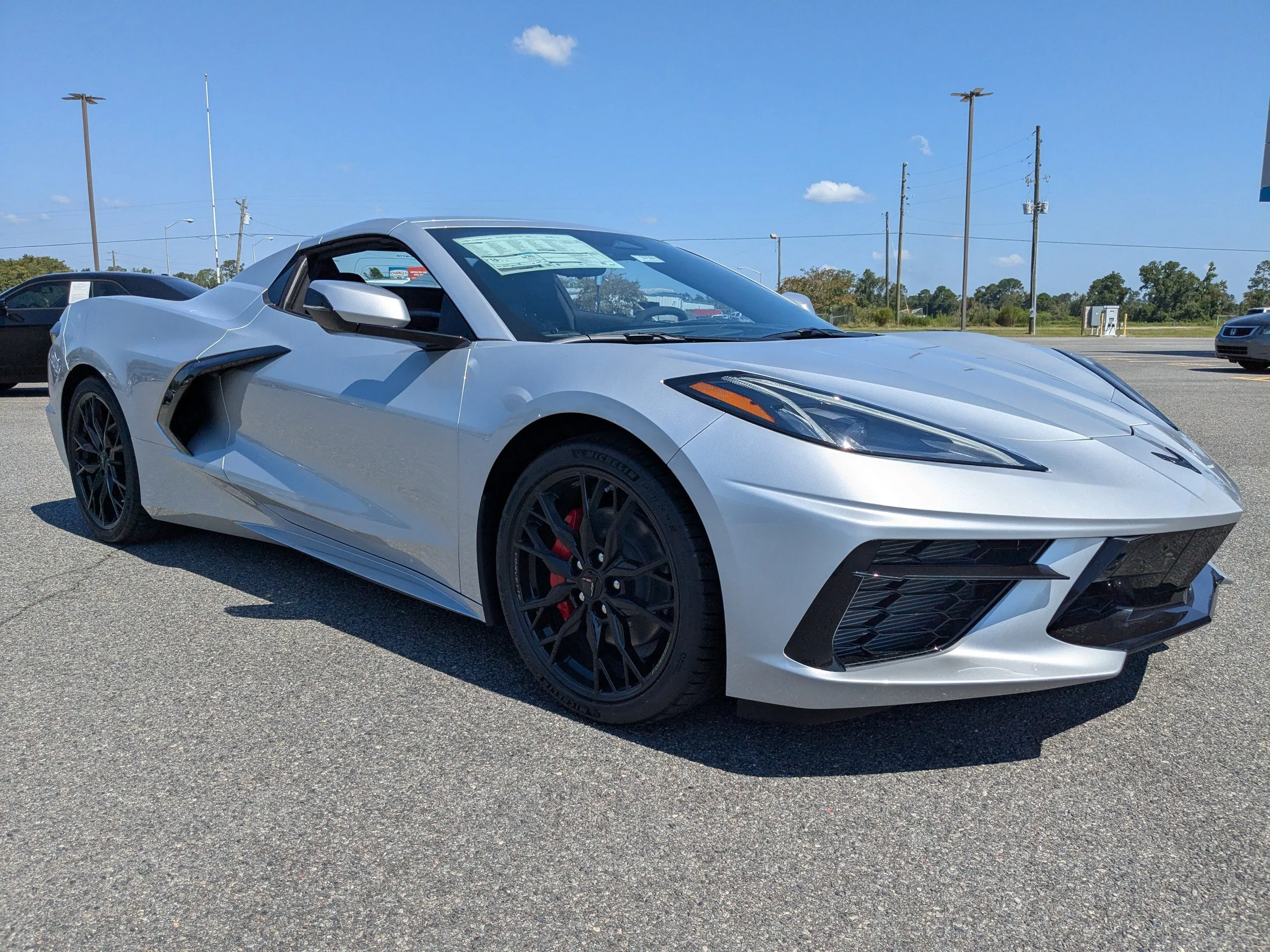
The end of the Lexus LC 500 marks another turning point for the luxury-coupe market. Lexus has confirmed that LC 500 production will conclude after the 2026 model year, ending the run of one of the few remaining naturally aspirated V8 luxury two-doors available new.
The coupe and convertible are expected to leave production in August 2026, making the final cars especially significant for buyers who value large-displacement engines, rear-wheel drive, and grand-touring character.
The LC 500 is not the last V8-powered luxury coupe on sale, but it is among the last that delivers its performance without turbochargers, hybrid assistance, or electric motors.
Its departure narrows an already small field of cars built around the traditional formula: a naturally aspirated V8 mounted ahead of the driver, a long hood, a low seating position, and an engine note that rises cleanly toward a high redline.
Turbocharged V8s remain common in high-performance luxury cars, particularly from German manufacturers. But naturally aspirated V8s have become rare because they struggle to meet increasingly strict emissions and fuel-economy rules.
Turbocharging allows manufacturers to produce more low-end torque from smaller engines, while hybrid systems can reduce official fuel consumption and emissions figures. Electric vehicles remove the combustion engine entirely.
That makes the remaining naturally aspirated V8 luxury coupes more important than their sales numbers suggest.
Also Read: 10 Affordable EVs Targeting Under $30,000 by 2027
Lexus LC 500
The Lexus LC 500 is the clearest example of the disappearing formula. Its 5.0-liter 2UR-GSE V8 produces 471 horsepower and 398 pound-feet of torque, sending power to the rear wheels through a 10-speed automatic transmission. Lexus quotes a 0 to 60 mph time of approximately 4.4 seconds.
Numbers alone do not explain the LC 500’s appeal. It is not the quickest car in its price range, and it does not offer the sharpest lap times. Its character comes from the way the V8 delivers power. The engine builds revs smoothly, responds immediately to throttle inputs, and produces a sound that is increasingly absent from modern luxury cars.
The LC was previewed by the LF-LC concept in 2012 and entered production in 2017. It retained much of the concept’s dramatic shape, which was unusual in an era when production cars often became more conservative than their show-car predecessors.
The long hood, low roof, wide rear haunches, and intricate lighting gave Lexus a flagship coupe that looked unlike any German rival.
It was built at Toyota’s Motomachi plant in Japan, the same facility associated with the Lexus LFA. Lexus positioned the LC as a hand-finished grand tourer rather than a high-volume performance car, and that approach helped it age well.
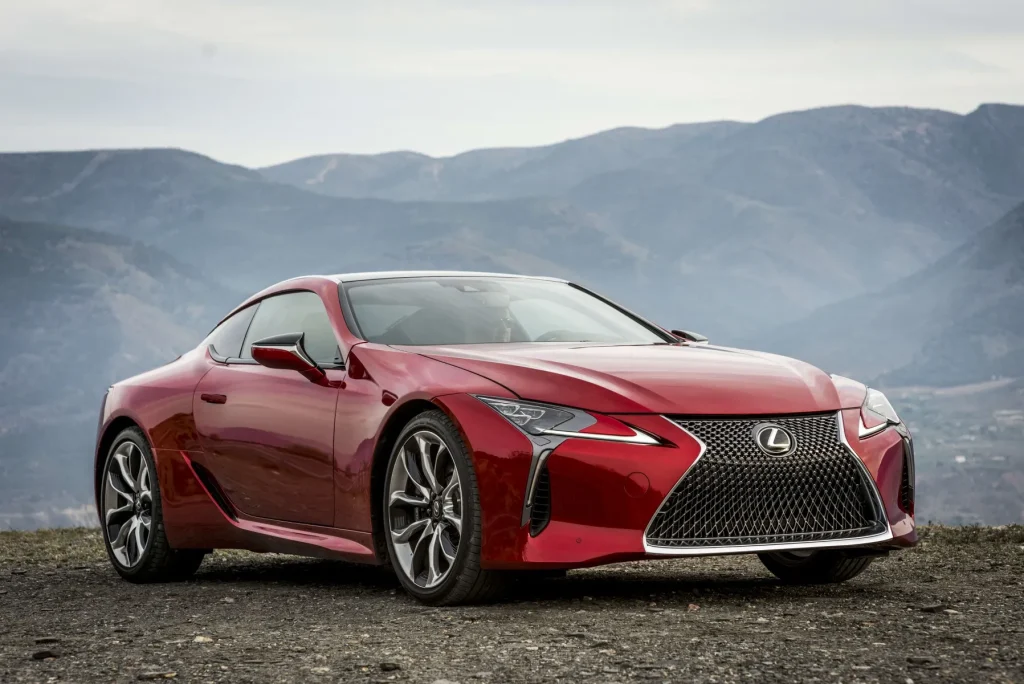
For 2026, Lexus has offered farewell editions, including the Inspiration Series, in North America. The final LC 500 coupe is limited to 200 units, while the final convertible is limited to 350 units. These cars use exclusive colors, special interior trim, carbon-fiber details, and black exterior accents.
The LC 500’s departure matters because it leaves Lexus without a V8-powered passenger car in the U.S. market. The brand has already retired the RC F and the previous LS V8 models. When LC production ends, the naturally aspirated 5.0-liter V8 will no longer be available in a new Lexus.
Chevrolet Corvette Stingray
The Chevrolet Corvette Stingray is not a traditional luxury coupe in the same way as the Lexus LC 500, but it occupies part of the same emotional space for buyers who want a naturally aspirated V8 grand touring experience.
Its 6.2-liter LT2 V8 produces up to 495 horsepower in the Z51 Performance Package configuration. Unlike the front-engine LC 500, the Corvette uses a mid-engine layout, placing the V8 behind the passenger compartment and giving the car a more exotic visual proportion.
The Corvette is considerably quicker than the Lexus. Chevrolet quotes a 0 to 60 mph time of 2.9 seconds for the Z51-equipped coupe. Yet the Stingray remains naturally aspirated, using a cross-plane V8 that delivers a familiar American sound and linear power delivery.
Its cabin has become more premium than earlier Corvettes, with available leather, carbon-fiber trim, performance seats, a digital instrument display, and a driver-focused dashboard. Still, it is primarily a sports car rather than a luxury coupe. Its ride is firmer, its luggage space is less flexible, and its styling is much more aggressive.
The Corvette’s importance lies in the fact that it remains a relatively accessible naturally aspirated V8 performance car. It starts far below the LC 500’s price, though popular options can push the price significantly higher.
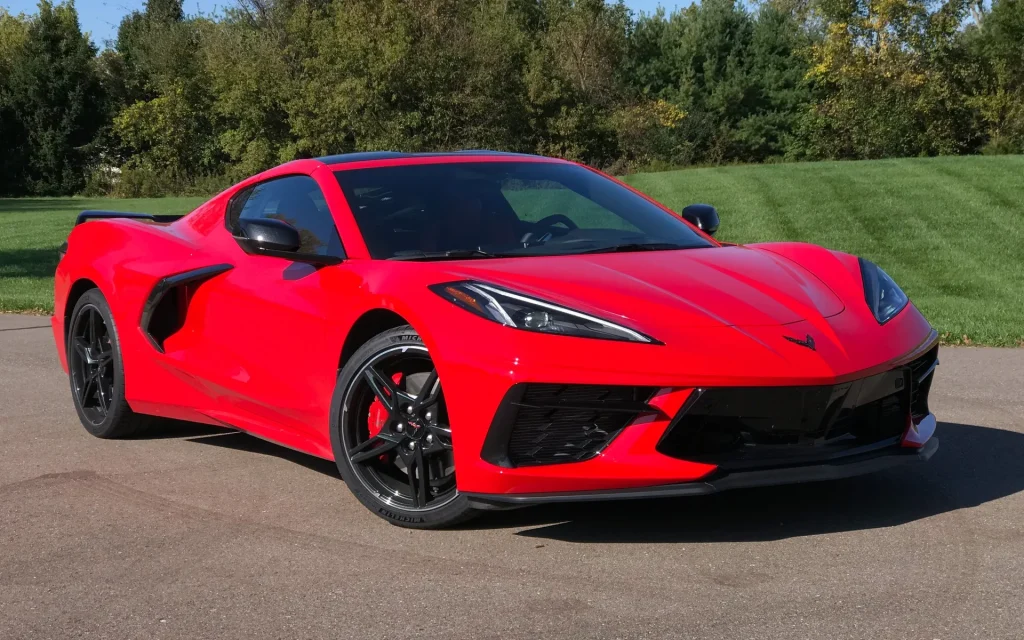
For buyers who want the sound and response of a naturally aspirated V8 but prioritize outright speed, the Corvette Stingray remains one of the strongest choices available new.
Ford Mustang GT
The Ford Mustang GT is another car that sits outside the traditional luxury-coupe category but remains relevant because it preserves the naturally aspirated V8 formula.
Ford’s current Mustang GT uses a 5.0-liter Coyote V8 producing up to 486 horsepower with the active exhaust system. It is available with either a six-speed manual transmission or a 10-speed automatic, making it one of the few new V8 coupes that still gives buyers a manual option.
The Mustang GT does not offer the craftsmanship, interior materials, or refinement of the LC 500. Its cabin is more performance-focused, and its rear seat remains limited. But it offers something luxury brands increasingly avoid: a high-revving V8, rear-wheel drive, and an accessible entry price.
The Mustang Dark Horse pushes the formula further with 500 horsepower, revised cooling, stronger drivetrain components, upgraded suspension tuning, and track-oriented hardware. It remains naturally aspirated, though it is aimed more directly at enthusiasts than grand-touring buyers.
For drivers who want a V8 coupe with a more relaxed cruising role, the Mustang GT Premium offers leather seating, a large digital dashboard, premium audio, and available comfort features. It can function as a daily driver while still delivering the character that makes naturally aspirated V8 cars appealing.
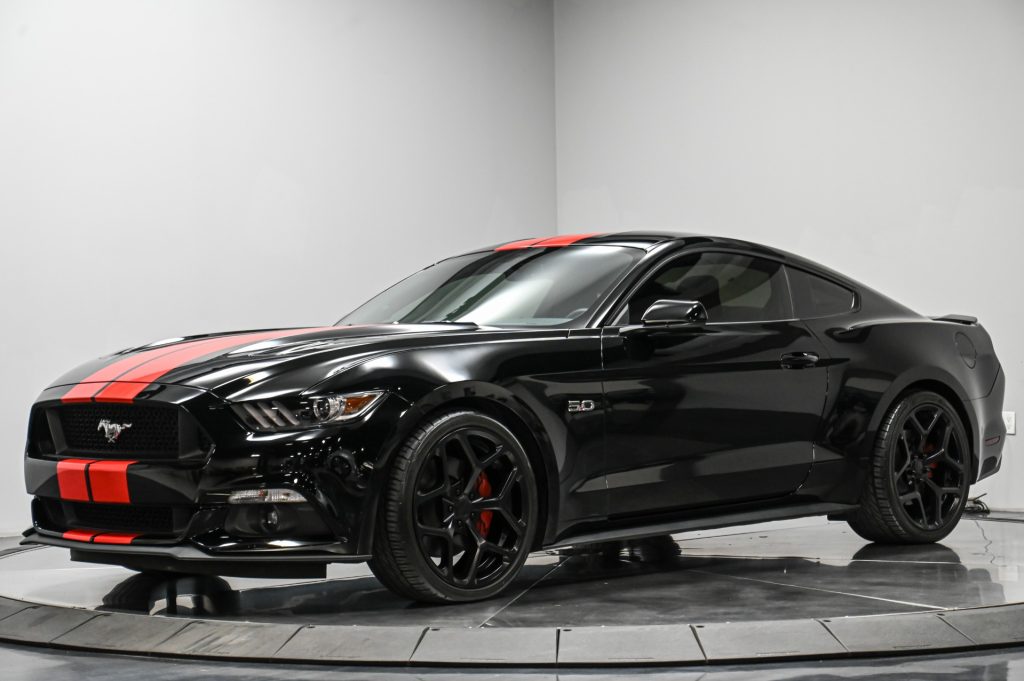
The Mustang is not a replacement for the LC 500, but it represents one of the last ways to buy a new high-revving V8 coupe without moving into six-figure territory.
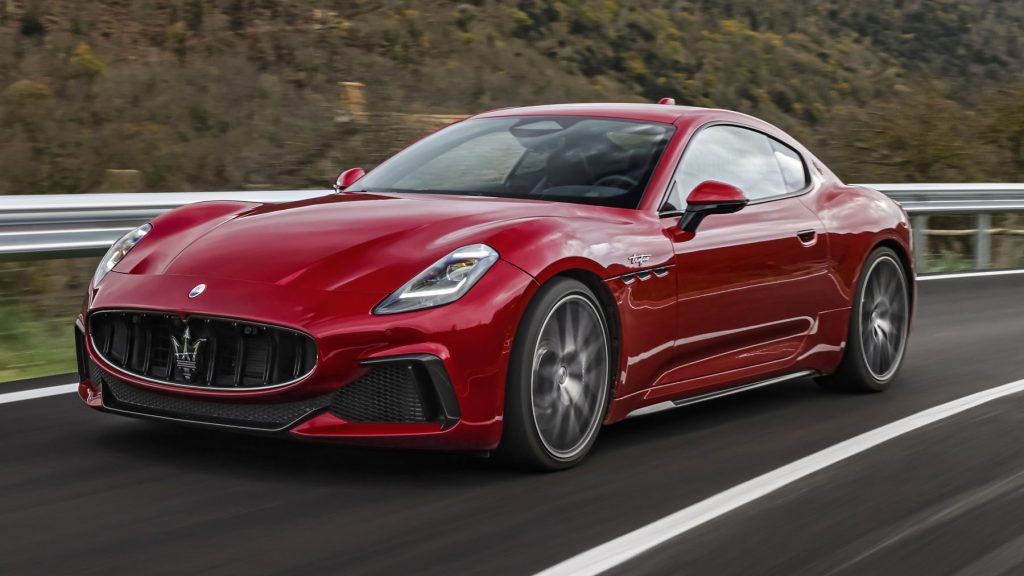
Maserati GranTurismo Trofeo
The Maserati GranTurismo Trofeo remains a true luxury coupe, but it illustrates why the naturally aspirated V8 is disappearing.
Earlier GranTurismo generations were celebrated for their Ferrari-derived naturally aspirated V8 engines. The current GranTurismo Trofeo uses a twin-turbocharged 3.0-liter Nettuno V6 producing 542 horsepower. It is fast, sophisticated, and more efficient than its predecessor, but it does not provide the same mechanical character as the old V8.
Its inclusion matters because it shows the change occurring across the luxury market. Maserati did not abandon the grand-touring coupe concept. It changed the engine philosophy to meet modern performance and emissions demands.
The same pattern has appeared at Mercedes-Benz, BMW, Bentley, Aston Martin, and Ferrari. Luxury coupes still exist, but their engines increasingly use turbochargers, hybrid systems, or both.
That makes the LC 500 unusual. Lexus continued selling a naturally aspirated V8 coupe long after many rivals had moved away from the format.
Why the Naturally Aspirated V8 Is Disappearing
Naturally aspirated V8 engines are difficult for automakers to justify today. They consume more fuel than smaller turbocharged engines during official testing cycles, and they produce more carbon dioxide than hybrid or electric alternatives.
They also require manufacturers to invest in emissions-control technology for engines that may sell in limited numbers.
Turbocharged engines offer a more efficient path. A twin-turbo V8 can produce much more torque at low engine speeds, allowing a heavy luxury coupe to accelerate strongly without requiring a large-displacement naturally aspirated engine.
Hybrid systems add electric torque and can improve city efficiency. Electric powertrains offer immediate acceleration without tailpipe emissions. Yet the technical advantages come with a trade-off.
A naturally aspirated V8 offers a response that is difficult to duplicate. There is no turbocharger waiting to build boost, no electric motor masking the engine’s character, and no artificial soundtrack needed to make the car feel exciting. The driver presses the accelerator, the engine responds, and the sound rises with the revs.
The LC 500’s V8 is especially distinctive because Lexus tuned it to rev to 7,300 rpm, unusually high for a large-displacement luxury-car engine. Its sound was developed with input from Yamaha, which has worked with Toyota on performance engines and acoustic tuning.
The Last Chance to Buy the Lexus LC 500
The 2026 LC 500 is likely to become more desirable as production ends, but buyers should not assume it will become an instant investment.
Collector value depends on condition, mileage, color, specification, production numbers, future demand, and the broader collector-car market. The LC was never produced in huge numbers, but rarity alone does not guarantee appreciation.
Its strongest appeal will likely remain emotional rather than financial. The LC 500 offers a combination that is becoming difficult to find: a naturally aspirated V8, distinctive styling, Japanese build quality, rear-wheel drive, and genuine luxury-car comfort.
It is not the fastest luxury coupe, the most practical coupe, or the most technologically advanced coupe. It is something more specific. It is one of the last cars built around the idea that a luxury grand tourer should make every drive feel special, even when it is simply traveling to dinner or covering highway miles.
When production ends after 2026, buyers will still be able to find turbocharged V8 coupes, hybrid performance cars, and powerful EVs. But the list of new naturally aspirated V8 luxury coupes will be effectively gone.
For that reason, the final Lexus LC 500 is more than the end of a single model. It is the closing chapter of a type of luxury car that may not return.
Also Read: 10 Hidden Features In The Toyota Tacoma
