
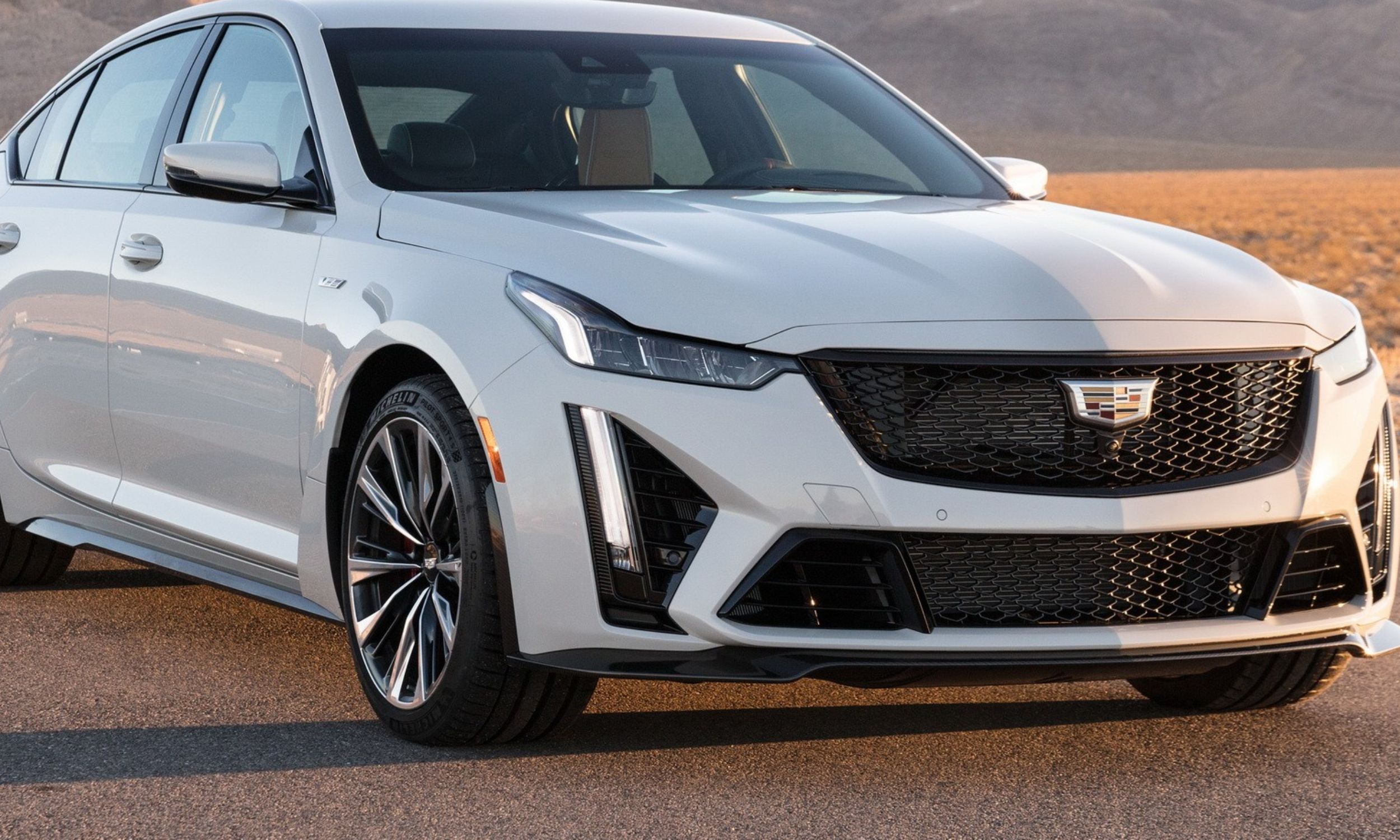
When people think of American performance, their minds usually jump to two icons. Massive muscle cars powered by huge engines and pickup trucks strong enough to drag a house from its foundation. Yet that familiar image overlooks a more understated and rebellious chapter in automotive history. In that era, engineers transformed everyday family sedans into genuinely intimidating machines while leaving their outward appearance almost completely unchanged.
These were not cars that announced themselves. A neighbor, glancing at a Chevrolet SS parked in a driveway, saw a mid-size family car. A driver pulling up next to a Dodge Spirit R/T at a stoplight saw a plain K-car sedan. Nobody suspected anything unusual. That was precisely the point. Under those forgettable exteriors lived engines with real intentions, suspension tuning that belonged on a sports car, and in several cases, factory manual transmissions that rewarded drivers who knew how to use them.
Eight of these sedans deserve their moment back in the spotlight. Some were killed by poor marketing. Others were casualties of corporate bankruptcy. A few were simply too unusual for a market that did not know what to do with them when they were new. All of them are worth knowing, understanding, and if you can find a clean one, driving at least once.
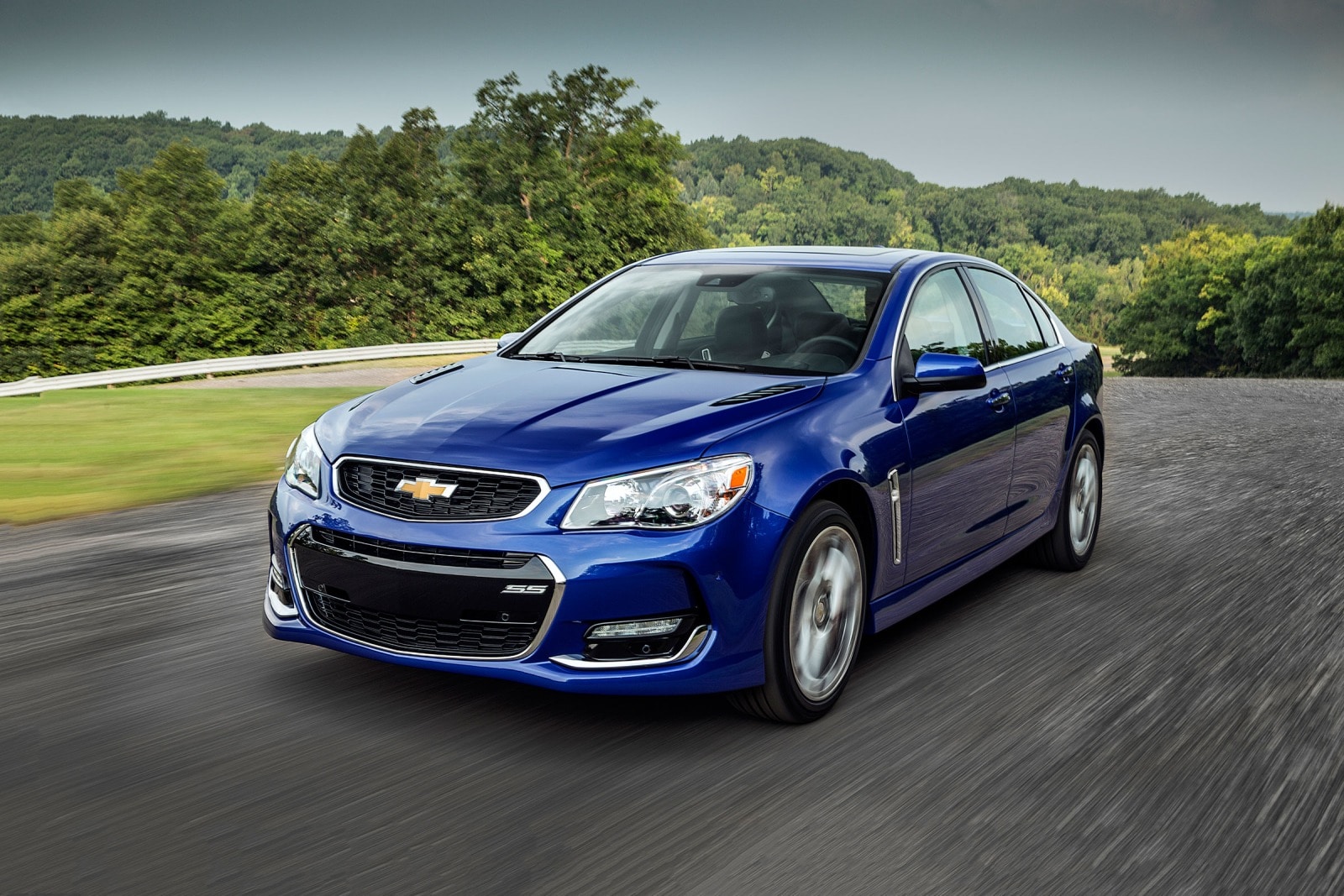
1. Chevrolet SS (2014 to 2017)
- Engine: 6.2L Naturally Aspirated V8 (LS3)
- Horsepower: 415 hp
- Torque: 415 lb-ft
- Size: 195.5 in Long x 74.7 in Wide
Ask a casual car buyer to name a rear-wheel-drive, manual-transmission sedan with 415 horsepower and Magnetic Ride Control from a major American manufacturer, built between 2010 and 2020, and almost none of them will answer correctly. Ask the same question of a performance car enthusiast, and you will get an immediate, slightly frustrated response: the Chevrolet SS. Frustration is appropriate here because the story of the Chevrolet SS is a story of a genuinely excellent car that General Motors apparently did not want anyone to know existed.
A 6.2-liter naturally aspirated LS3 V8 produced 415 horsepower and 415 lb-ft of torque in a rear-wheel-drive, four-door sedan body that measured 195.5 inches long and 74.7 inches wide. It came with an available 6-speed manual transmission at a time when manual performance sedans from any manufacturer were becoming increasingly rare.
Magnetic Ride Control adaptive suspension, Brembo brakes, and a limited-slip differential rounded out a specification that would have been genuinely impressive on a car wearing a BMW M or Mercedes-AMG badge. Chevrolet put all of it in a body that looked like something a fleet department would order for airport pickups.
That exterior is the SS’s most discussed characteristic, and not favorably. GM imported the car from its Holden division in Australia, where it was built as the Holden Commodore, a car with enormous cultural weight in the Australian performance car market. In American guise, the body received minimal visual distinction from the standard Chevrolet Impala that shared showroom floor space beside it. No aggressive body kit. No hood vents. No visual indication whatsoever that this was a vehicle capable of lapping Nurburgring-adjacent performance.
Marketing was similarly restrained to the point of being nearly absent. No major advertising campaigns. Limited dealership floor visibility. A production run of roughly 25,000 units across four model years suggests that GM either could not sell them or simply chose not to try very hard. Buyer confusion about what the car was and where it fit into GM’s lineup contributed to sales that never reflected what the vehicle deserved.
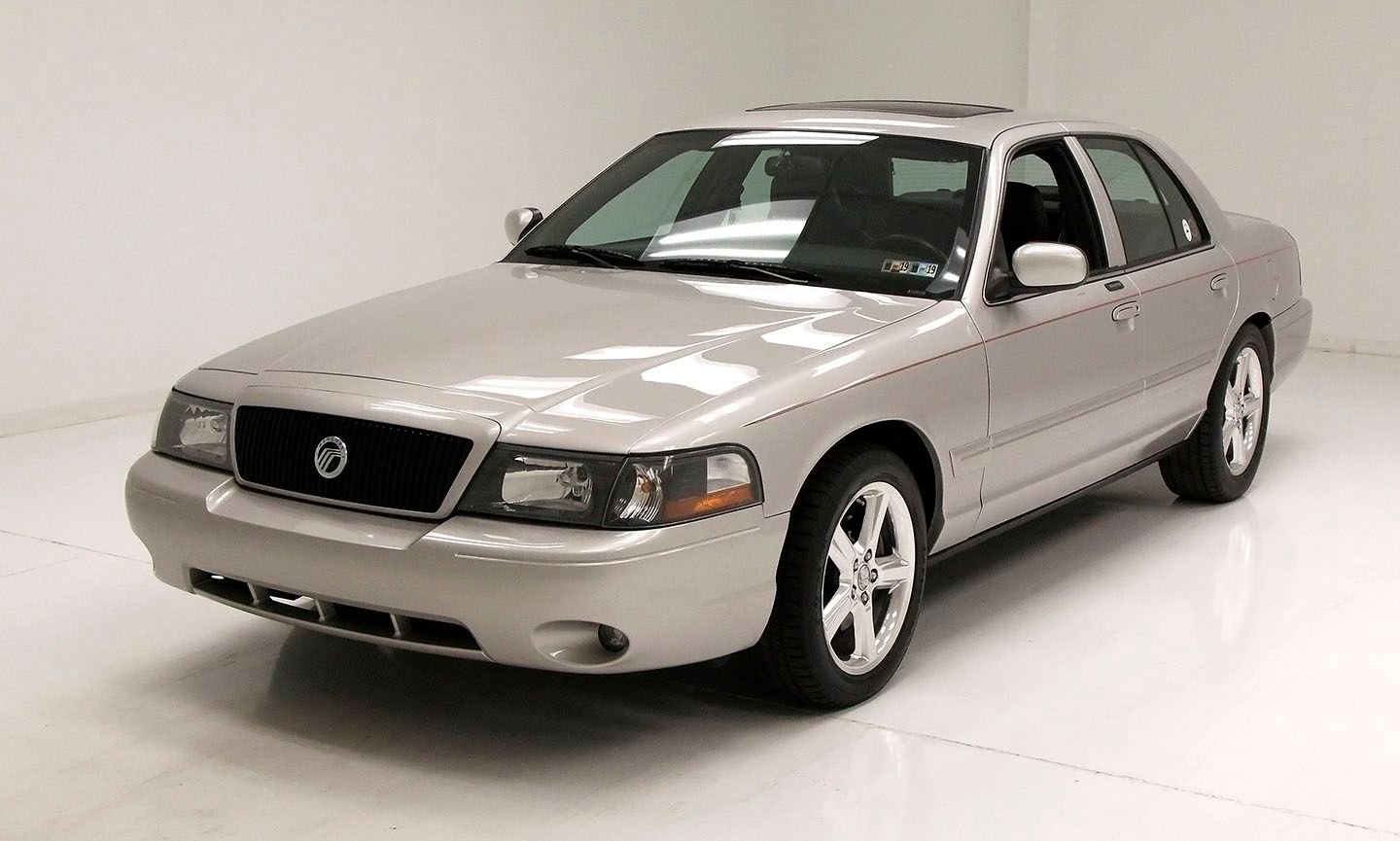
2. Mercury Marauder (2003 to 2004)
- Engine: 4.6L DOHC 32-Valve V8
- Horsepower: 302 hp
- Torque: 318 lb-ft
- Size: 211.9 in Long x 78.2 in Wide
Ford’s Panther platform, the full-size body-on-frame architecture underpinning the Crown Victoria and Grand Marquis, was not typically associated with performance. It was associated with police fleet purchases, airport taxis, and grandparents who wanted a large American car with a bench seat and a traditional V8.
Mercury took that platform, stripped every piece of chrome off it, painted everything black, dropped in a high-revving engine shared with a sports car, and created something that looked like it belonged to someone who did not want to be asked questions. A 4.6-liter DOHC 32-valve V8 produced 302 horsepower and 318 lb-ft of torque in a car measuring 211.9 inches long and 78.2 inches wide.
That engine came directly from the Mustang Mach 1, a car built explicitly for performance, and its presence in the large Grand Marquis body produced a driving experience that surprised everyone who did not know what they were riding in. Dual exhaust exited with a note that did not belong on a car typically driven by retirees, and 18-inch wheels replaced the standard Grand Marquis units with something that looked appropriately purposeful.
Visual transformation was the Marauder’s most immediate accomplishment. All exterior chrome received a blackout treatment. Body-colored or darkened trim replaced the brightwork that made the standard Grand Marquis look formal and restrained. Black headlight bezels, specific alloy wheel design, and a subtle trunk lid spoiler gave the Marauder a presence that looked simultaneously official and threatening, the kind of large American sedan that appears in the rearview mirror and makes you wonder who is driving it.
Values on surviving Marauders have climbed steadily as the performance car community came to appreciate exactly what Mercury built in those two years. Finding a clean, low-mileage example today requires patience and budget, but the combination of genuine rarity, distinctive appearance, and that Mustang-derived V8 makes the search worth conducting for buyers who appreciate this specific chapter of American automotive history.
Also Read: 8 Performance Sedans Quietly Dominating Track Days
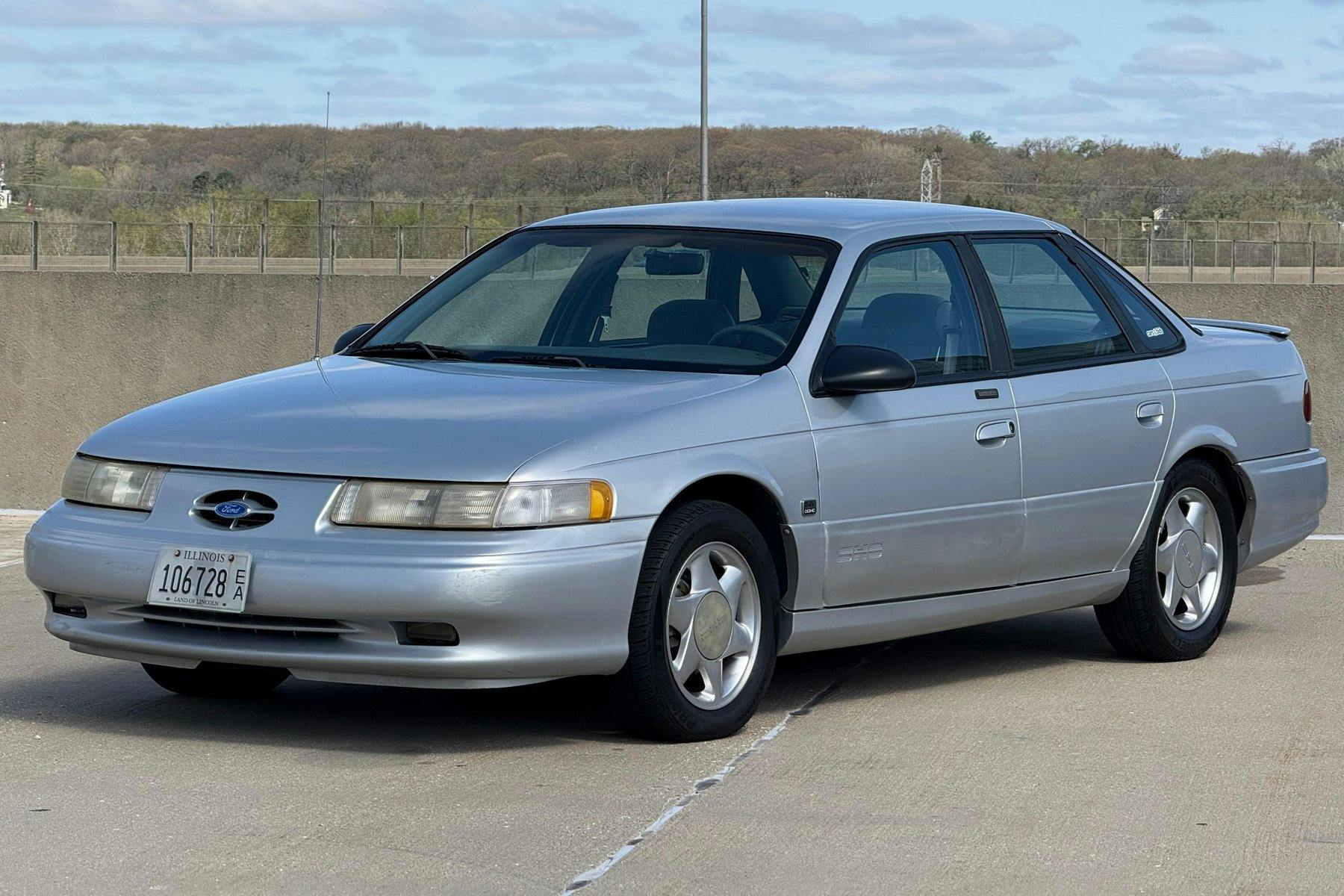
3. Ford Taurus SHO (1989 to 1995)
- Engine: 3.0L Naturally Aspirated V6 (Yamaha-engineered DOHC)
- Horsepower: 220 hp
- Torque: 200 lb-ft
- Size: 188.4 in Long x 70.8 in Wide
Ford’s decision to collaborate with Yamaha on a high-performance engine for a family sedan is one of the stranger chapters in American automotive engineering history, and the result was one of the most unexpectedly capable front-wheel-drive cars produced during its era.
Yamaha, then better known for motorcycles and musical instruments than automotive engine development, designed a 3.0-liter naturally aspirated V6 with a twin-cam, 24-valve cylinder head that produced 220 horsepower and 200 lb-ft of torque in a car measuring 188.4 inches long and 70.8 inches wide.
What made this engine genuinely special was its character. Most V6 engines of the period produced their power through torque at lower rpm, prioritizing comfortable family car driveability over excitement. Yamaha’s SHO engine peaked at 7,300 rpm, a redline that belonged on a sports car and that rewarded drivers willing to work through the gear ratios of its 5-speed manual transmission to extract the engine’s full potential.
A front-wheel-drive Ford Taurus that demanded to be driven at high revs to access its performance was not what the American family sedan market expected to find in 1989. Body styling did not indicate what lived under the hood. Standard Taurus bodywork, shared with the base model that fleet departments ordered in bulk, surrounded the SHO drivetrain without any dramatic visual differentiation.
Subtle badges and a specific wheel design were essentially the only exterior clues that this was anything other than a family sedan. Owners could and did use the car for school runs and grocery trips, and then put it on an on-ramp and reminded themselves why they chose this specific Taurus.
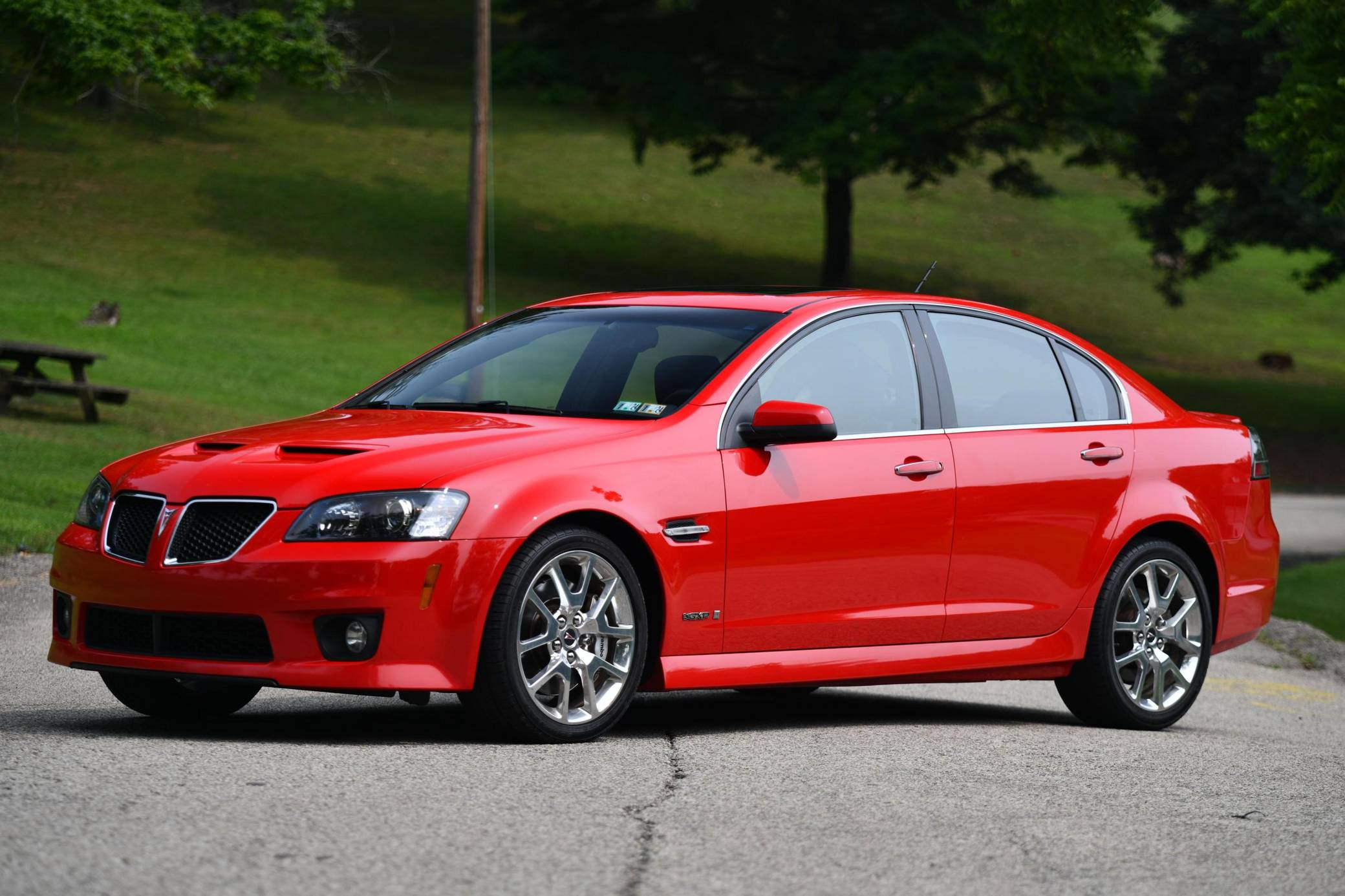
4. Pontiac G8 GXP (2009)
- Engine: 6.2L Naturally Aspirated V8 (LS3)
- Horsepower: 415 hp
- Torque: 415 lb-ft
- Size: 196.1 in Long x 74.8 in Wide
Pontiac’s history with performance cars is well documented. GTO muscle, Trans Am theatrics, and Firebird drama all contributed to a brand identity built on American performance with visual flair. What Pontiac never had until 2009 was a genuine European-style performance sedan, the kind of rear-wheel-drive, manually shifted, high-output car that BMW M and Mercedes-AMG were building for buyers who wanted performance without sacrificing four-door practicality. In 2009, they finally had one. GM announced the Pontiac brand would be eliminated that same year.
A 6.2-liter naturally aspirated LS3 V8 produced 415 horsepower and 415 lb-ft of torque in a car measuring 196.1 inches long and 74.8 inches wide, with an optional 6-speed manual transmission that made it one of the few rear-wheel-drive manual performance sedans available in its price bracket from any manufacturer. Magnetic Ride Control adaptive suspension, Brembo front brakes, and a limited-slip differential completed a specification that automotive journalists consistently described as BMW M5 territory at a substantially lower price.
Like the Chevrolet SS that effectively became its spiritual successor, the G8 GXP arrived from GM’s Holden division in Australia, where the platform carried genuine performance credentials in a market that valued rear-wheel-drive performance sedans more openly than the American market had historically. In Pontiac trim, the exterior received specific styling elements that gave it a more aggressive appearance than the understated SS, though it remained subtle by the standards of contemporary performance cars.
Fewer than 1,800 GXP examples were produced before Pontiac’s elimination ended production. That rarity, combined with the car’s genuine performance credentials and the melancholy of its circumstances, has made it one of the most sought-after performance sedans from the 2000s among American car collectors. Clean GXP examples command premiums that reflect both the car’s capability and its scarcity.
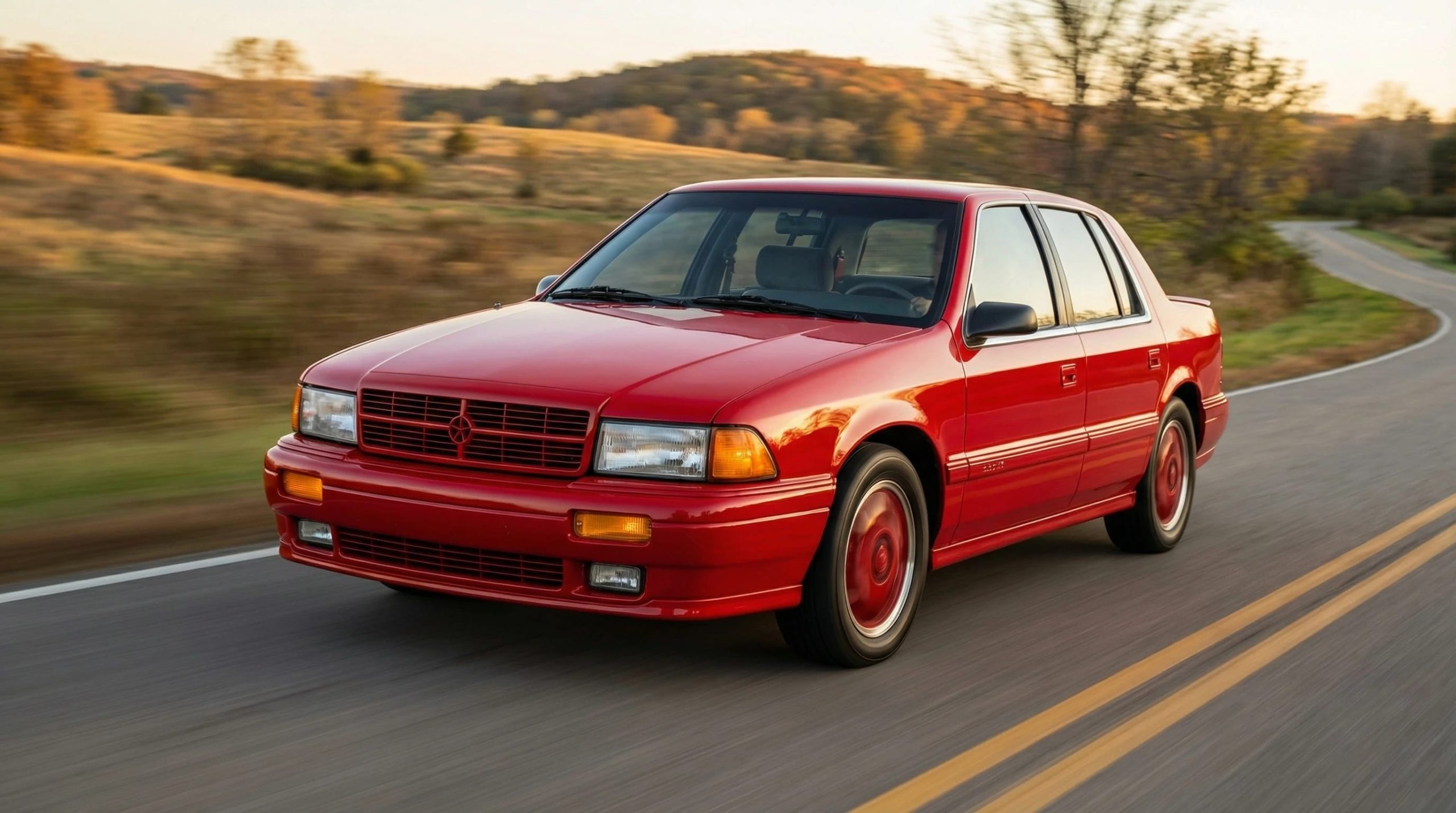
5. Dodge Spirit R/T (1991 to 1992)
- Engine: 2.2L Turbocharged 4-Cylinder (Lotus-developed 16-valve head)
- Horsepower: 224 hp
- Torque: 217 lb-ft
- Size: 181.2 in Long x 68.1 in Wide
Visual anonymity is usually a limitation. On the Dodge Spirit R/T, it was a feature. Measuring 181.2 inches long and 68.1 inches wide in a body borrowed from the K-car platform that defined Chrysler’s economy lineup through the 1980s, the Spirit R/T looked like exactly nothing. No assertive styling, no wide body, no hood vents suggesting anything unusual lived underneath. Walk past one in a parking lot in 1991, and you would never look twice.
Under that completely unremarkable exterior sat a 2.2-liter turbocharged four-cylinder engine with a cylinder head developed in consultation with Lotus Engineering, producing 224 horsepower and 217 lb-ft of torque. Lotus involvement in cylinder head design was not a marketing claim.
It reflected genuine technical collaboration that resulted in a 16-valve head configuration capable of supporting the boost pressure and combustion efficiency that made the Spirit R/T’s power output possible from a 2.2-liter displacement. Period testing placed the Spirit R/T as the quickest American sedan available in 1991, with 0 to 60 mph times that beat contemporary performance cars from manufacturers charging considerably more money for their performance credentials.
BMW drivers pulled up next to what appeared to be a budget Dodge sedan and found themselves genuinely surprised when the light changed. That scenario played out repeatedly before the R/T’s two-year production run ended, leaving a legacy that most people who were not paying very close attention in 1991 missed entirely.
Surviving examples are rare, valuable to the specific collector community that understands what the car represents, and genuinely interesting to drive for anyone who appreciates the combination of complete visual discretion and documented performance capability.
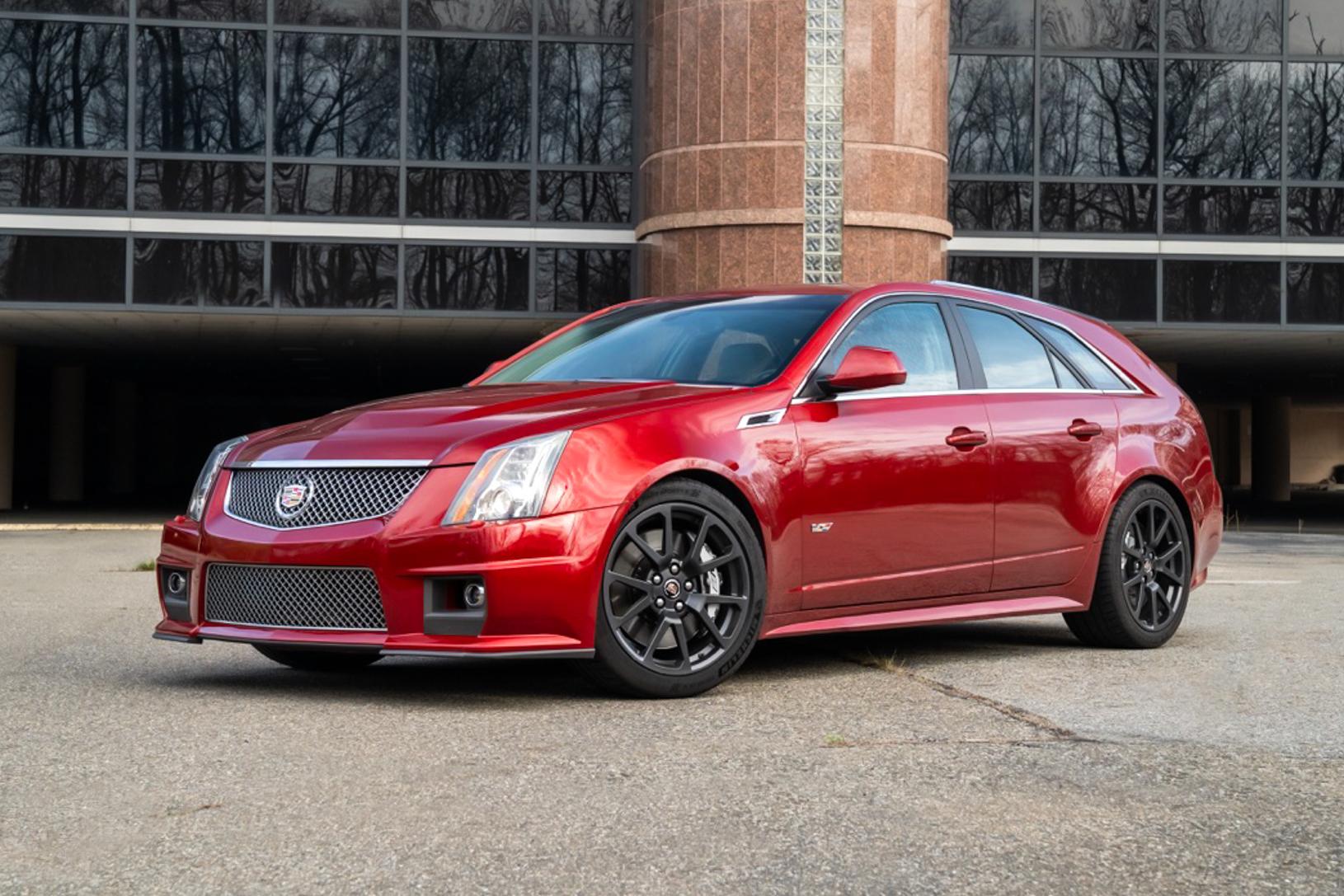
6. Cadillac CTS-V Wagon (2011 to 2014)
- Engine: 6.2L Supercharged V8 (LSA)
- Horsepower: 556 hp
- Torque: 551 lb-ft
- Size: 191.3 in Long x 74.1 in Wide
Station wagons are not where most people look for supercharged V8 performance. Cadillac understood this and built the CTS-V Wagon anyway, creating a vehicle whose combination of practicality and outright performance remains unmatched by any American manufacturer before or since.
A 6.2-liter supercharged LSA V8 produced 556 horsepower and 551 lb-ft of torque in a body measuring 191.3 in Long x 74.1 inches wide. That engine came from the Camaro ZL1, one of the most capable American performance cars of its era, and it sat under the hood of a long-roof body with cargo space, rear seats, and Cadillac’s premium interior appointments. An available 6-speed manual transmission made the performance accessible in the most direct way possible.
At the drag strip, on a highway on-ramp, or on a track day, the CTS-V Wagon performed identically to the CTS-V sedan, because it used identical mechanical components throughout. Adding cargo capacity and rear seat practicality did not compromise the driving experience in any measurable way. Cadillac sold both body styles simultaneously and priced them similarly, acknowledging that the performance was the primary selling point regardless of which roofline the buyer preferred.
Collector demand for clean CTS-V Wagon examples has grown steadily, particularly for manual transmission cars, which represent a combination of performance and practicality that no current production vehicle replicates.
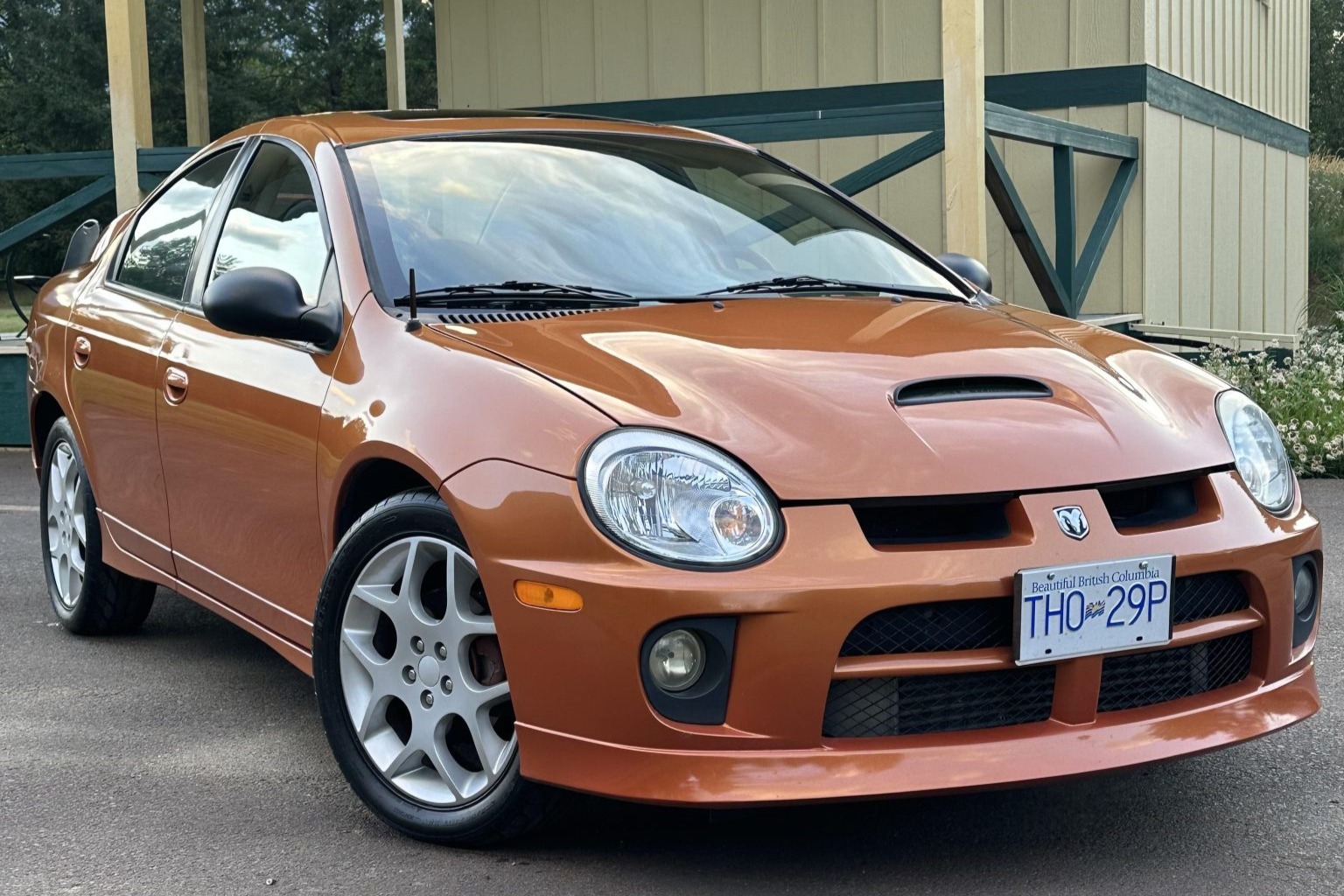
7. Dodge Neon SRT-4 (2003 to 2005)
- Engine: 2.4L Turbocharged 4-Cylinder
- Horsepower: 230 hp
- Torque: 250 lb-ft
- Size: 174.4 in Long x 67.4 in Wide
Budget and performance rarely share the same sentence, honestly. For a brief three-year production window, Dodge’s SRT engineering division made them share a platform. A 2.4-liter turbocharged four-cylinder producing 230 horsepower and 250 lb-ft of torque in a body measuring 174.4 inches long and 67.4 inches wide: this was the Dodge Neon SRT-4, and it arrived under $20,000 at original purchase price.
SRT engineers stripped weight without compromise. Rear power windows were removed entirely. Sound deadening was reduced. Every component that added mass without adding performance was evaluated and often eliminated. What remained was a front-wheel-drive compact with turbo boost calibrated to produce power that V8 muscle car drivers of the era did not expect from a car that looked like a Neon.
Documented 0 to 60 mph times placed the SRT-4 in performance territory occupied by cars costing two and three times its price. Stoplight racing in 2003 meant encountering an SRT-4 driven by someone who knew how to use the turbo’s powerband, and that experience was consistently educational for drivers of much more expensive vehicles.
Parts support and the performance aftermarket community built around the SRT-4 platform have kept many surviving examples well-maintained. Finding a clean, original, low-mileage example today requires patience, but the car’s combination of affordability, genuine performance credentials, and honest working-class character makes the search compelling for buyers who value what it represents.
Also Read: 10 Best Used Performance Sedans for Under 25000 Dollars
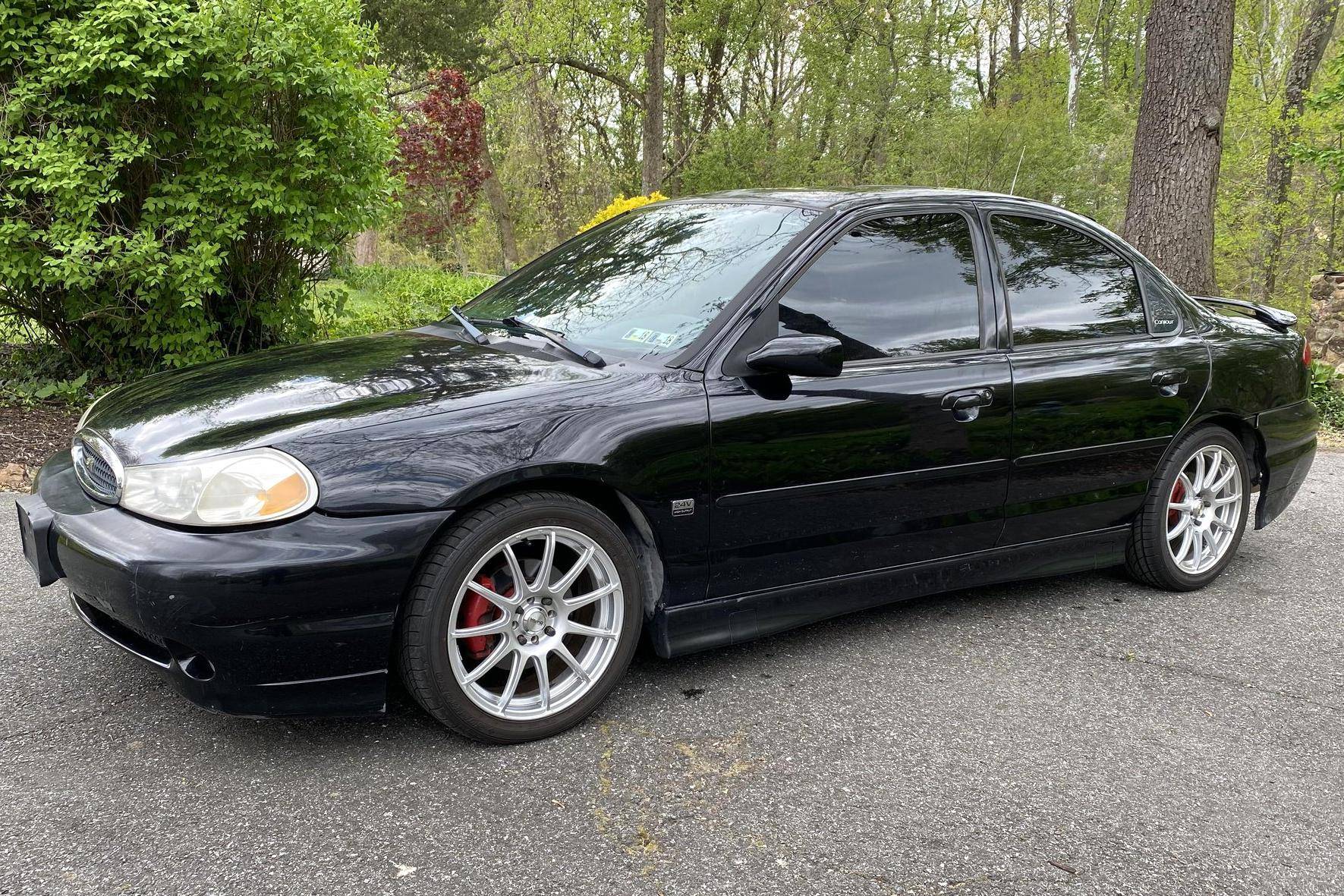
8. Ford Contour SVT (1998 to 2000)
- Engine: 2.5L Naturally Aspirated V6 (SVT Duratec)
- Horsepower: 195 hp to 200 hp (depending on year)
- Torque: 165 lb-ft to 169 lb-ft
- Size: 183.9 in Long x 69.1 in Wide
Ford’s Special Vehicle Team created the Contour SVT with a clear target in mind. The goal was to challenge compact performance sedans from Europe by offering something that felt just as engaging to drive, but at a price American buyers could reach. Models from BMW and Audi had earned respect for their balanced handling and responsive engines, and Ford wanted a homegrown option that delivered a similar experience without the luxury badge markup.
Sized at 183.9 inches long and 69.1 inches wide, the Contour SVT remained compact, yet it carried a 2.5-liter naturally aspirated V6 that produced between 195 and 200 horsepower, depending on the year. Torque figures ranged from 165 to 169 pound-feet, all sent through a well-matched five-speed manual transmission.
The real transformation came from the work done beneath the body. Engineers reworked the suspension tuning, added larger brakes, and fitted model-specific alloy wheels. Structural stiffening improved chassis feedback, turning the Contour SVT into something far sharper than the standard version.
Steering response felt quicker, body control was tighter, and the car reacted eagerly to driver inputs. Many automotive reviewers who tested it against European rivals pointed out that Ford had succeeded in delivering confident, composed handling while keeping the price lower than comparable imports.
Despite the engineering success, showroom interest never followed. During the late 1990s, compact sedan shoppers in the United States were focused on long-term dependability and affordability, often favoring Japanese brands. A manual-only performance sedan with a higher price tag than the regular Contour appealed to a narrow group of buyers. The engine also rewarded higher revs, which limited its appeal to casual drivers. As a result, production lasted just three model years.
Time has been kinder to the Contour SVT than the market was at launch. Enthusiasts now view it as a straightforward driver’s car that delivered exactly what Ford promised. Clean examples are increasingly appreciated for their honest performance, engaging feel, and the reminder that thoughtful engineering can matter more than badges.
