
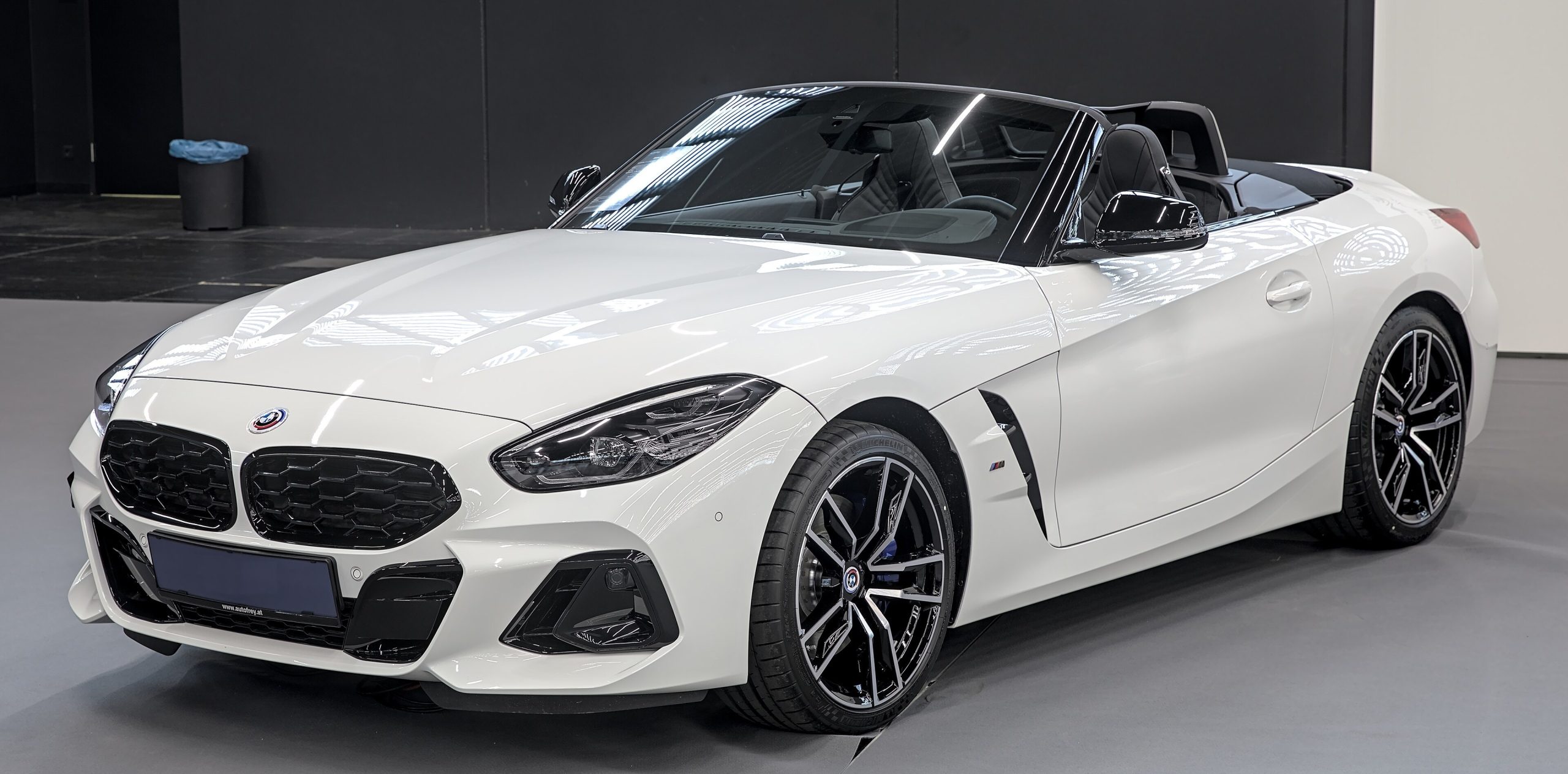
The BMW Z4 occupies a unique position in BMW’s lineup. It is a niche two-seat roadster built in relatively low volumes, requiring specialized engineering, premium materials, and a dedicated production process.
Unlike high-volume models such as the 3 Series or X3, the Z4 cannot rely on economies of scale to spread development costs across hundreds of thousands of vehicles. Instead, BMW prices the Z4 as a premium sports car to recover its investment while maintaining healthy profit margins.
One important point should be made before looking at the numbers: BMW does not publish the manufacturing cost of any individual model.
The figures below are industry estimates based on supplier costs, labor, materials, manufacturing overhead, logistics, warranty reserves, and typical automotive gross margins. They are not official BMW figures.
Still, they provide a realistic picture of how the economics of the Z4 have changed across its last six major versions.
Also Read: 10 SUVs With Third Rows That Are Too Cramped for Adults
Why a BMW Costs Much More Than Its Parts
Many buyers assume a car’s manufacturing cost is simply the price of its steel, engine, transmission, and interior. In reality, direct production is only one part of the equation.
BMW also spends billions on:
- Research and development
- Safety testing
- Crash certification
- Engine and transmission development
- Factory tooling
- Robotics
- Software engineering
- Supplier contracts
- Warranty coverage
- Shipping and logistics
- Marketing
- Dealer support
These expenses are spread across the production run of each vehicle. The Z4 is particularly expensive to develop because it sells in relatively small numbers compared with BMW’s SUVs and sedans.
The current G29 generation is also jointly developed with Toyota, sharing its platform with the Toyota GR Supra. That partnership significantly reduced development costs by allowing both companies to share engineering expenses.
1. 2003 BMW Z4 2.5i (E85)
The first-generation Z4 replaced the Z3 and entered production in BMW’s Spartanburg, South Carolina, plant for the 2003 model year. It featured an aluminum-intensive suspension, rear-wheel drive, and naturally aspirated inline-six engines.
Estimated manufacturing cost: approximately $22,000-$24,000
Original U.S. MSRP: approximately $33,300
BMW likely earned a gross manufacturing margin of roughly 30 percent before accounting for corporate overhead, dealer incentives, marketing, taxes, and warranty costs.
Although the E85 was considered an entry-level sports car, it already used expensive components, including an aluminum front suspension, premium interior materials, and BMW’s smooth inline-six engines.
2. 2006 BMW Z4 M Coupe (E86)
The Z4 M Coupe represented the ultimate version of the original platform. Powered by the legendary S54 naturally aspirated 3.2-liter inline-six borrowed from the E46 M3, it also featured upgraded brakes, suspension, differential, and extensive chassis tuning.
Estimated manufacturing cost: approximately $33,000-$36,000
Original U.S. MSRP: approximately $49,500
The higher selling price reflected not only the more powerful drivetrain but also lower production volumes. Specialty M cars generally carry higher margins because buyers are willing to pay for exclusivity.
Today, the Z4 M Coupe has become one of BMW’s most collectible modern sports cars.
3. 2009 BMW Z4 sDrive35i (E89)
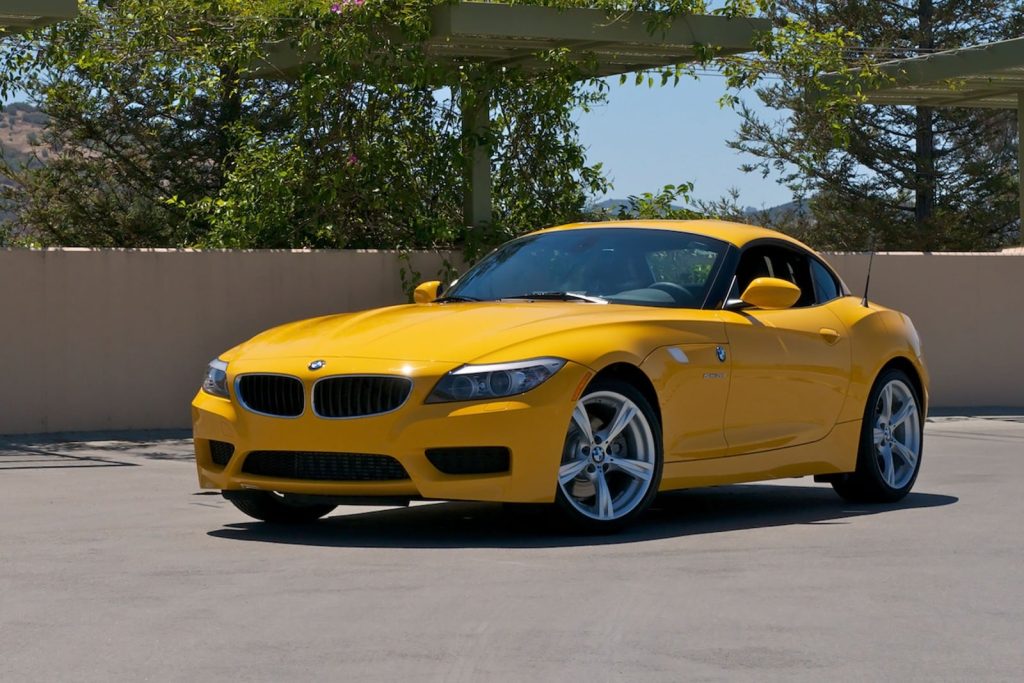
The second-generation Z4 introduced one of the most expensive engineering changes in the model’s history: a retractable aluminum hardtop.
BMW invested roughly €130 million to expand its Regensburg factory for E89 production, highlighting how costly the new generation was to manufacture.
Estimated manufacturing cost: approximately $34,000-$37,000
Original U.S. MSRP: approximately $52,400
The folding hardtop dramatically increased production complexity. It required electric motors, hydraulic mechanisms, additional structural reinforcement, and more sophisticated assembly than the soft-top used by its predecessor.
Although buyers appreciated the coupe-like refinement, the extra hardware also increased weight and production costs.
4. 2014 BMW Z4 sDrive35is (E89)
The sDrive35is became the performance flagship of the E89 lineup. It featured BMW’s twin-turbocharged N54 inline-six, a seven-speed dual-clutch transmission, adaptive suspension, larger brakes, and numerous cosmetic upgrades.
Estimated manufacturing cost: approximately $38,000-$41,000
Original U.S. MSRP: approximately $66,000
Turbocharging, premium interior equipment, and the retractable hardtop pushed production costs significantly higher than those of earlier Z4 models.
Even so, BMW maintained healthy margins by positioning the car against premium rivals such as the Porsche Boxster and Mercedes-Benz SLK.
5. 2019 BMW Z4 M40i (G29)
The third-generation Z4 represented one of BMW’s smartest financial decisions. Rather than developing a unique sports-car platform, BMW partnered with Toyota.
Both companies jointly engineered the new architecture that underpins the Z4 and the GR Supra, dramatically reducing development expenses while allowing each brand to create its own styling, suspension tuning, and interior.
The G29 also returned to a lighter fabric roof, eliminating the costly retractable hardtop used on the E89.
Estimated manufacturing cost: approximately $40,000-$43,000
Original U.S. MSRP: approximately $64,700
Despite more technology, BMW likely reduced per-car development costs through shared engineering while improving profitability.
The car is assembled by Magna Steyr in Graz, Austria, a contract manufacturer that also builds vehicles for several other premium brands.
6. 2026 BMW Z4 M40i Final Edition
The current Z4 enters its final production year in 2026. BMW has introduced a limited Final Edition featuring exclusive Frozen Black paint, unique interior trim, and both manual and automatic transmission options. Pricing starts at approximately $78,675 for the special edition.
Estimated manufacturing cost: approximately $43,000-$46,000
Starting MSRP: approximately $78,675
Limited-production special editions are typically among the most profitable vehicles manufacturers build. The additional manufacturing cost comes mainly from exclusive paint, trim, and minor equipment changes, while buyers pay a significant premium for rarity.
Estimated Manufacturing Cost vs Selling Price
| Model | Estimated Build Cost | Approximate MSRP |
|---|---|---|
| 2003 Z4 2.5i (E85) | $22,000-$24,000 | ~$33,300 |
| 2006 Z4 M Coupe | $33,000-$36,000 | ~$49,500 |
| 2009 Z4 sDrive35i (E89) | $34,000-$37,000 | ~$52,400 |
| 2014 Z4 sDrive35is | $38,000-$41,000 | ~$66,000 |
| 2019 Z4 M40i (G29) | $40,000-$43,000 | ~$64,700 |
| 2026 Z4 M40i Final Edition | $43,000-$46,000 | ~$78,675 |
The Selling Price Isn’t Pure Profit
Seeing a car that costs roughly $45,000 to manufacture selling for nearly $80,000 may suggest BMW earns more than $30,000 on every Z4. That isn’t how automotive finances work.
The selling price must also cover:
- Vehicle research and development
- Factory investments and tooling
- Supplier contracts
- Shipping and logistics
- Dealer margins
- Marketing and advertising
- Warranty reserves
- Regulatory compliance
- Corporate operating costs
Industry analysts generally estimate that premium manufacturers like BMW achieve automotive operating margins in the high single digits to low teens during strong market conditions, not the 40 to 50 percent implied by comparing manufacturing cost with MSRP alone.
Over three generations, the BMW Z4 has evolved from a relatively simple naturally aspirated roadster into a sophisticated turbocharged sports car packed with advanced electronics, premium materials, and modern safety technology.
Estimated manufacturing costs have nearly doubled since the original 2003 model, rising from roughly $23,000 to around $45,000 for today’s limited-production Final Edition.
Yet BMW has managed to keep the Z4 financially viable through careful pricing, premium positioning, and, most importantly, its engineering partnership with Toyota.
Sharing development costs with the GR Supra allowed BMW to continue offering a niche sports car that likely would have been difficult to justify on its own, ensuring the Z4 remained profitable through the end of its current production run.
Also Read: 10 Car Brands That Also Make Boats Engines
