
Cars and boats may operate in completely different environments, but both depend on engines that must deliver dependable power under demanding conditions.
Automakers have long used their engineering knowledge beyond roads, creating or supporting marine engine divisions that power fishing boats, cruisers, sport boats, commercial vessels, and recreational watercraft.
In some cases, the same company builds both passenger vehicles and outboard motors. In others, automotive engine designs are adapted for marine use through specialized divisions or closely connected companies.
Marine engines face challenges that car engines do not encounter every day. Saltwater corrosion, constant load, cooling requirements, limited engine-bay ventilation, and long hours at steady throttle all influence how a boat engine is designed.
A motor that works well in a car cannot simply be placed in a boat without changes. It needs marine-grade materials, different cooling systems, corrosion protection, specialized exhaust routing, and safety equipment suitable for operation on water.
The brands in this list show how broad the automotive industry can be. Some are famous for small cars and motorcycles, while others are known for luxury vehicles, trucks, or industrial machinery.
Their marine operations prove that automotive engineering is not limited to highways. These companies have helped power everything from small fishing boats to large yachts, often using technology developed through decades of experience with internal-combustion engines.
Also Read: 10 Hidden Features In The Honda Pilot
1. Honda
Honda is widely known for practical cars such as the Civic, Accord, CR-V, and Pilot, but its engineering reach extends far beyond passenger vehicles. Honda Marine produces a range of four-stroke outboard engines for boats, and many of its marine products benefit from technology connected to Honda’s automotive development.
The company has built a strong reputation for quiet operation, fuel efficiency, smooth acceleration, and long-term reliability.
One of Honda Marine’s most interesting qualities is the connection between its outboard engines and Honda automobile powertrains. Certain larger Honda outboards use engine architecture related to V6 engines found in Honda SUVs and minivans.
This gives the company a useful engineering foundation because it can adapt proven automotive technologies for marine conditions. Variable valve timing, electronic fuel injection, and advanced cooling systems are among the features that help Honda outboards perform efficiently on the water.
Honda’s marine lineup includes compact portable engines for small boats, mid-range motors for family fishing boats, and powerful V6 outboards for larger vessels.
The BF350 is one of the brand’s most advanced modern offerings, bringing a V8 layout to Honda’s outboard range. It reflects the same focus on refinement that has helped Honda become successful in the automotive world.
The company’s boat engines are especially popular with buyers who want a four-stroke motor that is easy to operate and relatively quiet.
Honda’s automotive background gives it a major advantage because the brand already understands engine durability, emissions control, fuel delivery, and electronic management systems.
2. Volvo
Volvo has a long connection with marine propulsion through Volvo Penta, one of the best-known names in the boat-engine industry. Volvo Penta became part of the Volvo Group in 1935, but its marine-engine history reaches even further back.
The division produces diesel and gasoline engines, sterndrive systems, inboard propulsion units, and advanced pod-drive technology for recreational and commercial boats.
Unlike brands that focus mainly on outboard motors, Volvo Penta is heavily associated with inboard engines and integrated propulsion systems. Its products are used in cruisers, yachts, workboats, ferries, and other vessels that require strong, dependable power.
Volvo Penta’s IPS system is particularly important because it uses forward-facing propellers mounted beneath the hull. This arrangement can improve maneuverability, efficiency, and onboard space compared with a more traditional shaft-drive setup.
Volvo’s automotive and marine operations share a similar engineering philosophy. Both place importance on durability, safety, efficient power delivery, and refined operation.
Volvo Penta engines are designed to work under continuous load, which is essential for boats that may operate for long periods at steady speeds. Marine engines also need protection from corrosion and specialized cooling systems, making them very different from standard passenger-car engines.
The Volvo name is associated with family SUVs, wagons, and sedans, while Volvo Penta serves a completely different type of customer. Yet the connection makes sense because both businesses rely on advanced engine design and mechanical reliability.
A Volvo SUV may carry a family on a highway trip, while a Volvo Penta-powered boat can carry passengers across open water with the same focus on controlled, dependable performance.
3. Suzuki
Suzuki is one of the clearest examples of a vehicle manufacturer that has successfully built a major presence on water as well as on land. The company produces compact cars, SUVs, motorcycles, all-terrain vehicles, and outboard engines through Suzuki Marine.
Its marine business began in 1965 with the D55, a small 5.5-horsepower outboard. Since then, Suzuki has developed one of the broadest outboard lineups in the industry.
Suzuki Marine is particularly well known for its four-stroke engines. The range begins with small portable motors for lightweight boats and extends to powerful V6 outboards used on larger fishing boats, offshore vessels, and performance-oriented recreational craft.
The flagship DF350A and DF350AMD models use a 4.4-liter V6 engine and are designed for boat owners who need strong acceleration, high-speed capability, and reliable power for demanding marine use.
Its automotive expertise is visible in the technology used by Suzuki Marine. Electronic fuel injection, variable valve timing, lean-burn operation, timing-chain systems, and advanced engine-control software all help improve efficiency and responsiveness.
Marine engines must work under sustained load for much longer periods than car engines, so Suzuki also uses corrosion-resistant materials, specialized water intakes, and marine-specific cooling arrangements.
The Suzuki name is familiar to car buyers through models such as the Swift, Jimny, Vitara, and S-Cross. While these vehicles serve commuters and families, Suzuki outboards are built for anglers, boaters, and commercial operators.
The connection between the two sides of the company is its ability to produce compact, efficient engines that remain dependable in difficult operating conditions.
Suzuki’s marine division has also earned recognition for innovation. Its large V6 outboards introduced features such as dual propellers, which can improve grip in the water and help larger boats accelerate with more confidence. That technical focus has made Suzuki a serious force in the global boat-engine market.
4. Yamaha
Yamaha is best known as a motorcycle manufacturer, but it has also produced automobiles through important engineering partnerships and has a deep history in marine propulsion.
The company has designed engines for several performance cars, including Toyota models, while Yamaha Motor produces one of the world’s most respected ranges of outboard engines.
This makes Yamaha a unique entry because its automotive connection comes through engine development rather than a large passenger-car lineup carrying the Yamaha badge.
Yamaha’s role in the car industry includes work on high-performance engines for Toyota. The famous Toyota 2000GT used a Yamaha-developed cylinder head, and later models such as the Toyota Celica, Lexus LFA, and several performance-oriented Toyota vehicles benefited from Yamaha engineering.
The company’s experience with high-revving motorcycle engines, precision manufacturing, and advanced intake design made it a valuable partner for automotive projects.
On the water, Yamaha Outboards has a far more visible public identity. Its lineup includes portable engines, mid-range four-stroke units, high-output V6 motors, and powerful V8 outboards.
The Yamaha XTO Offshore V8 is one of its best-known products, designed for large center-console fishing boats and luxury vessels that require major thrust and durability.
Yamaha marine engines are respected for smooth power delivery and strong reliability. Features such as electronic fuel injection, digital throttle control, variable camshaft timing, and corrosion-resistant finishes help them operate in freshwater and saltwater environments.
Boat owners also value Yamaha’s large dealer network, which can make servicing easier in coastal and recreational boating regions.

The company’s automotive work may be less visible than its motorcycle or marine products, but Yamaha’s engineering influence has reached highways, racetracks, and marinas. Its ability to develop engines for very different machines has helped it become one of the most versatile powertrain specialists in the world.
5. Volkswagen
Volkswagen has built its reputation through passenger cars such as the Golf, Jetta, Passat, Tiguan, Atlas, and many other models sold around the world. However, the company’s engineering has also reached the marine industry through Volkswagen Marine engines.
These powerplants were adapted from Volkswagen Group automotive diesel engines and designed for use in boats requiring efficient, long-range propulsion.
Volkswagen Marine became particularly associated with diesel engines based on the company’s TDI technology. Diesel power suits many boats because it provides strong, low-speed pulling power, good fuel efficiency, and the ability to operate for long periods under heavy loads.
A boat engine does not experience the same stop-and-go driving cycle as a car engine. It often runs at steady speeds for hours, which makes torque, cooling, corrosion resistance, and fuel economy especially important.
The company’s marine engines used automotive-derived diesel architecture but required major changes before being installed in a vessel. Marine versions needed special cooling systems, waterproof electrical components, corrosion-resistant materials, different exhaust arrangements, and safety features suitable for enclosed engine compartments.
These changes allowed Volkswagen-based engines to operate in cruisers, sailing yachts, workboats, and other recreational vessels.
Volkswagen’s involvement in marine propulsion shows how flexible its diesel-engine expertise could be. The brand became famous for compact and efficient TDI-powered cars, and that same focus on fuel economy made its marine engines appealing to boat owners who wanted to travel farther between refueling stops.

While Volkswagen no longer has the same visible marine-engine presence it once did, its past marine products remain an important example of automotive technology being adapted for life on the water. The company proved that a well-developed road-car diesel engine could become a capable marine power source when properly modified.
6. BMW
BMW is recognized around the world for luxury sedans, performance coupes, sporty SUVs, and high-revving engines. Long before modern BMW models became common on roads, the company also had a connection to marine propulsion.
BMW Marine was established as a dedicated division in the late 1970s, although BMW’s involvement with marine engines began much earlier. The division produced marinized versions of BMW automotive engines for use in powerboats, sailboats, and other recreational vessels.
BMW Marine used several engines that were closely related to units found in BMW passenger cars. The company’s four-cylinder and inline-six gasoline engines were modified for marine use, with added protection against saltwater corrosion and redesigned systems for cooling and exhaust management.
These engines were marketed to boat builders and private owners looking for smooth, refined power in a marine package.
The marine division also produced diesel engines and stern-drive systems. BMW’s Z-Drive was developed to compete with established marine propulsion systems from companies such as Volvo Penta and Mercury Marine.
A stern-drive arrangement combines an inboard engine with an external drive unit, giving a boat a balance of interior space, maneuverability, and performance.
BMW Marine did not become as large as the company’s automotive division, but it demonstrated the versatility of BMW engine design.
The same engineering principles that helped BMW build responsive road cars were useful on water, particularly smooth power delivery, compact packaging, and strong mechanical performance.
The division was eventually sold to Mercury Marine in the late 1980s. Even so, BMW Marine engines remain part of the company’s history, and some examples are still maintained by boat owners and marine specialists.
BMW’s marine chapter is a reminder that the brand’s engineering ambitions once extended well beyond cars and motorcycles.
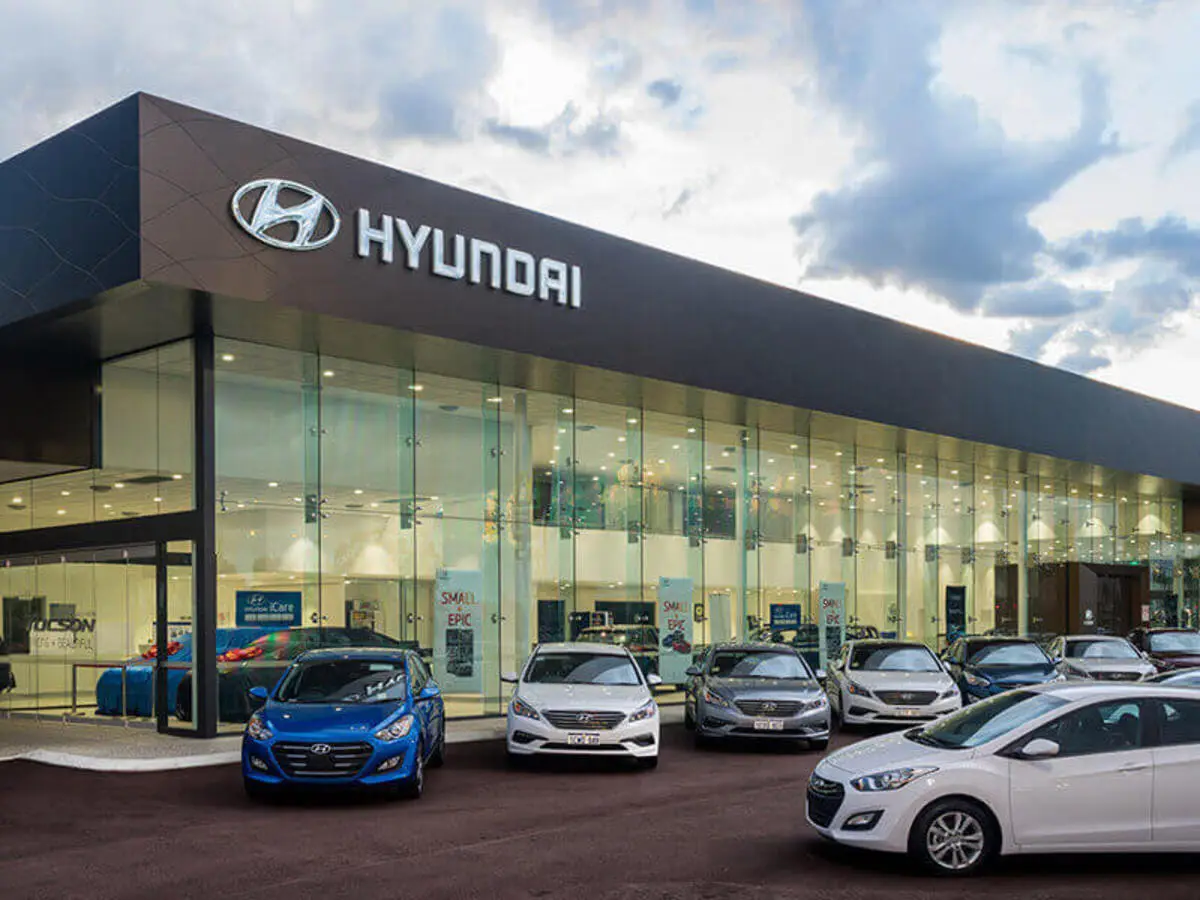
7. Hyundai
Hyundai has become a major automotive manufacturer through vehicles such as the Elantra, Sonata, Tucson, Santa Fe, Palisade, and Ioniq models.
The company also has a direct connection to the marine-engine industry through Hyundai SeasAll, a business that develops diesel propulsion systems using technology related to Hyundai and Kia automotive powertrains.
Hyundai SeasAll was established to adapt modern diesel-engine engineering for boats. Its products are designed for inboard, sterndrive, shaft-drive, and waterjet applications, making them suitable for leisure boats, fishing vessels, small commercial craft, and larger yachts.
The company offers engines ranging from approximately 200 horsepower to 700 horsepower, giving it a much broader marine presence than many people expect from an automaker best known for family cars and SUVs.
The important link between Hyundai’s road vehicles and its boat engines is diesel technology. Hyundai SeasAll uses common-rail fuel injection, turbocharging, electronic engine management, and compacted graphite iron engine blocks in several of its products.
These systems are useful in marine operations because boat engines need strong torque, efficient fuel consumption, and dependable cooling while running under sustained load.
A Hyundai SeasAll marine engine is not simply taken from a passenger vehicle and placed in a boat. It receives marine-grade components, corrosion protection, revised cooling arrangements, and hardware designed to work safely around water.
Still, the foundation of Hyundai’s automotive engineering gives the marine division a useful starting point.
Hyundai’s involvement in marine propulsion reflects how far the company’s powertrain expertise has expanded.
A Hyundai SUV may be designed for school runs and highway travel, while a Hyundai-based marine diesel can power a cruiser or workboat for hours at a time. Both depend on efficient engine design, modern electronic controls, and reliable long-distance performance.
8. General Motors
General Motors is one of the most influential automotive companies in American history, responsible for brands such as Chevrolet, GMC, Cadillac, Buick, and formerly Pontiac, Oldsmobile, and many others.
Its engine designs have also had a major impact on recreational boating, even when the marine engines were sold by specialized companies rather than directly under a GM Marine badge.
For decades, GM V8 engines became a popular foundation for marine propulsion. Companies including MerCruiser, Indmar, Crusader, and Marine Power adapted Chevrolet small-block and big-block V8 engines for use in ski boats, cabin cruisers, sport boats, and offshore performance craft.
The familiar Chevrolet 350-cubic-inch V8, also known as the 5.7-liter small-block, became one of the best-known marine engine platforms because it was compact, powerful, widely available, and relatively easy for marine companies to support.
Marine versions of GM engines needed substantial changes before being used in boats. They received corrosion-resistant components, marine cooling systems, specialized exhaust manifolds, spark-protected electrical equipment, revised fuel systems, and camshaft tuning suited to steady high-load operation.
These changes were essential because a boat engine often works harder for longer periods than a road-car engine.
GM’s truck-based V8 architecture was especially useful for marine applications because it offered strong low-end torque. That matters when a boat needs to lift onto a plane, carry passengers, pull skiers, or move through rough water. Even today, GM-based V8 engines remain common in many inboard and sterndrive boats.

The connection between General Motors and marine propulsion proves that automotive engines can have a life far beyond the road. A Chevrolet V8 may power a pickup truck, a muscle car, or a family boat, but its ability to produce dependable torque has made it valuable in every one of those roles.
9. Mitsubishi
Mitsubishi is a familiar name in the automotive world through vehicles such as the Outlander, Eclipse Cross, Triton, Pajero Sport, and Mirage. Its wider industrial background is even more extensive, covering heavy machinery, energy systems, aerospace equipment, and marine propulsion.
Mitsubishi Heavy Industries produces marine engines and generator systems for vessels ranging from workboats and fishing craft to cargo ships, ferries, offshore support vessels, and large commercial ships.
The company’s marine engines are very different from the compact gasoline units used in Mitsubishi passenger cars. They are large diesel power plants built to run for long periods under constant load.
A road vehicle may accelerate, brake, idle, and cruise at changing speeds throughout the day. A marine diesel engine can operate at a steady output for hours, so durability, cooling capacity, fuel efficiency, and resistance to harsh conditions become especially important.
Mitsubishi marine engines are used in propulsion and auxiliary applications. Propulsion engines move the vessel through water, while auxiliary engines can support onboard electrical systems, pumps, refrigeration equipment, navigation systems, and other essential functions.
The company offers engines across a very wide power range, including units suitable for smaller commercial vessels and much larger engines for demanding marine operations.
The connection between Mitsubishi’s automotive and marine businesses comes from deep engineering experience. Both depend on precision manufacturing, efficient combustion, reliable fuel systems, and strong long-term durability.
Mitsubishi’s cars are built for drivers who need dependable transportation, while its marine engines are designed for operators who cannot afford mechanical trouble far from shore.
Mitsubishi may not be as widely associated with recreational boat engines as Honda or Suzuki, but its marine division has a major role in the commercial side of the industry. Its products help power vessels that carry people, cargo, equipment, and supplies across difficult waters.
10. Toyota
Toyota is one of the largest car manufacturers in the world, known for vehicles such as the Corolla, Camry, RAV4, Tacoma, Land Cruiser, and Prius. Less widely known is Toyota’s long-running marine business, which has produced pleasure boats and marine engines using technology connected to the company’s automotive expertise.
Toyota entered the marine field in the 1990s and developed a range of boats designed for buyers who wanted the company’s quality standards on the water as well as on the road.
Toyota Marine has built vessels such as the Ponam series, which uses aluminum hull construction and marine propulsion systems developed for reliable cruising. The company also produced marine engines for certain boats and supplied engine technology to outside marine specialists.
Toyota’s automotive engineering experience gave it a strong foundation because marine engines need dependable combustion systems, efficient fuel delivery, robust cooling, and long service life.
One notable example is Toyota’s use of V8 engine technology in marine applications. The company’s 1UZ-FE V8, originally known from luxury road cars such as the Lexus LS 400, was adapted for boat use.
A marine version required major changes before it could operate safely in a vessel. It needed corrosion-resistant components, marine cooling equipment, revised exhaust systems, and electrical parts designed to reduce fire risk in enclosed engine compartments.
Toyota’s marine work shows that its engineering philosophy extends beyond passenger cars and trucks. The same attention to reliability that helped make the Corolla and Camry popular has also been applied to boats intended for long-distance cruising and recreational use.
Toyota Marine products have been especially important in Japan, where the company developed sales, service, and marina support for its customers.
Although Toyota is not one of the largest global outboard-engine manufacturers, it has made genuine marine engines and complete boats. That makes it a worthy entry because it proves that one of the world’s most recognized car brands has also brought its technology to the water.
Also Read: 10 Best Jaguar Cars Ever Made – Ranked
