
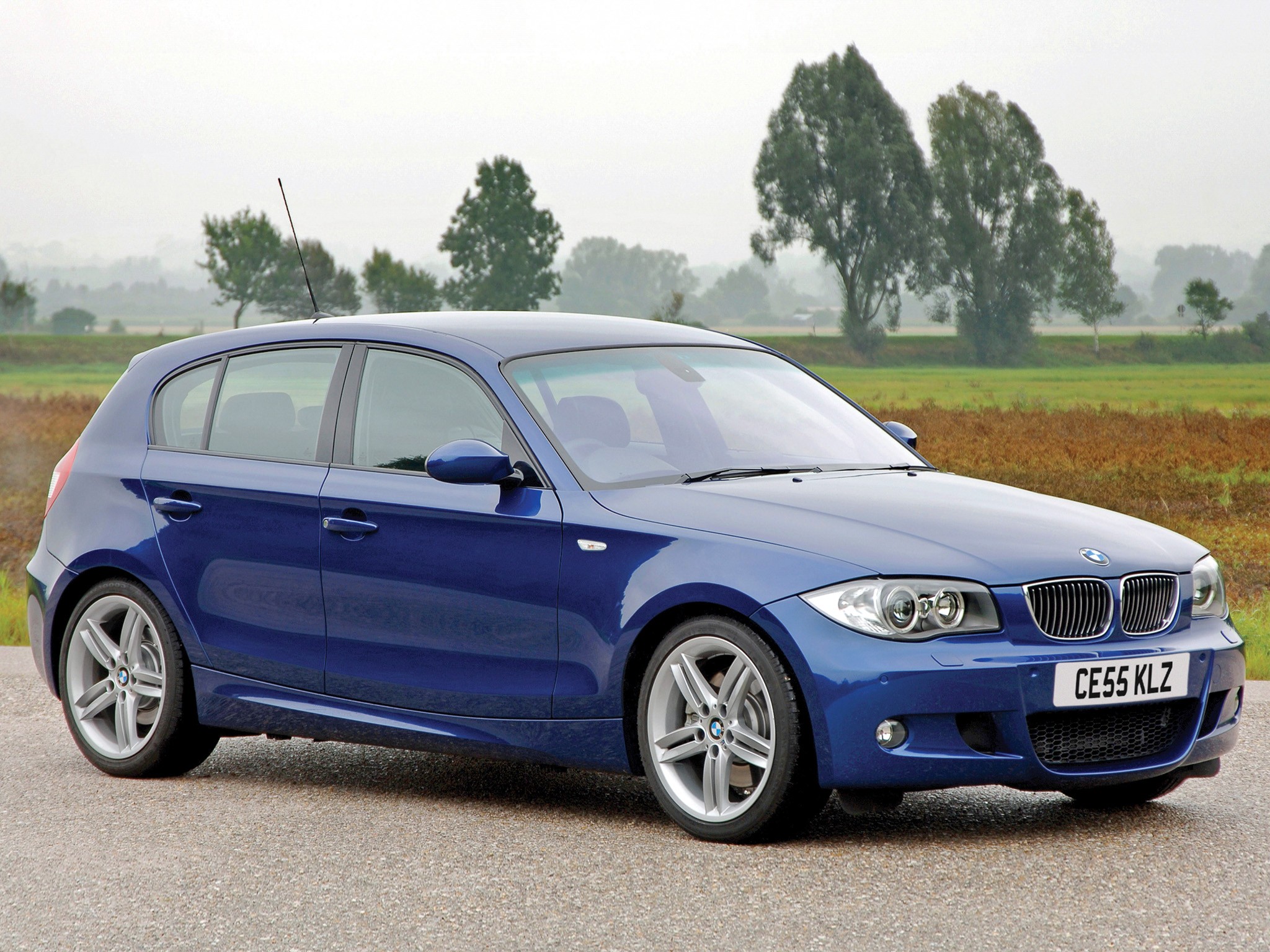
Buying a BMW has long been associated with premium pricing, luxury appointments, and a driving experience that many mainstream brands struggle to match. However, not every BMW has carried an intimidating price tag.
Throughout the company’s history, BMW has introduced several entry-level models that made German engineering accessible to a much wider audience.
Some were developed to attract first-time luxury buyers, while others were designed during changing economic conditions that demanded smaller, more affordable vehicles. Regardless of the reason, these models proved that owning a BMW did not always require an executive-level budget.
Affordability does not necessarily mean compromise. Even the least expensive BMWs have traditionally delivered balanced handling, refined engines, solid build quality, and a level of prestige that helped distinguish them from ordinary compact cars.
While equipment levels and engine outputs varied, each model stayed true to BMW’s focus on rear-wheel-drive dynamics, quality interiors, and enjoyable performance whenever possible.
Ranking the cheapest BMWs ever made is not simply about identifying the lowest sticker price. Inflation, production years, available technology, and the automotive market of each era all play a role.
Some of these cars became global sales successes, while others remain overlooked bargains today. Together, they tell the story of how BMW expanded beyond luxury flagships to welcome buyers looking for premium ownership at a far lower cost.
Also Read: 10 Non-Mazda Cars That Use A Mazda Engine
1. BMW 700 (1959 to 1965)
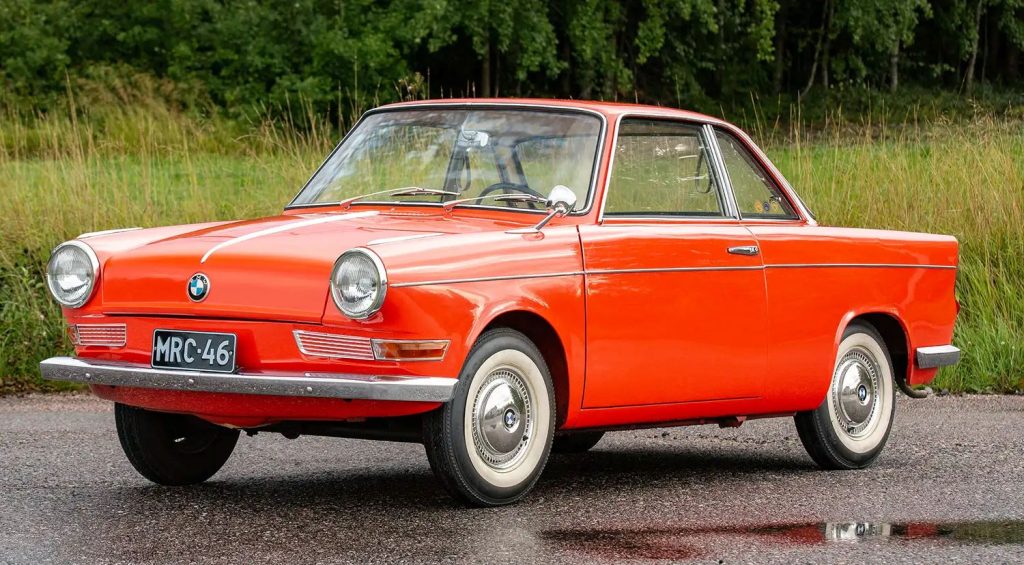
The BMW 700 occupies a remarkable place in the company’s history because it arrived when BMW desperately needed a commercial success. During the late 1950s, the manufacturer faced serious financial challenges, and expensive luxury sedans were not generating enough sales.
The compact BMW 700 offered an affordable solution for customers while giving the company a desperately needed volume seller. Its low purchase price attracted buyers across Europe who wanted dependable transportation with a touch of sporting character.
Although compact in every sense, the 700 avoided feeling like a stripped economy car. The lightweight chassis contributed to lively handling, and the rear-mounted twin-cylinder engine kept running costs manageable.
Customers could choose from coupe and sedan body styles, making the model appealing to a broad audience. Many families appreciated its practical dimensions, while younger buyers enjoyed its surprisingly engaging driving characteristics.
Another reason the 700 deserves recognition is its historical significance. Revenue generated from this affordable model helped stabilize BMW’s finances and gave the company the breathing room required to develop future generations of larger and more profitable vehicles. Without its commercial success, BMW’s future may have looked very different.
Collectors still admire the BMW 700 because it represents one of the company’s biggest turning points. Values remain reasonable compared to many classic BMWs, reflecting its original mission as an inexpensive car.
More importantly, it demonstrated that affordability and enjoyable driving could exist together long before BMW became known worldwide for premium sports sedans.
Specifications
- Engine: 697 cc air-cooled flat twin
- Torque: 38 lb ft
- Horsepower: 40 hp
- Length/Width: 139.4 in / 58.3 in
2. BMW 1502 (1975 to 1977)
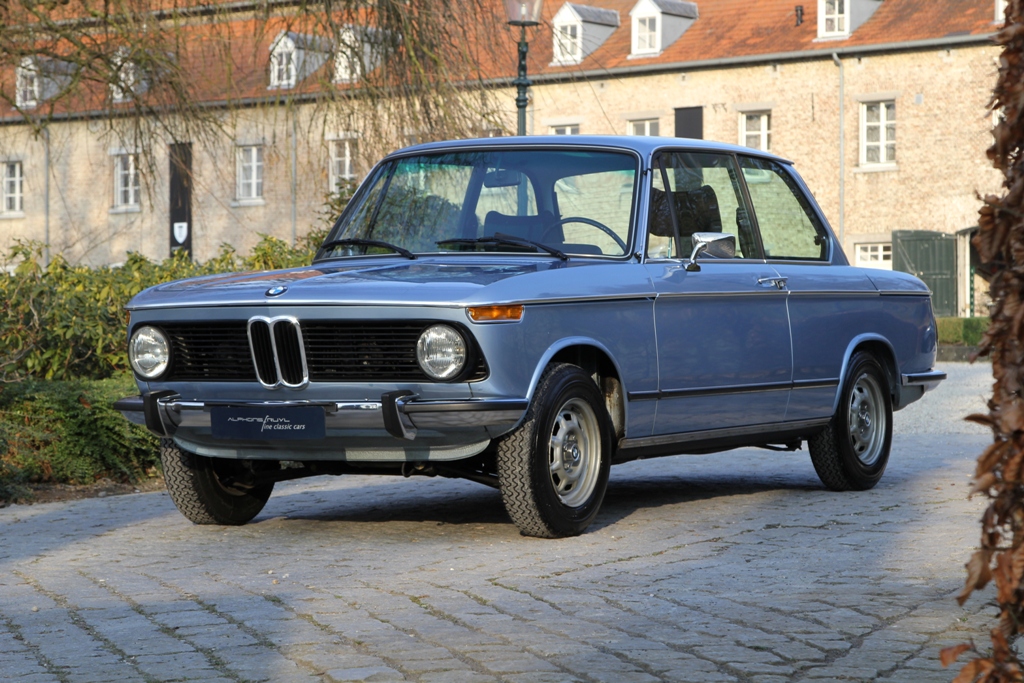
Few affordable BMWs earned the reputation of the 1502. Introduced as the entry point into BMW’s famous 02 Series, it was intentionally designed to lower the cost of ownership without sacrificing the engaging personality that made the lineup successful.
Buyers who wanted a genuine BMW but could not justify the expense of more powerful variants finally had a practical alternative.
Instead of relying on high-output performance, the 1502 emphasized simplicity and reliability. Its naturally aspirated four-cylinder engine produced modest power, yet the lightweight body meant the car remained enjoyable on winding roads.
Steering feedback, balanced weight distribution, and rear-wheel drive ensured the driving experience stayed true to BMW traditions. It never felt like an economy car pretending to be sporty because its engineering fundamentals were genuinely capable.
The 1502 also benefited from straightforward mechanical construction. Routine servicing proved relatively uncomplicated, and fuel economy compared favorably with larger European sedans of the era. These advantages appealed to students, young professionals, and families entering the premium market for the first time.
Even decades later, enthusiasts appreciate the 1502 because it represents one of the most accessible classics from BMW’s golden years.
Restoration costs remain lower than those associated with high-performance 2002 models, making ownership realistic for collectors seeking vintage German engineering without spending a fortune. It remains an important reminder that BMW built affordable cars with authentic character rather than merely inexpensive transportation.
Specifications
- Engine: 1.6-liter naturally aspirated inline 4
- Torque: 87 lb ft
- Horsepower: 75 hp
- Length/Width: 166.1 in / 62.8 in
3. BMW E30 316i (1982 to 1991)
By the early 1980s, the BMW 3 Series had already established itself as the benchmark compact executive sedan, but the company understood that not every customer needed a six-cylinder engine.
The E30 316i became the gateway into BMW ownership, combining the iconic styling and engineering of the second-generation 3 Series with a more affordable powertrain. It allowed thousands of buyers to experience the BMW badge without paying the premium attached to higher trim levels.
The 316i focused on balance instead of outright speed. Its four-cylinder engine delivered enough performance for daily commuting while keeping insurance costs, fuel consumption, and maintenance expenses lower than those of larger variants.
Drivers still enjoyed the responsive steering, near-perfect weight distribution, and rear-wheel drive layout that made the E30 legendary. Even with modest horsepower, the car felt composed and rewarding through corners, proving that enjoyable handling was not reserved for expensive performance models.
Another factor that made the 316i attractive was its impressive build quality. Doors closed with a reassuring solidity, cabin materials aged well, and mechanical reliability earned praise across Europe.
Buyers received many of the same engineering standards found in more expensive BMWs, making the lower purchase price feel like an exceptional value rather than a compromise.
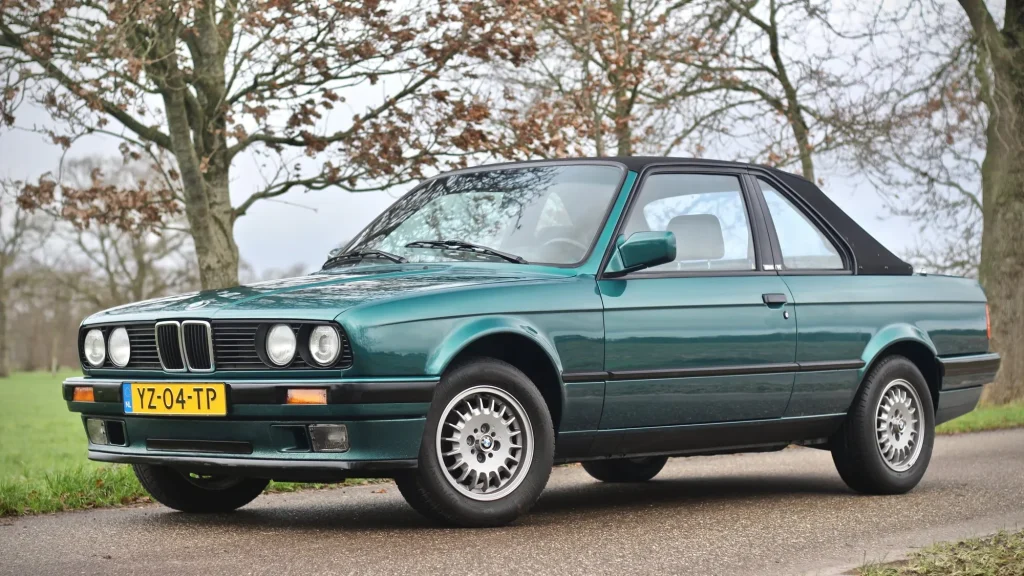
Today, the E30 316i has become increasingly appreciated among enthusiasts looking for an affordable classic BMW. While performance versions command substantial prices, the 316i continues to offer an accessible entry into vintage BMW ownership.
It reflects an era when the company successfully blended practicality, quality, and driver involvement into one attractively priced package.
Specifications
- Engine: 1.8 liter naturally aspirated inline 4
- Torque: 103 lb ft
- Horsepower: 102 hp
- Length/Width: 170.3 in / 64.8 in
4. BMW E36 316i (1990 to 1998)
Luxury cars were becoming increasingly sophisticated during the 1990s, yet BMW ensured there was still an affordable path into the brand.
The E36 316i fulfilled that role by delivering modern styling, improved safety, and better refinement while remaining the least expensive member of the E36 family in many markets. For buyers stepping into premium ownership for the first time, it represented excellent value.
Unlike its predecessor, the E36 placed a stronger emphasis on everyday comfort. Improved suspension tuning produced a smoother ride, cabin insulation reduced road noise, and ergonomics were significantly enhanced.
These upgrades gave owners a more mature driving experience without dramatically increasing the purchase price. The result was a compact sedan that comfortably handled long journeys while remaining enjoyable on twisting roads.
Its modest four-cylinder engine prioritized efficiency rather than acceleration, but the chassis never felt overwhelmed.
The steering remained communicative, braking performance inspired confidence, and the balanced platform encouraged spirited driving whenever the opportunity arose. This combination helped the E36 maintain BMW’s sporting reputation despite occupying the lower end of the price range.
The 316i also earned recognition for its durability. Many examples accumulated hundreds of thousands of miles with routine maintenance, contributing to their popularity in both European and international used car markets.
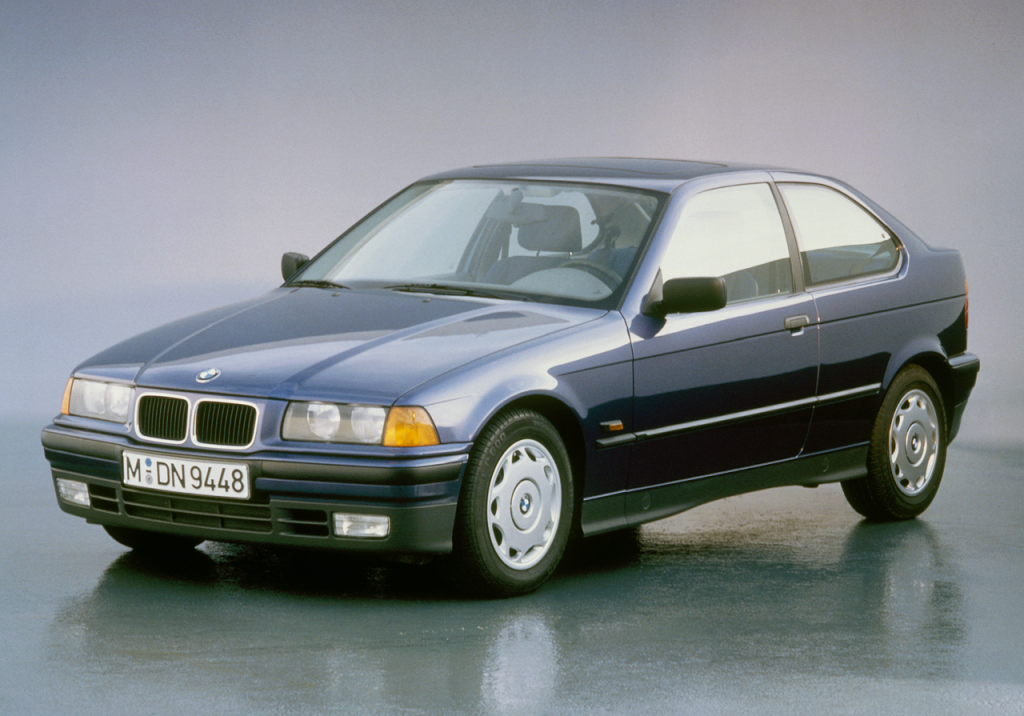
Even now, it remains one of the most economical ways to experience a classic rear-wheel-drive BMW with timeless styling. The E36 316i proved that affordability could coexist with premium engineering and everyday usability.
Specifications
- Engine: 1.6-liter naturally aspirated inline 4
- Torque: 111 lb ft
- Horsepower: 100 hp
- Length/Width: 174.5 in / 67.3 in
5. BMW E46 316i (1998 to 2005)
Ask BMW enthusiasts which generation of the 3 Series achieved the best balance between comfort, quality, and driver engagement, and the E46 is almost always part of the conversation.
While performance versions such as the 330i and M3 captured the headlines, the 316i quietly served as the most affordable gateway into one of BMW’s most respected model families. It delivered the same handsome proportions, premium cabin, and rear-wheel-drive dynamics without demanding a premium purchase price.
The E46 316i appealed to buyers who valued refinement over outright performance. Its naturally aspirated four-cylinder engine was designed to provide dependable everyday transportation while keeping operating costs reasonable.
Fuel economy was competitive for its class, insurance premiums remained lower than those of six-cylinder models, and routine servicing was generally simpler than on higher specification variants. These qualities made it especially attractive to young professionals and families looking to enter the luxury segment.
Inside, the car felt substantially more expensive than its price suggested. Soft-touch materials, supportive seats, intuitive controls, and solid assembly quality helped create a cabin that aged exceptionally well.
BMW also invested heavily in chassis engineering, giving the 316i excellent steering precision and composed handling that remained enjoyable even at moderate speeds.
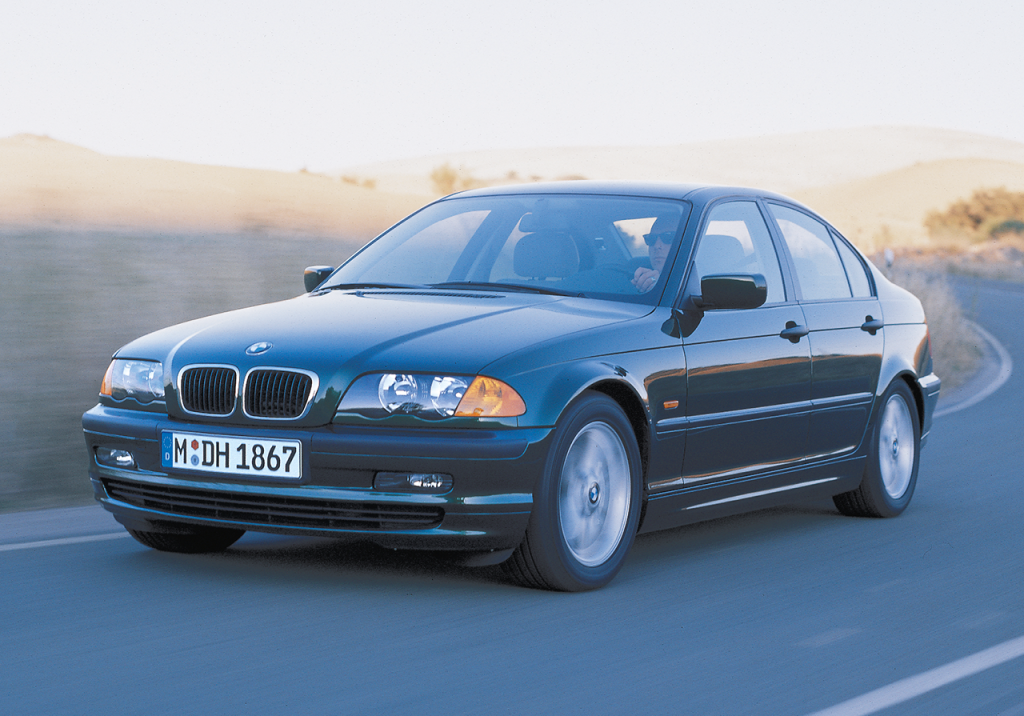
Years after production ended, the E46 316i continues to attract buyers seeking an affordable classic BMW. While collectors often chase more powerful versions, the entry-level model offers the same timeless styling and much of the same driving character at a considerably lower cost.
Its enduring popularity highlights how BMW successfully combined premium engineering with genuine affordability.
Specifications
- Engine: 1.8 liter naturally aspirated inline 4
- Torque: 129 lb ft
- Horsepower: 115 hp
- Length/Width: 176.7 in / 68.4 in
6. BMW 116i (E87) (2004 to 2011)
The introduction of the 1 Series marked a significant change in BMW’s product strategy. Instead of concentrating solely on larger executive sedans, the company created a compact hatchback aimed at buyers seeking premium quality in a smaller, more affordable package.
The 116i became the entry point to this new lineup, offering one of the lowest starting prices in BMW’s modern history while preserving the brand’s distinctive driving character.
Unlike many rivals that relied on front-wheel-drive layouts, the 116i retained rear-wheel-drive architecture. This decision gave the hatchback a handling balance rarely found in the compact segment.
Even though its engine produced modest power, the car felt lively thanks to accurate steering, well-tuned suspension, and predictable cornering behavior. Drivers appreciated that it remained enjoyable without needing excessive horsepower.
The interior reflected BMW’s premium philosophy despite its budget-friendly positioning. Materials were durable, seating offered excellent long-distance comfort, and the dashboard followed a clean, driver-focused layout.
Owners also benefited from a practical hatchback design that added versatility for urban lifestyles without sacrificing refinement.
The 116i proved that affordability did not require abandoning BMW’s engineering principles. It successfully attracted younger customers who may never have considered the brand before, helping expand BMW’s global customer base.
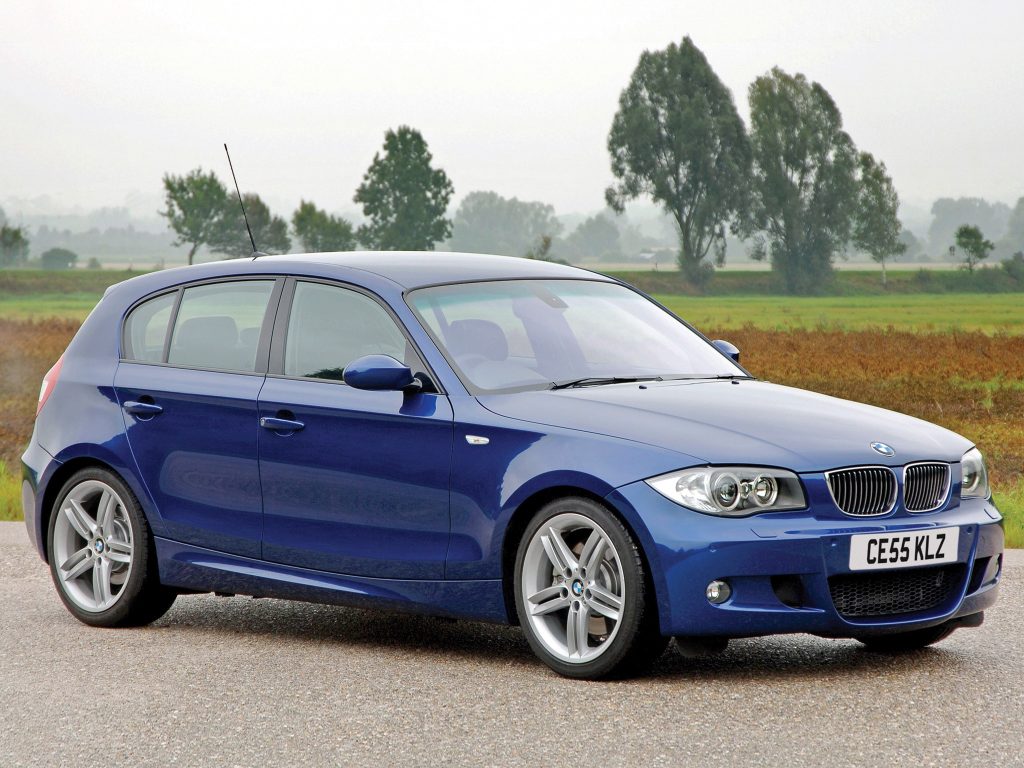
Today, well-maintained examples remain among the least expensive modern BMWs to own, making the 116i an appealing option for buyers seeking premium quality on a sensible budget.
Specifications
- Engine: 1.6-liter naturally aspirated inline 4
- Torque: 150 Nm (111 lb ft)
- Horsepower: 115 hp
- Length/Width: 166.9 in / 68.7 in
7. BMW 114i (F20) (2012 to 2015)
When BMW launched the second-generation 1 Series, the company wanted to attract an even broader audience without compromising its premium image. The answer was the 114i, one of the least expensive new BMWs ever offered in many European markets.
Although positioned at the bottom of the range, it still carried the same attention to engineering, safety, and refinement found throughout the lineup. For buyers seeking the prestige of a BMW badge at the lowest possible entry price, the 114i became an appealing choice.
Its turbocharged four-cylinder engine was tuned primarily for efficiency rather than outright speed. That approach suited urban commuters and first-time luxury car buyers who wanted low fuel consumption and manageable ownership costs.
The engine delivered smooth power for city driving, while the rear-wheel-drive platform continued to provide handling characteristics that distinguished the 1 Series from many front-wheel-drive competitors. The result was a hatchback that remained enjoyable even during everyday journeys.
BMW also avoided making the cabin feel basic. The driver-focused dashboard, supportive front seats, solid switchgear, and high-quality materials created an upscale atmosphere rarely found in entry-level hatchbacks.
Modern infotainment options, multiple safety systems, and refined ride quality further reinforced the feeling that buyers were purchasing a genuine premium vehicle rather than a budget model with a luxury badge.
Although it lacked the performance of higher trim levels, the 114i fulfilled its purpose exceptionally well. It introduced countless new customers to BMW ownership while maintaining respectable efficiency and comfort.
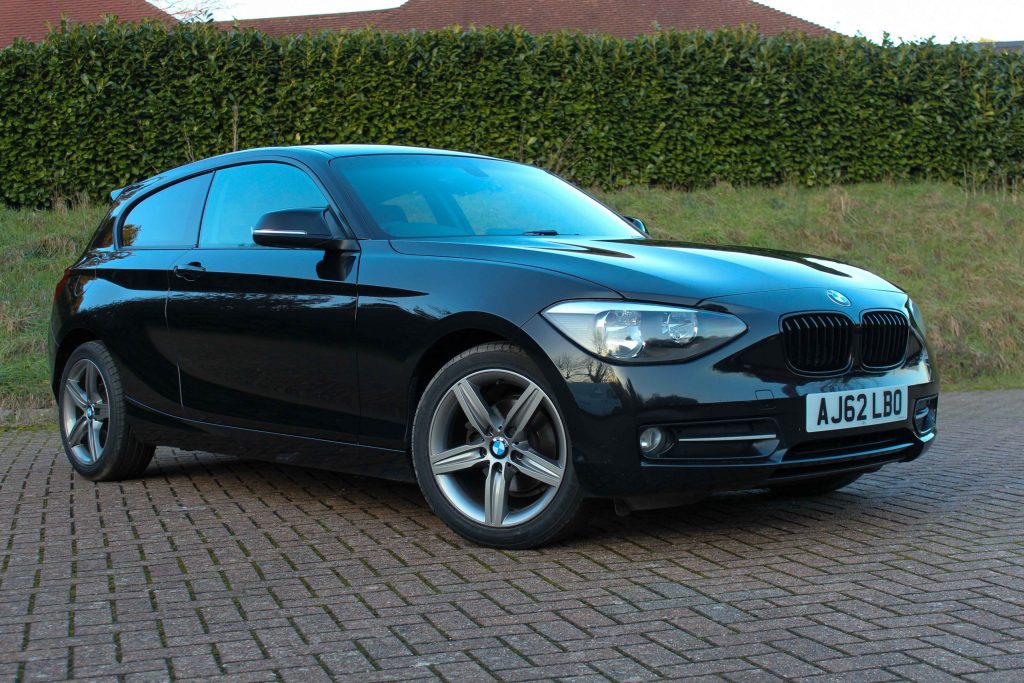
Its combination of affordable pricing, premium construction, and balanced driving dynamics secured its place among the cheapest BMW models ever produced.
Specifications
- Engine: 1.6-liter turbocharged inline-4
- Torque: 180 Nm (133 lb ft)
- Horsepower: 102 hp
- Length/Width: 170.3 in / 69.8 in
8. BMW 218i Active Tourer (2014 to Present)
The 218i Active Tourer represented one of BMW’s boldest departures from tradition. Rather than focusing exclusively on sports sedans and coupes, the company entered the compact family vehicle segment with a model designed for practicality and affordability.
It also became BMW’s first production front-wheel-drive vehicle, allowing engineers to maximize interior space while keeping manufacturing costs competitive. This strategy helped make the 218i Active Tourer one of the brand’s most accessible new vehicles.
Families appreciated the spacious cabin, generous rear seat room, and flexible cargo area, features that were uncommon in BMW’s smaller models at the time.
Despite its practical mission, the Active Tourer retained a premium atmosphere with quality materials, supportive seating, and intuitive technology. Buyers no longer had to choose between luxury and functionality because the 218i successfully blended both qualities into a compact package.
Power came from a compact turbocharged engine that emphasized efficiency and smooth everyday performance. While it was never intended to deliver sports car acceleration, the engine provided confident highway cruising and economical fuel consumption.
BMW also tuned the suspension to prioritize comfort, making the vehicle well suited to daily commuting and long family trips.
The 218i Active Tourer demonstrated that BMW could successfully broaden its lineup without abandoning the quality standards that defined the brand.
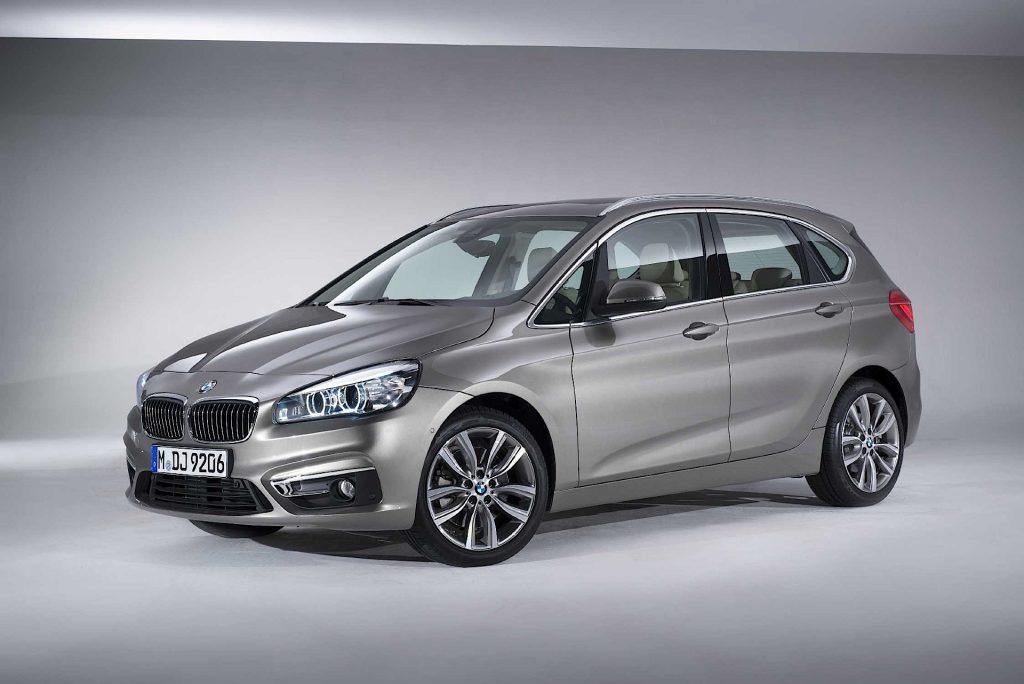
Its competitive pricing attracted customers who previously viewed BMW ownership as unattainable, proving that affordability and premium craftsmanship could comfortably exist together. Among BMW’s least expensive offerings, it remains one of the most practical and versatile choices ever introduced.
Specifications
- Engine: 1.5-liter turbocharged inline 3
- Torque: 220 Nm (162 lb ft)
- Horsepower: 136 hp
- Length/Width: 172.2 in / 71.7 in
