
For more than two decades, the automotive industry has steadily shifted toward smaller displacement engines. Tighter emissions regulations, stricter fuel economy targets, and advances in turbocharging encouraged manufacturers to replace naturally aspirated V8s with turbocharged four-cylinder and six-cylinder alternatives.
Many legendary eight-cylinder powerplants disappeared as companies focused on reducing carbon emissions while maintaining competitive performance figures. Despite this widespread transition, a handful of V8 engines refused to fade away.
These survivors earned their place through a combination of engineering excellence, customer demand, and proven reliability. Some continued because they delivered an unmistakable driving character that smaller engines could not replicate.
Others remained in production because they served heavy-duty trucks or high-performance vehicles where abundant torque and long-term durability were still essential.
Rather than becoming outdated, these V8s evolved with technologies such as direct fuel injection, variable valve timing, cylinder deactivation, and improved combustion efficiency to remain compliant with modern regulations.
The engines featured here represent six of the most significant V8s that successfully weathered the industry’s downsizing movement. Each has maintained relevance while countless competitors have disappeared from production lines.
Whether powering sports cars, muscle cars, luxury sedans, or full-size pickup trucks, these engines continue to prove that thoughtful engineering and continuous refinement can preserve the appeal of a classic V8 even in an era increasingly dominated by smaller, turbocharged powerplants.
Also Read: 10 Car Brands With The Most Safety Innovation
1. General Motors 6.2-Liter LT2 Small-Block V8
Some engines survive because of nostalgia, while others remain in production because they continue to outperform expectations. General Motors’ 6.2-liter LT2 small-block V8 belongs firmly in the second category.
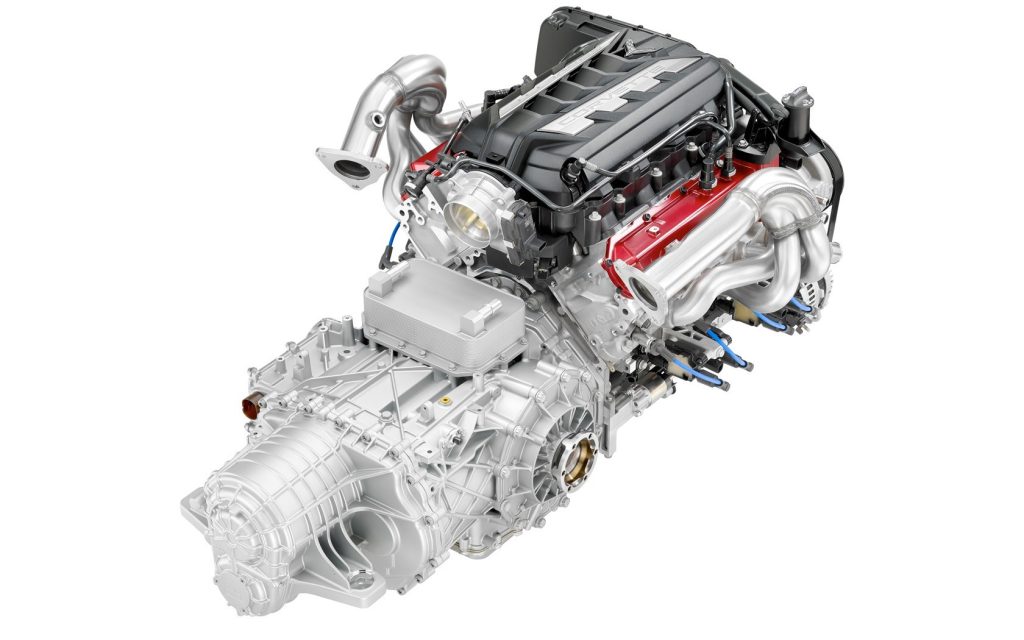
Introduced for the mid-engine Chevrolet Corvette C8, the LT2 demonstrates how a traditional naturally aspirated V8 can remain competitive despite an industry increasingly embracing smaller turbocharged engines. Instead of sacrificing displacement, GM refined nearly every aspect of the legendary small-block architecture.
The LT2 benefits from direct fuel injection, continuously variable valve timing, an advanced lubrication system, and carefully optimized combustion chambers.
These technologies improve efficiency while preserving the immediate throttle response and unmistakable sound that enthusiasts expect from a naturally aspirated V8. Producing impressive power without forced induction also gives the engine a broad, predictable torque curve that enhances everyday drivability as well as track performance.
Packaging played an equally important role. Engineers redesigned numerous components to suit the Corvette’s mid-engine layout, including a revised intake manifold and dry-sump lubrication system that maintains proper oil pressure during sustained high-speed cornering.
These updates allowed the engine to thrive in an entirely new platform without abandoning its proven small-block heritage.
Perhaps the greatest reason for the LT2’s continued success is its versatility. It delivers refined manners during relaxed highway driving while instantly transforming into a high-revving performance engine whenever demanded.
Few naturally aspirated V8s remain in today’s marketplace, making the LT2 one of the clearest examples that thoughtful engineering can keep traditional engine designs relevant long after many rivals have disappeared from production.
Specifications
- Engine: 6.2-liter Naturally Aspirated LT2 V8
- Torque: 465 lb-ft
- Horsepower: 495 hp
- Length/Width: Chevrolet Corvette C8 – 182.3 inches / 76.1 inches
2. Ford 5.0-Liter Coyote V8
When Ford revived the legendary 5.0 badge in 2011, few expected the Coyote V8 to remain a cornerstone of the Mustang lineup well into an era dominated by downsized turbocharged engines.
Yet continuous refinement has allowed this modern V8 to remain both competitive and compliant with increasingly demanding emissions standards. Rather than relying on nostalgia alone, Ford invested heavily in engineering improvements that kept the engine relevant year after year.
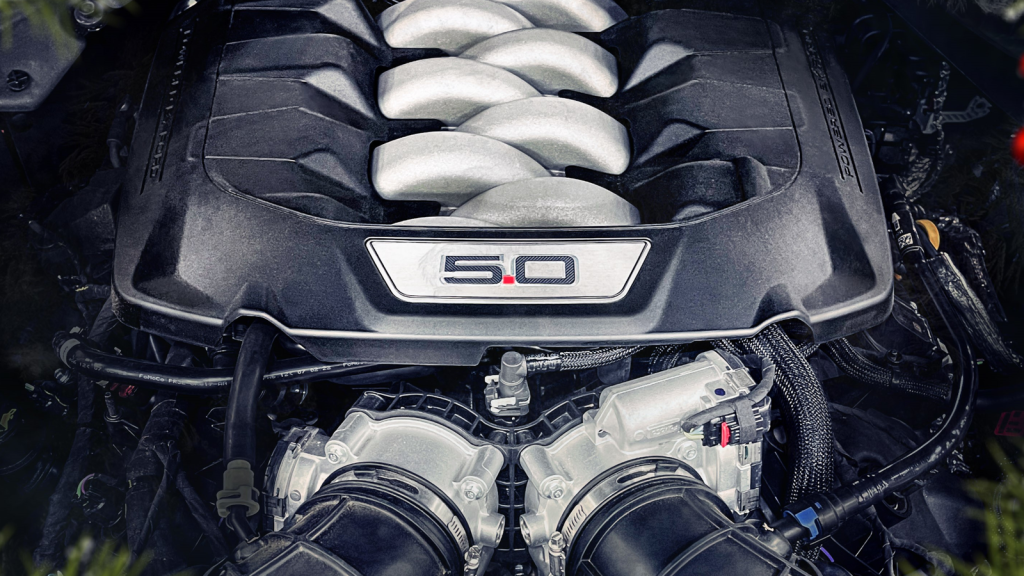
Unlike many traditional pushrod V8s, the Coyote employs dual overhead camshafts and four valves per cylinder. This sophisticated architecture allows exceptional airflow, enabling the engine to produce strong horsepower while maintaining impressive efficiency for its displacement.
Later generations added dual fuel injection, combining both direct and port injection to improve combustion quality, reduce carbon buildup, and enhance performance across a broad operating range.
Another reason for the Coyote’s longevity is its remarkable flexibility. It has powered everything from everyday Mustang GT models to high-performance special editions while also finding success in motorsports, custom builds, and aftermarket applications.
The engine responds exceptionally well to modifications, further strengthening its reputation among enthusiasts who value durability alongside performance.
Even in stock form, the Coyote delivers an engaging driving experience defined by smooth power delivery and an eagerness to rev that distinguishes it from many competing V8s.
Its naturally aspirated design offers immediate throttle response, creating a connection between driver and engine that many turbocharged alternatives struggle to duplicate.
The Coyote continues to represent one of the strongest examples of how intelligent design and steady development can allow a naturally aspirated V8 to remain successful despite the industry’s relentless movement toward smaller-displacement engines.
Specifications
- Engine: 5.0-liter Naturally Aspirated Coyote V8
- Torque: 418 lb-ft
- Horsepower: 480 hp
- Length/Width: Ford Mustang GT – 189.4 inches / 75.4 inches
3. Chrysler 6.4-Liter HEMI Apache V8
Few engines symbolize the modern muscle car era as effectively as Chrysler’s 6.4-liter HEMI, commonly known by enthusiasts as the Apache V8.
At a time when manufacturers increasingly replaced large-displacement engines with turbocharged six-cylinder units, this naturally aspirated powerhouse continued to thrive in vehicles such as the Dodge Challenger Scat Pack, Dodge Charger Scat Pack, and Jeep Grand Cherokee SRT.
Its survival demonstrates that customer demand and engineering refinement can sometimes outweigh industry trends.
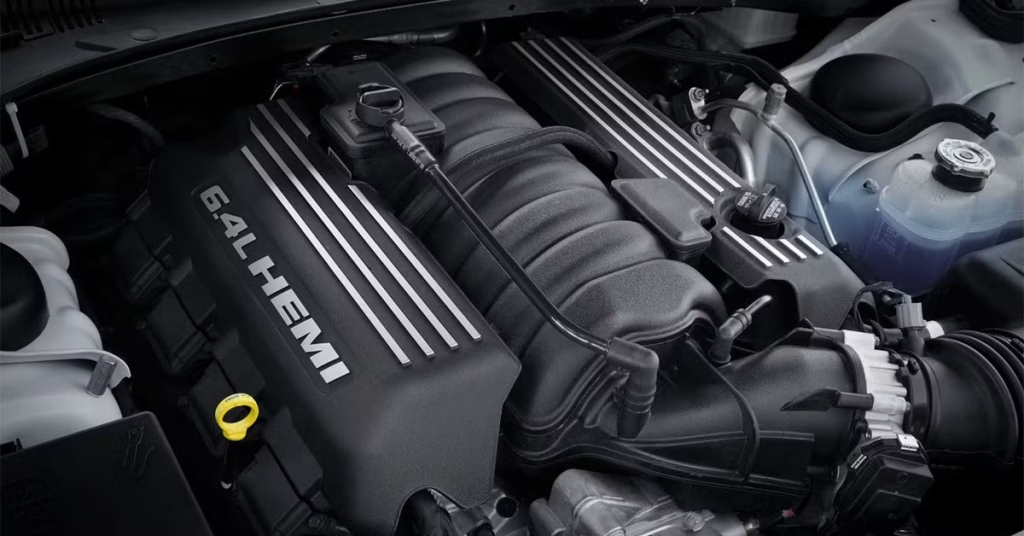
Rather than chasing smaller displacement, Chrysler focused on maximizing the efficiency of its proven HEMI architecture. Variable valve timing improved power delivery across the rev range while helping reduce emissions and fuel consumption compared with earlier generations.
The engine also incorporates an active intake manifold that adjusts airflow according to engine speed, allowing it to deliver strong low-end torque without sacrificing high-rpm performance.
One of the Apache’s greatest strengths is its effortless character. Peak torque arrives early enough to make daily driving enjoyable, yet the engine continues pulling with authority all the way to redline. Unlike many turbocharged alternatives, throttle response remains immediate because power builds naturally with engine speed.
Drivers receive a direct mechanical connection that has become increasingly uncommon in today’s performance cars.
Durability has also played a significant role in the engine’s longevity. Built with a robust cast-iron block and forged internal components in many performance applications, the Apache has earned a reputation for handling spirited driving with confidence.
It has become a favorite among enthusiasts who appreciate an engine that responds well to aftermarket upgrades while remaining dependable in factory form.
The 6.4-liter HEMI stands as one of the last great naturally aspirated American V8s, proving that traditional displacement can still deliver an engaging driving experience in the modern automotive landscape.
Specifications
- Engine: 6.4-liter Naturally Aspirated HEMI V8
- Torque: 475 lb-ft
- Horsepower: 485 hp
- Length/Width: Dodge Challenger Scat Pack – 197.9 inches / 75.7 inches
4. Mercedes-AMG 4.0-Liter Twin-Turbo V8 (M177)
Not every V8 survived by resisting change. Mercedes-AMG chose a different strategy, embracing downsizing while preserving the eight-cylinder configuration that defines its performance heritage.
The result was the M177, a 4.0-liter twin-turbocharged V8 that replaced the larger naturally aspirated 6.2-liter engine without sacrificing the performance expected from AMG models.
Instead of relying on displacement alone, engineers used advanced turbocharging technology and sophisticated electronics to create a compact yet exceptionally capable powerplant.
A defining feature of the M177 is its “hot inside V” layout, where the turbochargers are positioned between the cylinder banks. This design shortens the distance exhaust gases travel before reaching the turbines, significantly improving throttle response and reducing turbo lag.
Drivers experience rapid acceleration with a level of responsiveness that feels remarkably close to a naturally aspirated engine.
The M177 also benefits from direct fuel injection, variable valve timing, and cylinder deactivation on selected models. During light-load driving, four cylinders can temporarily shut down, reducing fuel consumption without affecting refinement.
Once additional power is requested, all eight cylinders reactivate almost instantly, delivering the strong acceleration AMG customers expect.
Another reason this engine has remained successful is its versatility. It powers luxury sedans, high-performance SUVs, grand tourers, and dedicated sports cars, adapting to a wide range of applications without losing its distinctive personality.
Depending on the model, output varies considerably, demonstrating the flexibility of its underlying architecture.
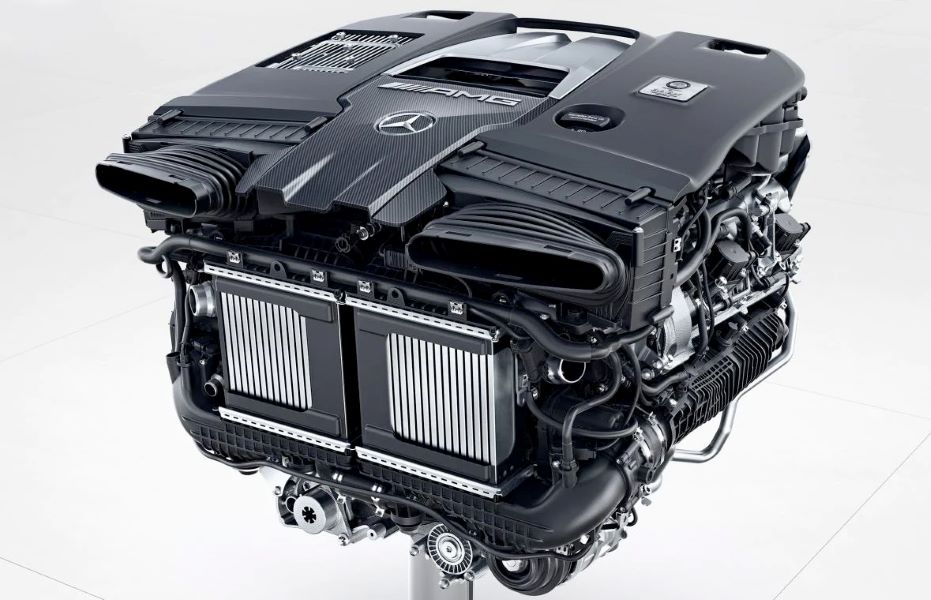
By combining modern efficiency technologies with unmistakable V8 performance, the M177 has become one of the clearest examples that downsizing does not necessarily require abandoning eight-cylinder engines.
Its continued production highlights the value of intelligent engineering in an increasingly demanding regulatory environment.
Specifications
- Engine: 4.0-liter Twin-Turbocharged M177 V8
- Torque: Up to 664 lb-ft
- Horsepower: Up to 603 hp
- Length/Width: Mercedes-AMG GT 63 S – 198.3 inches / 76.3 inches
5. Toyota 5.0-Liter 2UR-GSE V8
Longevity in today’s automotive world often depends on continuous adaptation, and Toyota’s 5.0-liter 2UR-GSE V8 is a perfect illustration of that principle. Developed with assistance from Yamaha, this naturally aspirated engine has remained in production long after many competing V8s disappeared.
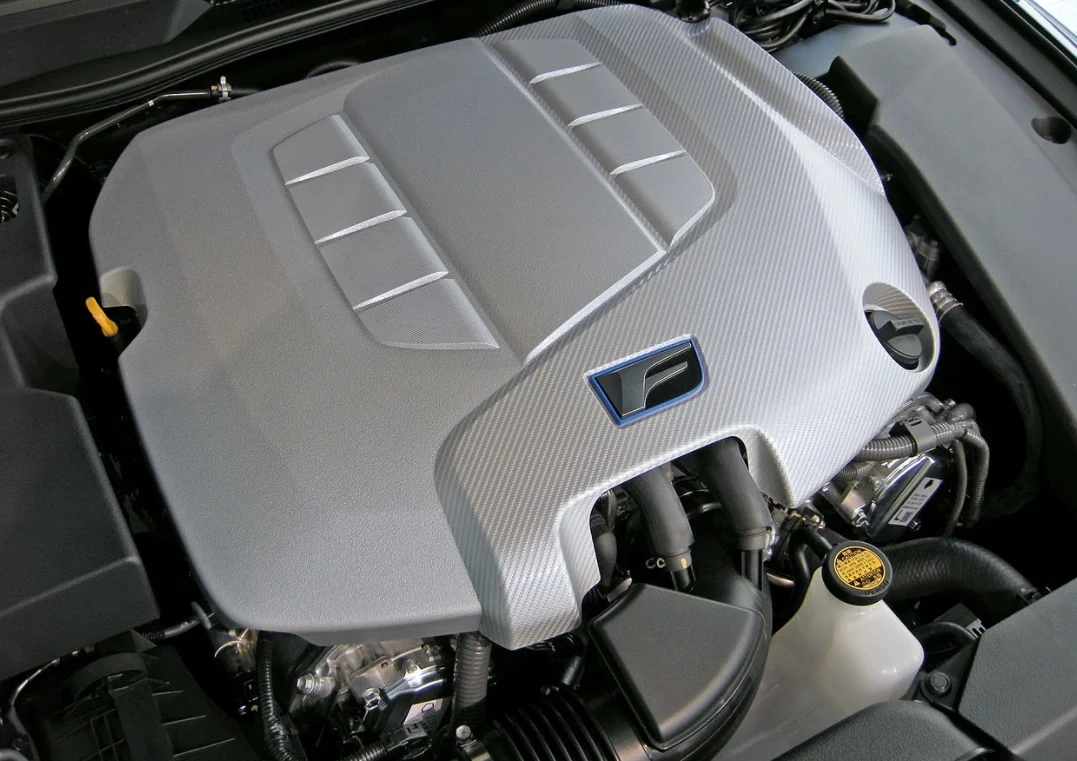
It continues to power performance models such as the Lexus IS 500 F SPORT Performance and Lexus LC 500, proving there is still room for a high-revving, naturally aspirated V8 in an increasingly electrified marketplace.
The character of the 2UR-GSE differs significantly from many American V8s. Instead of emphasizing low-end torque above all else, it was engineered to deliver smooth, linear power that builds steadily toward a lofty redline.
Yamaha’s expertise in cylinder head design helps the engine breathe efficiently at higher engine speeds, giving it an energetic personality that rewards enthusiastic driving while remaining refined during everyday use.
Toyota also equipped the engine with dual VVT-i variable valve timing and advanced fuel injection technology. These systems improve combustion efficiency, reduce emissions, and optimize performance across a wide operating range.
Although it retains a relatively large displacement, the engine demonstrates that thoughtful engineering can help a naturally aspirated V8 comply with modern emissions standards without losing its defining characteristics.
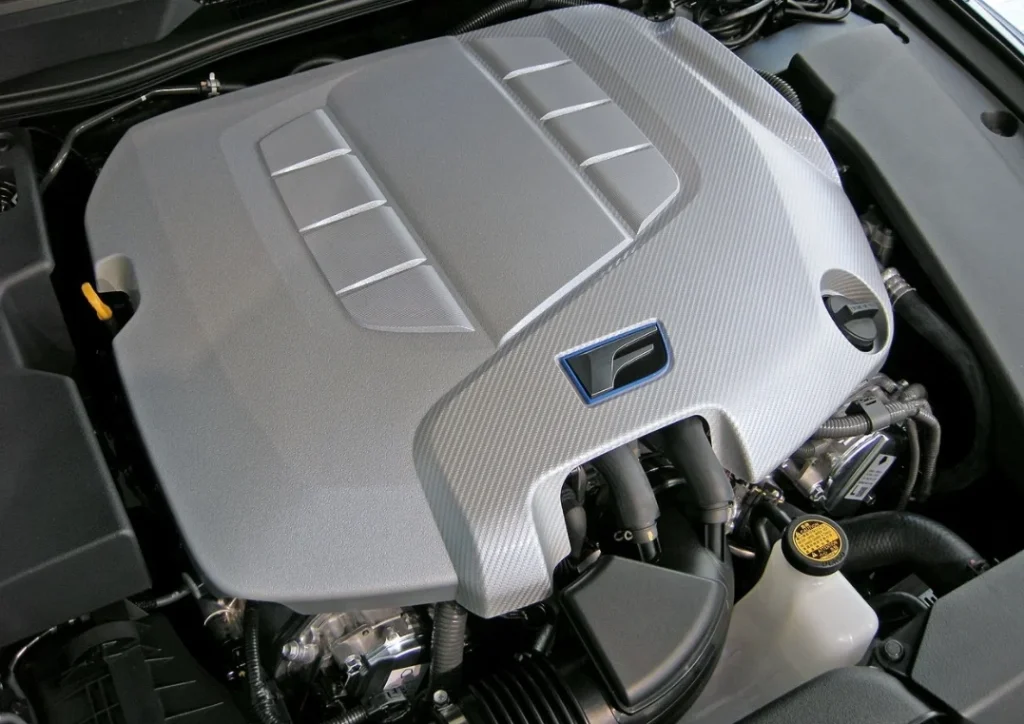
Reliability has become another cornerstone of the 2UR-GSE’s reputation. Like many Toyota-developed powerplants, it is known for durability when properly maintained, making it attractive to owners seeking long-term dependability alongside strong performance.
That balance has allowed the engine to remain desirable even as competitors increasingly transition to turbocharged six-cylinder alternatives.
The 2UR-GSE represents one of the final chapters of Toyota’s naturally aspirated V8 legacy, combining precision engineering, everyday refinement, and exhilarating performance in a package that continues to stand apart from current industry trends.
Specifications
- Engine: 5.0-liter Naturally Aspirated 2UR-GSE V8
- Torque: 395 lb-ft
- Horsepower: 472 hp
- Length/Width: Lexus LC 500 – 187.4 inches / 75.6 inches
6. General Motors 6.6-Liter Duramax Turbo-Diesel V8
While many passenger vehicles adopted smaller gasoline engines to satisfy changing regulations, heavy-duty pickup trucks continued to demand exceptional durability and immense towing capability.
That environment allowed General Motors’ 6.6-liter Duramax turbo-diesel V8 to remain an essential part of the company’s truck lineup.
Rather than being replaced by a downsized alternative, the Duramax evolved through multiple generations, consistently meeting stricter emissions standards while preserving the characteristics that truck owners value most.
Unlike performance-oriented gasoline V8s, the Duramax is engineered with sustained workloads in mind. Its robust cast-iron block, forged steel crankshaft, and high-strength internal components are designed to withstand the immense cylinder pressures generated by turbocharged diesel combustion.
This heavy-duty construction enables the engine to tow substantial loads over long distances while maintaining impressive reliability.
Modern versions feature sophisticated common-rail direct fuel injection, an advanced variable-geometry turbocharger, and carefully calibrated emissions control systems.
These technologies improve combustion efficiency, reduce exhaust emissions, and deliver smoother operation than earlier diesel engines. Massive torque becomes available at very low engine speeds, making steep grades, trailer towing, and heavy hauling feel effortless.
The Duramax has also adapted to modern customer expectations by becoming quieter and more refined.
Improved sound insulation, precise fuel delivery, and advanced engine management have significantly reduced the noise and vibration traditionally associated with large diesel engines, creating a more comfortable driving experience without sacrificing capability.
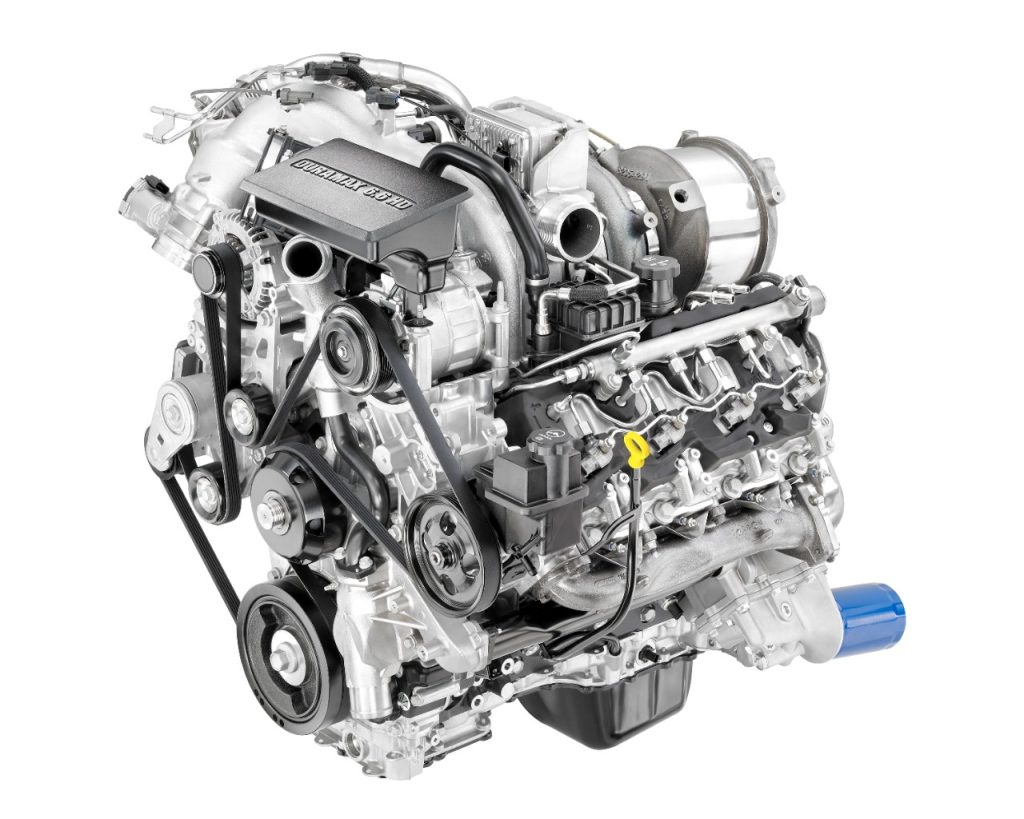
Its continued success proves that downsizing is not suitable for every application. In the heavy-duty truck segment, abundant displacement, exceptional durability, and tremendous torque remain essential requirements.
The 6.6-liter Duramax continues to meet these demanding requirements, proving that a V8 engine remains a valuable and practical choice in today’s automotive industry.
Specifications
- Engine: 6.6-liter Turbo-Diesel Duramax V8
- Torque: 975 lb-ft
- Horsepower: 470 hp
- Length/Width: Chevrolet Silverado 2500 HD Crew Cab – 250.0 inches / 81.9 inches
