
Some automotive engines disappear after a single generation, while others become so successful that manufacturers spend decades refining them instead of replacing them.
Building an engine that survives changing emissions laws, stricter fuel economy standards, evolving safety requirements, and rising customer expectations is one of the greatest challenges in automotive engineering.
Very few powerplants achieve that level of longevity, but those that do often become legendary for their durability, versatility, and engineering excellence.
The longest-running engine families have earned their reputation through continuous improvement rather than complete reinvention.
Over the years, manufacturers have introduced technologies such as electronic fuel injection, turbocharging, direct injection, variable valve timing, lightweight materials, and advanced engine management systems.
Despite these modern upgrades, the core architecture of these engines has remained recognizable, allowing them to serve generation after generation of cars, trucks, SUVs, commercial vehicles, and luxury automobiles.
Many of these engines have powered millions of vehicles worldwide, while others became icons within specific market segments because of their remarkable reliability or performance. Their influence extends beyond production vehicles, inspiring motorsports, aftermarket tuning, commercial transportation, and even marine applications.
This ranking highlights ten of the longest-running automotive engine families ever built. Ranked by their original introduction and remarkable production lifespan, these engines demonstrate how exceptional engineering and thoughtful evolution can create powerplants that remain relevant for decades.
Their enduring success has helped shape the automotive industry and cemented their place among the greatest engines ever produced.
Also Read: 8 Vehicles Most Stolen in Rural States
10. Chrysler Pentastar V6 (2010)
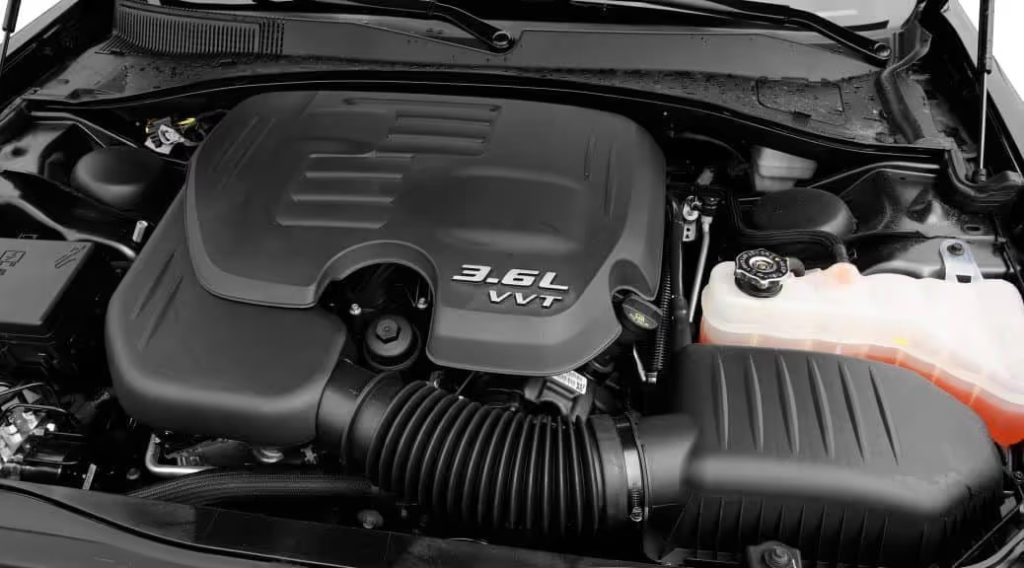
When Chrysler introduced the Pentastar V6 for the 2011 model year, the company set out to replace multiple aging V6 engines with a single modern powertrain that could support a wide range of vehicles across its lineup.
The result was the Pentastar, an engine family that quickly became one of the most versatile gasoline engines in the industry. Although it is the newest entry on this list, its widespread adoption and continued production have already established it as one of the longest-running modern V6 engine families.
Designed entirely from a clean sheet, the Pentastar features an aluminum block and cylinder heads, dual overhead camshafts, four valves per cylinder, chain-driven camshafts, and dual independent variable valve timing.
Engineers emphasized smooth operation, fuel efficiency, and durability while ensuring the engine could be adapted to front-wheel-drive, rear-wheel-drive, and four-wheel-drive platforms.
Instead of replacing the Pentastar after only a few years, Chrysler, now Stellantis, continuously refined the architecture. Updates included redesigned cylinder heads, variable valve lift, cooled exhaust gas recirculation, lower-friction internal components, improved thermal management, and enhanced electronic engine controls.
These revisions allowed the engine to meet increasingly demanding emissions regulations while maintaining its reputation for dependable everyday performance.
Throughout its production life, the Pentastar has powered an enormous variety of vehicles, including the Jeep Wrangler, Jeep Gladiator, Chrysler Pacifica, Dodge Durango, Ram ProMaster, Jeep Grand Cherokee, and several additional North American products.
Its ability to perform equally well in family minivans, commercial vans, and serious off-road vehicles highlights the flexibility of its original design.
Although Stellantis has begun introducing newer turbocharged Hurricane inline-six engines for some applications, the Pentastar remains an important part of the company’s portfolio. Its broad application, dependable reliability, and continuous development ensure its place among the automotive industry’s most successful modern engine families.
Specifications
- Engine: 3.6-liter Naturally Aspirated V6
- Horsepower: 287 hp
- Torque: 262 lb-ft
- Length/Width: Approximately 27.8 in / 28.1 in
9. Isuzu 4JJ1 (2004)
Introduced in 2004, Isuzu’s 4JJ1 engine family has earned a reputation as one of the toughest modern diesel engines ever developed.
While many manufacturers have repeatedly replaced their diesel platforms to meet changing emissions regulations, Isuzu has continuously refined the 4JJ1, allowing it to remain a cornerstone of the company’s global pickup and commercial vehicle lineup.
More than twenty years after its debut, it continues powering vehicles in markets across Asia, Australia, Africa, the Middle East, and South America, proving that durability and adaptability remain valuable engineering traits.
The 4JJ1 was designed primarily for demanding workloads. Built around a cast-iron cylinder block with an aluminum cylinder head, the engine features dual overhead camshafts, four valves per cylinder, and a timing chain that minimizes long-term maintenance.
From the beginning, Isuzu engineered the platform to deliver dependable low-end torque while operating reliably under heavy towing, off-road driving, and commercial hauling conditions.
As emissions regulations evolved, Isuzu updated the engine without abandoning its original architecture.
High-pressure common-rail direct injection replaced earlier fuel systems, and electronically controlled variable-geometry turbochargers improved both performance and efficiency, while diesel particulate filters and selective catalytic reduction systems were incorporated for markets with stricter emissions standards.
Each revision improved refinement and fuel economy without compromising the engine’s reputation for longevity.
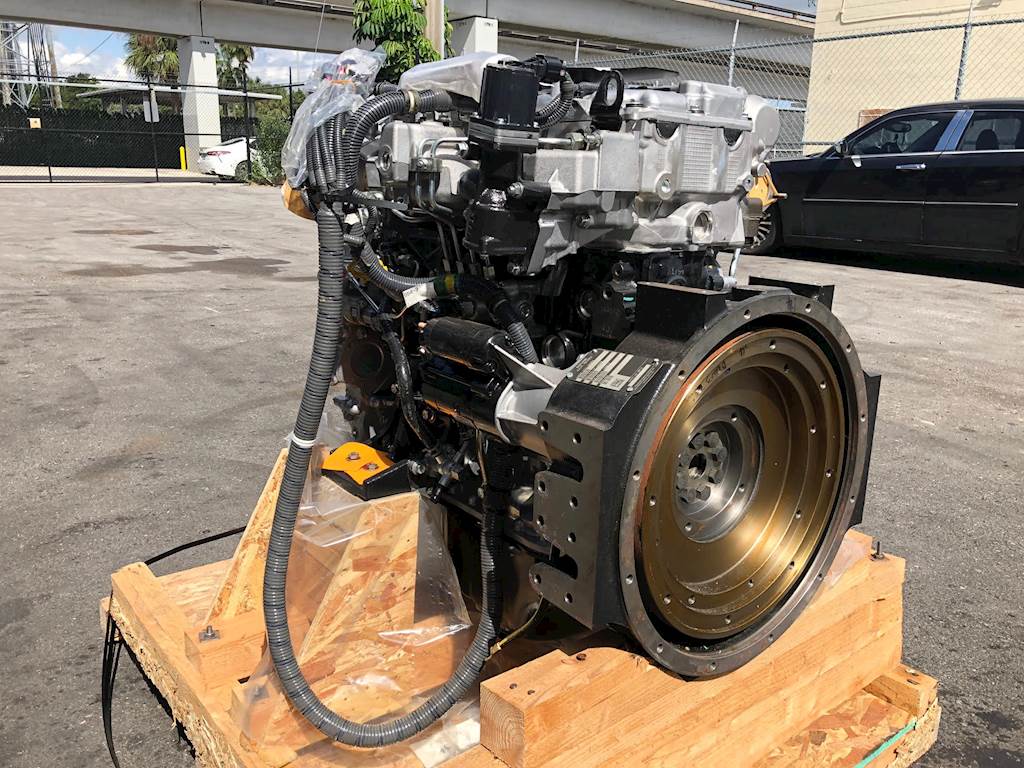
Today, the latest versions of the 4JJ1 continue powering the Isuzu D-Max and MU-X, two vehicles that have become increasingly popular in global markets because of their reliability and capability. The engine is also widely used in light commercial vehicles where long service life and low operating costs remain top priorities.
One reason the 4JJ1 has remained successful is its conservative engineering philosophy. Rather than chasing maximum horsepower figures, Isuzu focused on creating an engine capable of enduring hundreds of thousands of miles with routine maintenance.
That approach has made the 4JJ1 one of the automotive industry’s most respected diesel engines and secured its place among the longest-running engine families ever built.
Specifications
- Engine: 3.0-liter Turbocharged Inline-4 Diesel
- Horsepower: Up to 188 hp
- Torque: Up to 332 lb-ft
- Length/Width: Approximately 30.0 in / 27.0 in
8. Toyota GR engine (2002)
Toyota has long favored gradual engineering evolution over complete reinvention, and no modern V6 demonstrates that philosophy better than the GR engine family.
Introduced in 2002 as the successor to the VZ series, the GR family was developed to deliver improved efficiency, smoother performance, and greater flexibility across a broad range of vehicles.
More than two decades later, it continues serving numerous Toyota and Lexus models while remaining one of the company’s most successful naturally aspirated engine families.
The GR engine debuted with an aluminum block and cylinder heads, dual overhead camshafts, four valves per cylinder, and Toyota’s VVT-i variable valve timing technology. Compared with the VZ engines it replaced, the new architecture offered lower weight, improved combustion efficiency, and noticeably better refinement.
Over time, Toyota expanded the family to include several displacement options ranging from 2.5 to 4.0 liters, enabling the same engine family to power sedans, crossovers, pickup trucks, and body-on-frame SUVs.
Toyota continuously improved the platform instead of replacing it. Dual VVT-i, the D-4S direct and port fuel injection system, revised combustion chambers, friction-reducing internal coatings, improved cooling systems, and advanced engine management software allowed the GR family to meet increasingly strict global emissions regulations while preserving its reputation for reliability.
Perhaps the best-known member is the 3.5-liter 2GR series, which has powered millions of vehicles worldwide. Depending on the market, it has served the Toyota Camry, Avalon, Highlander, Tacoma, Land Cruiser Prado, Lexus RX, Lexus ES, and numerous additional Toyota and Lexus products.
Its broad torque curve and smooth operation have made it equally suitable for comfortable family transportation and demanding towing applications.
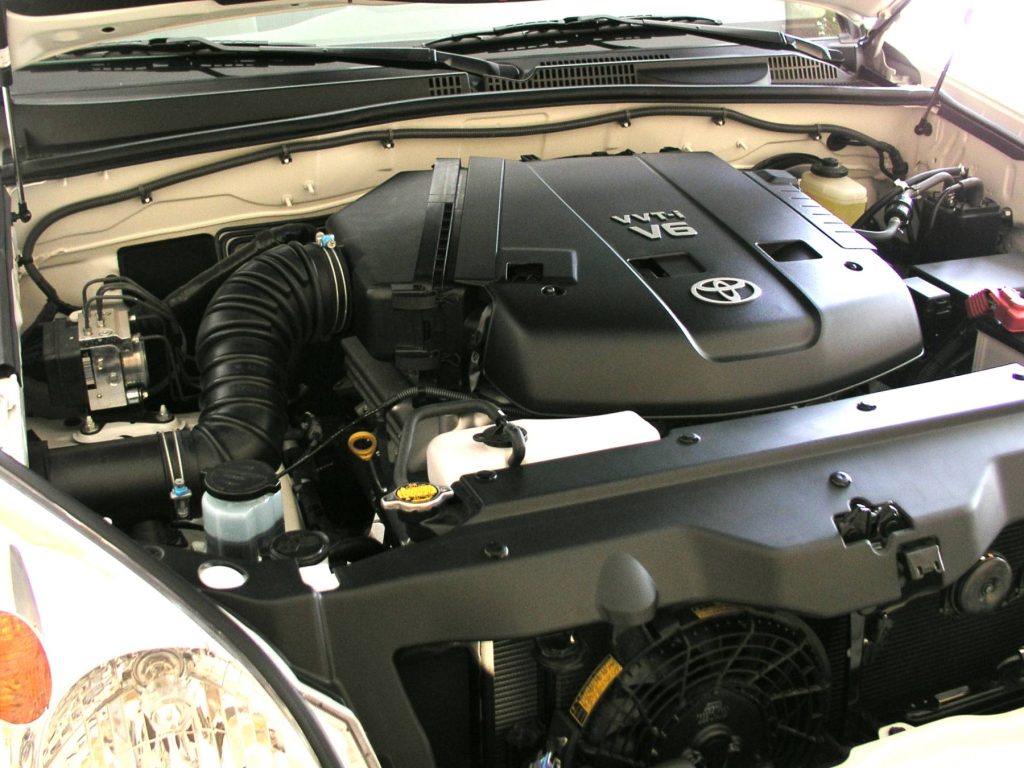
The GR family represents Toyota’s commitment to perfecting proven engineering instead of frequently introducing entirely new engine platforms.
More than twenty years after its launch, it remains one of the automotive industry’s most dependable naturally aspirated V6 engine families and continues influencing Toyota’s approach to powertrain development.
Specifications
- Engine: 3.5-liter Naturally Aspirated V6 (2GR-FKS)
- Horsepower: Up to 295 hp
- Torque: Up to 267 lb-ft
- Length/Width: Approximately 27.6 in / 28.2 in
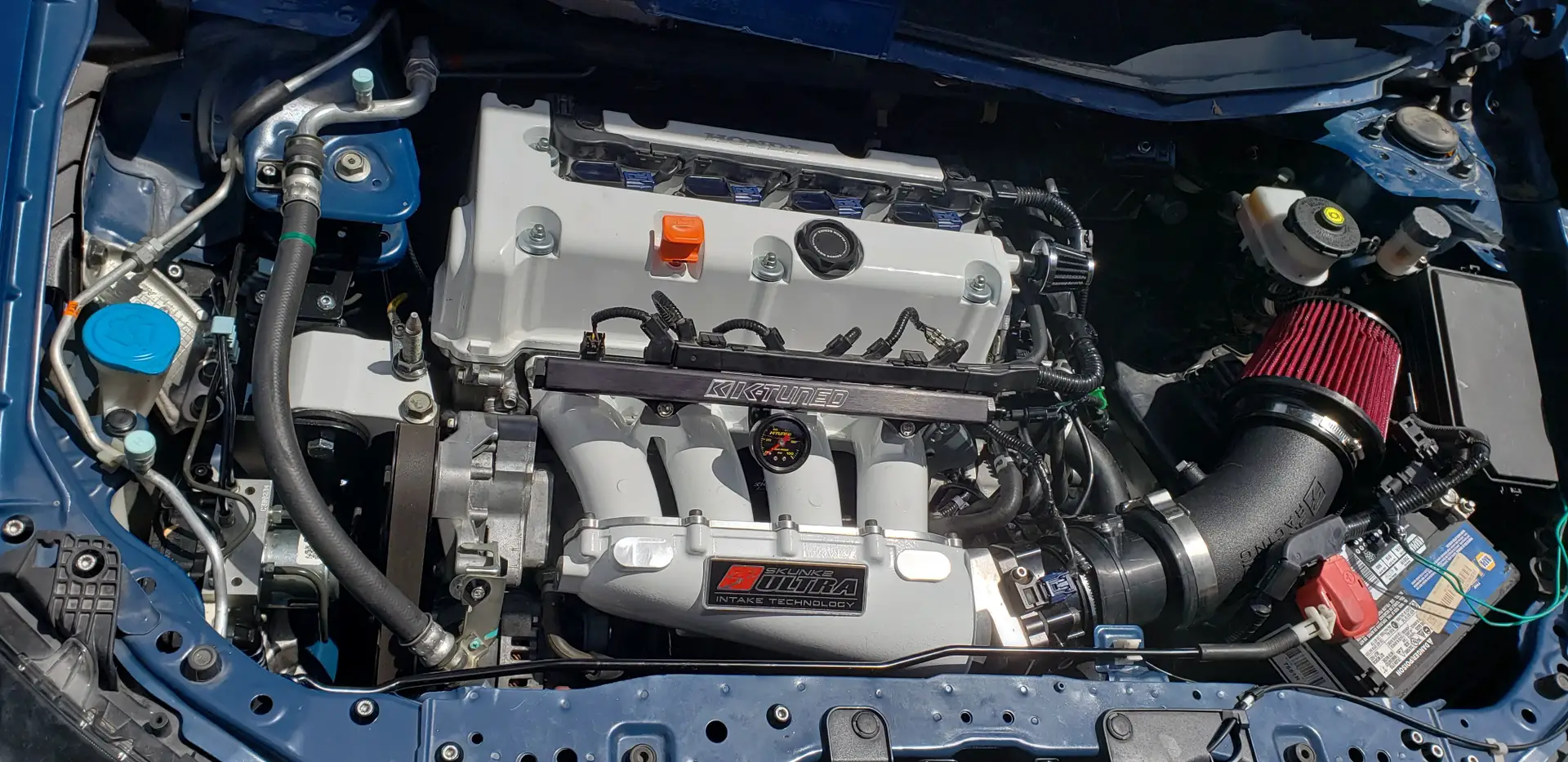
7. Honda K-Series (2001)
Honda has built countless respected engines over the decades, but few have enjoyed the lasting success of the K-Series. Introduced in 2001 as the replacement for the iconic B-Series, the K-Series arrived during a period when emissions regulations were tightening, and buyers expected greater refinement without sacrificing performance.
Honda responded by developing an engine family that could serve everything from economical compact cars to high-performance sports models. More than twenty years later, the K-Series remains in production and continues to rank among the company’s greatest engineering achievements.
Unlike the B-Series, the K-Series adopted a stronger aluminum block with cast-iron cylinder liners and a timing chain instead of a timing belt, significantly reducing long-term maintenance requirements.
Dual overhead camshafts and Honda’s intelligent i-VTEC system optimized valve timing and lift according to engine speed and load, allowing the engine to deliver both excellent fuel economy and impressive high-rpm performance.
The rigid bottom-end construction also improved durability, making the engine suitable for daily commuting as well as motorsports.
Honda has continually modernized the K-Series rather than replacing it outright. Direct fuel injection, turbocharging, revised cylinder heads, electronically controlled wastegates, friction-reducing coatings, and increasingly sophisticated engine management software have all been incorporated into newer versions.
These updates have enabled the engine to meet stricter emissions standards while preserving the responsiveness and reliability that made it famous.
Today, the K-Series powers several Honda and Acura models, including the Civic Si, Civic Type R, Acura Integra Type S, and selected CR-V variants in global markets.
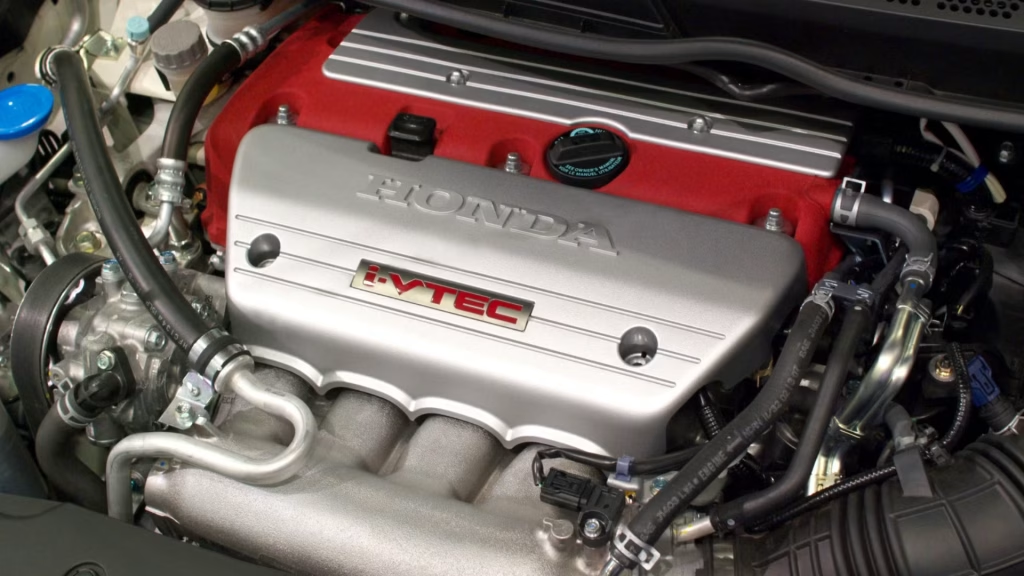
The family has also become one of the world’s favorite engines among tuners and racing teams because of its exceptional strength and ability to produce substantial horsepower with proper modifications.
More than two decades after its introduction, the K-Series continues demonstrating Honda’s engineering philosophy of constant refinement. Its blend of efficiency, durability, and performance has made it one of the most influential four-cylinder engine families ever developed.
Specifications
- Engine: 2.0-liter Turbocharged Inline-4 (K20C1)
- Horsepower: 315 hp
- Torque: 310 lb-ft
- Length/Width: Approximately 24.6 in / 25.2 in
6. Nissan VQ (1994)
When Nissan introduced the VQ engine family in 1994, it set a new benchmark for V6 performance and refinement. Replacing the VG engine family, the VQ was engineered to deliver smoother operation, improved efficiency, and greater flexibility across a wide variety of vehicle types.
Over the next three decades, it became one of Nissan’s defining powerplants, earning repeated recognition from industry experts while remaining in continuous production through multiple generations of technological development.
The original VQ featured an aluminum block and cylinder heads, dual overhead camshafts, four valves per cylinder, and sequential electronic fuel injection.
Compared with its predecessor, the new engine reduced weight, improved throttle response, and significantly lowered vibration levels. These improvements made it equally suitable for luxury sedans, sports coupes, SUVs, and pickup trucks.
Rather than abandoning the architecture after a few model cycles, Nissan continually refined it to meet changing market demands.
Variable valve timing, continuously variable valve event and lift technology, direct fuel injection, redesigned intake manifolds, stronger internal components, and advanced electronic engine management systems were gradually introduced.
These upgrades improved both fuel efficiency and performance while ensuring compliance with evolving emissions regulations around the world.
The VQ family has powered an extraordinary range of vehicles throughout its history. Models such as the Maxima, Altima, Pathfinder, Murano, 350Z, 370Z, Infiniti G35, Infiniti Q50, and Frontier have all relied on versions of the VQ.
Even as turbocharged engines become increasingly common, naturally aspirated VQ variants continue serving selected Nissan and Infiniti products in various global markets.
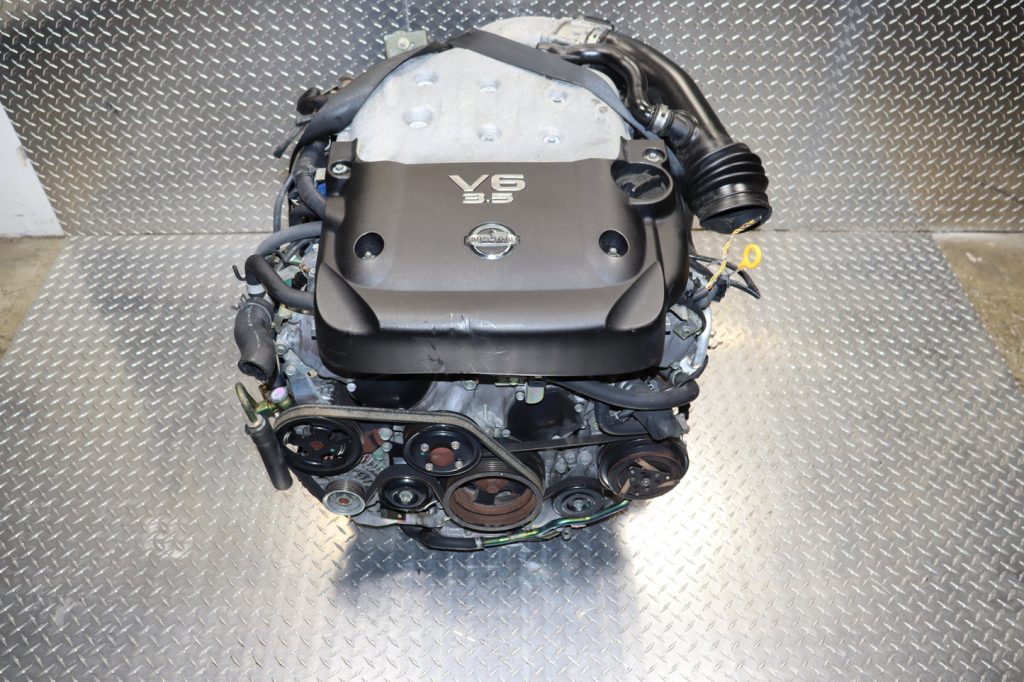
The VQ’s greatest achievement lies in its balance. It delivers smooth power, dependable reliability, and broad versatility without becoming overly complex. More than thirty years after its debut, it remains one of the automotive industry’s finest V6 engine families and a key part of Nissan’s engineering legacy.
Specifications
- Engine: 3.5-liter Naturally Aspirated V6 (VQ35DD)
- Horsepower: Up to 295 hp
- Torque: Up to 270 lb-ft
- Length/Width: Approximately 27.5 in / 28.0 in
5. Ford Modular engine (1991)
Ford’s modular engine family marked one of the company’s most significant engineering transitions. Introduced in 1991, it replaced several aging pushrod V8 engines with a modern overhead-cam architecture designed to improve efficiency, refinement, and long-term adaptability.
At the time, the change represented a bold step for Ford, but history has proven the decision successful. More than thirty years later, descendants of the original Modular family continue powering Ford performance vehicles, making it one of the longest-running gasoline engine families in automotive history.
The first modular engines appeared as 4.6-liter V8s in the Lincoln Town Car before expanding throughout Ford’s lineup. Their deep-skirt engine block, cross-bolted main bearing caps, overhead camshaft design, and efficient combustion chambers provided a stronger and more flexible foundation than the engines they replaced.
Over time, the family expanded to include the 5.4-liter V8, the 6.8-liter V10, and eventually the highly acclaimed 5.0-liter Coyote V8.
Ford chose continuous evolution rather than complete replacement. Variable camshaft timing, stronger rotating assemblies, revised cylinder heads, dual fuel injection systems, plasma-transferred wire arc cylinder liners, and advanced electronic engine management allowed the architecture to remain competitive against newer engine designs.
Each generation improved power, efficiency, and emissions performance while preserving the engineering principles established in 1991.
Today, the fourth-generation Coyote V8 powers the Ford Mustang GT and Mustang Dark Horse, producing naturally aspirated performance that rivals many turbocharged competitors.
Beyond passenger cars, earlier modular variants served millions of police vehicles, pickup trucks, commercial vans, luxury sedans, and fleet vehicles, demonstrating remarkable versatility throughout their production life.
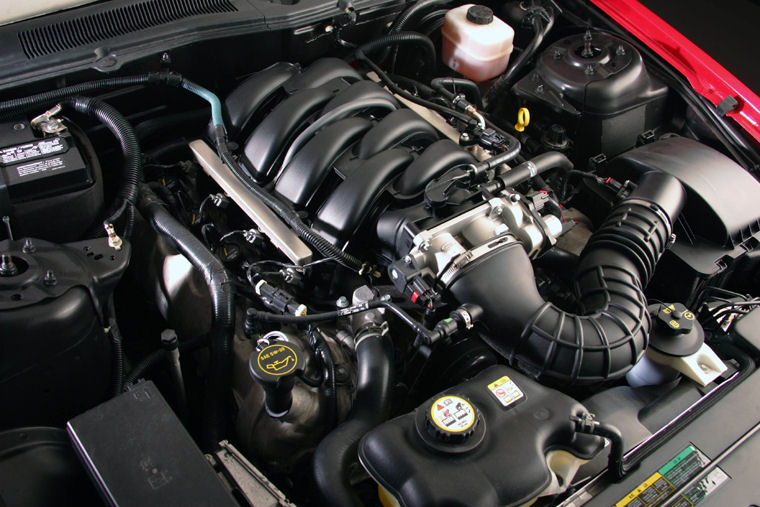
Few engine families have evolved as successfully as Ford’s modular platform. Its ability to adapt across multiple vehicle categories while remaining technologically competitive for more than three decades secures its place among the greatest and longest-running engine families ever built.
Specifications
- Engine: 5.0-liter Naturally Aspirated DOHC V8 (Gen 4 Coyote)
- Horsepower: 480 hp
- Torque: 418 lb-ft
- Length/Width: Approximately 29.8 in / 30.3 in
4. Cummins B-Series (1984)
When the Cummins B-Series debuted in 1984, it was developed primarily for commercial, agricultural, and industrial applications where durability mattered far more than outright performance. That philosophy ultimately transformed it into one of the most respected diesel engine families ever built.
Its biggest breakthrough came in 1989 when it became available in the Dodge Ram, forever changing the heavy-duty pickup segment and introducing buyers to commercial-grade diesel reliability.
The B-Series earned its reputation through robust engineering. A cast-iron block, forged steel crankshaft, gear-driven camshaft, and heavy-duty internal components enabled the engine to withstand demanding workloads for hundreds of thousands of miles with proper maintenance.
Instead of replacing the platform as technology evolved, Cummins continuously refined it with high-pressure common-rail fuel injection, electronically controlled turbochargers, advanced emissions systems, and sophisticated engine management software while retaining the same core architecture.
Today, the latest 6.7-liter version powers Ram Heavy Duty trucks and remains widely used in buses, construction equipment, generators, agricultural machinery, and marine applications worldwide.
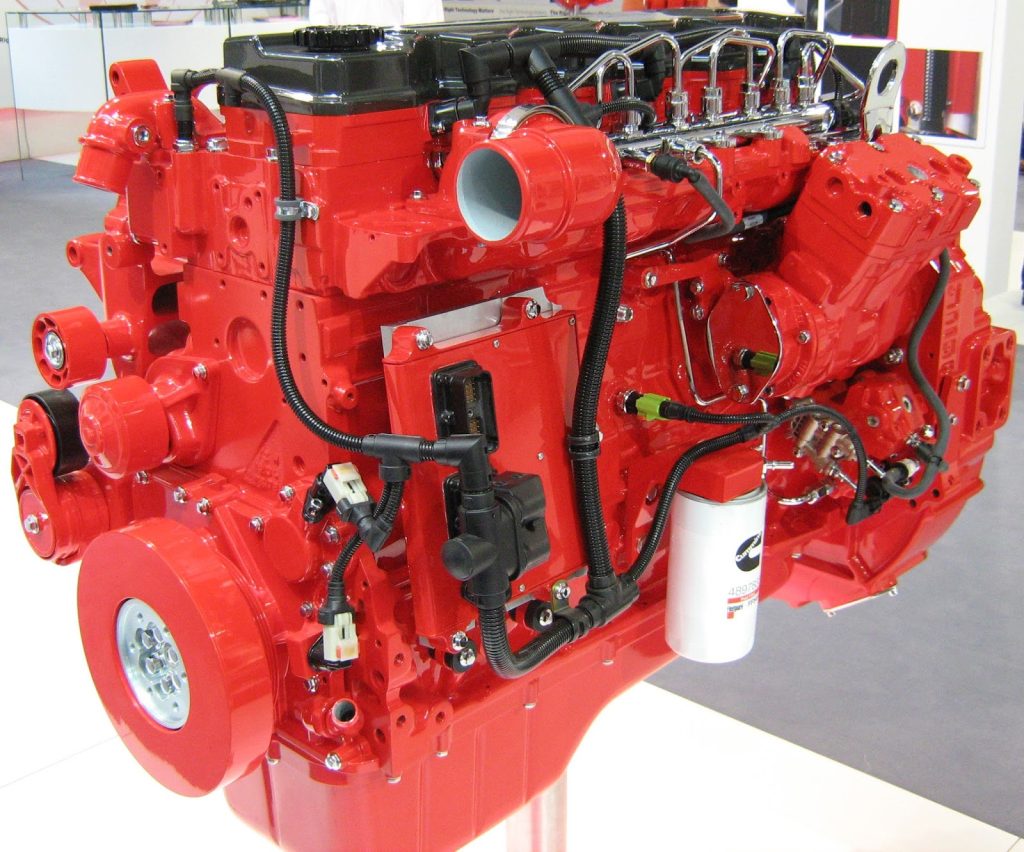
Few diesel engines have served such a broad range of industries for so long. More than four decades after its introduction, the Cummins B-Series continues to represent durability, reliability, and engineering that was designed to evolve rather than be replaced.
Specifications
- Engine: 6.7-liter Turbocharged Inline-6 Diesel
- Horsepower: Up to 430 hp
- Torque: Up to 1,075 lb-ft
- Length/Width: Approximately 40.0 in / 30.6 in
3. Toyota L engine (1977)
Toyota introduced the Toyota L engine in 1977 to provide dependable diesel power for commercial vehicles and utility-focused models operating in demanding environments. Rather than prioritizing speed or refinement, Toyota focused on longevity, fuel efficiency, and straightforward maintenance.
Those qualities helped the L-Series become one of the company’s most successful diesel engine families, particularly in regions where reliability was essential for daily transportation and commercial work.
The engine’s simple cast-iron construction proved capable of handling years of continuous use, while its overhead-cam design offered dependable performance with relatively low maintenance requirements.
As emissions regulations and customer expectations changed, Toyota gradually modernized the platform through turbocharging, electronic fuel management, intercooling, and common-rail direct injection. These updates improved efficiency and performance without abandoning the engine’s proven foundation.
Throughout its production history, L-Series variants powered vehicles such as the HiAce, Hilux, Land Cruiser Prado, and numerous light commercial models sold across Asia, Africa, and other international markets.
Fleet operators appreciated the engine’s ability to deliver dependable service under harsh operating conditions with minimal downtime.
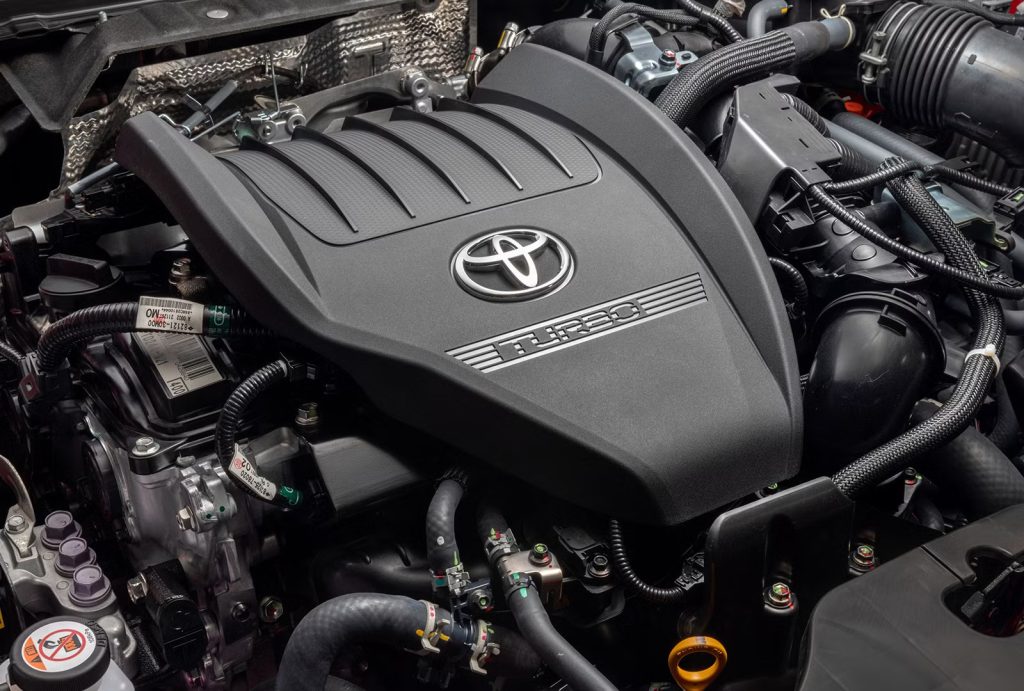
Although Toyota has introduced newer diesel platforms for many markets, the L-Series remains one of the company’s longest-running diesel engine families.
Its decades of dependable service highlight Toyota’s long-standing philosophy of improving proven engineering instead of replacing successful designs prematurely.
Specifications
- Engine: 2.8-liter Turbocharged Inline-4 Diesel (Later L-Series variants)
- Horsepower: Approximately 90 to 100 hp
- Torque: Approximately 141 to 177 lb-ft
- Length/Width: Approximately 29.0 in / 27.0 in
2. Rolls-Royce–Bentley L-Series V8 (1959)
Luxury manufacturers rarely keep an engine in production for more than a decade or two, making the Rolls-Royce–Bentley L-Series V8 one of the automotive world’s greatest engineering achievements.
Introduced in 1959, the all-aluminum V8 became the signature powerplant for Rolls-Royce and Bentley, remaining in production for more than sixty years before concluding its remarkable journey in 2020.
From its debut, the L-Series emphasized effortless performance and exceptional refinement rather than headline-grabbing horsepower.
Engineers intentionally designed the engine with generous engineering margins, allowing it to accommodate larger displacements, turbocharging, electronic fuel injection, and increasingly advanced engine management systems over the following decades.
Despite these extensive updates, the engine retained the same basic architecture that debuted in the late 1950s.
The L-Series became inseparable from Bentley’s flagship luxury models, delivering the smooth and abundant torque expected from the brand. By its final years, the 6.75-liter twin-turbocharged version produced more than 500 horsepower while maintaining the refined character that defined Bentley for generations.
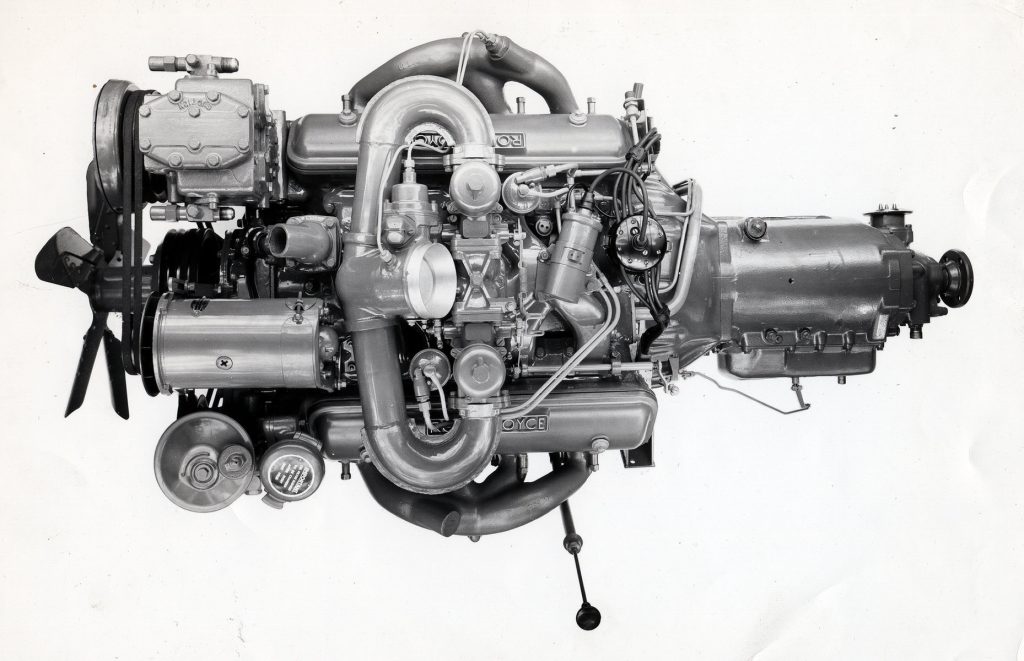
Very few engines have adapted so successfully across six decades of changing technology. The L-Series stands as a remarkable example of thoughtful engineering, proving that a well-designed foundation can remain relevant through continuous refinement rather than complete reinvention.
Specifications
- Engine: 6.75-liter Twin-Turbocharged V8
- Horsepower: 530 hp
- Torque: 811 lb-ft
- Length/Width: Approximately 31.0 in / 30.0 in
1. Chevrolet Small-Block V8 (1955)
Few engines have left a greater mark on automotive history than the Chevrolet Small-Block V8. Introduced in 1955, it established a blueprint that influenced American V8 development for generations.
Compact dimensions, lightweight construction, impressive durability, and outstanding performance quickly made it one of General Motors’ most successful engine families, powering everything from family sedans to sports cars, pickup trucks, and racing machines.
The original 265-cubic-inch V8 introduced innovative thin-wall casting techniques that reduced weight without compromising strength. Chevrolet steadily expanded the family through legendary versions such as the 283, 327, 350, and 400 cubic-inch engines, each building on the same successful design.
Rather than replacing the platform, engineers continued refining cylinder heads, fuel delivery systems, ignition technology, internal components, and efficiency, allowing the small block to remain competitive for decades.
Beyond production vehicles, its influence extended into motorsports, marine applications, hot rods, and aftermarket performance. No other American engine family has inspired such an enormous ecosystem of replacement parts, performance upgrades, and custom builds.
Millions of enthusiasts continue restoring and modifying small-block-powered vehicles because of the engine’s simplicity and exceptional parts availability.
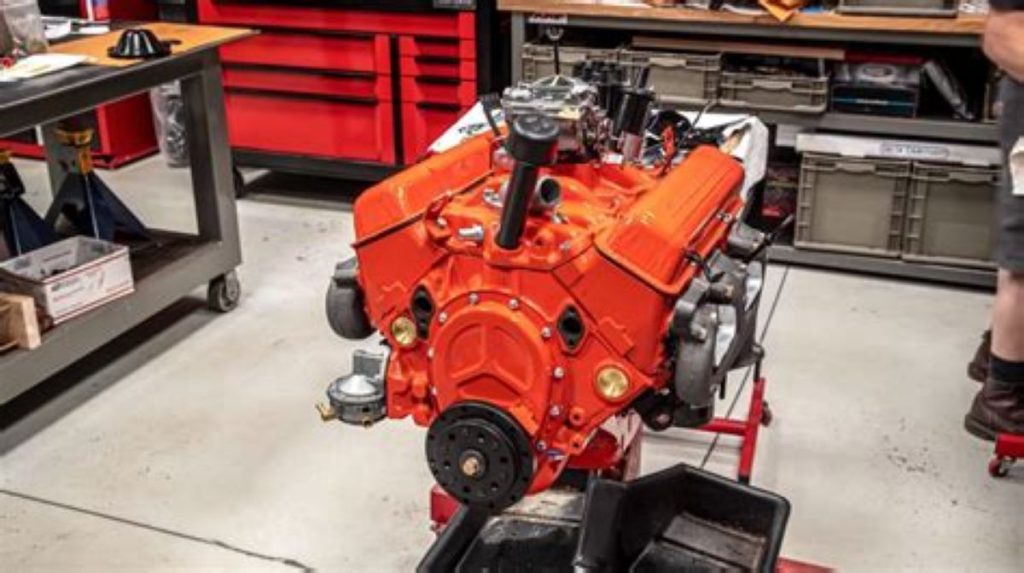
More than seventy years after its debut, the Chevrolet Small-Block remains one of the most influential engine families ever created. Its unmatched versatility, remarkable production history, and lasting impact on automotive engineering have secured its place among the greatest powerplants ever built.
Specifications
- Engine: Originally 265 cu in (4.3-liter) Naturally Aspirated V8
- Horsepower (Original): 162 hp
- Torque (Original): 257 lb-ft
- Length/Width: Approximately 28.0 in / 26.0 in
Also Read: 8 Hidden Features in the Volkswagen Atlas
