
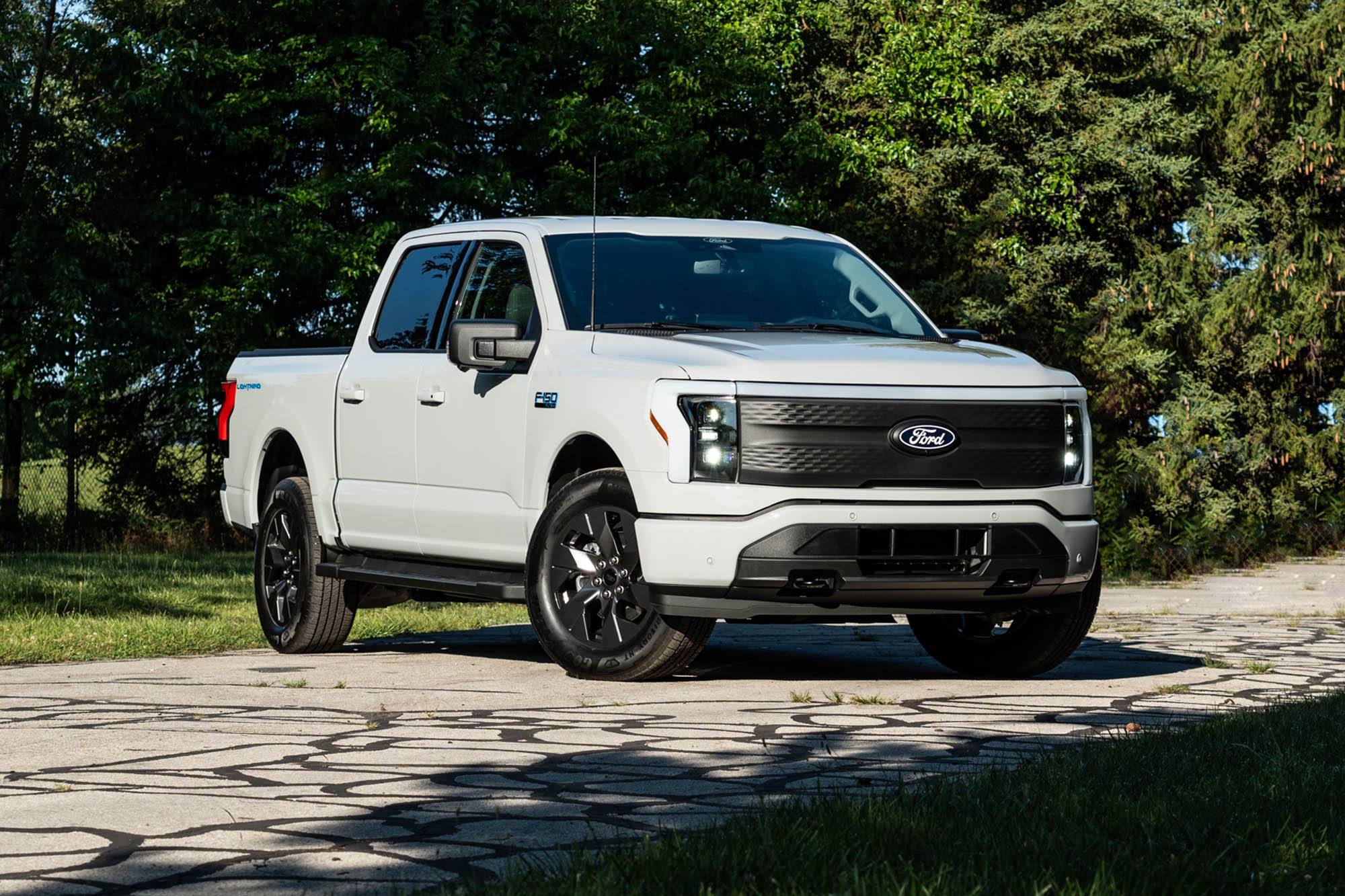
Ford’s next-generation affordable electric pickup has been spotted testing once again, providing the clearest look yet at one of the company’s most closely watched future products.
The heavily camouflaged prototype was photographed undergoing road testing in California, revealing new clues about its proportions, engineering, and full direction as Ford prepares to enter a segment that many analysts believe could define the next stage of electric vehicle adoption in the United States.
The new pickup is being developed as a smaller and more affordable alternative to the F-150 Lightning. Instead of targeting buyers who need heavy-duty capability, Ford is focusing on everyday drivers looking for a practical electric truck for daily use.
The project has attracted growing attention because Ford intends to build it around a completely new electric vehicle platform focused on reducing manufacturing costs while maintaining the practicality buyers expect from a pickup.
According to Electrek, the latest prototype appears noticeably smaller than both the Ranger and F-150, confirming earlier reports that Ford is targeting urban drivers, first-time truck buyers, and customers moving from compact SUVs into a more versatile vehicle.
Although the body remains covered in camouflage, its full dimensions and cab proportions suggest engineers have prioritized efficiency and maneuverability over maximum payload capacity.
The latest sighting also indicates that development has entered a more advanced stage. Automakers typically increase real-world testing as production engineering nears completion, allowing teams to evaluate ride quality, battery cooling, suspension tuning, braking performance, and software calibration under everyday driving conditions.
Also Read: 10 Hybrids Replacing Gas Models as Automakers Transition in 2027
The Prototype Offers New Design Clues
Even with extensive camouflage covering the bodywork, several design characteristics are becoming easier to identify.
The prototype features a four-door crew-cab layout with a relatively short cargo bed, indicating Ford expects the truck to serve primarily as a lifestyle vehicle rather than a dedicated commercial work truck.
The wheelbase appears longer than its full length would suggest, a design approach commonly used to maximize passenger space without significantly increasing exterior dimensions.
Photographs published by Electrek also show a flatter roofline, upright windshield, and a shorter front overhang than the F-150 Lightning. These proportions are expected to improve aerodynamic efficiency while maintaining the upright seating position and visibility that pickup buyers typically prefer.
Engineers also appear to be testing production-ready lighting elements, integrated cameras, and multiple sensor housings near the front of the vehicle.
While Ford has not confirmed equipment specifications, analysts expect the truck to launch with the latest generation of BlueCruise driver-assistance technology together with over-the-air software updates and a redesigned infotainment system.
A New Platform Designed Around Efficiency
Beyond the exterior styling, the biggest story lies underneath the bodywork. Ford has confirmed that this pickup will become the first vehicle built on its new Universal Electric Vehicle platform, an architecture developed specifically for lower-cost electric vehicles.
This platform was engineered from the ground up to simplify manufacturing and lower production costs, marking a departure from earlier Ford EVs that relied on adapting existing engineering solutions.
Reuters has previously reported that Ford’s affordable EV program represents one of the company’s largest engineering initiatives in recent years. Executives believe lowering manufacturing costs is essential if electric vehicles are to compete directly with gasoline-powered models without depending on government purchase incentives.
One of the platform’s defining features is the use of large structural castings that replace dozens of conventional stamped components. WardsAuto reported that this approach significantly reduces assembly complexity while lowering weight and improving manufacturing consistency.
Engineers have also adopted a zonal electrical architecture that uses substantially less wiring than conventional vehicle designs, reducing both material costs and assembly time.
The battery system is expected to use lithium iron phosphate chemistry, a technology increasingly favored for affordable electric vehicles because it offers lower production costs and greater durability than many nickel-based battery packs.
Although Ford has not released official range figures, analysts expect efficiency to receive greater emphasis than outright battery capacity.
More Than Another Electric Truck
Ford views the project as the foundation for an entirely new generation of electric vehicles rather than a single standalone model.
Chief Executive Jim Farley has repeatedly stated that the company’s next phase of electrification will focus on vehicles that ordinary consumers can realistically afford instead of premium products with increasingly expensive battery packs.
The compact pickup is expected to lead that strategy before additional crossover and commercial models arrive using the same architecture.
Industry analysts believe the timing is significant. Following slower growth in the U.S. electric vehicle market during the past year, manufacturers are increasingly shifting attention toward practical, lower-cost EVs that can appeal to a much broader audience.
Rather than competing solely on horsepower or battery size, Ford is aiming to compete on value, efficiency, and everyday usability.
The latest prototype sightings suggest that development is progressing on schedule, bringing Ford closer to revealing what could become one of the most important affordable electric vehicle launches of the decade.
If the production model delivers on its expected combination of price, practicality, and modern technology, it could reshape expectations for electric pickups and broaden EV ownership beyond early adopters.
Ford Is Targeting a Different Kind of Truck Buyer
Ford’s upcoming electric truck takes a different approach from traditional full-size pickups. Rather than prioritizing maximum towing capacity or demanding commercial work, it is being developed for buyers who use their trucks for daily commuting, weekend recreation, home improvement projects, and occasional cargo hauling.
Industry analysts believe this reflects a broader shift in consumer behavior, as many pickup owners today rarely utilize the maximum capabilities offered by larger trucks.
By developing a smaller electric pickup, Ford hopes to reach buyers who may have previously driven compact SUVs or sedans but are interested in the versatility of an open cargo bed without the size and operating costs associated with full-size pickups.
This strategy also allows Ford to attract younger buyers entering the truck market for the first time.
Another advantage is manufacturing efficiency. According to Reuters, Ford’s new affordable EV platform has been engineered to support multiple future models, allowing development costs to be shared across an entire family of vehicles instead of a single product.
Analysts believe this common architecture will reduce production expenses, simplify supply chains, and accelerate future product development as additional crossovers and commercial vehicles join the lineup.
Competition in the electric pickup segment is also evolving. Premium models such as the F-150 Lightning, Rivian R1T, Chevrolet Silverado EV, and GMC Sierra EV have shown that buyers are interested in electric trucks. However, their relatively high prices have kept sales volumes from reaching a broader audience.
Ford’s upcoming model is expected to enter a segment where relatively few direct competitors currently exist, allowing the company to establish an early leadership position if pricing remains close to its intended target.
Investors are watching the project closely because it represents more than just another vehicle launch. It will serve as the first real test of Ford’s revised electric vehicle strategy, which places greater emphasis on affordability, manufacturing discipline, and sustainable profitability rather than rapid expansion at any cost.
If the production version delivers the efficiency, practicality, and price that executives have outlined, it could become a blueprint for Ford’s future electric portfolio and play an important role in expanding EV adoption among mainstream American consumers.
Looking ahead, industry analysts expect Ford to reveal additional technical specifications, including battery options, estimated driving range, payload capacity, charging performance, and pricing strategy as the vehicle moves closer to its official debut.
Those details will determine how effectively the pickup competes with both compact gasoline trucks and emerging affordable EV rivals. Consumer expectations are particularly high because the project represents Ford’s effort to make electric trucks accessible to a much wider audience.
If the company successfully combines competitive pricing with practical capability and dependable range, the new pickup could become one of the most influential product launches in Ford’s recent history and help redefine the affordable electric truck segment in North America.
