
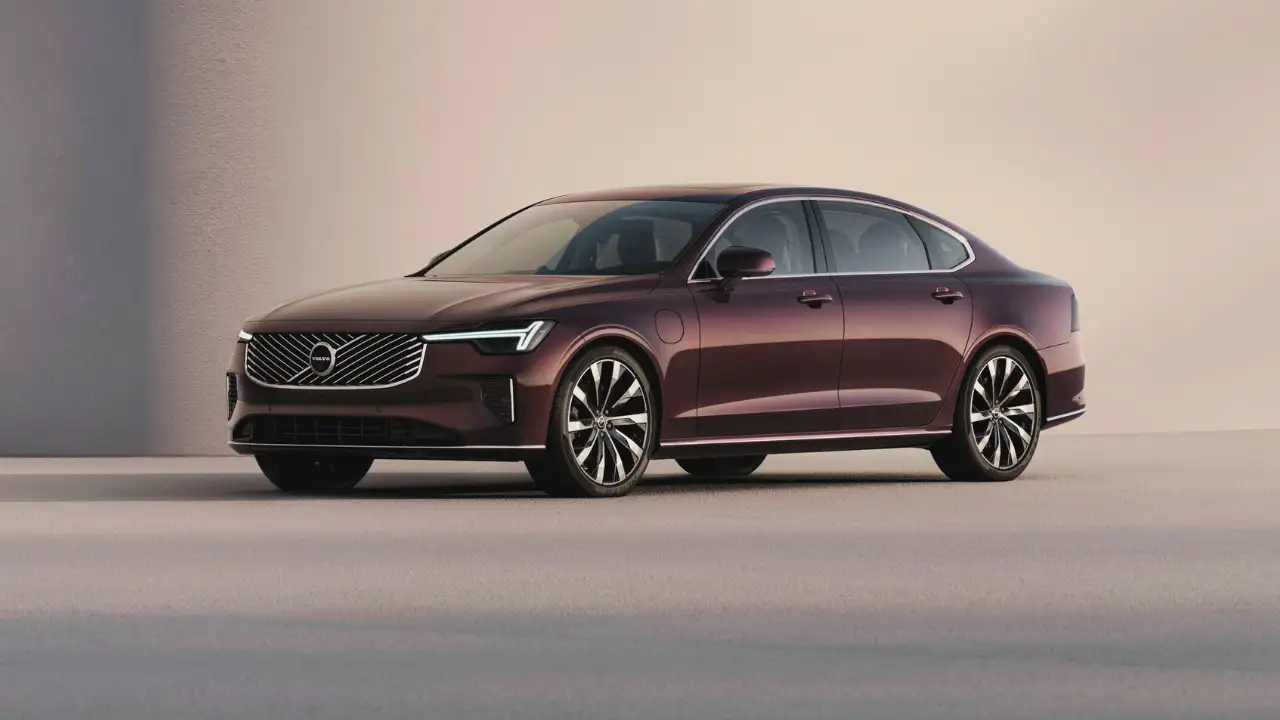
The American sedan is fading fast. Buyers keep choosing SUVs and crossovers instead. Automakers are responding by trimming their lineups. Sedans with slow sales are the first to go.
By 2027, several well-known nameplates will disappear from dealership showrooms. The list includes everything from luxury performance models to affordable daily commuters. Cadillac is discontinuing its final two traditional sedans, while Tesla is bringing production of the vehicle that helped establish its brand to an end.
Audi is reshuffling its lineup around new naming rules. Volvo has already walked away from sedans entirely. Nissan is trimming its cheapest models, too. Even affordable, high-volume cars aren’t safe anymore.
This shift reflects changing consumer tastes. SUVs offer more space and a commanding driving position. Electric vehicles are also eating into sedan sales. Many buyers now want a crossover-shaped EV instead.
Analysts expect this trend to raise average new car prices. Affordable sedans typically anchor the lower end of pricing. Their disappearance removes cheaper entry points from the market. Buyers will increasingly need bigger budgets for new cars.
For enthusiasts, this is a bittersweet moment. Some of these cars are genuinely excellent machines. Others represent decades of engineering history now closing. Their exit marks the end of distinct automotive eras.
Below are eight sedans disappearing from the US market. Each one gets a proper, detailed look. We’ll cover specs, sales context, and what replaces them. Some have successors; others simply vanish.
1. Cadillac CT4
The CT4 is Cadillac’s compact sports sedan. It replaced the aging ATS back in 2019. Cadillac introduced it as part of a simplified “Y” trim strategy. That plan aimed to make naming more logical across the lineup.
Cadillac confirmed the CT4 will die after 2026. Production ends at the Lansing Grand River plant. The standard build wraps up around June 2026. Order books are closing even earlier at many dealers.
This matters because the CT4 anchors Cadillac’s entry-level sedan lineup. Losing it narrows the brand’s affordable options considerably. The CT4-V and CT4-V Blackwing die alongside it.
Enthusiasts will miss the manual-transmission Blackwing especially. That car was one of the last new sedans offered with a stick shift. It competed directly against BMW’s M3 and the Mercedes-AMG C63.
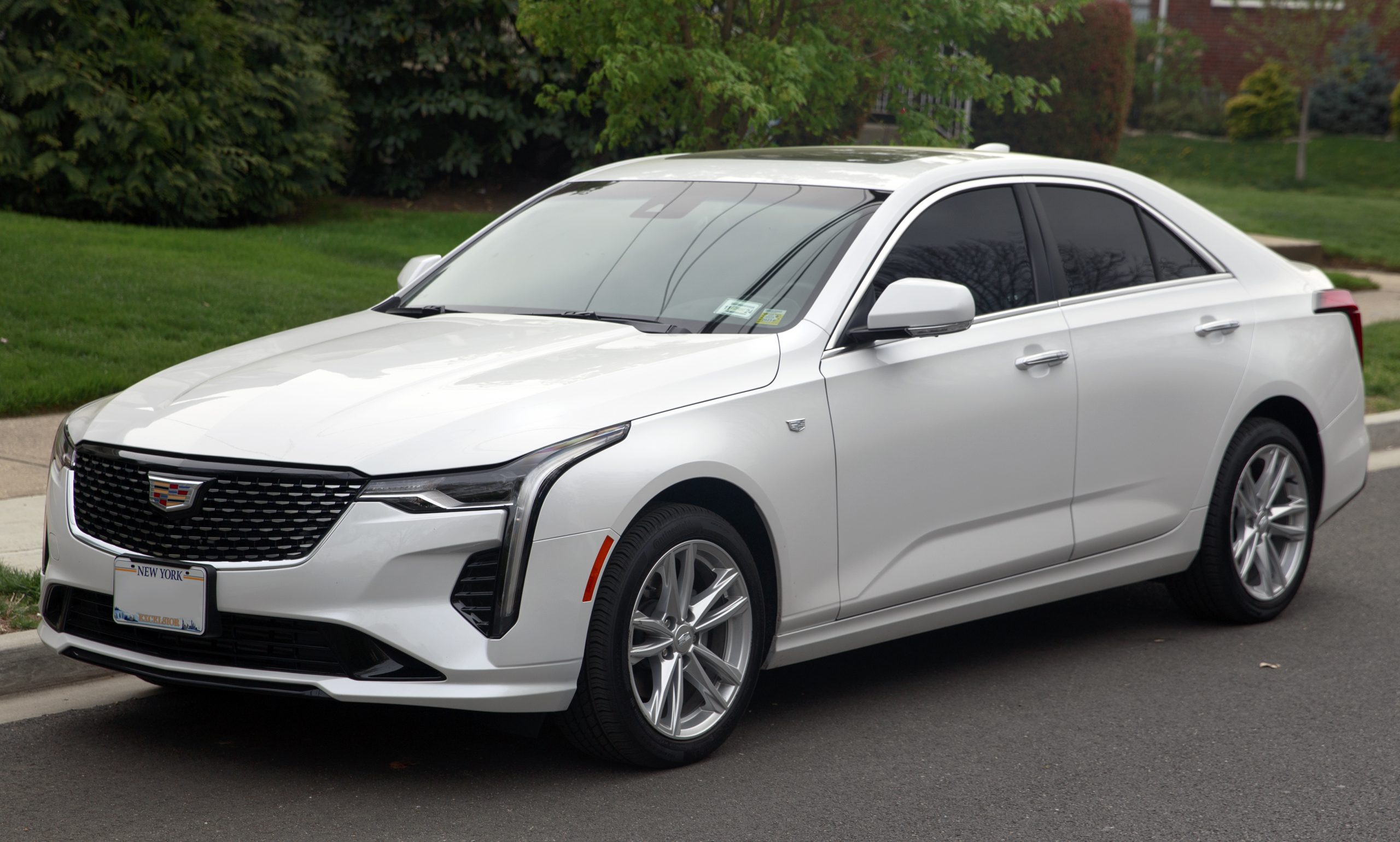
Specifications:
- Engine: 2.7L Turbo I4 (base); 3.6L Twin-Turbo V6 (Blackwing)
- Horsepower: 237 hp (base); 325 hp (CT4-V); 472 hp (Blackwing)
- Torque: 258 lb-ft (base); 380 lb-ft (CT4-V); 445 lb-ft (Blackwing)
- Length: 187.4 inches
- Width: 71.4 inches
- Seating: 5 passengers
The base CT4 uses a turbocharged four-cylinder engine. It sends power through rear-wheel or all-wheel drive. The mid-range CT4-V adds meaningful power over the base model. It reaches 60 mph in about 4.8 seconds.
The CT4-V Blackwing uses a twin-turbo V6 instead. It can hit 60 mph in roughly 3.9 seconds. Top speed for the Blackwing reaches an impressive 189 mph. Few sedans in this price range can match that number.
Cadillac cited slowing sedan demand as the main reason for cancellation. SUVs like the XT4 and XT5 now dominate showroom traffic. The company is shifting resources toward electric models instead. The Celestiq and Lyriq represent that new strategic direction.
Sales volume tells the real story here. The CT4 never matched Cadillac’s crossover sales figures. Its exit leaves a gap in the compact luxury segment. Buyers will likely shift toward BMW, Genesis, or Audi instead.
Cadillac has not confirmed any spiritual successor for the CT4. The CT5 will remain as the brand’s only traditional sedan. Used CT4 values may hold steady given the limited production run. Blackwing models, especially, could become future collectibles. For now, the remaining CT4 inventory is shrinking fast nationwide. Interested buyers should act before dealer stock disappears entirely.
2. Cadillac CT5
The CT5 is Cadillac’s larger, more prestigious sedan. It replaced the CTS starting in the 2020 model year. Cadillac confirmed this generation ends after 2026, too. Production continues through late 2026 before finally stopping.
Unlike the CT4, though, there’s genuine good news here. A next-generation CT5 is already confirmed for the future. That new model will keep a gasoline engine, according to Cadillac.
It arrives at the same Lansing Grand River facility. This makes the CT5’s exit more of a pause than a permanent ending. The nameplate isn’t disappearing forever from Cadillac’s lineup.
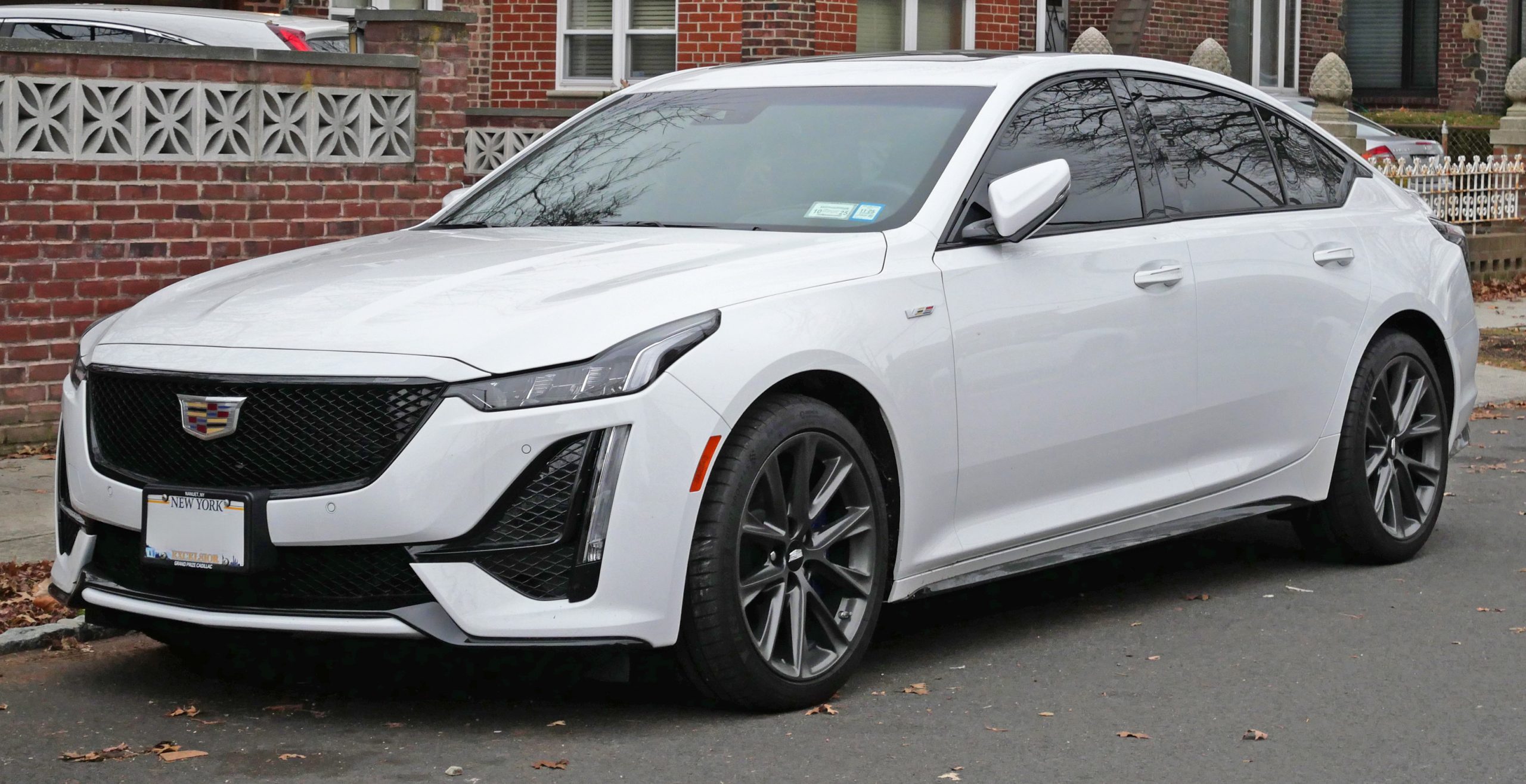
Specifications:
- Engine: 2.0L Turbo I4 (base); 3.0L Twin-Turbo V6 (CT5-V Blackwing)
- Horsepower: 237 hp (base); 668 hp (Blackwing)
- Torque: 258 lb-ft (base); 659 lb-ft (Blackwing)
- Length: 194.9 inches
- Width: 71.8 inches
- Seating: 5 passengers
The CT5-V Blackwing is the range-topping performance variant. It rivals the BMW M5 and Mercedes-AMG E63 in raw output. That car uses a supercharged V6 producing serious horsepower. It remains one of America’s most powerful production sedans.
Cadillac says the CT5 outsells the CT4 significantly in the market. That’s roughly a three-to-one sales advantage industry-wide. This explains why GM chose to revive the nameplate rather than kill it outright. Demand simply justified continued investment in the platform.
GM recently pulled back from converting Lansing entirely to EV production. A $1.25 billion investment will keep the plant running on gas power. That reversal followed a $1.6 billion charge tied to unused EV assets. Market demand for EVs cooled faster than GM originally expected.
So while the current CT5 disappears after 2026, hope remains for sedan fans. A gas-powered successor is genuinely already in development. John Roth, Cadillac’s Global Vice President, confirmed these plans directly. His letter to dealers outlined the exact production timeline.
Buyers wanting today’s CT5-V Blackwing should act relatively soon. This particular generation won’t be built much longer. The Celestiq remains Cadillac’s only other sedan once these two exit. However, its price tag puts it far out of reach for most buyers.
3. Tesla Model S
The Model S is Tesla’s original flagship sedan. It launched back in 2012 and reshaped the entire EV industry. Tesla confirmed the Model S will end production after 2026. Production will stop at the Fremont, California, factory.
This is a major symbolic loss for Tesla as a company. The Model S proved electric cars could be genuinely desirable to mainstream buyers. Elon Musk has told buyers to act now if interested. If you want one, this is essentially your last chance.
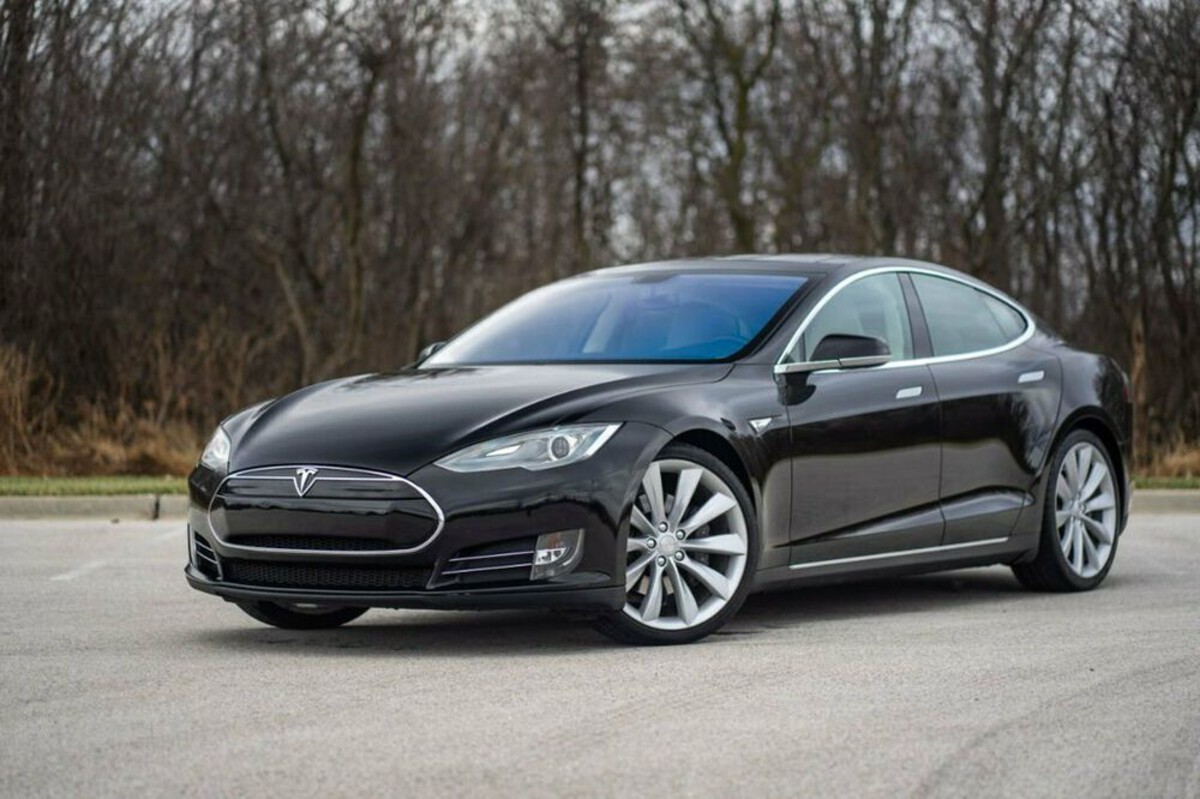
Specifications:
- Engine: Dual/Tri-Motor Electric Powertrain
- Horsepower: 670 hp (Long Range); 1,020 hp (Plaid)
- Torque: 713 lb-ft (Long Range); 1,020 lb-ft (Plaid)
- Length: 197.7 inches
- Width: 77.3 inches
- Range: Approximately 410 miles (Long Range)
The Long Range trim delivers around 410 miles on a full charge. The Plaid trim sacrifices some range for blistering straight-line speed. The Plaid can reportedly hit 60 mph in under two seconds. That figure rivals hypercars costing several times more money.
Tesla’s decision comes down to shifting sales priorities across its lineup. The Model 3 and Model Y now dominate total deliveries. Those two vehicles made up roughly 97% of Tesla’s 2025 deliveries worldwide. The Model S and Model X became a tiny niche by comparison.
Interestingly, Tesla plans to repurpose the Fremont factory afterward. Reports suggest it will eventually build Optimus humanoid robots there. That’s a striking pivot for a plant that built Tesla’s first true luxury car. It shows exactly where Tesla’s priorities now lie strategically.
The Model X SUV is being discontinued at the same time as the sedan. Both vehicles exit together as a single package. No direct successor has been announced for either model currently. Tesla seems content to let its original sedan legacy close quietly.
This marks the end of an era for electric luxury cars generally. The Model S essentially created the modern premium EV segment. Rivals like the Lucid Air and Mercedes EQS now compete for that same audience. Tesla appears willing to cede that specific space.
4. Audi A7
The A7 is Audi’s stylish four-door coupe-sedan. It debuted in the US market back in 2011. Audi confirmed the A7 is being phased out entirely. This aligns with the brand’s new naming strategy going forward. Audi is shifting all combustion models toward odd-numbered names. Electric models will use even numbers under this new system.
The A7 rides on Volkswagen Group’s MLB Evo platform. It shares mechanical bones with both the A6 and A8. Its sloping rear roofline made it an instant design standout. Few sedans blended everyday practicality with such dramatic styling.
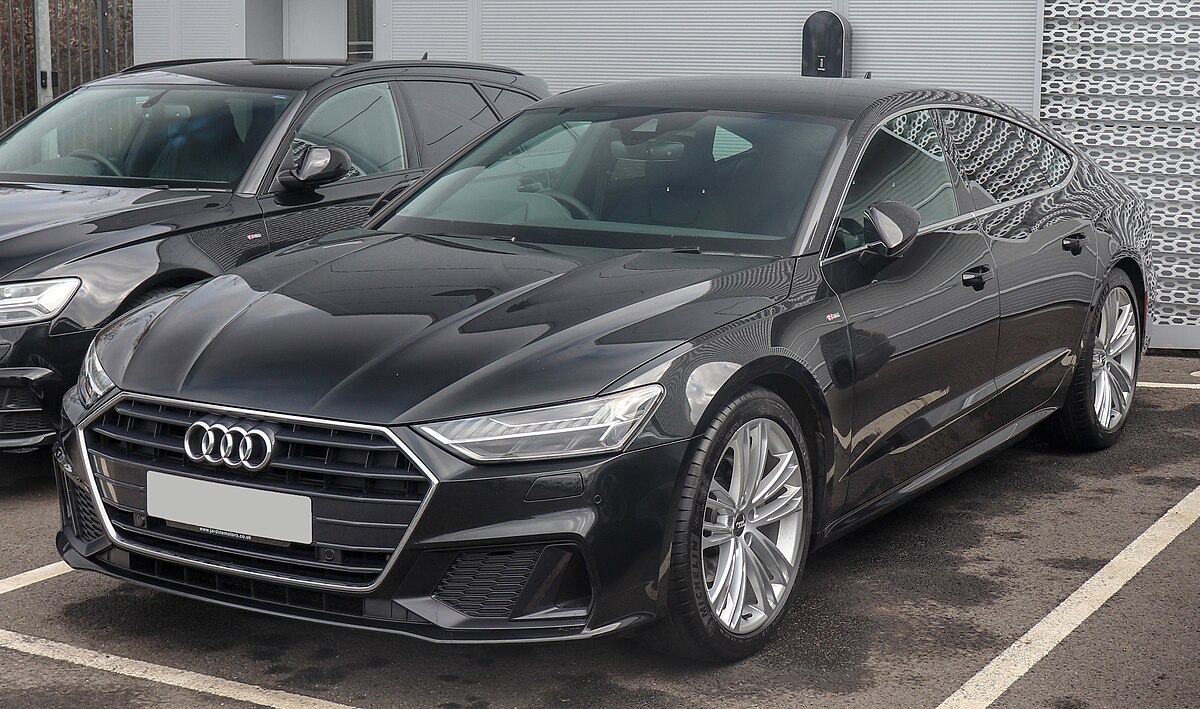
Specifications:
- Engine: 3.0L Turbocharged V6
- Horsepower: 335 hp
- Torque: 369 lb-ft
- Length: 195.5 inches
- Width: 75.1 inches
- Starting Price: Approximately $75,000
Audi wants to ramp up A6 production as its primary focus instead. The A6 will absorb buyers who might have otherwise chosen the A7. This isn’t purely about declining sales, though. It’s also a deliberate lineup consolidation strategy across Audi’s range.
Audi also plans to discontinue the high-performance S7 alongside its sibling. Both cars share this exact same fate. The RS7 Performance model will stick around a bit longer than the others. It remains Audi’s flagship gas-powered sports sedan for now.
Audi’s broader plan involves reviving the A4 nameplate at some point. That name will return attached to a future electric model instead. This naming shuffle reflects Audi’s larger electrification push across its lineup. Expect more nameplate changes as this transition continues over the coming years.
For now, the A7’s departure ends a distinctive design chapter for Audi. Its coupe-like silhouette won’t get a direct like-for-like replacement. The new A5 Sportback already went on sale, covering a similar niche. A high-performance RS5 variant is also expected soon.
Also Read: 10 Car Insurers Charge the Most to Cover Against Theft
5. Audi S7
The S7 is the performance version of the A7. It adds significantly more power and sharper driving dynamics. Audi confirmed the S7 ends alongside its A7 sibling. Both vehicles share the exact same production timeline.
The S7 served as Audi’s mid-range performance sedan option. It sat comfortably between the standard A7 and the flagship RS7. Its twin-turbo V6 delivers strong, linear power delivery throughout the rev range. Quattro all-wheel drive keeps it planted confidently in corners.
This same engine also appears in other Audi performance models. It’s a proven, well-regarded powertrain shared across the lineup. Audi’s decision reflects shrinking demand for niche performance sedans generally. Buyers increasingly prefer SUVs like the SQ7 and SQ8 instead.

Specifications:
- Engine: 2.9L Twin-Turbocharged V6
- Horsepower: 444 hp Torque: 443 lb-ft
- Length: 195.5 inches
- Width: 75.1 inches
- Starting Price: Approximately $86,000
The S7’s discontinuation also ties into Audi’s broader naming overhaul. Odd-numbered models are being reserved specifically for combustion vehicles.
But even within that framework, not every nameplate survives the cut. The S7 simply doesn’t fit Audi’s leaner future lineup plans. Enthusiasts liked the S7 for its blend of practicality and genuine speed. It offered near-RS7 performance at a noticeably lower price point.
Losing it narrows Audi’s performance sedan choices considerably going forward. Only the RS7 will remain as a gas-powered flagship option. Audi hasn’t ruled out an electric successor for the nameplate eventually.
But nothing concrete has been announced publicly at this stage. The current S7 accelerates from 0-60 mph in around 4.3 seconds. That performance figure won’t be easy for a replacement to match.
6. Volvo S90
The S90 is Volvo’s full-size luxury flagship sedan. It represented the brand’s most premium four-door offering available. Volvo is ending the S90 in the US market completely. No replacement gas-powered sedan is currently planned to take its place.
Interestingly, a new S90 still technically exists for 2026. However, it’s only sold in the Chinese domestic market. American buyers won’t get access to that particular version. Import economics simply don’t favor bringing it across the Pacific.
Ongoing trade tensions between the US and China played a role too. Tariffs made importing the Chinese-built car far less attractive financially. Volvo sold just over a thousand S90 units in the US during 2024. That’s a tiny number compared to its SUV sales figures.
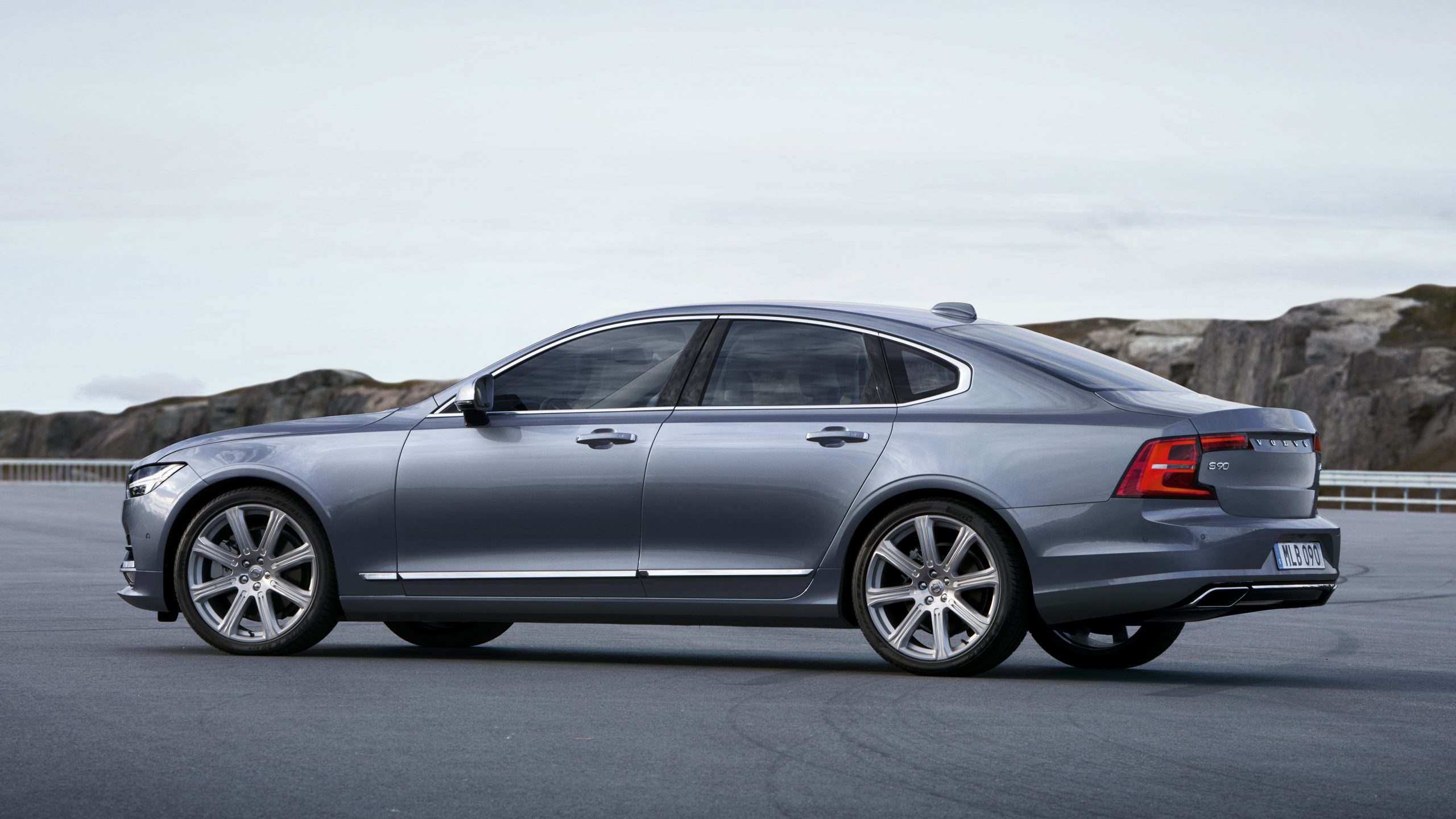
Specifications:
- Engine: 2.0L Turbocharged and Supercharged I4
- Horsepower: 295 hp Torque: 310 lb-ft
- Length: 198.4 inches
- Width: 74.7 inches
- Starting Price: Approximately $58,000
The XC90 alone outsells the S90 by a massive margin every year. This made continuing the sedan difficult to justify internally. Volvo is fully committing to SUVs and electric vehicles going forward. The brand wants to become fully electric globally by 2030.
Factories previously used for building sedans are being retooled for EVs instead. The Ridgeville, South Carolina, plant now builds the electric EX90. This shift ends Volvo’s long history of stately executive sedans in America. The S90 embodied understated Scandinavian luxury for many years.
Buyers wanting that specific experience will need to consider used models instead. Or they can switch entirely to Volvo’s new EX-badged SUVs. The related V90 wagon is also being discontinued around the same time. Volvo’s shift away from traditional body styles is essentially complete.
7. Volvo S60
The S60 was Volvo’s compact luxury sedan for over two decades. It competed against the BMW 3 Series and Mercedes C-Class. Volvo ended US production of the S60 already back in 2024. This closed a 24-year chapter for the beloved nameplate.
Volvo built the S60 at its Ridgeville, South Carolina, assembly plant. That same factory now builds the EX90 electric SUV instead. Sales numbers were consistently weak for the S60 over recent years. Volvo never sold more than 20,000 units in any single year.
Compare that figure to rivals like BMW’s 3 Series sedan. That car alone sold around 33,000 units during a similar period. The related V60 wagon performed even worse in terms of sales. Neither body style could compete against Volvo’s own popular SUVs.
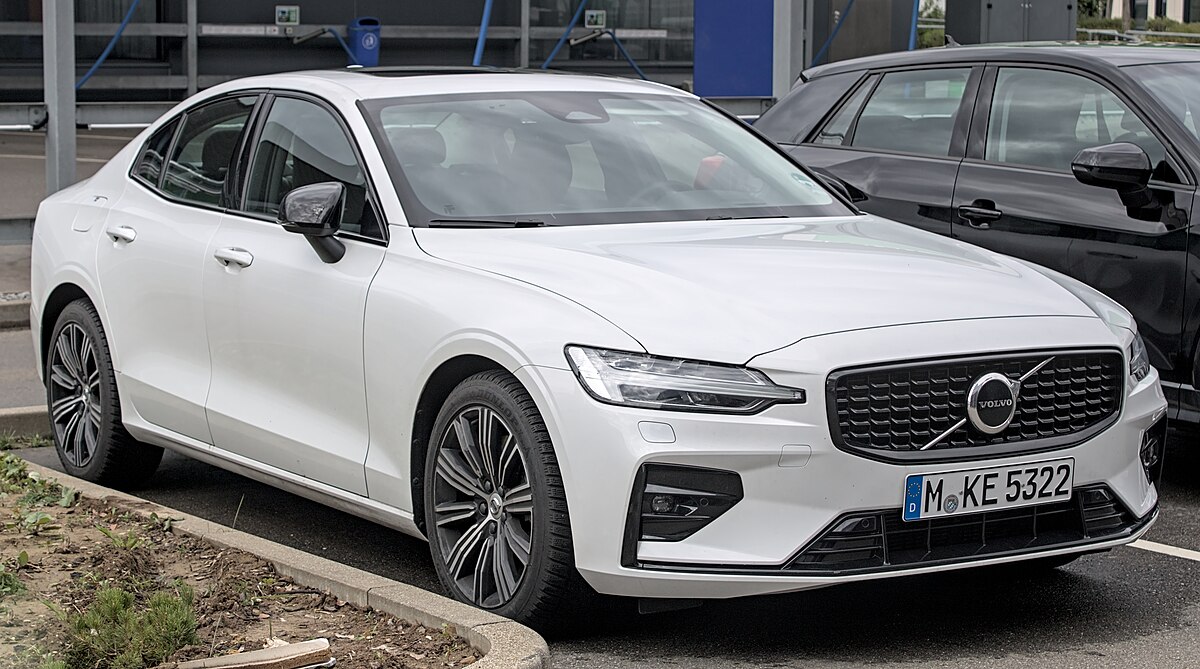
Specifications:
- Engine: 2.0L Turbocharged I4 (B5); Turbo/Supercharged I4 (Polestar Engineered)
- Horsepower: 250 hp (B5); 455 hp (Polestar Engineered)
- Torque: 258 lb-ft (B5); 523 lb-ft (Polestar Engineered)
- Length: 187.4 inches Width: 73.0 inches
- Trunk Space: 12.5 cubic feet
The XC60 crossover alone outsold the S60 by roughly five times globally. That enormous gap made the decision fairly straightforward for management.
Volvo also builds a separate S60 version specifically for China. However, no plans exist to import that version into America. This mirrors the exact fate of the related S90 sedan. Volvo is essentially exiting the American sedan business entirely at this point.
The company’s EV strategy prioritizes SUV-shaped electric models going forward. The EX30 and EX90 represent a clear new direction. For sedan loyalists, this leaves very few options remaining within the Volvo brand.
Used S60s are likely to hold value reasonably well going forward. The Polestar Engineered variant, in particular, may become a future enthusiast favorite. Its rarity and performance combination make it genuinely distinctive.
8. Nissan Versa
The Versa is Nissan’s smallest, most affordable sedan offering. It served as an entry point for budget-conscious first-time buyers. Nissan is ending US production of the Versa entirely. This follows the completion of the 2025 model year.
The Versa offered strong fuel economy for its low price point. It appealed heavily to first-time car buyers and daily commuters. Nissan is shifting its focus toward crossovers and electric models instead. The Kicks and Rogue represent that new corporate direction.
Compact crossovers now attract buyers who once wanted small, cheap sedans. This trend has hurt subcompact sedan sales industry-wide. The Versa’s low price point made it genuinely hard to profit from. Thin margins pushed Nissan toward higher-value vehicles instead.
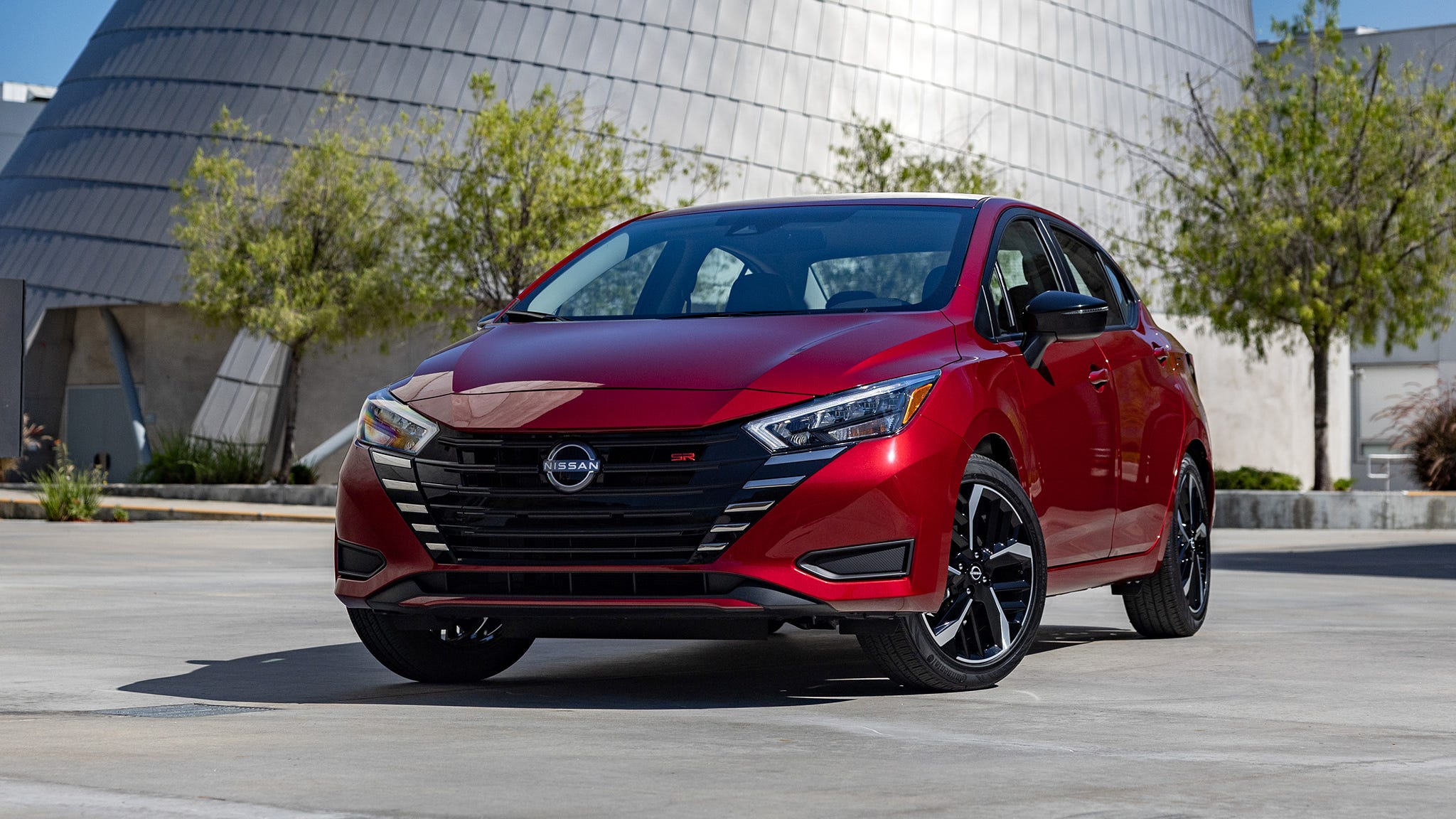
Specifications:
- Engine: 1.6L Naturally Aspirated I4
- Horsepower: 122 hp
- Torque: 114 lb-ft
- Length: 177.3 inches
- Width: 68.5 inches
- Starting Price: Approximately $17,000
Nissan hasn’t announced any direct successor for the Versa nameplate. The Sentra remains the brand’s smallest sedan option going forward. This mirrors industry-wide pressure on affordable sedans, generally speaking. Analysts expect average new car transaction prices to rise as a direct result.
Justin Fischer of CarEdge noted this exact trend recently in industry commentary. Losing affordable sedans naturally pushes market prices higher for everyone.
The Versa’s departure also affects rental fleets and budget buyers broadly. It was a common, reliable choice for cost-sensitive customers nationwide.
Nissan’s Ariya electric crossover was also discontinued as an import around the same time. That leaves Nissan’s entry-level lineup notably thinner than before.
Together, these changes signal Nissan’s broader pullback from cheap sedans generally. The brand is betting heavily on SUVs and future EVs instead.
For shoppers seeking something similarly affordable, the Nissan Kicks may be the closest replacement. It offers comparable pricing with added SUV-style versatility.
Also Read: 10 Luxury Sedans That Become Bargains at Three Years Old
