
Few suspension repairs have a bigger impact on how a vehicle rides and handles than replacing worn shocks and struts. These components help keep the tires in contact with the road, control body movement during cornering and braking, and absorb bumps that would otherwise be transmitted directly into the cabin.
While shocks and struts gradually wear over time, many drivers do not notice the decline because performance deteriorates slowly over tens of thousands of miles. By the time symptoms become obvious, stopping distances may have increased, tire wear may be accelerating, and full vehicle stability may have declined.
Unlike routine maintenance items such as oil changes or air filters, shocks and struts do not have a universal replacement interval. Their lifespan depends on road conditions, vehicle weight, driving habits, and the quality of the original equipment.
Many manufacturers expect them to remain effective well beyond 50,000 miles, while suspension experts often recommend inspecting them around that point and evaluating replacement by 75,000 to 100,000 miles if performance has noticeably deteriorated.
The cost of replacing a full set of shocks and struts can surprise many owners because the repair involves both expensive components and several hours of labor. Vehicles equipped with electronically controlled suspension systems or adaptive dampers can cost substantially more than models using conventional suspension designs.
According to Kelley Blue Book and RepairPal, replacing all four shocks or struts on a modern passenger vehicle generally costs between $1,000 and $2,500, although luxury vehicles, heavy-duty trucks, and performance models can exceed that range depending on parts and labor rates.
Understanding what drives those costs can help owners determine whether a repair estimate is reasonable and why replacing worn suspension components is often a worthwhile investment.
Also Read: 10 Ultra-Compact Cars Ranked From Shortest to Longest
Why Shocks and Struts Are Not the Same
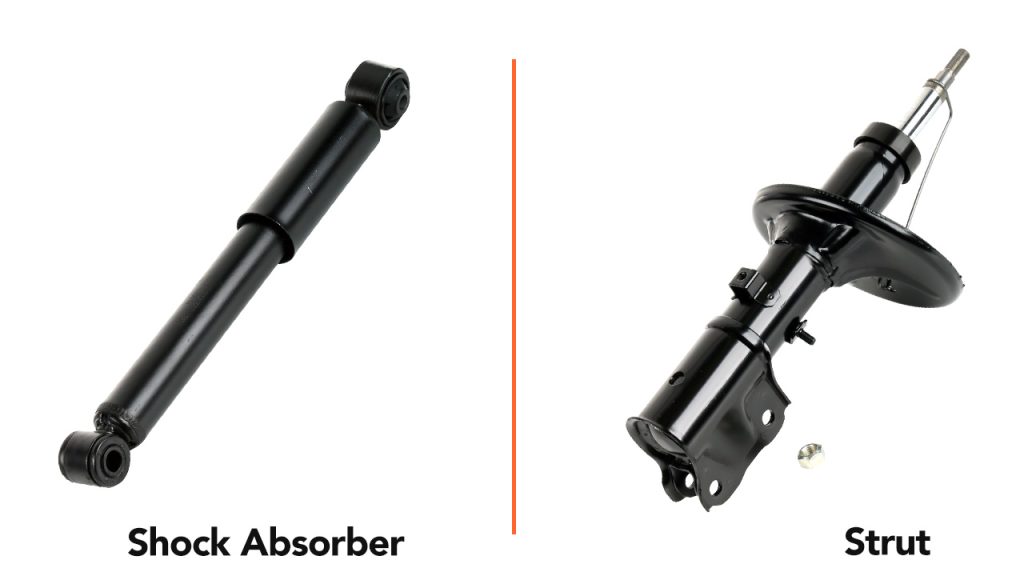
Although many people use the terms interchangeably, shocks and struts perform different functions.
A shock absorber is designed primarily to control suspension movement after the springs compress and rebound. It does not support the vehicle’s weight.
A strut, by comparison, is a structural part of the suspension system. In addition to damping suspension movement, it helps support the vehicle’s weight and serves as part of the steering and suspension assembly.
Many vehicles use:
- Struts on the front suspension
- Shock absorbers on the rear suspension
Others may use struts at all four corners or conventional shocks on both axles, depending on suspension design.
Because struts are integrated into the suspension assembly, replacing them generally requires more labor than replacing standalone shock absorbers.
Average Replacement Costs
The final repair bill depends on whether the vehicle uses shocks, struts, or a combination of both.
According to RepairPal, replacing a pair of front struts typically costs between $700 and $1,600, while replacing rear shocks generally ranges from $350 to $900, depending on the vehicle. Replacing all four components often brings the total into the $1,000 to $2,500 range for mainstream passenger vehicles.
Kelley Blue Book notes that luxury vehicles, SUVs equipped with adaptive suspension systems, and heavy-duty pickup trucks may exceed $3,000 because electronically controlled dampers and air suspension components are considerably more expensive than conventional hydraulic units.
Regional labor rates also play a major role. Repair shops in large metropolitan areas generally charge higher hourly rates than independent shops in smaller markets.
What Makes the Repair So Expensive?
Many owners assume they are paying primarily for the replacement parts, but labor accounts for a significant portion of the total cost.
Replacing front struts often requires technicians to:
- Raise and secure the vehicle
- Remove the wheels
- Disconnect steering components
- Separate suspension links
- Compress the coil springs when necessary
- Install the new strut assembly
- Reassemble the suspension
- Perform a wheel alignment
If completely loaded strut assemblies are used, labor may be reduced because the new unit already includes the spring and upper mount.
Rear shocks are often easier to replace, although some vehicles require partial interior trim removal to access the upper mounting points.
Because suspension geometry changes during strut replacement, a four-wheel alignment is commonly recommended after the repair.
Parts Prices Vary Widely
The replacement components themselves account for much of the full cost.
Several factors influence pricing, including:
- Vehicle make and model
- Original equipment versus aftermarket parts
- Conventional or adaptive suspension
- Loaded versus bare strut assemblies
Original Equipment Manufacturer (OEM) parts typically cost more than aftermarket alternatives, but they are designed to match the ride quality and handling characteristics intended by the manufacturer.
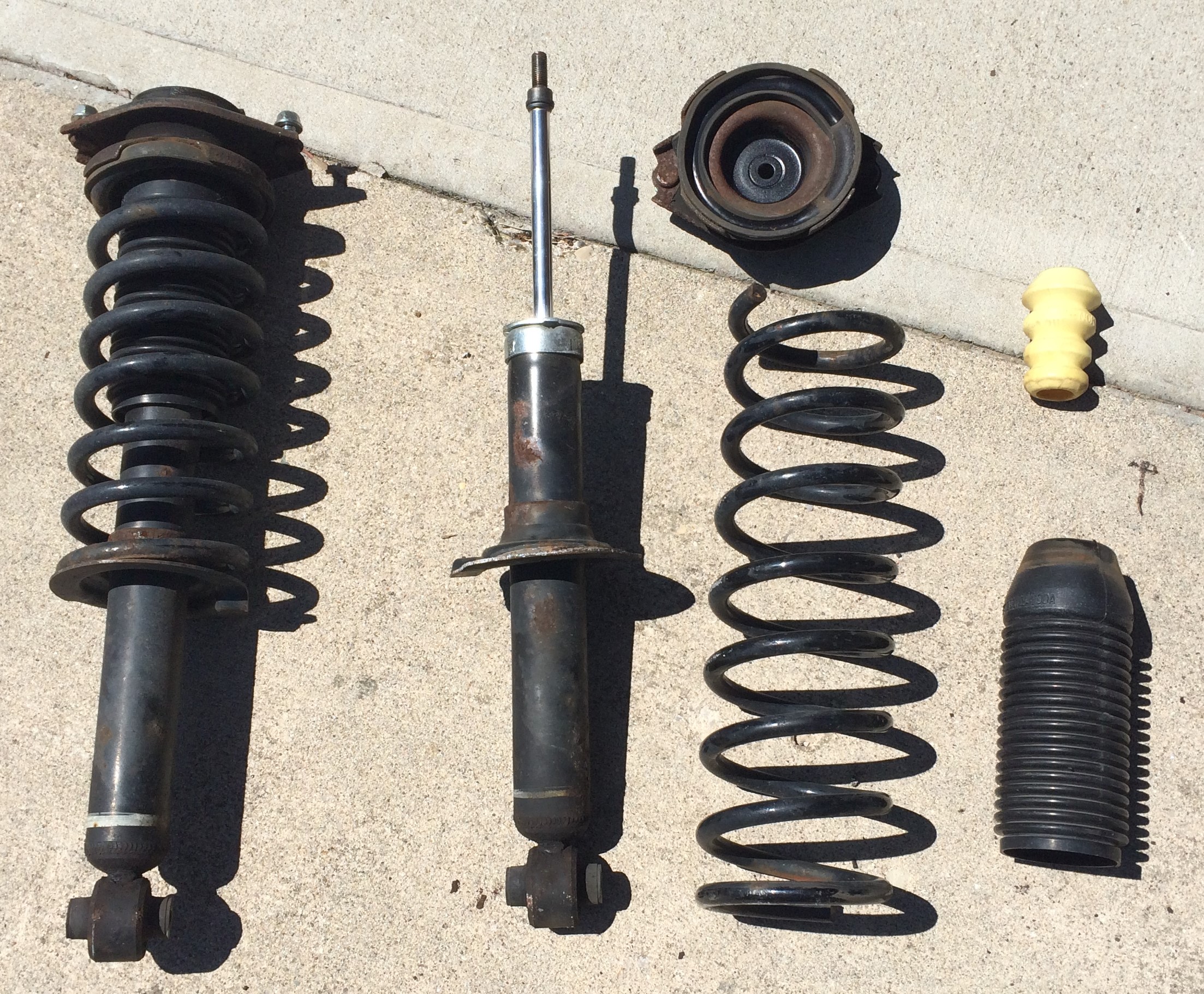
Loaded strut assemblies include:
- New strut
- Coil spring
- Upper mount
- Bearing plate
- Dust boot
- Bump stop
Although these assemblies cost more than replacing only the strut cartridge, they reduce installation time and replace several wear items at once.
Signs Your Shocks or Struts Need Replacement
Suspension components usually wear gradually, making deterioration difficult to notice.
Common warning signs include:
- Excessive bouncing after bumps
- Nose-diving during braking
- Increased body roll while cornering
- Uneven tire wear
- Fluid leaking from the shock or strut
- Clunking noises over rough roads
- Reduced steering stability
- Longer stopping distances
According to the National Highway Traffic Safety Administration (NHTSA), worn suspension components can reduce vehicle stability and tire contact with the road, particularly during emergency maneuvers or wet-weather driving.
While shocks and struts are not inspected during every state safety inspection, maintaining them in good condition contributes to safe vehicle handling.
Should You Replace All Four at Once?
Many repair shops recommend replacing shocks or struts in pairs because suspension performance should remain balanced across the axle.
Replacing only one worn front strut, for example, can create uneven damping between the left and right sides of the vehicle.
If all four components have similar mileage and wear, replacing the complete set often restores the vehicle’s ride quality more effectively than replacing only the failed unit.
However, replacing all four is not always mandatory. If the rear shocks remain in excellent condition while only the front struts have worn out, replacing the front pair alone may be appropriate after a thorough inspection.
The decision should be based on the condition of each component rather than mileage alone.
Additional Parts May Increase the Bill
Shock and strut replacement sometimes reveals other worn suspension components that should be replaced at the same time.
These may include:
- Strut mounts
- Sway bar links
- Ball joints
- Control arm bushings
- Tie rod ends
- Coil springs
- Bump stops
- Dust boots
Replacing these parts while the suspension is already disassembled can reduce future labor costs and help restore proper handling.
Although this increases the initial repair estimate, it often prevents paying for duplicate labor later.
Can You Delay the Repair?
Unlike a failed engine or transmission, worn shocks and struts usually do not leave a vehicle stranded. However, delaying replacement can have consequences.
As damping performance declines:
- Tires may lose contact with the road more easily.
- Braking distances can increase.
- Tire wear often accelerates.
- Suspension components experience greater stress.
- Ride comfort deteriorates.
Worn suspension also affects electronic safety systems such as anti-lock braking and electronic stability control because these systems rely on consistent tire contact with the road.
Addressing suspension wear before it becomes severe can also reduce the likelihood of additional repairs caused by excessive vibration and component movement.
Is It Worth Paying for Premium Suspension Parts?
Some owners wonder whether premium shocks and struts justify their higher price. For most daily drivers, high-quality OEM or reputable aftermarket replacements provide the best balance between ride quality, durability, and cost.
Performance-oriented dampers may improve handling, while heavy-duty shocks are often beneficial for trucks used for towing or carrying heavy payloads.
Choosing the least expensive replacement available may reduce the upfront repair bill, but lower-quality components may wear more quickly or alter the vehicle’s original ride characteristics.
Selecting replacement parts that match the manufacturer’s specifications generally provides the most predictable results.
Replacing a full set of shocks and struts is one of the more expensive suspension repairs most vehicle owners will face, but it is also one of the most beneficial for restoring ride quality, handling, and braking performance.
For most mainstream passenger vehicles, owners can expect to spend $1,000 to $2,500 for all four corners, including parts and labor. Luxury vehicles, adaptive suspension systems, and certain trucks may cost considerably more because of higher-priced components and additional labor requirements.
While it may be tempting to postpone the repair if the vehicle still feels drivable, worn shocks and struts affect far more than comfort. They influence steering response, braking stability, tire wear, and the effectiveness of modern safety systems.
Replacing them before excessive wear develops helps maintain the vehicle’s original handling characteristics and can prevent additional suspension repairs later.
The best way to determine whether replacement is necessary is through a professional suspension inspection. If leaks, excessive wear, or declining performance are confirmed, replacing worn shocks and struts with quality components is an investment that improves both safety and long-term vehicle reliability.
Also Read: 10 Heaviest Pickup Trucks Ever Built – Ranked by Weight
