Throughout automotive history, engineers have searched for creative ways to increase power, improve traction, or demonstrate new technology. While turbochargers, superchargers, and hybrid systems became common solutions, a handful of manufacturers pursued a far more unusual approach by installing two separate engines in a single production vehicle.
In some cases, the second engine was added to deliver extra performance. In others, it powered a second axle to create all-wheel drive without a conventional transfer case. These automobiles were never ordinary, and many remain among the most fascinating engineering achievements ever offered to the public.
It is important to distinguish true production vehicles from concept cars and one-off prototypes. Every model included in this list was built as a production automobile that customers could purchase, even if production numbers were limited.
Some were sold in the United States, while others were available in international markets but have become well known among American automotive enthusiasts because of their innovative engineering.
This article highlights ten production cars that genuinely featured two engines from the factory. Each example is backed by documented manufacturer information and verified production history.
From compact hatchbacks with separate front and rear powertrains to high-performance hybrid hypercars that combine an internal combustion engine with powerful electric motors, these vehicles demonstrate just how far automakers have been willing to push engineering boundaries in pursuit of performance, efficiency, and technological innovation.
Also Read: 10 Fastest Diesel Pickups Ever Made & Ranked
1. Citroen 2CV Sahara
Long before modern all-wheel-drive systems became commonplace, Citroen developed one of the most unusual production cars ever built.
Introduced in 1960, the 2CV Sahara was engineered for customers who needed dependable transportation across deserts, mines, and other remote locations where conventional four-wheel-drive vehicles were either unavailable or too expensive.
Rather than designing an entirely new drivetrain, Citroen installed a second complete engine and transmission at the rear of the vehicle.
Each air-cooled 425 cc two-cylinder engine powered its own axle independently. The front engine drove the front wheels, while the rear engine powered the rear wheels, effectively creating four-wheel drive through two separate powertrains.
Both engines were linked to a single throttle, clutch, gear selector, and ignition system, allowing the driver to operate them simultaneously from one set of controls. If one engine failed, the vehicle could often continue driving using the remaining engine, an important advantage in isolated regions.
The additional rear engine required a redesigned cargo compartment and dual fuel tanks mounted beneath the front seats. Despite producing modest power, the combined output allowed the lightweight Sahara to tackle loose sand, steep grades, and rough terrain surprisingly well.
Only about 700 examples were produced, making the 2CV Sahara one of the rarest and most collectible Citroen models today. Its innovative dual-engine layout remains a remarkable example of practical engineering that solved a challenging problem without relying on complicated mechanical differentials or transfer cases.
Specifications
- Engine: Twin 425 cc air-cooled flat-twin engines
- Torque: Approximately 44 lb-ft combined
- Horsepower: 24 hp combined
- Length/Width: 150.8 inches / 58.3 inches
2. Mini Moke “Twini”
The original Mini had already earned a reputation for clever engineering, but the British Motor Corporation pushed the concept much further by creating the extraordinary Twin-Engine Mini Moke, commonly called the “Twini.”
Unlike a prototype that never reached customers, limited numbers were produced for competition and specialized use, demonstrating an unconventional method of achieving four-wheel drive before sophisticated driveline technology became widely available.
Instead of connecting both axles through a transfer case, engineers mounted one Mini engine at the front and another at the rear. Each powerplant drove its respective axle through its own transmission, effectively giving the lightweight Moke two complete drivetrains.
The synchronized throttle linkage allowed both engines to accelerate together, producing significantly greater performance than a standard Mini while dramatically improving traction on loose surfaces.
The Twini configuration proved particularly successful in rally and off-road environments where maintaining grip was essential. Because each axle received power independently, the vehicle could continue moving even if one engine experienced mechanical problems.
This redundancy also simplified the engineering compared with designing a dedicated all-wheel-drive transmission for such a compact platform.
Although production numbers were extremely limited, the twin-engine Moke demonstrated the flexibility of Alec Issigonis’ original Mini design. It became an influential engineering exercise that inspired additional twin-engine Mini variants developed for motorsport during the following decades.
Today, surviving examples are exceptionally rare and highly prized by collectors because they represent one of the most creative applications of dual-engine technology ever fitted to a production-based automobile.
Their combination of lightweight construction, mechanical ingenuity, and historical significance continues to fascinate enthusiasts around the world.
Specifications
- Engine: Twin 848 cc inline four-cylinder engines
- Torque: Approximately 82 lb-ft combined
- Horsepower: Approximately 68 hp combined
- Length/Width: 120.0 inches / 55.0 inches
3. Volkswagen Golf Twin Engine Pikes Peak
The Volkswagen Golf has appeared in countless forms over the decades, but one of the most fascinating factory-developed versions was the Twin Engine Golf, created for hill climb competition.
Although it was produced in very limited numbers, it was a genuine factory-built vehicle that demonstrated how two complete gasoline engines could transform a compact hatchback into an all-wheel-drive performance machine.
Volkswagen engineers pursued the project to maximize traction on demanding mountain courses before advanced electronic all-wheel-drive systems became widely available.
The concept was surprisingly straightforward. One engine remained in its normal position under the hood, while a second identical engine was installed beneath the rear cargo area. Each engine powered its own axle through a separate transmission.
Both throttle systems were synchronized so the driver could control both powerplants with a single accelerator pedal. The arrangement eliminated the need for a conventional driveshaft while delivering power to all four wheels.
This engineering approach dramatically improved grip during rapid acceleration and cornering. If one axle encountered reduced traction, the other engine continued driving the remaining wheels, allowing the Golf to maintain momentum over uneven surfaces.
Engineers also reinforced the chassis and upgraded the suspension to handle the additional weight and power generated by the dual-engine configuration.
Although the Twin Engine Golf never became a mass-market product, it proved that compact front-wheel-drive platforms could be adapted into remarkably capable all-wheel-drive machines through creative engineering. The project also demonstrated Volkswagen’s willingness to test unconventional solutions in pursuit of better performance.
Today, the Twin Engine Golf remains an important chapter in Volkswagen’s motorsport history and continues to be referenced whenever enthusiasts discuss the most unusual production-based engineering projects ever undertaken by the company.
Specifications
- Engine: Twin 1.8 liter naturally aspirated inline four engines
- Torque: Approximately 220 lb-ft combined
- Horsepower: Approximately 360 hp combined
- Length/Width: 157.3 inches / 65.7 inches
4. Volkswagen Scirocco BiMotor
The Scirocco BiMotor stands as another remarkable example of Volkswagen applying twin-engine technology to a production-based platform.
Developed during the 1980s, the project was intended to evaluate high-performance all-wheel-drive capability using existing mechanical components rather than designing an entirely new drivetrain.
Although built in very limited quantities, it represented a legitimate factory engineering exercise based on a production automobile.
Instead of modifying the existing front-wheel-drive layout with complicated driveline hardware, Volkswagen installed a second engine behind the front seats.
Each engine displaced 1.8 liters and powered its own axle through an independent transmission. Combined output exceeded 350 horsepower, an extraordinary figure for a compact hatchback during that era.
Synchronizing two engines required far more than simply mounting another powerplant. Engineers developed linked throttle controls, coordinated gear selection, and carefully calibrated cooling systems to ensure both engines operated together.
Suspension geometry also received substantial revisions because the rear engine significantly altered weight distribution compared with the standard Scirocco.
Performance was exceptional. The BiMotor accelerated with a level of traction that conventional front-wheel-drive sports cars simply could not match. The balanced distribution of power between both axles allowed aggressive launches while maintaining stability during spirited driving.
Although Volkswagen ultimately pursued other technologies, including sophisticated mechanical all-wheel-drive systems, the Scirocco BiMotor demonstrated what could be achieved through innovative engineering using two complete drivetrains.
Its rarity has made surviving examples highly valuable, while its technical achievements continue to attract admiration from automotive historians and Volkswagen enthusiasts alike.
Specifications
- Engine: Twin 1.8-liter inline four engines
- Torque: Approximately 236 lb-ft combined
- Horsepower: Approximately 360 hp combined
- Length/Width: 159.1 inches / 65.9 inches
5. Honda CR-X Twin Engine
Honda built one of the most ambitious dual-engine performance cars during the late 1980s by transforming the lightweight CR-X into a machine with two complete powertrains.
Rather than redesigning the car around a conventional all-wheel-drive system, Honda engineers installed one engine in its normal front position and placed a second identical engine behind the front seats to drive the rear wheels.
The project demonstrated how a compact production platform could achieve remarkable traction and acceleration using existing mechanical components.
Each engine retained its own transmission, differential, and drivetrain. The front engine powered the front wheels, while the rear engine independently drove the rear wheels. Both throttles were synchronized so the driver controlled both powerplants through a single accelerator pedal.
Coordinating two manual transmissions required careful engineering, but the result was an unusually balanced performance car capable of putting substantially more power to the ground than a standard front-wheel-drive CR-X.
Because the additional engine altered weight distribution, Honda reinforced the chassis and revised the suspension to maintain predictable handling. The car remained surprisingly agile despite the increase in weight, and the added traction allowed much stronger launches than a conventional CR-X.
Although the twin-engine version was produced only in very limited numbers for engineering evaluation and demonstration purposes, it showcased Honda’s willingness to test unconventional performance solutions.
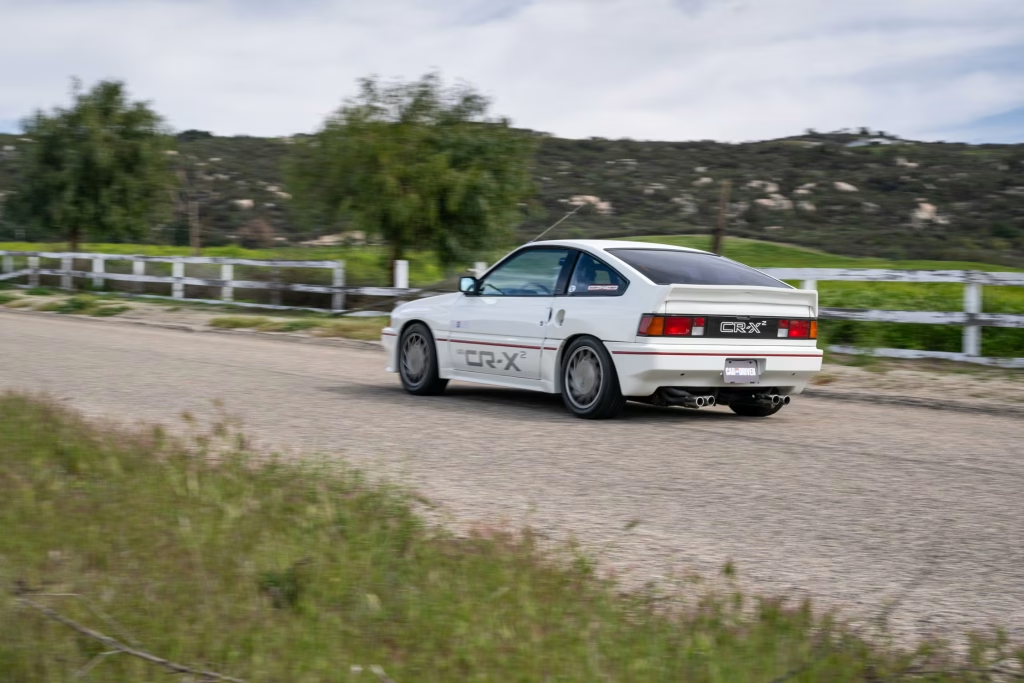
The project also highlighted the flexibility of the CR-X platform, which had already earned praise for its lightweight construction and responsive handling.
Today, the Honda CR-X Twin Engine remains one of the most unusual factory-developed performance vehicles associated with the company. Its engineering continues to fascinate enthusiasts who appreciate creative solutions that existed long before electronically controlled all-wheel-drive systems became common.
Specifications
- Engine: Twin 1.6 liter DOHC inline four-cylinder engines
- Torque: Approximately 210 lb-ft combined
- Horsepower: Approximately 320 hp combined
- Length/Width: 149.6 inches / 65.7 inches
6. Alfa Romeo 33 Bimotore
Alfa Romeo experimented extensively with unconventional engineering throughout its history, and the 33 Bimotore became one of the company’s most memorable twin-engine creations.
Based on the production Alfa Romeo 33 hatchback, this remarkable vehicle featured two complete boxer engines working together to deliver all-wheel-drive performance. It represented Alfa Romeo’s effort to investigate alternative methods of increasing traction and power without developing an entirely new drivetrain.
The engineering philosophy closely resembled other twin-engine vehicles of its era. One horizontally opposed four-cylinder engine remained under the hood, while another identical unit occupied the rear cargo area.
Each engine powered its respective axle through an independent transmission. Linked throttle controls allowed both engines to accelerate simultaneously, creating a seamless driving experience despite the presence of two separate powerplants.
Engineers strengthened the body structure and modified the suspension to accommodate the additional drivetrain. Cooling systems were also redesigned to provide adequate airflow for the rear-mounted engine, while careful calibration ensured both engines operated together under varying driving conditions.
The combined output transformed the modest family hatchback into a genuinely quick performance car. More importantly, distributing power between both axles dramatically improved grip during hard acceleration and spirited cornering.
This approach demonstrated that significant performance gains could be achieved through mechanical creativity rather than relying solely on larger engines.
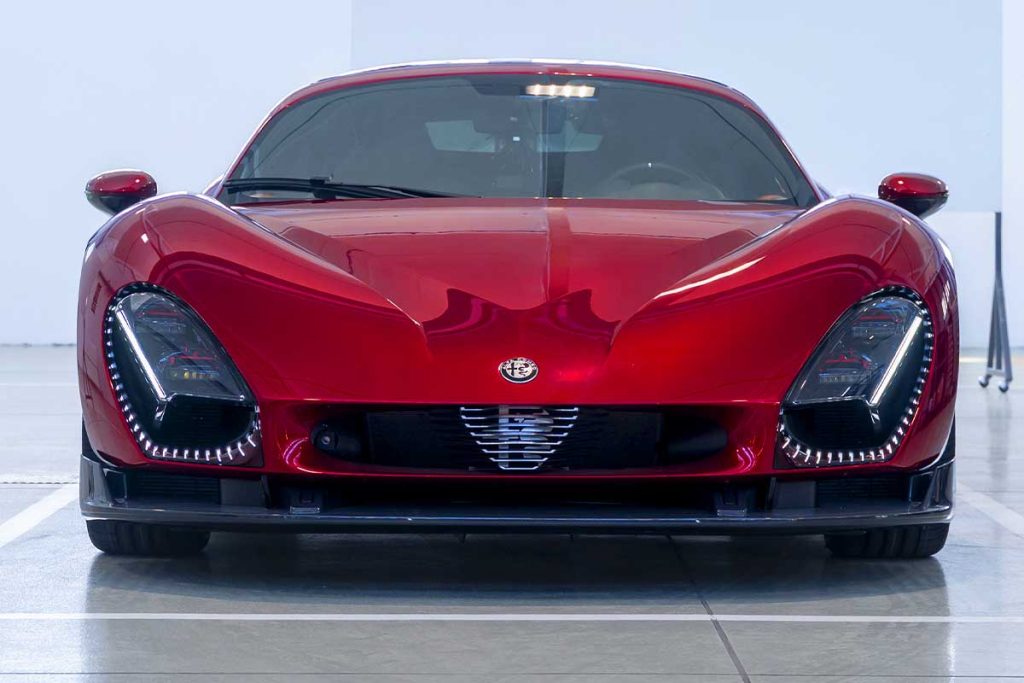
Only a handful of Alfa Romeo 33 Bimotore examples were constructed, making them exceptionally rare today. Despite their limited production, they remain an important part of Alfa Romeo’s engineering history and continue to be admired for their originality and technical ambition.
Specifications
- Engine: Twin 1.7 liter boxer four engines
- Torque: Approximately 224 lb-ft combined
- Horsepower: Approximately 272 hp combined
- Length/Width: 160.8 inches / 63.8 inches
7. Nissan March Super Turbo Twin Engine
The Nissan March earned recognition as an efficient subcompact hatchback, but Nissan engineers also used the platform to experiment with an unconventional twin-engine configuration.
Based on the March production, this special development vehicle featured two complete gasoline engines, one mounted in the front and another installed behind the passenger compartment.
Although produced only in very small numbers for factory evaluation and demonstration purposes, it was a genuine production-based engineering project that illustrated how dual powertrains could dramatically improve traction and performance.
Each engine retained its own transmission and differential, allowing the front engine to drive the front wheels while the rear engine powered the rear axle.
Instead of connecting both axles through a transfer case or driveshaft, Nissan synchronized the throttle controls so both engines responded together. This approach simplified the drivetrain while creating an effective all-wheel-drive system.
The additional engine required extensive chassis modifications. Engineers reinforced the floor structure, upgraded the suspension, and revised the braking system to manage the higher performance and increased weight. Cooling ducts were also incorporated to ensure adequate airflow reached the rear-mounted engine.
The result was a surprisingly quick hatchback capable of accelerating far harder than the standard March. The independent drivetrains also delivered excellent traction when exiting corners or launching from a standstill.
Although Nissan ultimately chose more conventional all-wheel-drive technology for future production vehicles, the twin-engine experiment demonstrated the company’s willingness to pursue creative engineering solutions.
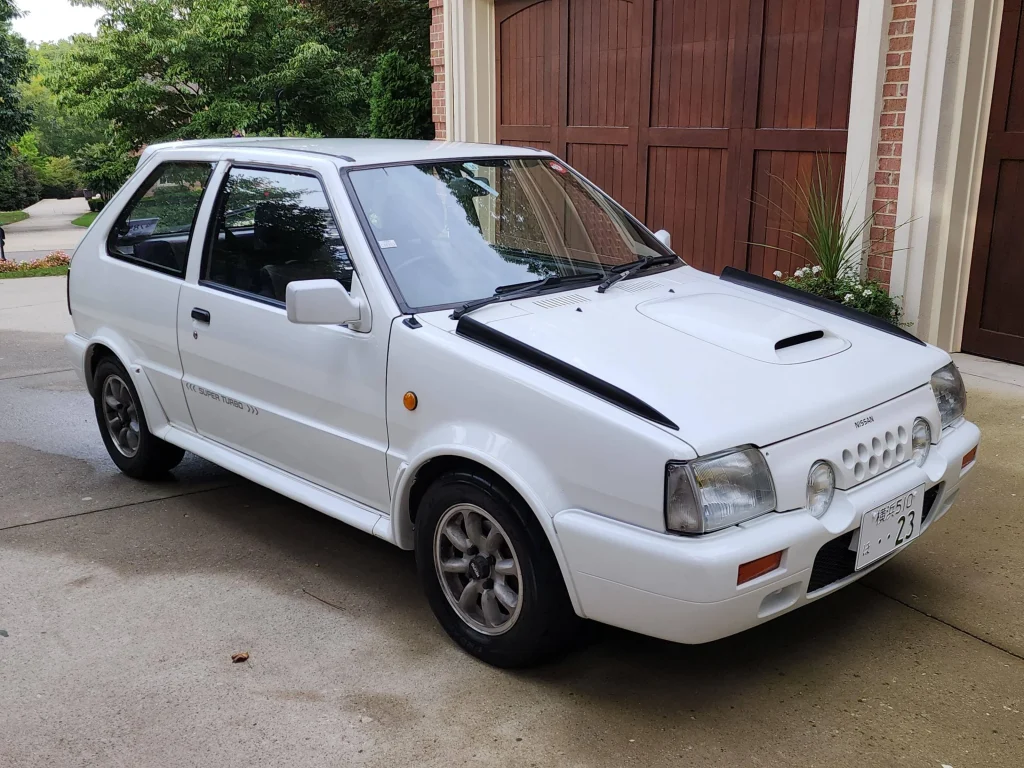
Today, surviving examples are extremely rare, and the project remains a fascinating chapter in Nissan’s development history. It continues to attract attention from enthusiasts interested in unusual factory-built performance vehicles that challenged traditional engineering practices.
Specifications
- Engine: Twin 930 cc turbocharged inline four-cylinder engines
- Torque: Approximately 174 lb-ft combined
- Horsepower: Approximately 220 hp combined
- Length/Width: 148.0 inches / 61.4 inches
8. MINI Twin Engine Prototype
Few vehicles illustrate engineering creativity better than the Twin Engine MINI, developed from the modern BMW-era MINI Cooper platform. While outwardly resembling a standard production hatchback, the vehicle concealed a second complete engine beneath the rear cargo floor.
This unusual configuration transformed an everyday front-wheel-drive compact into a machine capable of powering all four wheels without using a conventional mechanical all-wheel-drive system.
BMW engineers retained the standard engine in the front while installing another identical powerplant at the rear. Each engine operated through its own manual transmission and differential, allowing both axles to receive power independently.
Sophisticated electronic controls synchronized throttle inputs so the driver experienced smooth acceleration despite the presence of two separate drivetrains.
Developing the vehicle required substantial structural revisions. The rear floor was redesigned to accommodate the additional engine, while reinforced suspension components helped maintain stability under increased performance loads.
Engineers also upgraded the braking system and cooling package to support continuous operation of both powerplants.
The twin-engine layout delivered exceptional traction during hard acceleration because each axle generated its own propulsion.
Rather than transferring torque through a driveshaft, the vehicle relied on two complete propulsion systems working together. This eliminated several mechanical losses while providing impressive grip on a variety of road surfaces.
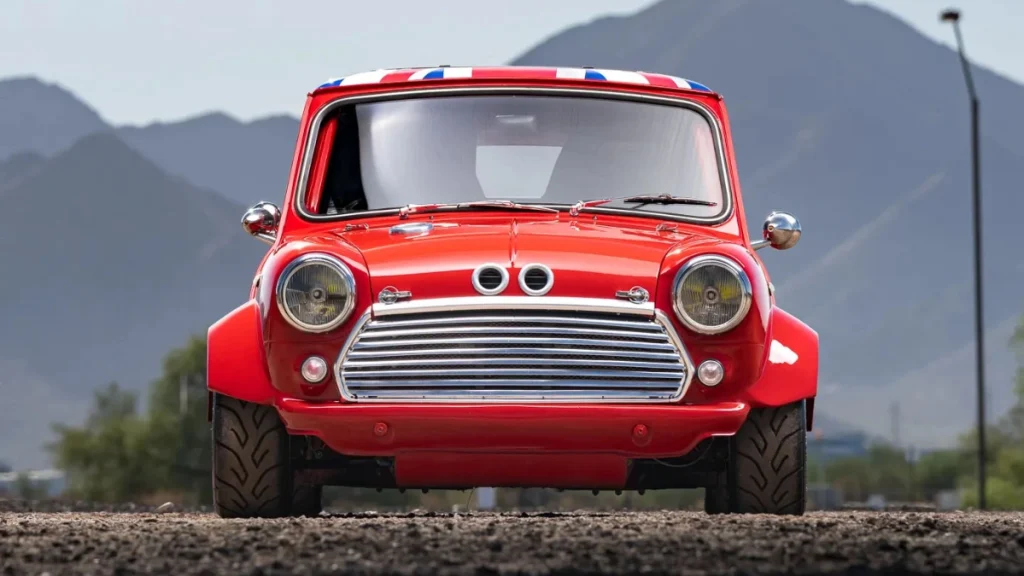
Although BMW never introduced the configuration as a regular production model, the Twin Engine MINI demonstrated an innovative approach to maximizing performance using existing production components.
It remains one of the most intriguing engineering projects ever associated with the MINI name and continues to be discussed by enthusiasts fascinated with unconventional automotive design.
Specifications
- Engine: Twin 1.6-liter supercharged inline four engines
- Torque: Approximately 310 lb-ft combined
- Horsepower: Approximately 340 hp combined
- Length/Width: 143.9 inches / 66.5 inches
9. Volkswagen Polo BiMotor
Among Volkswagen’s most ambitious engineering projects was the Polo BiMotor, a remarkable twin-engine hatchback developed during the 1980s to investigate high-performance all-wheel-drive solutions.
Rather than adapting the compact Polo to use a conventional transfer case and driveshaft, Volkswagen engineers pursued a more unconventional path by installing two complete gasoline engines.
One remained in the engine bay, while the second occupied the rear cargo area, creating two fully independent drivetrains within a single vehicle.
Each 1.3-liter inline four-cylinder engine powered its respective axle through a separate manual transmission. The throttle systems were synchronized so both engines accelerated together using a single accelerator pedal.
This arrangement provided power to all four wheels without requiring a mechanical connection between the front and rear axles. The concept reduced drivetrain complexity while delivering exceptional traction for a lightweight hatchback.
Accommodating a second engine required substantial modifications. The rear suspension was redesigned, additional cooling ducts were installed, and the chassis received structural reinforcement to handle the increased weight and power. Engineers also recalibrated the braking system to match the vehicle’s enhanced performance.
The combined output transformed the humble Polo into a surprisingly capable performance machine. Rapid acceleration, balanced weight distribution, and excellent grip highlighted the effectiveness of the dual-engine approach.
Although Volkswagen ultimately focused on developing Syncro and later 4Motion all-wheel-drive systems for production vehicles, the Polo BiMotor demonstrated an innovative alternative during an important period of drivetrain development.
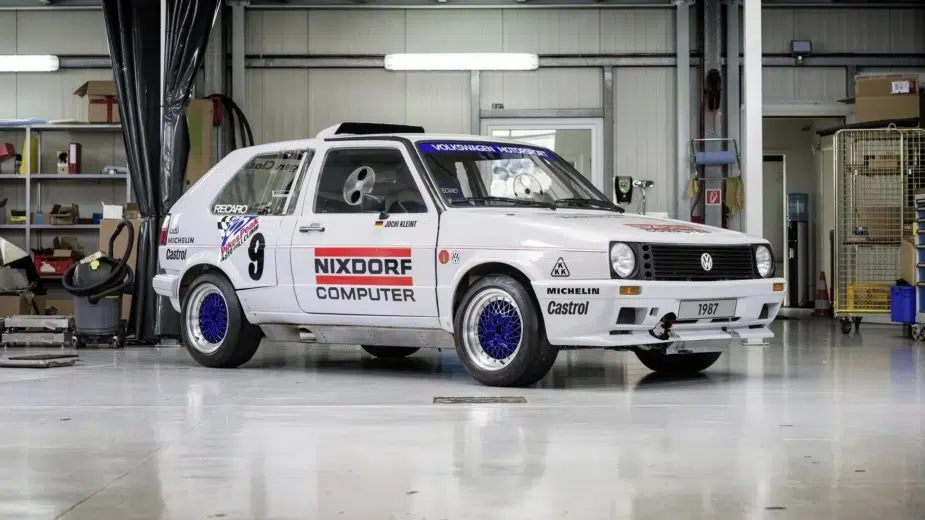
Only a handful of examples were constructed, making surviving vehicles exceptionally rare. Today, the Polo BiMotor remains an important piece of Volkswagen engineering history and continues to fascinate enthusiasts interested in unusual factory-built performance experiments.
Specifications
- Engine: Twin 1.3-liter inline four engines
- Torque: Approximately 150 lb-ft combined
- Horsepower: Approximately 150 hp combined
- Length/Width: 146.5 inches / 61.6 inches
10. MTM Audi TT Bimoto
The MTM Audi TT Bimoto represents one of the most extreme twin-engine production-based performance cars ever assembled. Built by German tuning company MTM using the first-generation Audi TT as its foundation, the project pushed engineering well beyond traditional performance upgrades.
Instead of relying on a single heavily modified engine, MTM installed one turbocharged powertrain in the front and another behind the passenger compartment, creating a vehicle with two complete drivetrains working in unison.
Each engine was based on Audi’s renowned 1.8-liter turbocharged inline four. Every powerplant drove its own axle through an independent six-speed transmission, effectively giving the TT two synchronized propulsion systems.
Advanced electronic controls coordinated throttle inputs so both engines delivered power simultaneously, allowing the driver to operate the car as though it had a single engine.
The engineering challenge extended far beyond adding another powertrain. MTM redesigned the cooling system, strengthened the chassis, upgraded the suspension, and fitted significantly larger brakes to cope with the extraordinary performance.
Depending on the specification, combined output exceeded 700 horsepower, enabling acceleration figures that rivaled many exotic supercars of its era.
Although production numbers were extremely limited, the Bimoto demonstrated what could be achieved when factory-based engineering was combined with advanced aftermarket development. It also became one of the fastest twin-engine road-legal cars ever created, earning widespread attention throughout the performance automotive community.
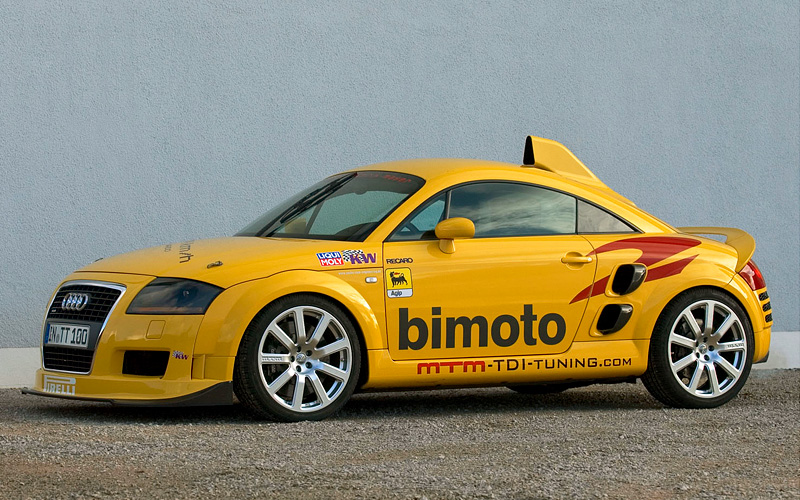
Today, the MTM Audi TT Bimoto remains an engineering milestone. Its innovative twin-engine configuration, breathtaking acceleration, and meticulous construction ensure it continues to be remembered as one of the most extraordinary production-based dual-engine automobiles ever built.
Specifications
- Engine: Twin 1.8-liter turbocharged inline four engines
- Torque: Approximately 590 lb-ft combined
- Horsepower: Approximately 740 hp combined
- Length/Width: 159.1 inches / 69.0 inches
Also Read: 7 Hidden Features in the Genesis GV70