
Pickup trucks are expected to tow, haul, and handle difficult terrain, but crash protection has become an equally important measure of engineering quality.
The Insurance Institute for Highway Safety evaluates vehicles through small-overlap front, moderate-overlap front, and side crash tests, while also examining headlights and crash-prevention technology.
Its rating scale runs from Good to Acceptable, Marginal, and Poor, giving U.S. buyers a detailed picture of where a truck protects occupants well and where weaknesses remain.
This ranking uses the latest IIHS results available for current pickup designs, with the strongest crash-test performers placed highest.
The 2026 award criteria are particularly demanding because IIHS now requires a good moderate overlap front rating for either of the top safety pick awards. That test places added emphasis on rear-seat protection, an area where several popular trucks have struggled.
The differences are substantial. One pickup earns good ratings across every major crashworthiness category and qualifies for Top Safety Pick+, while others lose ground because of rear-passenger restraints or side-impact structure.
These eight trucks show that size alone does not determine crash performance. Detailed engineering, restraint systems, and structural design can separate the strongest performers from the rest of the field.
Also Read: 10 Car Brands Most Likely to Cross 250,000 Miles
1. 2026 Tesla Cybertruck
The strongest current IIHS crash-test record among pickups belongs to the 2026 Tesla Cybertruck. It is the only pickup listed as a 2026 Top Safety Pick+ winner by IIHS, and its rating sheet contains Good scores in all three primary crashworthiness categories: small overlap front, updated moderate overlap front, and updated side. Good is the highest grade on the IIHS scale.
That clean rating pattern is particularly significant under the tougher 2026 rules. IIHS requires a Good rating in the moderate overlap front test for both award levels, putting greater pressure on automakers to protect people sitting behind the driver.
The Cybertruck earned a Good in that evaluation rather than being pulled down by rear-seat restraint concerns that have affected several conventional pickups.
Its small overlap performance also deserves attention, but the production date matters. IIHS states that the Good small overlap ratings apply to 2025 and 2026 Cybertrucks built after April 2025. Tesla changed the front underbody structure and footwell to improve occupant protection.
In the driver-side evaluation, IIHS gave the structure and safety cage a Good rating, while head and neck, chest, hip and thigh, and lower leg and foot injury measures all received Good grades. The restraints and dummy kinematics assessment was good as well.
The updated side test produced another complete set of strong crashworthiness results. Beyond impact protection, IIHS rated the Cybertruck’s headlights as Good.
Its standard vehicle-to-vehicle front crash prevention system received a Good rating, and the standard pedestrian front crash prevention system earned the same top grade. The weaker areas appear outside the main crash tests, with marginal seat belt reminders and acceptable LATCH ease of use.
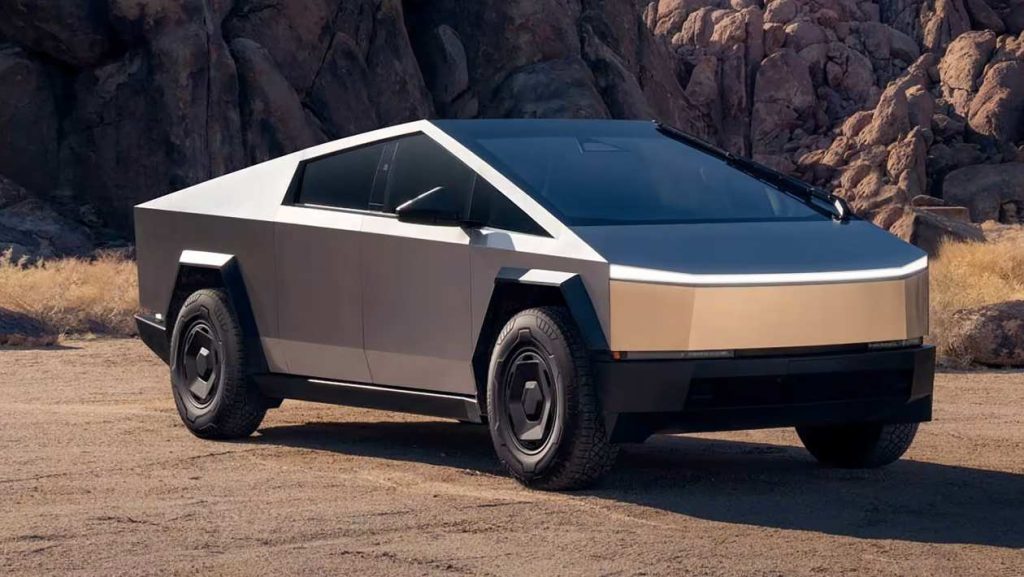
For a vehicle whose unconventional stainless-steel design has generated extensive safety debate, the verified IIHS results are unusually decisive. Under the Institute’s current U.S. testing program, no other pickup matches its 2026 Top Safety Pick+ status.
- Engine: Dual electric motors, all-wheel drive
- Torque: Tesla does not publish a conventional combined lb-ft motor torque figure for the current AWD model
- Horsepower: Approximately 593 hp for the 2026 dual-motor AWD version
- Length/Width: 223.7 inches / 80.0 inches without mirrors
2. 2026 Toyota Tundra Crew Cab
Toyota’s full-size pickup takes second place because the 2026 Tundra Crew Cab is the only other pickup currently carrying a 2026 IIHS safety award. It qualifies as a Top Safety Pick, sitting one level below the Cybertruck’s Top Safety Pick+ designation.
More importantly for this crash-test ranking, the Tundra earns Good ratings in the small overlap front, moderate overlap front, and updated side evaluations.
The result represents a major strength in occupant protection. IIHS data for the passenger-side small overlap evaluation show a Good rating for the Tundra’s structure and safety cage. Head and neck, chest, and hip and thigh injury measures also received good grades.
These ratings apply to 2022 through 2026 Crew Cab models following the truck’s redesign for the 2022 model year.
Side-impact performance is equally convincing. The updated IIHS side evaluation is more demanding than the Institute’s older test, using a heavier striking barrier and greater impact energy to better represent collisions involving modern SUVs and pickups.
In the Tundra’s test, the structure and safety cage received Good. Driver head and neck, torso, and pelvis injury measures were all good, while driver head protection also achieved the highest grade.
What separates the Tundra from many rival full-size trucks is its ability to avoid a low grade in the current moderate overlap front category. IIHS specifically redesigned this evaluation to place more attention on rear passengers.
Under the 2026 award rules, a Good rating is mandatory even for the standard Top Safety Pick award. The Tundra cleared that crashworthiness requirement.
It does not reach the Cybertruck’s higher award because the 2026 criteria extend beyond physical crash tests. The Institute’s award framework also considers headlamps and front crash prevention performance.
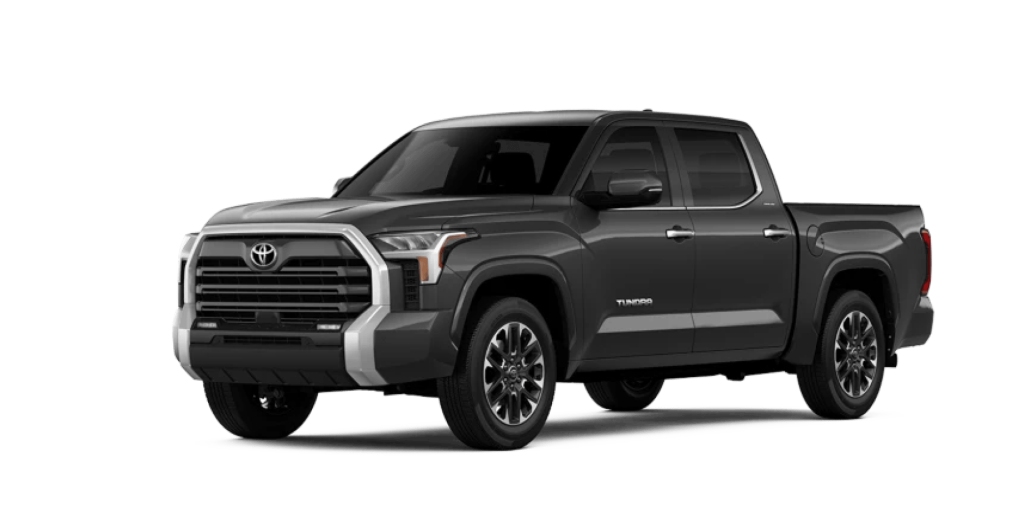
Still, when the ranking is centered on verified crash-test protection, the Tundra’s three Good crashworthiness scores make it one of the strongest pickups evaluated by IIHS.
Toyota offers multiple powertrains, but the standard non-SR i-FORCE specification provides 389 horsepower and 479 lb-ft of torque. Buyers can also choose the more powerful i-FORCE MAX hybrid with 437 horsepower and 583 lb-ft.
- Engine: 3.4-liter twin-turbocharged i-FORCE V6
- Torque: 479 lb-ft
- Horsepower: 389 hp
- Length/Width: 233.6 inches / 80.2 inches
3. 2026 Rivian R1T Crew Cab
The Rivian R1T presents an unusual crash-test profile. Its 2026 IIHS record does not qualify for a current Top Safety Pick award, yet the electric pickup still earns Good ratings in the small overlap front and updated side tests.
Its main setback is an acceptable score in the updated moderate overlap front evaluation. Those results place it ahead of trucks carrying poor ratings in the same rear-seat-focused frontal test.
IIHS tested the redesigned 2025 R1T, with the relevant crashworthiness ratings applying to 2025 and 2026 models.
On the driver side of the small overlap evaluation, the truck received good grades for its structure and safety cage, head and neck injury measures, chest protection, hip and thigh protection, lower leg and foot measures, and restraint performance.
The passenger-side structure was rated Acceptable, but every listed passenger injury measure received a Good grade. The combined small overlap result remained good.
The updated moderate overlap test reveals why the R1T misses the higher positions. Its structure was rated Good, and every driver injury category achieved a Good result. Rear-passenger head and neck, chest, and thigh injury measures were also good.
However, IIHS assigned a marginal rating to rear-passenger restraints and dummy kinematics, pulling the truck’s complete test rating down to acceptable.
Side-impact performance tells a stronger story. The R1T achieved a Good updated side rating, with Good grades for the safety cage and every listed driver and rear-passenger injury measure.
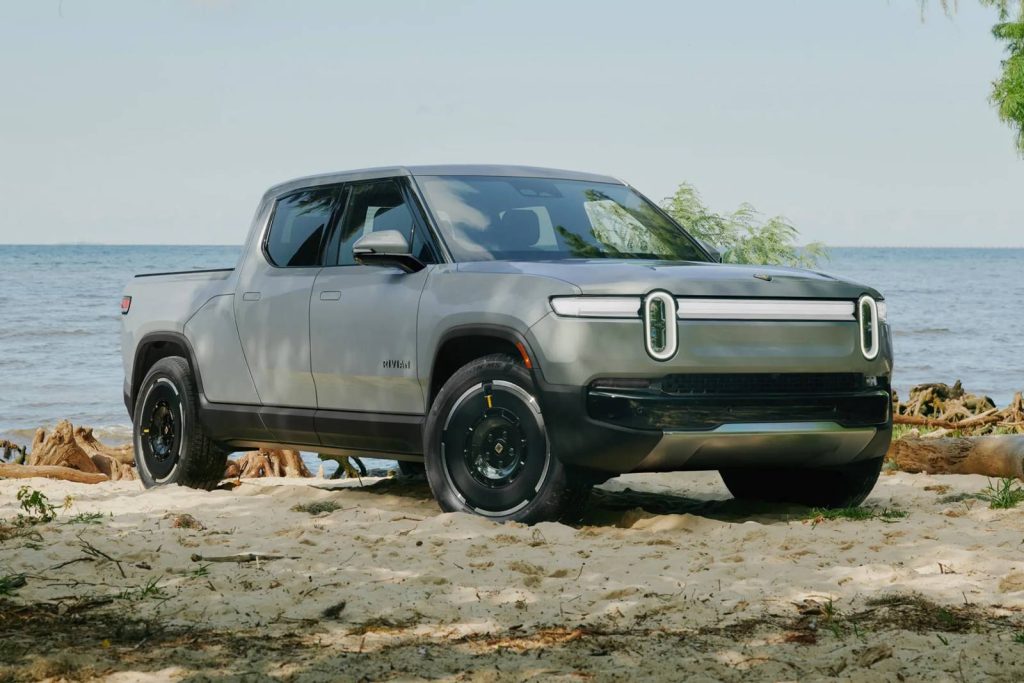
IIHS noted that part of the rear dummy’s head moved beyond the curtain airbag and contacted the C-pillar, resulting in an “Acceptable” rear head-protection assessment. The complete side evaluation remained good.
For buyers comparing crash-test results rather than award badges alone, the R1T remains a strong performer. Its frontal structure and injury measures are impressive, but IIHS data also identify a specific rear-restraint weakness that prevents a clean sweep of the three major crashworthiness categories.
- Engine: Dual-motor electric powertrain
- Torque: 610 lb-ft in Dual-Motor configuration
- Horsepower: 533 hp in Dual-Motor configuration
- Length/Width: 217.1 inches / 81.8 inches without mirrors
4. 2026 Ford F-150 Crew Cab
The Ford F-150 demonstrates exactly why individual IIHS categories matter more than simply assuming a large pickup provides uniform protection in every crash. For 2026, the crew cab earns a good small overlap front rating and a good updated side rating.
The sharp contrast arrives in the updated moderate overlap front test, where the IIHS gives the truck a Poor score.
Start with the F-150’s strongest frontal result. The current truck was redesigned for the 2021 model year, and IIHS states that Ford added reinforcements to both sides of the frame on 2021 models built after March to improve frontal crash protection. In the driver-side small overlap evaluation, structure and safety cage performance earned Good.
Head and neck, chest, and hip and thigh injury measures were also good, while lower leg and foot protection received an acceptable rating. The complete driver-side evaluation was good.
The passenger-side result also finished with a Good rating. Although the safety cage was graded Acceptable, the passenger’s head and neck, chest, hip, and thigh measures all achieved Good scores. Lower leg and foot measures were acceptable. These findings helped preserve the truck’s good combined small overlap rating.
Rear-seat protection changes the picture dramatically. In IIHS’s updated moderate overlap test, the F-150’s structure remained good, and every listed driver injury measure was good. The rear dummy, however, received poor head and neck injury measures and poor chest injury measures.
Rear-passenger restraints and dummy kinematics were also rated Poor. Consequently, the entire moderate overlap evaluation received the Institute’s lowest grade.
The updated side test produced a much better result. IIHS awarded the F-150 a Good rating, with good driver and rear-passenger injury measures across the listed head and neck, torso, and pelvis categories.
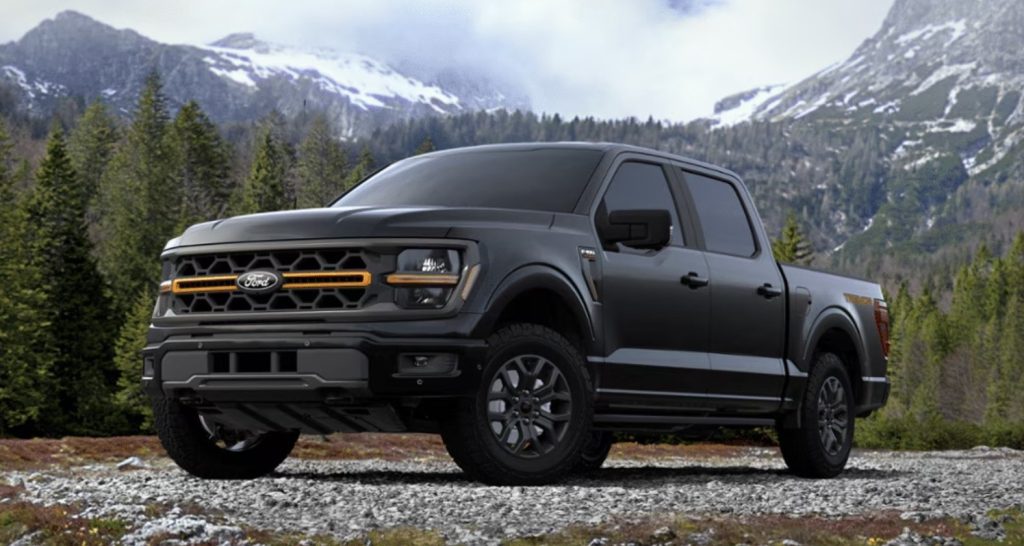
Rear head protection was acceptable because the dummy’s head moved beyond part of the side curtain airbag and contacted the C-pillar.
The F-150, therefore, ranks fourth because its two good crashworthiness scores are offset by a serious weakness in the rear-seat-focused frontal evaluation. IIHS data show strong driver protection, but they also make clear that occupant position can substantially change the crash-test picture.
- Engine: 2.7-liter EcoBoost twin-turbocharged V6
- Torque: 400 lb-ft
- Horsepower: 325 hp
- Length/Width: 231.7 inches / 79.9 inches
5. 2026 Ram 1500 Crew Cab
Ram’s 2026 full-size pickup delivers impressive results in two major IIHS crashworthiness evaluations, but one severe weakness keeps it from joining the award winners.
The Ram 1500 Crew Cab receives a Good rating in the small overlap front test and Good rating in the updated side test. Its updated moderate overlap front score is Poor, creating a major gap between front-seat and rear-seat protection.
The small overlap category highlights improvements made to the truck. IIHS states that the current Ram 1500 Crew Cab was redesigned for the 2019 model year. Beginning with 2025 models, Stellantis changed the passenger-side airbag to improve occupant safety in passenger-side small-overlap crashes.
The resulting passenger-side evaluation applies to 2025 and 2026 trucks. This is important because a small overlap impacts concentrated crash forces on a limited portion of the vehicle’s front structure rather than directly engaging the entire frontal crash-management system.
Side protection is another strong point. IIHS gives the Ram a Good rating in its updated side evaluation. The institute’s research on large pickups found that the Ram’s safety cage held up well in the more demanding side test, which was created to better represent impacts involving today’s heavier SUVs and trucks.
Strong structural performance helped the Ram maintain the highest complete rating in this category.
The ranking changes sharply when rear-seat safety enters the equation. IIHS gives the 2026 Ram 1500 a Poor updated moderate overlap front rating. That test includes a second dummy positioned in the rear seat and places greater emphasis on restraint performance for occupants behind the driver.
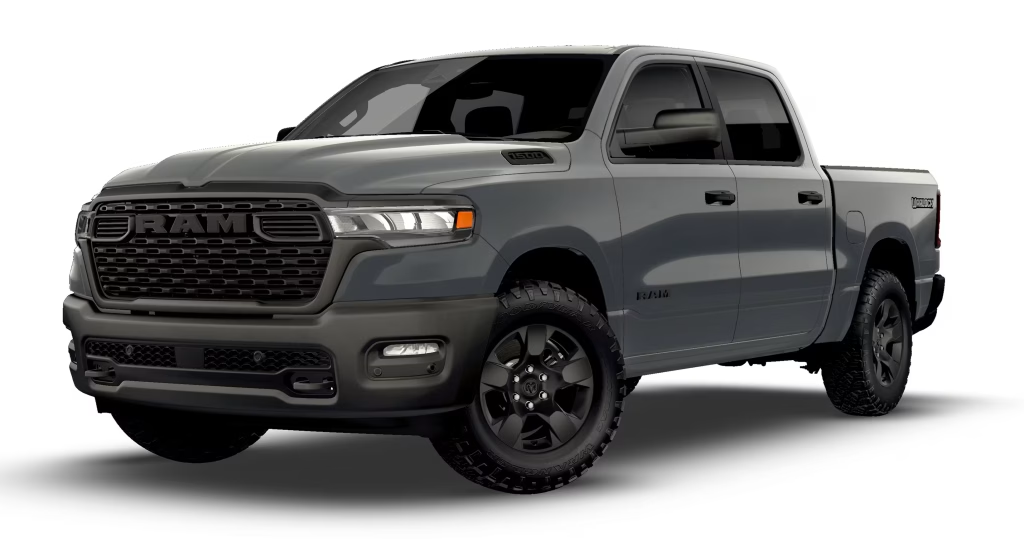
Under the tougher 2026 award requirements, a good score is necessary for either of the top safety pick levels. The Rams’ poor result immediately removes them from award contention.
Ram, therefore, lands in fifth position because its crash performance is divided. Good small overlap and side results demonstrate substantial protection in two demanding impacts, but the poor moderate overlap rating identifies a serious rear-passenger weakness under current IIHS criteria.
- Engine: 3.0-liter Hurricane twin-turbocharged inline-six
- Torque: 469 lb-ft
- Horsepower: 420 hp
- Length/Width: 232.9 inches / 82.1 inches
6. 2026 Chevrolet Silverado 1500 Crew Cab
The Chevrolet Silverado 1500 reaches sixth place with a crash-test record that is considerably less consistent than the pickups ranked above it.
According to the current IIHS large-pickup rating summary, the 2026 Silverado 1500 Crew Cab earns Marginal in small overlap front protection, Poor in the updated moderate overlap front test, and Acceptable in the updated side evaluation. None of those three primary crashworthiness scores reaches Good.
Its frontal test history provides the clearest reason for the lower position. Chevrolet redesigned the Silverado 1500 Crew Cab for the 2019 model year, and the current IIHS small overlap ratings apply to 2019 through 2026 models.
The complete small overlap front rating is marginal. That score sits one step above Poor on the Institute’s four-level scale but remains below Acceptable and Good.
A more serious concern appears in the updated moderate overlap front evaluation. IIHS conducted two Silverado tests because the rear-passenger data acquisition system failed during the first evaluation.
The institute used information from both tests for driver injuries, rear dummy restraints and kinematics, and structural ratings, while rear dummy injury values came from the second test. The final rating was Poor. IIHS’s large-pickup research has repeatedly highlighted rear-seat protection as a weakness in this vehicle class.
Side-impact performance is better, although the Silverado still does not achieve the highest grade. Its acceptable updated side rating puts it below trucks such as the Cybertruck, Tundra, R1T, F-150, and Ram 1500, all of which receive good side scores in the current IIHS large pickup summary.
IIHS previously noted that the Silverado’s structure and safety cage were rated Acceptable in the tougher side evaluation.
The Silverado’s position is based on the complete pattern rather than a single weak test. Marginal frontal protection in one evaluation, poor performance in the rear-seat-focused moderate overlap test, and an acceptable side result leave it behind the five trucks already ranked.
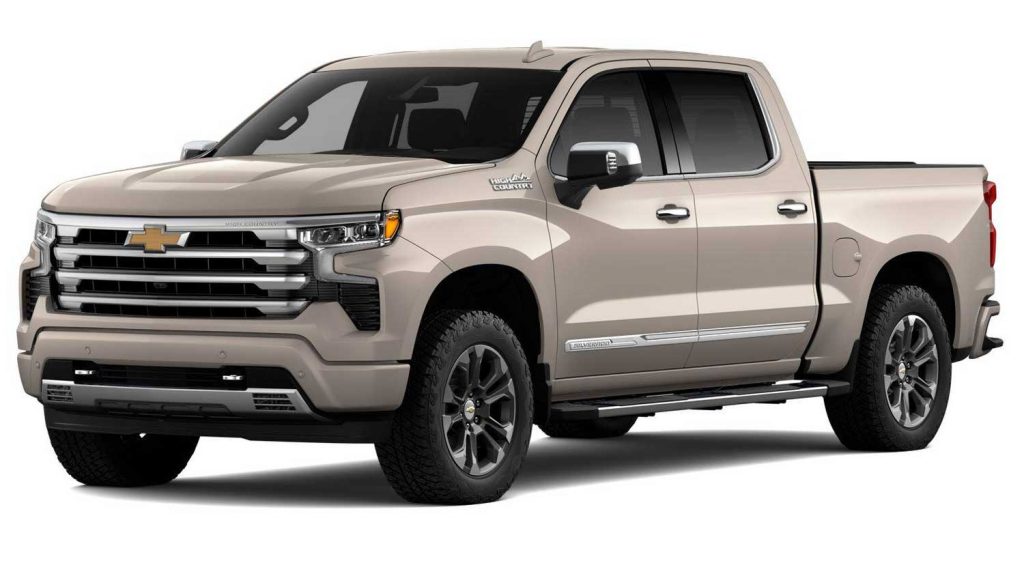
For buyers using IIHS crashworthiness data as a comparison tool, the verified scores reveal meaningful differences between Chevrolet’s popular full-size pickup and the strongest performers in the class.
- Engine: 2.7-liter TurboMax turbocharged four-cylinder
- Torque: 430 lb-ft
- Horsepower: 310 hp
- Length/Width: 232.8 inches / 81.2 inches
7. 2026 GMC Sierra 1500 Crew Cab
The 2026 GMC Sierra 1500 Crew Cab sits near the bottom because its IIHS crashworthiness pattern mirrors that of the closely related Chevrolet Silverado. IIHS gives the Sierra a Marginal rating in the small overlap front test, Poor in the updated moderate overlap front evaluation, and Acceptable in the updated side test.
These scores leave the GMC without a Good rating in the three principal crash categories used for the Institute’s 2026 safety awards.
The small overlap score immediately limits the Sierra’s standing. IIHS applies the relevant Chevrolet Silverado test results to the structurally related Sierra, which was redesigned for the 2019 model year. A marginal rating means the truck falls two levels below the institute’s highest good grade.
Rear-seat safety creates an even larger problem. The updated moderate overlap front evaluation ends with a poor rating. IIHS designed this test to place greater attention on protection for passengers sitting behind the driver. Under 2026 award requirements, a vehicle must earn Good in this category to qualify for either Top Safety Pick or Top Safety Pick+.
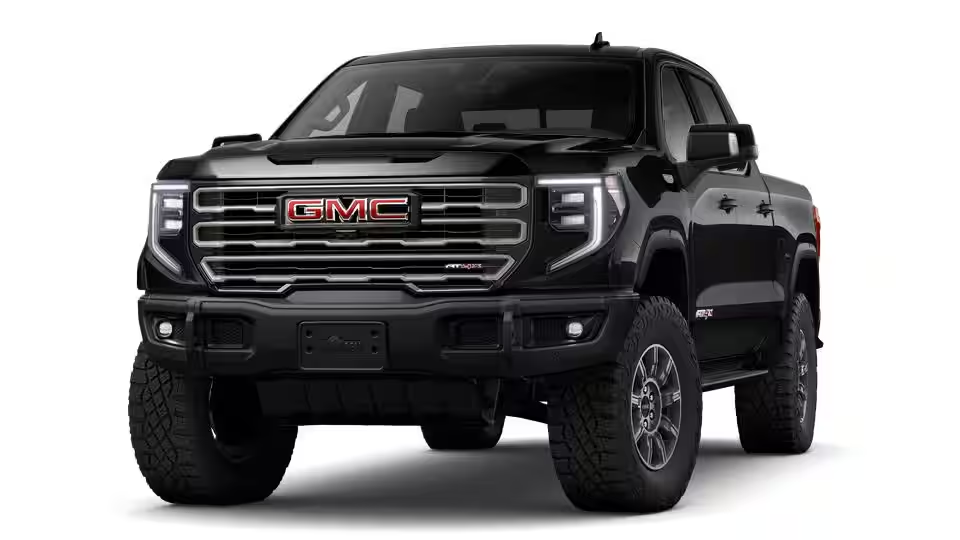
The Sierra performs better from the side, receiving an Acceptable grade, but that result still trails the Good ratings recorded by several higher-ranked pickups. Its test pattern makes the ranking straightforward: three major evaluations, no good crashworthiness scores, and a poor result in the increasingly important rear-passenger frontal test.
- Engine: 2.7-liter TurboMax turbocharged four-cylinder
- Torque: 430 lb-ft
- Horsepower: 310 hp
- Length/Width: 231.9 inches / 81.2 inches
8. 2026 Ford F-150 Extended Cab
The Ford F-150 Extended Cab takes eighth place, but its position requires an important explanation. IIHS does not list an updated moderate overlap front rating for the 2026 extended-cab model, meaning it lacks a result in one of the central crashworthiness evaluations used under current award criteria.
Its available results are stronger: Good in the small overlap front test and good in the updated side evaluation.
That missing moderate overlap score makes a direct comparison with fully evaluated trucks difficult. A pickup with two Good ratings can appear stronger than a model carrying a documented Poor result, but an untested category cannot be treated as a passing grade. For a ranking based on IIHS crash-test performance, complete test coverage matters.
Where IIHS has evaluated the extended-cab F-150, the truck performs well. The small overlap front rating is Good, showing effective protection in a demanding crash that directs impact forces toward the outer portion of the vehicle’s front structure. The updated side test also receives a Good rating, matching the highest grade available from IIHS.
The limitation is therefore not a demonstrated failure in the moderate overlap test. It is the absence of a current rating. IIHS’s 2026 Top Safety Pick criteria require good ratings in small overlap front, moderate overlap front, and side crash tests.
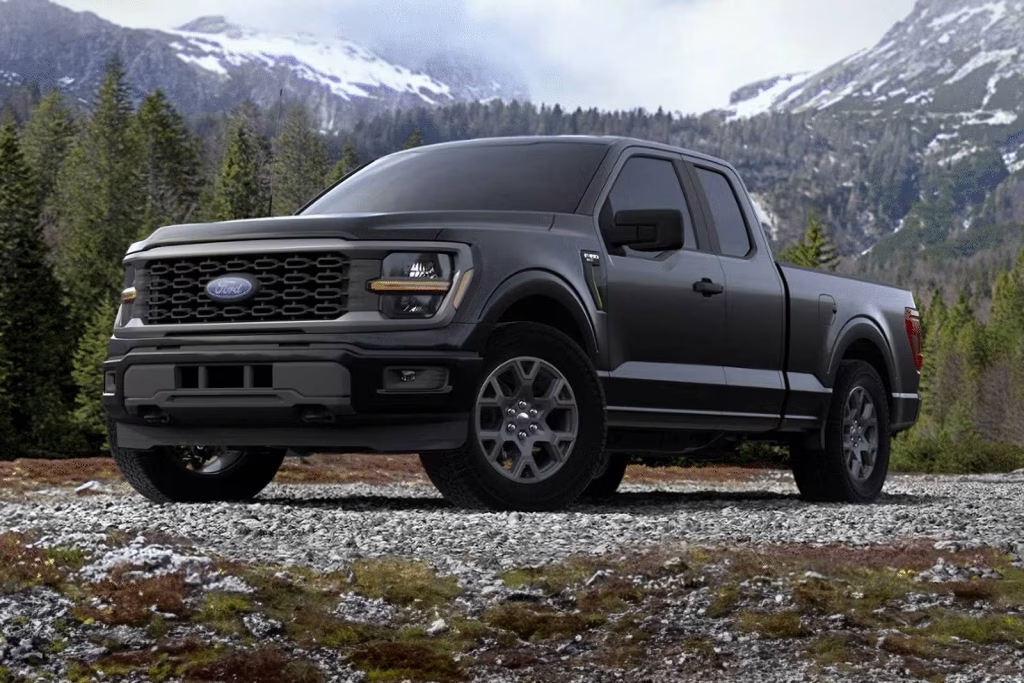
Without a moderate overlap result, this F-150 configuration cannot establish the complete three-test record achieved by the strongest pickups in this ranking.
Its eighth-place position reflects incomplete verified crash data rather than two weak recorded results.
- Engine: 2.7-liter EcoBoost twin-turbocharged V6
- Torque: 400 lb-ft
- Horsepower: 325 hp
- Length/Width: 231.7 inches / 79.9 inches
Also Read: 8 Longest Trucks Ever Made, Ranked
