
Trucks have always represented power, endurance, and engineering ambition. From hauling enormous mining equipment to transporting heavy industrial materials across challenging environments, some trucks have been designed on a scale that seems almost impossible.
While most people think of trucks as everyday vehicles used for transportation and logistics, the largest trucks ever built are specialized machines created for specific industries where size, strength, and capacity matter more than speed or convenience.
The longest trucks in history include massive road trains, mining vehicles, and custom-built heavy haulers that push the boundaries of mechanical design. Some stretch far beyond the length of conventional trucks, requiring advanced engineering solutions to handle their enormous frames and loads.
These machines demonstrate how manufacturers have adapted truck designs to meet demanding requirements in mining, construction, and long-distance freight operations.
This ranking explores eight of the longest trucks ever created, examining their dimensions, purposes, and engineering features that make them stand out. From legendary mining giants to record-breaking transport combinations, these trucks show just how far vehicle design can go when size becomes the ultimate priority.
Also Read: 8 Hidden Features in the Volkswagen Atlas
- Engine: Caterpillar C175-20 diesel engine, 20-cylinder, 106-liter displacement
- Horsepower: Approximately 4,000 hp (2,983 kW)
- Torque: Around 13,000+ lb-ft (17,600+ Nm) at the engine output
- Length: 49.2 feet (15.0 meters)
- Width: 31.1 feet (9.5 meters)
- Payload Capacity: Around 400 short tons (363 tonnes)
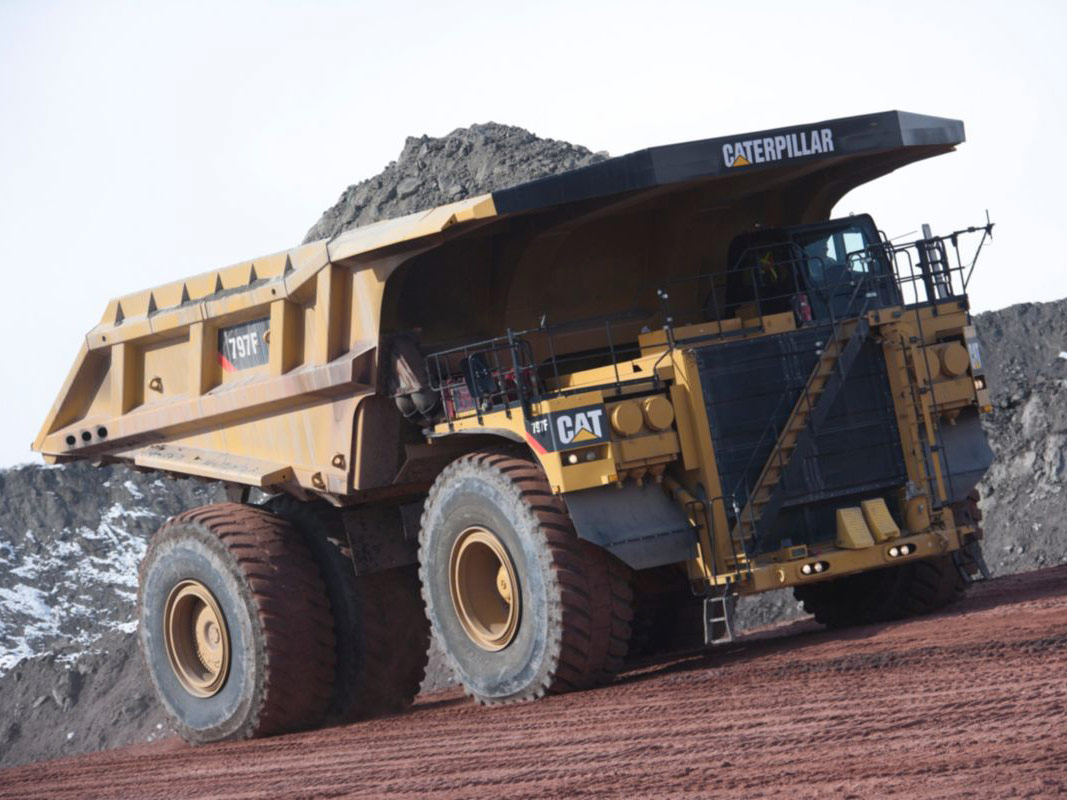
8. Caterpillar 797F Mining Truck
The Caterpillar 797F is among the largest mechanical drive mining trucks ever produced and is built specifically for extreme heavy-duty operations.
Although it is not designed for public roads, this enormous vehicle plays a crucial role in large open-pit mines around the world. Its massive frame, powerful engine, and huge payload capacity allow mining companies to move hundreds of tons of material in a single trip.
The truck measures approximately 49 feet in length, making it longer than many commercial vehicles combined. Its design focuses on efficiency in mining environments where moving large quantities of earth, coal, or minerals quickly is essential.
The 797F uses a powerful diesel engine producing thousands of horsepower, allowing it to carry loads that would be impossible for ordinary trucks.
The most impressive aspects of the Caterpillar 797F are its payload capacity. It can transport more than 360 tons of material, reducing the number of trips required during mining operations. Its enormous tires, which can cost tens of thousands of dollars each, are specially designed to handle extreme weight and harsh terrain.
The 797F is built with advanced control systems that help operators manage the vehicle safely. Features such as improved braking technology, monitoring systems, and automated assistance tools allow this giant truck to operate effectively in demanding conditions. It represents the combination of industrial strength and modern engineering.
The Caterpillar 797F is not the longest truck ever built, but its immense size and hauling capacity have made it one of the world’s most recognizable mining vehicles. Designed to maximize efficiency in demanding work environments, it shows how truck engineering is transformed when productivity takes priority over everyday transportation.
- Engine: Cummins QSK95 diesel engine, 16-cylinder, 95-liter displacement
- Horsepower: Approximately 3,500 hp (2,610 kW)
- Torque: Around 11,000 lb-ft (14,900 Nm)
- Length: 51.5 feet (15.7 meters)
- Width: 28.9 feet (8.8 meters)
- Payload Capacity: Around 400 short tons (363 tonnes)
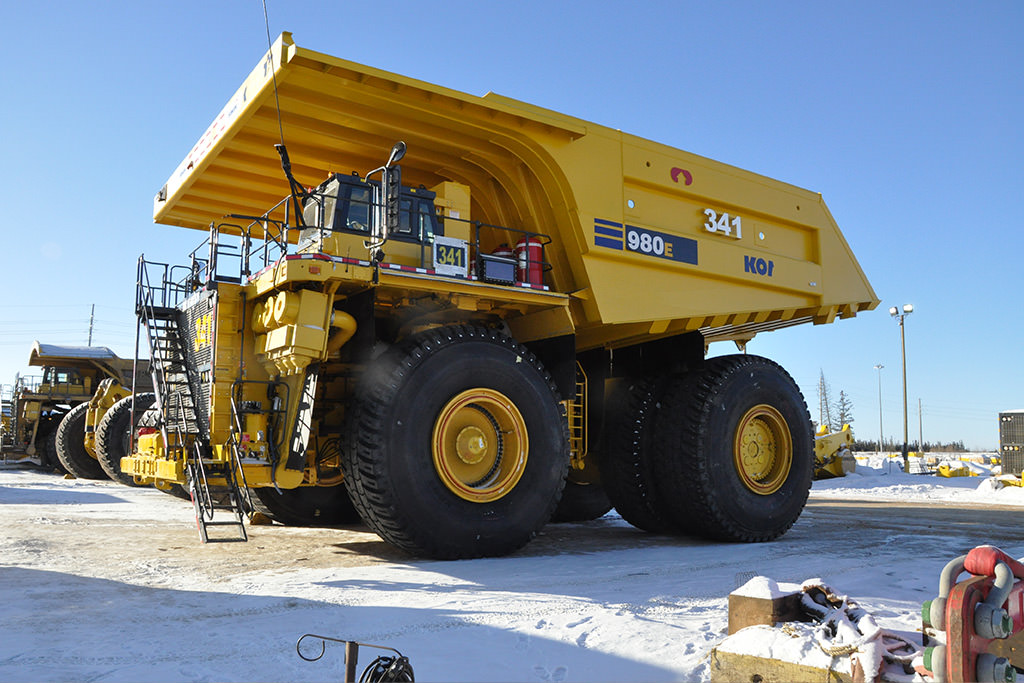
7. Komatsu 980E-4 Mining Truck
The Komatsu 980E-4 is another massive mining truck created to handle some of the toughest jobs on Earth. Built by Japanese manufacturer Komatsu, this ultra-class haul truck is used in large mining operations where durability and high carrying capacity are essential.
Its enormous structure allows it to transport huge amounts of material while operating continuously in difficult environments.
The 980E-4 has a length of around 50 feet and stands several stories tall. It is powered by a massive diesel engine combined with an electric drive system, giving it the strength needed to move heavy loads across mining sites. This hybrid approach improves efficiency while providing the power required for steep inclines and rough terrain.
A major advantage of the Komatsu 980E-4 is its payload capacity, which exceeds 400 tons. This allows mining companies to improve productivity by reducing the number of vehicles needed for material transportation. Every component of the truck, from the suspension system to the tires, is designed to withstand enormous stress during daily operations.
The truck also includes advanced operator assistance features. Modern mining vehicles rely heavily on technology to improve safety, and the 980E-4 includes monitoring systems that track performance, fuel usage, and mechanical conditions. These systems help reduce downtime and allow maintenance teams to address problems before they become serious.
While its primary purpose is not simply to achieve record-breaking length, the Komatsu 980E-4 represents the next level of heavy truck engineering. Its combination of size, capacity, and technology makes it one of the biggest working trucks ever created.
- Engine: Two MTU 16V4000 diesel engines paired with an electric drive system
- Horsepower: Approximately 4,600 hp combined (3,430 kW)
- Torque: Estimated 13,000+ lb-ft (17,600+ Nm) per engine output system
- Length: 67.7 feet (20.6 meters)
- Width: 31.5 feet (9.6 meters)
- Payload Capacity: Around 496 short tons (450 tonnes)
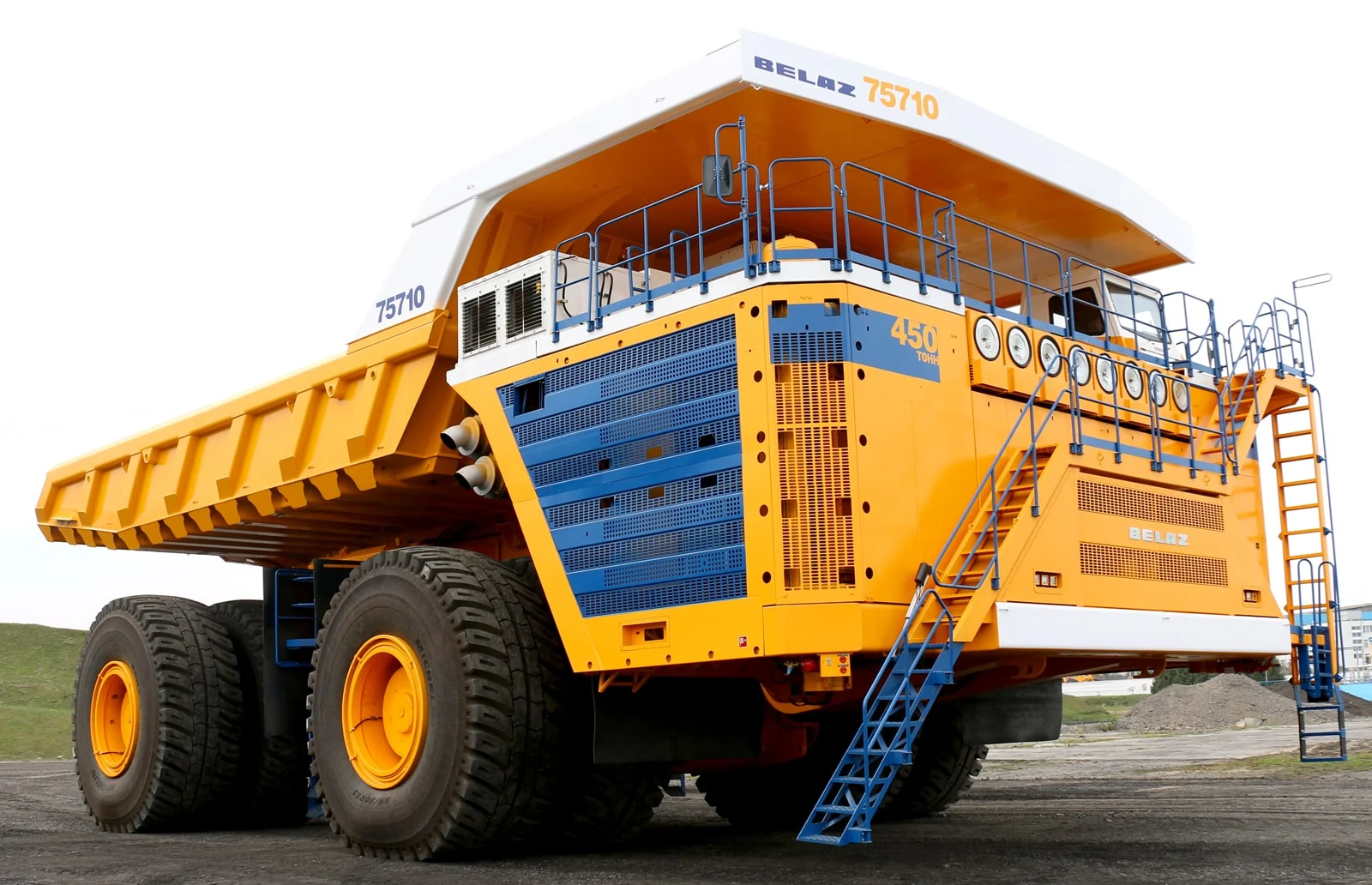
6. BelAZ 75710
The BelAZ 75710 is widely recognized as the largest and heaviest dump truck ever built. Manufactured in Belarus by BelAZ, this giant vehicle was designed for mining operations where transporting extremely heavy loads is necessary. It gained worldwide attention because of its enormous dimensions and record-setting payload capability.
The truck measures about 67 feet in length, making it significantly longer than most industrial vehicles. Its height and width are equally impressive, with the machine towering over ordinary trucks and requiring specially designed facilities for maintenance. The vehicle uses multiple engines and an advanced electric drive system to move its enormous weight.
The defining feature of the BelAZ 75710 is its payload capacity of around 450 metric tons. This allows it to transport more material in one trip than almost any other truck currently operating. For large mines, this level of capacity can dramatically improve efficiency by reducing transportation time and fuel consumption per ton of material moved.
The engineering behind the BelAZ 75710 is particularly impressive because every part must handle extreme forces. Its massive tires, powerful suspension, and reinforced frame are designed to support hundreds of tons while traveling over uneven mining roads. The truck also uses advanced steering systems because traditional methods would not be practical at this scale.
The BelAZ 75710 shows what is possible when engineers focus entirely on industrial performance. It may not be suitable for highways or normal transportation, but within the mining industry, it represents the greatest achievements in heavy vehicle development.
- Engine: Detroit Diesel DD16 or Cummins ISX15 diesel engine (depending on configuration)
- Horsepower: Up to approximately 600 hp
- Torque: Up to around 2,050 lb-ft (2,780 Nm)
- Length: Truck alone: around 28 feet (8.5 meters)
- With multiple trailers: can exceed 170 feet (52 meters)
- Width: Around 8.5 feet (2.6 meters)
- Payload Capacity: Depends on trailer configuration and regional regulations
5. Western Star 6900 Road Train
Unlike mining trucks that operate in controlled environments, road trains are built for long-distance transportation across open roads. The Western Star 6900 is the strongest conventional truck used in heavy-hauling applications, particularly in regions where extremely long combinations of trailers are common.
The truck itself is not as massive as mining vehicles, but when combined with multiple trailers, it becomes the longest truck setup ever seen. Road trains in Australia and other remote regions can stretch hundreds of feet in length, allowing operators to transport large amounts of goods across vast distances.
The Western Star 6900 is designed with a powerful engine, reinforced chassis, and heavy-duty components to handle demanding loads. Its durability makes it suitable for industries such as mining support, agriculture, and freight transportation. Unlike specialized mine trucks, it can travel on public roads and cover enormous distances.
The biggest challenges with extremely long trucks are maintaining control and safety. Drivers of road trains require extensive training because braking distances, turning space, and vehicle handling are completely different from standard trucks. Advanced braking systems and careful load management are essential for safe operation.
The Western Star 6900 and similar road train combinations demonstrate an approach to creating massive trucks. Instead of building one oversized vehicle, engineers create long transport systems capable of carrying huge amounts of cargo across remote landscapes. This makes road trains some of the longest truck configurations ever used in real-world transportation.
- Engine: MTU DD 20V4000 diesel engine or equivalent power unit
- Horsepower: Approximately 3,650 hp (2,720 kW)
- Torque: Around 12,000 lb-ft (16,300 Nm)
- Length: 47.6 feet (14.5 meters)
- Width: 29.5 feet (9 meters)
- Payload Capacity: Around 363 tons (330 tonnes)
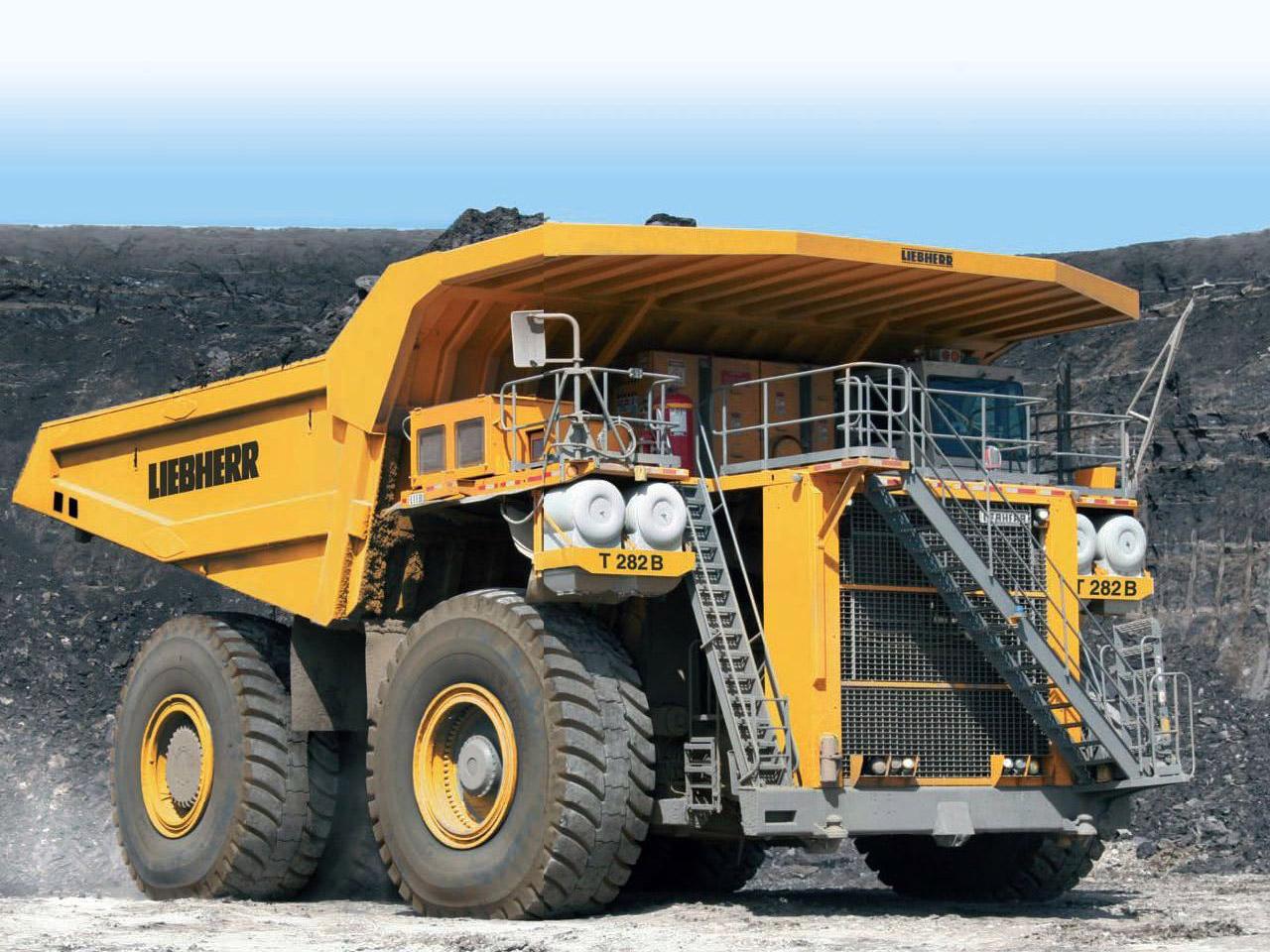
4. Liebherr T 282B Mining Truck
The Liebherr T 282B is among the most impressive mining trucks ever developed and has earned a reputation as a giant among heavy-haul vehicles.
Built by the German manufacturer Liebherr, this truck was designed to transport enormous quantities of material in large-scale mining operations. Its combination of size, strength, and advanced technology makes it the most important ultra-class mining truck in history.
The T 282B measures approximately 47 feet in length, but its presence is much larger due to its massive height and width. Like other mining giants, it was created for efficiency rather than road travel. Its purpose is to move heavy loads from excavation areas to processing locations as quickly as possible while reducing operating costs for mining companies.
The truck’s most notable feature is its payload capacity, which reaches around 360 tons. This capability allows it to carry huge amounts of rock, ore, and other mined materials in a single journey. The vehicle uses an electric drive system powered by a large diesel engine, providing the torque needed to move its enormous weight across difficult terrain.
The engineering of the Liebherr T 282B focuses heavily on durability. Mining environments are extremely demanding, with trucks operating for long hours under intense stress.
Components such as the suspension, tires, brakes, and frame must withstand constant pressure. The truck is also equipped with systems that monitor performance and help maintenance teams keep it operating efficiently.
Newer mining trucks have surpassed it in certain areas, but the Liebherr T 282B remains a landmark achievement in heavy vehicle design. It helped establish new standards for mining transportation and showed how advanced engineering could create machines capable of handling tasks that once seemed impossible.
Also Read: 5 Best Ford Escape Years vs 5 to Avoid
- Engine: Mack MP10 diesel engine, 16-liter, 6-cylinder
- Horsepower: Up to 685 hp
- Torque: Around 2,300 lb-ft (3,120 Nm)
- Length: Truck alone: around 29 feet (8.8 meters)
- Road train combinations: 100+ feet (30+ meters), depending on trailers
- Width: Around 8.5 feet (2.6 meters)
- Payload Capacity: Depends on trailer combination and regional limits
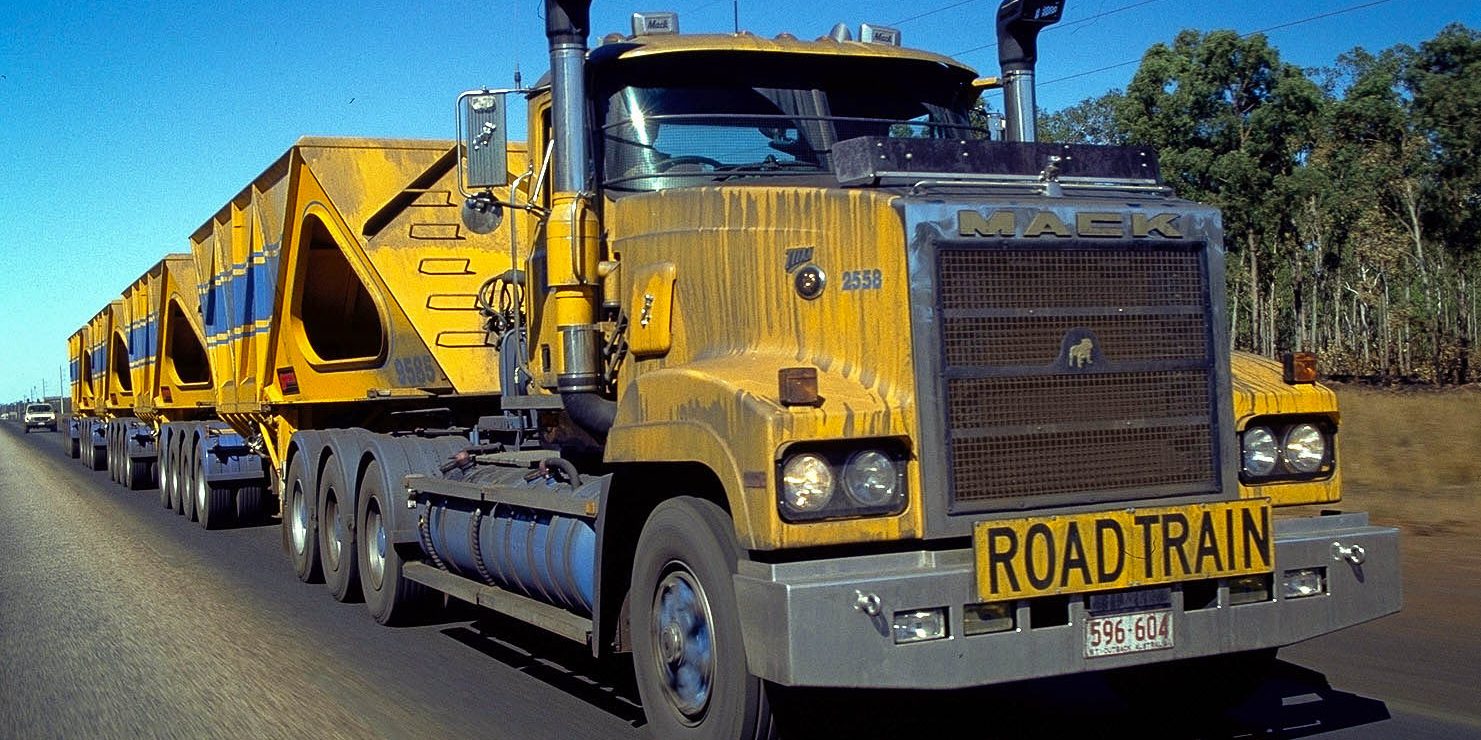
3. Mack Titan Road Train
The Mack Titan is the most powerful conventional truck ever produced and became especially famous for its role in extreme heavy hauling. Developed by Mack Trucks for demanding transport conditions, the Titan was designed to handle massive loads across challenging routes.
While the truck itself is not the longest single vehicle on this list, its use in road train configurations allows it to achieve extraordinary lengths.
Road trains equipped with powerful trucks like the Mack Titan can include multiple trailers connected together, creating some of the longest vehicle combinations on Earth. These setups are commonly used in remote regions where transporting goods over thousands of kilometers requires maximum cargo efficiency.
The Mack Titan was built around strength and reliability. It featured a heavy-duty chassis, a high-output engine, and components designed to withstand harsh environments. These characteristics made it suitable for industries requiring exceptional pulling power, including mining, construction, and long-distance freight operations.
Handling a vehicle combination stretching hundreds of feet requires significant skill. Drivers must carefully manage acceleration, braking, and cornering because the movement of each trailer affects the entire combination. Modern road train operators rely on experience, planning, and specialized equipment to safely control these enormous vehicles.
The Mack Titan represents the traditional side of heavy trucking, where durability and mechanical power are just as important as size. It demonstrates that a truck does not need to be the largest machine by itself to become part of the longest transport systems ever created.
- Engine: Multiple gas turbine engines (Solar 10MC engines)
- Horsepower: Approximately 4,680 hp combined
- Torque: Not commonly published due to turbine drivetrain design
- Length: Around 570 feet (174 meters)
- Width: Approximately 15 feet (4.6 meters)
- Payload Capacity: Around 150 tons (136 tonnes)
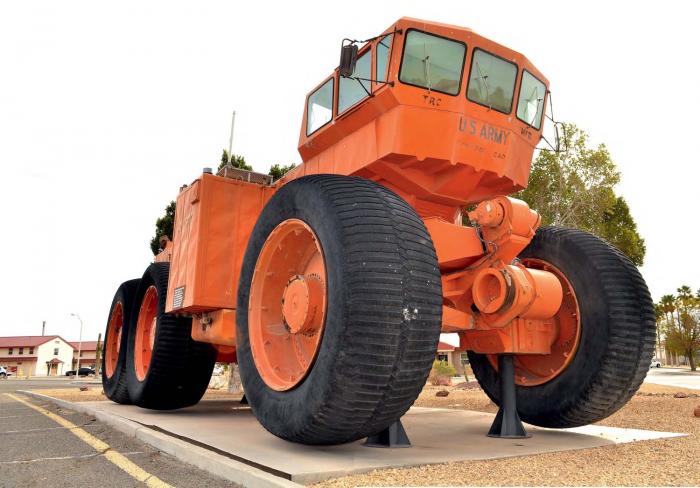
2. Overland Train Mk II
The Overland Train Mk II is among the most unusual and ambitious truck designs ever created. Developed in the United States during the 1960s, this experimental vehicle was built to transport supplies across remote areas where traditional transportation methods were difficult or impossible. It was designed with extreme length and versatility in mind.
The vehicle stretched over 570 feet when fully assembled, making it one of the longest truck systems ever built. Instead of using a standard trailer arrangement, the Overland Train consisted of multiple powered and unpowered sections connected together. This design allowed it to carry significant amounts of equipment across deserts, rough terrain, and isolated regions.
The project was created with military and logistical applications in mind. The idea was to develop a vehicle capable of transporting materials without requiring traditional roads or railway systems. Its enormous length allowed it to carry fuel, equipment, and supplies needed for operations in remote locations.
Operating such a long vehicle required careful coordination, and its size made it difficult to use in many environments. Advances in aviation, traditional transport methods, and infrastructure development reduced the need for vehicles of this type.
Even though it never became a common transportation solution, the Overland Train Mk II remains an important example of experimental engineering. It showed how designers could rethink the concept of a truck and create a machine focused on extreme distance and carrying capacity.
- Engine: Commonly uses heavy-duty engines such as:
- Cummins X15
- Detroit DD16
- Caterpillar C15/C16
- Horsepower: Typically 500 to 700+ hp
- Torque: Approximately 1,650 to 2,500 lb-ft (2,237 to 3,390 Nm)
- Length: Common configurations: 170+ feet (52+ meters)
- Extreme combinations can exceed 300 feet (90+ meters)
- Width: Around 8.5 feet (2.6 meters)
- Payload Capacity: Can exceed 200 tonnes depending on configuration and location
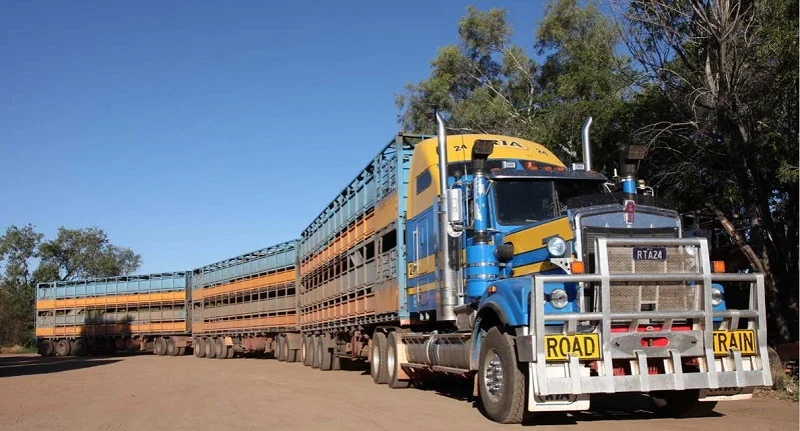
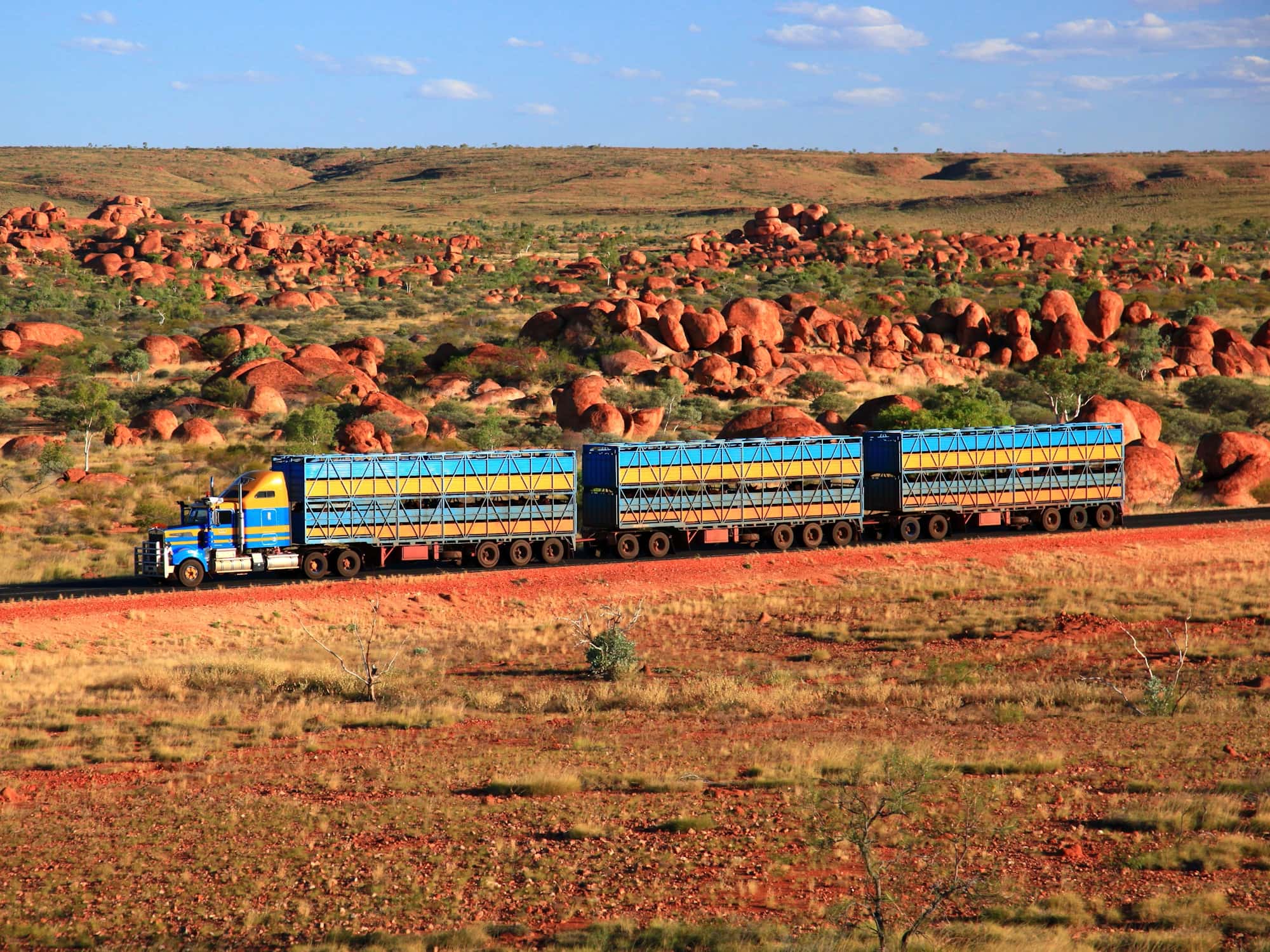
1. Australian Road Trains
When discussing the longest trucks ever made, Australian road trains deserve the top position because they represent some of the longest operational truck combinations in the world. Unlike a single massive vehicle, a road train uses a powerful prime mover connected to multiple trailers, creating an enormous transport system capable of reaching incredible lengths.
Some Australian road trains can exceed 170 feet in length, with certain specialized combinations stretching even farther. These vehicles are essential in remote parts of Australia, where vast distances and limited infrastructure make efficient transportation extremely important. They carry everything from mining equipment and agricultural products to fuel and general supplies.
The trucks used for these combinations must be exceptionally powerful. Manufacturers produce heavy-duty models with strong engines, reinforced frames, and advanced braking systems to manage the weight of several trailers. Popular heavy-haul trucks used in Australia include models from manufacturers such as Kenworth, Mack, and Western Star.
Operating these giant combinations requires advanced driving skills. Turning corners, controlling speed on long downhill sections, and managing stopping distances all require careful attention. Many road train drivers undergo specialized training to understand how different trailer configurations affect handling and safety.
Australian road trains represent the practical side of extreme truck engineering. Instead of creating one enormous machine, they use a flexible system that can transport massive amounts of cargo across some of the world’s most isolated regions.
Their unmatched length and real-world importance make them one of the greatest examples of heavy transportation ever developed.
