The 1990s produced some of the most technologically ambitious cars ever sold in the United States. Automakers were experimenting with electronically controlled suspension, active aerodynamics, rear-wheel steering, advanced traction systems, and cabin technology that could make an ordinary sedan feel futuristic.
Many of these ideas are common in modern vehicles, but seeing them in a car built more than three decades ago can still be surprising.
This ranking focuses on production cars from the 1990s with documented factory equipment rather than aftermarket modifications or unsupported claims. Period manufacturer brochures, automaker heritage records, and archived road tests provide the technical basis for the features discussed.
Performance alone is not enough to earn a high position. The technology must have given the vehicle a distinctive ability, unusual driver interaction, or engineering advantage for its time.
Japanese manufacturers were particularly aggressive during this period, but European and American brands also introduced remarkable ideas. Some systems disappeared because they were expensive or complicated. Others evolved into technology found in current cars.
These eight machines capture a decade when engineers appeared willing to put nearly every available idea into a production vehicle and let buyers experience the future from the driver’s seat.
Also Read: 8 SUVs With Over 400 Horsepower for Under $60,000
1. 1991 Mitsubishi 3000GT VR-4
The 1991 Mitsubishi 3000GT VR-4 did not arrive with one headline feature. It arrived with an entire collection of technology that made the car feel like an engineering demonstration on wheels.
Mitsubishi’s original U.S. brochure documented full-time four-wheel drive, four-wheel steering, electronically controlled suspension, active aerodynamics, and an electronically controlled exhaust system. Few performance cars of the period combined so many adjustable or automatically operated systems in one package.
Its active aerodynamic equipment remains one of the coolest features. Mitsubishi connected a movable front venturi and rear spoiler to an electronic control system. Period documentation explained that the front air dam lowered and the rear spoiler changed position at speed.
Archived technical material for early VR-4 models identifies 45 mph as the activation point. Instead of fitting fixed aerodynamic pieces purely for appearance, Mitsubishi gave the car body components that physically responded to driving speed.
Then there was four-wheel steering. The rear wheels participated in high-speed directional changes, while full-time all-wheel drive distributed engine output through the driveline.
Mitsubishi’s brochure also described electronically controlled suspension with Tour and Sport settings. The driver could change the damping strategy from inside the cabin rather than accepting one permanent suspension calibration.
Even the exhaust received an electronic party trick. A dashboard-controlled system altered exhaust characteristics, allowing the driver to select different modes. Put these technologies together, and the 3000GT VR-4 becomes remarkably complicated by early 1990s standards.
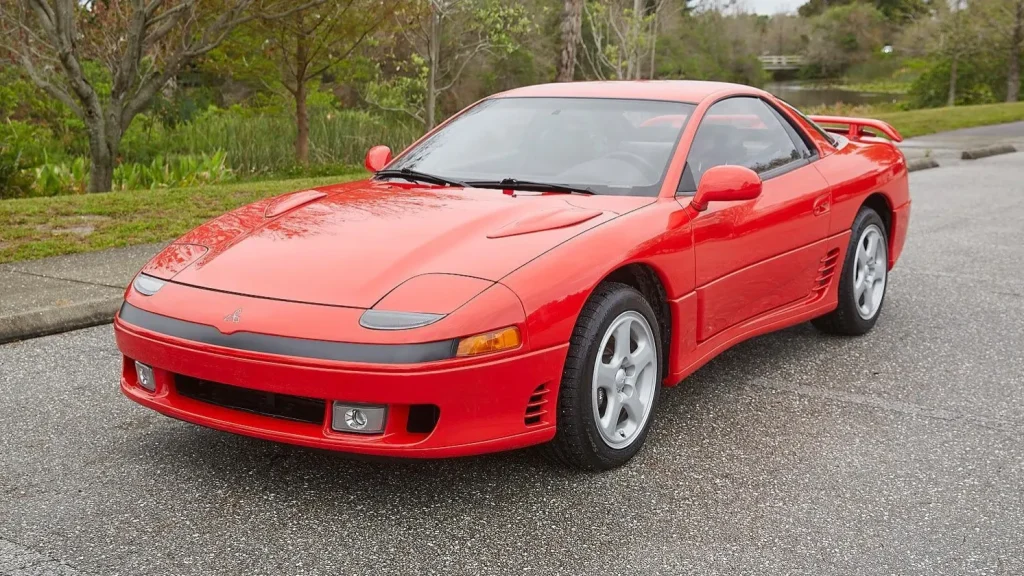
Power matched the technical ambition. The 1991 U.S.-specification VR-4 used a 3.0-liter twin-turbocharged V6 producing 300 horsepower. Period and archived specifications place torque at 307 lb-ft.
The combination of turbocharging, all-wheel drive, rear-wheel steering, active bodywork, and adjustable systems explains why the VR-4 takes first place. It was not simply futuristic-looking. Much of the futuristic equipment actually moved, adjusted, or reacted while the car was being driven.
- Engine: 3.0-liter twin-turbocharged DOHC V6
- Torque: 307 lb-ft
- Horsepower: 300 hp
- Length/Width: 179.7 inches / 72.4 inches
2. 1991 Nissan 300ZX Twin Turbo
Nissan took a subtler approach with the Z32-generation 300ZX Twin Turbo. Its technology was not presented as a collection of dramatic, moving aerodynamic pieces.
Instead, much of the clever engineering worked beneath the body, helping the car change direction and deliver power with a level of sophistication that impressed contemporary road testers.
Super HICAS was the standout feature. Nissan’s heritage documentation identifies the 300ZX as using the company’s Super HICAS four-wheel-steering technology alongside a four-wheel multilink suspension. The system allowed the rear wheels to participate in steering response, giving the Z32 an unusual chassis tool for a production sports car of its era.
Car and Driver’s period testing provides useful context for how the technology felt from behind the wheel. In a 1992 comparison, the magazine described the rear-steer system as compactly packaged and noted that the driver mainly experienced well-behaved transient handling rather than an obvious mechanical intervention.
The same archived test discussed the car’s two-position adjustable shocks, which provided Tour and Sport settings.
The engine bay contained another technical showcase. Nissan fitted the 3.0-liter VG30DETT V6 with parallel twin turbochargers and dual intercoolers. U.S.-specification manual-transmission cars were rated at 300 horsepower and 283 lb-ft of torque.
That output matched the contemporary Chevrolet Corvette’s 300-horsepower rating referenced in Car and Driver’s 1992 comparison, despite the Nissan using only 3.0 liters of displacement.
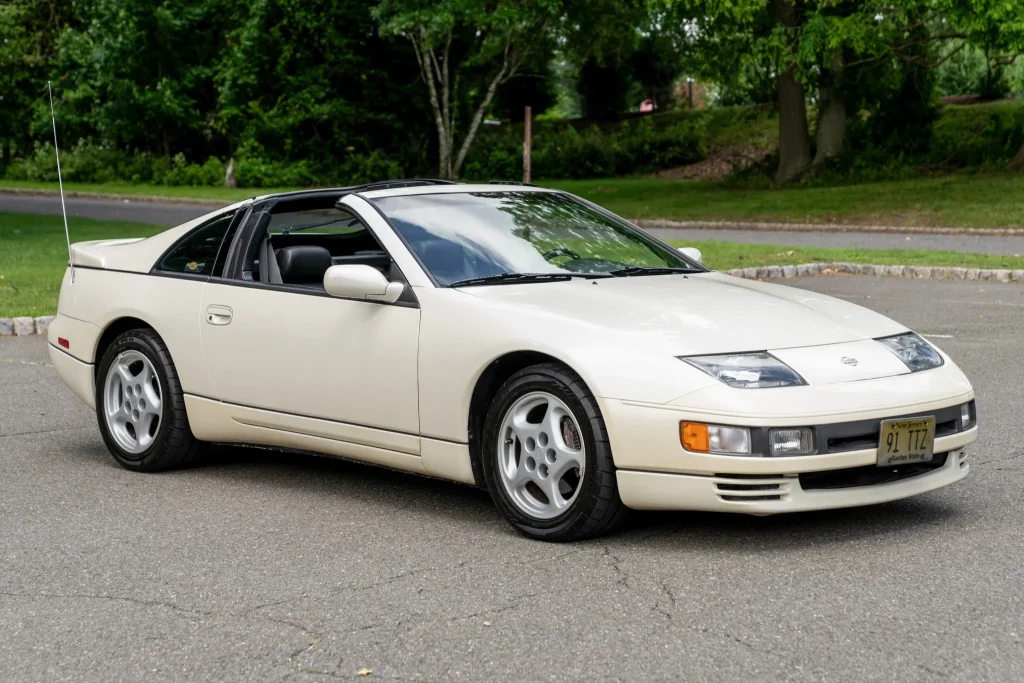
Even the cabin layout had a distinctly 1990s interpretation of driver-focused technology. Major controls were grouped into pods beside the instrument cluster, placing functions close to the steering wheel. T-top roof panels added another physical feature that owners could directly interact with.
The 300ZX ranks second because its coolest equipment was integrated with unusual restraint. Super HICAS, adjustable dampers, twin turbochargers, dual intercoolers, and multilink suspension created a technologically dense sports car without making every system announce itself.
Nissan built a car whose advanced hardware often became most obvious only when the road started turning.
- Engine: 3.0-liter twin-turbocharged DOHC V6
- Torque: 283 lb-ft
- Horsepower: 300 hp
- Length/Width: 169.5 inches / 70.5 inches
3. 1991 Acura NSX
The 1991 Acura NSX looked dramatic, but its coolest feature was hidden in plain sight: the car itself was an aluminum engineering experiment brought to mass production.
Acura’s original U.S. press material described an all-aluminum monocoque body and chassis, along with aluminum suspension components. The company stated that the aluminum unit body saved about 440 pounds compared with a comparable steel structure.
Honda did not stop with lightweight body construction. The 3.0-liter V6 used titanium connecting rods made from a specially patented alloy. Acura’s 1991 technical documentation explained that titanium rods were familiar in Formula One and other racing applications but were extremely unusual in a production automobile.
The lighter connecting rods helped reduce reciprocating mass in an engine designed to operate at high speeds.
Then there was VTEC. The DOHC V6 used Honda’s variable valve timing and lift system to provide different valve operation depending on engine speed. In U.S.-specification manual-transmission form, the NSX produced 270 horsepower.
Its mid-engine placement, independent four-wheel suspension, and lightweight construction created a technical package unlike Acura’s conventional passenger cars.
The cabin introduced another clever idea through its driver visibility. Acura’s original press information discussed a forward-positioned cockpit and exceptionally wide visibility goals. Rather than designing an exotic car that felt intimidating from the driver’s seat, Honda concentrated on giving the NSX a usable view of the road.
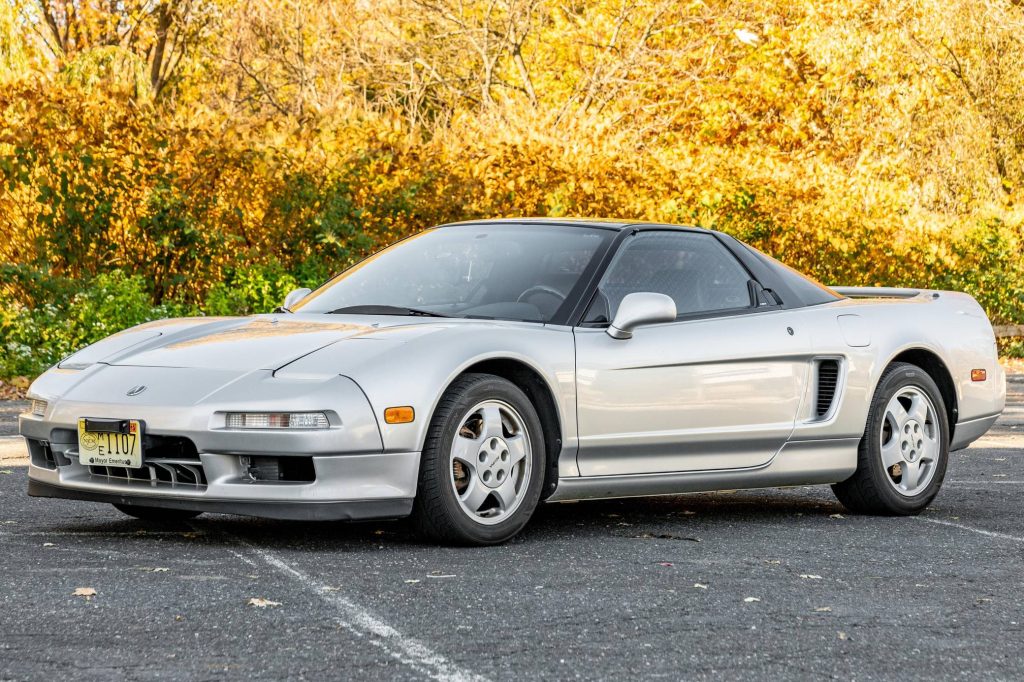
That mixture is why the NSX belongs near the top. Titanium engine components, VTEC, an aluminum structure, and a mid-mounted V6 sound like race-car technology, yet Acura packaged them into a production car with air conditioning and daily-driving usability. The NSX made advanced engineering feel surprisingly normal.
- Engine: 3.0-liter DOHC VTEC V6
- Torque: 210 lb-ft
- Horsepower: 270 hp with five-speed manual transmission
- Length/Width: 173.4 inches / 71.3 inches
4. 1996 Chevrolet Corvette Grand Sport
A bright blue Corvette with a white center stripe may not initially sound as technologically strange as a four-wheel-steering Japanese coupe. The 1996 Chevrolet Corvette Grand Sport, however, carried one of the decade’s coolest mechanical features beneath its hood.
Chevrolet gave the limited-production model the LT4 V8, an engine reserved for manual-transmission Corvettes during the C4’s final model year.
The LT4 was not simply an LT1 with a different badge. Chevrolet’s period specifications rated the 5.7-liter V8 at 330 horsepower and 340 lb-ft of torque, compared with 300 horsepower for the standard LT1.
The higher-output engine used revised cylinder heads, a higher 10.8:1 compression ratio, and valvetrain changes that helped support stronger high-rpm performance.
Its most memorable visual trick was factory-applied rather than electronic. Every 1996 Grand Sport wore Admiral Blue paint with a broad Arctic White stripe running over the center of the body. Two red hash marks appeared on the driver’s-side front fender.
Chevrolet created only 1,000 Grand Sports for 1996, divided between 810 coupes and 190 convertibles, making the appearance package instantly identifiable.
The coupe received another distinctive detail. Wider rear wheels and tires required small extensions over the rear wheel openings. Those black fender flares became part of the Grand Sport’s unusual factory appearance and separated the coupe’s stance from an ordinary C4.
Inside, buyers could choose black or red and black upholstery. A six-speed manual transmission was mandatory because the LT4 was tied to the manual gearbox.
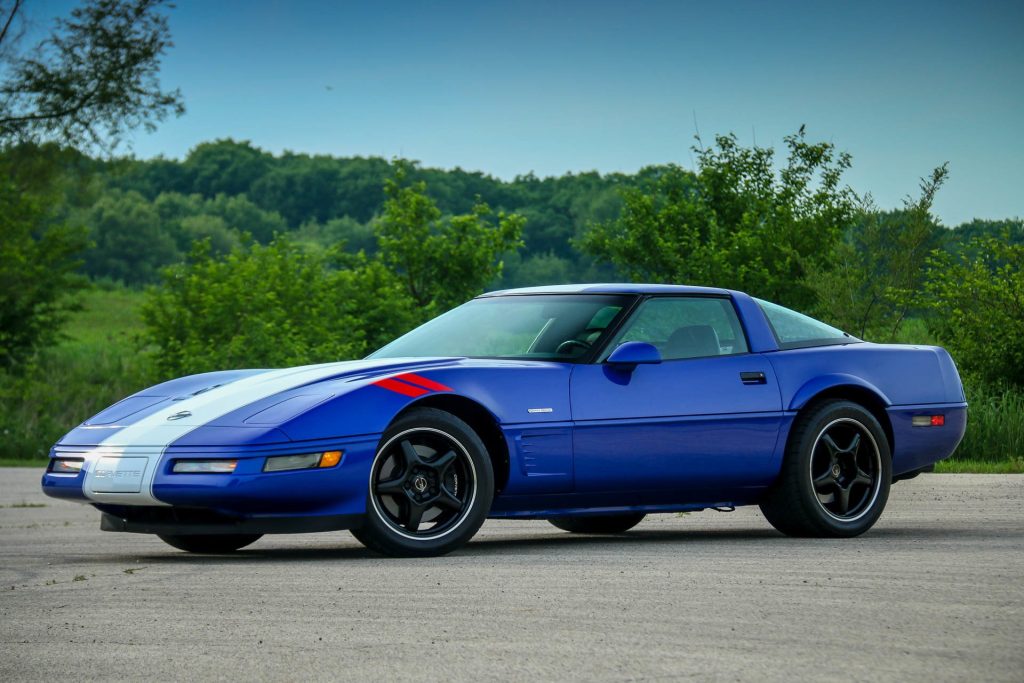
This meant the Grand Sport’s coolest feature was not a screen or electronic gadget. Chevrolet created a tightly defined factory configuration where the special engine, transmission, color scheme, and body details were connected.
The result was a Corvette that announced its identity before the engine even started. Once the LT4 reached higher engine speeds, the mechanical upgrades gave the stripes genuine performance substance.
- Engine: 5.7-liter LT4 V8
- Torque: 340 lb-ft
- Horsepower: 330 hp
- Length/Width: 178.5 inches / 70.7 inches
5. 1993 Mazda RX-7
Mazda’s coolest 1990s technology came from an engine that did not even use conventional pistons. The third-generation 1993 RX-7 reached the U.S. with a 1.3-liter two-rotor 13B-REW engine and a sequential twin-turbocharging system. The keyword was sequential.
Instead of relying on two turbochargers operating identically across the engine’s entire speed range, Mazda designed a system that brought boost into the power delivery in stages.
Period testing by Car and Driver explained that the two turbochargers acted sequentially, comparing their operation to the primary and secondary barrels of a carburetor.
The primary turbo worked early to reduce the familiar low-rpm weakness associated with turbo lag, while the second turbo joined the process higher in the engine’s operating range. This helped create a broader supply of usable torque from a rotary engine.
The numbers were serious for 1993. U.S.-specification cars produced 255 horsepower and 217 lb-ft of torque. Car and Driver recorded a 13.7-second quarter-mile at 101 mph and a 159-mph top speed in its period comparison test. The magazine also measured 0.97 g of skidpad grip from the R1 test car.
Mazda’s obsession with reducing weight created some wonderfully unusual details. The period road test noted that even the engine oil dipstick handle had been reduced to a thin wire. Hollow anti-roll bars and aluminum clutch and brake pedals further reflected the lightweight philosophy.
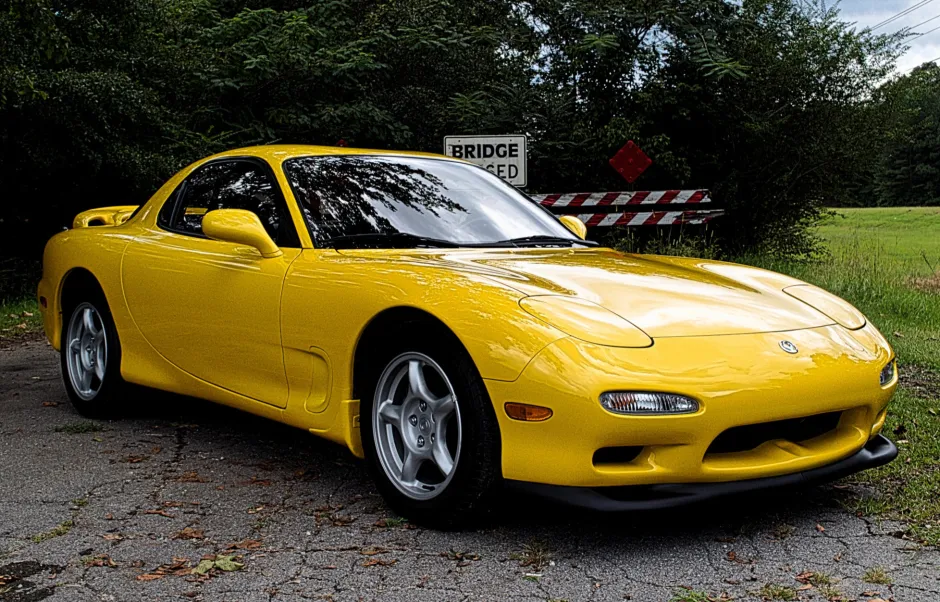
Unlike the technology-packed Mitsubishi 3000GT VR-4, the RX-7 used complexity in one highly focused area: extracting serious performance from a tiny rotary engine. Sequential turbocharging gave the car its defining mechanical feature, while a Torsen limited-slip differential and standard anti-lock brakes supported its performance mission.
- Engine: 1.3-liter twin-rotor sequential twin-turbo rotary
- Torque: 217 lb-ft
- Horsepower: 255 hp
- Length/Width: 168.7 inches / 68.9 inches
6. 1990 Lexus LS 400
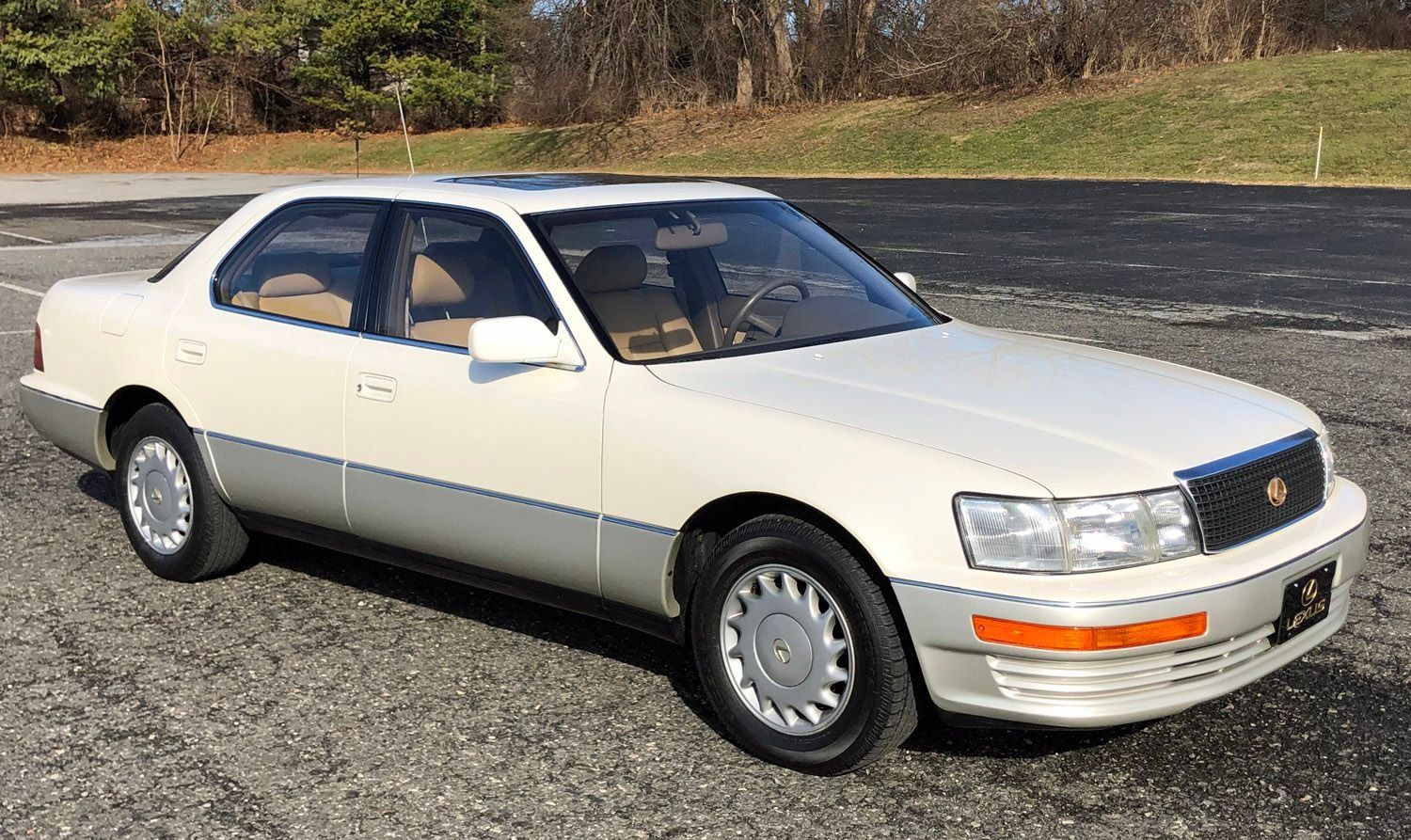
The 1990 Lexus LS 400’s coolest features were designed to make complicated technology almost invisible. Lexus entered the U.S. luxury market with a sedan built around silence and refinement, but the cabin contained equipment that looked genuinely futuristic in 1990. The most memorable example appeared directly in front of the driver.
Its electroluminescent instrument cluster remained dark before startup. Once the ignition was activated, the gauges illuminated with bright, highly defined markings.
The presentation gave the dashboard a distinctive electronic appearance at a time when traditional illuminated analog gauges remained common. This display concept became closely associated with Lexus and later evolved under the Optitron name.
The LS 400 also treated driver adjustment as a coordinated system. Period Lexus documentation describes a memory function capable of storing the driver’s power-seat position, steering-wheel position, outside-mirror settings, and seat-belt height. That is an unusually broad collection of personalized settings for an early 1990s production sedan.
Even the steering column performed a small mechanical trick. The power tilt-and-telescoping wheel could move to improve entry and exit.
Available equipment included an integrated cellular telephone with hands-free capability and a Nakamichi premium audio system, bringing serious electronic hardware into the cabin years before smartphones changed vehicle interiors.
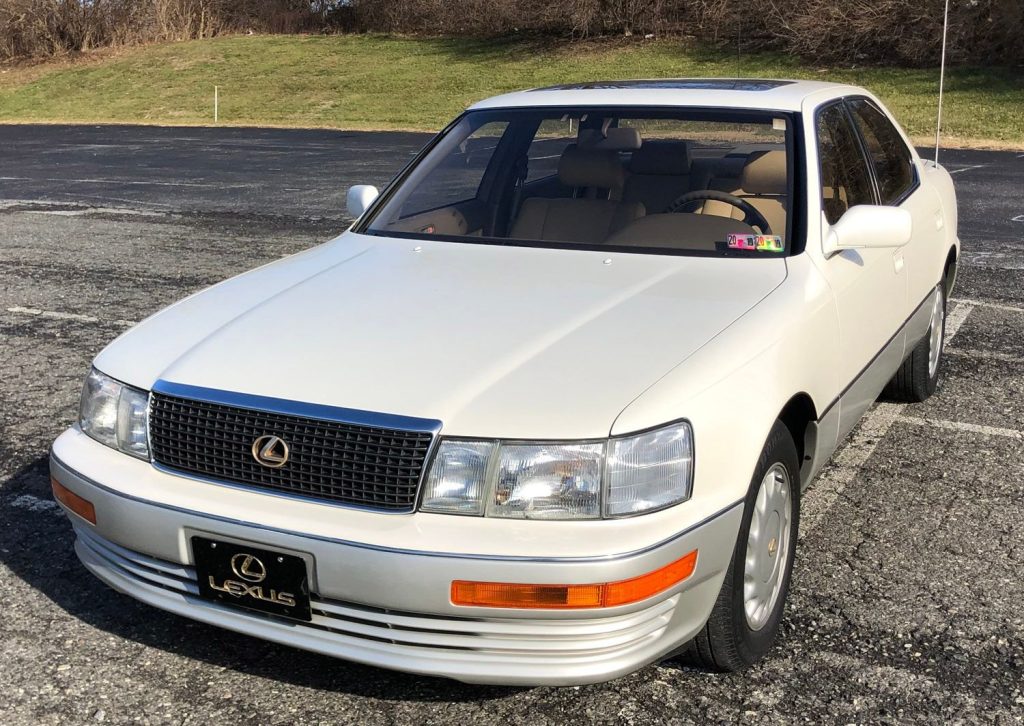
Beneath the quiet presentation sat Toyota’s newly developed 1UZ-FE V8. The U.S.-specification 4.0-liter, 32-valve engine produced 250 horsepower and 260 lb-ft of torque. Lexus also paid extraordinary attention to airflow and noise reduction, using underbody fairings and other measures to help achieve a 0.29 drag coefficient.
The LS 400 earns its position because it makes futuristic features feel elegant rather than experimental. Glowing instruments, extensive memory settings, powered steering-wheel adjustment, and an available car phone turned the flagship sedan into a technology showcase without covering the dashboard in obvious gadgets.
- Engine: 4.0-liter DOHC 32-valve V8
- Torque: 260 lb-ft
- Horsepower: 250 hp
- Length/Width: 196.7 inches / 71.7 inches
7. 1994 BMW 850CSi
BMW gave the 850CSi a feature that sounds completely normal in a current performance car but was strikingly advanced in the 1990s: a driver-selectable electronic throttle response.
Car and Driver’s April 1994 test documented an EML switch on the center console with K and S settings. Changing modes altered the programming of the drive-by-wire throttle system, effectively giving the V12 two distinct response characteristics.
In K mode, the electronically operated throttle plates opened more gradually as the accelerator was pressed. Selecting S changed the calibration so the throttles responded much faster to pedal movement.
Full power remained available in either setting, but the sharper programming made the 850CSi feel more aggressive. This was an early example of software changing a car’s personality without mechanically modifying the engine.
The engine itself was hardly ordinary. BMW enlarged the V12 to 5.6 liters, producing 372 horsepower and 402 lb-ft of torque in U.S.-specification form. A six-speed manual transmission was standard. Car and Driver recorded 0 to 60 mph in 5.3 seconds and described substantial improvements over the earlier 850i.
Another fascinating feature was the rear-axle steering system. BMW’s period technical concept used electrohydraulic rear-wheel steering to influence the rear wheels, adding another layer of chassis sophistication to the flagship coupe. The 850CSi also received quicker steering, stiffer springs and dampers, a lower ride height, and wider wheels.
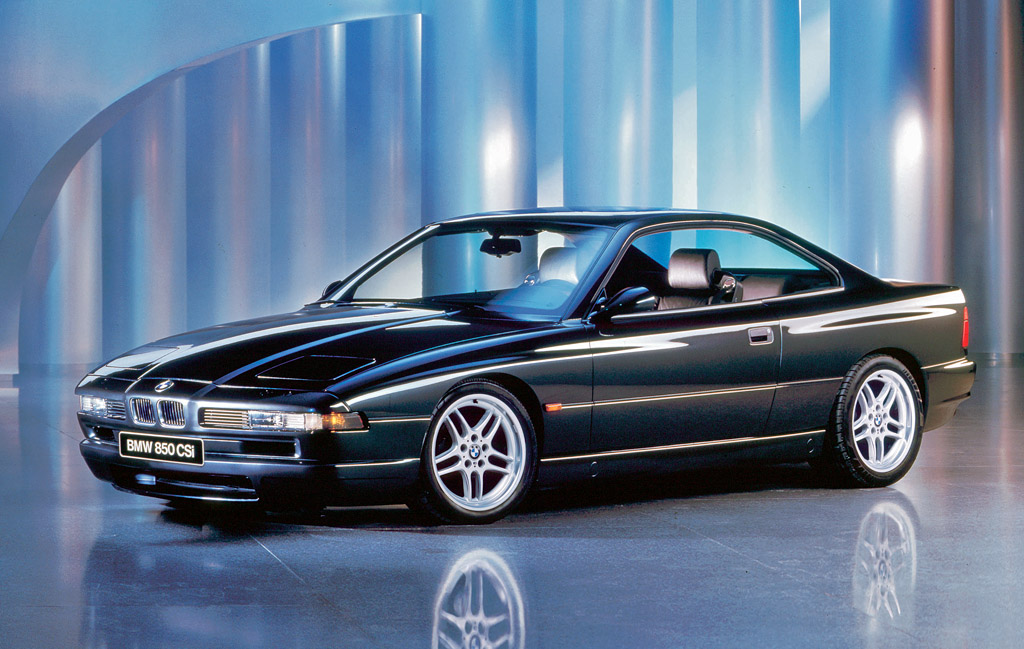
What makes the 850CSi memorable is how early BMW connected electronics with driver choice. Pressing one console switch changed throttle mapping, much like the configurable drive modes now fitted to modern cars.
Add a V12, six-speed manual, and rear-steering technology, and the result feels decades ahead of a typical 1994 coupe.
- Engine: 5.6-liter naturally aspirated V12
- Torque: 402 lb-ft
- Horsepower: 372 hp
- Length/Width: 188.2 inches / 73.0 inches
8. 2000 Mercedes-Benz S500
Although sold in the United States as a 2000 model, the W220-generation Mercedes-Benz S-Class was revealed and launched internationally in 1998, placing its original engineering firmly within the 1990s.
The S500 brought together so many futuristic features that several technologies deserve attention, but radar-based DISTRONIC cruise control stands above the rest.
DISTRONIC used a radar sensor to detect traffic ahead and help maintain a selected following distance. Instead of conventional cruise control simply attempting to hold a fixed speed, the system could respond to a slower vehicle in front.
Mercedes-Benz introduced this technology on the W220 S-Class, making radar-assisted adaptive cruise control available decades before it became common on mainstream family cars.
The cabin offered another wonderfully excessive idea: actively ventilated comfort seats. Mercedes-Benz technical material described miniature fans moving air through perforations in the seat upholstery.
For drivers accustomed to simple heated seats, a luxury sedan actively circulating air through the seat cushion and backrest seemed genuinely futuristic.
The AIRMATIC suspension added electronic control beneath the body. The adaptive air-suspension system could adjust damping and vehicle level, while the car could lower itself at higher speeds. Available KEYLESS-GO technology also allowed entry and engine operation without the traditional process of inserting a key.
Even closing the doors could involve assistance. Pneumatic closing support helped pull incompletely latched doors and the trunk into the closed position. Inside, the COMAND system centralized navigation, audio, and telephone-related functions through a color display.
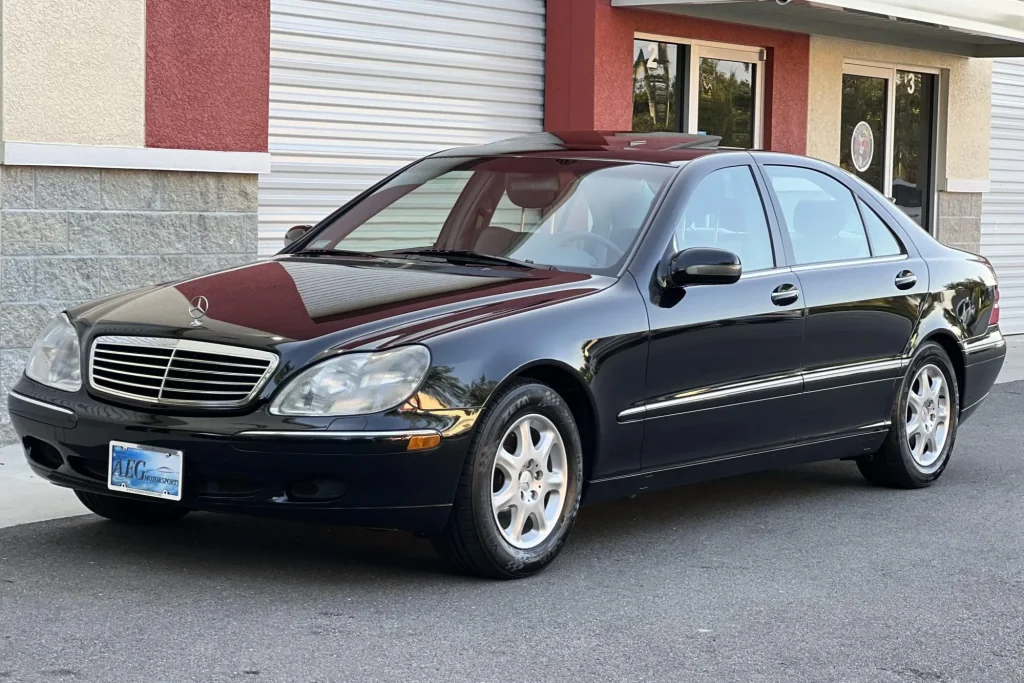
For the U.S. S500, a 5.0-liter V8 produced 302 horsepower and 339 lb-ft of torque. The engine was impressive, but technology defined the car.
Radar cruise control, ventilated seats, adaptive air suspension, keyless operation, and soft-close assistance read like a modern luxury specification sheet. Mercedes-Benz was putting them into its flagship as the 1990s came to an end.
- Engine: 5.0-liter naturally aspirated V8
- Torque: 339 lb-ft
- Horsepower: 302 hp
- Length/Width: 203.1 inches / 73.0 inches
Also Read: 10 Most Popular Car Brands That Are Owned By A Single Company