
The dynamics of the modern gas station have fundamentally changed, yet consumer behaviour remains firmly stuck in the past. For decades, the choice at the pump was simple: regular unleaded was for the family haulier, mid-grade was a confusing middle child, and premium 91 or 93 octane was reserved strictly for exotic sports cars and high-end German executive sledges.
If your car didn’t feature a prominent luxury badge on the hood or an exhaust note that woke up the neighbourhood, you confidently pressed the yellow 87-octane button and went about your day.
However, current automotive engineering strategies have flipped this dynamic entirely. Driven by aggressive federal emissions targets and consumer demands for better fuel efficiency without a drop in real-world performance, mainstream manufacturers have abandoned large, naturally aspirated powerplants in favour of downsized, highly pressurised engines.
These powerplants rely on advanced turbocharging, extreme compression ratios, and sophisticated direct-injection setups to squeeze massive power figures out of small displacements.
The hidden catch to this engineering marvel is ignition stability. Many everyday crossovers, family sedans, and commuter hatchbacks now require or strongly recommend high-octane fuel to run safely and efficiently.
Yet, because these vehicles wear ordinary, working-class badges, thousands of owners unwittingly pump regular fuel into their tanks every single week, completely oblivious to the hidden financial and mechanical penalties building up under the hood.
To understand why an ordinary family vehicle now demands premium fuel, you have to peel back the layers of engine calibration and look at the physical realities inside the combustion chamber.
The octane rating of a fuel has absolutely nothing to do with its energy density or “quality”, a common marketing myth that oil companies have happily let persist. Instead, octane is purely a measure of a fuel’s stability and its resistance to pre-ignition, a phenomenon colloquially known in automotive circles as engine knock or detonation.
In a traditional engine, the piston travels upward, compressing a tightly metered mixture of air and fuel. At the exact millisecond determined by the engine control unit (ECU), the spark plug fires, creating a controlled, predictable flame front that pushes the piston back down.
However, when you add a turbocharger into this equation, you are forcing massive amounts of hot, compressed air into those same cylinders. This raises the baseline internal temperature and pressure exponentially.
If you use low-octane 87 gas in a high-compression, turbocharged environment, the fuel cannot withstand the intense heat and pressure during the compression stroke. It ignites prematurely, spontaneously exploding before the spark plug even has a chance to fire.
This creates a violent, counter-productive shockwave inside the cylinder that slams against the rising piston, creating a metallic pinging sound and subjecting critical internal components to extreme structural stress.
Regular 87 octane fuel experiences spontaneous detonation under high pressure, causing engine knock. Conversely, premium 91+ octane fuel maintains stable compression, allowing for controlled ignition and improved engine performance reliability.
Modern cars protect themselves from total catastrophic failure using highly sensitive electronic knock sensors. When these microscopic microphones pick up the structural vibrations of pre-ignition, the ECU instantly steps in like an emergency medical technician. It alters the vehicle’s ignition timing, delaying the spark to stop the knocking.
While this saves your pistons from melting, it comes at a high daily cost to the owner. Retarding the ignition timing kills engine efficiency, severely dropping your real-world fuel economy and stripping away significant amounts of torque and horsepower.
Paradoxically, by saving a few cents per gallon at the pump with regular unleaded, owners of these specific vehicles end up spending significantly more over time due to degraded fuel economy, all while driving a car that feels sluggish and unresponsive.
ALSO READ: Are Modern Cars Too Heavy to Ever Be Truly Fun Again?
7 Everyday Vehicles with Stealth Premium Demands
The following seven modern vehicles are prime examples of this shifting engineering trend. They span different segments, plug-in hybrids to family three-row hauliers, and all feature specific trim levels or powertrains where high-octane premium fuel is an absolute operational necessity, despite what their mainstream branding implies.
1. Mazda CX-90 (3.3 Turbo S Trims)
Mazda has spent the last several years deliberately moving its brand upmarket, culminating in its flagship three-row crossover, the CX-90. To compete directly with premium European alternatives, Mazda engineers developed a brilliant, rear-wheel-drive-biased platform powered by a silky-smooth, turbocharged 3.3-litre inline-six engine paired with a mild-hybrid system.
It is a masterpiece of modern packaging, providing effortless passing power and an incredibly refined cabin experience for larger families. However, the lineup features a critical fork in the road regarding fuel requirements.
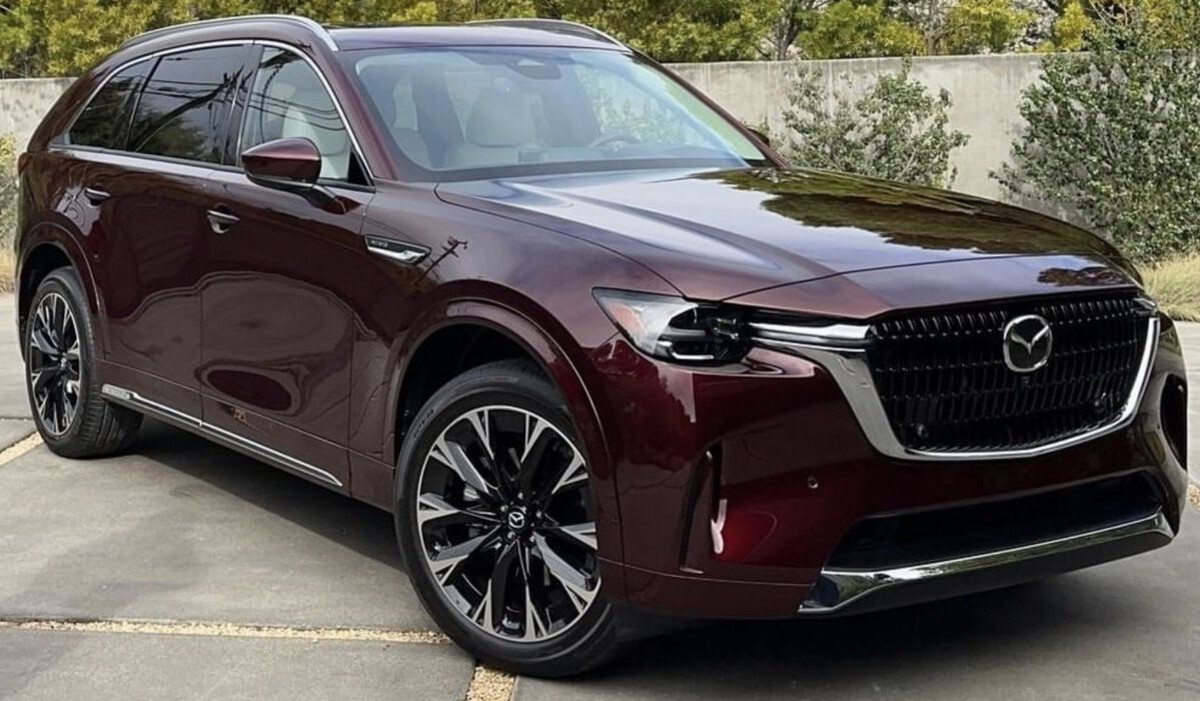
While the standard 3.3 Turbo model is calibrated to run happily on regular 87 octane, the high-output 3.3 Turbo S trims require premium 91 octane or higher to unlock their advertised performance.
According to official consumer guidance from Bountiful Mazda, running regular fuel in the Turbo S directly alters the engine’s capability. On 87 octane, the computer detunes the powertrain, dropping output from a stout 340 horsepower down to 319.
If you are loading up all three rows with luggage and climbing steep mountain highway passes, that performance drop is instantly noticeable.
- Engine: 3.3-liter e-SKYACTIV-G Turbocharged Inline-6
- Horsepower: 340 hp (on 91+ octane) / 319 hp (on 87 octane)
- Torque: 369 lb-ft
- Length: 201.6 inches
- Width: 77.6 inches
2. Subaru WRX (VB Generation)
The Subaru WRX is a rally-bred legend built for driving enthusiasts who crave all-weather traction and raw mechanical engagement. With its signature symmetrical all-wheel-drive system and aggressive body lines, it looks like a vehicle that should be treated with care.
Yet, because it carries an affordable consumer badge and shares showroom space with the humble Outback and Forester, many buyers treat it like a standard, low-maintenance commuter car.

Under the hood of the current VB-generation WRX lies a 2.4-litre turbocharged Boxer engine. Because horizontal boxer engines have unique thermal profiles and run under high turbocharger boost pressures, ignition stability is incredibly volatile. Subaru’s factory documentation specifically states that 91-octane premium fuel is strictly required for daily operation.
As highlighted by Nashville Subaru’s technical overview, skipping premium and opting for cheap 87 octane forces the ECU into an aggressive fail-safe mode. It aggressively retards timing and cuts boost pressure, crippling the vehicle’s signature mid-range punch and causing rough, jerky idling and accelerated carbon buildup on the valves over time.
- Engine: 2.4-litre Turbocharged Subaru BOXER 4-Cylinder
- Horsepower: 271 hp @ 5,600 rpm
- Torque: 258 lb-ft @ 2,000–5,200 rpm
- Length: 183.8 inches
- Width: 71.9 inches
3. Jeep Grand Cherokee 4xe
The Jeep Grand Cherokee is a staple of suburban driveways and rugged trailheads alike. In its latest evolutionary step, Jeep introduced the advanced 4xe plug-in hybrid (PHEV) powertrain, aiming to give buyers an eco-conscious alternative capable of running on pure electricity for short daily commutes.
It represents a massive technological leap for a brand long associated with thirsty, old-school V6 and V8 internal combustion engines.

The common misconception among 4xe owners is that because they bought a green hybrid, it should run on the cheapest gas available. However, the mechanical reality tells a completely different story.
To deliver its massive combined torque figures, the 4xe discards the traditional Pentastar V6 in favour of a small, highly stressed 2.0-litre turbocharged inline-four acting as the thermal core alongside two electric motors. Jeep’s official performance guidelines outline that while the vehicle will technically run on 87 octane in emergencies, 91-octane premium fuel is explicitly recommended for optimal operation.
When running in “eSAVE” or hybrid modes under heavy load, using regular fuel causes noticeable powertrain hesitation and drops the engine’s thermal efficiency, actively eating away at the fuel economy benefits you bought the hybrid for in the first place.
- Engine: 2.0-litre Turbocharged I-4 PHEV with Dual Electric Motors
- Horsepower: 375 hp (combined system output)
- Torque: 470 lb-ft (combined system output)
- Length: 193.5 inches
- Width: 77.5 inches
4. Honda Civic Type R (FL5)
The Honda Civic is the absolute poster child for economical, bulletproof reliability. For millions of drivers, the nameplate is synonymous with cheap insurance, minimal maintenance, and 87-octane fuel fill-ups that cost next to nothing.
This stellar commuter reputation creates a massive blind spot when buyers step up into the high-performance variant: the feral Civic Type R.
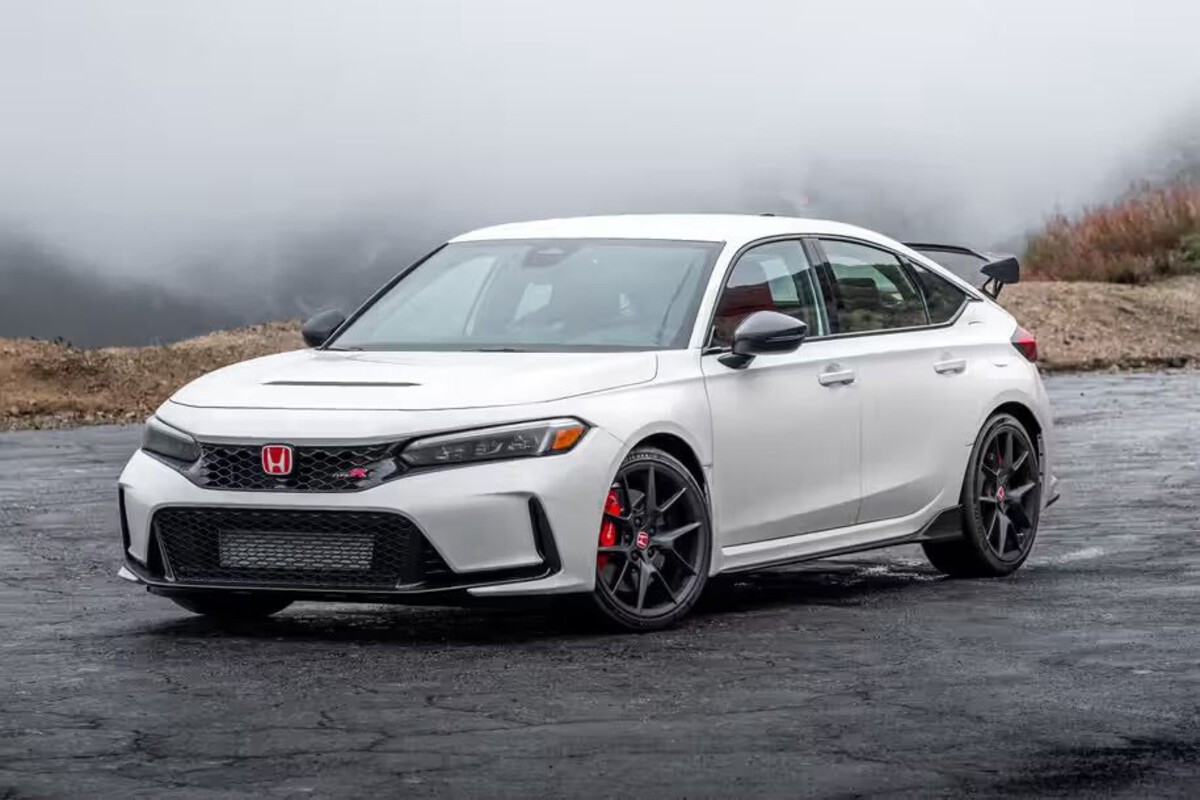
The FL5-generation Civic Type R is a street-legal track weapon wrapped in a hatchback body. Its K20C1 engine is a marvel of modern engineering, pushing a staggering 315 horsepower out of just two litres of displacement via a heavy-duty turbocharger.
To maintain stable combustion at high engine speeds, this specific motor runs an incredibly precise ignition map. Honda’s official factory manual explicitly mandates the use of premium unleaded fuel. Feeding this track-tuned machine regular 87 octane instantly chokes its performance.
The anti-knock sensors sense the unstable fuel and scale back performance parameters dramatically, turning a sharp, highly responsive sports car into a sluggish shadow of its engineered self.
- Engine: 2.0-liter K20C1 Turbocharged Inline-4
- Horsepower: 315 hp @ 6,500 rpm
- Torque: 310 lb-ft @ 2,600–4,000 rpm
- Length: 180.9 inches
- Width: 74.4 inches
5. Toyota Crown (Platinum Grade / Hybrid MAX)
Toyota built its global empire on the back of bulletproof, accessible engineering designed to run flawlessly on standard, regular unleaded gas. When the company introduced the distinctive, high-riding Crown sedan to replace the Avalon, buyers expected the same fuel-and-forget experience. For the base XLE and Limited trims equipped with the traditional 2.5-litre hybrid setup, that holds completely true.
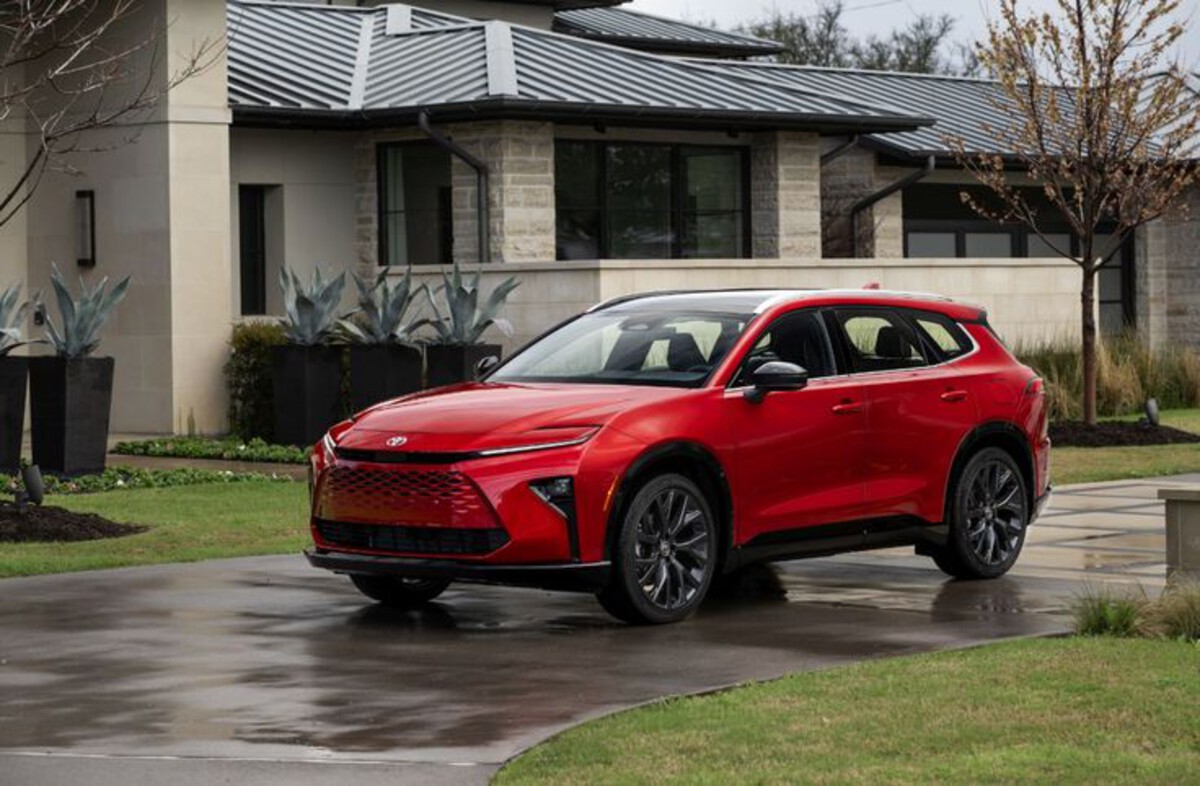
The structural trap lies at the top of the lineup in the Platinum grade, which features Toyota’s high-performance Hybrid MAX powertrain. This setup pairs a 2.4-litre turbocharged four-cylinder engine with a powerful rear-axle electric motor, routing power through a direct six-speed automatic transmission rather than a standard CVT.
As detailed in the comprehensive overview by Automotive24, this highly pressurised system is tuned explicitly for high-octane combustion stability. Toyota officially recommends 91-octane premium fuel to keep the turbo happy and achieve the advertised 400 pound-feet of torque.
Putting 87 octane in a Platinum Crown causes the ECU to dull the throttle response and reduce total system output, undermining the premium performance experience buyers pay a steep price premium to get.
- Engine: 2.4-litre Turbocharged Hybrid MAX Powertrain
- Horsepower: 340 hp (combined system output)
- Torque: 400 lb-ft (combined system output)
- Length: 196.1 inches
- Width: 72.4 inches
ALSO READ: 10 Most Hated Features by Modern Car Drivers
6. Mini Cooper S / John Cooper Works (JCW)
With its playful retro styling, compact dimensions, and British charm, the Mini Cooper is often viewed by the general public as a fun, quirky urban runabout rather than a precision-engineered machine.
Because it is small and nimble, many owners mistakenly categorise it alongside basic economy hatchbacks and feed it standard 87-octane pump gas without a second thought.

In reality, modern Minis are built entirely on mechanical foundations engineered by BMW. Underneath that cute, rounded hood sits a highly refined, BMW-designed 2.0-litre TwinPower Turbo engine.
These engines run tight internal tolerances, high cylinder pressures, and advanced direct injection systems that run remarkably hot. Technical service data from the Mall of Georgia MINI emphasises that premium 91-octane fuel is required across the turbocharged MINI lineup.
Continuous use of low-octane regular gasoline in a Cooper S or JCW model causes significant operational degradation. Beyond immediate losses in fuel economy and throttle crispness, it regularly causes rough cold starts, uneven idling, and persistent micro-detonations that degrade the specialised internal combustion coatings over time.
- Engine: 2.0-liter TwinPower Turbocharged Inline-4
- Horsepower: 228 hp (JCW Trims) / 189 hp (Cooper S Trims)
- Torque: 258 lb-ft (JCW) / 206 lb-ft (Cooper S)
- Length: 152.2 inches
- Width: 68.0 inches
7. Volkswagen Golf GTI (Mk8)
The Volkswagen Golf GTI practically invented the “hot hatch” segment, a vehicle designed to offer sports-car-slaying dynamics in a practical, everyday package that can haul groceries or navigate tight city parking spaces with ease.
It is an automotive icon praised for its democratisation of performance. However, because it looks like a standard hatchback on the outside, many casual owners treat it identically to a base-model commuter car.

The Mk8 GTI is powered by the latest iteration of Volkswagen’s EA888 2.0-litre turbocharged engine. To squeeze impressive performance figures out of this engine while maintaining strict emissions compliance, Volkswagen engineers pushed the boundaries of turbocharger boost mapping.
While the vehicle’s electronic systems are smart enough to pull back timing and protect the engine from immediate destruction on regular gas, doing so defeats the entire purpose of buying a performance variant.
Running 87 octane prevents the engine from reaching its peak torque curve, making the car feel noticeably sluggish out of corners and lowering real-world highway fuel efficiency. To experience the sharp, linear power delivery that made the GTI famous, premium fuel is a mandatory requirement at the pump.
- Engine: 2.0-liter EA888 Turbocharged TSI Inline-4
- Horsepower: 241 hp @ 5,000 rpm
- Torque: 273 lb-ft @ 1,600 rpm
- Length: 168.8 inches
- Width: 70.4 inches
To frame this properly from an SEO and consumer-value perspective, we must address the elephant in the room: the immediate cost differential at the pump. When an owner stands at the fuel station and looks at the pricing structure, the gap between regular and premium fuel can feel like a financial gut punch.
On average, premium fuel commands a pricing premium over regular unleaded. For a standard 15-gallon tank fill-up, choosing premium adds a noticeable amount to the total receipt. Over the course of a standard driving year spanning 15,000 miles, this translates to a clear difference in direct operating costs.
However, viewing this choice purely through the lens of cost-per-gallon is a major mathematical mistake. When you factor in the real-world operational penalties of running lower octane in a vehicle designed for premium, the financial math completely shifts.
When a premium-engineered engine is run on regular fuel, the ECU must retard the ignition timing to prevent damage, resulting in a 10–12% drop in fuel economy and a noticeable loss of power. Conversely, using the manufacturer-recommended premium fuel ensures optimal combustion, which allows the engine to achieve its maximum fuel efficiency and deliver its full rated power output.
When an engine’s computer retards ignition timing to stop knocking, fuel efficiency regularly drops by 10% to 12%. If your crossover normally averages 25 miles per gallon on premium, running regular gas can drop that average down to around 22 miles per gallon.
When you recalculate the yearly operating cost based on actual miles driven versus degraded fuel consumption, the supposed savings of buying cheap gas quickly disappear.
When you add in the long-term risk of accelerated direct-injection carbon buildup, fouled spark plugs, and potential fuel system damage that can easily deny factory warranty coverage, saving a few bucks at the pump becomes an incredibly expensive gamble.
ALSO READ: Opinion: Modern Headlights Got So Bright They Became a Safety Problem
Ultimately, the badge on a vehicle’s trunk or the price tag on the window sticker does not dictate its fueling requirements; the precise laws of thermodynamics and mechanical engineering do.
As manufacturers continue to push smaller engines to produce higher power outputs to meet stringent global standards, the need for stable, high-octane fuel across mainstream car lineups will only continue to grow.
The ultimate takeaway for any modern car owner is simple: ignore the branding and read the fine print. Never make assumptions about what your car needs based on its badge or body style.
Open your driver’s side door, look inside the fuel filler flap, or flip to the technical specifications section of your factory owner’s manual. Look specifically for the phrases “91 Octane Minimum” or “Premium Fuel Required.” If those words are printed there, do not look at it as a luxury option or an unnecessary upsell.
Treat it as a vital mechanical requirement to protect your powertrain, preserve your performance, and ensure your vehicle runs safely and efficiently for years to come.
The absolute worst thing you can do for a modern, high-compression turbocharged engine is to treat fuel selection as an afterthought. If you are currently driving one of these engineering marvels, pay close attention to how it behaves on your next drive.
If you notice a distinct hesitation when you step on the gas pedal, a subtle metallic pinging noise under hard acceleration, or fuel economy figures that fall well short of the official EPA estimates on your window sticker, your car is likely crying out for higher octane.
Take care of the mechanical engineering hidden beneath the hood, feed it the stable fuel it was designed for, and your car will happily return the favour with crisp throttle response, maximum fuel efficiency, and long-term mechanical reliability.