
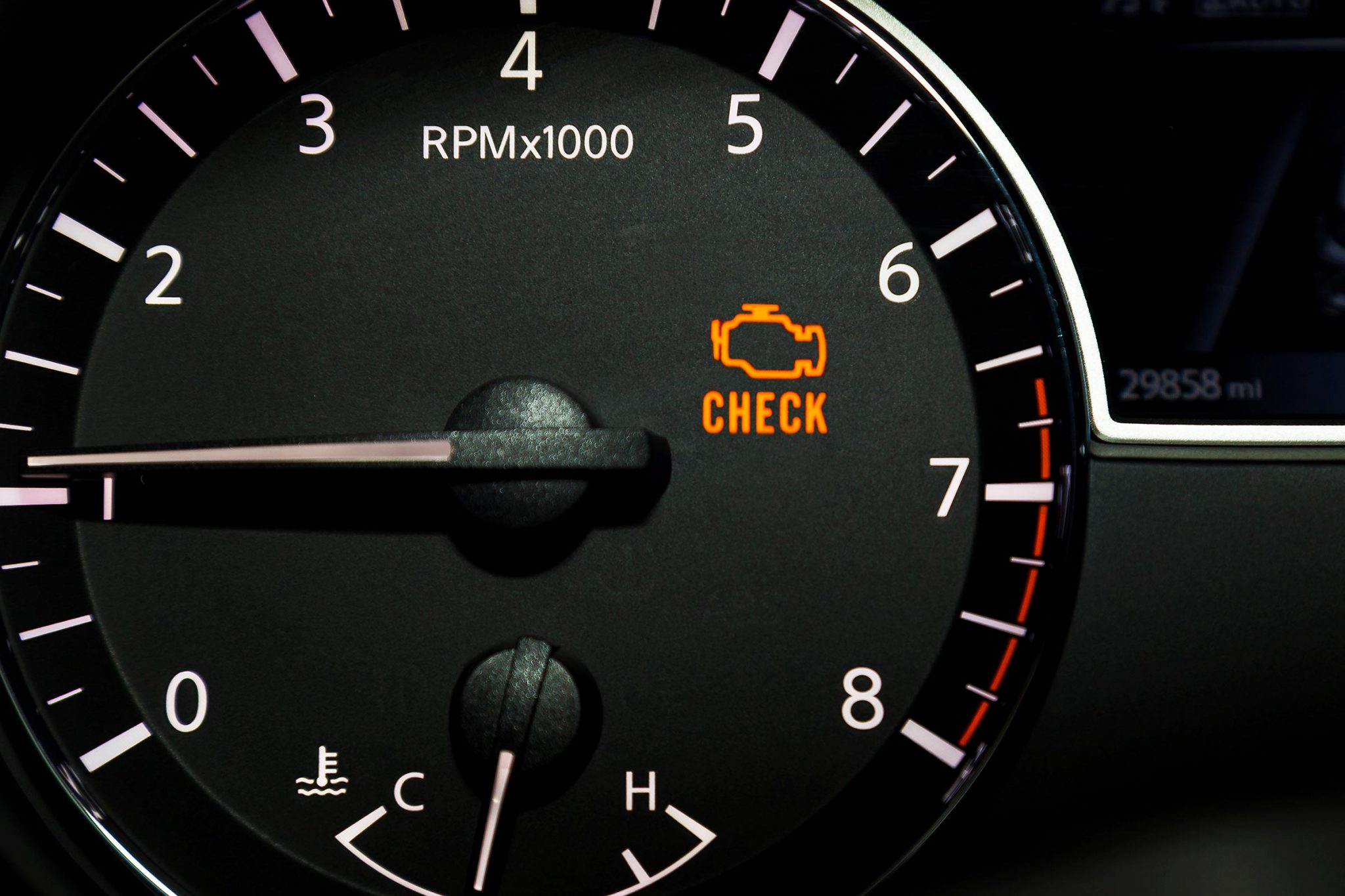
Few dashboard warnings create anxiety as quickly as the check engine light. It can appear while a car seems to run perfectly, remain illuminated without an obvious symptom, or suddenly flash as the engine shakes and loses power.
For many drivers, the amber engine-shaped symbol feels frustratingly vague. That vagueness is intentional. The light was never designed to identify a failed part.
Its official regulatory name is the Malfunction Indicator Light, or MIL, and its history is closely tied to America’s effort to reduce vehicle emissions. The U.S. Environmental Protection Agency describes on-board diagnostics as a computer-based system that monitors emission controls and important engine components.
When the system detects a qualifying malfunction, it stores diagnostic information and can illuminate the “Check Engine” or “Service Engine Soon” warning.
The check engine light is therefore more than a repair warning. Its development tells the story of how automobiles changed from largely mechanical machines into computer-controlled vehicles capable of monitoring their own operation.
Emissions Rules and Engine Computers Created the Check Engine Light
Cars built during the middle of the 20th century had no universal computer continuously watching the engine. If a carburetor supplied the wrong fuel mixture, ignition timing was incorrect, or an engine began misfiring, diagnosis depended heavily on physical symptoms and a mechanic’s experience.
Technicians listened to engines, examined spark plugs, checked vacuum, and connected specialized testing equipment. The car itself generally could not report what it had detected because there was no central electronic control unit continuously analyzing engine operation.
That began to change as governments introduced stricter emissions standards. California became particularly influential because severe air pollution required tighter control of vehicle exhaust. Automakers needed increasingly precise management of fuel delivery and ignition to reduce pollutants while maintaining performance and fuel economy.
Electronic engine controls expanded during the late 1970s and 1980s. Sensors measured operating conditions while computers adjusted fuel and ignition decisions. Once a computer controlled the engine, engineers gained another important capability: the system could identify certain faults in the components it monitored.
Early on-board diagnostic systems were far from standardized. General Motors, Ford, Chrysler, and foreign manufacturers developed different connectors, communication methods, and trouble codes. A repair procedure for one brand might be useless on another.
Some vehicles allowed mechanics to retrieve codes by connecting specific terminals or activating a diagnostic mode. The dashboard warning light would flash in patterns representing stored fault codes. Technicians literally counted the flashes to identify a diagnostic direction.
These early systems are commonly described as OBD-I today, although there was no single universal OBD-I standard covering every manufacturer.
California’s Air Resources Board pushed the industry toward a more comprehensive system. CARB’s second-generation requirements became known as OBD II.
According to CARB, nearly all 1996-and-newer vehicles under 14,000 pounds were equipped with OBD II systems. The 1996 model year became the major turning point for standardized diagnostics in American passenger vehicles.
OBD II introduced far greater consistency. The familiar 16-pin diagnostic connector gave technicians standardized physical access to emissions-related vehicle information. SAE J1962 defines the diagnostic connector used for OBD access.
Diagnostic trouble codes also became more standardized. Codes such as P0300, P0420, and P0171 are now recognized across much of the automotive industry. The first letter identifies a broad system category. A “P” code refers to the powertrain, while other categories cover body, chassis, and vehicle-network systems.
This created one of the biggest misunderstandings surrounding the check engine light: a trouble code does not automatically identify the part that needs replacement.
A P0420 code, for example, describes catalyst system efficiency below a programmed threshold. It gives a technician a diagnostic direction.
The underlying cause still needs to be confirmed. Replacing a catalytic converter simply because a code mentions catalyst efficiency can become an expensive mistake if another fault contributed to the reading. A diagnostic code is evidence. It is not always a complete repair instruction.
What the Check Engine Light Is Actually Telling the Driver
The modern check engine light is primarily connected to emissions and powertrain monitoring. An engine computer receives information from numerous sensors and compares vehicle operation with programmed diagnostic criteria.
The system can monitor oxygen sensor signals, fuel mixture corrections, misfire activity, evaporative emissions operation, and catalytic converter performance. When specific conditions indicate a malfunction, the computer can store a diagnostic trouble code and illuminate the Malfunction Indicator Light.
Not every unusual reading immediately turns on the light. OBD systems use specific monitoring logic. Some problems must occur more than once or under particular driving conditions before the warning is illuminated.
This explains why a check engine light can appear inconsistent. A fault may occur only when the engine is cold, during highway driving or under a specific load. The computer evaluates the problem when the correct monitoring conditions are present.
One of the most famous causes is a loose fuel cap. Modern gasoline vehicles use evaporative emissions systems to prevent fuel vapors from escaping into the atmosphere. An improperly tightened cap can create what the diagnostic system interprets as a vapor leak.
The EPA has specifically used a loose gas cap as an example of OBD operation. Once the cap is correctly tightened, the warning light may switch off after the vehicle completes enough monitoring cycles to confirm the leak is no longer present.
The same dashboard symbol can also appear for considerably more serious problems. This is why the difference between a steady and flashing check engine light matters.
A steady light generally means the system has identified a malfunction that needs diagnosis. The vehicle may continue to drive normally, but the problem should not simply be ignored.
A flashing check engine light is more urgent. EPA technical material explains that a flashing MIL can indicate a malfunction posing an immediate threat to the catalytic converter. Severe engine misfires may allow unburned fuel to enter the exhaust, creating extremely high temperatures inside the catalyst.
Continuing to drive aggressively with a severe misfire can turn an ignition problem into an expensive catalytic converter repair. If the engine is shaking, losing substantial power, or the warning is flashing, the situation requires more immediate attention.
The check engine light also does not monitor every mechanical component. A failing wheel bearing, worn suspension bushing, or damaged shock absorber may never trigger it. Even some engine problems may not immediately illuminate the light if the monitored systems have not detected a qualifying fault.
Likewise, seeing “check engine” does not mean the engine itself is destroyed. The wording is consumer-friendly language attached to a much broader diagnostic system.
A small evaporative emissions leak and a severe misfire can illuminate the same warning symbol. That enormous range of possible causes is why diagnosing a vehicle from the light alone is impossible.
OBD-II Changed Automotive Repair Forever
The greatest importance of the check engine light may be the diagnostic network behind it. Before standardized OBD II access, mechanics often depended on manufacturer-specific procedures and equipment.
Today, even an inexpensive compatible code reader can retrieve standardized emissions-related diagnostic trouble codes from most 1996-and-newer U.S. passenger vehicles. That accessibility fundamentally changed vehicle repair.
A technician can connect diagnostic equipment and examine stored trouble codes, pending codes, and live operating information. Depending on the vehicle and scan tool, data may include fuel trims, oxygen sensor readings, coolant temperature, engine speed, and numerous other parameters.
Professional diagnostic equipment goes much further. Modern vehicles contain many electronic control modules managing transmissions, brakes, airbags, body electronics, and communication networks. Advanced scan tools can communicate with systems far beyond the engine computer.
The check engine light itself remains deliberately simple. A driver does not need to understand fuel trim percentages or sensor voltage patterns to recognize that the vehicle has detected a problem.
This simplicity has helped create the modern code-scanning industry. Parts stores, repair shops, and inexpensive Bluetooth adapters have made trouble code retrieval available to almost anyone.
The problem begins when reading a code is confused with performing a diagnosis. If a scan tool displays an oxygen-sensor-related code, the oxygen sensor may be defective.
However, damaged wiring, an exhaust leak, or another engine problem could potentially affect the data received by the computer. A professional diagnostic process uses the code as a starting point.
Clearing the code does not repair the vehicle either. A scan tool can erase diagnostic information and turn off the warning, but the computer will usually detect the malfunction again if the underlying problem remains.
Resetting codes can also clear emissions-monitor readiness information. The vehicle may need to complete certain driving conditions before those monitors run again, an important consideration in states using OBD data for emissions inspections.
The check engine light emerged from a very different automotive era. Early cars relied almost entirely on mechanical diagnosis. The growth of emissions regulations pushed manufacturers toward precise electronic engine controls, while California’s OBD requirements and federal emissions rules helped establish systems capable of monitoring their own performance.
OBD II transformed that concept into a standardized diagnostic framework. The 16-pin connector and standardized trouble-code structure gave technicians far more consistent access to emissions-related vehicle information.
Yet the purpose of the warning light itself remains surprisingly simple. It does not know how much the repair will cost. It does not automatically identify the component that should be replaced.
It cannot tell the driver whether the problem is a loose fuel cap, damaged wiring, an ignition fault, or a failing catalytic converter without further diagnosis.
Its job is to say that the vehicle’s computer has detected a malfunction significant enough to record and report.
That is the real story behind one of the most misunderstood dashboard symbols ever created. The check engine light was not originally developed simply as a general mechanical warning. Its history is rooted in emissions control, electronic engine management, and the rise of on-board diagnostics.
From early manufacturer-specific systems and technicians counting flashing codes to standardized OBD II scan tools, the warning represents a fundamental shift in how cars communicate problems.
The next time the amber engine symbol appears, its message is both simpler and more complicated than many drivers assume. It is not saying the engine is ruined, and it is not naming a failed part. It is telling the driver that the car has detected something requiring investigation.
Decades after OBD II became widespread in 1996-model U.S. vehicles, the check engine light remains intentionally vague. Behind that single amber symbol, however, sits one of the most important diagnostic systems in modern automotive history.
