
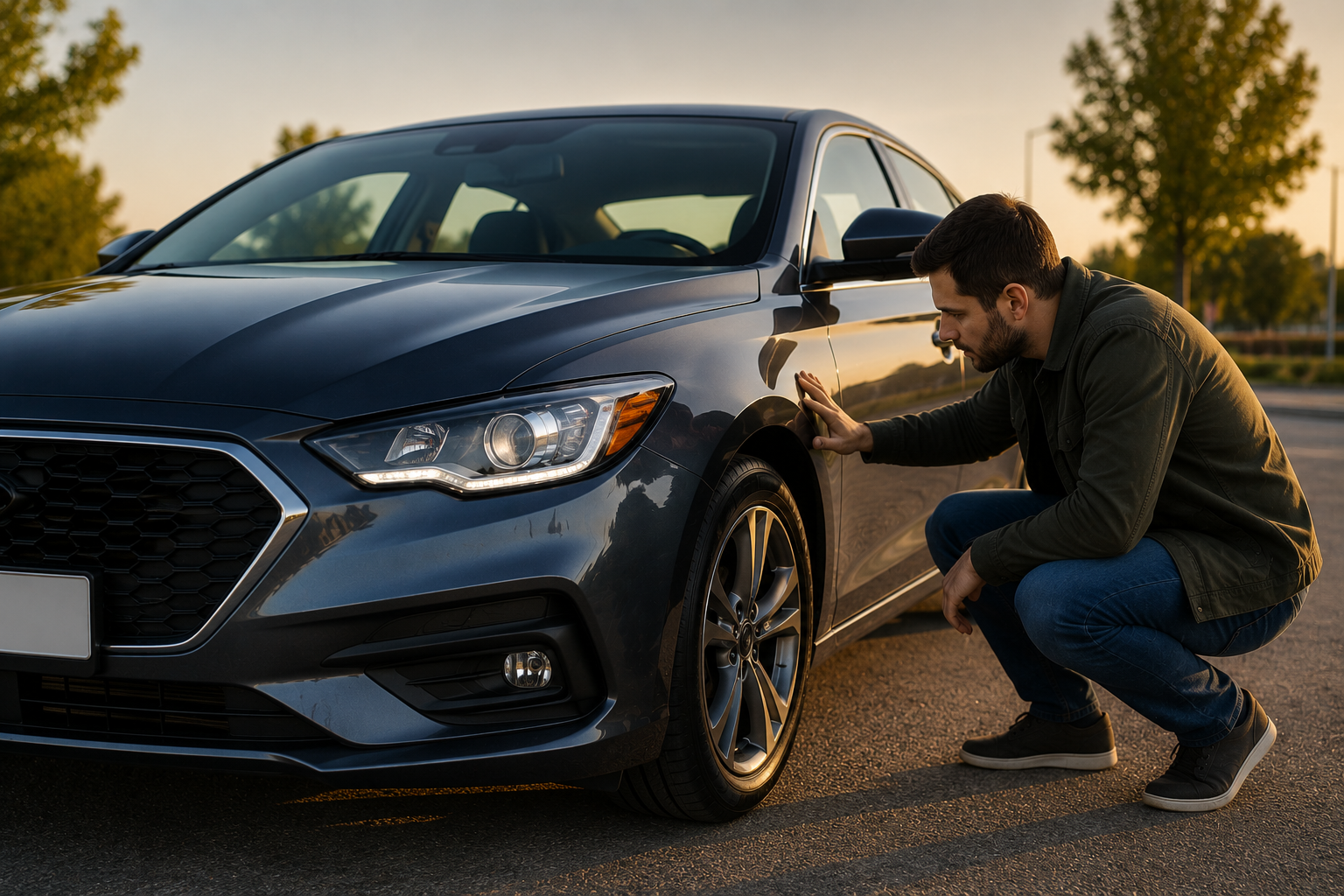
A used car can look spotless in a dealership photo and still reveal expensive problems within the first few miles of driving. A test drive is therefore more than a chance to decide whether the seats are comfortable or the engine feels powerful.
It is an opportunity to observe how the engine starts, transmission shifts, brakes respond, steering behaves, and suspension reacts under real driving conditions.
The Federal Trade Commission warns that a vehicle history report is not a substitute for an independent mechanical inspection because history reports typically do not identify mechanical problems.
Consumer Reports also recommends paying close attention to steering play, brake behavior, transmission operation, and unusual noises when assessing a used vehicle.
A proper test drive should include city streets and, where safely possible, higher-speed roads. Buyers should avoid rushing because some symptoms only become obvious after the powertrain reaches normal operating temperature.
The 10 checks below focus on observable warning signs that may indicate mechanical wear, neglected maintenance, or a developing repair. A test drive cannot replace a professional pre-purchase inspection, but it can help identify a car that deserves much closer examination before any money changes hands.
Also Read: The 10 Cars Owners Hold For 15 Years or More Are All Japanese
1. Check How the Engine Starts From Cold
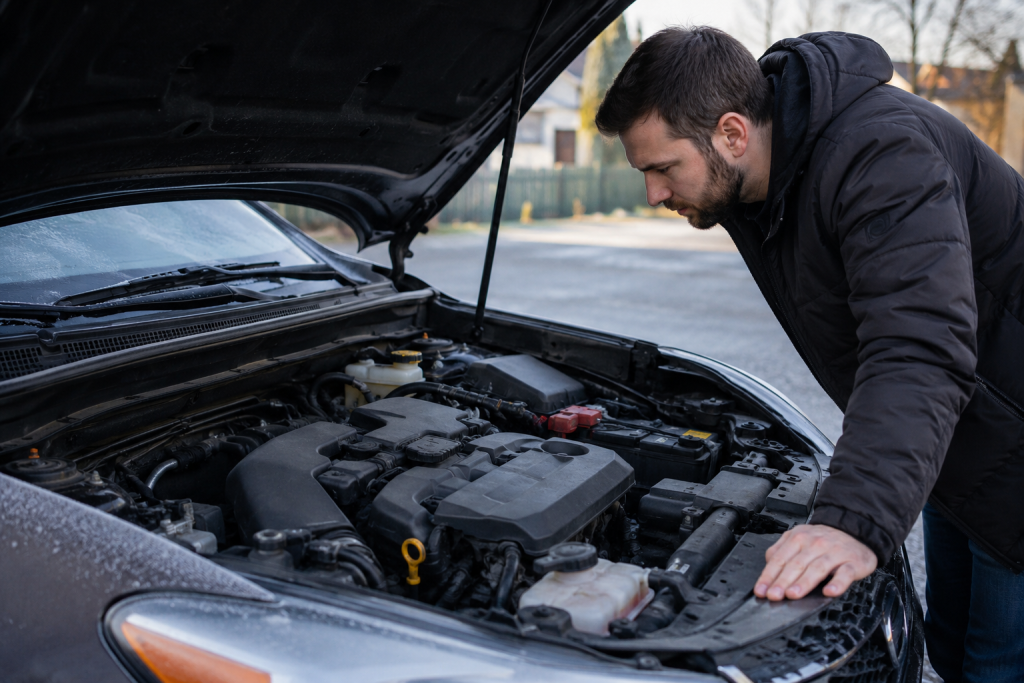
The first few seconds after starting a used car can reveal information that disappears once the engine is warm. If possible, ask the seller not to start the vehicle before you arrive. A cold engine gives you a better opportunity to observe the initial startup rather than evaluating a car that has already been running.
Turn the ignition on and watch the instrument cluster before starting. The warning lights should illuminate as part of the vehicle’s normal self-check procedure. After the engine starts, pay attention to lights that remain illuminated.
A persistent check engine, oil pressure, charging system, or other warning indicator deserves investigation rather than an assumption that it is a minor sensor issue.
Listen carefully to the engine. Repeated knocking, pronounced tapping, grinding, or an abnormal rattle should not be ignored.
A brief sound at startup can have different causes depending on engine design, temperature, and service history, so the noise alone does not establish a diagnosis. It does, however, give a qualified mechanic something specific to investigate.
Next, observe the idyll. The engine should settle into behavior consistent with the manufacturer’s design as it warms. Notice severe shaking, repeated stumbling, stalling, or an idle speed that continually surges without an obvious reason.
Consumer Reports recommends starting a used vehicle and allowing it to warm while inspecting its condition, including fluid-related signs that may point to mechanical trouble.
Do not let a seller rush this part of the drive. A vehicle that is already warm when you arrive is not automatically defective, but you can ask why it was started earlier.
Record any unusual startup behavior and have it examined during the pre-purchase inspection. The FTC specifically states that even a certified used vehicle should receive an independent mechanical inspection.
2. Test the Transmission at Low and Higher Speeds
Transmission problems can become extremely expensive, making shift quality one of the most important observations during a used car test drive. The goal is not to diagnose the gearbox yourself. Instead, concentrate on whether the transmission behaves consistently during acceleration, deceleration, and low-speed maneuvering.
For an automatic transmission, move from Park into Reverse and then into Drive while holding the brake. Notice an excessive delay before engagement or a harsh impact as the transmission selects a gear.
Some characteristics vary between conventional automatics, continuously variable transmissions, and dual-clutch gearboxes, so compare the behavior with what is considered normal for that specific model.
Once moving, accelerate progressively. A conventional automatic should change gears without unexplained slipping or severe hesitation. Watch for engine speed rising sharply without a corresponding increase in road speed.
Pay attention to repeated shuddering, heavy jolts, or inconsistent gear engagement. Consumer Reports notes that transmission maintenance requirements and repair costs vary significantly between vehicles, which is why model-specific service history matters.
Do not judge the transmission from a two-minute drive around a parking lot. Drive at different speeds where traffic conditions and local laws safely permit. Include stop-and-go operation because low-speed shifts may reveal behavior that is less obvious during steady cruising.
If the vehicle has a manual transmission, assess clutch engagement and watch for signs of slipping under acceleration.
Transmission fluid can also provide useful information on vehicles equipped with an accessible dipstick. Consumer Reports states that fluid should not be brown or have a burnt odor, and visible metal particles can indicate a more serious problem. The correct checking procedure varies by vehicle.
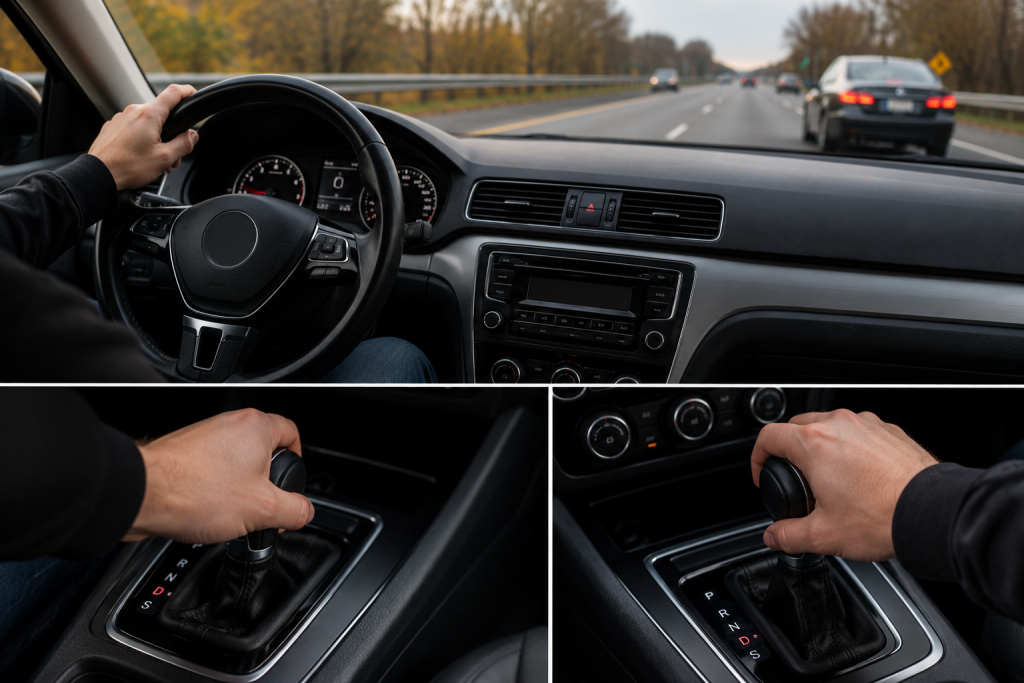
A single unusual shift does not prove the transmission is failing. Repeated slipping, delayed engagement, or severe shuddering, however, should trigger a professional inspection before purchase.
3. Test the Brakes for Smooth and Consistent Stopping
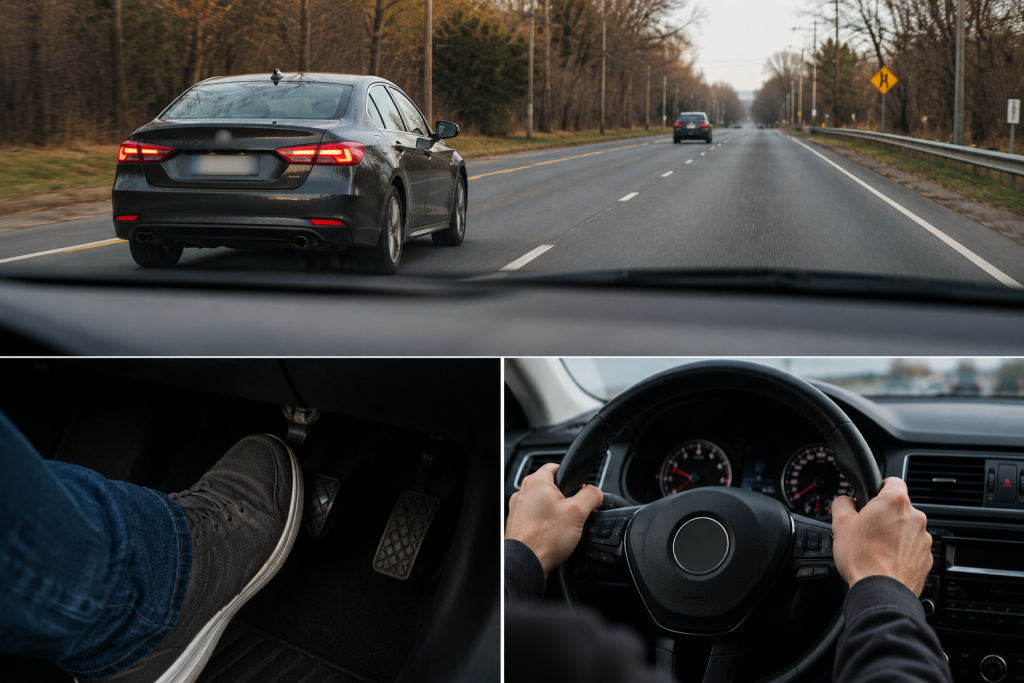
Brakes should be judged by feel, sound, and the car’s behavior as speed decreases. Begin with normal stops in a safe area before applying greater pedal pressure.
Consumer Reports recommends checking whether the braking response is smooth and progressive during a test drive. A pedal that feels excessively soft or braking that is unusually grabby can reduce driver confidence and deserves closer examination.
Pay attention to the steering wheel and brake pedal as the car slows. Repeated vibration or pulsation during braking can point to a condition that requires inspection.
Listen for persistent grinding or other abnormal sounds rather than assuming the vehicle simply needs inexpensive brake pads. Brakes are wear items, and Consumer Reports notes that pads require periodic replacement as their friction material wears away.
The car’s direction matters too. On a flat, safe road, notice whether braking is accompanied by a pronounced pull to one side. Do not perform emergency-style tests in traffic or exceed safe road conditions merely to evaluate a used vehicle.
Hybrid and electric cars require additional context because regenerative braking can change pedal response. Consumer Reports specifically notes that their brakes may feel different from conventional systems and can require some familiarization.
A test drive cannot measure pad thickness or fully inspect rotors, hydraulic components, and electronic brake systems. If the pedal behavior, noises, or stopping response raises concerns, use those symptoms as reasons for a professional pre-purchase inspection. The FTC recommends an independent mechanical inspection even when a used car is dealer-certified.
4. Pay Close Attention to Steering and Straight-Line Stability
A used car should give the driver a predictable sense of direction. During the test drive, find a flat road with a smooth surface and observe how the vehicle tracks while maintaining a normal, safe speed. Constant steering corrections, unusual looseness, or pronounced wandering should not be dismissed as personality traits without further inspection.
Consumer Reports advises checking for slack or play in the steering and listening for clunking noises. Excessive play may indicate worn steering gear or damaged linkage. With the vehicle idling, gently turning the steering wheel left and right can help reveal unusual free movement or sounds before the road test even begins.
Once underway, assess steering response through ordinary turns and lane positioning. Listen when turning at low speed, particularly in parking areas. Repeated clunks or other abnormal mechanical noises deserve attention. Avoid trying to identify the failed component yourself because similar symptoms can have different causes.
Tire condition should also be considered when a car does not track normally. NHTSA advises motorists to address uneven tire wear and notes that tire rotation can reduce irregular wear. The tire guidance recommends checking tread and sidewalls for damage and ensuring tread depth has not fallen below 2/32 of an inch.
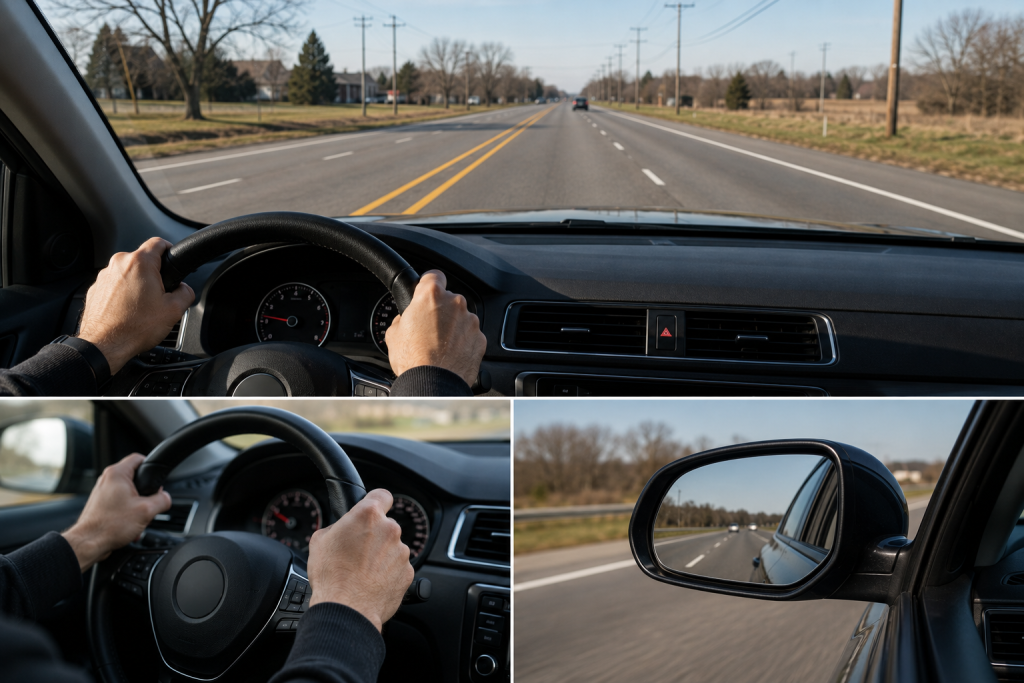
Before buying, compare what you felt on the road with a physical inspection of the tires, steering, and suspension. Consumer Reports notes that play or clunking around the front wheels can be associated with worn wheel bearings or suspension joints.
The steering test is not about demanding sports-car precision. It is about finding abnormal behavior that could indicate wear, damage, or a need for repair.
5. Listen for Suspension Noises Over Rough Roads
A freshly cleaned used car can hide cosmetic neglect, but the suspension often reveals its condition once the road surface becomes uneven. During the test drive, travel over ordinary bumps, patched pavement, and minor road imperfections at safe speeds.
Do not deliberately hit potholes. Instead, listen for repeated clunks, rattles, or knocking sounds as the wheels move through their suspension travel.
Consumer Reports recommends checking a used vehicle for unusual noises and examining suspension components during a pre-purchase inspection. Worn shocks, struts, bushings, ball joints, and other components can affect how a vehicle controls body movement and maintains tire contact with the road.
Notice how quickly the body settles after a bump. Excessive bouncing or repeated vertical movement deserves further investigation. Through turns, pay attention to unusual instability or movement that feels inconsistent with the vehicle type. A large SUV will naturally behave differently from a sports coupe, so model-specific expectations matter.
Low-speed driving can be especially informative. Turn into a driveway or cross a mild road transition while listening to each corner of the car. A repeated noise from the same area gives a technician a useful starting point during an inspection.
After driving, inspect the tires for irregular wear because abnormal tread patterns may accompany alignment or suspension problems. NHTSA recommends checking tires regularly for uneven wear and physical damage.
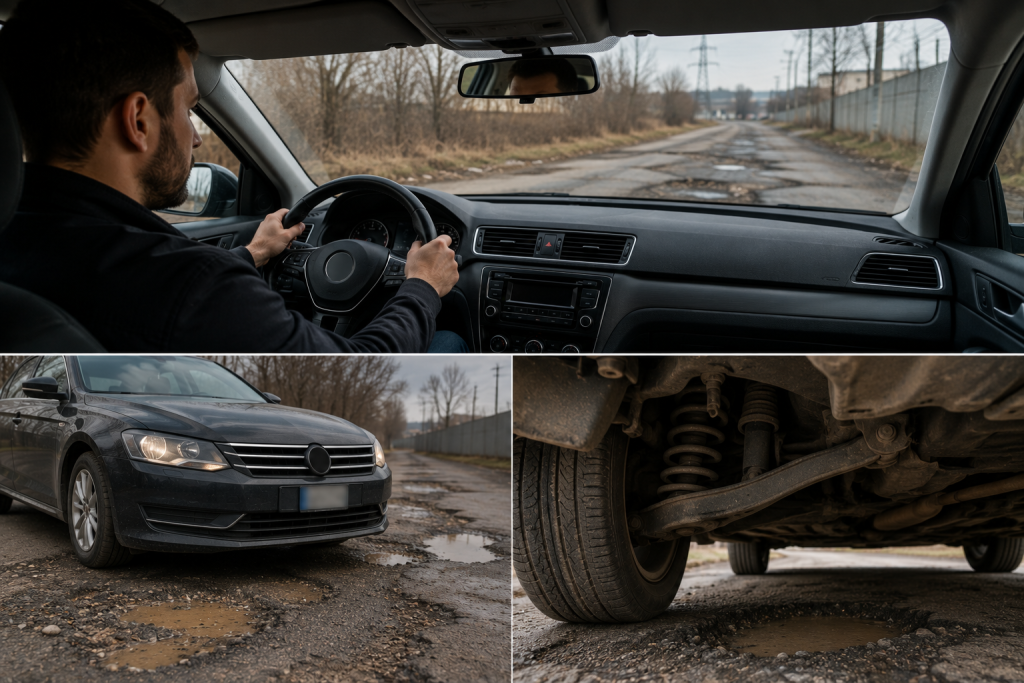
Suspension noises do not identify a failed part by themselves. Several components can produce similar symptoms, and guessing can lead to an inaccurate repair estimate.
Record when the sound occurs, which side it appears to come from, and whether steering or braking changes it. A qualified mechanic can then inspect the vehicle before you commit to buying it.
6. Accelerate Firmly and Check the Engine’s Power Delivery
A used car should not be judged only at parking-lot speeds. Once the engine has reached normal operating temperature and road conditions safely permit, apply progressive, firm acceleration. The purpose is not to race the vehicle. You are checking whether the engine delivers power consistently when placed under a greater load.
Watch for hesitation, repeated surging, severe vibration, or an obvious loss of power. If the engine speed rises but the car does not accelerate as expected, the symptom may involve the transmission or clutch rather than the engine itself. This is why buyers should observe the tachometer, vehicle speed, and mechanical behavior together.
Listen carefully during acceleration. Knocking, metallic rattling, or other abnormal sounds that appear only under load deserve professional investigation. A warning light that begins flashing is especially important.
The EPA explains that a blinking malfunction indicator light can indicate a severe condition, such as an engine misfire, that may damage the catalytic converter. The agency advises reducing speed and seeking service as soon as possible.
Check the exhaust in a safe location as well. Persistent abnormal smoke after the engine has warmed should not be ignored. Exhaust appearance can be influenced by temperature and operating conditions, so a brief vapor cloud on a cold day is not automatically evidence of engine failure.
The most useful acceleration test is controlled and repeatable. Try normal throttle first, followed by firmer acceleration where legal and safe. Notice whether the same hesitation or noise occurs again.
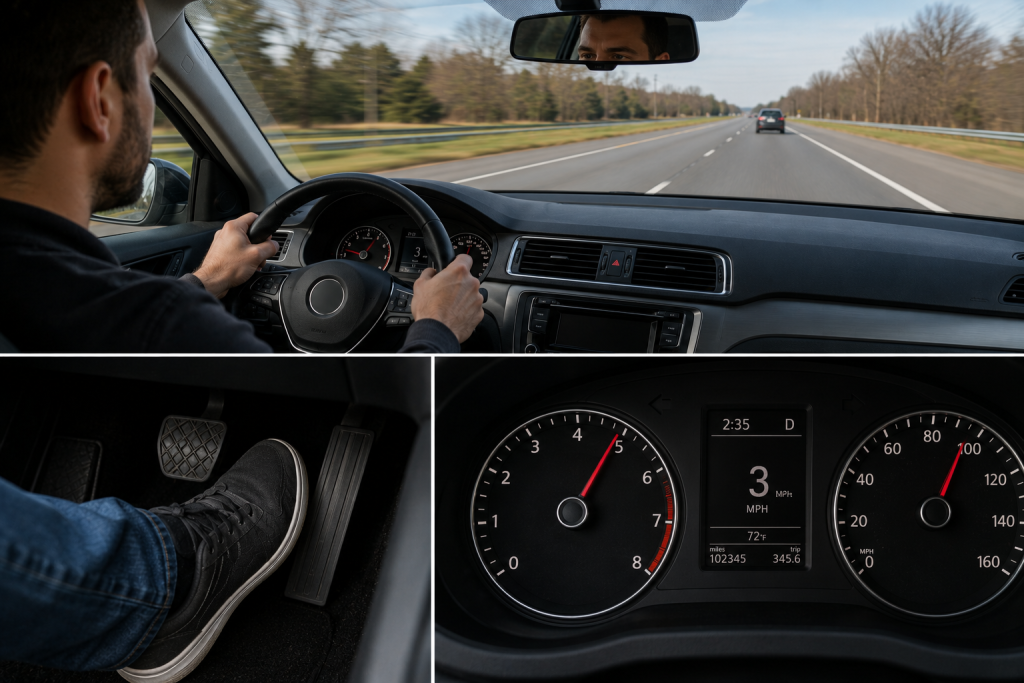
Do not accept “they all do that” as a diagnosis without verification. Research the specific model and arrange an independent inspection. The FTC emphasizes that a vehicle history report does not replace a mechanical inspection because history databases generally do not identify current mechanical problems.
7. Check for Warning Lights and Electronic Faults
Modern used cars depend heavily on electronic control modules, sensors, cameras, and driver-assistance systems. A vehicle may drive normally for a short test while still displaying clear evidence of a fault on the instrument panel. Before moving, switch the ignition on and observe the warning lights. After the engine starts, check which indicators remain illuminated.
The check engine light deserves particular attention. The U.S. Environmental Protection Agency explains that the malfunction indicator light is part of the vehicle’s onboard diagnostic system and illuminates when the system detects certain emissions-related problems.
A steady light requires attention, while a blinking light may indicate a severe condition that could damage the catalytic converter.
Do not stop at the check-engine indicator. Look for airbag, antilock braking system, traction control, battery, oil pressure, power steering, and tire pressure warnings. The exact symbols vary by model, making the owner’s manual useful when an unfamiliar indicator appears.
Test the equipment you may otherwise forget. Operate the power windows, locks, mirrors, climate control, infotainment screen, backup camera, parking sensors, and seat adjustments. If the car has adaptive cruise control or other advanced driver-assistance technology, verify the system’s status and arrange further inspection if fault messages appear.
Consumer Reports recommends checking accessories and controls during a used-car inspection rather than assuming small electronic failures are inexpensive.
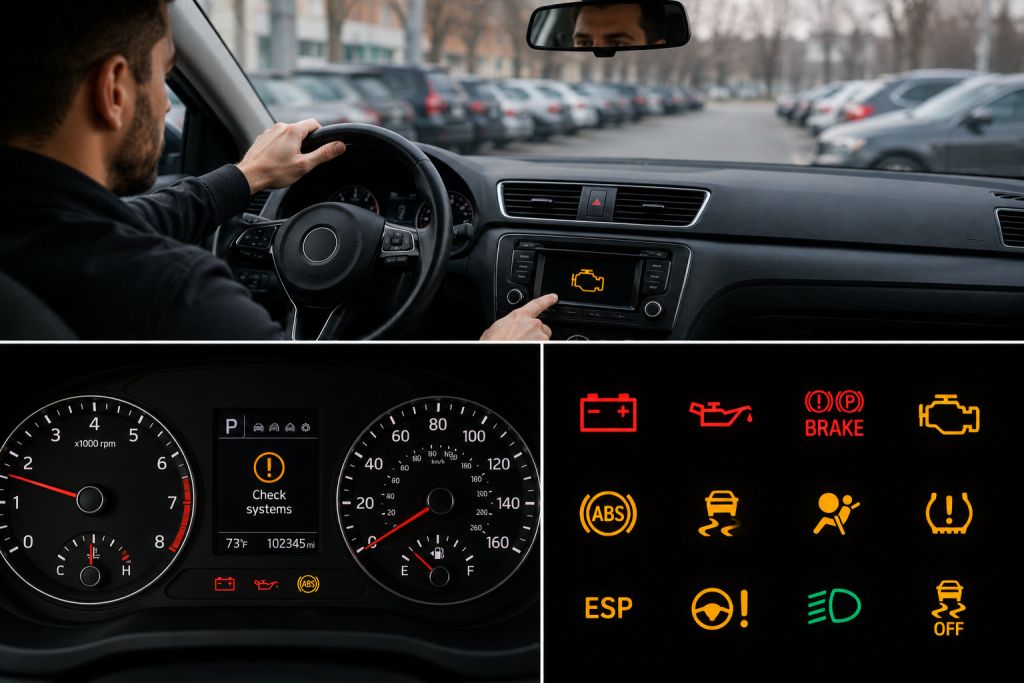
Never rely on a seller simply clearing a warning light before purchase. An OBD-II scan and professional inspection can provide more useful diagnostic information.
The FTC recommends an independent mechanical inspection because a history report generally will not identify current mechanical faults. Electronic warnings are evidence that deserves verification before signing a sales contract.
8. Drive at Highway Speed and Check for Vibration
City driving can make a used vehicle appear perfectly normal. Some problems become noticeable only as speed increases, which is why Consumer Reports recommends testing a vehicle on different roads and at varying speeds. If traffic conditions and local laws allow, include a highway or similar higher-speed road during the test drive.
As the car reaches cruising speed, pay attention to the steering wheel, seat, and floor. A repeated vibration that appears within a particular speed range deserves investigation. Tire or wheel conditions may contribute to vibration, but buyers should avoid diagnosing the cause from the driver’s seat because several mechanical issues can produce similar symptoms.
NHTSA advises drivers to inspect tires for uneven wear, cracks, bulges, cuts, and other physical damage. The agency also states that tires are considered unsafe when the tread is worn to 2/32 of an inch. Tire condition matters during a test drive because the only contact between the car and the road occurs through four relatively small tire contact areas.
Listen for humming, droning, or other noises that become louder with vehicle speed. Notice whether the sound changes when the car follows a gentle road curve. Record the behavior and describe it to the mechanic performing the pre-purchase inspection.
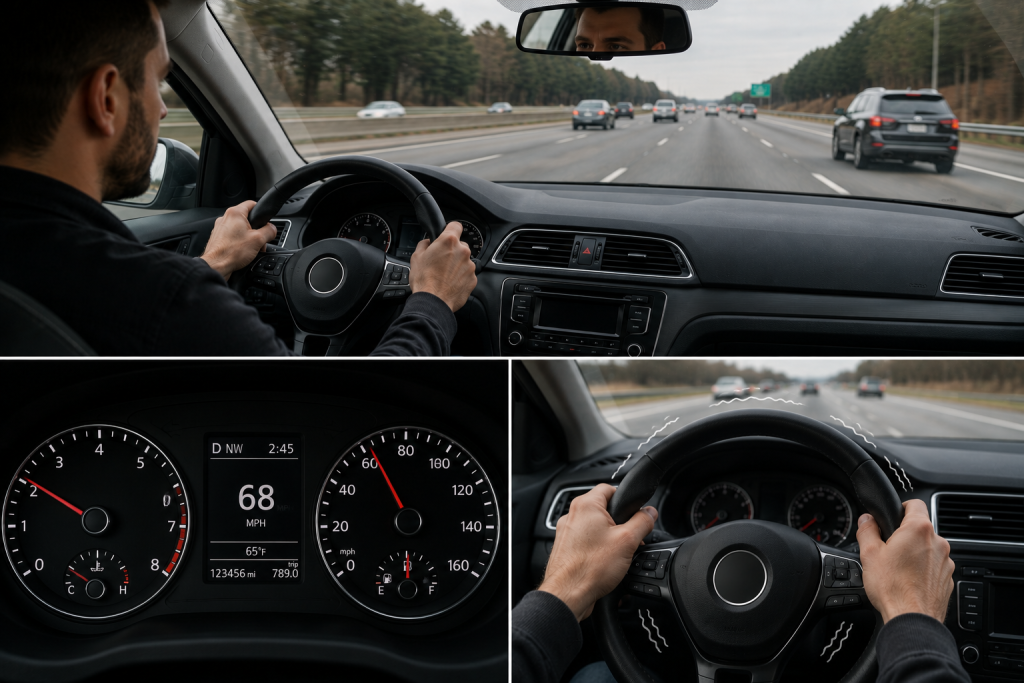
The car should also maintain predictable straight-line stability. Constant steering correction on a relatively flat road may justify a closer look at tires, alignment, steering, or suspension components.
Do not let a dealer restrict the drive to a parking lot if you are seriously considering the vehicle. A proper test should reproduce the type of driving you expect to do after purchase. Higher-speed operation can reveal vibration, wind noise, stability concerns, and mechanical sounds that remain hidden during a five-minute neighborhood drive.
9. Check Driving Position, Visibility, and Cabin Comfort
Mechanical condition deserves serious attention, but a test drive should also determine whether the used car actually fits the driver. Consumer Reports recommends judging comfort carefully because seat shape, lumbar support, driving position, and climate-control performance can become much more noticeable during regular ownership.
Start by adjusting the driver’s seat and steering wheel. You should be able to reach the pedals and controls comfortably while maintaining a suitable driving position. Check the view through the windshield, side windows, and rear glass.
Thick roof pillars or a small rear window may create blind areas, so use the mirrors and observe visibility while changing direction.
Do not evaluate the seat for only two minutes. Continue paying attention as the drive progresses. Pressure points, poor lower-back support, or an awkward pedal position may become more apparent with time. Consumer Reports notes that features such as lumbar adjustment can improve long-term comfort.
Climate control also deserves a real test. Run the air conditioning and confirm that the cabin begins responding. Try the heater, fan speeds, and different vent settings when practical. If the car has rear climate vents or separate passenger controls, test them as well.
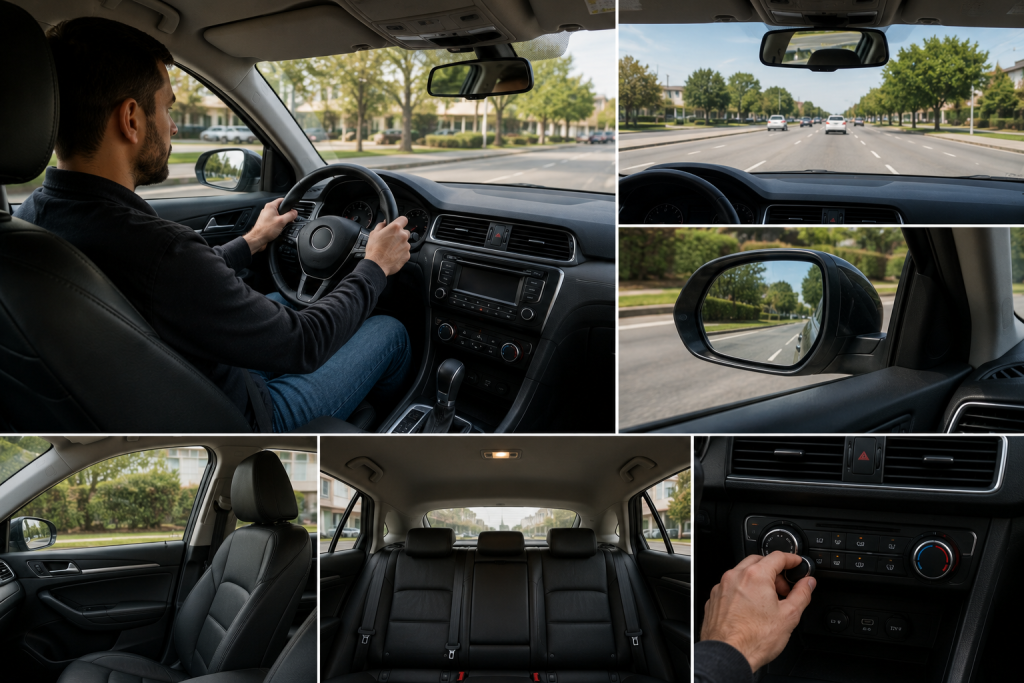
Finally, park the vehicle yourself. Reverse into a space and check the backup camera, mirrors, and parking sensors if fitted. A car can be mechanically sound yet frustrating to use every day.
Comfort is subjective, but the test should still be systematic. Buying a vehicle that causes discomfort or creates poor visibility for your driving position can turn a seemingly good deal into a car you quickly regret.
10. Recheck the Car After the Test Drive
The inspection should not end when you switch off the engine. A second walk around the vehicle immediately after the drive may reveal symptoms that were not obvious when the car was cold. Park on a reasonably clean, level surface and give yourself several minutes to examine the vehicle without rushing.
Begin by listening after shutdown. Fans may continue operating on some vehicles, and normal heat-related sounds can occur, so do not automatically label every noise a defect. Instead, look for warning messages that appeared during the drive and record any repeated mechanical symptoms.
Check beneath the vehicle for fresh fluid. Consumer Reports recommends examining a used car for leaks and inspecting fluids as part of the buying process. Water from air-conditioning condensation can be normal, which is why the appearance and location of any liquid matter. Do not touch an unidentified fluid or open a hot cooling system.
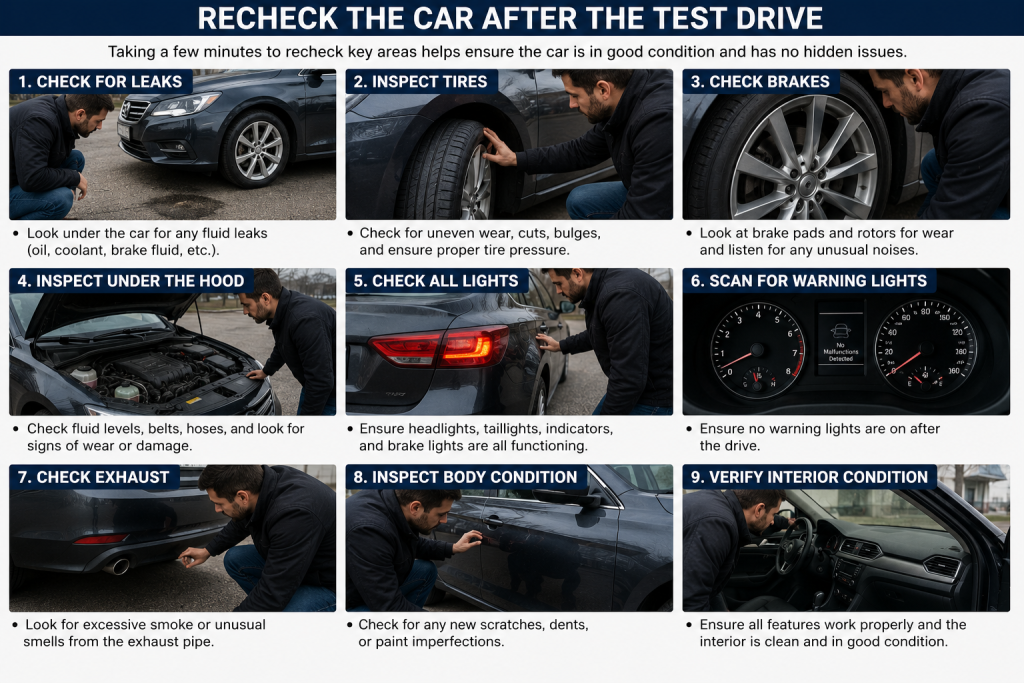
Use this moment to check for unusual odors. A persistent burnt smell after the test drive deserves investigation. So does an odor that appeared during acceleration or braking. Describe exactly when the smell occurred to the mechanic rather than trying to identify the failed component yourself.
Before leaving, record the vehicle’s 17-character VIN. NHTSA says buyers can use the VIN to check for open safety recalls. An unrepaired recall will appear in the agency’s VIN lookup data. NHTSA also states that recall repairs are available free through the manufacturer’s dealership network.
The final step is an independent pre-purchase inspection. The Federal Trade Commission specifically warns that a vehicle history report usually does not identify mechanical problems and is not a substitute for an inspection by an independent mechanic.
A successful test drive should therefore be treated as the beginning of verification, not final proof that the used car is trouble-free.
Also Read: Ford Recalls More Than 110,000 Vehicles, Including the Mustang and Mustang Mach-E
