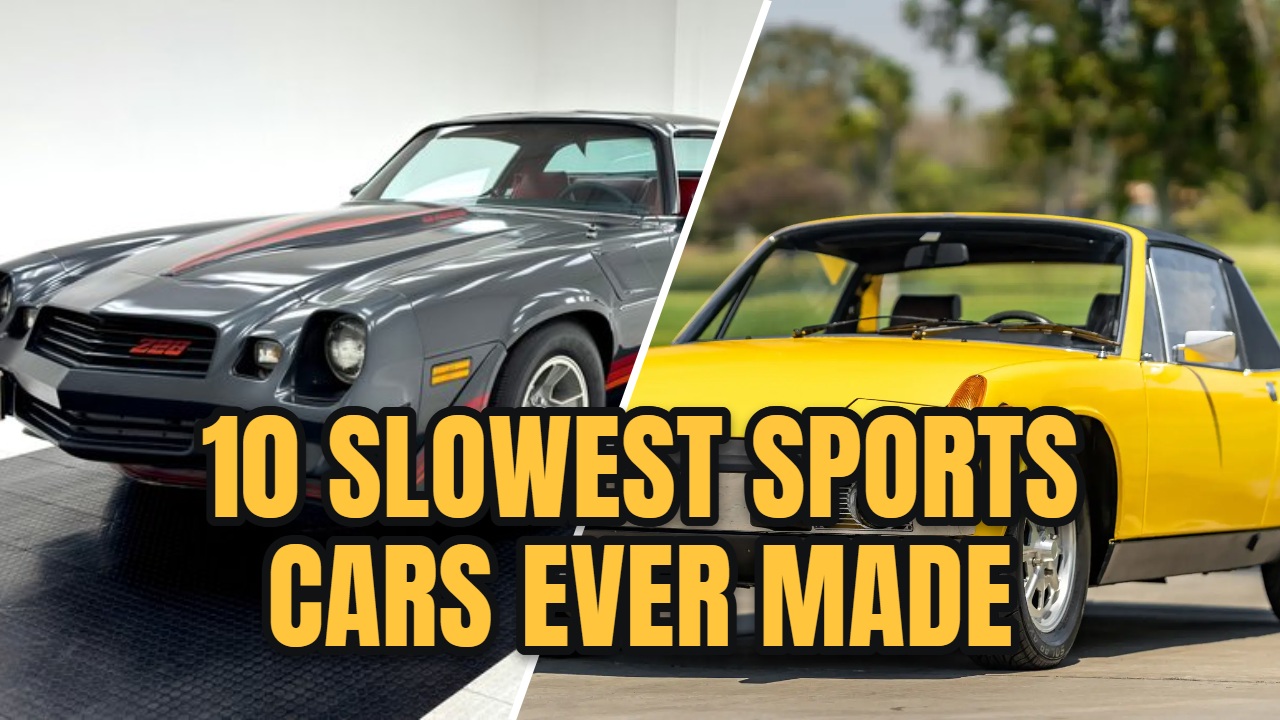
Sports cars are supposed to feel fast. Low seating positions, lightweight bodies, rear-wheel drive, and dramatic styling create an expectation of rapid acceleration the moment a driver turns the key. Yet automotive history contains plenty of machines that looked ready for a racetrack but struggled to produce the straight-line performance their appearance suggested.
Calling a sports car slow requires context. A 0-to-60-mph time of 10 seconds may seem painfully relaxed today, but the same figure could have been acceptable during an earlier decade.
Emissions regulations, limited engine technology, low horsepower, restrictive equipment, and unexpected weight gains all influenced performance. For this list, period test results and documented production specifications are more important than judging old cars by modern supercar standards.
Some of these vehicles remain genuinely enjoyable. Sharp steering, low curb weight, open-air driving, and distinctive styling can create excitement without huge horsepower. Slow acceleration does not automatically make a bad sports car. In fact, several models here became beloved classics.
The numbers, however, are difficult to ignore. These ten production sports cars recorded unusually modest acceleration or top-speed figures, proving that a sporty badge, two seats, and an aggressive body have never guaranteed high straight-line speed.
Also Read: 8 Best V8 Engines With the Fewest Reported Problems
1. 1980 Triumph Spitfire 1500
0 to 60 mph: 15.1 seconds
Top Speed: 87 mph
Few cars demonstrate the difference between looking quick and actually accelerating quickly better than the final U.S.-market Triumph Spitfire 1500.
Its long hood, tiny two-seat cockpit, folding roof, and extremely low stance delivered nearly every visual ingredient expected from a classic British sports car. A period Car and Driver test told a much less dramatic story once the stopwatch started.
The magazine recorded 15.1 seconds from 0 to 60 mph. The quarter-mile required 19.8 seconds, with the Triumph crossing the line at only 67 mph.
Top speed was measured at 87 mph. Those figures make the 1980 Spitfire exceptionally slow by modern standards and modest even when compared with several ordinary cars from its own period.
The U.S.-specification engine explains much of the problem. Car and Driver’s tested Spitfire produced only 53 horsepower from its 1.5-liter inline-four. Federal emissions requirements and U.S.-market tuning had taken a toll on output. The car weighed just 1,885 pounds in the magazine’s test, but there was only so much that low mass could do with 53 horsepower.
Yet reducing the Spitfire to an acceleration number misses why people still remember it fondly. The driver sat close to the road, the manual transmission demanded involvement, and the convertible body turned relatively modest speeds into a more physical experience.
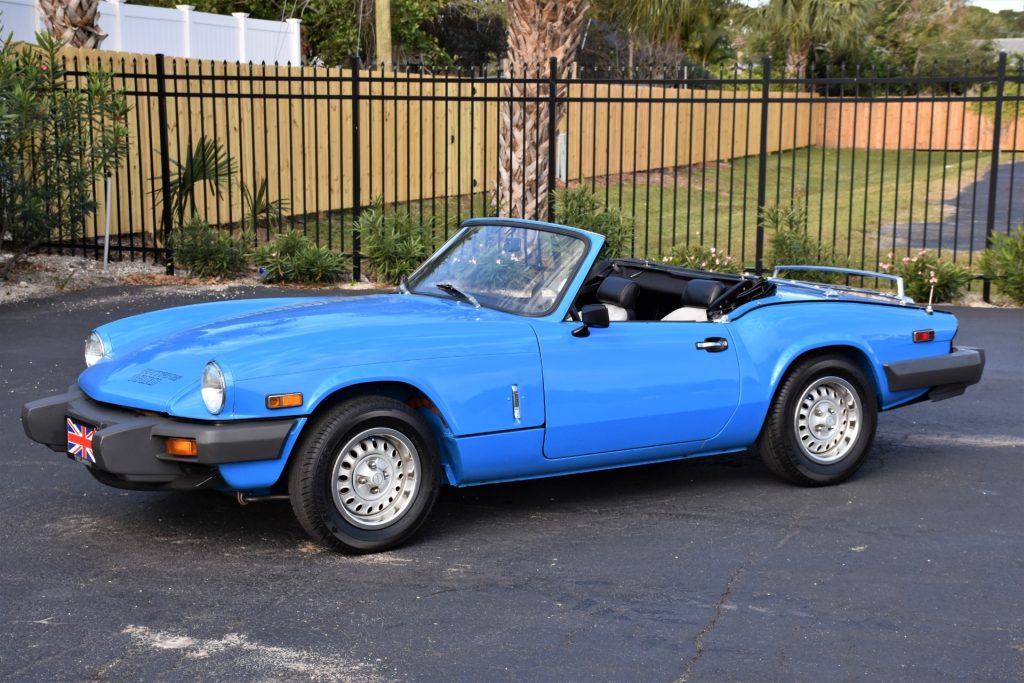
The final Spitfire was slow in a measurable sense. It’s 15.1-second sprint and 87-mph maximum provide hard evidence. Triumph simply proved that a sports car could deliver personality even when the speedometer needle climbed at a remarkably patient rate.
- Engine: 1.5-liter inline-four
- Torque: Approximately 69 lb-ft
- Horsepower: 53 hp
- Length/Width: Approximately 145.5 inches / 58.0 inches
2. 1975 Bricklin SV-1
0 to 60 mph: Approximately 9.0 seconds
Top Speed: Approximately 118 mph
Gull-wing doors usually suggest exotic speed. The Bricklin SV-1 added hidden headlights, a dramatic wedge-shaped body, two seats, and a V8 engine.
Although Malcolm Bricklin’s Canadian-built safety sports car looked capable of competing with the high-performance icons of the 1970s, its substantial weight and modest powertrain resulted in performance that fell well short of its aggressive appearance.
The 1975 SV-1 used Ford’s 351-cubic-inch Windsor V8, but the engine was fitted with a two-barrel carburetor and rated at approximately 175 horsepower.
Torque was a healthier 286 lb-ft, yet the only transmission offered for the 1975 Ford-powered car was a three-speed FMX automatic. Bricklin could not offer a manual because Ford lacked an EPA-certified manual-transmission combination for the 351W in this application.
Weight became the SV-1’s other enemy. The safety-focused construction incorporated a steel perimeter frame and an integral roll structure, while the composite body and heavy hydraulically operated gull-wing doors added complexity. Period specifications put curb weight in the neighborhood of 3,470 pounds.
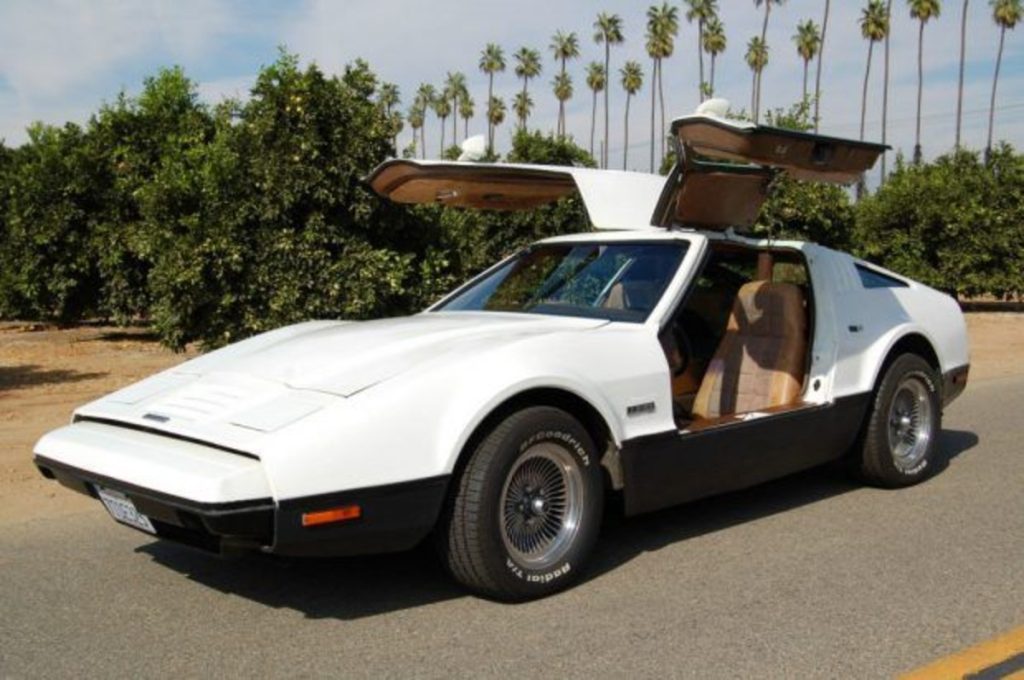
Performance estimates place the 1975 model at roughly 9 seconds from 0 to 60 mph. Depending on specification and testing methodology, maximum-speed figures are generally around 118 mph. Those numbers are not disastrous for 1975, but they feel strangely modest beside styling that still resembles a low-volume exotic.
The SV-1 was designed around safety as much as speed. Its name literally meant Safety Vehicle One, and the car featured energy-absorbing bumpers and structural protection concepts.
That mission helps explain the performance compromise. Bricklin built one of the decade’s most visually aggressive sports cars, then gave it acceleration that could not fully support the promise made by its spectacular gull-wing silhouette.
- Engine: 5.8-liter 351 Windsor V8
- Torque: 286 lb-ft
- Horsepower: 175 hp
- Length/Width: 178.6 inches / 67.6 inches
3. 1981 DeLorean
0 to 60 mph: 10.5 seconds
Top Speed: 109 mph
Stainless-steel body panels, gull-wing doors, a rear-mounted engine, and Giorgetto Giugiaro styling created enormous expectations for the DeLorean. Few cars of the early 1980s looked more exotic. Unfortunately, the U.S.-market production car’s straight-line performance was far less dramatic than its appearance suggested.
A period Road & Track test recorded 10.5 seconds from 0 to 60 mph and a tested top speed of 109 mph. Car and Driver also found the DeLorean lacking against contemporary sports and GT machinery, recording a 9.5-second run to 60 mph in its 1982 comparison test. The variation between tests does not change the conclusion. This was a slow car for its price and image.
American-market output was limited to 130 horsepower and 153 lb-ft of torque from the 2.85-liter PRV V6. A five-speed manual was available, but buyers could also select a three-speed automatic. The DeLorean weighed roughly 2,700 pounds, leaving the naturally aspirated six-cylinder with a difficult power-to-weight equation.
The disappointment becomes clearer when period rivals enter the picture. In Car and Driver’s comparison, a Datsun 280ZX Turbo reached 60 mph in 7.1 seconds. The DeLorean needed 2.4 seconds longer despite looking like something designed to chase Ferraris.
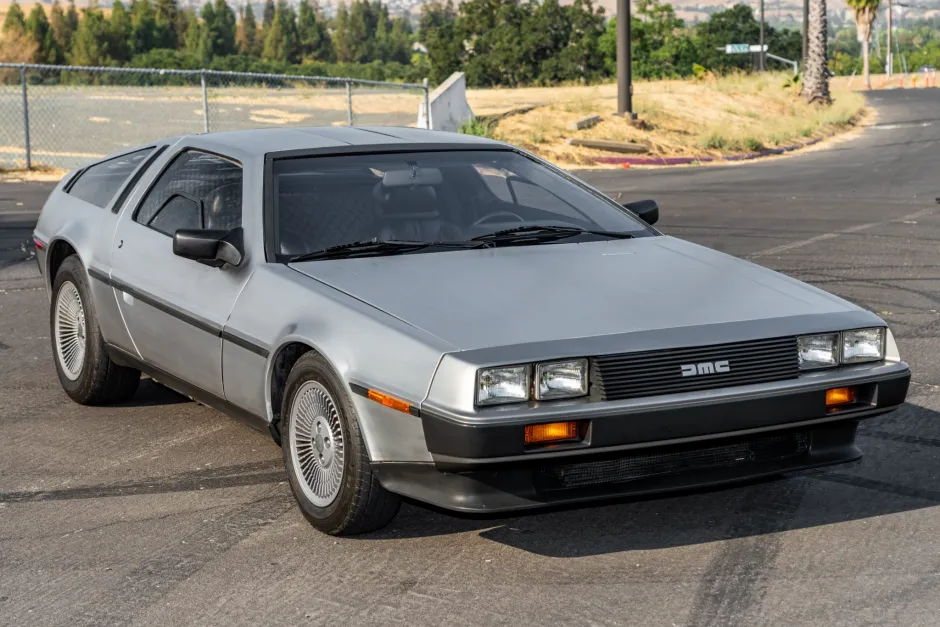
Yet speed never became the primary reason people remembered it. Its stainless-steel skin and upward-opening doors created an identity no acceleration figure could erase. The DeLorean remains an automotive icon, but period testing confirms that the production version was much better at attracting attention than at rapidly reaching 60 mph.
- Engine: 2.85-liter naturally aspirated V6
- Torque: 153 lb-ft
- Horsepower: 130 hp
- Length/Width: 168.0 inches / 78.3 inches
4. 1976 Chevrolet Corvette Stingray L48
0 to 60 mph: Approximately 9.7 seconds
Top Speed: Approximately 116 mph
There was a time when the Corvette represented some of America’s most intimidating straight-line performance.
By the middle of the 1970s, however, the combination of emissions requirements, changing engine calibrations, and lower net horsepower ratings had transformed the country’s sports-car icon. The 1976 base L48 Corvette provides one of the clearest examples.
Its 350-cubic-inch, or 5.7-liter, V8 produced 180 horsepower in U.S. specification. That sounds particularly modest when compared with the output of modern Corvettes, but even within the C3 generation, it represented a dramatic retreat from the muscle-era numbers associated with earlier versions.
Performance estimates for the base 1976 L48 place the 0-to-60-mph run at approximately 9.7 seconds, with a theoretical top speed around 116 mph in a representative specification.
Another calculation for a four-speed 180-horsepower version estimates 8.5 seconds to 60 mph, illustrating how transmission and configuration could alter the result. The important point is that the base Corvette had moved into acceleration territory that no longer matched its aggressive fiberglass body.
The L48 generated approximately 270 lb-ft of torque, giving it more low-speed muscle than the tiny European roadsters on this list. Weight worked against the V8. Depending on equipment, a 1976 Corvette could weigh well above 3,500 pounds.
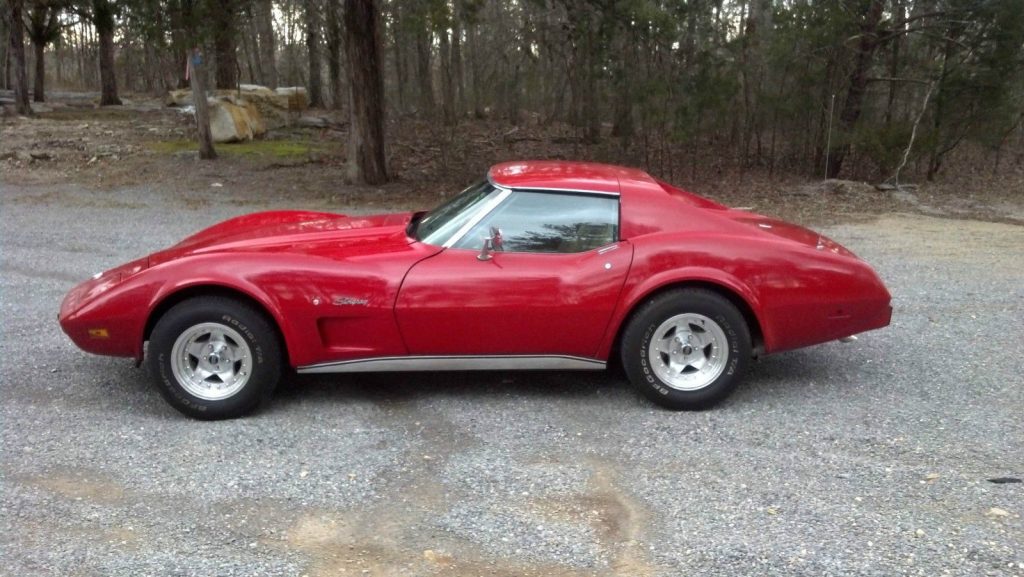
This was still unmistakably a Corvette from the driver’s seat. The long hood, two-seat cabin, low roof, and rear-wheel-drive layout preserved the sports-car character. Straight-line numbers simply revealed the difficult era in which it was built.
The 1976 L48 Stingray is fascinating because the shape promised classic American V8 aggression while the stopwatch documented a very different performance reality.
- Engine: 5.7-liter L48 V8
- Torque: 270 lb-ft
- Horsepower: 180 hp
- Length/Width: 185.2 inches / 69.0 inches
5. 1980 MGB Roadster
0 to 60 mph: Approximately 18 seconds
Top Speed: Approximately 90 mph
By 1980, the MGB had become a sports car trapped between its celebrated past and increasingly restrictive American regulations.
The basic roadster had entered production in the early 1960s, when its 1.8-liter engine and lightweight construction delivered respectable performance. Nearly two decades later, the U.S.-specification MGB looked familiar, but its ability to build speed had changed dramatically.
Late American cars were hit particularly hard by emissions equipment and engine calibration. The 1,798-cc B-Series inline-four was reduced to roughly 62.5 horsepower in the final U.S. specification.
That figure was a major retreat from the higher output associated with early MGBs. The American model also carried large rubber bumpers introduced to satisfy federal impact requirements, while its ride height had been raised during the 1970s.
Acceleration suffered badly. Period specifications and historical performance data place late U.S.-market MGBs at roughly 18 seconds from 0 to 60 mph, depending on the exact test and configuration. Maximum speed was around 90 mph.
The contrast with earlier MGBs is important because the original design had been capable of reaching approximately 100 mph. Historical accounts also document the major decline in U.S.-market engine output by the end of production.
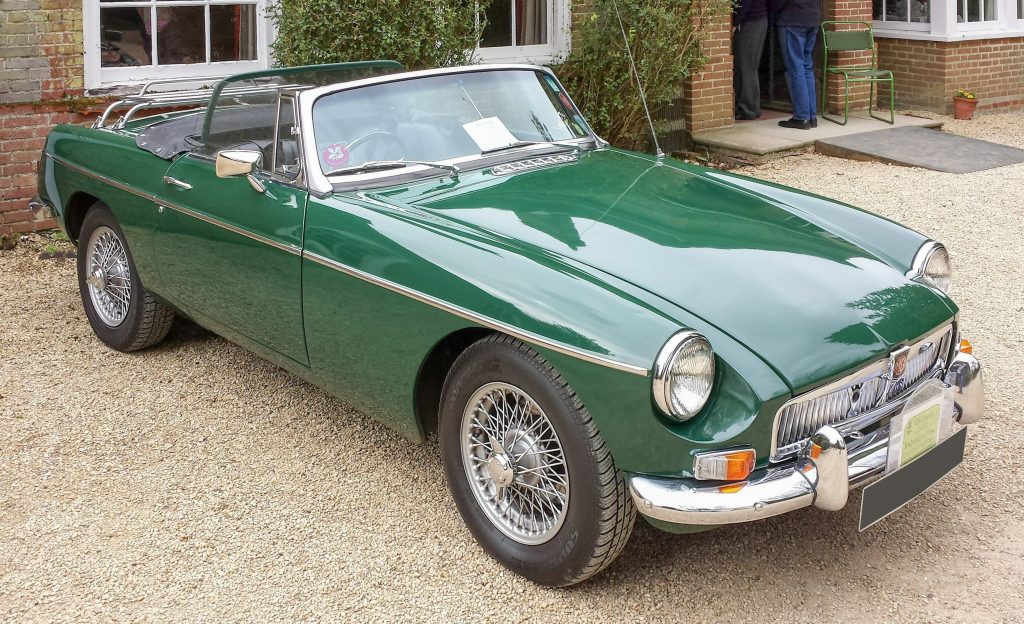
None of this erased the car’s traditional appeal. The driver still received a four-speed manual transmission, rear-wheel drive, a low seating position, and an open roof. On a winding road, the MGB could feel far more energetic than its acceleration time suggested.
The stopwatch remains unforgiving. A sports car requiring around 18 seconds to reach 60 mph belongs among history’s slowest, even if the MGB’s character has helped it remain a beloved classic.
- Engine: 1.8-liter inline-four
- Torque: Approximately 88 lb-ft
- Horsepower: Approximately 62.5 hp
- Length/Width: 158.3 inches / 61.8 inches
6. 1974 Porsche 914 1.8
0 to 60 mph: Approximately 12 seconds
Top Speed: Approximately 100 mph
The Porsche name creates a difficult performance expectation. Mention a mid-engine Porsche today, and thoughts immediately turn toward rapid acceleration, precise chassis balance, and high speed. The 1974 U.S.-market 914 1.8 delivered the mid-engine layout and handling philosophy, but straight-line urgency was in very short supply.
North American specification data lists the 1.8-liter flat-four at just 72.5 horsepower and 94 lb-ft of torque. A five-speed manual transmission sent that modest output to the rear wheels. The car’s 2,094-pound curb weight helped, yet the engine still had fewer than 75 horsepower available to overcome acceleration and aerodynamic resistance.
A 0-to-60-mph time of around 12 seconds illustrates the result. Maximum speed was roughly 100 mph for the low-output 1.8-liter version, depending on test conditions and specifications.
These were hardly intimidating figures for a vehicle carrying Porsche branding, especially when the company’s 911 had already established a much more serious performance reputation.
But the 914 was never simply a smaller 911. Its engine sat ahead of the rear axle, creating a mid-engine configuration that gave the car a distinctive balance. The removable Targa roof panel added open-air character, while the low body stood only about 48.4 inches tall. Factory-related specification data lists the car at 156.9 inches long and 65 inches wide.
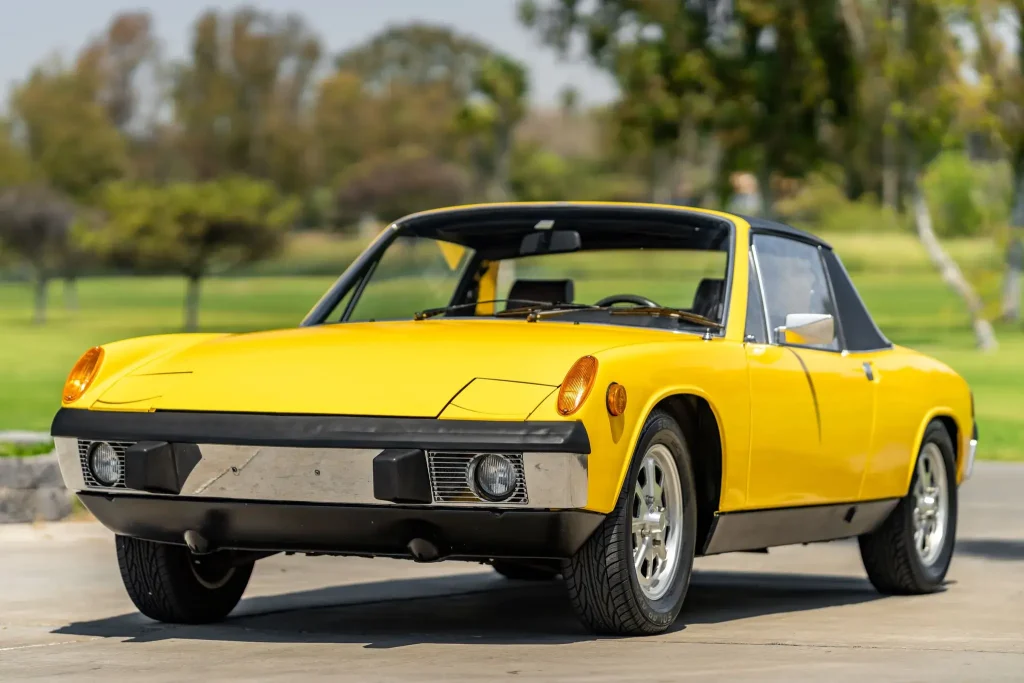
That explains the 914’s enduring appeal. Drivers did not need enormous speed to experience the compact proportions and chassis layout. Still, this particular 1.8-liter model makes the list because the performance numbers were undeniably impressive.
A 72.5-horsepower mid-engine Porsche sounds almost impossible by current standards. In 1974, America, it was a production reality.
- Engine: 1.8-liter air-cooled flat-four
- Torque: 94 lb-ft
- Horsepower: 72.5 hp
- Length/Width: 156.9 inches / 65.0 inches
7. 1980 Fiat X1/9
0 to 60 mph: Approximately 13 seconds
Top Speed: Approximately 105 mph
The Fiat X1/9 possessed a technical layout that still sounds serious today. Its engine sat behind the seats but ahead of the rear axle, power went to the rear wheels, and the wedge-shaped body was designed by Bertone.
Add a removable roof panel and pop-up headlights, and the small Fiat had the visual and mechanical ingredients of a miniature exotic. American buyers, however, received very little horsepower. By 1980, the U.S.-market X1/9 used a fuel-injected 1.5-liter inline-four producing approximately 75 horsepower.
Torque stood near 75 lb-ft. A five-speed manual transmission helped the driver make use of the limited output, but no clever gearing could turn 75 horsepower into explosive straight-line performance.
Contemporary and historical performance figures place the 0-to-60-mph sprint at roughly 13 seconds, with maximum speed near 105 mph. Some tests and model-year configurations vary slightly because the X1/9’s output changed during its long production life. The basic picture remains consistent: this was a sports car that depended on preserving momentum rather than generating huge acceleration.
Its modest speed actually highlights the intelligence of the chassis. The X1/9 was compact, measuring roughly 156 inches long and only about 61.8 inches wide. With a curb weight near 2,000 pounds, the Fiat could use its mid-engine balance and low center of gravity to create entertainment at road speeds.
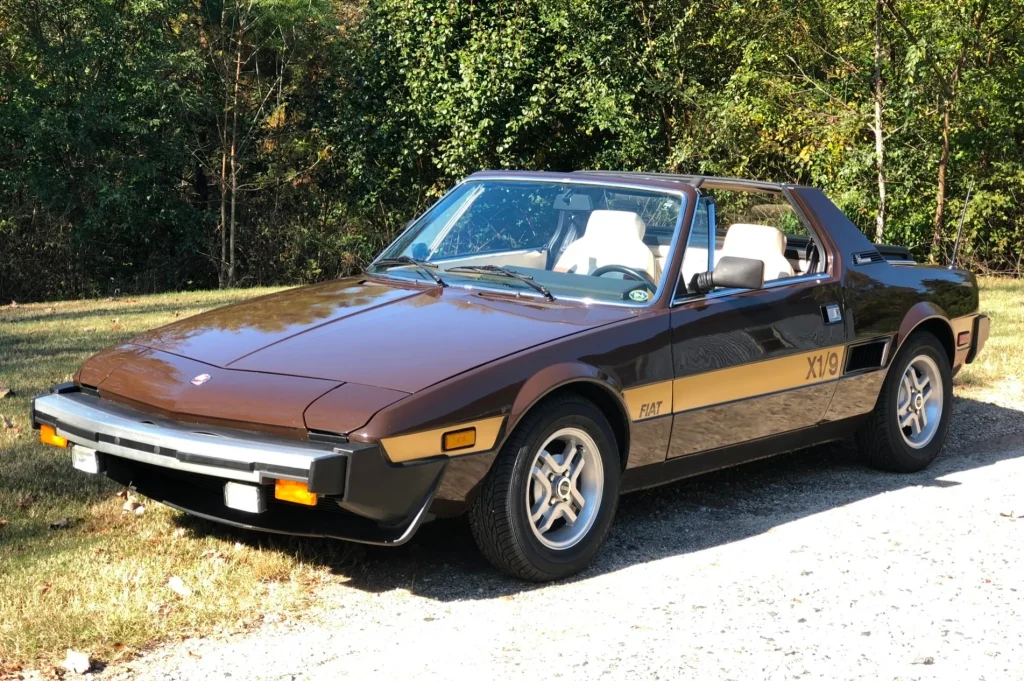
That character is why the X1/9 cannot be dismissed as a failed sports car. The problem appears only when straight-line figures become the deciding measurement.
A shape resembling a scaled-down Italian supercar needed around 13 seconds to reach 60 mph. Few cars have ever created a greater visual contrast between apparent speed and measured acceleration.
- Engine: 1.5-liter inline-four
- Torque: Approximately 75 lb-ft
- Horsepower: Approximately 75 hp
- Length/Width: Approximately 156.0 inches / 61.8 inches
8. 1981 Chevrolet Camaro Sport Coupe
0 to 60 mph: Approximately 20 seconds with 3.8-Liter V6
Top Speed: Approximately 95 mph
Not every painfully slow sports-oriented car was a tiny European roadster. In 1981, American buyers could order a Chevrolet Camaro Sport Coupe with a 3.8-liter V6 producing just 110 horsepower. The combination created one of the most startling gaps between muscle-car appearance and actual acceleration.
The second-generation Camaro still had visual presence. A long hood, low roofline, wide stance, and rear-wheel-drive proportions connected it to Chevrolet’s performance heritage.
Yet the base V6 had to move a car weighing roughly 3,200 pounds, depending on equipment. With around 190 lb-ft of torque and only 110 horsepower, the power-to-weight ratio was deeply unfavorable.
Historical performance estimates for this low-output configuration put the 0-to-60-mph run close to 20 seconds in representative automatic-transmission form. Maximum speed was around the mid-90-mph range. Exact figures vary by axle ratio, transmission, and test methodology, but the base six-cylinder Camaro was unquestionably slow.
The timing explains much of the problem. Detroit was still adjusting to emissions rules, fuel-economy pressure, and changing powertrain technology. Chevrolet offered stronger V8 engines, including a 350-cubic-inch unit in the Z28, but the ordinary Sport Coupe could be specified with an engine whose performance barely matched the aggressive body.
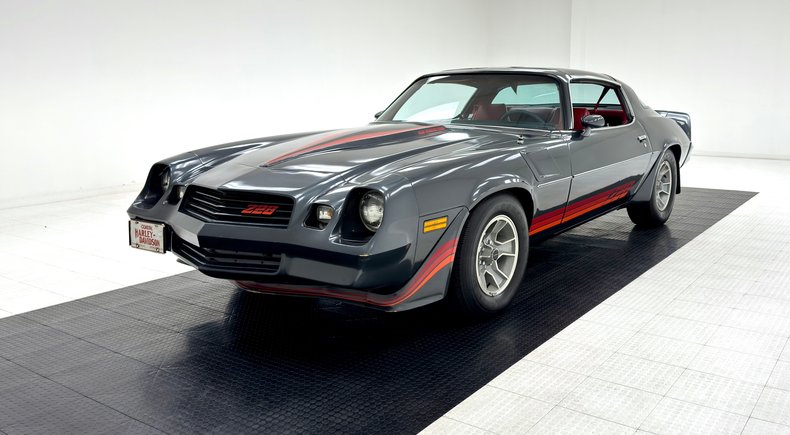
That is what makes this Camaro such a fascinating inclusion. Unlike the Triumph Spitfire or Fiat X1/9, it was not exceptionally light or designed around low-powered momentum driving. It looked substantial, muscular, and distinctly American.
Then the driver pressed the accelerator. A 0-to-60-mph time approaching 20 seconds turned the Camaro’s dramatic profile into one of the strangest performance contradictions of its era.
- Engine: 3.8-liter V6
- Torque: Approximately 190 lb-ft
- Horsepower: 110 hp
- Length/Width: Approximately 197.6 inches / 74.5 inches
9. 1980 Triumph TR7 Convertible
0 to 60 mph: Approximately 11.8 seconds
Top Speed: Approximately 110 mph
Triumph advertised the TR7’s dramatic wedge profile as “the shape of things to come.” Looking at the sharply sloping hood, hidden headlights, and low two-seat body, buyers could reasonably expect the British sports car to deliver performance matching its futuristic shape. The North American engine specification made that expectation difficult to satisfy.
Under the hood sat a 2.0-liter inline-four. While versions in other markets were rated at 105 horsepower, the emissions-controlled North American specification produced approximately 92 horsepower.
Historical acceleration data places the 1980 TR7 Convertible’s 0-to-60-mph time at about 11.8 seconds, with the quarter-mile taking roughly 18.3 seconds. The factory-declared top speed for the TR7 was approximately 110 mph. Those numbers were especially awkward because Triumph’s earlier TR sports cars had established a reputation for straightforward British performance.
The TR7 was supposed to represent a new generation. Instead, its roughly 2,238-pound base curb weight had to be moved by an engine producing less than 100 horsepower in U.S. trim.
Speed, however, was not the only part of its personality. Rear-wheel drive, a five-speed manual transmission, and compact dimensions preserved traditional sports-car ingredients. The convertible introduced for the later production years also restored the open-air experience many Triumph customers expected.
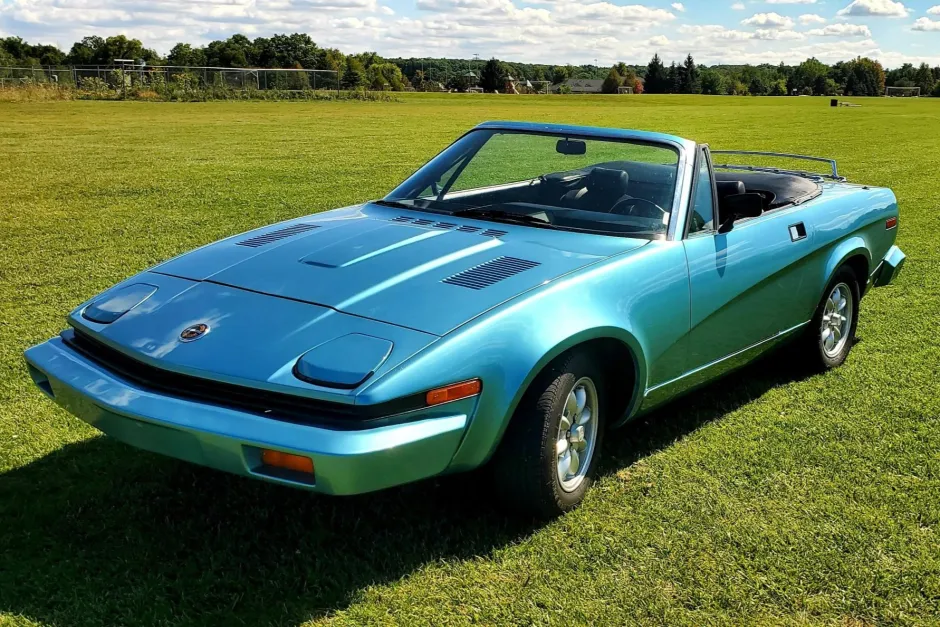
The contradiction is what earns the TR7 its position. Few slow sports cars looked so determined to slice through the air. Its wedge-shaped body visually promised the future, but an 11.8-second run to 60 mph showed how difficult the late-1970s performance era could be for a small sports car.
- Engine: 2.0-liter inline-four
- Torque: Approximately 119 lb-ft
- Horsepower: Approximately 92 hp in North American specification
- Length/Width: 160.0 inches / 66.0 inches
10. 1986 Alfa Romeo Spider Veloce
0 to 60 mph: Approximately 10 seconds
Top Speed: Approximately 116 mph
The Alfa Romeo Spider Veloce closes this list with a lesson in how a sports car can remain desirable without dominating a stopwatch. By 1986, the Pininfarina-designed Spider’s basic lineage stretched back two decades. Its low body, two-seat cabin, rear-wheel drive, and unmistakably Italian styling still delivered visual drama, but U.S.-specification performance had become relatively modest.
A 2.0-liter twin-cam inline-four powered the 1986 Spider Veloce. North American specification figures put output at approximately 115 horsepower. Historical performance estimates place the 0-to-60-mph sprint at around 10 seconds.
The car’s maximum speed was roughly 116 mph, depending on testing conditions and specifications. Published dimensional data lists the 1986 Veloce at 168.8 inches long and 64.1 inches wide.
The numbers sound particularly relaxed beside modern sports cars. A current family sedan can easily beat a 10-second sprint to 60 mph, and many mainstream vehicles can approach the Alfa’s maximum speed, electronically limited. Yet judging the Spider entirely through acceleration misses the engineering character that sustained it for so long.
The five-speed manual transmission required driver participation. Four-wheel disc brakes were another meaningful part of the Spider formula, while the open cabin amplified the sensation of speed. Rather than relying on enormous power, the Alfa asked its driver to work with the engine and preserve momentum.
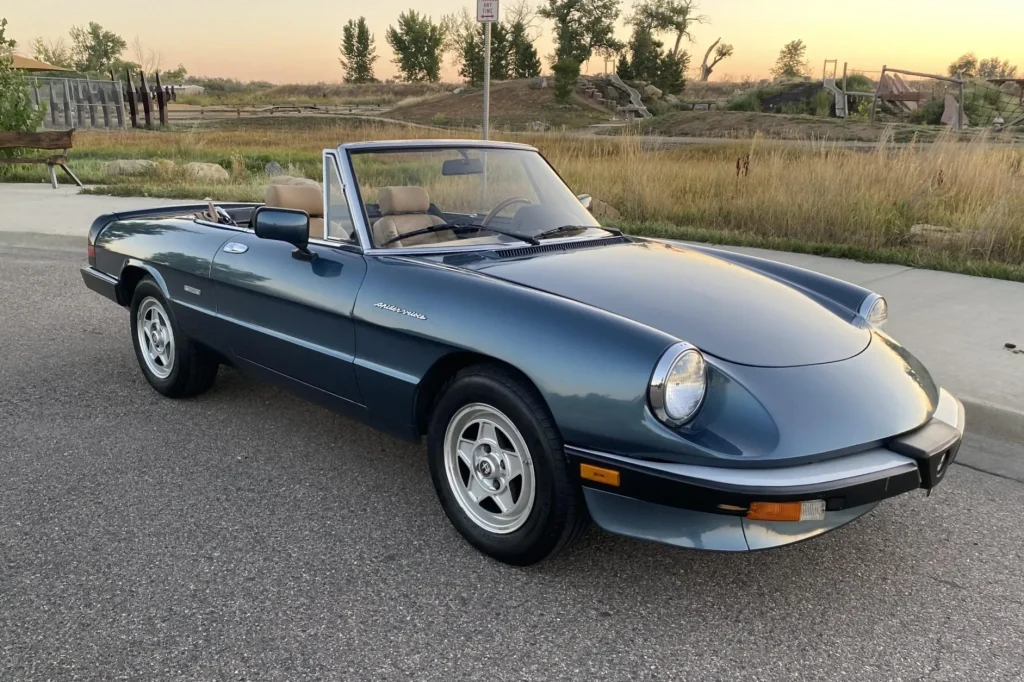
That difference explains why the Spider Veloce remained memorable. It was slow enough to qualify for this list, but its lack of acceleration never erased its sports-car identity. The Alfa demonstrated that emotional appeal and measured speed are two very different automotive qualities.
- Engine: 2.0-liter twin-cam inline-four
- Torque: Approximately 119 lb-ft
- Horsepower: Approximately 115 hp
- Length/Width: 168.8 inches / 64.1 inches
Also Read: 8 Engines Known for Burning Oil and What the Fix Costs