Buying a high-performance sports car involves far more than paying the purchase price. Insurance, premium fuel, scheduled maintenance, and specialized replacement parts all contribute to ownership costs.
One expense that frequently surprises even experienced enthusiasts is the cost of replacing tires. Unlike ordinary passenger cars, modern sports cars are engineered to extract every possible bit of grip from the road.
To achieve that goal, manufacturers fit them with ultra-high-performance summer tires featuring advanced rubber compounds, reinforced sidewalls, and exceptionally wide tread widths.
These specialized tires deliver remarkable handling, shorter braking distances, and outstanding cornering performance, but they also wear faster than conventional tires. Many performance models use staggered wheel setups, meaning the front and rear tires are different sizes.
This prevents owners from rotating the tires to extend their lifespan, often resulting in more frequent replacements. Some vehicles also require manufacturer-approved tires developed specifically for their suspension and electronic stability systems, leaving owners with limited and expensive replacement options.
Driving habits play an important role as well. Spirited acceleration, aggressive cornering, and track-day use can shorten tire life dramatically. Even drivers who rarely push their cars to the limit should expect higher replacement costs simply because of the tire sizes and performance requirements involved.
The following sports cars are among the models that demand some of the most expensive replacement tires. Their incredible performance justifies premium rubber, but maintaining that performance comes with a significant financial commitment.
Also Read: 10 Tools To Fix Scratches On Cars
1. Chevrolet Corvette ZR1
The Chevrolet Corvette ZR1 represents the highest level of factory Corvette performance, and every aspect of the car is designed to cope with extraordinary speed. One of the biggest ownership expenses comes from its tires.
Chevrolet equips the ZR1 with extremely wide Michelin Pilot Sport Cup 2 R or similarly specialized ultra-high-performance tires that are engineered to maximize grip under hard acceleration, aggressive cornering, and high-speed braking.
These tires are built with soft rubber compounds that prioritize performance rather than longevity, making replacement intervals noticeably shorter than those of ordinary sports cars.
Another factor driving replacement costs is the Corvette’s immense power output. With well over 1,000 horsepower available in the latest generation, even moderate throttle inputs place tremendous stress on the rear tires.
Owners who enjoy spirited driving or occasional track days often notice accelerated wear on the rear axle, while the staggered wheel setup prevents front-to-rear tire rotation. As a result, purchasing rear tires separately becomes a regular part of ownership for many drivers.
The ZR1 also benefits from tires developed specifically for its suspension tuning and electronic performance systems. Choosing cheaper alternatives may reduce handling precision, braking capability, and stability at high speeds.
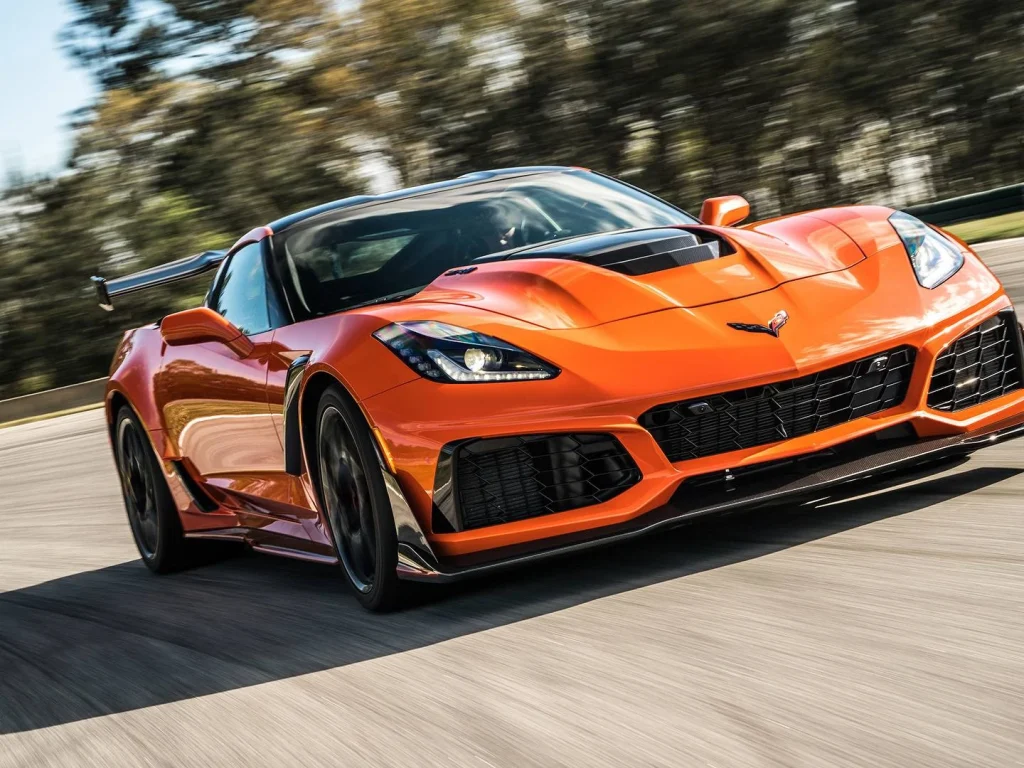
Maintaining the car as Chevrolet intended generally requires premium replacement tires from leading manufacturers, making every tire change a substantial investment. For enthusiasts seeking world-class performance, the expense is part of owning one of America’s fastest production sports cars.
Specifications
- Engine: 5.5-liter Twin-Turbo Flat-Plane Crank V8
- Torque: 828 lb-ft
- Horsepower: 1,064 hp
- Length/Width: 184.7 in / 79.7 in
2. Porsche 911 GT3 RS
The Porsche 911 GT3 RS was designed with a single goal focused on maximum performance on both road and racetrack. Every component is carefully engineered for precision, and the tires follow the same philosophy.
Porsche equips the GT3 RS with exceptionally wide, ultra-high-performance tires that are specifically developed to complement the car’s sophisticated suspension, aerodynamic package, and rear-engine weight distribution.
Replacing them is rarely inexpensive because only a limited number of manufacturers produce tires in the exact specifications required.
Another reason ownership costs rise quickly is the car’s tremendous cornering capability. The immense grip generated during spirited driving places extraordinary stress on the rubber, particularly along the outer shoulders.
Drivers who attend track events may discover that a set of tires lasts only a handful of weekends before performance begins to decline. Even conservative road driving cannot completely avoid accelerated wear because the tire compounds are intentionally soft to maximize traction.
The GT3 RS also uses a staggered wheel arrangement with different tire dimensions at each end of the vehicle. That eliminates the possibility of rotating tires to balance wear over time. Owners often replace rear tires earlier than fronts due to the substantial load transferred during acceleration.
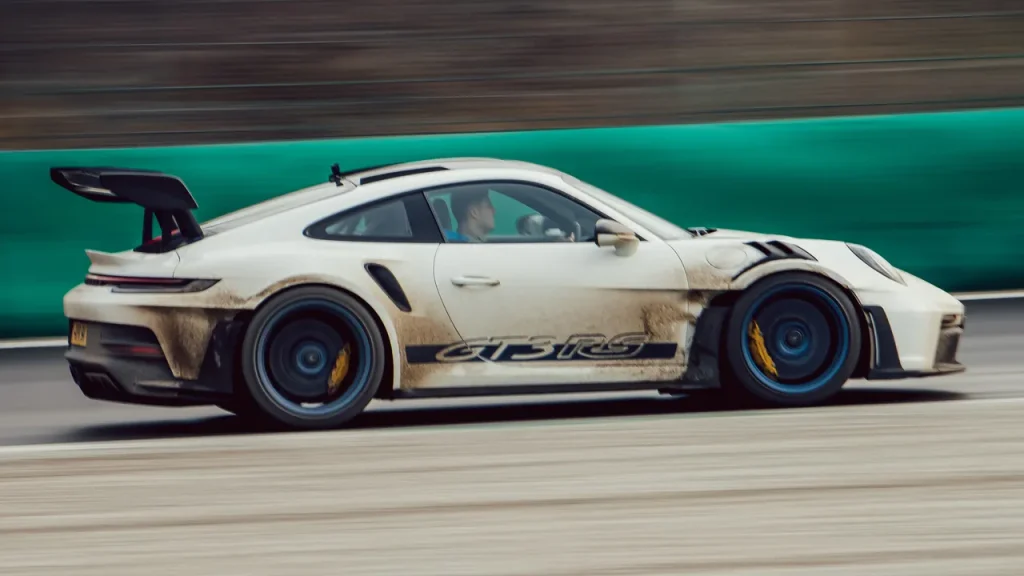
Choosing lower-cost alternatives is generally discouraged because Porsche calibrates its chassis around approved tire models.
Maintaining the factory driving characteristics usually means purchasing premium replacements, making tire ownership one of the largest recurring expenses associated with this legendary sports car.
Specifications
- Engine: 4.0-liter Naturally Aspirated Flat-6
- Torque: 343 lb-ft
- Horsepower: 518 hp
- Length/Width: 180.0 in / 79.3 in
3. Ferrari 812 Competizione
Tire replacement on the Ferrari 812 Competizione is not simply routine maintenance. It is an essential part of preserving the car’s extraordinary performance.
Powered by one of the most powerful naturally aspirated V12 engines ever installed in a road-going Ferrari, the 812 Competizione places enormous demands on its tires every time the accelerator is pressed.
Massive rear tires are needed to transmit the engine’s power efficiently, and they are manufactured using advanced compounds that deliver exceptional grip while sacrificing long-term durability.
Ferrari engineers worked closely with tire manufacturers to create rubber that complements the car’s chassis, steering calibration, and sophisticated electronic differential.
These specialized tires are considerably more expensive than conventional performance tires because they are produced in relatively small volumes and must meet Ferrari’s strict engineering standards. Owners seeking to preserve the vehicle’s handling characteristics generally avoid less expensive alternatives.
The 812 Competizione is built to encourage enthusiastic driving, with razor-sharp responses and exceptional balance. As a result, frequent hard acceleration, spirited mountain-road driving, or occasional track use can significantly reduce tire life, especially on the rear axle.
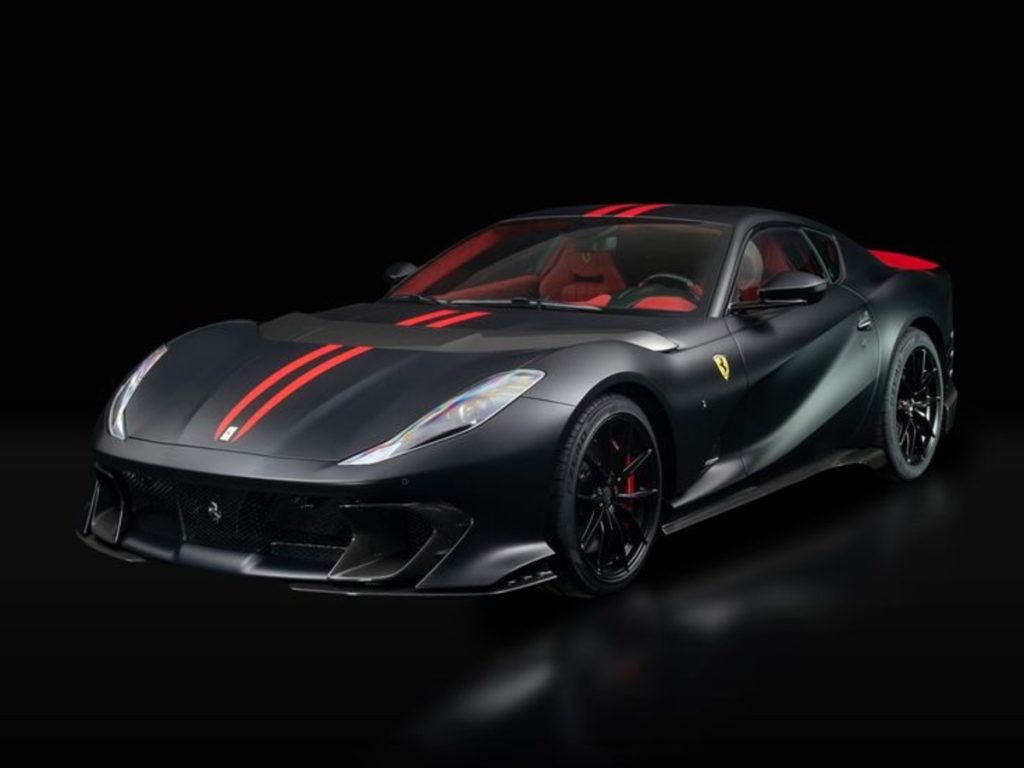
Since the car features a staggered tire setup, rotating the tires to equalize wear is not possible. This often results in replacing rear tires well before the fronts.
While the replacement cost may appear substantial, it reflects the engineering required to keep one of Ferrari’s most focused front-engine sports cars performing at its highest level.
Specifications
- Engine: 6.5-liter Naturally Aspirated V12
- Torque: 510 lb-ft
- Horsepower: 819 hp
- Length/Width: 185.1 in / 77.6 in
4. Lamborghini Huracán STO
The Lamborghini Huracán STO was inspired directly by the brand’s racing program, and its tire requirements reflect that motorsport heritage. Every aspect of the car has been developed to maximize grip, braking performance, and cornering precision.
As a result, replacing its tires is among the most expensive maintenance tasks owners regularly face. The factory-fitted Bridgestone Potenza Race or Bridgestone Potenza Sport tires are specially engineered for the STO’s lightweight chassis and aggressive aerodynamic package, making them premium products with premium prices.
The STO is engineered with a clear focus on lap times and steering response rather than a balance of comfort and longevity. Its high-grip tire compounds deliver exceptional traction, though they tend to wear more quickly, particularly under spirited driving conditions.
Rapid acceleration, repeated hard braking, and high cornering loads place continuous stress on the tread, causing noticeable wear even during relatively short periods of spirited driving.
The car’s staggered wheel configuration, combined with rear-wheel drive, means the rear tires experience greater loads during acceleration and often require replacement first.
Owners who attend track events frequently may replace multiple sets within a single driving season. Lamborghini also recommends using approved tire models to ensure compatibility with the vehicle’s advanced stability systems and suspension tuning.
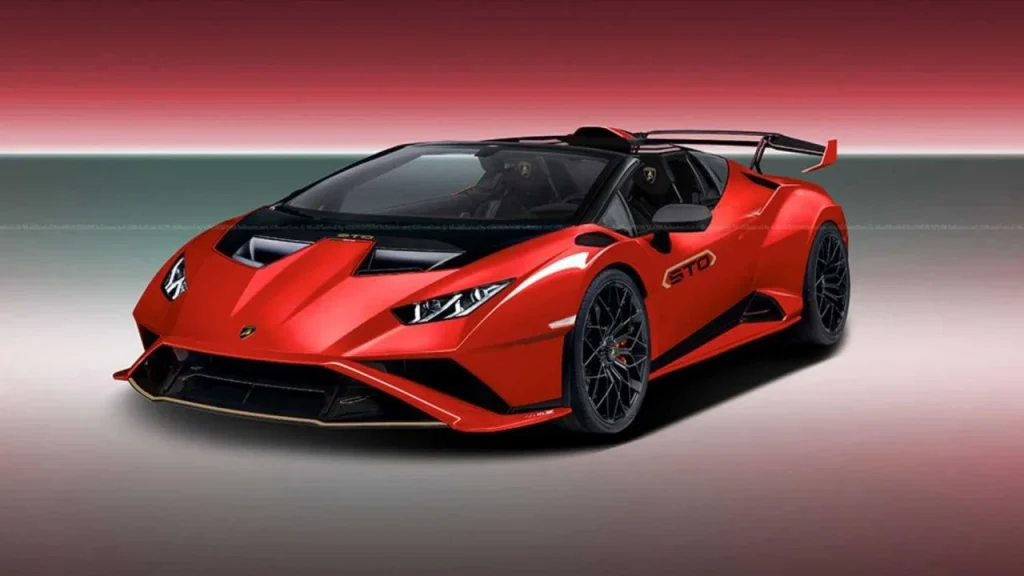
Although replacement costs can be substantial, those tires are a critical reason the Huracán STO delivers the sharp handling, confidence, and precision that define one of the most exhilarating road-legal supercars available.
Specifications
- Engine: 5.2-liter Naturally Aspirated V10
- Torque: 417 lb-ft
- Horsepower: 631 hp
- Length/Width: 179.8 in / 76.1 in
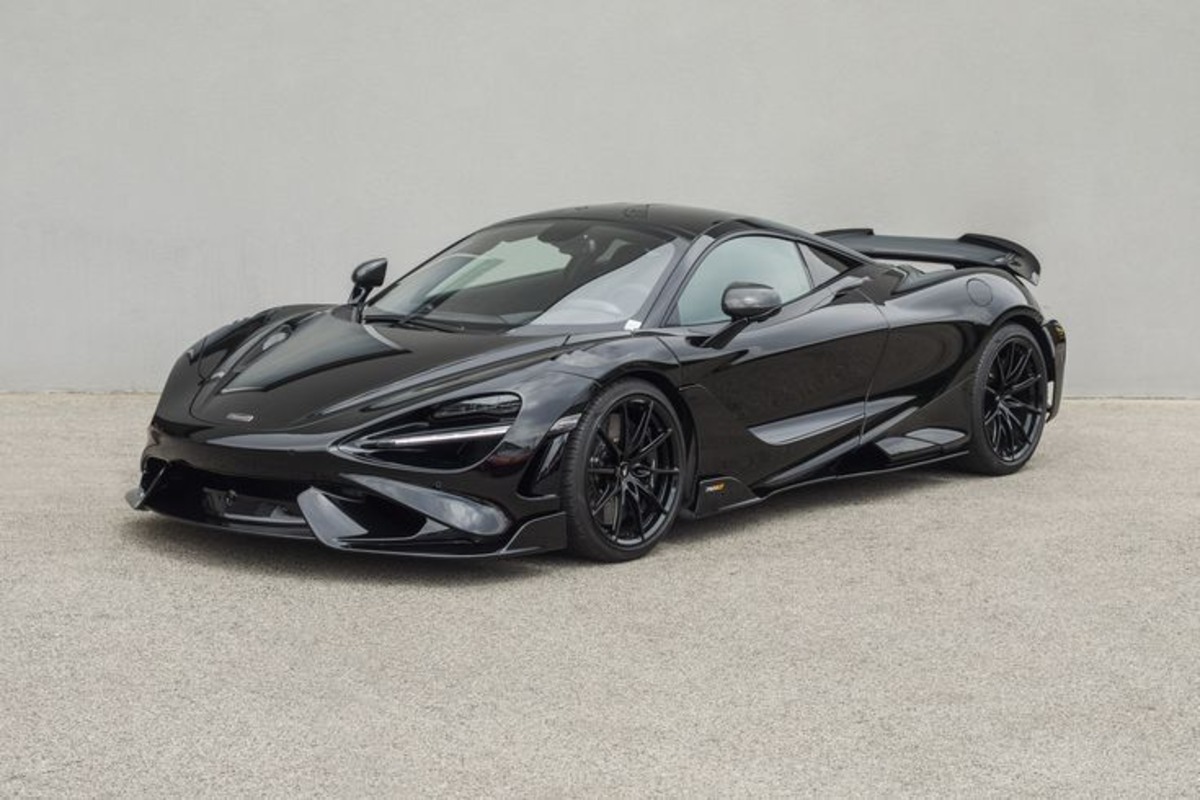
5. McLaren 765LT
The McLaren 765LT was engineered with a single clear objective focused on reducing lap times while delivering an intensely connected driving experience.
Achieving that level of performance requires tires capable of handling immense acceleration, sharp steering inputs, and extraordinary braking forces. McLaren equips the 765LT with specially developed Pirelli P Zero Trofeo R tires, a premium track-focused option that delivers remarkable grip but comes with a very high replacement cost.
Their advanced construction and limited production make them significantly more expensive than conventional ultra-high-performance tires.
Another reason tire expenses climb quickly is the car’s lightweight design. Although lower weight generally reduces wear, the 765LT’s immense power and rapid throttle response place tremendous stress on the rear tires.
Even enthusiastic road driving can shorten tread life, while frequent track sessions accelerate wear considerably. Owners often find that rear tires require replacement long before the fronts because of the vehicle’s rear-wheel-drive layout and staggering levels of acceleration.
The staggered wheel setup also eliminates the possibility of rotating tires between axles, making balanced wear impossible.
McLaren recommends using factory-approved tire models because they are specifically matched to the suspension geometry, steering calibration, and electronic stability systems.

Switching to cheaper alternatives may affect handling precision and braking consistency, diminishing one of the car’s greatest strengths.
For owners, replacing tires is simply part of preserving the 765LT’s extraordinary capabilities and ensuring it continues to deliver the razor-sharp performance expected from one of McLaren’s most focused production cars.
Specifications
- Engine: 4.0-liter Twin-Turbo V8
- Torque: 590 lb-ft
- Horsepower: 755 hp
- Length/Width: 181.1 in / 76.0 in
6. Mercedes-AMG GT Black Series
Few production cars place as much emphasis on aerodynamic performance as the Mercedes-AMG GT Black Series. Large wings, aggressive bodywork, and a highly tuned suspension generate incredible cornering ability, but none of those components can perform properly without equally capable tires.
Mercedes pairs the Black Series with Michelin Pilot Sport Cup 2 R tires, one of the most advanced road-legal performance tires available. Their sophisticated design and specialized compounds contribute to replacement costs that can easily reach several thousand dollars for a complete set.
The Black Series is engineered to prioritize extreme performance rather than the comfort focus of grand touring sports cars. Every hard launch, late braking moment, and quick cornering maneuver places significant loads on the tires.
The soft compound provides phenomenal grip, but it sacrifices longevity to achieve that level of performance. Drivers who regularly participate in performance driving events often find themselves replacing tires much sooner than expected.
Adding to the expense is the car’s staggered wheel arrangement, with wider rear tires carrying the majority of acceleration forces. Because front-to-rear rotation is impossible, the rear tires generally wear at a faster rate.
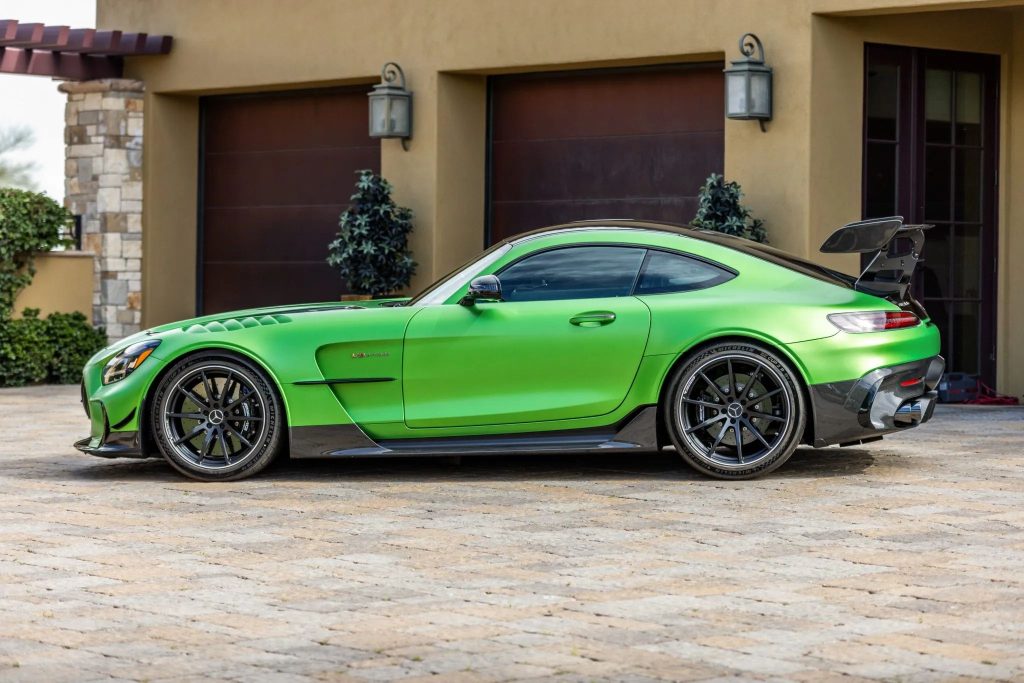
Mercedes also calibrates the suspension, traction control, and active aerodynamics around specific approved tire models, making premium replacements the preferred option. Owners may view tire costs as significant, yet they are an unavoidable part of maintaining the Black Series exactly as its engineers intended.
Specifications
- Engine: 4.0-liter Twin-Turbo V8
- Torque: 590 lb-ft
- Horsepower: 720 hp
- Length/Width: 179.0 in / 79.7 in
7. Aston Martin Vantage V12
The Aston Martin Vantage V12 blends traditional grand touring elegance with the performance expected from a modern supercar. Its twin-turbocharged V12 delivers immense power to the rear wheels, requiring exceptionally capable tires to manage acceleration and maintain stability at high speeds.
Aston Martin fits the car with specially engineered Michelin Pilot Sport S 5 or equivalent ultra-high-performance tires that are designed specifically for its suspension and chassis. These premium tires provide remarkable grip, but replacing them represents one of the highest routine maintenance costs owners will encounter.
The Vantage V12 produces substantial torque across a broad rev range, allowing rapid acceleration from almost any speed. That effortless performance places continuous strain on the rear tires, particularly during spirited driving.
Even drivers who rarely visit a racetrack can experience faster tread wear simply because the engine delivers so much power through the rear axle. The car’s staggered tire configuration also prevents front-to-rear rotation, meaning rear tires often reach the end of their service life well before the fronts.
Beyond outright grip, Aston Martin selected these tires to complement the car’s steering precision, ride quality, and electronic stability systems.
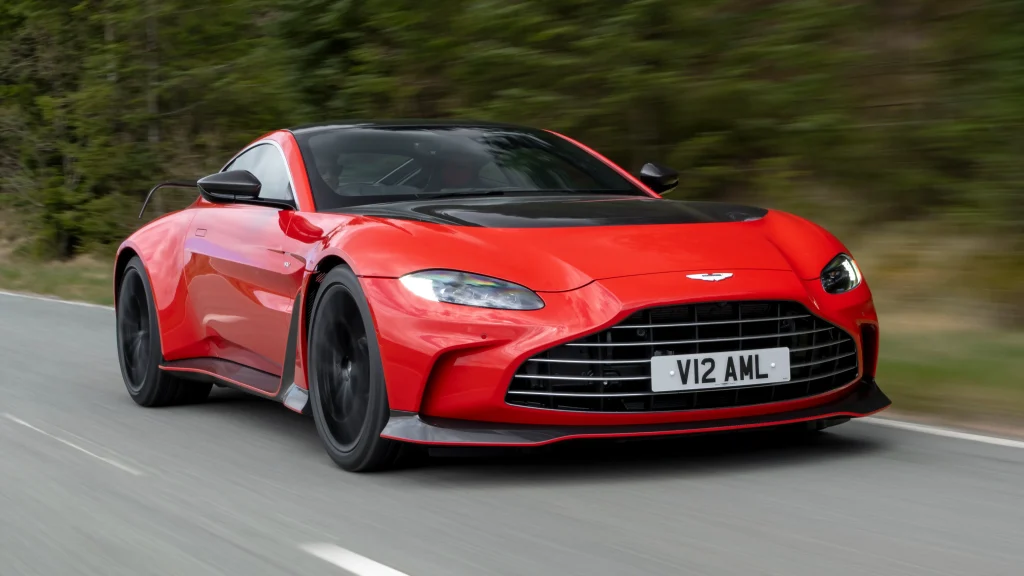
Using non-approved replacements can alter handling characteristics and reduce the balanced feel engineers worked hard to achieve.
Although replacing a full set requires a considerable investment, premium tires are essential to preserving the Vantage V12’s combination of confidence, precision, and exhilarating performance on both winding roads and high-speed highways.
Specifications
- Engine: 5.2-liter Twin-Turbo V12
- Torque: 555 lb-ft
- Horsepower: 690 hp
- Length/Width: 176.7 in / 77.6 in
8. Dodge Viper ACR
The Dodge Viper ACR earned its reputation by setting lap records rather than focusing on everyday comfort. Every component was engineered with maximum grip in mind, and the tires are among the most specialized fitted to an American sports car.
Wide Kumho Ecsta V720 ACR tires were developed specifically for this model, providing extraordinary cornering ability while carrying a replacement price that reflects their limited production and highly specialized construction.
Driving the Viper ACR demands commitment. There are no turbochargers or hybrid systems to soften the experience, only a massive naturally aspirated V10 sending power directly to the rear wheels.
Every burst of acceleration, every heavy braking zone, and every fast corner generates enormous forces that quickly wear the soft rubber compounds. Owners who participate in track events often budget for tires as a regular operating expense rather than an occasional maintenance item.
Another contributor to high replacement costs is the car’s extremely wide wheel and tire package. Finding the correct sizes is more challenging than for mainstream sports cars, and availability can sometimes be limited.
Because the front and rear tires are of different dimensions, rotation is not an option, allowing wear patterns to develop independently. Maintaining factory-recommended tires is important because they were selected to match the Viper ACR’s suspension setup and aerodynamic balance.
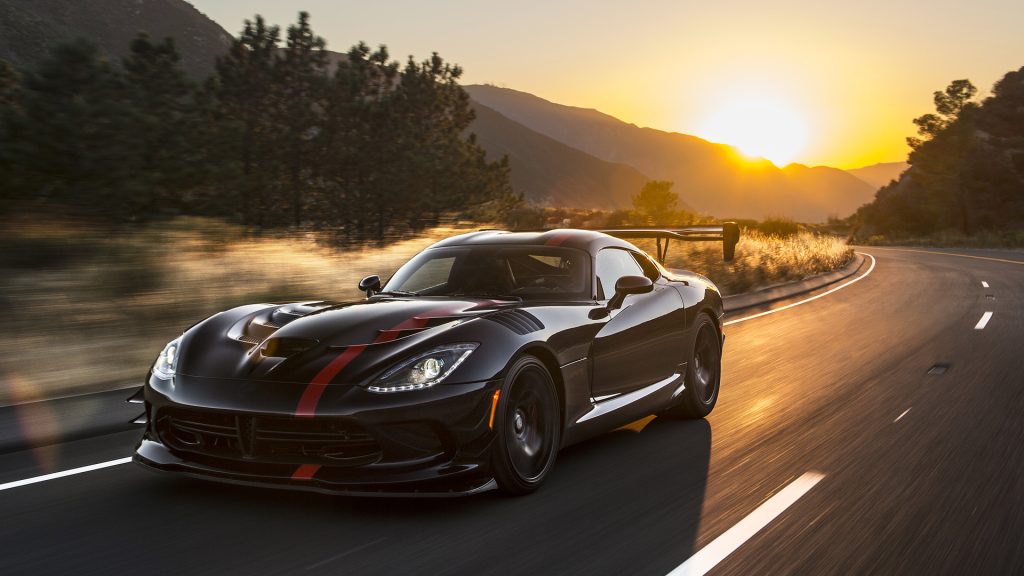
The expense may be significant, but those tires are a major reason the car remains one of the most capable track-focused machines ever built by an American manufacturer.
Specifications
- Engine: 8.4-liter Naturally Aspirated V10
- Torque: 600 lb-ft
- Horsepower: 645 hp
- Length/Width: 175.7 in / 76.4 in
9. Ford Mustang GTD
The Ford Mustang GTD takes the familiar Mustang formula into an entirely different category. Developed with significant influence from Ford’s GT3 racing program, it is engineered to compete with elite European performance cars on demanding circuits.
To achieve that objective, Ford equips the GTD with massive forged wheels wrapped in ultra-high-performance tires developed specifically for the vehicle.
These specialized tires maximize grip during high-speed cornering and heavy braking, but they are among the most expensive components owners will replace during regular maintenance.
Unlike conventional sports cars that balance performance with everyday practicality, the GTD is tuned to deliver exceptional capability on a racetrack. The aggressive suspension geometry and advanced aerodynamics place tremendous loads on the tires, especially when driven enthusiastically.
Even on public roads, the supercharged V8’s immense output can accelerate tread wear, particularly at the rear, where most of the power reaches the pavement. Owners who regularly participate in performance driving events should expect tire replacement to become a recurring expense.
Another factor increasing ownership costs is the vehicle’s staggered wheel arrangement and unique tire specifications. The front and rear tires differ in size, eliminating the possibility of rotation to equalize wear.
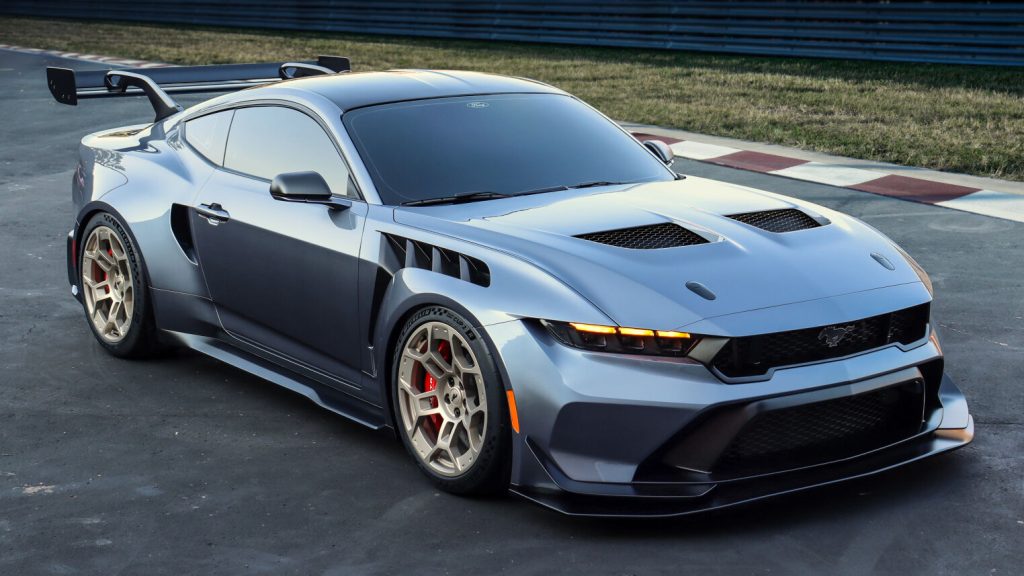
Ford also recommends approved tire models to ensure compatibility with the GTD’s active suspension, traction control, and stability systems.
Premium replacement tires help preserve the extraordinary handling characteristics that define the GTD, making their substantial cost an unavoidable part of owning one of Ford’s most advanced performance cars.
Specifications
- Engine: 5.2-liter Supercharged V8
- Torque: 664 lb-ft
- Horsepower: 815 hp
- Length/Width: 193.6 in / 81.7 in
10. Ferrari SF90 Stradale
Owning a Ferrari SF90 Stradale means maintaining one of the most technologically advanced road cars ever produced by the Italian manufacturer.
Its plug-in hybrid powertrain combines a twin-turbocharged V8 with three electric motors, producing extraordinary acceleration that places exceptional demands on its tires. Ferrari equips the SF90 with premium Michelin Pilot Sport Cup 2 or Pirelli P Zero performance tires, depending on configuration.
Both options are developed to withstand incredible forces while providing the grip needed to fully utilize the car’s sophisticated all-wheel-drive system.
The SF90’s astonishing acceleration allows it to reach highway speeds in only a few seconds, and every launch transfers tremendous energy into the tires.
Even drivers who avoid track use will notice that the soft rubber compounds wear faster than conventional performance tires. Frequent spirited driving shortens tire life even further because the hybrid system delivers instant electric torque alongside the output of the gasoline engine.
Replacing tires on the SF90 is also expensive because of its staggered wheel setup and manufacturer-approved specifications. Ferrari engineers carefully tuned the suspension, torque vectoring, and electronic stability controls around particular tire models.
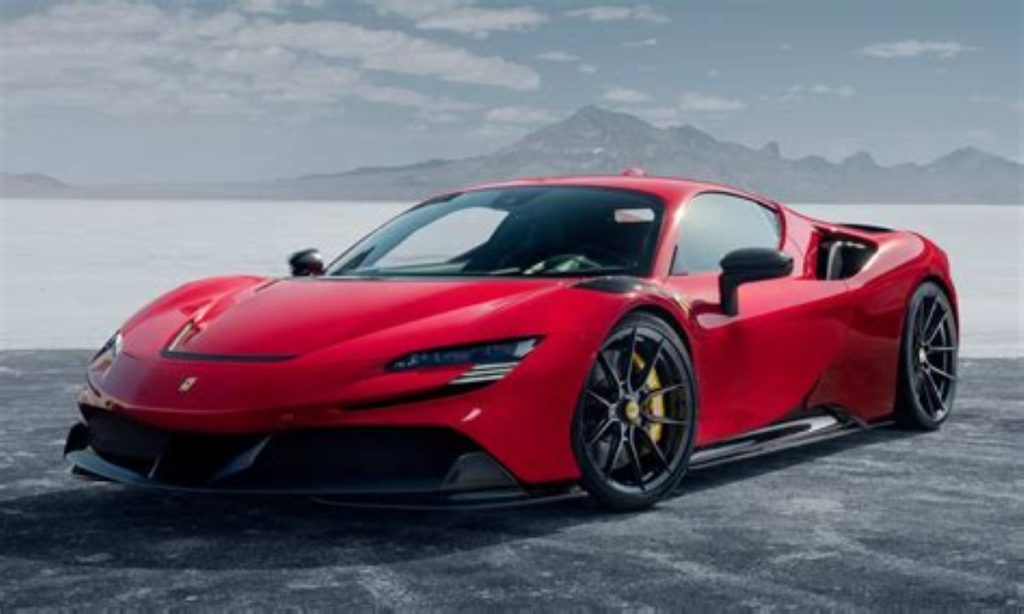
Installing less expensive alternatives can affect steering precision, braking performance, and the predictable handling that defines the car.
While premium replacement tires require a considerable investment, they remain essential for preserving the remarkable balance, traction, and confidence that make the SF90 Stradale one of the most capable high-performance sports cars in the world.
Specifications
- Engine: 4.0-liter Twin-Turbo V8 Plug-in Hybrid
- Torque: 590 lb-ft
- Horsepower: 986 hp
- Length/Width: 185.4 in / 77.6 in