
Minivans are purchased for space and family practicality, but depreciation can quietly become one of the highest costs of ownership. A van that loses half its original value in five years creates a very different financial result from one that keeps more than 60 percent.
For U.S. buyers planning to trade or sell after several years, resale performance deserves attention alongside fuel economy and cargo room.
This ranking uses 2026 five-year resale-value analysis from iSeeCars, which analyzed more than 3 million vehicles. Its methodology compares a model’s new-car MSRP with the equivalent five-year-old used price and uses U.S. Bureau of Labor Statistics data to adjust for inflation. The current minivan category average is 53.8 percent value retention after five years.
One limitation matters. The dedicated 2026 iSeeCars minivan ranking currently publishes five ranked gasoline minivans. To reach eight without inventing positions, this article adds three separately measured minivan variants or nameplates with published five-year depreciation data.
Their percentages are clearly identified rather than falsely presented as part of iSeeCars’ five-model category table.
Value retention is never guaranteed for one specific vehicle. Mileage, accident history, trim, condition, location, and maintenance records affect the final selling price. Still, category-level depreciation data provide a useful picture of which minivans have historically retained more of their original value.
Also Read: 10 Things to Check During a Used Car Test Drive
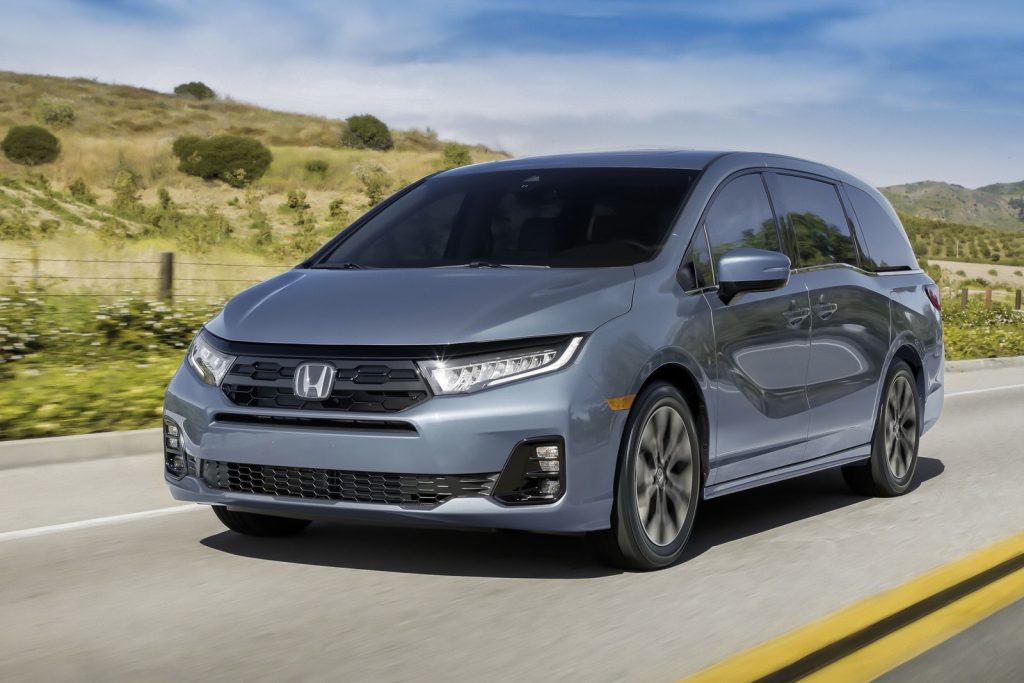
1. Honda Odyssey: 62.6 Percent Five-Year Value Retention
The Honda Odyssey takes first place in iSeeCars’ 2026 minivan resale-value ranking, retaining 62.6 percent of its value after five years. That puts the Honda 8.8 percentage points above the 53.8 percent minivan average. iSeeCars also calculates an average price of $29,072 for five-year-old Odyssey models.
Those figures make the Odyssey’s depreciation easier to understand from the opposite direction. A 62.6 percent retention rate means the model loses approximately 37.4 percent of its original value over five years under the study’s methodology.
For a family vehicle exposed to school runs, road trips, child seats, and heavy cargo use, that is a strong resale performance.
Demand is one important part of the equation. The Odyssey has remained a familiar name in the U.S. minivan segment, and five-year-old examples still offer features that family buyers actively seek.
The 2021 model, which lines up with the five-year age point in 2026, used Honda’s 3.5-liter V6 and 10-speed automatic transmission across the range. It also offered seating for up to eight occupants.
Honda’s Magic Slide second-row seats add another practical advantage in the used market. Depending on configuration, the seats can move laterally, making third-row access and passenger arrangement more flexible. Features that remain genuinely useful after five years can help sustain buyer interest.
The Odyssey is not immune to mileage-related depreciation. A high-mileage former commercial vehicle or accident-damaged van can sell far below category estimates. Yet the model-level data is clear: among the five minivans in iSeeCars’ current 2026 ranking, no other nameplate retains a greater percentage of its value after five years.
- Engine: 3.5-liter naturally aspirated V6
- Torque: 262 lb-ft
- Horsepower: 280 hp
- Length/Width: 205.2 inches / 78.5 inches
- Five-Year Value Retention: 62.6 percent
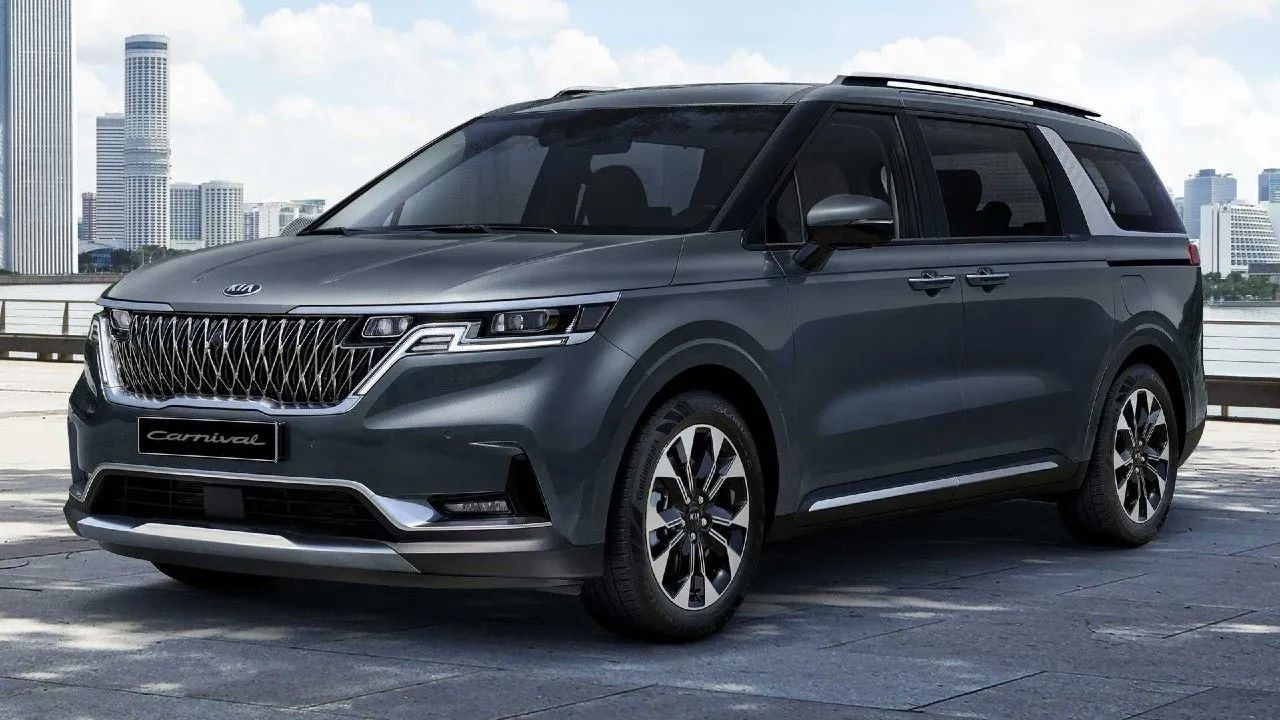
2. Kia Carnival: 55.0 Percent Five-Year Value Retention
Second place requires a different kind of explanation because the Kia Carnival does not have the same decades-long U.S. history as the Odyssey. Kia replaced the Sedona name with Carnival for the 2022 model year in America, yet iSeeCars’ 2026 resale analysis places the Carnival second among minivans with 55.0 percent five-year value retention.
That figure sits 1.2 percentage points above the current minivan average of 53.8 percent. It also represents approximately 45 percent depreciation over five years under the study’s statistical methodology. The result is notable for a nameplate that arrived in the United States with a deliberately different design strategy.
Kia marketed the Carnival as a multi-purpose vehicle, and the styling moved away from the traditional rounded minivan profile. The 2022 U.S. model used a 3.5-liter V6 producing 290 horsepower and 262 lb-ft of torque. Its 40.2 cubic feet of cargo volume behind the third row also gave buyers a strong practicality argument.
Resale value, however, should not be confused with the original sticker price. iSeeCars’ current model information places Carnival new-vehicle pricing in a broad range and shows used examples at substantially different prices depending on age and trim.
The 55 percent retention figure is designed to measure value kept relative to the original MSRP, not simply identify which van has the highest used-car price.
The Carnival’s ranking suggests that used-car buyers continue to place meaningful value on its passenger space, powerful standard V6, and feature-heavy cabin. Its relatively fresh styling may also help five-year value forecasts compared with vehicles that appear visually older sooner.
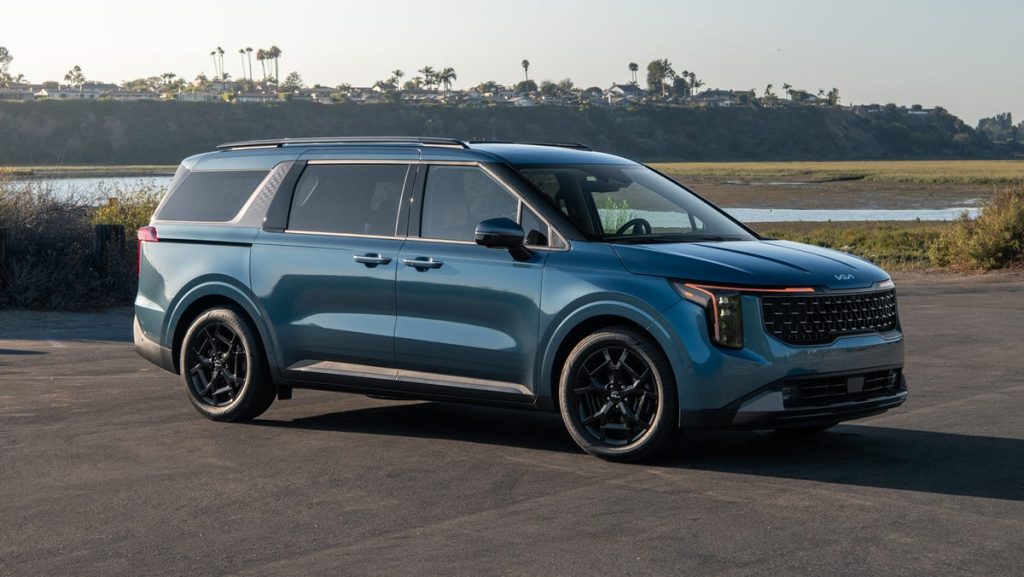
There is an important data caveat. Since the Carnival name reached the U.S. in 2022, its long-term resale history is less mature than the Odyssey’s. Even so, iSeeCars ranks it directly in second place for 2026. Based on the published category data, the Carnival retains more value after five years than the Sedona, Voyager, and gasoline Pacifica.
- Engine: 3.5-liter naturally aspirated V6
- Torque: 262 lb-ft
- Horsepower: 290 hp
- Length/Width: 203.0 inches / 78.5 inches
- Five-Year Value Retention: 55.0 percent
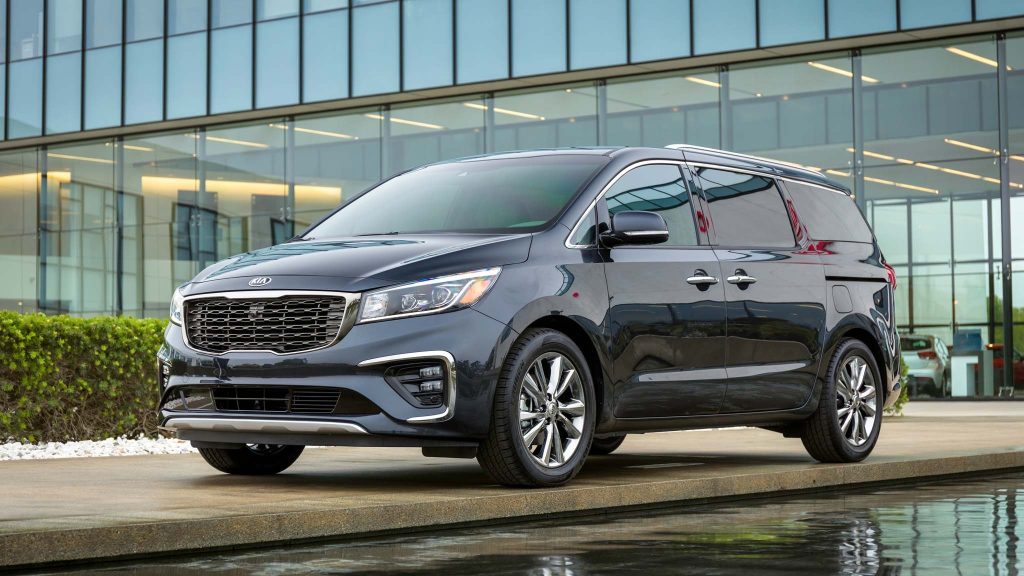
3. Kia Sedona: 49.4 Percent Five-Year Value Retention
The Kia Sedona takes third place in iSeeCars’ 2026 minivan resale ranking. Current depreciation analysis shows the discontinued Kia nameplate losing 50.6 percent of its value after five years, which translates to 49.4 percent value retention. That is a noticeable step down from the Carnival and Honda Odyssey.
The Sedona’s position is interesting because Kia replaced it with the Carnival in the U.S. market after the 2021 model year.
A discontinued name can sometimes create resale challenges as buyers turn toward newer products, but the Sedona remains a practical choice in the used-minivan market. iSeeCars’ 2026 used-vehicle analysis ranks the 2021 Sedona as its top used minivan under $20,000.
Mechanically, the 2021 Sedona used a 3.3-liter naturally aspirated V6 connected to an eight-speed automatic transmission. Its 276 horsepower provided conventional gasoline performance without a hybrid system or turbocharger.
For used buyers, the familiar powertrain and three-row layout can make the Sedona attractive when pricing is significantly below newer minivans.
The retention figure still shows that depreciation was substantial. A 50.6 percent five-year value loss means more than half of the vehicle’s original value disappears under the study’s methodology.
That creates two different stories. Original owners face heavier depreciation than Odyssey owners, while secondhand shoppers may find the Sedona appealing precisely because the first owner absorbed a larger value drop.
- Engine: 3.3-liter naturally aspirated V6
- Torque: 248 lb-ft
- Horsepower: 276 hp
- Length/Width: 201.4 inches / 78.1 inches
- Five-Year Value Retention: 49.4 percent
4. Chrysler Voyager: 49.7 Percent Five-Year Value Retention
The Chrysler Voyager lands in the lower half of the resale picture with 49.7 percent five-year value retention. iSeeCars calculates five-year depreciation at 50.3 percent and estimates resale value at $20,563 in its current model analysis. The same data places typical minivan depreciation at 46.2 percent.
Unlike the Odyssey, the Voyager’s market history includes an unusual fleet chapter. Chrysler separated lower Pacifica trims into the Voyager nameplate for the 2020 model year. The van later became fleet-only in the United States before returning to retail buyers for 2025. That history means used examples can come from very different ownership environments.
Its mechanical formula is straightforward. The Voyager uses Chrysler’s 3.6-liter Pentastar V6 and a nine-speed automatic transmission. The engine produces 287 horsepower and 262 lb-ft of torque. Stow ‘n Go second-row seating also gives the van a practical feature that remains valuable after the vehicle leaves its first owner.
Resale data show the Voyager holds slightly more value than the gasoline Chrysler Pacifica. iSeeCars’ Chrysler brand analysis lists the Voyager at 49.7 percent retained value, compared with 48.8 percent for the Pacifica minivan.
The Voyager’s depreciation can work in favor of used buyers. Families searching for maximum cabin space at a lower purchase price may accept weaker resale performance in exchange for a less expensive entry point.
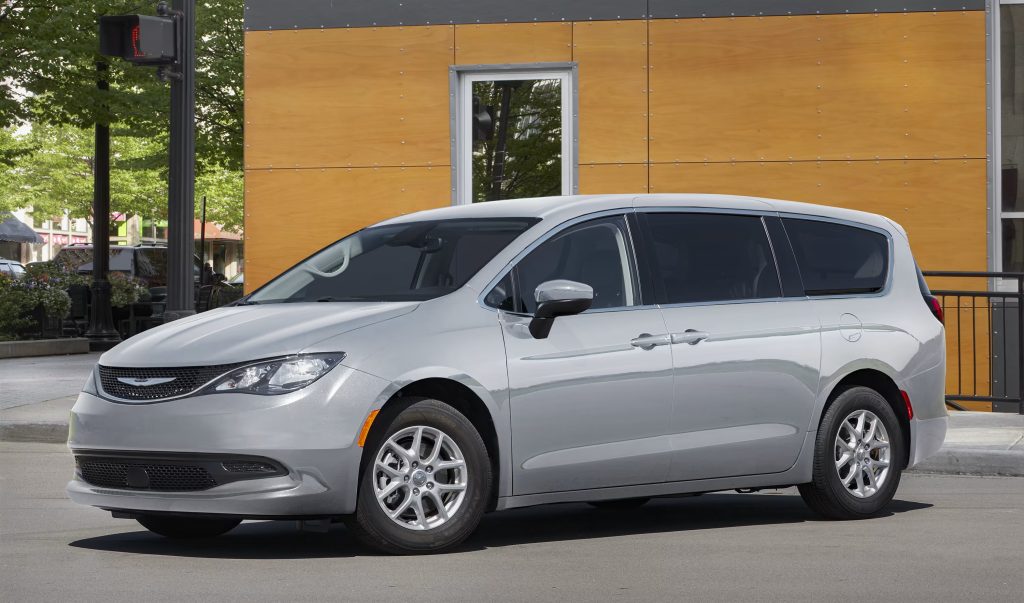
Fleet history, mileage, interior wear, and maintenance records deserve close attention on individual examples. Two five-year-old Voyagers can have dramatically different histories even when their odometers show similar mileage.
- Engine: 3.6-liter naturally aspirated Pentastar V6
- Torque: 262 lb-ft
- Horsepower: 287 hp
- Length/Width: 203.8 inches / 79.6 inches
- Five-Year Value Retention: 49.7 percent
5. Chrysler Pacifica: 48.8 Percent Five-Year Value Retention
The Chrysler Pacifica sits fifth in iSeeCars’ published 2026 minivan resale-value ranking, retaining 48.8 percent of its value after five years. That means the gasoline Pacifica loses approximately 51.2 percent of its original value under the study’s methodology. A five-year-old Pacifica averages about $24,839 in the current iSeeCars data.
Depreciation is one of the Pacifica’s weaker financial points, but its used-market appeal is easy to understand. The 2021 gasoline model combined a 3.6-liter Pentastar V6 with a nine-speed automatic transmission.
Chrysler’s Stow ‘n Go seating also allowed the second and third rows to fold into the floor, creating a cargo configuration that remains distinctive among family vans.
The Pacifica’s broad trim range can create substantial differences between individual used vehicles. A heavily equipped Pinnacle originally carried a much higher sticker price than an entry-level version, and optional equipment does not always recover its full original cost at resale.
Condition also matters greatly. Family minivans often accumulate interior wear, high mileage, and cosmetic damage that can reduce a specific vehicle’s selling price below statistical estimates.
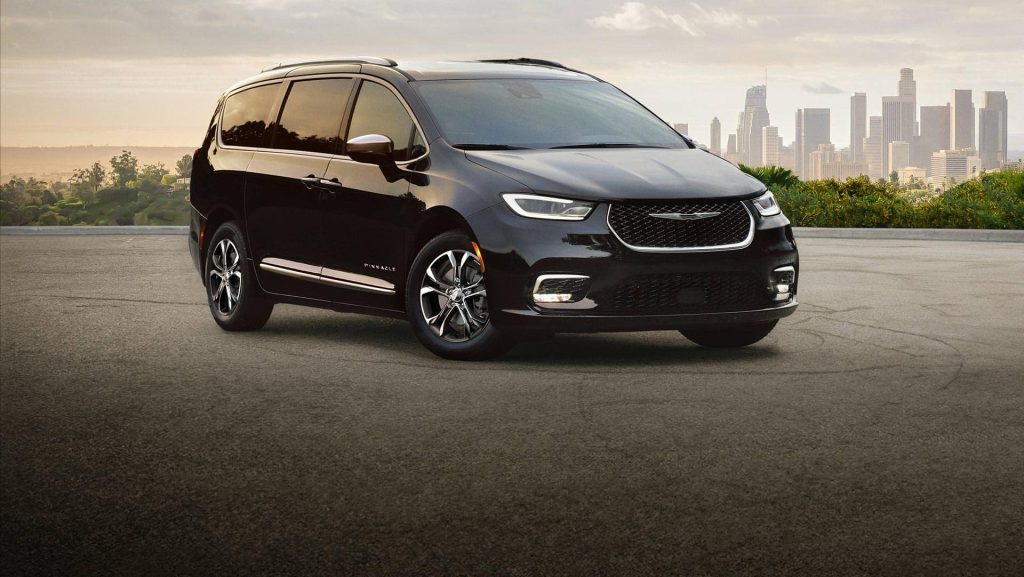
From a secondhand buyer’s perspective, the Pacifica’s depreciation can create value. The first owner absorbs more than half of the model’s estimated five-year value loss, leaving used shoppers with access to a spacious and feature-rich van at a substantially reduced price.
- Engine: 3.6-liter naturally aspirated Pentastar V6
- Torque: 262 lb-ft
- Horsepower: 287 hp
- Length/Width: 204.3 inches / 79.6 inches
- Five-Year Value Retention: 48.8 percent
6. Toyota Sienna: 71.0 Percent Five-Year Value Retention
The Toyota Sienna creates an important ranking complication. iSeeCars classifies the current Sienna in its hybrid minivan category, so it does not appear in the five-model gasoline-minivan table used for the first five positions. Measured separately, however, its resale performance is stronger than that of every van discussed so far.
Current iSeeCars model depreciation data shows the Sienna losing just 29 percent after five years, leaving 71.0 percent of its original value retained and an estimated five-year resale value of $28,706. For comparison, the same analysis places five-year depreciation for hybrid minivans at 39.9 percent.
Toyota’s decision to make the fourth-generation Sienna hybrid-only for the U.S. market is central to its used-car identity. The 2021 Sienna paired a 2.5-liter four-cylinder engine with Toyota’s hybrid system for 245 net combined horsepower.
EPA ratings reached up to 36 mpg combined for front-wheel-drive versions, giving used buyers a fuel-economy advantage that remains relevant years after the original purchase.
Scarcity and demand also influence resale values. Families seeking an efficient three-row minivan have relatively few hybrid choices, while Toyota’s strong resale performance extends across numerous model lines. In iSeeCars’ broader 2026 depreciation study, the Sienna also appeared among the 15 vehicles with the lowest five-year depreciation.
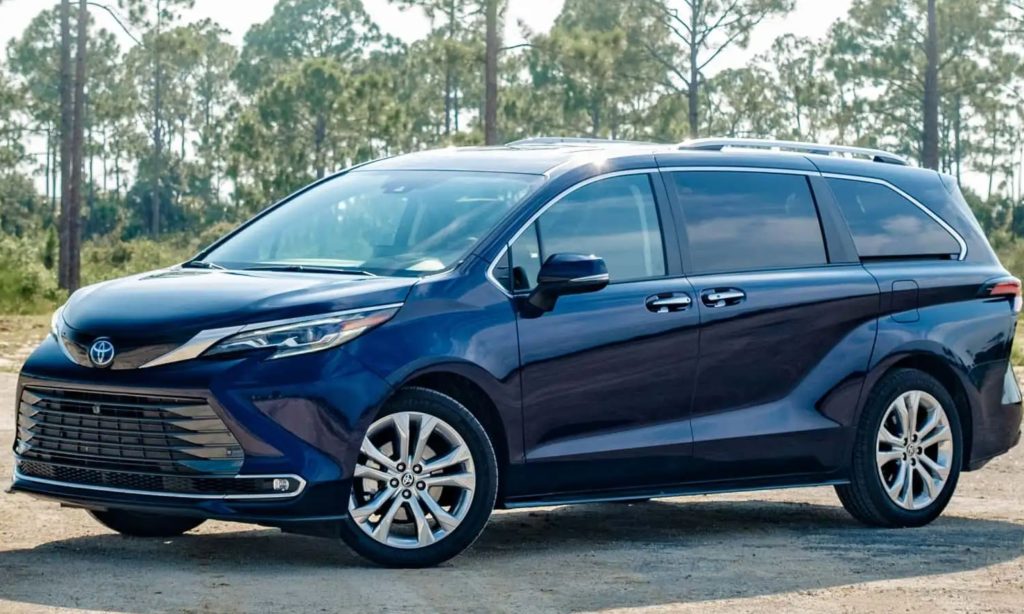
Its 71 percent figure should therefore be treated as separately measured hybrid minivan data, not sixth place in iSeeCars’ gasoline minivan table.
- Engine: 2.5-liter four-cylinder hybrid system
- Torque: 176 lb-ft from the gasoline engine
- Horsepower: 245 net combined hp
- Length/Width: 203.7 inches / 78.5 inches
- Five-Year Value Retention: 71.0 percent
7. Kia Carnival Hybrid: 51.8 Percent Five-Year Value Retention
The Kia Carnival Hybrid adds another separately measured entry to this list because iSeeCars places it in the hybrid-minivan category rather than its standard gasoline-minivan ranking. Current 2026 resale data gives the Carnival Hybrid a 51.8 percent five-year value retention rate, ranking it second among hybrid minivans behind the Toyota Sienna.
That percentage translates to an estimated 48.2 percent loss in value over five years. While the Carnival Hybrid cannot match the Sienna’s exceptional 71 percent retention figure, it still performs better than the Chrysler Pacifica Hybrid’s published 48.5 percent result.
Kia introduced the Carnival Hybrid to the U.S. market for the 2025 model year. Its powertrain combines a turbocharged 1.6-liter four-cylinder engine with an electric motor and a six-speed automatic transmission.
Total system output reaches 242 horsepower and 271 lb-ft of torque. That makes it mechanically different from the gasoline Carnival’s naturally aspirated 3.5-liter V6.
Fuel efficiency is a major part of the hybrid’s resale argument. The front-wheel-drive Carnival Hybrid carries EPA estimates of up to 34 mpg city, 31 mpg highway, and 33 mpg combined. Those numbers give families a reason to consider the electrified version even several years after its initial purchase.
The 51.8 percent figure should be understood as iSeeCars’ model-level depreciation estimate. Because the Carnival Hybrid is still a relatively new U.S. product, its long-term used-market history is less established than the Sienna’s.
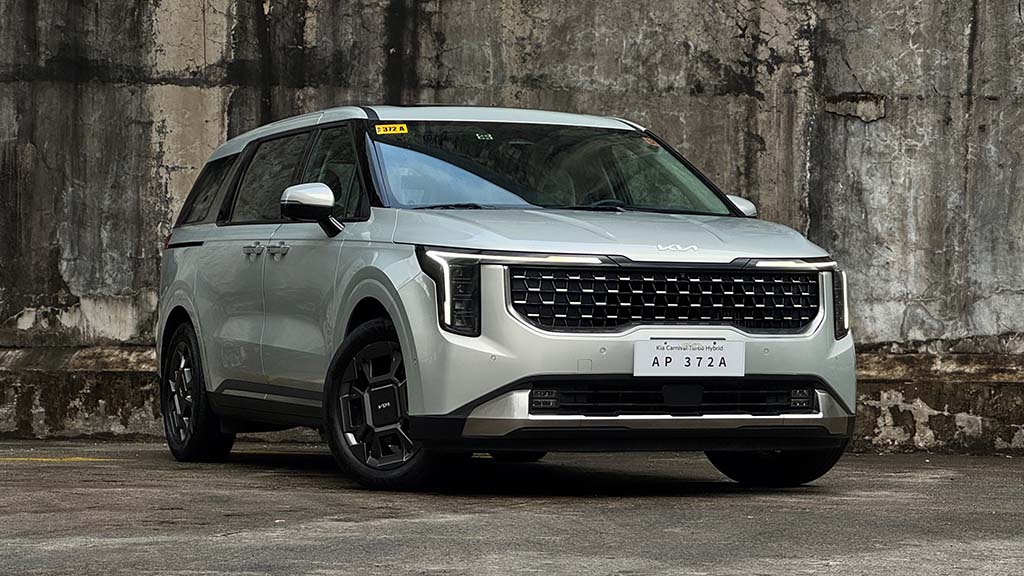
Still, the current data places Kia’s hybrid van firmly between the Sienna and Pacifica Hybrid for five-year value retention.
- Engine: 1.6-liter turbocharged four-cylinder hybrid system
- Torque: 271 lb-ft combined
- Horsepower: 242 combined hp
- Length/Width: 203.0 inches / 78.5 inches
- Five-Year Value Retention: 51.8 percent
8. Chrysler Pacifica Hybrid: 48.5 Percent Five-Year Value Retention
The Chrysler Pacifica Hybrid finishes the list with 48.5 percent five-year value retention in current iSeeCars data. Its five-year-old average price is approximately $24,809, and iSeeCars ranks it third among the hybrid minivans shown in its 2026 resale-value analysis.
There is an important financial detail behind that number. iSeeCars calculates that a new Pacifica Hybrid loses approximately 51.5 percent of its value after five years, producing an estimated resale value of about $25,085 in its model depreciation analysis.
The same source states that hybrid minivans, as a category, lose 39.9 percent after five years. The Chrysler, therefore, depreciates faster than the broader hybrid-minivan benchmark.
Its plug-in hybrid powertrain makes the Pacifica fundamentally different from every gasoline van discussed earlier. The system combines a 3.6-liter Pentastar V6 with electric drive components and a lithium-ion battery. Chrysler rates total system output at 260 horsepower.
For used buyers, the Pacifica Hybrid’s depreciation can create an attractive entry point into a plug-in family vehicle. Its three-row cabin and ability to travel on electric power for shorter trips remain practical features. However, resale shoppers also need to consider battery condition, charging history, mileage, recall completion, and service records.
The Pacifica Hybrid’s 48.5 percent retention rate is slightly below the gasoline Pacifica’s 48.8 percent figure in current iSeeCars data.
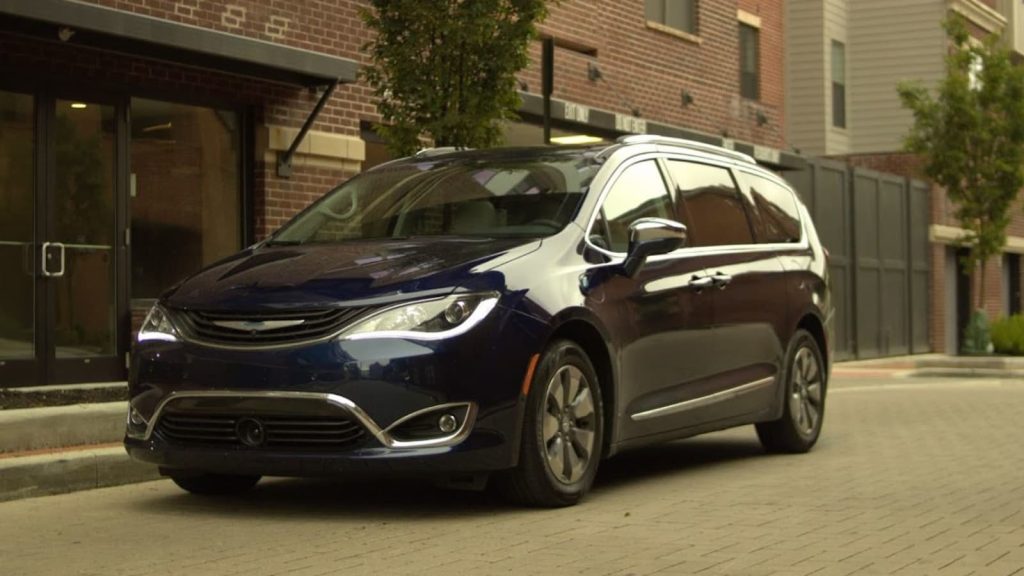
That small difference is notable because electrification does not automatically guarantee stronger resale value. In this case, the Sienna’s conventional hybrid system retains substantially more value, while Chrysler’s plug-in model loses more than half of its estimated original value within five years.
- Engine: 3.6-liter Pentastar V6 plug-in hybrid system
- Torque: Gasoline engine rated at 262 lb-ft
- Horsepower: 260 net combined hp
- Length/Width: 204.3 inches / 79.6 inches
- Five-Year Value Retention: 48.5 percent
Also Read: 8 Off-Road Vehicles That Can Handle Anything
