
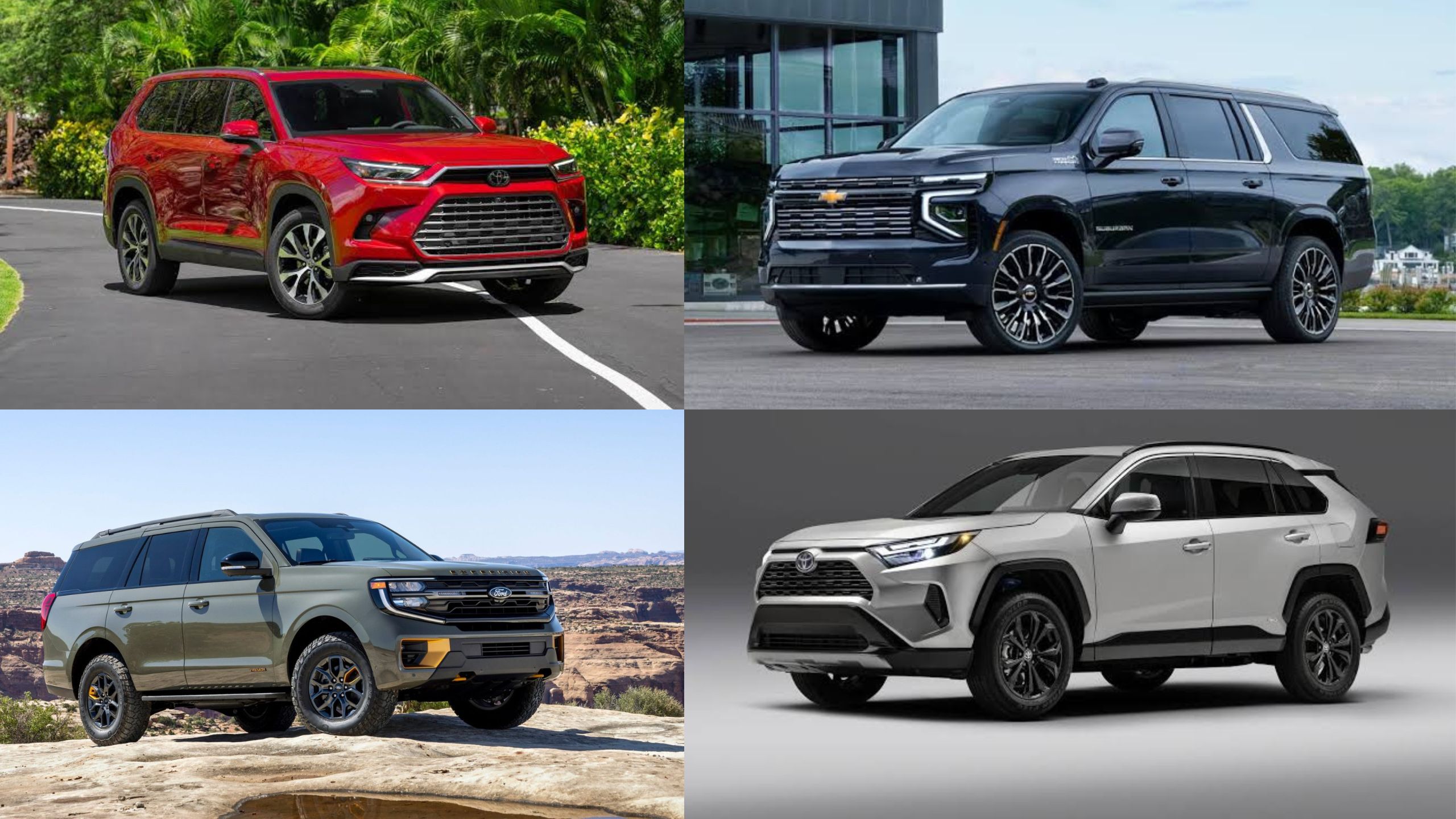
Driving range remains an important consideration for SUV buyers because it determines how far a vehicle can travel between fuel stops. The most straightforward way to estimate range is by multiplying the EPA combined fuel economy rating by the manufacturer’s stated fuel tank capacity, the same method used by fueleconomy.gov to calculate driving range estimates.
This ranking compares 10 model-year 2026 SUVs using that calculation. The results show that fuel efficiency often has a greater impact on range than tank size alone, with several hybrid SUVs outperforming much larger models. Each entry includes key specifications such as engine, power output, dimensions, fuel tank capacity, and EPA combined fuel economy.
1. Kia Sorento Hybrid EX FWD, 655 Miles
The Sorento Hybrid tops this list, and it does it without a giant tank. Its secret is raw efficiency, not brute fuel capacity. Kia rates the EX FWD trim at 37 mpg combined. Multiply that by the 17.7-gallon tank, and you get Kia’s own advertised 655-mile total range.
That number actually beats several full-size diesel SUVs on this list. It does so with a tank barely half their size. The turbo-hybrid powertrain blends a 1.6-liter engine with an electric motor. Combined output lands at 227 horsepower and 258 lb-ft of torque.
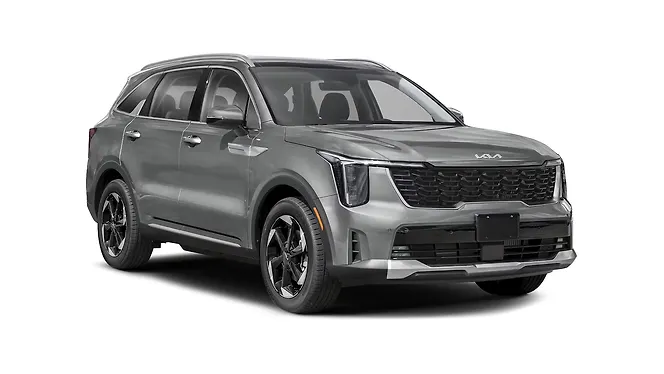
Power delivery feels smooth around town. The electric motor handles low-speed torque, so the gas engine rarely strains. AWD versions drop to a still-strong 602-mile range. That’s the trade-off for all-weather traction on rougher Sorento trims.
Three-row seating remains standard across the lineup. Most buyers won’t sacrifice practicality to get this kind of efficiency. The Sorento Hybrid proves midsize crossovers can out-range trucks. It’s a genuinely different approach to long-distance driving.
Fuel stops become a once-a-week event for most commuters. Road trips from coast-adjacent cities to inland destinations become single-tank affairs. This is what happens when hybrid tech matures. The Sorento Hybrid isn’t just efficient it’s now a genuine range champion.
Specifications:
- Engine: 1.6L turbocharged I4 hybrid
- Horsepower: 227 hp
- Torque: 258 lb-ft
- Length: 189.6 in
- Width: 74.8 in
- Fuel Tank: 17.7 gallons
- EPA Combined: 37 mpg (FWD)
2. Chevrolet Suburban 3.0L Duramax RWD, 644 Miles
The Suburban has always been about size. Now it pairs that size with genuine diesel efficiency. The 3.0-liter Duramax inline-six returns an EPA-estimated 23 mpg combined in RWD form. Paired with a massive 28-gallon tank, that’s 644 miles of combined-cycle range.
On the highway alone, Chevrolet advertises up to 728 miles. That’s enough to cross several states without stopping. Power comes from 305 horsepower and a hefty 495 lb-ft of torque. Diesel torque arrives low in the rev range, making merging and towing effortless.
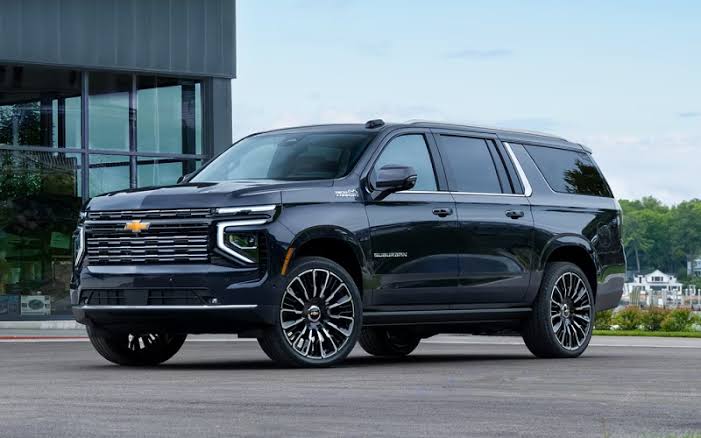
This is still a genuinely massive vehicle. Length stretches past 225 inches, dwarfing nearly everything else on this list. Cargo space follows suit at 144.7 cubic feet maximum. Few SUVs can match that kind of interior volume.
Towing capacity reaches up to 8,200 pounds. The diesel doesn’t sacrifice capability to achieve its efficiency numbers. Gas V8 versions trade range for lower upfront cost. The 5.3L and 6.2L engines return just 16 to 17 mpg combined.
For long-haul families, the diesel Suburban is the obvious choice. It combines three-row comfort with genuine road-trip range. Few full-size SUVs deliver this much distance per fill-up. The Suburban proves size and efficiency aren’t mutually exclusive anymore.
Specifications:
- Engine: 3.0L Duramax turbo-diesel I6
- Horsepower: 305 hp
- Torque: 495 lb-ft
- Length: 225.7 in
- Width: 81.0 in
- Fuel Tank: 28 gallons
- EPA Combined: 23 mpg (RWD, diesel)
3. GMC Yukon XL Denali Duramax, 644 Miles
The Yukon XL shares its bones with the Suburban. Unsurprisingly, it shares nearly identical range numbers too. GMC’s own materials advertise a maximum 644-mile diesel range. That’s built on the same 28-gallon tank and Duramax powertrain as its Chevrolet cousin.
The 3.0-liter Duramax makes 305 horsepower here as well. Torque holds steady at 495 lb-ft, ideal for towing trailers or boats. City and highway estimates land at 21 and 26 mpg respectively. That combined efficiency is best-in-class among full-size, body-on-frame SUVs.
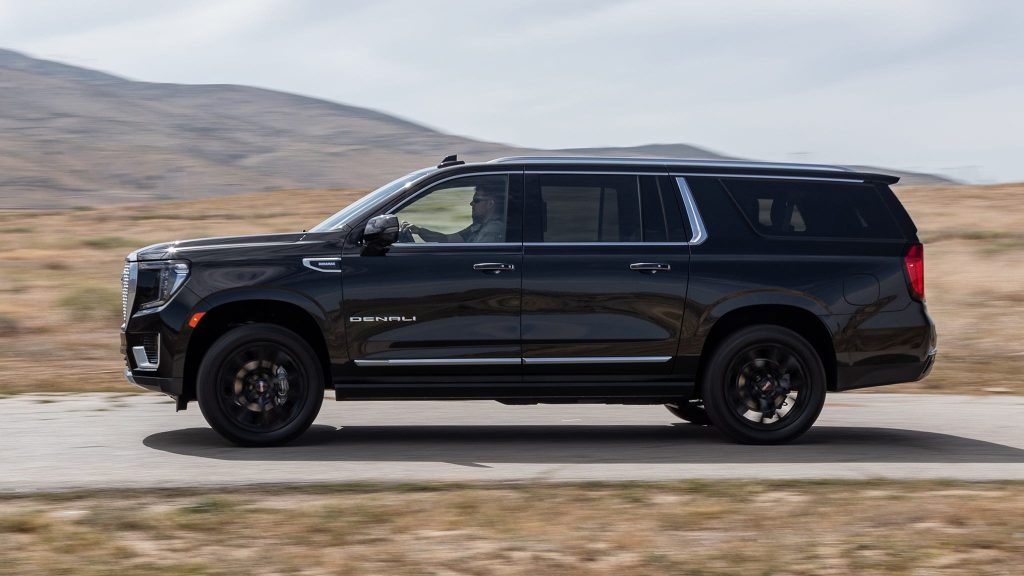
What separates the Yukon XL is trim and refinement. Denali and Denali Ultimate trims add open-pore wood and premium leather. Cargo capacity reaches 144.5 cubic feet with seats folded. That’s virtually identical to the Suburban’s own figures.
Nine-passenger seating is available on lower trims. Most buyers, though, opt for captain’s chairs and a more premium six-to-seven-person layout. Super Cruise hands-free driving is available on compatible highways. It pairs nicely with the diesel’s long-distance range advantage.
Towing tops out around 7,800 pounds depending on configuration. That’s slightly below the Suburban’s max rating. For GMC loyalists wanting Suburban-level range, this is the answer. It’s proof that platform-sharing doesn’t mean settling for less capability.
Specifications:
- Engine: 3.0L Duramax turbo-diesel I6
- Horsepower: 305 hp
- Torque: 495 lb-ft
- Length: 225.2 in
- Width: 81.1 in
- Fuel Tank: 28 gallons
- EPA Combined: 23 mpg (diesel)
4. Toyota Grand Highlander Hybrid FWD, 641 Miles
The Grand Highlander Hybrid is Toyota’s three-row family hauler. It also happens to be remarkably efficient for its size. Toyota rates the FWD Hybrid at 36 mpg combined. Multiplied by its 17.8-gallon tank, that works out to roughly 641 miles of range.
Toyota’s own city-cycle math actually pushes higher, near 658 miles. Highway range settles closer to 605 miles under EPA methodology. Power comes from a 2.5-liter four-cylinder hybrid system. Combined output reaches 245 horsepower, enough for confident merging and passing.
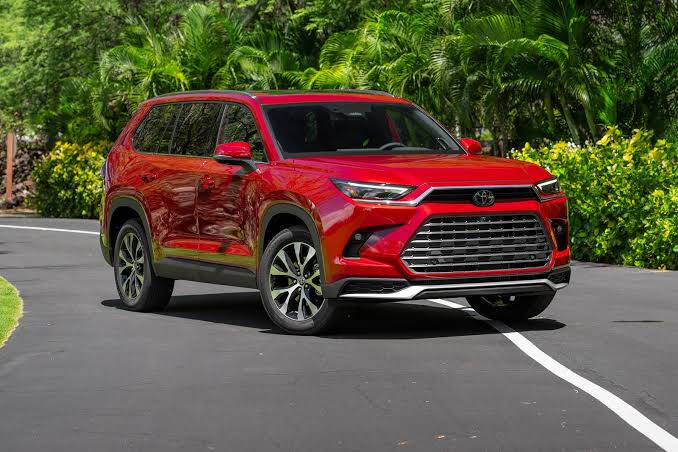
The AWD version drops slightly to 34 mpg combined. That still nets an impressive 605-mile range on the same tank. A Hybrid MAX version exists for buyers wanting more punch. It trades efficiency for 362 horsepower, dropping combined mpg to 27.
Interior space is genuinely cavernous for the segment. Adult-friendly third-row seating sets this model apart from smaller three-row rivals. At 201.4 inches long, it’s noticeably larger than the standard Highlander. Width comes in at 78.3 inches, wide enough for comfortable three-across seating.
This SUV proves three-row families don’t need a diesel truck. Efficient hybrid tech now delivers comparable range in a more manageable footprint. Reliability and resale value round out the appeal. Toyota’s hybrid reputation makes this an easy long-term recommendation.
Specifications:
- Engine: 2.5L I4 hybrid (Dynamic Force)
- Horsepower: 245 hp (combined system)
- Torque: Not officially disclosed as a combined figure
- Length: 201.4 in
- Width: 78.3 in
- Fuel Tank: 17.8 gallons
- EPA Combined: 36 mpg (FWD hybrid)
Also Read: 8 Metal Parts Automakers Swapped for Plastic, and What Fails Now
5. Hyundai Santa Fe Hybrid FWD, 637 Miles
Hyundai’s redesigned Santa Fe Hybrid quietly delivers some of the best range in the midsize segment. It does this without sacrificing much cargo room. FWD models earn an EPA-estimated 36 mpg combined. Paired with a 17.7-gallon tank, that produces roughly 637 miles of range.
Hyundai’s own city-cycle estimate reaches even higher, near 655 miles. That number reflects how well hybrid systems perform in stop-and-go traffic. The powertrain pairs a 1.6-liter turbocharged engine with an electric motor. Combined output reaches 231 horsepower and 271 lb-ft of torque.
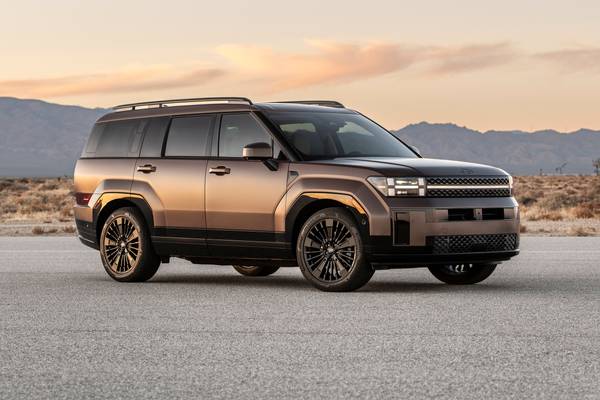
AWD trims dip to 34 mpg combined. Range still lands around 602 miles, respectable for a vehicle with standard all-wheel traction. Toyota’s Grand Highlander Hybrid rivals it closely. This Santa Fe Hybrid trades a slightly larger footprint for a boxier, more distinctive design.
Standard three-row seating is a genuine value-add here. Few midsize hybrids in this price range offer a usable third row. Hyundai backs the hybrid system with a strong warranty. That includes extended coverage for battery and hybrid-specific components.
The Panoramic Curved Display adds tech appeal inside. Highway Driving Assist further supports long-distance comfort on road trips. This SUV shows Korean automakers are closing the efficiency gap. It’s a legitimate alternative to Toyota’s long-range hybrid lineup.
Specifications:
- Engine: 1.6L turbocharged I4 hybrid
- Horsepower: 231 hp
- Torque: 271 lb-ft
- Length: 190.2 in
- Width: 75.4 in
- Fuel Tank: 17.7 gallons
- EPA Combined: 36 mpg (FWD)
6. Toyota RAV4 Hybrid FWD, 624 Miles
The RAV4 Hybrid remains one of the most popular efficient SUVs in America. Its 2026 redesign pushes range numbers even higher. FWD trims earn an EPA-estimated 43 mpg combined. Multiplied by the 14.5-gallon tank, that’s approximately 624 miles per fill-up.
That’s a genuinely remarkable figure for a compact SUV. Few vehicles this size, hybrid or not, approach 600-plus miles of range. Toyota’s hybrid system pairs a 2.5-liter engine with electric motors. FWD models produce 226 combined horsepower, while AWD trims reach 236.
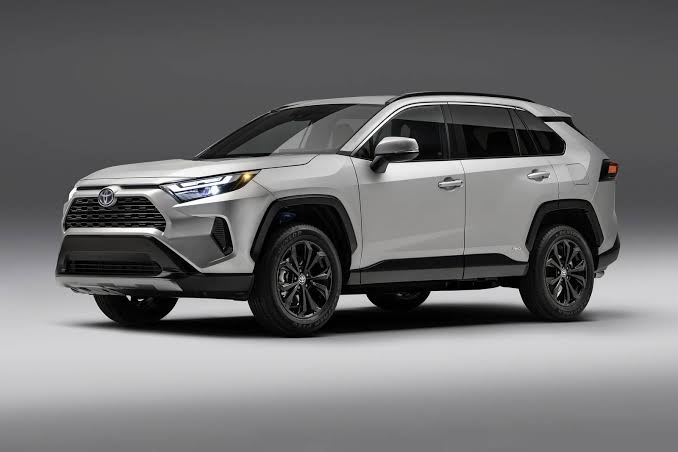
The 2026 redesign dropped all non-hybrid gas engines. Every RAV4 now ships standard with hybrid power across the lineup. AWD versions see a small mpg dip, landing near 41 combined. Range still holds strong at roughly 594 miles per tank.
A plug-in hybrid variant exists for buyers wanting even more flexibility. It adds up to 54 miles of electric-only range on top of gas range. Cargo space remains competitive within the compact SUV class. Toyota didn’t sacrifice practicality to chase these efficiency numbers.
This generation also gained a stiffer, updated platform. Ride quality and handling improved alongside the powertrain changes. For buyers wanting compact-SUV practicality with road-trip range, this is hard to beat. It’s efficient without demanding any real-world compromise.
Specifications:
- Engine: 2.5L I4 hybrid (Dynamic Force)
- Horsepower: 226 hp (FWD)
- Torque: Not officially disclosed as a combined figure
- Length: 181.0 in
- Width: 73.0 in
- Fuel Tank: 14.5 gallons
- EPA Combined: 43 mpg (FWD)
7. Chevrolet Tahoe 3.0L Duramax RWD, 576 Miles
The Tahoe is the Suburban’s shorter sibling, and the diesel version shares similar efficiency DNA. It just carries a smaller tank to match its smaller footprint. Chevrolet rates RWD Duramax models around 22 city and 26 highway mpg. That averages to roughly a 24 mpg combined figure.
Multiplied by the 24-gallon fuel tank, that’s approximately 576 miles of range. Chevrolet’s own highway-only marketing claims up to 624 miles. The same 3.0-liter Duramax inline-six powers this SUV. Output remains identical at 305 horsepower and 495 lb-ft of torque.
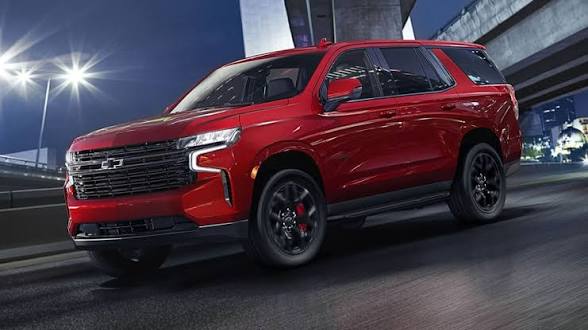
Gas-powered Tahoes fall well short by comparison. The standard 5.3L V8 manages just 17 mpg combined, cutting range dramatically. Towing capacity reaches an impressive 8,400 pounds with the V8. The diesel matches closely at 8,200 pounds, still plenty for most trailers.
Interior cargo space totals 72.6 cubic feet behind the second row. With all seats folded, that expands to 122.7 cubic feet. A new 11-inch driver information center debuted for this generation. It’s a meaningful tech upgrade over prior Tahoe interiors.
Diesel maintenance does require attention to DEF fluid. Owners should expect refills roughly every 5,000 miles alongside oil changes. For buyers who don’t need Suburban-length dimensions, this is the efficient choice. It’s a smaller footprint with genuinely long-haul capability.
Specifications:
- Engine: 3.0L Duramax turbo-diesel I6
- Horsepower: 305 hp
- Torque: 495 lb-ft
- Length: 210.7 in
- Width: 81.0 in
- Fuel Tank: 24 gallons
- EPA Combined: 24 mpg (approx., diesel)
8. Honda CR-V Hybrid FWD Sport, 560 Miles
The CR-V Hybrid has long been a fuel-economy favorite. Its efficiency continues to translate into genuinely useful range. Honda’s hybrid system returns approximately 40 mpg combined on FWD Sport trims. Multiplied by the 14-gallon tank, that’s roughly 560 miles of range.
City-focused driving actually improves this number further. Honda advertises up to 602 city miles per tank on select trims. The 2.0-liter Atkinson-cycle engine pairs with two electric motors. Combined output reaches 204 horsepower and 247 lb-ft of torque.
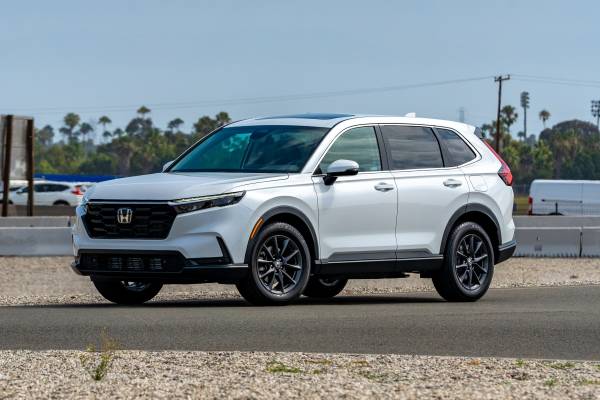
AWD versions see efficiency dip slightly to around 38 mpg combined. Range still lands near 521 miles on the smaller AWD tank. A dedicated ECON button helps drivers manage throttle response. It’s a small but useful feature for maximizing every gallon.
The CR-V remains one of Honda’s best-selling nameplates. That popularity stems from its blend of efficiency, space, and dependability. A new rugged TrailSport variant joined the 2026 lineup. It adds capability without significantly hurting the hybrid’s core efficiency numbers.
Cargo space stays competitive within the compact SUV segment. Honda didn’t compromise practicality to hit these fuel economy figures. For daily commuters and occasional road-trippers alike, this remains a smart pick. It balances range, space, and price better than most rivals.
Specifications:
- Engine: 2.0L Atkinson-cycle I4 hybrid
- Horsepower: 204 hp
- Torque: 247 lb-ft
- Length: 184.8 in
- Width: 73.5 in
- Fuel Tank: 14.0 gallons
- EPA Combined: 40 mpg (FWD, approx.)
9. Toyota Sequoia i-FORCE MAX RWD, 495 Miles
The Sequoia stands alone as the only hybrid, body-on-frame full-size SUV on sale. That hybrid system delivers genuinely strong range for its class. RWD models earn an EPA-estimated 22 mpg combined. Paired with a 22.5-gallon tank, that’s approximately 495 miles of range.
4WD versions drop slightly to 20 mpg combined. Range falls to roughly 450 miles, still solid for a true off-road-capable SUV. Power comes from a 3.4-liter twin-turbo V6 hybrid system. Combined output is a substantial 437 horsepower and 583 lb-ft of torque.
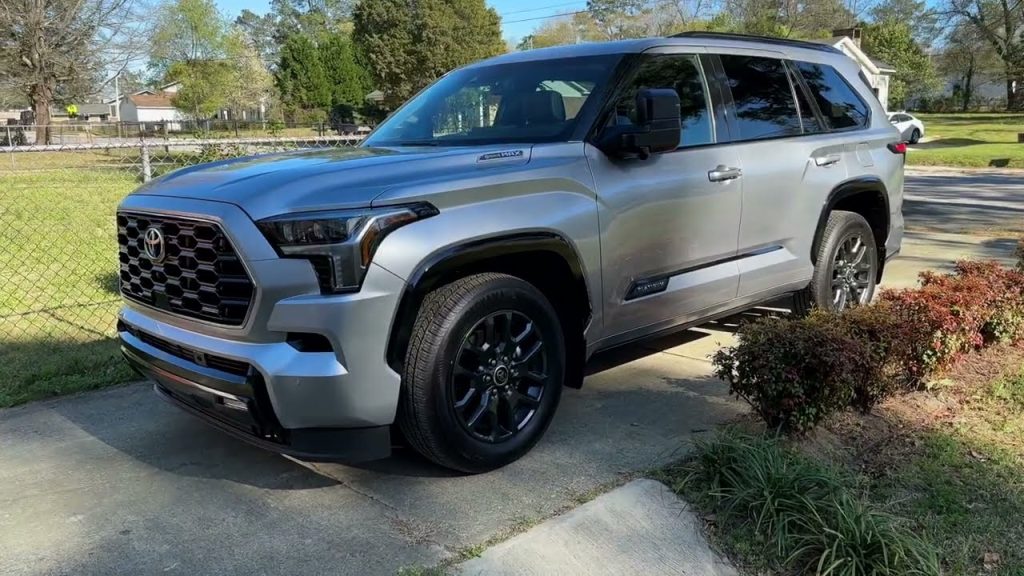
That torque figure includes 184 lb-ft from the electric motor alone. It gives the Sequoia genuinely quick acceleration for its size and weight. Towing capacity reaches 9,520 pounds on base configurations. That figure beats most rivals’ standard, non-package towing ratings outright.
The platform shares its bones with the Tundra pickup. That shared architecture brings genuine off-road credibility to the Sequoia lineup. TRD Pro trims add locking differentials and Crawl Control. Multi-Terrain Monitor further supports serious off-pavement driving situations.
Interior space trails some rivals like the Tahoe and Expedition. The solid rear axle and battery placement do compromise third-row and cargo flexibility somewhat. Still, no other body-on-frame SUV matches this efficiency-to-capability ratio. It’s a genuinely unique option in the full-size segment.
Specifications:
- Engine: 3.4L twin-turbo V6 hybrid (i-FORCE MAX)
- Horsepower: 437 hp
- Torque: 583 lb-ft
- Length: 208.1 in
- Width: 81.6 in
- Fuel Tank: 22.5 gallons
- EPA Combined: 22 mpg (RWD)
10. Ford Expedition Active RWD, 442 Miles
The Expedition rounds out this list with solid, if unspectacular, range numbers. It still delivers genuine full-size capability alongside its efficiency. The Active trim with RWD earns an EPA-estimated 19 mpg combined. Multiplied by its 23.3-gallon tank, that’s approximately 442 miles of range.
Other trims and 4WD configurations see slightly lower combined ratings. Most Expedition trims still land close to that 19 mpg combined figure. Power comes from a 3.5-liter EcoBoost V6. The standard version produces 400 horsepower and 480 lb-ft of torque.
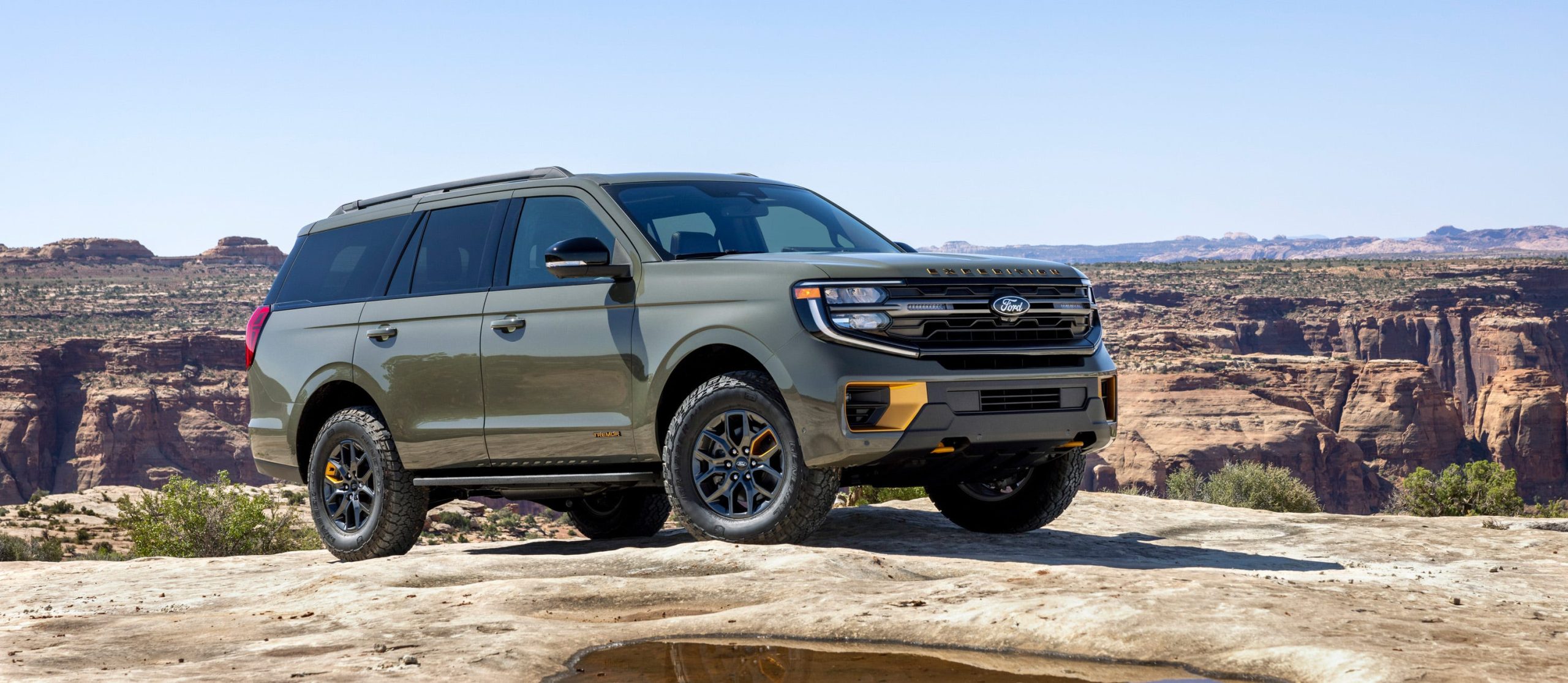
A high-output variant bumps output to 440 horsepower. That version trades a bit of efficiency for stronger towing and acceleration. Both engines pair with a smooth 10-speed automatic transmission. SelectShift capability lets drivers manage gears manually when desired.
Cargo volume reaches 108.5 cubic feet with seats folded. That’s respectable, though it trails both the Suburban and Tahoe significantly. Towing capacity sits around 6,000 to 9,300 pounds depending on package. The Max long-wheelbase version adds even more cargo length behind the third row.
Seating flexibility is a genuine Expedition strength. Configurations range from six to eight passengers depending on chosen seat layout. While it lacks a diesel or hybrid option, the Expedition remains a strong all-around performer. It’s proof that even without electrification, modern turbocharged V6 engines deliver respectable range.
Specifications:
- Engine: 3.5L EcoBoost turbocharged V6
- Horsepower: 400 hp
- Torque: 480 lb-ft
- Length: 209.9 in
- Width: 80.0 in (94.6 in with mirrors)
- Fuel Tank: 23.3 gallons
- EPA Combined: 19 mpg (RWD)
Also Read: 7 Fluid Colors Under Your Car and What Each Leak Costs
