
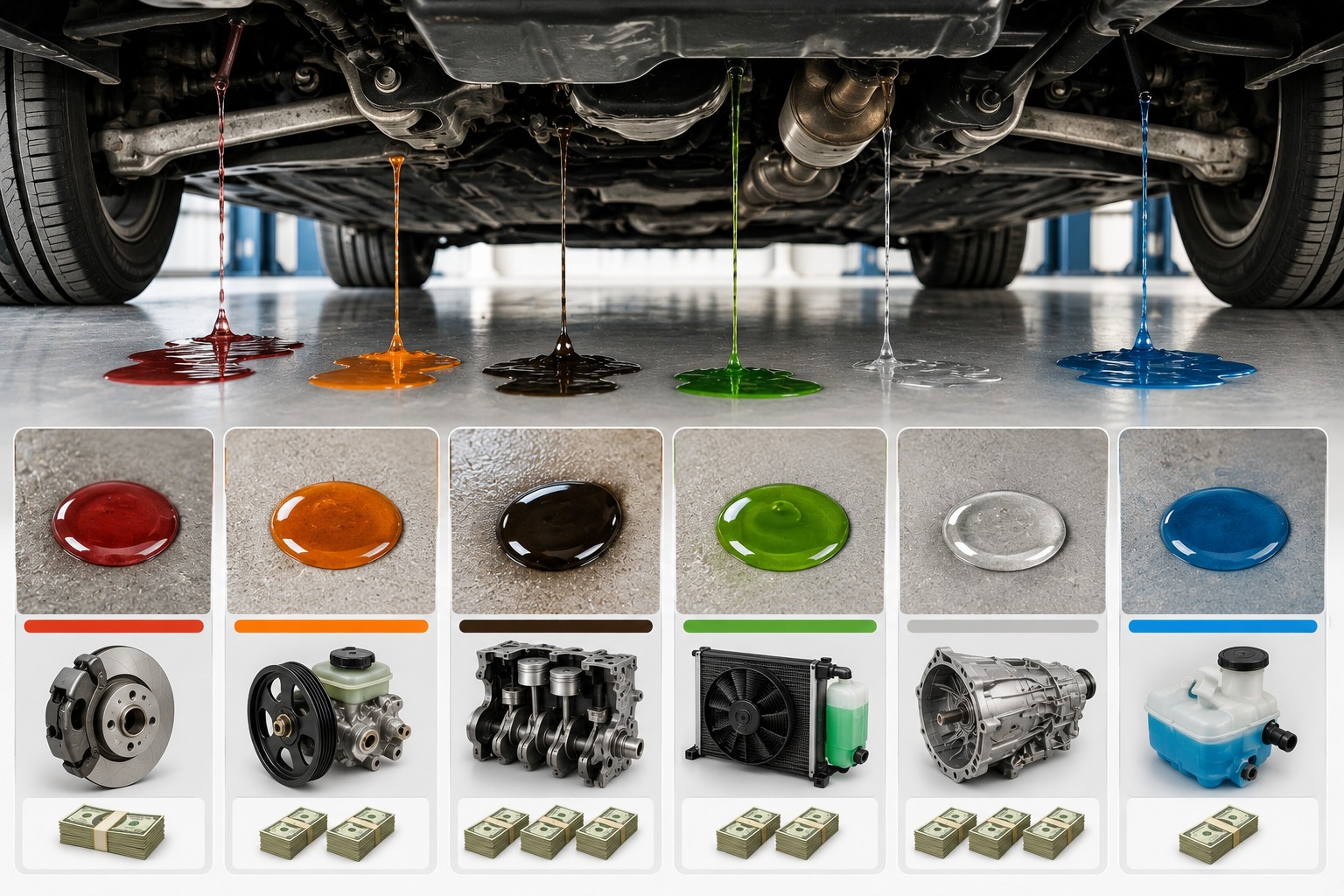
Every stain on your driveway tells a story. Your car speaks in colors long before a warning light ever turns on. Learning to read that language can save you thousands of dollars. A five-minute glance under the hood often catches a problem while it’s still cheap.
This guide breaks down the seven fluids you’re most likely to find pooling beneath your vehicle. Each one has a distinct color, a specific job, and a very different price tag when it fails.
We’ll walk through engine oil, coolant, transmission fluid, power steering fluid, brake fluid, differential fluid, and AC condensation. You’ll learn what each color means and what a typical repair actually costs in 2026.
We’ve also included real vehicle specifications for context. Different engines and drivetrains leak differently, and size matters more than most drivers realize.
Ignoring a puddle rarely saves money. It almost always turns a $150 fix into a $1,500 disaster. By the end of this article, you’ll be able to identify any fluid on sight. You’ll also know exactly what to expect when the mechanic hands you the bill.
1. Black or Dark Brown: Engine Oil
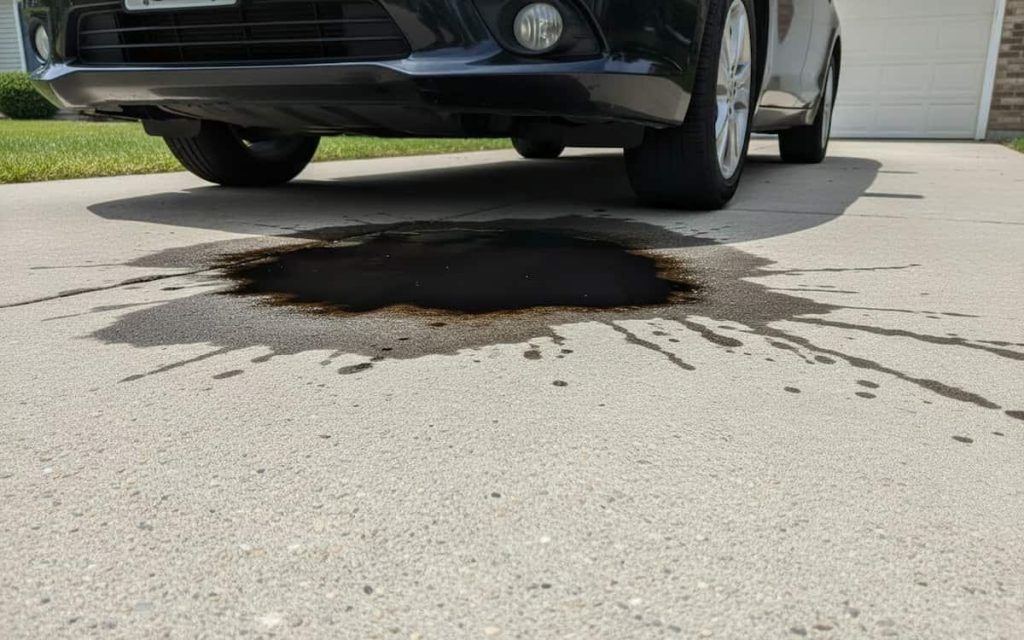
Fresh engine oil starts out amber and translucent. Heat and mileage slowly darken it to black. A dark, oily puddle under the front-center of your car almost always means an oil leak. It often carries a faint burnt smell if it’s dripping onto the exhaust.
Common culprits include the valve cover gasket, oil pan gasket, and rear main seal. Loose drain plugs and failing oil filters are frequent, cheaper offenders too.
Fixing a car oil leak can cost anywhere from $150 to over $2,000, with a typical average falling between $300 and $1,000. Location inside the engine drives most of that spread.
This wide range comes down to leak location, vehicle make and model, and the cost of parts and labor. A valve cover gasket sits on top of the engine and is easy to reach.
A rear main seal sits between the engine and transmission. Reaching it often means pulling the transmission, which multiplies the labor bill. Valve cover gasket repairs typically range from $150 to $500, while oil pan gasket repairs generally range from $300 to $1,000. Oil filter leaks fall into a similar mid-range bracket.
A valve cover gasket leak on an older Honda Accord may cost around $300, while a rear main seal repair on a luxury SUV can exceed $1,800 due to extensive labor. The part itself rarely costs much. Never keep driving on low oil. The engine can seize within minutes once lubrication fails completely.
2. Green, Orange, or Pink: Engine Coolant
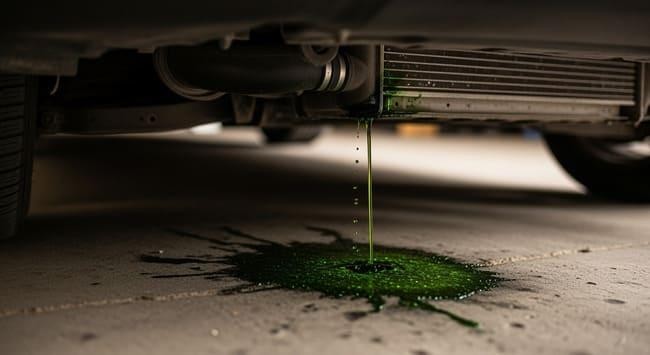
Coolant color depends entirely on the additive package your manufacturer uses. Green is the traditional formula, while orange and pink are longer-life extended versions.
A sweet, syrupy smell almost always accompanies a coolant leak. That smell is a dead giveaway even before you spot the color. Coolant leak repair costs typically range from $200 to $2,500, depending on the source and severity of the issue. Hose and clamp failures sit at the cheap end of that range.
A minor external leak from a worn or loose hose clamp is typically the least costly repair, ranging between $150 and $350. These jobs usually take under an hour.
Repairs involving larger components, like the radiator or water pump, generally fall between $400 and $900. Water pumps often sit deep behind the timing cover.
The most expensive coolant leaks come from inside the engine. Complex issues such as head gasket leaks can cost between $1,000 and $2,500 because they demand major disassembly.
A new radiator alone averages between $1,010 and $1,162 before labor is even factored in. That’s a stark jump from a $20 hose clamp. Never open a hot radiator cap. Pressurized coolant can cause severe burns instantly.
3. Red or Reddish-Brown: Transmission Fluid
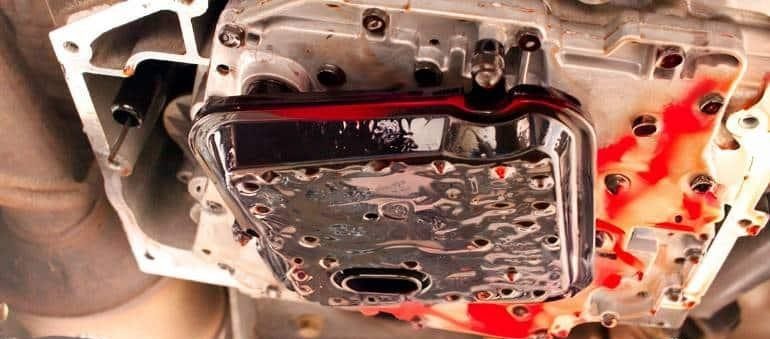
Fresh automatic transmission fluid is bright red, almost like cherry syrup. Age and heat gradually darken it toward brown. This oily fluid usually pools near the center of the vehicle, close to the transmission pan. It has a slightly sweet, distinctly different smell from engine oil.
A transmission leak repair typically costs between $150 and $400 for minor issues like a pan gasket or seal replacement. Front seal or removal-required jobs run much higher.
If the leak stems from a front seal or requires removing the transmission, costs can escalate to $800 to $1,200. That’s a significant labor jump. A leak often requires just a new pan gasket, seal, or torque converter seal, typically costing $250 to $700. Slipping gears point to a much deeper problem.
Ignore this leak and the stakes rise sharply. Extensive damage from running low on fluid may lead to a rebuild costing $3,000 or more. Mercedes and BMW repairs sit at the premium end, with leak fixes running $800 to $1,500.
Luxury imports demand specialized fluids and parts. Modern transmissions shift by hydraulic pressure. Low fluid causes internal friction that snowballs into total failure fast.
4. Light Amber or Clear-Reddish: Power Steering Fluid
Power steering fluid looks nearly identical to fresh transmission fluid, only lighter. It typically leaks near the front wheels, close to the steering rack.
A whining noise when turning the wheel is the classic warning sign. Stiff, heavy steering often follows soon after. The average power steering fluid leak costs between $500 and $650 to repair. That figure covers most hose, pump, and seal-related jobs.
Replacing power steering hoses typically costs between $100 and $300 for parts, plus roughly an hour of labor. That’s the cheapest fix in this category.
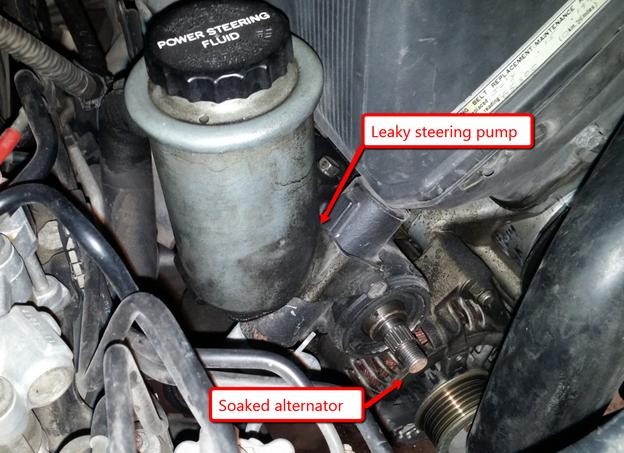
A full steering rack replacement costs far more. A worn rack seal that’s left unaddressed can destroy the rack entirely, a repair that typically runs $600 to $2,000.
A basic power steering leak inspection alone runs between $63 and $92 before any repair work begins. Diagnosis is cheap; the fix depends on what’s found.
Additional damage can add extra costs, since fluid leakage can soften nearby belts and hoses, adding another $90 to $250 to the bill. One leak often triggers a second problem. Many modern cars use electric steering instead. If yours has no hydraulic pump, this leak simply won’t apply to you.
Also Read: 8 Cheapest New Cars You Can Buy In 2027
5. Yellow-Brown or Clear: Brake Fluid
Fresh brake fluid is nearly clear with a faint yellow tint. It darkens toward brown as moisture and heat contaminate it over time. Brake fluid leaks appear near a wheel or underneath the master cylinder by the firewall. A soft, spongy brake pedal is the most dangerous warning sign.
Brake fluid leak repair typically costs between $150 and $700, depending on which brake component is leaking. Caliper and master cylinder failures push costs much higher.
Repairs can reach $1,000 or more if major parts like the master cylinder or brake caliper need replacement. These parts are expensive and labor-intensive.
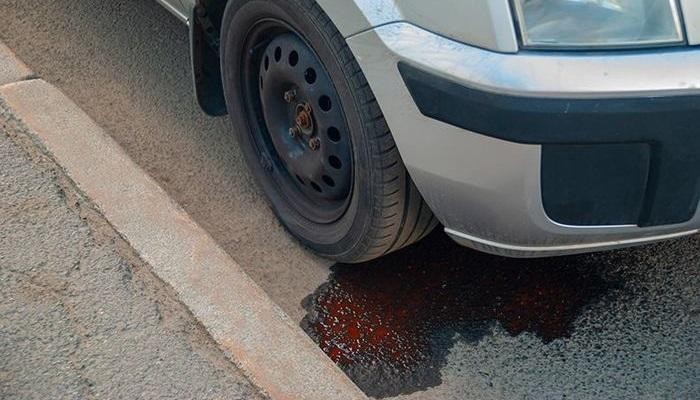
Minor brake fluid leaks involving tightening or replacing an inexpensive part can cost as little as $100. A cracked brake line runs higher. More extensive hose or brake line repairs could cost between $300 and $400, since brake lines run the full length of the vehicle. Access alone eats up labor hours.
This is not a leak to postpone. Low brake fluid directly reduces stopping power, and it can lead to complete brake failure. Book a shop visit immediately if you notice this leak. Brake systems are the one category where waiting is never worth the savings.
6. Amber to Reddish-Brown: Differential and Gear Oil
Gear oil is thicker and darker than engine oil, with a distinctly pungent, sulfuric smell. It leaks near the rear axle on rear-wheel and all-wheel-drive vehicles.
A whining or humming noise during turns is a classic symptom. It often gets louder as speed increases. The average rear differential leak repair cost ranges from $200 to $850, depending on parts, labor, and whether the issue is a simple seal replacement or a full rebuild. Most jobs land on the lower end.
Basic seal replacements cost around $200 to $400, while severe leaks that damage internal components can reach $1,000 or more. Delayed repairs are what push costs upward.
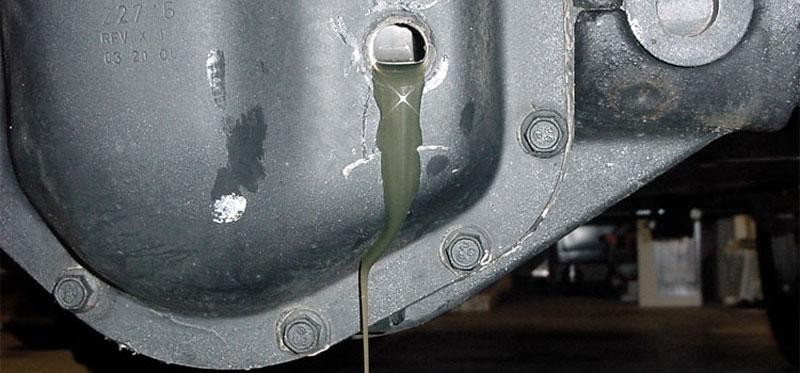
A leaking or damaged differential cover typically runs $150 to $400 when you combine the gasket, labor, and fresh fluid. This is one of the more affordable drivetrain fixes.
Fluid replacement alone, without a seal issue, typically runs $30 to $150 depending on whether it’s a simple top-off or a full drain and refill. Catching it early keeps costs low. Running a differential dry destroys gears quickly. A cheap seal job can turn into a full axle rebuild in a matter of weeks.
7. Clear Water: AC Condensation (Not a Real Leak)
Not every puddle spells trouble. Clear, odorless water under the passenger side, especially after running the air conditioning, is completely normal.
This is simply condensation draining from the AC evaporator core. It’s the same process that causes a cold glass to sweat on a warm day. The repair cost for this “leak” is zero dollars, because nothing is actually wrong. No fluid, no gasket, and no seal needs replacing.
The only exception is a clogged AC drain tube, which can cause water to pool inside the cabin instead of draining outside. That fix typically costs under $100 in labor to clear the blockage.
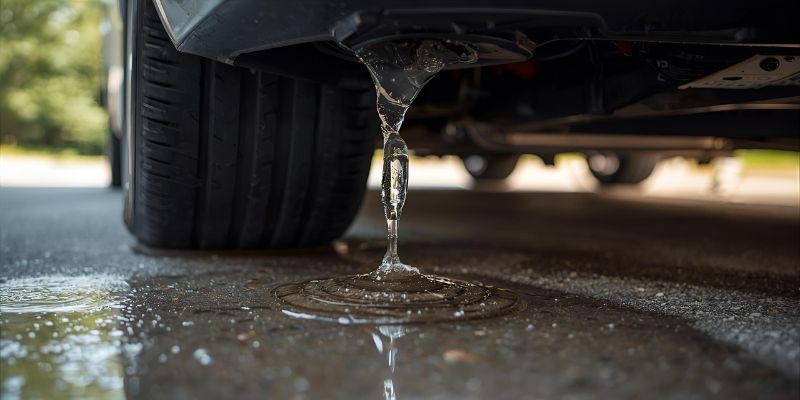
Confusing this with coolant is a common and costly mistake. Drivers sometimes pay for unnecessary diagnostics chasing a puddle that was never a leak at all. Touch the puddle before you panic. Water evaporates and leaves no residue, while every other fluid on this list leaves an oily stain behind.
Also Read: 8 Cars With the Smallest Factory Fuel Tanks
