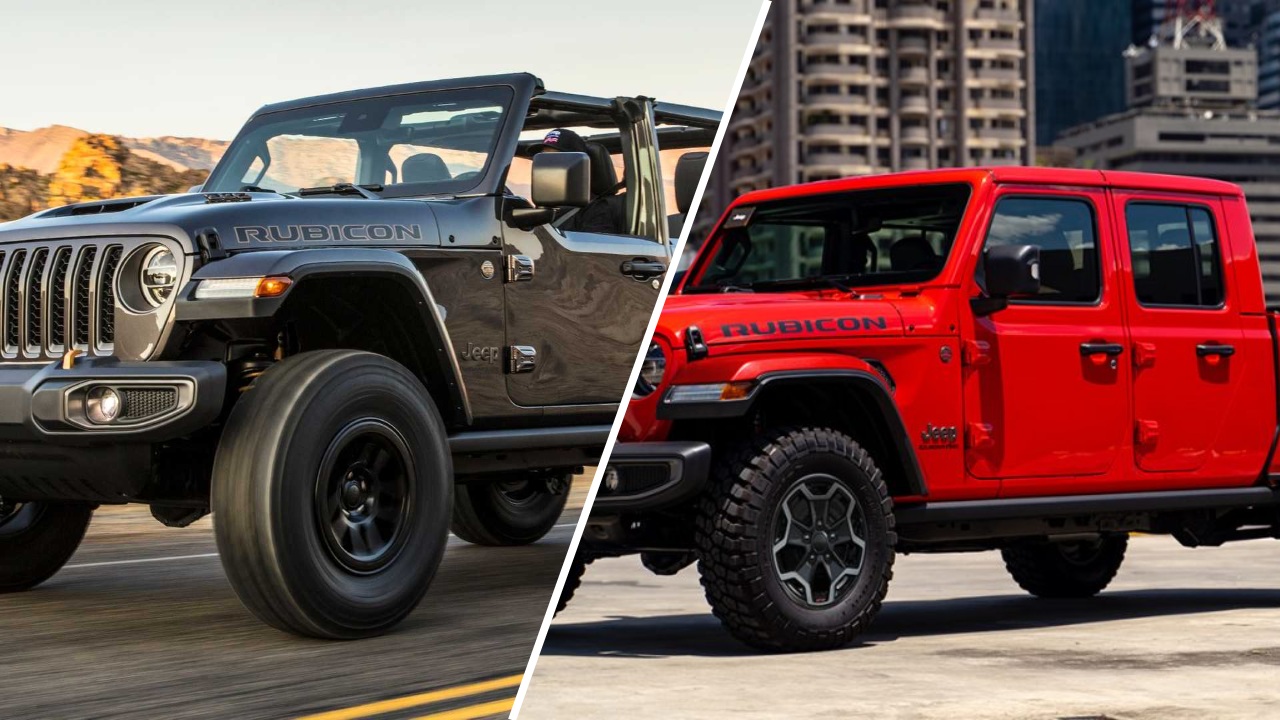
The Jeep Wrangler Rubicon has earned a reputation as one of the world’s most capable production off-road vehicles. From the deserts of the Middle East to the forests of North America and the mountain trails of Australia, the Rubicon is designed to venture where many SUVs simply cannot.
Factory-equipped with heavy-duty Dana 44 axles, electronically locking front and rear differentials, an electronic sway bar disconnect, skid plates, rock rails, and aggressive all-terrain tires, it offers serious off-road performance straight from the showroom.
At the same time, modern Wrangler models include advanced infotainment systems, driver-assistance technologies, and improved cabin comfort, making them practical enough for daily use.
While the Wrangler Rubicon’s legendary capability attracts buyers worldwide, owning one involves much more than paying the purchase price. Fuel consumption, scheduled maintenance, depreciation, tire replacement, registration fees, and occasional repairs all contribute to the total cost of ownership.
Buyers often focus on monthly loan payments, but long-term operating expenses can significantly influence the full financial commitment. Fortunately, the Wrangler also benefits from strong resale values, helping offset some of its higher running costs.
This analysis uses realistic global-average ownership estimates based on a new Jeep Wrangler Unlimited Rubicon, driven approximately 12,000 miles (19,000 kilometers) per year over five years.
Actual expenses vary depending on local taxes, fuel prices, insurance markets, and labor costs, but these estimates provide a practical picture of what many owners can expect during a typical ownership period.
Also Read: 8 High-Wear Car Parts You Shouldn’t Ignore at 100,000 Miles
Purchase Price: Paying for Purpose-Built Capability
The Wrangler Rubicon sits near the top of Jeep’s lineup and commands a premium price because of the specialized hardware included as standard equipment.
Unlike many midsize SUVs that prioritize road comfort over off-road performance, the Rubicon is engineered to tackle steep climbs, deep mud, rocky trails, and water crossings without requiring expensive aftermarket upgrades.
Across global markets, the equivalent purchase price for a well-equipped four-door Wrangler Unlimited Rubicon generally falls between $58,000 and $68,000, depending on taxes, destination charges, and optional features.
Premium paint, leather seating, upgraded audio systems, larger infotainment displays, and removable hardtops can increase the final transaction price further.
Although this may appear expensive compared with conventional SUVs, buyers receive equipment that would cost thousands of dollars to install separately.
Heavy-duty Dana 44 front and rear axles, electronically locking differentials, the Rock-Trac four-wheel-drive system with a 4:1 low-range transfer case, heavy-duty suspension components, and underbody skid plates are all included from the factory.
These components are specifically designed for demanding off-road use and contribute significantly to the Rubicon’s worldwide reputation.
Another reason the Wrangler commands premium pricing is its unique market position. Few vehicles combine removable doors, removable roof panels, solid front and rear axles and genuine factory off-road capability.
This lack of direct competition allows Jeep to maintain strong pricing while continuing to attract buyers seeking an authentic adventure vehicle rather than another family crossover.
Depreciation: Strong Resale Value Works in the Owner’s Favor
Depreciation is often the largest expense associated with owning any new vehicle, but the Wrangler Rubicon consistently performs better than many premium SUVs. Strong global demand, limited direct competition, and an enthusiastic owner community help maintain used values even after several years of ownership.
Using a representative purchase price of approximately $63,000, a well-maintained Wrangler Rubicon commonly retains 60 to 70 percent of its original value after five years.
This translates to a resale value between $38,000 and $44,000, depending on mileage, condition, service history, and local market demand. As a result, depreciation generally falls between $19,000 and $25,000, which is considerably better than many similarly priced SUVs.
Several factors contribute to these impressive resale figures. Wrangler buyers often seek factory-original Rubicon models because they include premium off-road equipment already engineered and tested by Jeep.
Vehicles with complete maintenance records, minimal accident history, and moderate mileage typically command the highest resale prices.
The Wrangler’s timeless design also helps preserve value. Unlike many SUVs that undergo dramatic styling changes every few years, the Wrangler has evolved gradually while maintaining its instantly recognizable appearance. Older generations therefore continue to look current, helping sustain demand in the used market.
Fuel Costs: Capability Comes at the Pump
Exceptional off-road capability inevitably affects fuel economy. The Wrangler Rubicon’s solid axles, permanent four-wheel-drive hardware, high ground clearance, and aggressive all-terrain tires increase weight and clearance and drag compared with conventional crossovers.
Most global markets offer the Wrangler Rubicon with the proven 3.6-liter Pentastar V6, while some regions also receive the 2.0-liter turbocharged engine or the 4xe plug-in hybrid. For this analysis, ownership costs are based on the widely available V6 model.
Real-world fuel economy generally ranges between 17 and 20 mpg (U.S.) in mixed driving. Owners who install larger tires, steel bumpers, roof racks or winches often experience lower fuel economy because of additional weight and increased wind resistance.
Assuming annual driving of 12,000 miles, owners can expect to consume approximately 650 to 700 gallons of gasoline each year.
Using a global-average fuel price equivalent to $4.20 per gallon, annual fuel expenses range from roughly $2,700 to $2,900, producing a five-year fuel bill between $13,500 and $14,500. For many owners, fuel becomes the second-largest ownership expense after depreciation.
Maintenance, Insurance, Repairs and the Real Five-Year Ownership Cost
Routine maintenance is another major expense that Wrangler Rubicon owners should budget for. Unlike many crossover SUVs that spend their lives on paved roads, the Rubicon’s sophisticated four-wheel-drive system, locking differentials, transfer case, and heavy-duty suspension components require regular inspection and servicing to remain in peak condition.
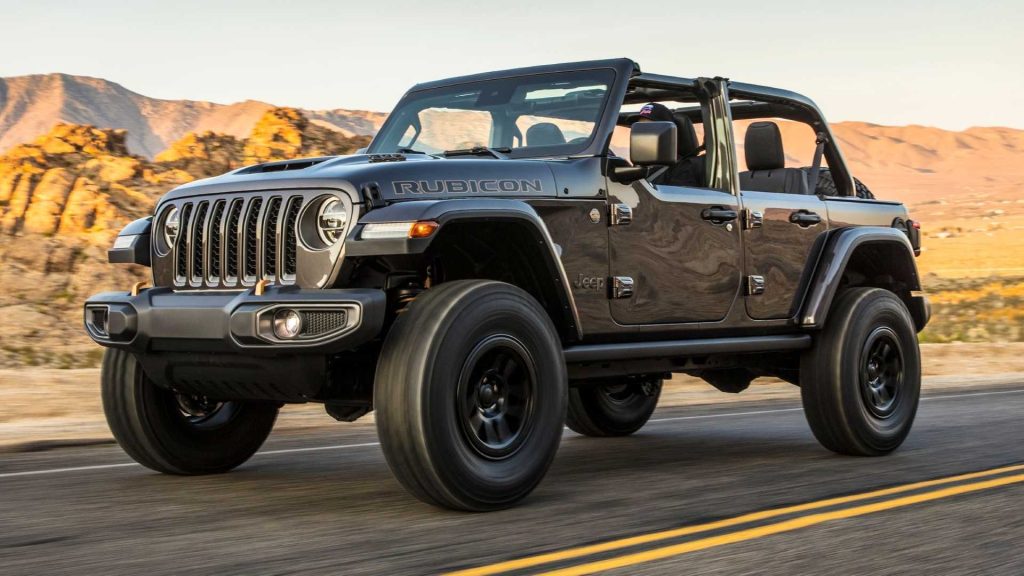
Jeep recommends scheduled oil and filter changes, brake inspections, transmission and differential fluid replacements, transfer case servicing, cooling system maintenance, and suspension checks.
Owners who frequently drive off-road should also inspect underbody protection, steering components, and suspension hardware more often, as rough terrain accelerates wear.
On average, routine maintenance costs between $700 and $1,000 per year, depending on labor rates and regional service prices.
Over five years, owners should expect to spend approximately $4,000 to $5,000 on scheduled servicing alone. Following the manufacturer’s maintenance schedule is essential, as neglecting drivetrain components can result in costly repairs later.
Insurance also represents a significant ownership expense. Because the Wrangler Rubicon carries a relatively high purchase price and features specialized off-road equipment, repair costs tend to be higher than those of mainstream SUVs.
Comprehensive insurance premiums vary according to the driver’s age, location, driving record, and local regulations, but a realistic global average ranges from $1,400 to $2,000 annually. Using a midpoint estimate of $1,700 per year, owners can expect to spend roughly $8,500 on insurance during a five-year ownership period.
The Rubicon’s factory 33-inch all-terrain tires are another recurring expense. These tires deliver excellent grip on rocks, mud, and sand but generally wear faster than standard highway tires, particularly when driven aggressively on pavement.
Replacing a complete set of quality all-terrain tires typically costs between $1,400 and $1,800, while wheel alignment and balancing can increase the total to around $2,000. Registration fees, inspections, and local vehicle taxes usually add another $2,000 to $2,500 over five years.
Unexpected repairs are generally moderate rather than excessive. The Pentastar V6 has developed a solid reputation for reliability when maintained properly, although items such as batteries, brake components, suspension bushings, wheel bearings, and electronic sensors may require replacement as mileage increases.
Owners who frequently tackle difficult trails may also face additional costs for suspension parts, skid plates, or underbody components damaged during off-road use.
Adding together depreciation, fuel, maintenance, insurance, tires, registration, and minor repairs, the total five-year cost of owning a Jeep Wrangler Rubicon typically falls between $52,000 and $60,000, excluding financing costs and optional modifications.
While that figure is higher than many conventional SUVs, the Rubicon offers exceptional off-road capability, one of the strongest resale values in its class, and an ownership experience few vehicles can match.
For buyers who regularly venture beyond paved roads, the additional expense is often justified by its durability, versatility, and unmatched ability to tackle challenging terrain while remaining comfortable enough for everyday driving.
Also Read: 10 Toyota Models That Tell the Brands Story