
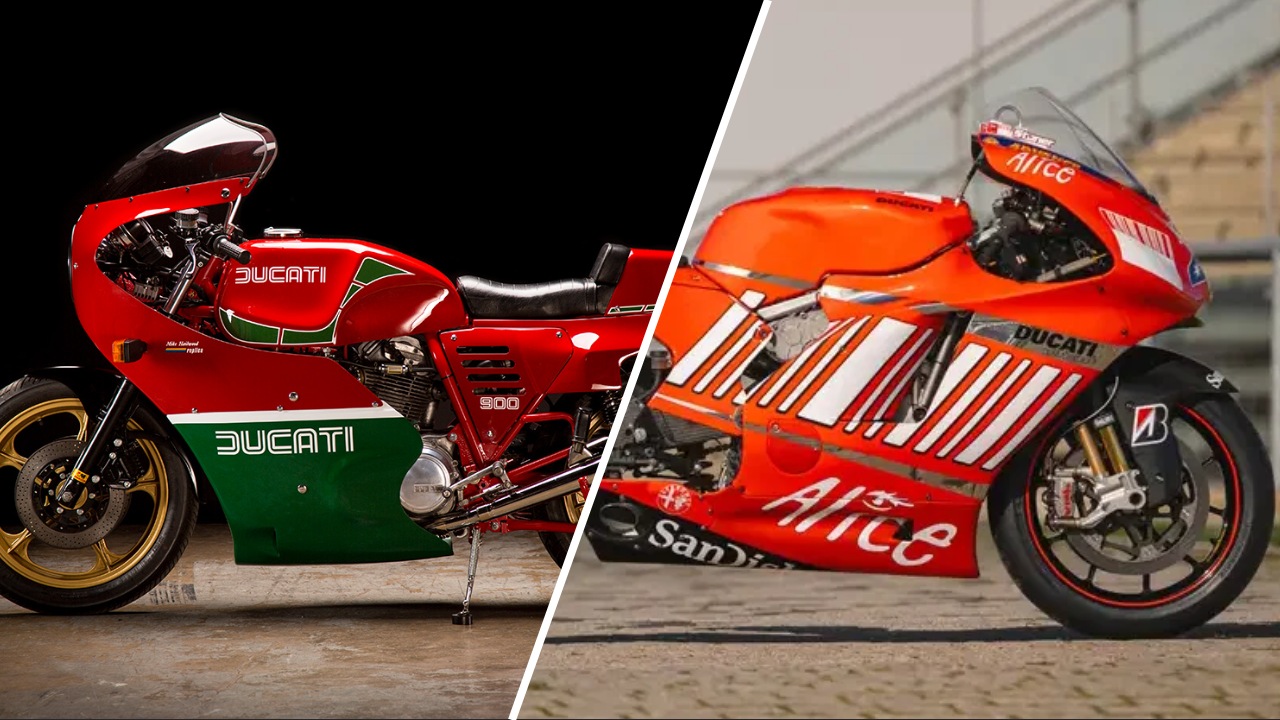
Ducati motorcycles have earned a special place among collectors because they combine racing success, Italian engineering, rare production numbers, and unforgettable design.
Over the decades, certain Ducati models have become highly valuable because of their competition history, limited availability, famous riders, and connection to important moments in motorcycle racing.
Auction houses have witnessed remarkable prices for factory race machines, historic superbikes, and collectible editions. These motorcycles represent more than transportation because they preserve chapters of Ducati’s racing heritage.
This article examines the most expensive Ducatis ever sold at auction, highlighting their history, significance, and record-setting values among collectors.
Also Read: 10 Toyota Models That Tell the Brand & Story
- Engine: 989 cc Desmosedici V4, four-stroke, DOHC, Desmodromic valve system
- Horsepower: Approximately 220 hp
- Torque: Approximately 118 Nm
- Length: Approximately 2,070 mm
- Width: Approximately 650 mm
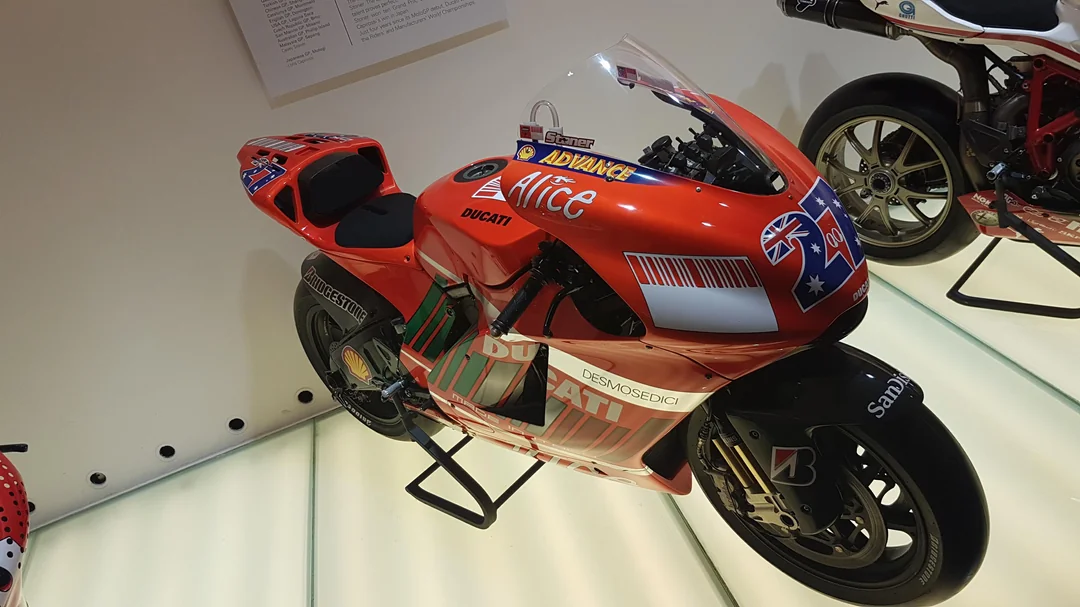
1. Ducati Desmosedici GP7 Ex Casey Stoner
The Ducati Desmosedici GP7 holds a special position in the company’s racing history because it represents the machine that helped Ducati achieve its first MotoGP world championship in the modern era.
The 2007 season was historic for the Italian manufacturer, with Casey Stoner dominating races and securing the championship title. The combination of Ducati’s powerful V4 engine, advanced electronics, and Stoner’s exceptional riding ability created a motorcycle that became a major part of MotoGP history.
The GP7 auction example gained enormous attention because it was directly connected to Casey Stoner’s championship-winning campaign. Unlike production motorcycles, factory MotoGP machines rarely appear on the open market, making them extremely attractive to serious collectors.
The rarity comes from the fact that manufacturers usually keep these machines within private collections, museums, or racing archives instead of offering them for public sale.
In 2024, an ex-Casey Stoner 2007 Ducati Desmosedici GP7 was sold by Iconic Auctioneers for £402,500, making it the highest publicly reported Ducati auction sale at that time. The motorcycle attracted international interest because it represented a genuine MotoGP race machine with a direct connection to a championship-winning rider.
The value of this Ducati comes from several important factors. Racing history is among the strongest influences in motorcycle collecting, and a bike connected with a world champion naturally receives significant attention.
The GP7 also represents a turning point for Ducati, proving that the company could compete successfully against established Japanese manufacturers in the premier class.
Collectors often view motorcycles like the GP7 as historical artifacts rather than ordinary machines. The value is not only linked to specifications but also to memories, achievements, and the people involved with the motorcycle.
Casey Stoner’s championship season transformed the GP7 into a symbol of Ducati’s racing ambition and technical achievement.
- Engine: 799 cc Desmosedici V4, four-stroke, DOHC, Desmodromic valve system
- Horsepower: Approximately 220 hp
- Torque: Approximately 120 Nm
- Length: Approximately 2,050 mm
- Width: Approximately 650 mm
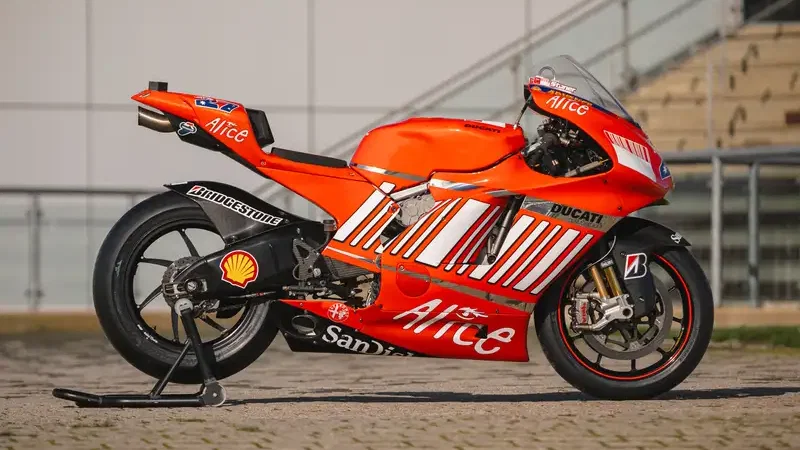
2. Ducati Desmosedici GP10 Ex Casey Stoner
The Ducati Desmosedici GP10 represents another important chapter in Ducati’s MotoGP journey. This machine was raced during the 2010 MotoGP season by Casey Stoner, who remained one of the most successful riders in Ducati’s history.
The GP10 continued the development of Ducati’s unique approach to MotoGP engineering, featuring the famous Desmodromic valve system and advanced aerodynamic technology.
Factory MotoGP motorcycles from this period are extremely rare because they were designed purely for competition.
These bikes were not built for public ownership, and each example carries technical details that separate them from road-going motorcycles. Their engines, electronics, suspension systems, and carbon components were created specifically for racing at the highest level.
At the RM Sotheby’s Monaco Ducati sale, Casey Stoner’s GP10 achieved a record price of €251,550. The sale placed the motorcycle among the most valuable Ducati race machines ever auctioned and demonstrated the growing collector interest in modern MotoGP history.
The importance of the GP10 extends beyond its auction result. It represents the period when Ducati was competing against manufacturers with decades of MotoGP experience. The motorcycle reflects Ducati’s willingness to develop unconventional engineering solutions while chasing championship success.
For collectors, owning a Desmosedici GP machine provides a direct connection to professional racing. These motorcycles are viewed as pieces of motorsport history because they were created for competition rather than commercial production.
The GP10 remains highly desirable due to its factory origins, racing pedigree, and association with Casey Stoner.
- Engine: 800 cc Desmosedici V4, four-stroke, pneumatic valve system
- Horsepower: Approximately 220 hp
- Torque: Approximately 120 Nm
- Length: Approximately 2,050 mm
- Width: Approximately 650 mm
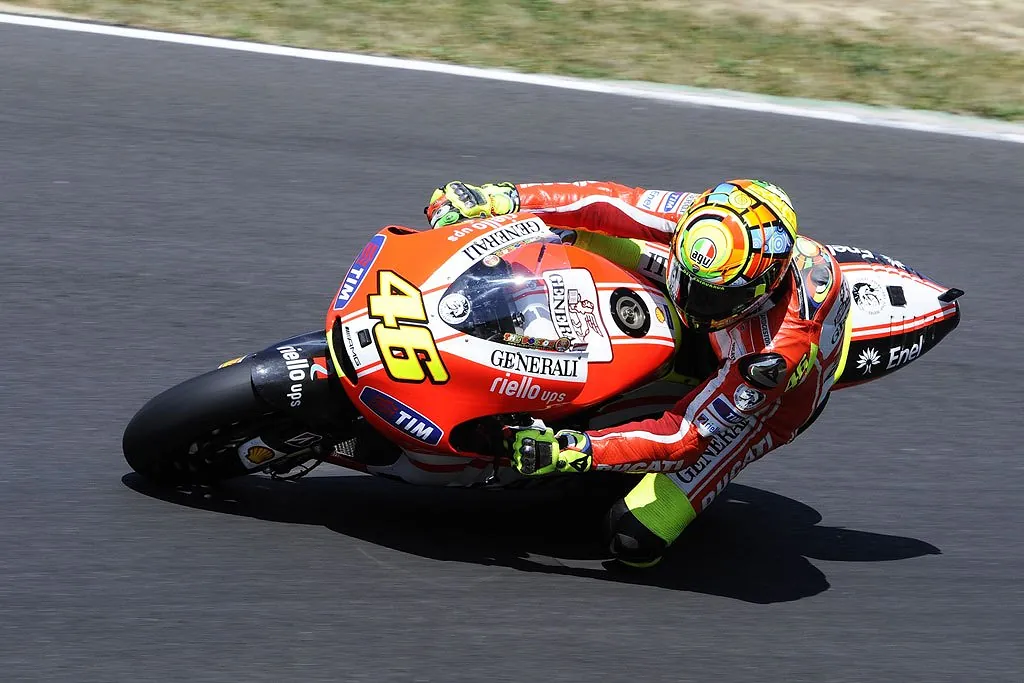
3. Ducati Desmosedici GP11 Ex Valentino Rossi
The Ducati Desmosedici GP11 is among the most recognizable MotoGP motorcycles because it was connected with Valentino Rossi’s short but highly significant period with Ducati Corse.
Rossi joined Ducati for the 2011 MotoGP season after achieving multiple world championships with Honda and Yamaha. His arrival created enormous excitement because fans expected one of the greatest riders in history to bring success to the Italian manufacturer.
The GP11 represented Ducati’s attempt to create a motorcycle that could compete for the championship against strong rivals from Japan.
The bike featured Ducati’s signature 90-degree V4 engine layout, advanced electronics, carbon fiber components, and a sophisticated aerodynamic package. The motorcycle was built around pure racing requirements, making it very different from Ducati’s road-going Desmosedici models.
Factory motorcycles connected with famous riders usually receive strong attention at auctions because collectors value the human stories behind them.
A machine ridden by Valentino Rossi carries additional historical importance because of his legendary career, worldwide popularity, and influence on motorcycle racing. Even though the 2011 season was challenging for Rossi and Ducati, the GP11 remains a significant part of MotoGP history.
The auction value of a GP11 depends heavily on documentation, authenticity, and the exact connection between the motorcycle and the rider.
Factory race bikes with official records, race history, and manufacturer confirmation are far more desirable than similar-looking replicas. Collectors often focus on provenance because it proves that the motorcycle genuinely participated in important racing events.
The Ducati Desmosedici GP11 remains valuable because it represents a unique moment when two major names in motorcycle racing came together. Ducati’s engineering ambition combined with Rossi’s global reputation created a motorcycle that continues to attract interest from collectors and motorsport enthusiasts.
- Engine: 748 cc air-cooled L-twin, two valves per cylinder, Desmodromic system
- Horsepower: Approximately 65 hp
- Torque: Approximately 68 Nm
- Length: Approximately 2,150 mm
- Width: Approximately 760 mm
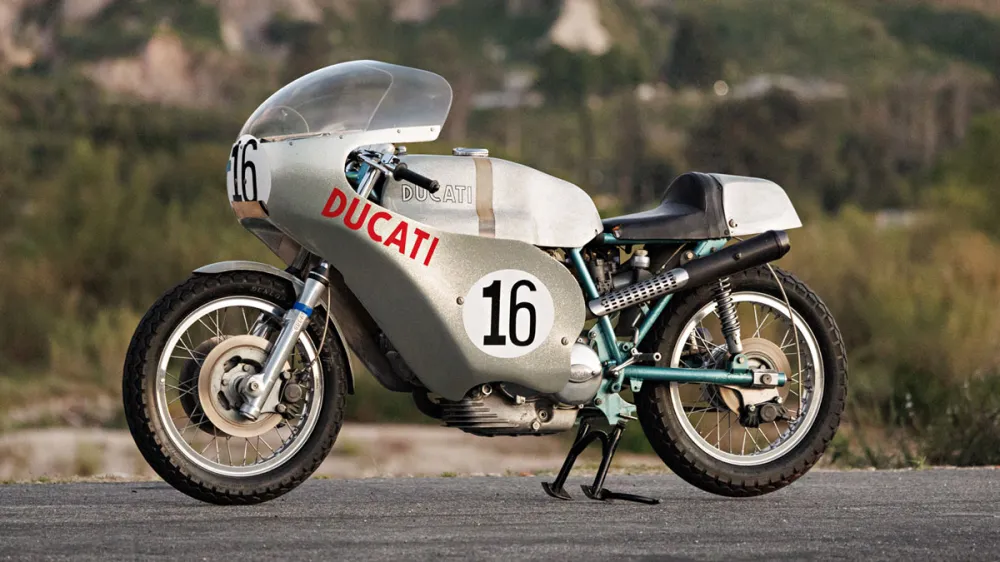
4. Ducati 750SS Imola Desmo
The Ducati 750SS Imola Desmo is considered among the most important classic Ducati motorcycles ever created. Its history is closely connected with Ducati’s famous victory at the 1972 Imola 200 race, where Paul Smart and Bruno Spaggiari achieved a remarkable one-two finish. That victory helped establish Ducati as a serious force in international motorcycle racing.
The production version of the 750SS was created to celebrate this achievement and became highly respected among collectors.
The motorcycle featured Ducati’s air-cooled L-twin engine, desmodromic valve technology, and distinctive Italian styling. During the 1970s, it represented a combination of racing influence and road usability that appealed to passionate riders.
Original examples of the 750SS Imola Desmo are extremely rare today. Many motorcycles from this era were modified, raced, or used extensively, reducing the number of untouched examples available.
A well-preserved motorcycle with original components, matching numbers, and strong history can command exceptional prices at specialist auctions.
Some examples of the Ducati 750SS Imola Desmo have achieved prices exceeding $200,000 at major collector auctions. The exact value depends on condition, originality, restoration quality, and documented history.
These motorcycles remain highly sought after because they represent Ducati’s transition from a small Italian manufacturer into a respected racing brand.
The appeal of the 750SS Imola Desmo comes from its connection to Ducati’s racing foundation. Modern Ducati superbikes benefit from decades of competition experience, and this model represents an important early stage of that development. For collectors, it is not simply a classic motorcycle but a piece of Ducati heritage.
- Engine: 864 cc air-cooled L-twin, Desmodromic valve system
- Horsepower: Approximately 80 hp
- Torque: Approximately 72 Nm
- Length: Approximately 2,150 mm
- Width: Approximately 720 mm
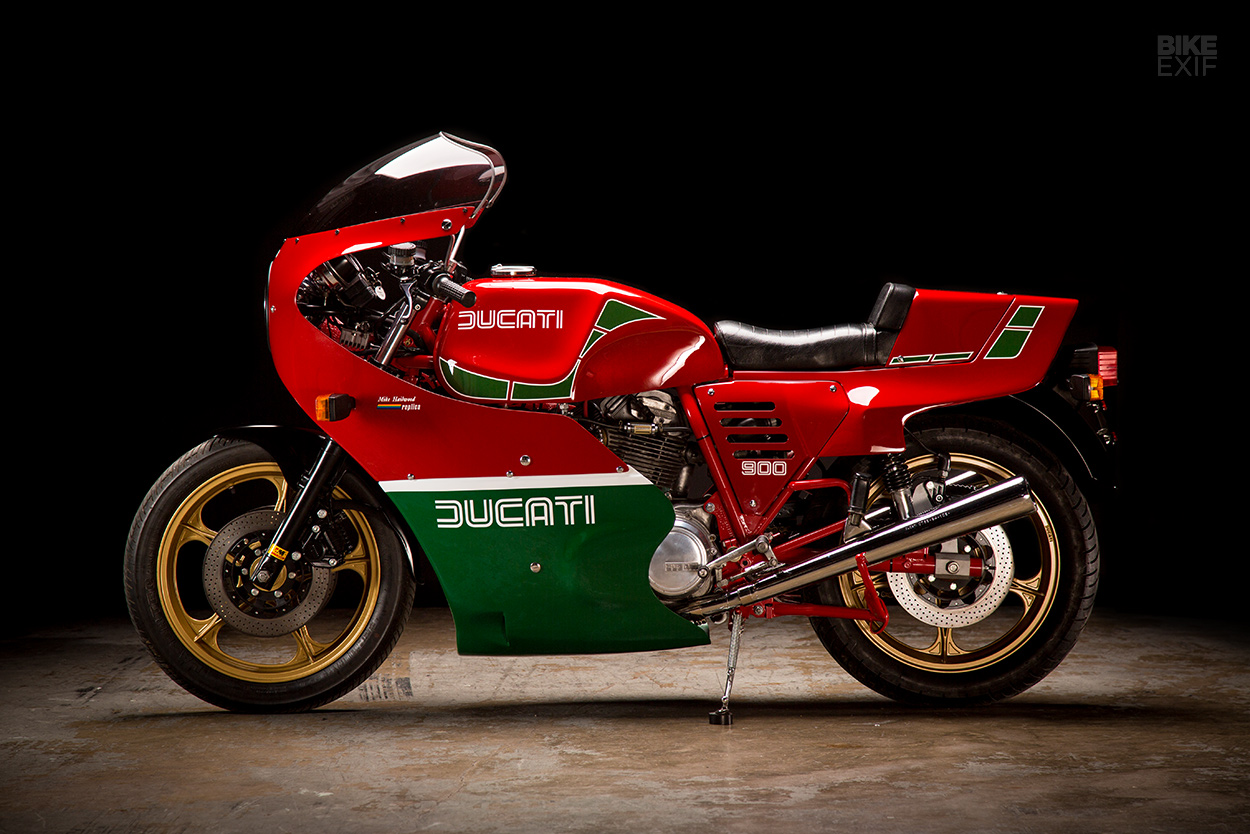
5. Ducati 900SS Mike Hailwood Replica
The Ducati 900SS Mike Hailwood Replica is one of the most famous Ducati road motorcycles ever produced. The model was created to celebrate Mike Hailwood’s legendary comeback victory at the 1978 Isle of Man TT.
Hailwood returned to racing after years away from professional competition and achieved a memorable win aboard a Ducati 900SS-based machine.
The motorcycle became a tribute to that achievement and quickly gained a reputation among enthusiasts. It featured Ducati’s traditional air-cooled L-twin engine, sporty riding position, and distinctive white and green racing-inspired paint scheme.
The design captured the spirit of the Isle of Man victory and helped strengthen Ducati’s reputation among performance motorcycle fans.
Collectors value the Mike Hailwood Replica because it combines racing history with limited production. Unlike mass-produced motorcycles, these machines were built in smaller numbers and have become increasingly difficult to find in original condition. Examples with complete documentation and factory specifications are especially valuable.
Auction prices for excellent examples have reached well into six figures, with rare and exceptionally preserved motorcycles attracting serious interest.
The value comes from the motorcycle’s historical connection, limited availability, and the reputation of Mike Hailwood as one of the greatest racers in motorcycle history.
The Ducati 900SS Mike Hailwood Replica remains a symbol of classic Italian motorcycle design. It represents an era when racing success directly influenced production motorcycles, creating machines that carried competition character onto public roads.
- Engine: 748 cc air-cooled L-twin, Desmodromic valve system
- Horsepower: Approximately 70 hp
- Torque: Approximately 65 Nm
- Length: Approximately 2,150 mm
- Width: Approximately 750 mm
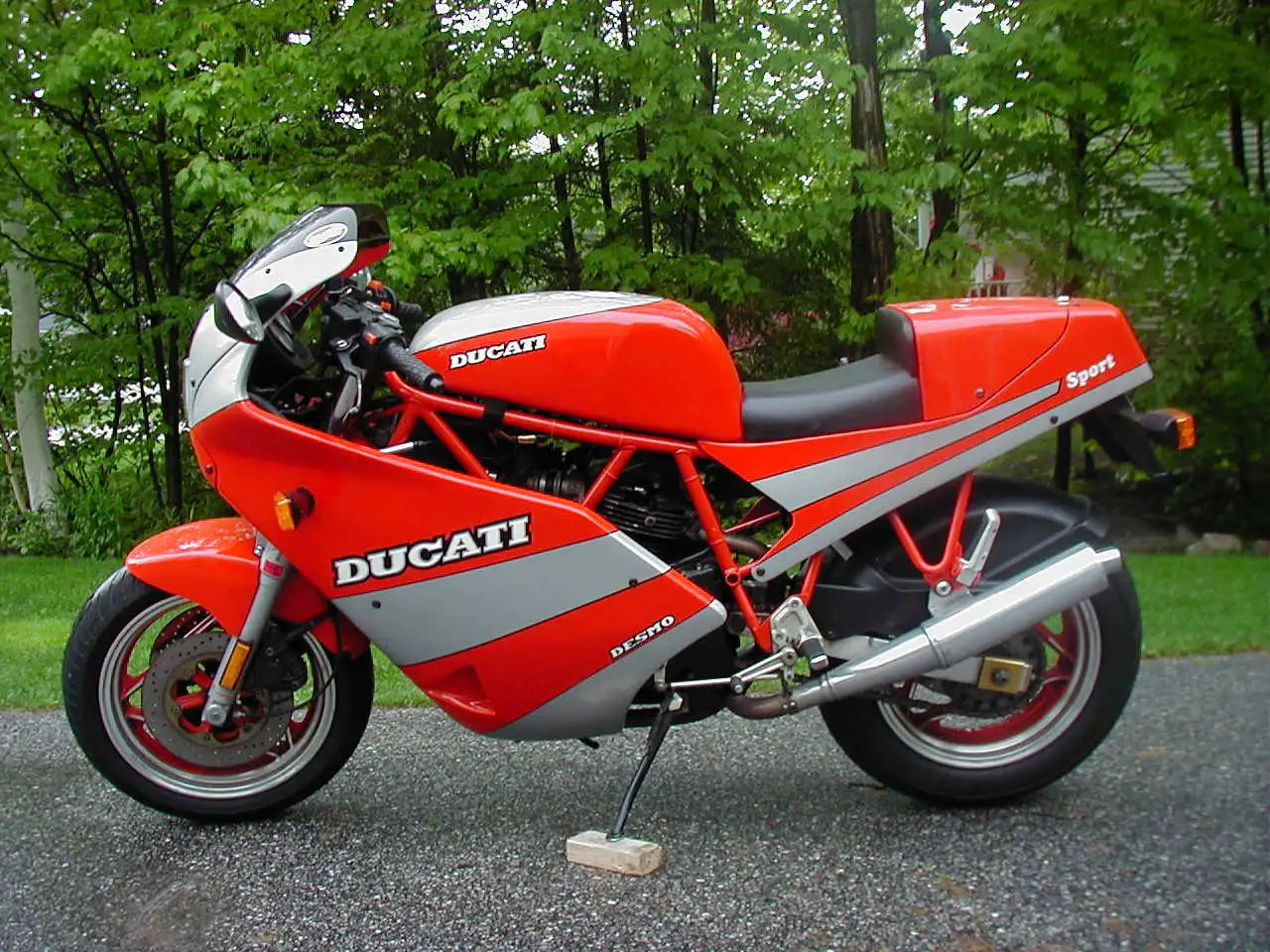
6. Ducati 750 Sport Desmo
The Ducati 750 Sport Desmo is another highly respected classic model that has gained significant value among collectors. Introduced during the golden period of Ducati’s development in the 1970s, the motorcycle represented the company’s growing reputation for producing lightweight, high-performance machines with racing influence.
Its combination of elegant styling, advanced engineering, and limited availability has helped it become a prized collector motorcycle.
The 750 Sport Desmo shared many characteristics with Ducati’s famous sporting models from the same era. It used the company’s air-cooled L-twin engine with desmodromic valve operation, a technology that became closely associated with Ducati’s identity.
The system allowed precise valve control at higher engine speeds, supporting the brand’s racing ambitions and performance-focused approach.
Collectors appreciate the 750 Sport Desmo because many examples have disappeared over time. Some were used for racing, while others were modified or neglected as motorcycle technology changed.
Finding an original example with correct components, factory paint, and proper documentation is increasingly difficult. These factors have contributed to rising auction values.
Well-preserved Ducati 750 Sport Desmo motorcycles have reached six-figure prices at specialist auctions. The exact value varies depending on rarity, condition, originality, and historical significance. Models connected with owners or documented racing backgrounds generally attract stronger bids from international collectors.
The importance of the 750 Sport Desmo comes from its place in Ducati’s evolution. It represents the company’s commitment to performance engineering during a period when Italian motorcycle manufacturers were competing for global recognition. Today, it remains admired by collectors who appreciate traditional Ducati craftsmanship and classic racing-inspired design.
- Engine: 851 cc liquid-cooled L-twin, four valves per cylinder, fuel injected
- Horsepower: Approximately 93 hp
- Torque: Approximately 80 Nm
- Length: Approximately 2,100 mm
- Width: Approximately 710 mm
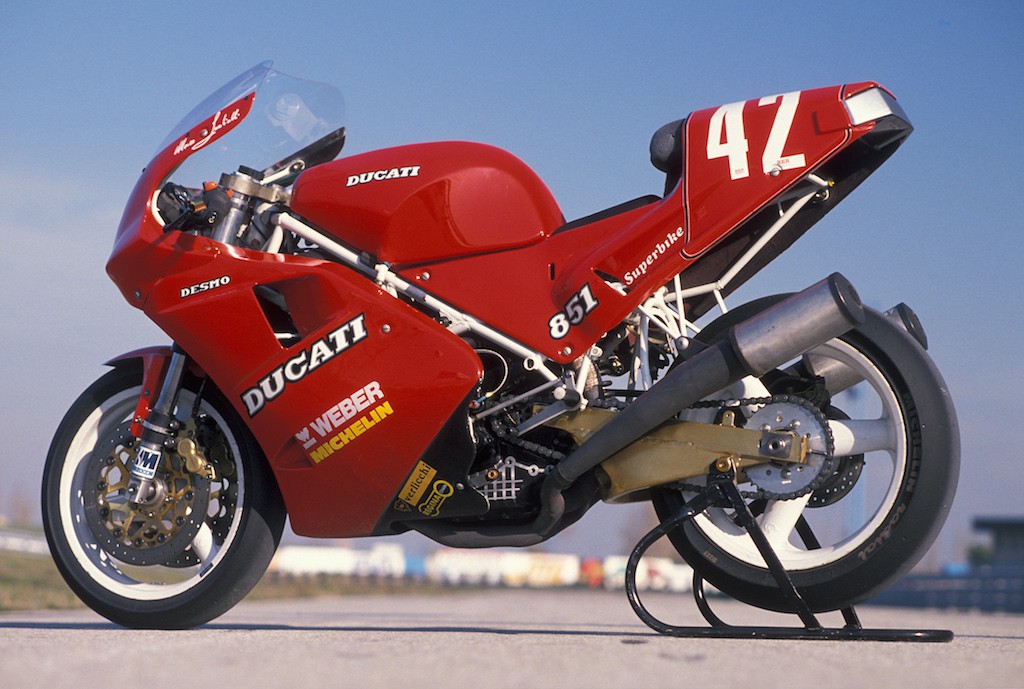
7. Ducati 851 Superbike Racing Prototype
The Ducati 851 Superbike Racing Prototype holds a special position in Ducati’s modern racing history. Released during the late 1980s, the 851 marked a major change for the company by introducing advanced liquid cooling, four-valve technology, and fuel injection. These developments helped Ducati compete more effectively in the World Superbike Championship.
Before the arrival of the 851, Ducati was already respected among motorcycle enthusiasts, but this model helped establish a new era of performance. The motorcycle became the foundation for Ducati’s future superbike success, eventually leading to legendary models that dominated international racing competitions.
Prototype and factory racing examples of the Ducati 851 are particularly valuable because they represent the development process behind Ducati’s championship-winning machines. These motorcycles often feature unique components, experimental technology, and engineering solutions that never appeared on standard production models.
Auction prices for rare Ducati 851 racing machines vary significantly depending on their history. A prototype connected with factory development, racing participation, or important riders can command much higher prices than a standard road model. Collectors place great importance on authenticity and historical documentation.
The Ducati 851 represents a turning point in the company’s history. It helped transform Ducati from a respected Italian motorcycle manufacturer into a serious competitor in global superbike racing. Its technical achievements influenced future Ducati designs and created the foundation for decades of racing success.
- Engine: 916 cc liquid-cooled L-twin, four valves per cylinder, Desmodromic system
- Horsepower: Approximately 114 hp
- Torque: Approximately 92 Nm
- Length: Approximately 2,070 mm
- Width: Approximately 685 mm
8. Ducati 916 Senna
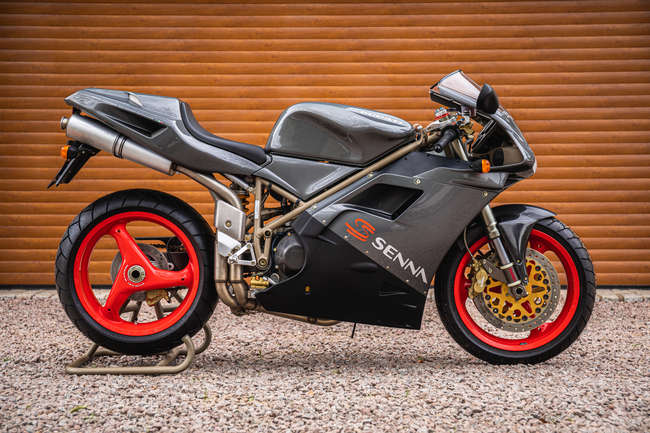
The Ducati 916 Senna is among the most recognizable limited-edition Ducati motorcycles ever produced. Created as a tribute to Formula One champion Ayrton Senna, the motorcycle combined Ducati’s famous 916 platform with unique styling and exclusive details.
Senna himself was known to appreciate Ducati motorcycles, which made the connection particularly meaningful.
The standard Ducati 916 had already gained worldwide recognition because of its design, performance, and racing success. Designed by Massimo Tamburini, the motorcycle introduced styling elements that influenced superbike design for years. The Senna edition added special colors, upgraded components, and collectible status.
Only a limited number of Ducati 916 Senna motorcycles were produced, increasing their desirability among collectors.
The model featured carbon fiber components, premium suspension parts, and a distinctive dark color scheme that separated it from regular 916 versions. Many owners preserved these motorcycles carefully, helping maintain their value.
At specialist auctions, exceptionally maintained Ducati 916 Senna examples have achieved strong prices, with rare low-mileage motorcycles attracting serious collector attention. While not always reaching the values of factory MotoGP machines, the model remains among the most valuable modern classic Ducatis.
The Ducati 916 Senna represents the connection between motorcycle culture and motorsport legends. Its limited production, emotional connection to Ayrton Senna, and timeless design have made it a highly desirable machine for collectors around the world.
- Engine: 1,198 cc Superquadro L-twin, liquid-cooled, Desmodromic system
- Horsepower: 200 hp at 11,000 rpm
- Torque: 134 Nm at 10,250 rpm
- Length: Approximately 2,075 mm
- Width: Approximately 810 mm
9. Ducati 1199 Panigale Superleggera
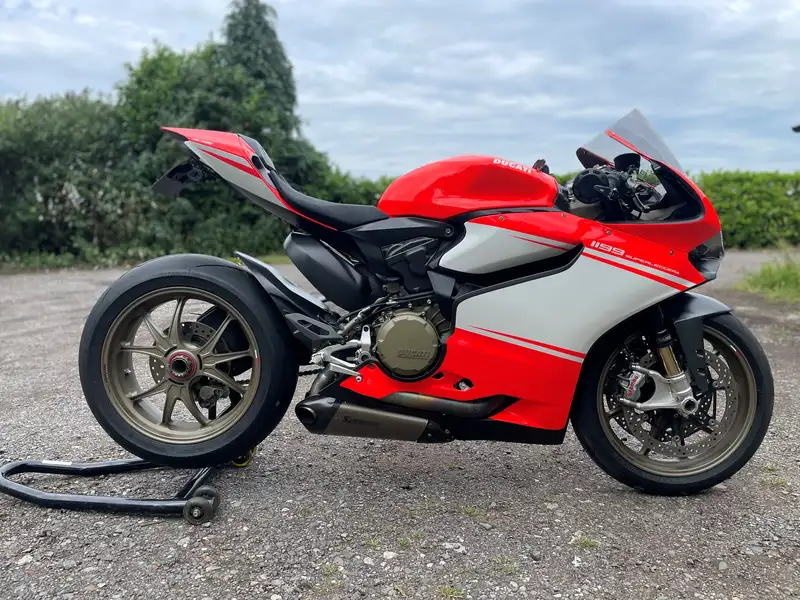
The Ducati 1199 Panigale Superleggera represents Ducati’s pursuit of extreme performance through lightweight engineering. Introduced as a limited-production motorcycle, it combined advanced materials, racing technology, and exceptional performance capabilities. The model was designed for enthusiasts who wanted a motorcycle close to Ducati’s competition machines.
The Superleggera name reflects Ducati’s focus on reducing weight while increasing performance. The motorcycle used extensive carbon fiber components, titanium parts, and advanced suspension technology.
These features made it significantly different from standard superbike models and positioned it as a collector-focused machine.
Only a small number of Ducati 1199 Panigale Superleggera motorcycles were produced, making availability limited. Owners often treated these motorcycles as collectible investments rather than everyday transportation. Low mileage examples with complete documentation have become particularly attractive at auctions.
Auction results for the Superleggera have shown strong demand from collectors seeking modern Ducati exclusivity. Prices have often exceeded the original purchase value, especially for examples maintained in exceptional condition.
The motorcycle appeals to collectors interested in engineering achievements as much as historical racing connections.
The Ducati 1199 Panigale Superleggera demonstrates how modern technology can create collectible motorcycles. It represents an era where advanced materials, electronic systems, and racing-inspired development became central parts of Ducati’s identity.
Also Read: 10 States Where Owners Keep Their Cars the Longest
