The American automotive industry has spent the last several years introducing electric pickups that are larger, faster, and more technologically advanced than ever before.
Models like the Ford F-150 Lightning, Rivian R1T, and Tesla Cybertruck have pushed the boundaries of performance, luxury, and innovation, but they have also pushed prices well beyond what many buyers can comfortably afford.
For customers who simply need an inexpensive electric truck for commuting, home improvement projects, or light-duty work, the market has offered very few realistic options.
That is exactly the gap the Slate Truck hopes to fill. Rather than competing with premium electric pickups costing $60,000 or more, Slate has taken the opposite approach by creating a compact, minimalist electric pickup that starts at $24,950 before destination charges and available federal incentives.
The company’s philosophy is simple: eliminate unnecessary equipment, keep manufacturing costs low, and allow buyers to customize the truck only if they choose. Instead of filling the vehicle with expensive electronics and luxury features, the Slate Truck focuses on the essentials.
Buyers receive a practical electric pickup capable of handling everyday transportation and light hauling without paying for equipment they may never use. The result is one of the most affordable new electric vehicles announced for the U.S. market.
So what exactly does the base price include, and what has Slate left out to achieve such a low starting price?
Also Read: 10 States With the Roughest Roads, Per Federal Data
A Purpose-Built Electric Work Truck
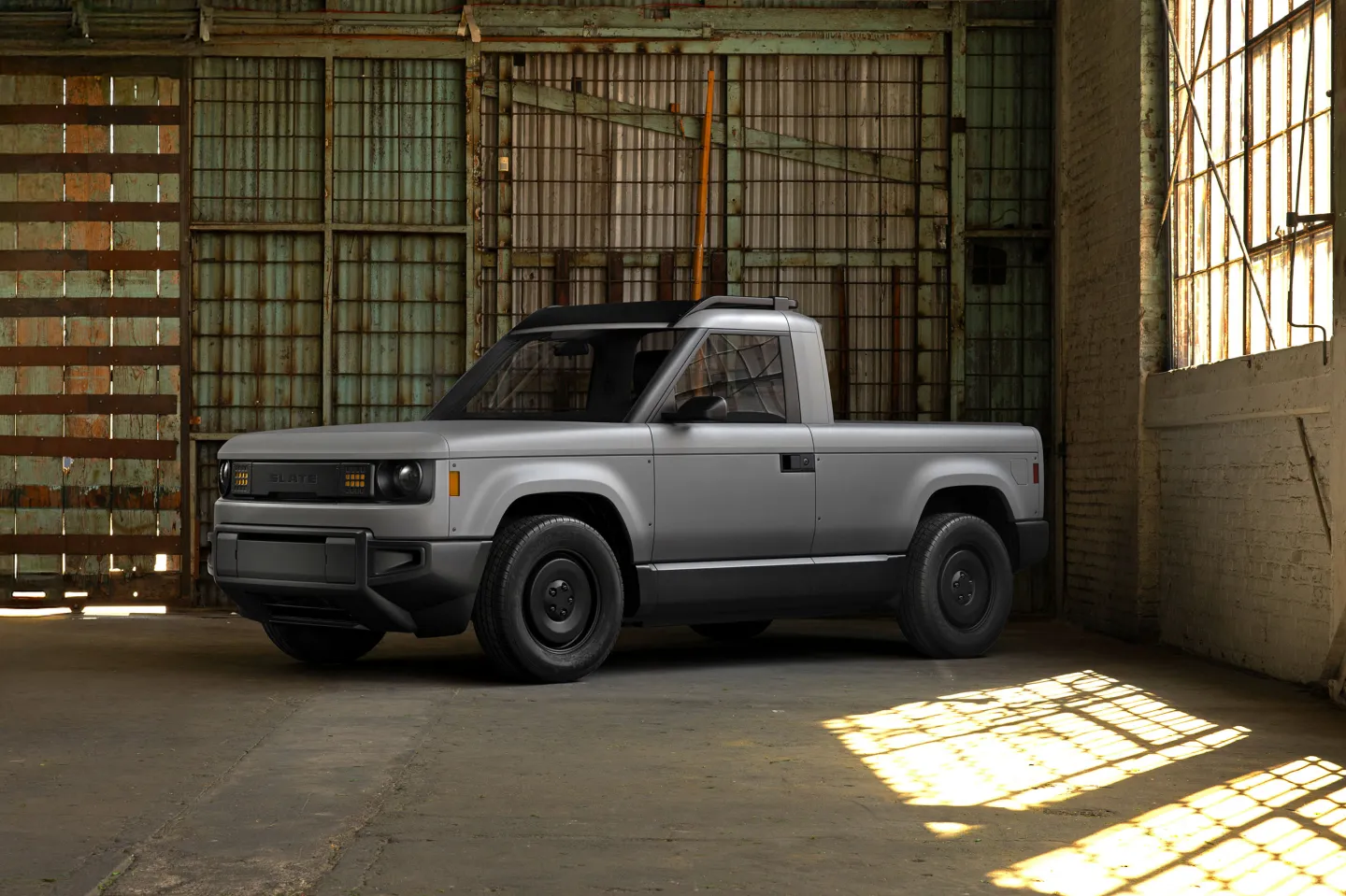
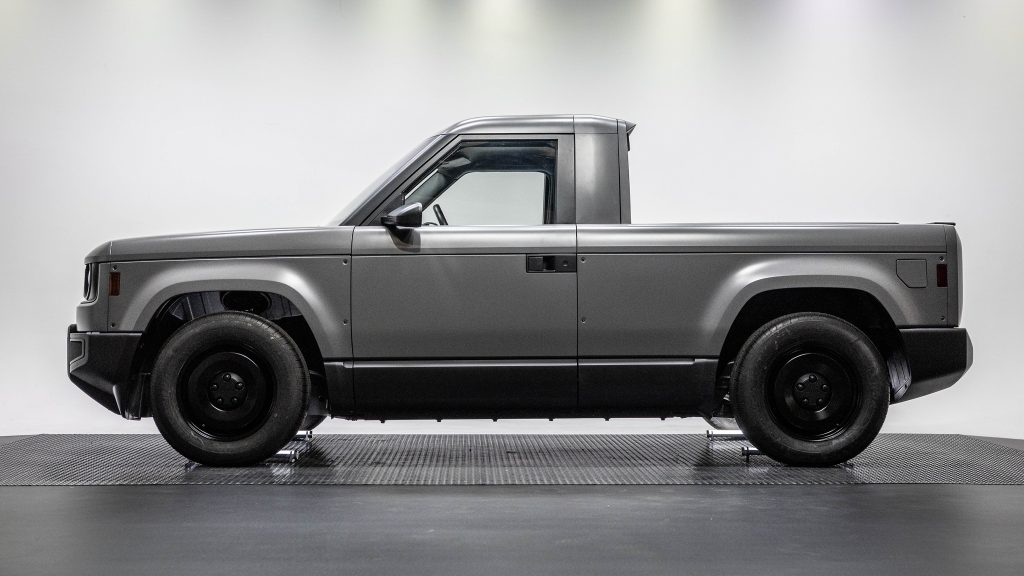
At first glance, the Slate Truck looks refreshingly simple. It is a compact two-door pickup with seating for two occupants and a design that emphasizes function over appearance. The truck’s clean exterior panels, upright proportions, and short full length make it well suited for city driving while still offering the practicality expected from a pickup.
Power comes from a single rear-mounted electric motor producing 181 horsepower and 195 lb-ft of torque.
Those figures may seem modest compared with high-performance electric trucks producing 600 horsepower or more, but they are appropriate for the truck’s intended purpose. The Slate Truck is designed as an affordable daily driver rather than a performance vehicle.
Acceleration is respectable, with an estimated 0 to 60 mph time of around eight seconds, while top speed is electronically limited to approximately 90 mph. These numbers place it comfortably within the expectations of most everyday drivers without sacrificing efficiency.
Energy is supplied by a 65-kWh lithium iron phosphate (LFP) battery, providing an estimated driving range of 205 miles on a full charge. Buyers who require additional range can choose an optional larger battery pack capable of extending the estimated range to roughly 240 miles, although that upgrade increases the purchase price.
One advantage of using LFP battery technology is durability. These batteries generally tolerate frequent charging better than many nickel-based battery chemistries and are known for their long service life. They also reduce dependence on expensive raw materials such as cobalt, helping Slate maintain its aggressive pricing strategy.
Charging flexibility is another important strength. The truck supports 11-kW Level 2 AC charging for home charging and 120-kW DC fast charging, allowing the battery to recharge from approximately 20 percent to 80 percent in about 30 minutes under ideal conditions.
Slate has also adopted the North American Charging Standard (NACS) connector, giving owners access to an expanding network of compatible public charging stations across the United States.
Despite its compact size, the Slate Truck offers practical capability. The base model provides a 1,550-pound payload capacity, allowing owners to transport construction materials, landscaping supplies, motorcycles, furniture, or recreational equipment without difficulty.
Maximum towing capacity is rated at 2,000 pounds, making it suitable for small utility trailers, personal watercraft, or lightweight campers.
These capabilities position the Slate Truck as a practical alternative for buyers who need occasional utility without the size, weight, and cost of a full-size pickup.
Interior: Built Around Simplicity Instead of Luxury
Step inside the base Slate truck, and the minimalist philosophy becomes immediately clear. Unlike many modern vehicles that feature multiple digital displays, touch-sensitive controls, and elaborate ambient lighting, the Slate Truck keeps everything straightforward.
The cabin is designed to be functional, durable, and easy to use, reducing both manufacturing costs and long-term maintenance expenses.
The dashboard uses a clean, uncluttered layout with physical buttons and rotary knobs for essential controls such as climate settings. This approach allows drivers to make adjustments without navigating through touchscreen menus, a feature many drivers continue to prefer because it reduces distractions while driving.
One of the biggest surprises is the absence of a built-in infotainment touchscreen. Instead of installing an expensive multimedia system, Slate provides a dedicated smartphone mount integrated into the dashboard.
Owners simply connect their own phone for navigation, music streaming, and hands-free communication. Since most drivers already rely on Apple CarPlay, Android Auto, Google Maps, or Waze through their smartphones, Slate believes many buyers will not miss an integrated infotainment display.
The base truck includes:
- Cloth seating surfaces
- Manual seat adjustments
- Air conditioning
- USB charging ports
- Digital driver information display
- Physical climate controls
- Manual door locks
- Manual crank windows
- Steering-wheel-mounted basic controls
- Multiple storage compartments throughout the cabin
The use of manual crank windows has generated considerable discussion because they have become rare in modern vehicles. However, they eliminate electric window motors, switches, and wiring that can eventually fail. Manual windows also reduce weight, helping improve efficiency while keeping production costs low.
Similarly, manually adjustable seats replace expensive power seat mechanisms. Although buyers lose conveniences such as memory settings and multiple electric adjustments, manual seats are generally lighter, simpler, and less expensive to repair over the life of the vehicle.
Practical Cargo Space
Although compact, the Slate Truck is engineered to maximize usable cargo space. The pickup bed is designed for homeowners, contractors, and outdoor enthusiasts who need practical hauling capability without a full-size truck.
The open cargo bed can accommodate:
- Lumber and construction materials
- Gardening equipment
- Camping supplies
- Mountain bikes
- Small motorcycles
- Furniture
- Home improvement materials
In addition to the rear bed, the truck also features a front trunk (frunk) beneath the hood. Since there is no gasoline engine occupying that space, owners gain additional enclosed storage that can be used for backpacks, charging cables, groceries, or valuable equipment that should remain protected from weather.
This combination of a pickup bed and front storage compartment gives the Slate Truck flexibility that many compact crossovers cannot match.
Charging Equipment Included at the Base Price
Despite its affordable price, Slate has not compromised on charging capability. Every base truck includes support for:
- 11-kW Level 2 AC charging, ideal for overnight charging at home.
- 120-kW DC fast charging for long-distance travel.
- The North American Charging Standard (NACS) charging port, giving owners access to a rapidly expanding public charging network.
Under ideal conditions, DC fast charging can replenish the battery from approximately 20% to 80% in about 30 minutes, making road trips significantly more practical than many buyers might expect from a budget-oriented electric vehicle.
For daily commuting, many owners will simply plug the truck into a Level 2 home charger overnight and begin each morning with a full battery.
Safety Features Included
Keeping costs low does not mean eliminating essential safety equipment. Every Slate truck includes the federally required safety systems expected in a modern passenger vehicle.
Standard safety equipment includes:
- Multiple airbags
- Electronic Stability Control
- Traction Control
- Anti-lock Braking System (ABS)
- Tire Pressure Monitoring System
- Rearview camera
- Three-point seat belts
- LED headlights
- Daytime running lights
These systems provide the basic safety foundation buyers expect from a new vehicle while avoiding some of the more expensive electronic driver-assistance technologies that significantly increase production costs.
What the Base Model Doesn’t Include
Understanding what is not included is just as important as knowing what comes standard. To maintain its remarkably low starting price, the base Slate Truck omits many features that have become common on higher-priced vehicles, including the following:
- Large touchscreen infotainment system
- Built-in navigation
- Wireless Apple CarPlay or Android Auto
- Premium audio system
- Heated or ventilated seats
- Leather upholstery
- Power-adjustable seats
- Power windows
- Wireless phone charging
- Sunroof
- Adaptive cruise control
- Lane-centering assistance
- 360-degree camera system
- Premium alloy wheels
For some shoppers, these omissions may seem significant. However, Slate’s philosophy is that buyers who genuinely want these features should have the freedom to add them later rather than financing them as part of every new truck.
That strategy is what separates the Slate Truck from virtually every other vehicle currently on the U.S. market. Rather than forcing customers into expensive trim levels packed with equipment they may never use, Slate starts with a functional foundation and lets owners decide how simple or sophisticated they want their truck to become.
A Different Ownership Philosophy
Perhaps the most distinctive aspect of the Slate Truck is that the base model is intentionally designed as a starting point rather than a finished product. Instead of bundling every available feature into the initial purchase price, Slate offers an extensive catalog of accessories that owners can install over time.
Buyers can choose from upgraded wheels, roof racks, cargo organizers, bed accessories, exterior graphics, improved audio systems, and even conversion kits that transform the pickup into an SUV. This modular approach allows customers to spread upgrade costs over several years instead of financing them all at once.
For many buyers, that flexibility is the truck’s biggest advantage. Someone who only needs a dependable commuter or light-duty work vehicle can keep the truck in its simple, affordable form.
Others can personalize it as their needs change without replacing the entire vehicle. While adding numerous accessories can significantly increase the final price, the base Slate Truck remains one of the most affordable ways to enter the electric pickup market.
By focusing on practicality, low operating costs, and owner customization rather than luxury, Slate has created a vehicle that stands apart from today’s increasingly expensive and technology-heavy trucks.