Volkswagen has abandoned its growth outlook for 2026 after reporting weaker-than-expected second-quarter earnings, underscoring the mounting pressures facing one of the world’s largest automakers.
The German automotive group, which owns brands including Volkswagen Passenger Cars, Audi, Porsche, Škoda, SEAT, Bentley, Lamborghini, and Volkswagen Commercial Vehicles, now expects revenue to decline by as much as 3% this year instead of growing by up to 3% as previously forecast.
The revision comes as slowing demand in China, rising tariff costs, and expensive restructuring efforts continue to weigh heavily on the company’s financial performance.
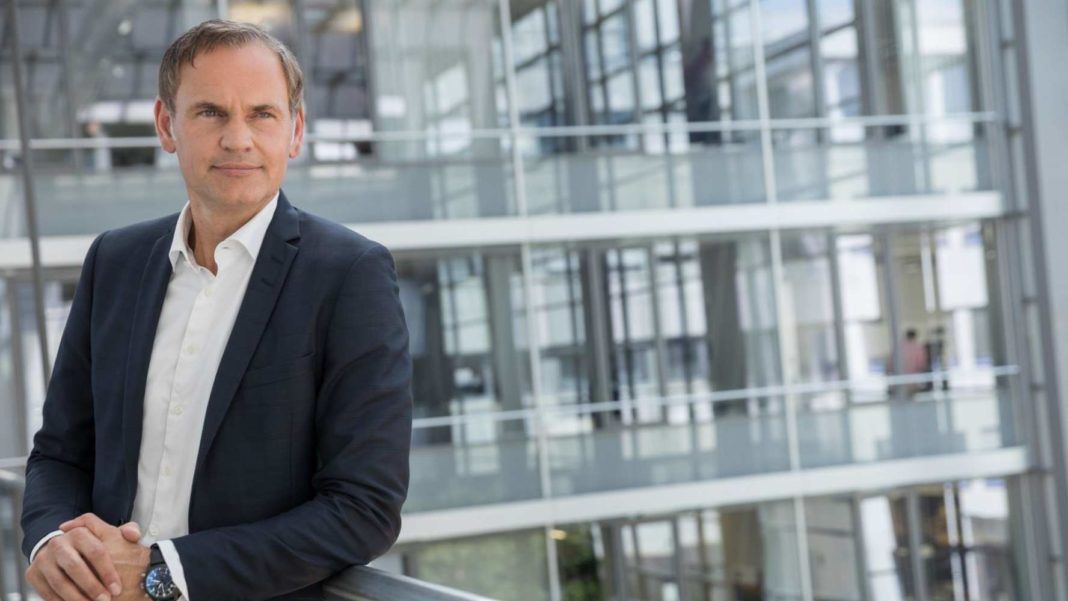
The disappointing results represent another setback for Chief Executive Oliver Blume, who has spent much of the past two years attempting to reshape Volkswagen into a leaner and more competitive company.
Once regarded as one of the strongest players in the global automotive industry, Volkswagen is now confronting a rapidly changing market where Chinese manufacturers are gaining market share at home and increasingly challenging established European brands abroad.
At the same time, geopolitical tensions, higher production costs, and slowing electric vehicle demand in several markets have created additional obstacles for traditional automakers.
According to Reuters, Volkswagen reported second-quarter operating profit of €3.5 billion ($3.98 billion), down 9.5% from a year earlier and below analyst expectations.
Despite maintaining its operating margin forecast of between 4.0% and 5.5%, management acknowledged that revenue growth is no longer realistic under current market conditions.
Instead, executives now expect sales revenue to decline modestly as the company absorbs restructuring costs while attempting to improve long-term profitability.
Also Read: 10 EVs Ranked by Charging Speed
China Continues to Challenge Volkswagen’s Largest Overseas Business
The biggest contributor to Volkswagen’s weaker outlook remains China, a market that has long served as the company’s largest source of vehicle sales and profits. For decades, Volkswagen dominated the Chinese automotive market through successful joint ventures and an extensive lineup of gasoline-powered vehicles.
However, the market has changed dramatically as domestic manufacturers have rapidly improved vehicle quality while offering competitive pricing and advanced software features.
Chinese automakers such as BYD, Geely, and several emerging electric vehicle brands have steadily captured market share by introducing vehicles specifically designed for local buyers. Their ability to launch new models quickly, integrate advanced digital technology, and price vehicles aggressively has made competition increasingly difficult for foreign manufacturers.
Reuters previously reported that Volkswagen’s global deliveries fell sharply during the second quarter, with China accounting for the largest decline.
Vehicle deliveries in the country dropped more than 30% during the first half of the year as the broader Chinese market weakened and domestic competitors expanded their presence across multiple vehicle segments.
Although Volkswagen continues to perform relatively well in Europe and North America, those gains have not been enough to offset losses in its most important overseas market.
The changing competitive landscape has also forced Volkswagen to reconsider its long-term product strategy. Instead of relying on global platforms and introducing similar vehicles worldwide, the company has increasingly emphasized developing China-specific models and software tailored to local consumer preferences.
Even with these efforts, executives acknowledge that regaining lost market share will require significant investment while margins remain under pressure.
Tariffs and Rising Costs Add Further Pressure
Volkswagen’s financial challenges extend beyond slowing demand. The company also continues to face higher manufacturing expenses, increased logistics costs, and billions of euros in tariff-related expenses that have reduced profitability across several markets.
Trade tensions involving the United States and Europe have increased uncertainty for global manufacturers with complex international supply chains. Higher import duties on certain vehicles and automotive components have forced companies to reconsider production strategies, sourcing decisions, and future investment plans.
Volkswagen has warned that these additional costs are making it more difficult to achieve the profitability targets established before global trade conditions deteriorated. Meanwhile, inflationary pressures continue affecting labor, raw materials, and energy expenses throughout Europe.
Germany remains one of the most expensive manufacturing locations in the automotive industry, making it increasingly difficult for Volkswagen to compete with lower-cost rivals from China and other regions.
Executives believe reducing structural costs will be essential if the company hopes to restore competitive margins over the next several years.
The latest earnings report reflects these combined challenges. While Volkswagen remains one of the world’s largest automakers by vehicle sales, management now accepts that maintaining previous growth expectations is unrealistic without fundamental changes to the company’s cost structure and manufacturing footprint.
Those changes have become the centerpiece of Oliver Blume’s ambitious restructuring strategy, which is expected to reshape Volkswagen’s operations for years to come.
Restructuring Becomes the Centerpiece of Volkswagen’s Recovery Plan
Faced with slowing profitability and intensifying competition, Volkswagen has accelerated one of the most significant restructuring programs in its recent history.
Chief Executive Oliver Blume has repeatedly emphasized that improving efficiency is essential if the company hopes to restore sustainable earnings and remain competitive in an automotive industry undergoing rapid transformation.
According to Reuters, Volkswagen’s restructuring program includes reducing production costs, simplifying operations across several brands, shortening product development cycles, and improving manufacturing efficiency.
The company has also been negotiating with labor representatives to reduce expenses without significantly affecting its ability to develop future vehicles.
One of the biggest objectives is lowering fixed costs at Volkswagen’s German operations, where labor and manufacturing expenses remain substantially higher than many international competitors.
The company has acknowledged that its domestic factories are operating below optimal efficiency because of slowing demand and changing consumer preferences. Management believes increasing factory utilization while streamlining production processes will help improve operating margins over the coming years.
Executives have also indicated that investment priorities are changing. Instead of aggressively expanding production capacity, Volkswagen intends to focus capital spending on software development, battery technology, and next-generation electric vehicle platforms.
The company believes concentrating resources on fewer strategic projects will generate stronger long-term returns while helping offset rising operational costs.
Reuters reported that restructuring expenses were among the major factors weighing on second-quarter profitability, although management maintains that these short-term costs are necessary to strengthen Volkswagen’s long-term financial position.
Investors will closely monitor future earnings reports to determine whether these initiatives begin producing measurable savings during the next several quarters.
Competition From Chinese Automakers Continues to Intensify
Perhaps the greatest challenge facing Volkswagen is the extraordinary rise of Chinese automotive manufacturers, particularly in the electric vehicle market. Companies such as BYD, Geely, Chery, and SAIC have transformed themselves into global competitors by combining lower manufacturing costs with rapid technological innovation.
Unlike many traditional automakers, Chinese manufacturers have significantly shorter vehicle development cycles, allowing them to introduce new products more frequently while quickly responding to changing consumer preferences.
Many also design their vehicles around advanced digital ecosystems featuring sophisticated infotainment systems, artificial intelligence functions, and over-the-air software updates that appeal to younger buyers.
Volkswagen has responded by expanding partnerships with Chinese technology companies and increasing local research and development efforts. The company has also accelerated development of China-specific electric vehicles designed to compete more effectively against domestic brands.
Despite these investments, analysts believe recovering lost market share will require sustained product improvements and competitive pricing over several years rather than a single product cycle.
At the same time, Volkswagen faces growing pressure from global rivals outside China. Tesla remains a dominant force in premium electric vehicles, while Hyundai, Kia, Toyota, and several European manufacturers continue strengthening their hybrid and battery-electric offerings.
The result is an increasingly crowded marketplace where pricing power has weakened, and manufacturers must compete aggressively for every customer.
Investors Focus on Execution Rather Than Promises
Following Volkswagen’s revised outlook, investors shifted their attention away from ambitious growth targets and toward management’s ability to successfully execute its restructuring strategy.
Financial analysts generally agreed that lowering the sales forecast reflected current market realities, but they also stressed that restoring profitability will ultimately depend on whether cost reductions translate into stronger operating margins.
Several analysts noted that maintaining the company’s operating margin guidance despite weaker revenue expectations suggests management remains confident that restructuring measures can partially offset declining sales.
However, continued weakness in China or additional tariff-related costs could make achieving those targets increasingly difficult.
The coming quarters will therefore be closely watched by shareholders, suppliers, and industry observers alike. Future earnings reports are expected to provide greater clarity on whether Volkswagen’s cost-cutting initiatives are delivering meaningful improvements in efficiency while preserving investment in electric vehicles and software development.
Although abandoning its growth forecast represents a significant setback, Volkswagen remains one of the world’s largest automotive manufacturers with a broad portfolio of global brands, extensive manufacturing capacity, and substantial financial resources.
Those strengths provide the company with opportunities to recover, but success will depend on adapting more quickly to changing consumer preferences and an increasingly competitive global market.
For now, the revised forecast reflects the difficult environment confronting much of the automotive industry. Slowing demand in key markets, higher operating costs, trade uncertainty, and fierce competition are forcing even the world’s largest manufacturers to rethink long-term strategies.
Volkswagen’s restructuring program is designed to position the company for that new reality, but its effectiveness will only become clear as the company moves through the remainder of 2026 and into the years ahead.
Reuters noted that management continues to prioritize financial discipline, operational efficiency, and targeted investment despite the weaker earnings outlook, signaling that Volkswagen remains committed to rebuilding profitability even as short-term challenges persist.
Also Read: 10 Cars With the Best Factory Headlights