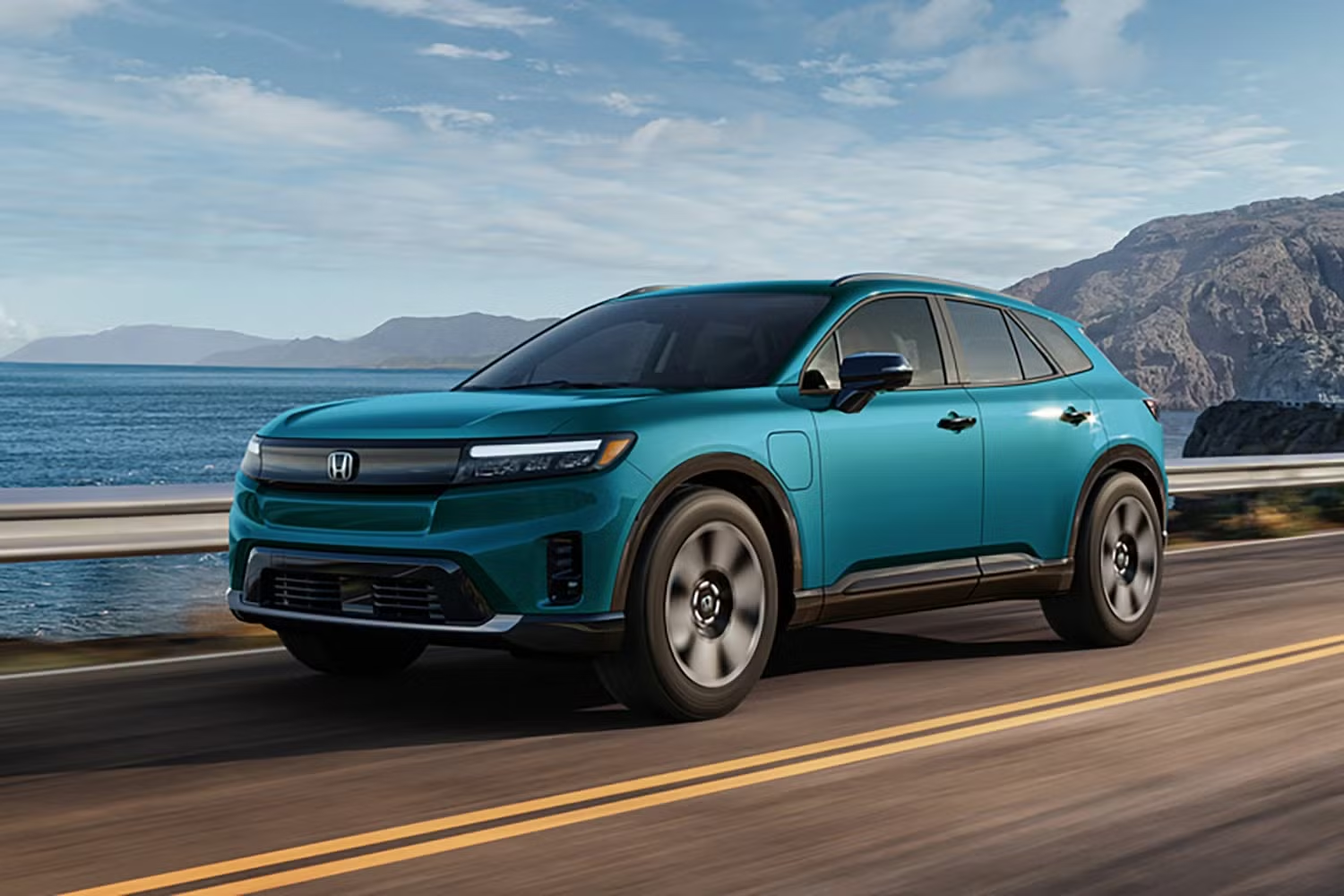
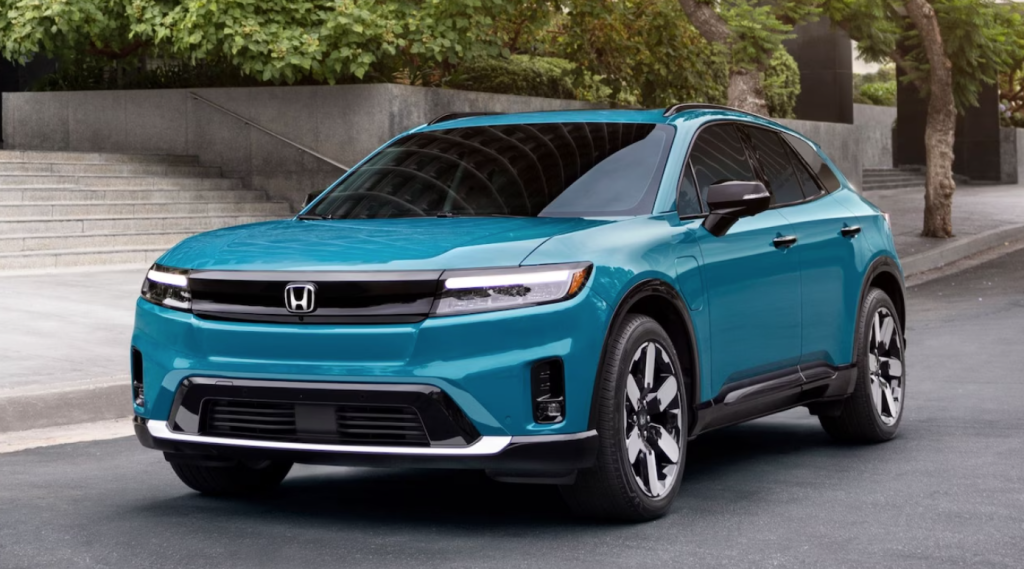
Honda’s latest message to owners of its Prologue electric SUV has sparked discussion across the automotive industry. Instead of encouraging current EV customers to stay with another battery-electric model, the company is asking them to consider one of its hybrid vehicles when they are ready for their next purchase.
The recommendation comes at a time when Honda is discontinuing the Prologue after the 2026 model year and temporarily stepping away from selling fully electric vehicles in the United States.
For many Prologue owners, the message was unexpected. They had embraced Honda’s first mass-market electric SUV in North America, only to learn that there will be no direct battery-electric replacement in the brand’s lineup.
The move reflects more than just Honda’s product planning. It signals a broader shift taking place across the automotive industry, where manufacturers are recalibrating their electrification strategies as consumer demand, government incentives, production costs, and market realities evolve.
Also Read: 10 Cars With the Best Factory Headlights
A Surprising Message to Honda’s EV Customers
The discussion began after Prologue owners noticed a note in their monthly Honda Finance statements encouraging them to “consider what’s next” and highlighting Honda’s expanding hybrid lineup as an attractive option for their next vehicle.
According to reporting by Business Insider, the company believes models such as the CR-V Hybrid, Accord Hybrid, Civic Hybrid, and future hybrid products could appeal to returning customers even if they originally purchased a fully electric vehicle.
For some owners, the recommendation appeared practical. Hybrids offer improved fuel economy while eliminating concerns about charging infrastructure or long-distance travel. Others viewed the message less favorably, arguing that customers who intentionally chose an EV may not be interested in returning to gasoline-powered vehicles, even partially.
Online EV communities and Prologue owner forums reflected that divide, with many owners saying they would instead shop for another fully electric model from a competing manufacturer.
Honda has not suggested it is abandoning electrification altogether. Instead, the company appears to be acknowledging that current market conditions favor hybrids while it works toward a longer-term electric strategy.
Why Honda Is Ending the Prologue
Honda confirmed earlier this month that production of the Prologue will conclude after the 2026 model year. The SUV entered the North American market in 2024 as Honda’s first high-volume battery-electric vehicle, developed in partnership with General Motors using GM’s Ultium battery platform.
While the Prologue received positive reviews for its spacious interior, driving range, and refinement, it was always intended as a transitional product while Honda developed its own dedicated EV architecture. However, several factors changed the company’s plans.
According to Honda’s March 2026 corporate announcement, the automaker reassessed its electrification strategy because of changing market conditions, slower EV demand in the United States, and the need to improve profitability. The company canceled several planned North American EV programs and announced a greater emphasis on hybrid technology.
Industry conditions also played an important role. The expiration of the federal EV tax credit, higher borrowing costs, and slowing consumer demand significantly reduced the momentum many automakers had expected for battery-electric vehicles.
Analysts have noted that these changes forced several manufacturers to reconsider aggressive EV expansion plans.
Hybrids Become Honda’s New Growth Strategy
Rather than abandoning electrification, Honda is redirecting resources toward hybrid vehicles, which continue to perform strongly in North America.
During its 2026 business briefing, Honda announced plans to introduce 15 next-generation hybrid models globally by the end of fiscal year 2030.
The company said North America would become one of its highest priorities, with new hybrid sedans, SUVs, and larger vehicles arriving over the next several years. Honda also plans to equip all of its North American manufacturing plants to build hybrid vehicles.
President Toshihiro Mibe explained that Honda intends to concentrate investment where consumer demand is strongest while continuing to pursue carbon neutrality through multiple technologies, including hybrids, battery-electric vehicles, and carbon-neutral fuels.
The strategy reflects a growing industry consensus that hybrids can serve as an important bridge technology while charging infrastructure expands and battery costs continue to decline.
Consumer Demand Is Shifting
Honda is far from alone in changing direction. Across the U.S. auto market, several manufacturers have postponed or canceled EV launches during the past year. Ford, Hyundai, Kia, Volvo, BMW, Porsche, and others have delayed electric programs, revised production targets, or shifted investment toward hybrids and plug-in hybrids.
According to Business Insider, the end of federal tax incentives contributed to a sharp decline in EV demand during late 2025, prompting many automakers to reassess their product portfolios.
Meanwhile, hybrid sales continue to grow. Industry analysts say many buyers appreciate hybrids because they deliver significant fuel savings without requiring home charging equipment or changes to driving habits.
According to Wired, hybrid sales in the United States are projected to increase this year, with Toyota, Honda, Hyundai, Kia, Ford, and General Motors all expanding their hybrid offerings as consumers look for practical alternatives to conventional gasoline vehicles.
For manufacturers, hybrids also provide a more predictable business case. They generally require smaller batteries than EVs, reducing production costs while helping companies meet increasingly stringent emissions regulations.
What This Means for Existing Prologue Owners
Although Honda is ending Prologue production, owners are not being left without support. The company has confirmed that existing customers will continue receiving warranty coverage, replacement parts, software support, and dealership service after production ends.
Sales of remaining inventory are expected to continue into early 2027 as dealers work through existing stock.
That reassurance is important because concerns often arise whenever a vehicle is discontinued. Owners typically worry about long-term parts availability, resale values, and future software updates. Honda has stated that dealer support will remain in place despite the model’s discontinuation.
Still, some Prologue owners remain disappointed that there will not be another Honda EV available when they decide to replace their vehicle. Business Insider reported that several owners said they would likely consider Rivian, Hyundai, Kia, Tesla, General Motors, or other manufacturers if they wish to remain fully electric.
Honda’s Long-Term EV Ambitions Remain Alive
Despite today’s emphasis on hybrids, Honda insists its long-term commitment to electrification has not disappeared.
The company continues to target carbon neutrality by 2050 and says future battery-electric models remain part of its roadmap. Rather than rushing new EVs to market, Honda plans to introduce next-generation products once technology, production economics, and customer demand better align.
Executives have emphasized that future EV investments will be made with greater flexibility while balancing profitability and market conditions.
That approach differs from the aggressive expansion strategies many automakers announced only a few years ago, but it reflects the reality of today’s U.S. market, where hybrid demand has significantly outpaced expectations for battery-electric growth.
A Reflection of a Changing Industry
Honda’s recommendation that Prologue owners consider a hybrid may seem unusual at first glance, but it illustrates how dramatically the automotive landscape has changed.
Only a few years ago, nearly every major manufacturer was accelerating toward an all-electric future. Today, many companies are adopting a more balanced approach, recognizing that consumer preferences are evolving more gradually than anticipated.
For Honda, hybrids now represent the most practical path to reducing emissions while maintaining profitability and meeting customer expectations.
The Prologue may be leaving the lineup sooner than expected, but its short lifespan has become part of a much larger story about how automakers are adjusting to a rapidly changing market.
Whether consumers ultimately embrace Honda’s hybrid-first strategy or continue demanding fully electric vehicles will shape the company’s next chapter.
For now, the automaker is betting that flexibility, rather than an all-or-nothing approach, offers the strongest route through an increasingly unpredictable transition to electrified transportation.
Also Read: 10 Toyota Models That Tell the Brand & #8217;s Story