
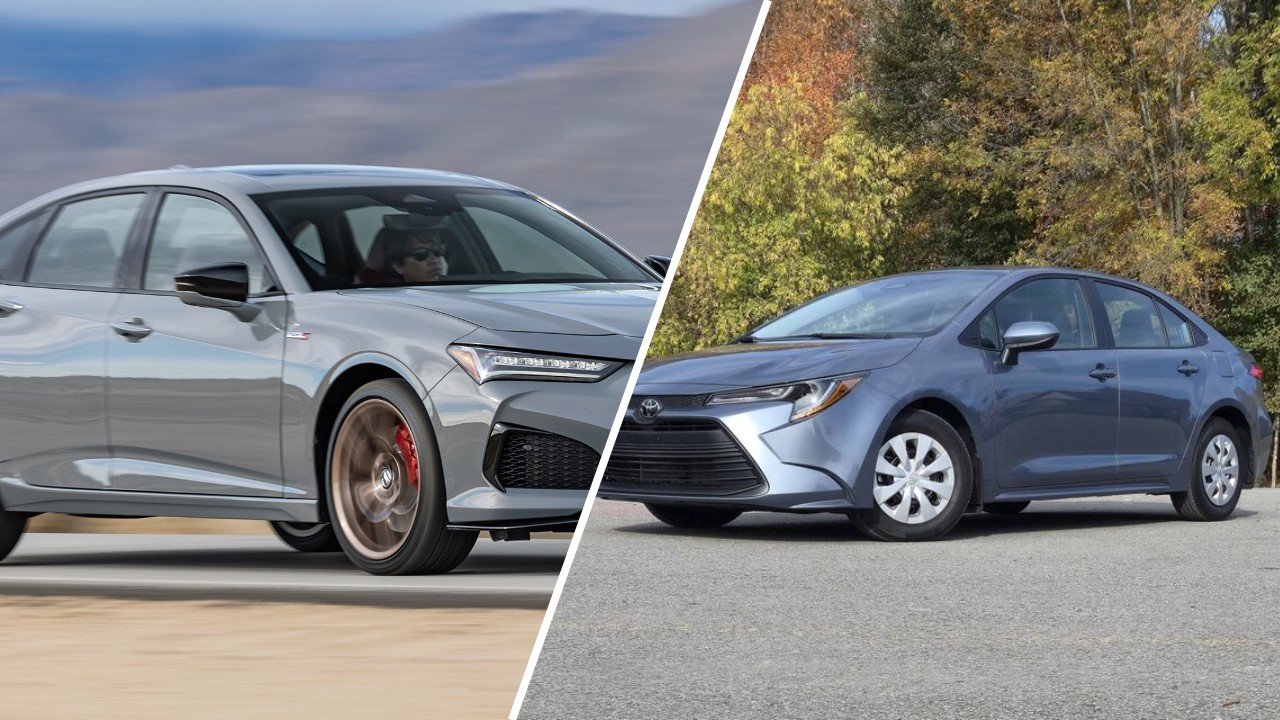
Night driving depends heavily on how far a vehicle’s headlights can illuminate the road ahead. A longer beam distance gives drivers more time to identify curves, wildlife, stalled vehicles, and other hazards, particularly on rural highways where street lighting is limited.
Modern LED, Matrix LED, and adaptive lighting systems have significantly improved nighttime visibility, but not every car delivers the same performance.
Some models project a beam that approaches or exceeds 400 feet under low-beam testing, while others fall noticeably short because of headlamp design or lower-output lighting systems. This comparison examines cars that excel in beam distance and those that provide much shorter forward illumination.
Also Read: 5 Used Bikes Mechanics Recommend and 5 They Avoid
5 Cars With Headlights That Reach 400 Feet
1. Genesis G90
Luxury flagship sedans often introduce technology that later spreads throughout the automotive industry, and the Genesis G90 is an excellent example when it comes to headlight performance.
Equipped with advanced Micro Lens Array LED headlights on higher trims, the G90 delivers exceptionally long and evenly distributed illumination.
Independent testing and evaluations have consistently shown that its lighting system provides outstanding forward visibility, with low beams capable of illuminating close to or beyond the 400-foot mark under favorable testing conditions while maintaining excellent glare control.
Rather than simply producing more brightness, Genesis engineered the G90’s lighting system to maximize usable illumination. Multiple precision LED elements work together with carefully designed optics to distribute light evenly across the roadway, reducing dark spots that can hide obstacles.
Adaptive lighting functions further improve visibility by adjusting beam direction as the vehicle enters curves, allowing drivers to see farther into corners before steering input is completed.
The Insurance Institute for Highway Safety has awarded top ratings to Genesis lighting systems on several models because of their strong straightaway illumination and effective curve performance.
Drivers traveling on rural roads particularly benefit from the extended beam distance, gaining valuable reaction time for wildlife, disabled vehicles, or unexpected debris.
Another advantage is the seamless operation of automatic high beams. Sensors continuously monitor surrounding traffic, switching between high and low beams when appropriate without distracting the driver. This encourages more consistent use of maximum available illumination during nighttime driving.
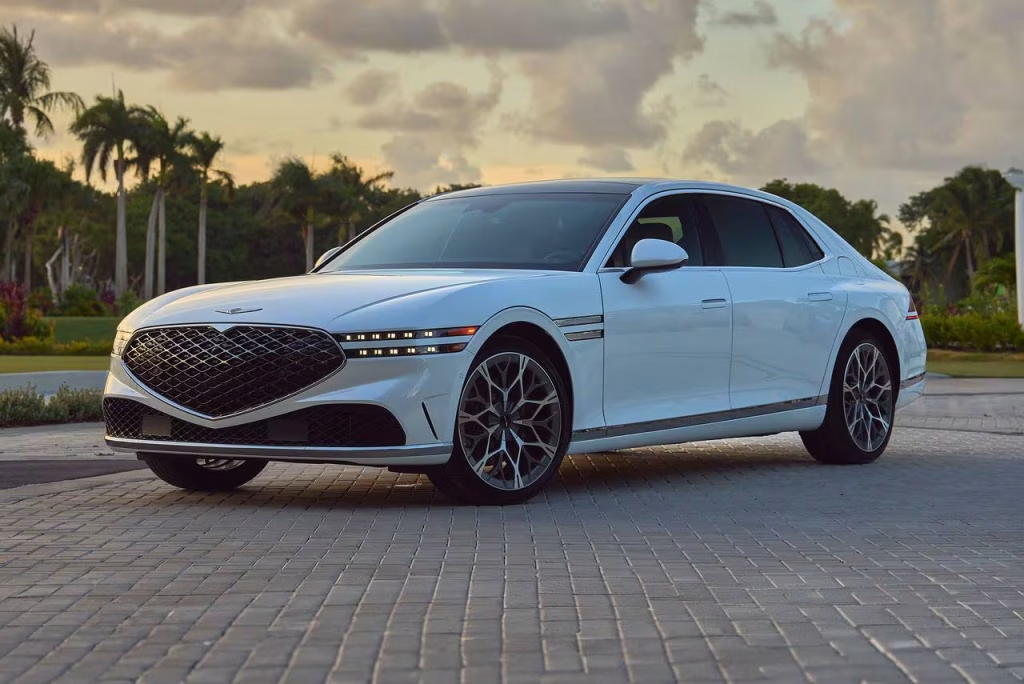
The G90 demonstrates that premium lighting technology involves much more than brightness alone. Careful optical engineering, adaptive functionality, and sophisticated LED hardware combine to produce one of the most capable factory headlight systems currently available.
Specifications
- Engine: 3.5-liter Twin-Turbo V6
- Torque: 391 lb-ft
- Horsepower: 375 hp
- Length/Width: 207.7 in / 76.0 in
2. Mercedes-Benz E-Class
Mercedes-Benz has invested heavily in lighting innovation for decades, and the latest E-Class showcases how advanced headlamp engineering improves nighttime safety. Models equipped with DIGITAL LIGHT or MULTIBEAM LED technology deliver remarkable beam reach while maintaining precise control over glare.
Under standardized testing, these systems are among the strongest performers in the luxury midsize sedan segment, with forward illumination approaching or exceeding 400 feet under appropriate conditions.
Instead of relying on a fixed beam pattern, the E-Class continuously adjusts light distribution based on vehicle speed, steering angle, road conditions, and surrounding traffic.
Thousands of individually controlled lighting elements work together to illuminate the road without unnecessarily dazzling approaching drivers. This dynamic control allows the system to maximize usable visibility while remaining compliant with lighting regulations.
The adaptive system proves especially valuable on winding highways where conventional headlights often leave portions of the road in darkness. As the steering wheel turns, the beam pivots into the corner, revealing lane markings, pedestrians, and roadside hazards significantly earlier than traditional fixed headlights.
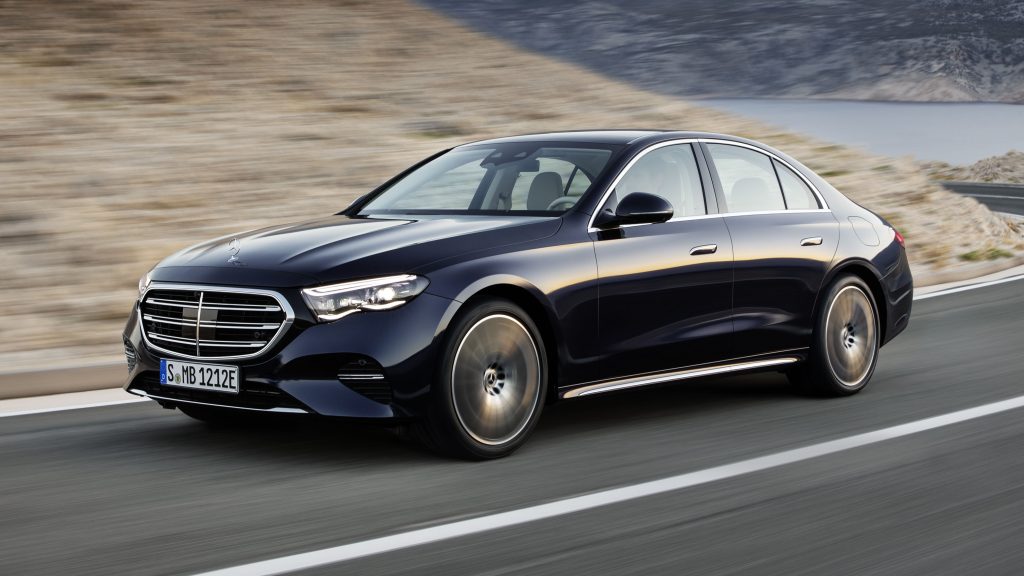
Automatic high-beam functionality also contributes to longer effective visibility during nighttime travel. The transition between lighting modes is smooth and responsive, encouraging drivers to benefit from the full capability of the lighting system whenever traffic conditions permit.
Mercedes-Benz combines premium hardware with sophisticated software to create one of the industry’s most refined lighting packages. The result is exceptional nighttime confidence, impressive beam distance, and illumination quality that supports safer long-distance driving.
Specifications
- Engine: 2.0-liter Turbocharged Inline-4
- Torque: 295 lb-ft
- Horsepower: 255 hp
- Length/Width: 194.9 in / 74.8 in
3. Volvo S90
Volvo has built its reputation around safety, and effective nighttime visibility is an important part of that philosophy. The S90 demonstrates this commitment with its advanced LED lighting system, especially on trims equipped with Adaptive Full LED headlights.
Rather than focusing only on brightness, Volvo engineers concentrated on creating a long, controlled beam pattern that gives drivers more time to react to hazards.
Independent evaluations and instrumented testing have shown the S90 to be among the better-performing luxury sedans for low-beam visibility, with illumination capable of reaching approximately 400 feet under favorable testing conditions.
One reason the S90 performs so well is the precision of its projector optics. The LED modules produce a crisp beam with a defined cutoff that minimizes glare while maintaining excellent forward reach.
This allows drivers to identify lane markings, road signs, and pedestrians much earlier than they could with conventional halogen systems. The wider beam pattern also improves visibility near the shoulders of the road, where wildlife or cyclists are more likely to appear.
The adaptive lighting system further enhances real-world performance by turning the headlights slightly in the direction of travel during cornering.
This feature proves particularly valuable on rural roads with limited street lighting, allowing drivers to see into bends before the vehicle has fully entered the curve. Automatic high beams operate smoothly and quickly, maximizing available illumination whenever traffic conditions permit.
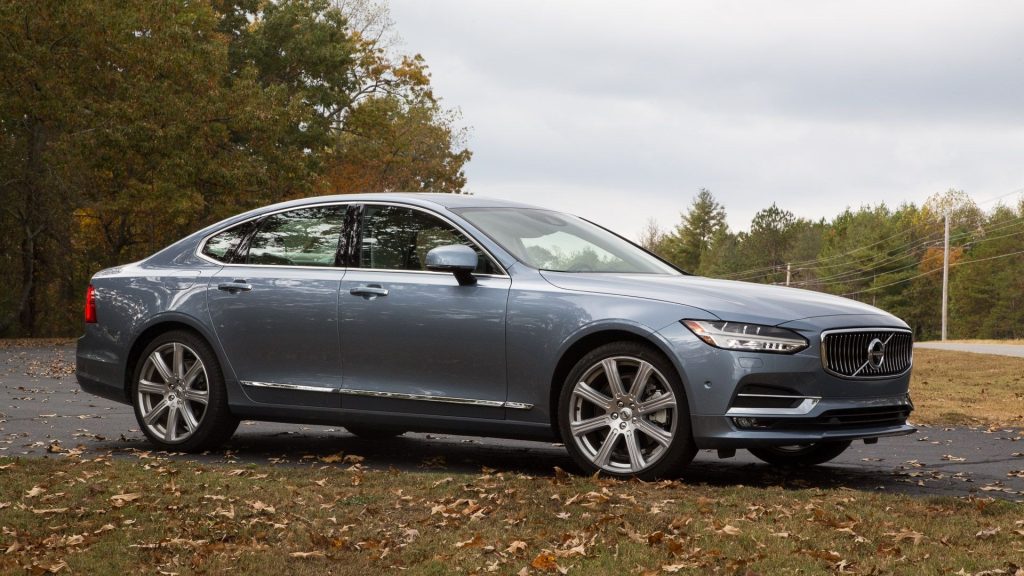
Volvo also carefully calibrates the beam distribution to reduce driver fatigue. Instead of producing excessive foreground brightness that can make distant objects harder to detect, the S90 places more emphasis on long-range visibility. This balanced approach helps drivers maintain better awareness during extended nighttime journeys.
The result is a luxury sedan that excels not only in crash protection but also in helping drivers avoid hazards before they become emergencies. For motorists who regularly travel after dark, the Volvo S90 offers one of the most confidence-inspiring factory lighting systems available today.
Specifications
- Engine: 2.0-liter Turbocharged and Supercharged Inline-4 (B6)
- Torque: 310 lb-ft
- Horsepower: 295 hp
- Length/Width: 200.4 in / 74.0 in
4. Audi A6
Audi has long been recognized as an industry leader in automotive lighting, and the latest A6 continues that tradition. Equipped with HD Matrix LED headlights on higher trims, the sedan delivers outstanding nighttime visibility through a combination of sophisticated electronics and carefully engineered optics.
Independent headlight evaluations consistently place the A6 among the strongest performers in its class, with beam distances approaching or exceeding 400 feet under standardized testing conditions.
The Matrix LED system differs from conventional headlights by using numerous individually controlled LED segments. These segments constantly adjust their output based on information from cameras and sensors mounted around the vehicle.
Instead of simply switching between low and high beams, the system selectively dims specific portions of the light pattern while keeping the remainder of the road brightly illuminated. This technology allows drivers to enjoy extended visibility without creating excessive glare for oncoming traffic.
Another strength of the A6 lies in its uniform light distribution. The beam extends far down the road while also providing excellent illumination along the edges of the lane. This wider coverage makes it easier to detect pedestrians, cyclists, animals, or stalled vehicles before they become immediate hazards.
Adaptive cornering lights improve visibility even further by directing illumination toward the vehicle’s intended path during turns.
Audi also incorporates automatic high-beam assistance that reacts quickly to changing traffic conditions. Drivers therefore benefit from maximum available lighting during most nighttime journeys without constantly operating the headlight controls themselves.
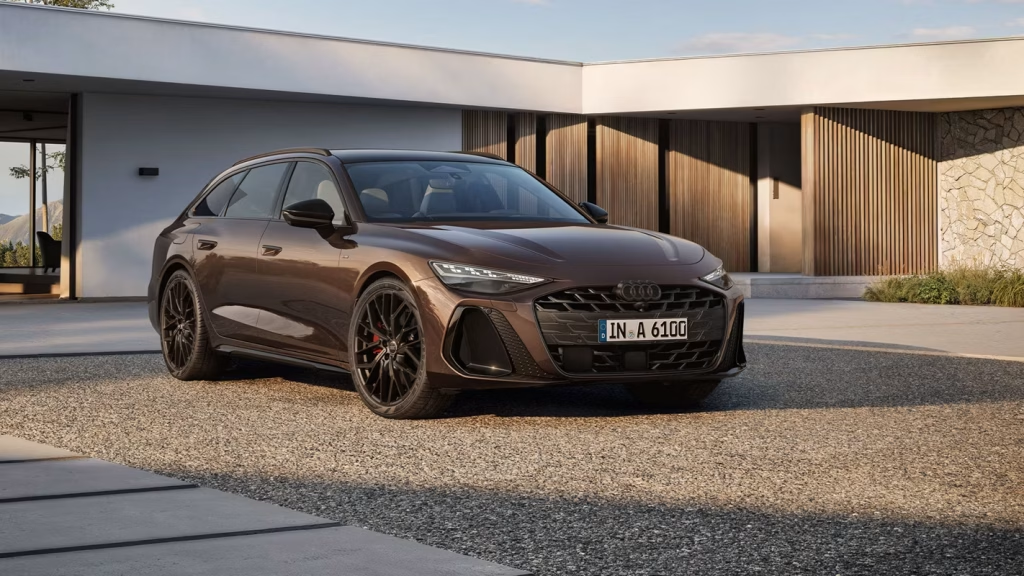
The combination of advanced software, high-quality LED hardware, and precise optical engineering results in one of the finest factory headlight systems currently offered in the midsize luxury sedan segment.
For drivers who regularly travel long distances after sunset, the Audi A6 delivers exceptional confidence through excellent beam reach and outstanding lighting consistency.
Specifications
- Engine: 3.0-liter Turbocharged V6
- Torque: 369 lb-ft
- Horsepower: 335 hp
- Length/Width: 194.4 in / 74.3 in
5. Acura TLX
Not every vehicle with exceptional headlights belongs to the highest luxury segment. The Acura TLX demonstrates that a premium sport sedan can deliver outstanding nighttime visibility through intelligent engineering rather than sheer lighting intensity.
Higher trims equipped with Jewel Eye LED headlights have earned praise for producing a long, focused beam pattern with excellent uniformity.
Independent evaluations, including headlight testing by safety organizations, have shown these lamps to provide illumination approaching the 400-foot range under ideal testing conditions while maintaining effective glare control.
The Jewel Eye system uses multiple compact LED projectors instead of a single large projector. Each LED performs a specific role in shaping the beam, creating a pattern that reaches farther down the road while maintaining excellent visibility along the shoulders.
Drivers benefit from earlier detection of road signs, curves, pedestrians, and unexpected obstacles without excessive foreground brightness that can reduce long-distance vision.
Another advantage is consistency. The TLX delivers similar lighting performance in both urban and rural environments because the beam remains evenly distributed across the lane. Automatic high beams respond quickly to approaching traffic, allowing drivers to maximize visibility whenever road conditions permit.
The headlights also integrate well with Acura’s driver-assistance technologies, helping maintain clear forward visibility during nighttime highway travel.
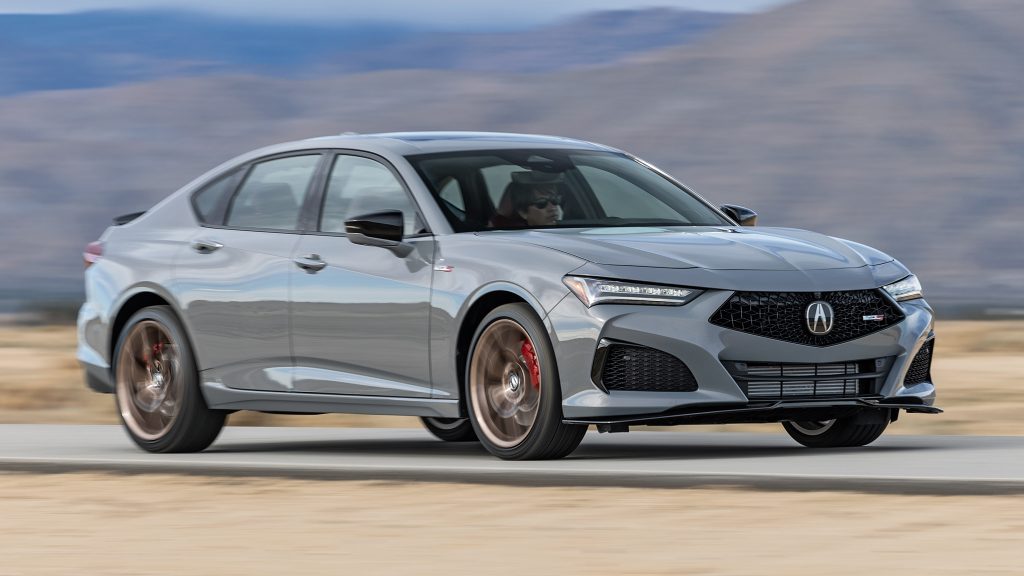
Acura’s emphasis on optical precision rather than simply increasing brightness results in a lighting system that performs confidently during long-distance driving. It reduces eye fatigue by avoiding uneven hotspots while providing drivers with additional reaction time at highway speeds.
For buyers who prioritize nighttime safety alongside reliability and strong value, the Acura TLX stands among the best-equipped sedans in its class. Its advanced LED technology proves that effective headlight design is just as important as raw light output.
Specifications
- Engine: 2.0-liter Turbocharged Inline-4
- Torque: 280 lb-ft
- Horsepower: 272 hp
- Length/Width: 194.6 in / 75.2 in
5 Cars That Do Not
1. Toyota Corolla (LE and SE Halogen Models)
The Toyota Corolla has earned an outstanding reputation for reliability, fuel economy, and low ownership costs, but not every version excels in nighttime visibility. Earlier LE and SE trims equipped with halogen projector headlights have consistently scored lower in independent headlight evaluations than LED-equipped versions.
Instrumented testing has shown that these halogen systems fall well short of the approximately 400-foot beam distance achieved by the best-performing headlights, particularly on straight roads and gradual curves.
The issue is not brightness alone but how the available light is distributed. The beam pattern concentrates much of its illumination closer to the vehicle, reducing the amount of usable light farther down the roadway.
At highway speeds, this shortens the time drivers have to react to hazards such as animals, stalled vehicles, or debris. On winding rural roads, the limited reach can also make it more difficult to identify upcoming curves.
Toyota addressed many of these concerns by offering LED headlights on higher trims, but buyers considering used Corolla models should pay close attention to the specific lighting package installed on the vehicle. Two cars from the same model year can deliver noticeably different nighttime performance depending on trim level.
Automatic high beams, when equipped, help improve visibility during low-traffic driving, but they cannot completely compensate for the shorter low-beam range. Many owners choose upgraded replacement bulbs, although these upgrades rarely match the effectiveness of a factory-engineered LED projector system.
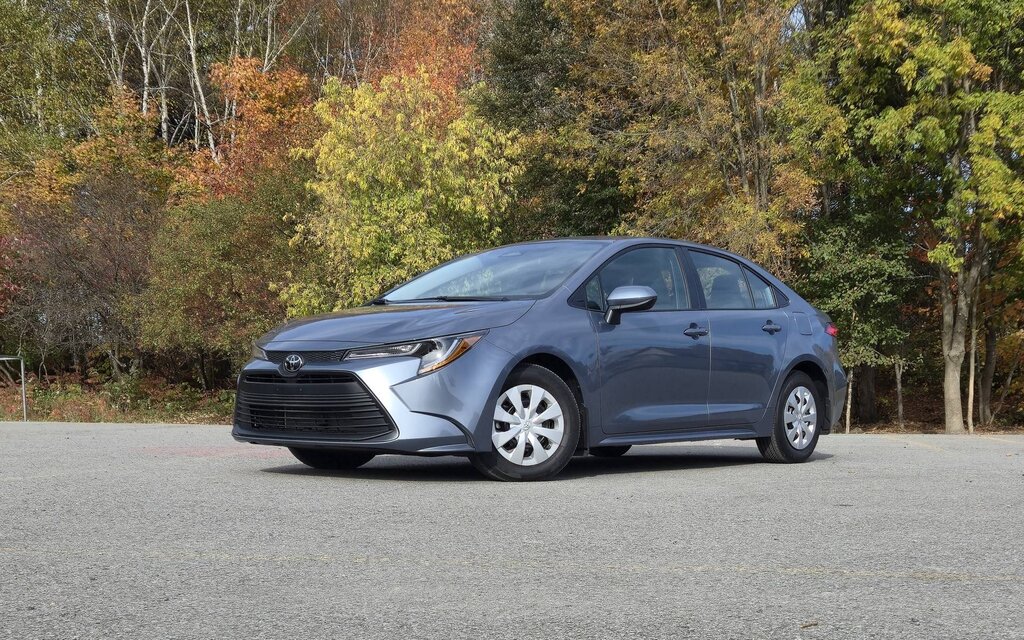
The Corolla remains one of the smartest compact sedans for dependability and affordability, yet shoppers who regularly drive after dark should recognize that halogen-equipped models provide considerably shorter forward illumination than the strongest performers in the segment.
Specifications
- Engine: 2.0-liter Inline-4
- Torque: 151 lb-ft
- Horsepower: 169 hp
- Length/Width: 182.5 in / 70.1 in
2. Nissan Sentra (Standard LED System)
The current Nissan Sentra offers attractive styling, impressive fuel economy, and a comfortable ride, but its standard headlight system has produced mixed results in independent testing.
While the LED headlights represent an improvement over older halogen designs, the beam distance still falls below the approximate 400-foot benchmark reached by the highest-rated luxury and premium sedans.
One reason is the conservative beam calibration. Nissan places considerable emphasis on limiting glare for oncoming traffic, resulting in a beam pattern that remains well controlled but does not project as far down the roadway as some competing systems. Drivers therefore receive less advance warning of hazards during nighttime highway travel.
The headlights perform adequately in urban environments where street lighting supplements vehicle illumination.
On dark rural highways, however, the shorter forward reach becomes more noticeable. Independent evaluations have also found that illumination on certain left-hand curves is less effective than on vehicles equipped with adaptive lighting systems.
Automatic high-beam assistance improves visibility when traffic conditions allow, but low-beam performance remains the primary factor measured during standardized testing. Drivers who spend significant time traveling after sunset may therefore notice the difference compared with vehicles featuring more advanced projector or Matrix LED technology.
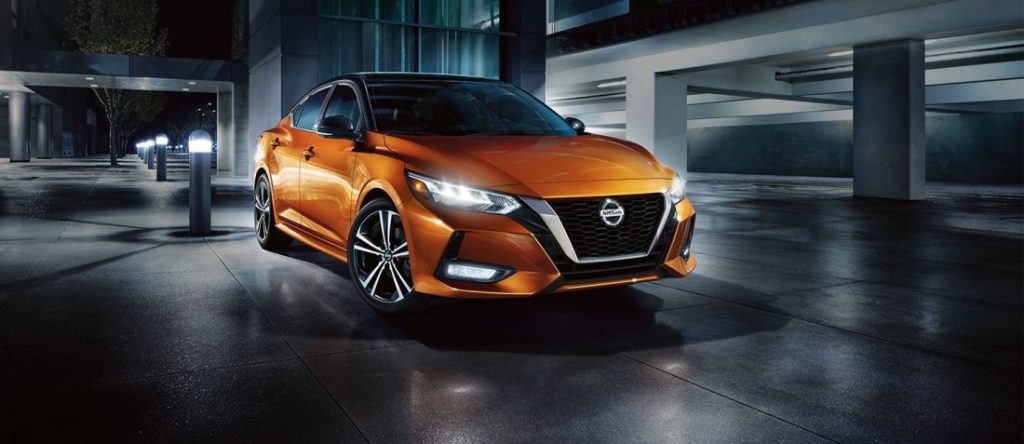
The Sentra continues to offer excellent value, modern safety technology, and dependable transportation. Its appearance here does not indicate poor safety, only that its factory low-beam headlights provide less long-range illumination than the strongest systems currently available.
Specifications
- Engine: 2.0-liter Inline-4
- Torque: 146 lb-ft
- Horsepower: 149 hp
- Length/Width: 182.7 in / 71.5 in
3. Subaru Impreza (Base Trim)
The Subaru Impreza has long been appreciated for its standard all-wheel drive, predictable handling, and excellent performance in poor weather. These strengths make it a popular choice in regions that experience snow and heavy rain.
However, independent headlight evaluations have shown that the base trim’s standard lighting system does not provide the same long-range visibility as the best-performing vehicles on the market. Its low-beam headlights typically fall short of the approximately 400-foot benchmark achieved by advanced LED and Matrix LED systems.
The limitation stems primarily from beam reach rather than light intensity. The headlights illuminate the area immediately in front of the vehicle effectively, but the usable light begins to diminish sooner than on higher-rated systems.
This reduces the amount of time available for drivers to react to wildlife, sharp bends, disabled vehicles, or road debris when traveling at highway speeds.
Curve performance is another area where the base system trails more advanced designs. Without adaptive lighting that pivots with steering input, portions of winding roads can remain relatively dark until the vehicle has already entered the turn.
Higher trims equipped with steering-responsive LED headlights perform noticeably better under these conditions.
For drivers who spend most of their time in well-lit urban areas, the difference may be difficult to notice. On rural highways with limited ambient lighting, however, the shorter beam distance becomes more apparent.
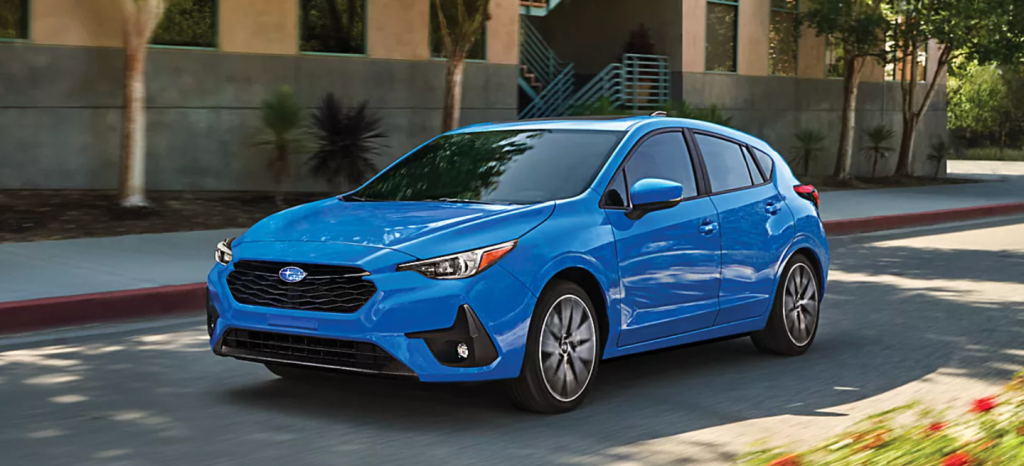
Buyers considering the Impreza should compare trim levels carefully, as upgraded lighting packages offer a measurable improvement in nighttime visibility.
The Impreza continues to deliver strong safety credentials and dependable all-weather capability, but shoppers who frequently drive after sunset may benefit from selecting versions equipped with Subaru’s more advanced headlight technology.
Specifications
- Engine: 2.0-liter BOXER Flat-4
- Torque: 145 lb-ft
- Horsepower: 152 hp
- Length/Width: 176.2 in / 70.1 in
4. Hyundai Elantra (Lower Trims)
The Hyundai Elantra offers impressive value, modern technology, and strong fuel efficiency, making it one of the most competitive compact sedans in its class. Even so, lower trims equipped with the standard headlight package have not matched the beam distance achieved by premium lighting systems found on higher-end vehicles.
Independent testing indicates that their low-beam illumination remains below the approximate 400-foot range delivered by top-performing headlights. The headlights provide acceptable visibility for everyday commuting, particularly in suburban and city environments where road lighting supplements the vehicle’s lamps.
The difference becomes more noticeable on dark two-lane highways, where drivers rely entirely on the headlights to identify hazards ahead. Shorter beam reach means less time to recognize animals, roadway debris, or vehicles stopped around a bend.
Another factor is beam width. While the Elantra provides adequate illumination within its lane, the outer edges of the roadway receive less light than vehicles equipped with adaptive or Matrix LED technology. This can make pedestrians, cyclists, and wildlife near the shoulder more difficult to detect during nighttime travel.
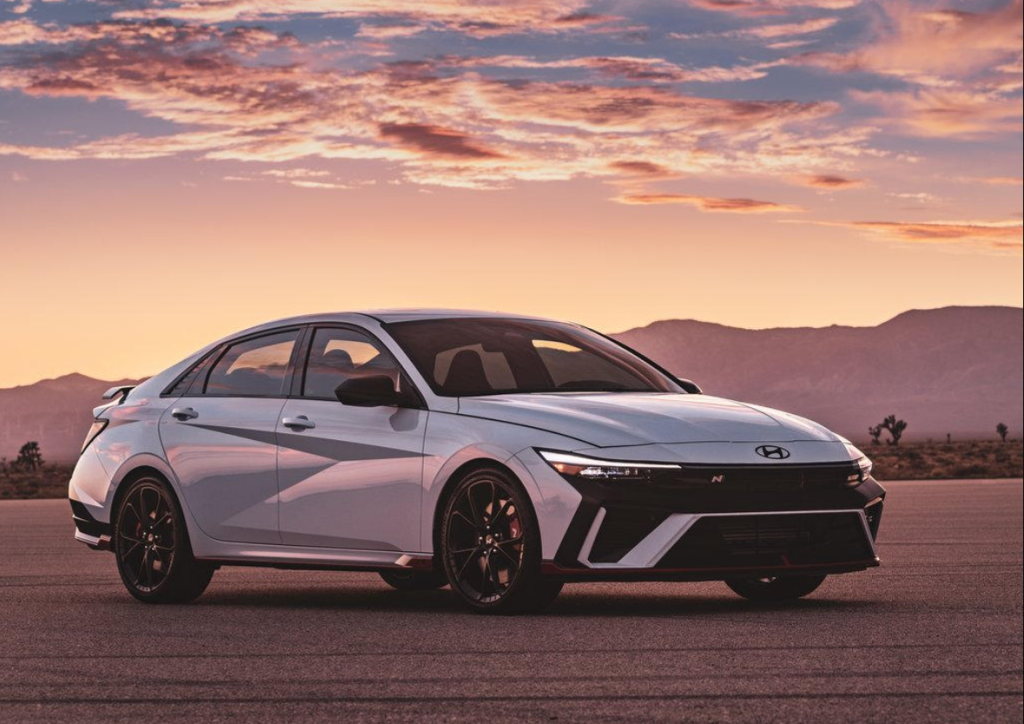
Higher Elantra trims equipped with upgraded LED projector systems improve performance, demonstrating how much the lighting package influences real-world visibility. Buyers should therefore pay attention to trim specifications instead of assuming every version performs identically after dark.
The Hyundai Elantra remains an excellent compact sedan for efficiency, technology, and affordability. Its placement in this comparison simply reflects that the standard headlight system does not project light as far down the road as the strongest factory lighting systems currently available.
Specifications
- Engine: 2.0-liter Inline-4
- Torque: 132 lb-ft
- Horsepower: 147 hp
- Length/Width: 184.1 in / 71.9 in
5. Mazda3 Sedan (Standard LED Headlights)
Mazda has earned widespread praise for producing vehicles that combine engaging driving dynamics with upscale interiors, and the Mazda3 Sedan is no exception.
Its standard LED headlights deliver crisp illumination and an attractive appearance, yet independent beam-distance testing has shown that they do not reach the approximately 400-foot level achieved by the industry’s strongest lighting systems.
Instead, the headlights prioritize balanced light distribution and glare control over maximum forward projection.
One advantage of the Mazda3 is its uniform beam pattern. Drivers experience relatively few bright hotspots or distracting dark areas immediately in front of the vehicle, creating a comfortable nighttime driving experience.
However, the beam begins to taper sooner than advanced adaptive LED or Matrix LED systems, reducing long-range visibility on dark highways.
Performance on curved roads also depends on the trim level. Models without adaptive front lighting cannot direct the beam into corners, meaning the driver often sees less of the roadway until steering input increases.
Higher trims equipped with adaptive front-lighting system technology improve this behavior, but the standard system remains more limited.
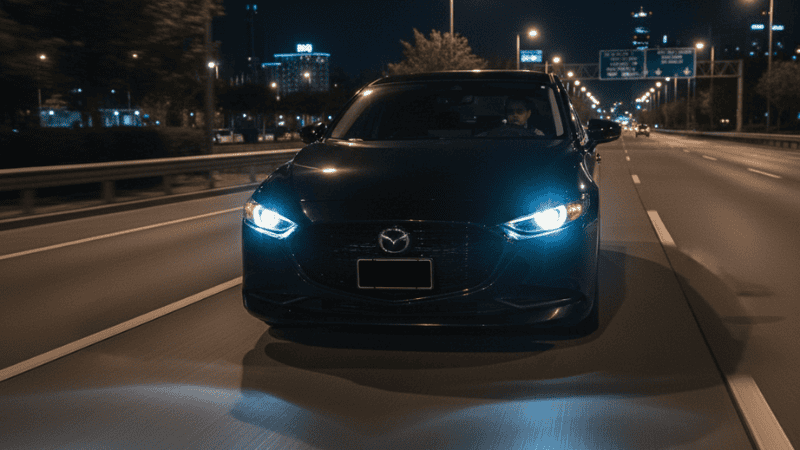
Despite these findings, the Mazda3 still provides lighting that comfortably meets federal safety requirements and performs well for most everyday driving situations. It simply does not deliver the exceptional beam reach seen in several premium luxury sedans featured earlier in this article.
For buyers who regularly drive on unlit rural roads, nighttime headlight performance deserves careful consideration alongside fuel economy, reliability, and crash-test ratings. The Mazda3 remains a highly desirable compact sedan, but drivers seeking maximum low-beam distance may prefer vehicles equipped with more advanced lighting technology.
Specifications
- Engine: 2.5-liter Skyactiv-G Inline-4
- Torque: 186 lb-ft
- Horsepower: 191 hp
- Length/Width: 183.5 in / 70.7 in
Also Read: 10 Greatest Dodge Muscle Cars Ever Built
