
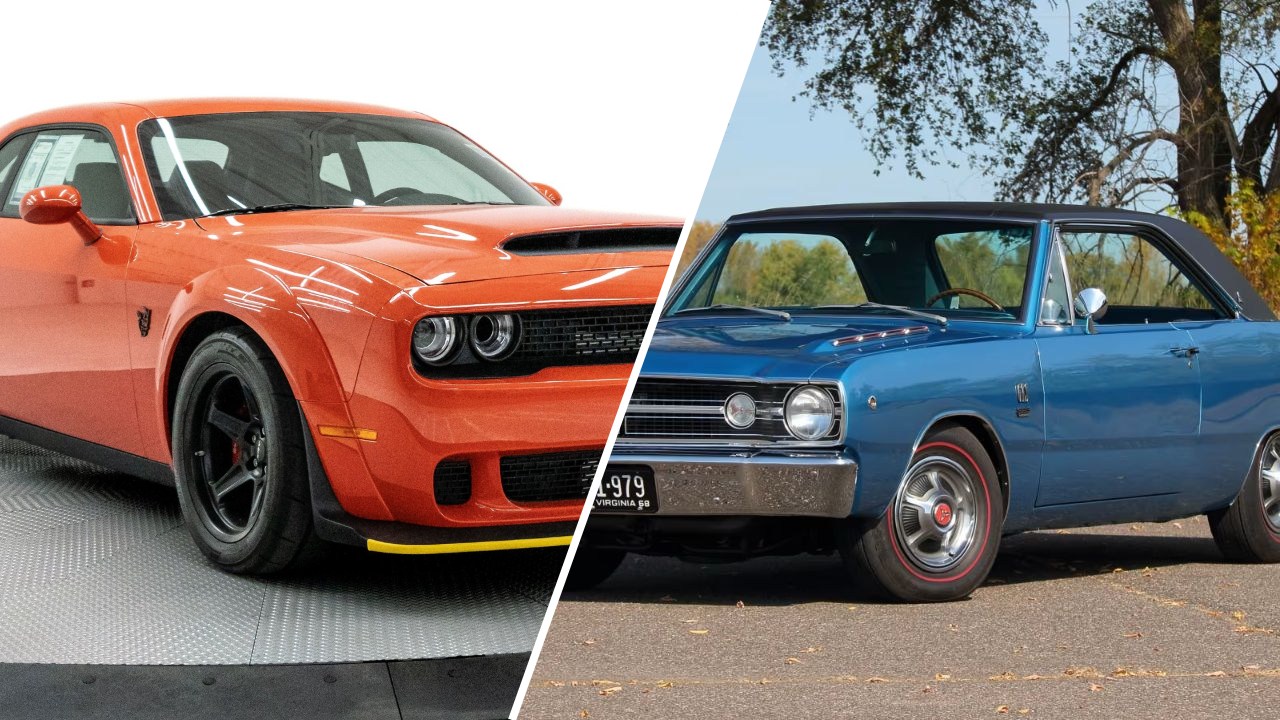
Few American brands have influenced the muscle car era like Dodge. From the golden age of the late 1960s to the modern supercharged monsters of today, Dodge has consistently produced vehicles that combine bold styling with exceptional straight-line performance.
Some became NASCAR legends, others dominated NHRA drag strips, while a handful have become million-dollar collector cars because of their rarity. Production numbers, factory horsepower ratings, racing success, and long-term collector demand all help separate the truly legendary models from the rest.
These are ten Dodge muscle cars that earned their place through documented performance history and lasting impact on American automotive culture.
Also Read: 10 Most Expensive Harley-Davidsons Ever Sold
1. 1970 Dodge Challenger R/T 426 HEMI
The 1970 Dodge Challenger R/T equipped with the legendary 426 HEMI arrived at the peak of the American muscle car era.
Introduced as Dodge’s answer to the Ford Mustang and Chevrolet Camaro, the Challenger immediately stood out with aggressive styling and an engine lineup that ranged from practical small-block V8s to one of the most feared powerplants ever installed in a production car.
While thousands of Challengers were built in 1970, only a small fraction left the factory with the optional 426 Street HEMI, making these cars exceptionally rare today.
Officially, the 426 HEMI produced 425 horsepower and 490 lb-ft of torque, although historians and engine builders widely agree Chrysler intentionally underrated its output for insurance and racing reasons.
Contemporary road tests recorded quarter-mile times in the low 13-second range on factory tires, extraordinary performance for a showroom vehicle in 1970. The HEMI Challenger also became a favorite among drag racers because the hemispherical combustion chamber design responded exceptionally well to tuning.
Production records reinforce its exclusivity. Dodge built fewer than 400 Challenger R/T hardtops equipped with the 426 HEMI for the 1970 model year, making surviving examples among the most valuable Mopars ever produced.
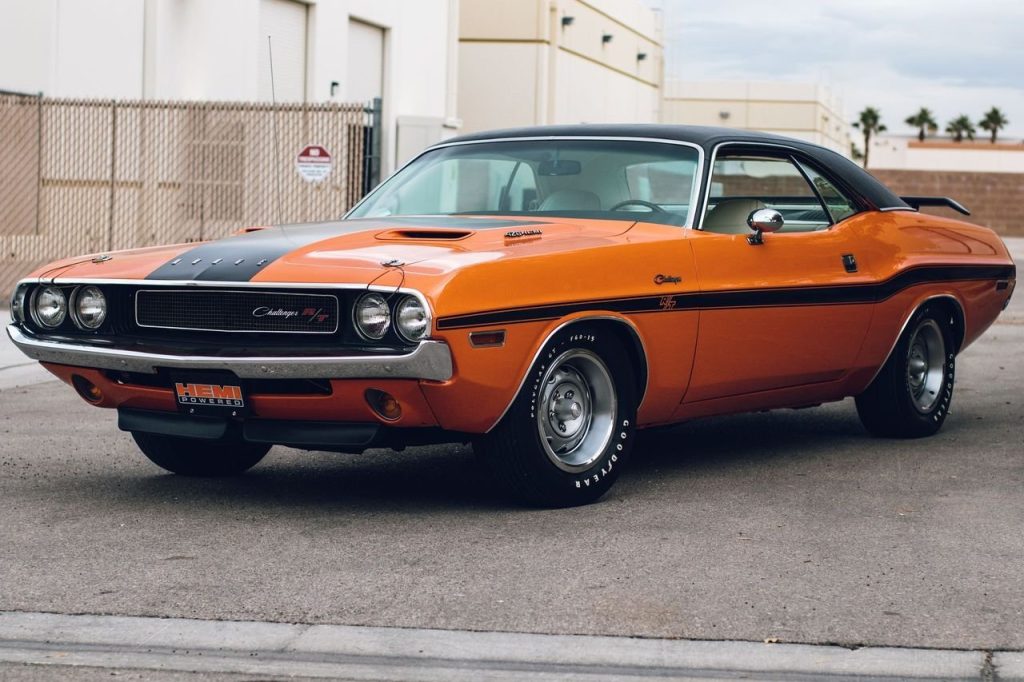
Auction houses such as Mecum, Barrett-Jackson, and RM Sotheby’s have repeatedly documented sales reaching well into six figures, with exceptionally restored or numbers-matching cars commanding even higher prices.
The combination of rarity, factory performance, and cultural significance has secured the 1970 Challenger R/T HEMI’s place among the greatest Dodge muscle cars ever created. More than five decades after its debut, it remains one of the most desirable American performance cars ever built.
Specifications
- Engine: 426-cubic-inch HEMI V8
- Torque: 490 lb-ft
- Horsepower: 425 hp
- Length/Width: 191.3 inches / 76.1 inches
2. 1969 Dodge Charger Daytona
Some muscle cars became legends because of quarter-mile performance. The 1969 Dodge Charger Daytona achieved immortality by changing NASCAR history.
Developed specifically to dominate high-speed oval racing, the Daytona featured a pointed aerodynamic nose cone and an enormous rear wing unlike anything previously seen on an American production vehicle.
NASCAR homologation rules required Dodge to produce street versions, resulting in one of the rarest and most recognizable muscle cars ever built.
Only 503 Charger Daytonas were produced, comfortably exceeding NASCAR’s homologation requirement while ensuring long-term collector rarity. Buyers could choose either the 440 Magnum V8 rated at 375 horsepower or the optional 426 HEMI producing a factory-rated 425 horsepower.
The Daytona’s aerodynamic improvements proved revolutionary. In March 1970, Buddy Baker drove a race-prepared Daytona to become the first driver in NASCAR history to officially exceed 200 mph during a closed-course event, forever cementing the model’s place in motorsports history.
The production Daytona also delivered impressive road performance. HEMI-equipped examples were capable of quarter-mile times in the low 13-second range, placing them among the quickest factory muscle cars of the era.
While its towering rear wing attracted attention, extensive wind tunnel development significantly reduced aerodynamic drag and improved high-speed stability compared with the standard Charger.
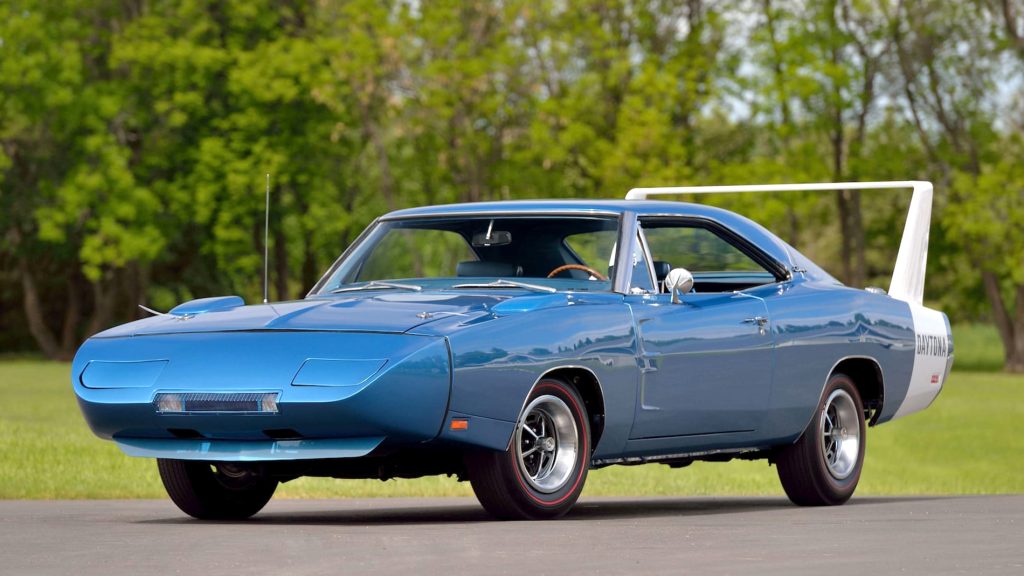
Today, authentic Charger Daytonas rank among the most valuable American muscle cars ever sold. Documented auction results from Mecum, Barrett-Jackson, and RM Sotheby’s regularly exceed seven figures for rare HEMI-equipped examples.
Its combination of limited production, NASCAR dominance, and unmistakable appearance has made the Charger Daytona one of Dodge’s greatest engineering achievements.
Specifications
- Engine: 426-cubic-inch HEMI V8
- Torque: 490 lb-ft
- Horsepower: 425 hp
- Length/Width: 220.0 inches / 76.4 inches
3. 1970 Dodge Charger R/T 426 HEMI
Unlike the winged Daytona that was designed to conquer NASCAR, the 1970 Dodge Charger R/T 426 HEMI became famous by dominating both the street and the drag strip. The redesigned front-end styling introduced for 1970 gave the Charger a cleaner appearance while preserving its unmistakable muscle car identity.
Buyers seeking maximum performance could order the legendary 426 Street HEMI, creating one of the quickest full-size muscle cars available from any American manufacturer.
The Charger R/T was offered with several V8 engines, but the HEMI remained the crown jewel. Officially rated at 425 horsepower and 490 lb-ft of torque, the engine delivered performance that exceeded its published numbers.
Contemporary magazine testing regularly recorded quarter-mile times in the low 13-second range with skilled drivers, making it a serious competitor against the Chevrolet Chevelle SS 454, Plymouth Road Runner, and Ford Torino Cobra.
The engine’s forged internals, dual four-barrel carburetors, and hemispherical combustion chambers also made it exceptionally durable for racing applications.
Production numbers add another layer to its significance. Dodge produced thousands of Charger R/T models for the 1970 model year, but only a small percentage received the optional 426 HEMI because the engine carried a substantial price premium.
As emissions regulations and rising insurance costs began affecting the muscle car market, demand for expensive high-performance engines declined sharply, making surviving HEMI Chargers highly desirable today.
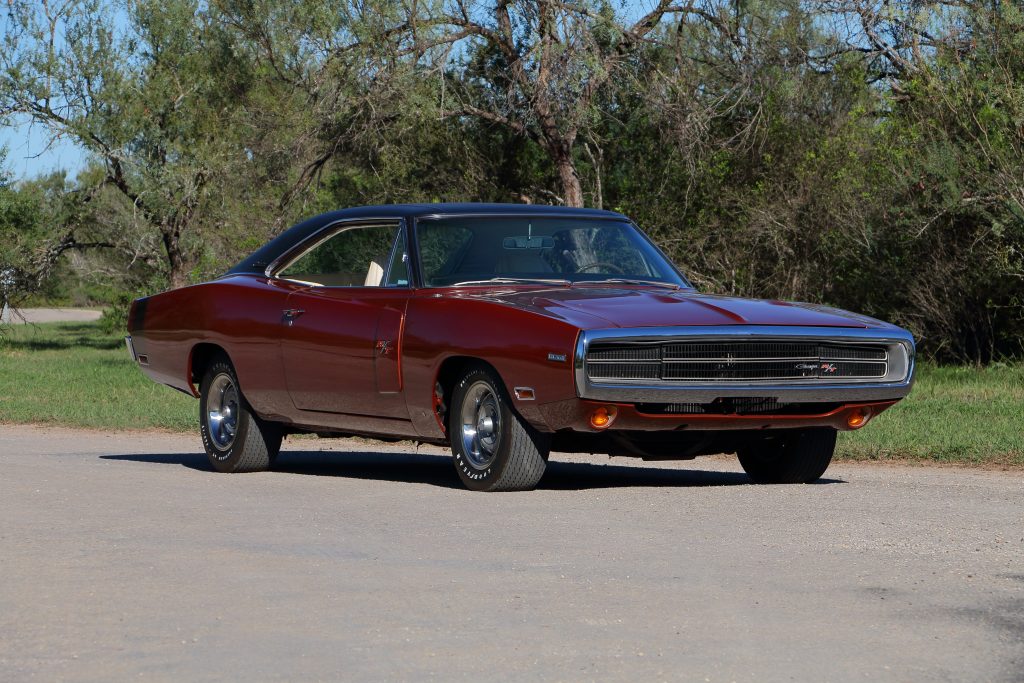
Auction results consistently demonstrate its collector appeal. Numbers-matching examples documented by Mecum, Barrett-Jackson, and RM Sotheby’s frequently sell for several hundred thousand dollars, with rare factory colors, four-speed transmissions, and extensive documentation commanding even stronger prices.
The combination of iconic styling, genuine racing pedigree, and limited production ensures the 1970 Charger R/T HEMI remains one of Dodge’s most celebrated muscle cars.
Specifications
- Engine: 426-cubic-inch HEMI V8
- Torque: 490 lb-ft
- Horsepower: 425 hp
- Length/Width: 208.0 inches / 76.6 inches
4. 1968 Dodge Dart GTS 440
The 1968 Dodge Dart GTS 440 followed a completely different philosophy from many other muscle cars of its era. Rather than placing a large engine inside a similarly large vehicle, Dodge installed the massive 440 Magnum V8 into the compact Dart platform.
The result was an intimidating power-to-weight ratio that made the car exceptionally fast in a straight line, although it also presented engineering challenges that have become part of automotive history.
Officially, the 440 Magnum produced 375 horsepower and 480 lb-ft of torque. Because the engine occupied nearly every inch of available space beneath the hood, Dodge engineers could not fit a power brake booster or factory air conditioning.
Narrow factory tires also struggled to transfer the engine’s tremendous torque to the pavement, meaning experienced drivers often found traction to be the biggest performance limitation rather than horsepower.
Production remained extremely limited. Historical Dodge records indicate that only 639 Dart GTS 440 hardtops were built for the 1968 model year, making it one of the rarest factory big-block muscle cars ever produced.
The combination of compact dimensions and a massive V8 gave the Dart an unforgettable reputation among enthusiasts and drag racers, many of whom modified the cars into highly successful quarter-mile competitors.
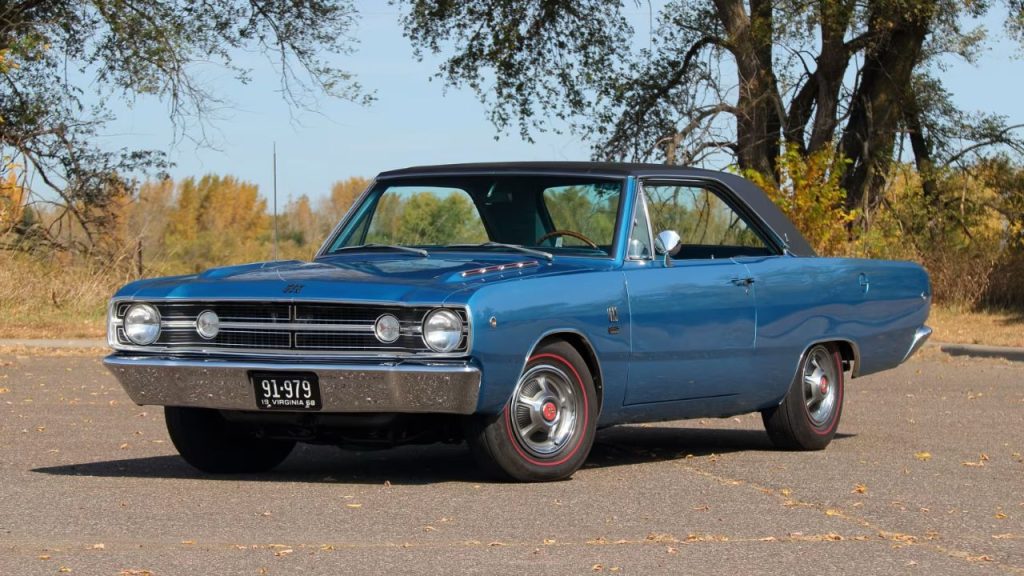
Today, authentic Dart GTS 440 models command significant attention whenever they appear at major collector auctions. Documented sales through Mecum and Barrett-Jackson consistently reflect their rarity, particularly for numbers-matching examples retaining their original drivetrains.
The car represents Dodge’s willingness to push engineering boundaries during the peak of the muscle car era, creating one of the most memorable factory hot rods in American automotive history.
Specifications
- Engine: 440 cubic-inch Magnum V8
- Torque: 480 lb-ft
- Horsepower: 375 hp
- Length/Width: 193.8 inches / 71.4 inches
5. 1968 Dodge Super Bee 426 HEMI
The Dodge Super Bee was created with a simple mission: deliver maximum performance without the premium price tag associated with more luxurious muscle cars. Introduced for the 1968 model year, it shared its B-body platform with the Coronet but stripped away unnecessary luxury features to keep costs down.
Buyers who wanted the ultimate factory package could order the legendary 426 Street HEMI, transforming the affordable Super Bee into one of the quickest production cars of its era.
While the standard 383 Magnum V8 attracted most buyers, the HEMI version became the collector favorite. Chrysler officially rated the engine at 425 horsepower and 490 lb-ft of torque, though many historians believe actual output was considerably higher.
Contemporary magazine road tests regularly reported quarter-mile times in the low 13-second range, placing the Super Bee alongside the fastest factory muscle cars available in America. Its straightforward engineering also made it popular with drag racers, who appreciated the HEMI’s durability and tuning potential.
Production numbers help explain today’s collector demand. Dodge produced more than 27,000 Super Bees during the 1968 model year, but only about 125 hardtops were equipped with the optional 426 HEMI.
That extremely limited production has driven values steadily upward for decades. Auction houses including Mecum, Barrett-Jackson, and RM Sotheby’s have documented HEMI Super Bee sales reaching well into six-figure territory, particularly for factory-correct examples with original drivetrains and documentation.
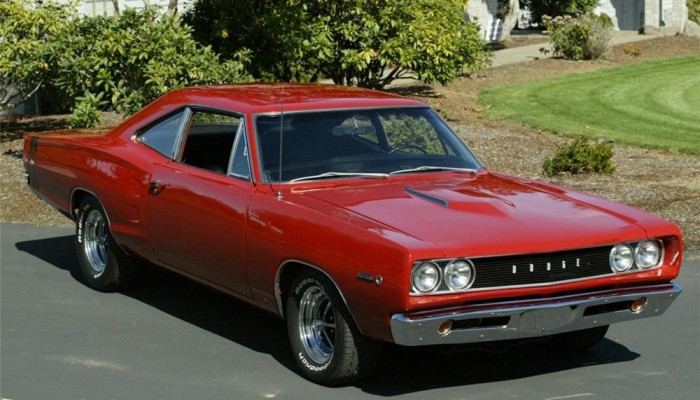
The Super Bee proved that buyers did not need an expensive luxury coupe to own genuine street performance. Its combination of low production numbers, race-inspired engineering, and one of the most famous V8 engines in American history secures its place among Dodge’s greatest muscle cars.
Specifications
- Engine: 426-cubic-inch HEMI V8
- Torque: 490 lb-ft
- Horsepower: 425 hp
- Length/Width: 203.2 inches / 76.1 inches
6. 1971 Dodge Demon 340
Not every legendary muscle car relied on massive displacement. The 1971 Dodge Demon 340 demonstrated that a lighter body paired with a well-engineered small-block V8 could deliver outstanding real-world performance.
Introduced as the sporty version of the Dodge Dart, the Demon arrived just as insurance rates and emissions regulations began reshaping the muscle car market. Even under those changing conditions, it quickly earned a reputation as one of Dodge’s most balanced performance machines.
Power came from Chrysler’s respected 340 cubic-inch V8, officially rated at 275 net horsepower for 1972 under revised SAE standards, while the 1971 gross rating stood at 275 horsepower before the industry transitioned to net measurements. More important than published numbers was the engine’s willingness to rev.
Combined with the Demon’s relatively low curb weight, the car produced impressive acceleration and agile handling compared with heavier big-block competitors. Many owners also appreciated that the 340 responded exceptionally well to common performance upgrades.
Production remained modest, adding to the Demon’s desirability among collectors. Although Dodge built several thousand Demon models between 1971 and 1972, surviving factory 340-equipped cars are considerably less common today because many were modified for racing or simply driven hard during their early years.
Their combination of rarity and performance has steadily increased collector interest, with auction values continuing to rise for documented, numbers-matching examples.
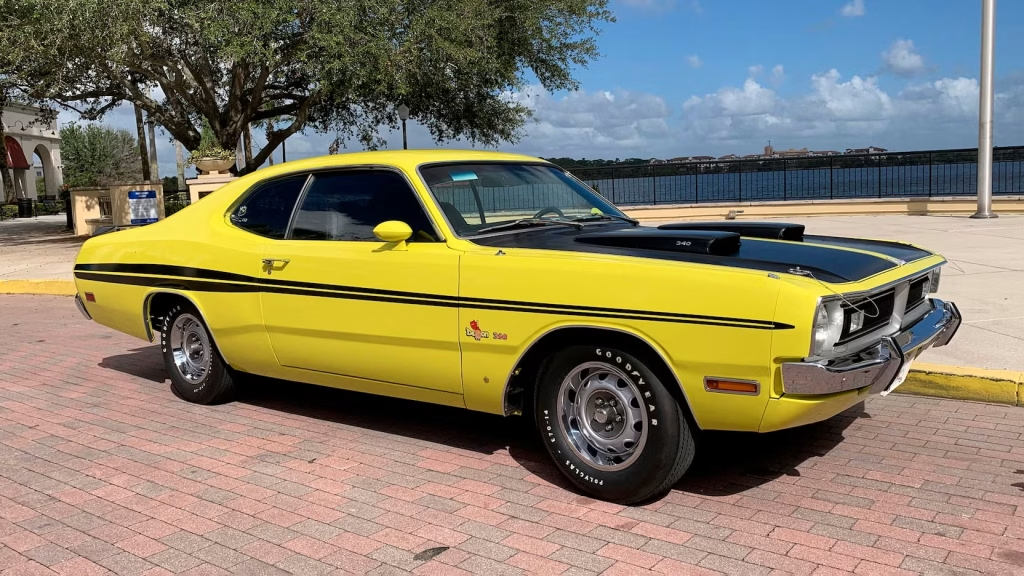
The Demon also occupies an important place in Dodge history because it represented the final wave of classic small-block muscle before tightening emissions regulations dramatically reduced factory performance.
Today it stands as proof that intelligent engineering could compete with raw engine displacement during the golden age of American muscle.
Specifications
- Engine: 340 cubic-inch LA V8
- Torque: 340 lb-ft
- Horsepower: 275 hp (gross rating)
- Length/Width: 193.8 inches / 71.4 inches
7. 2018 Dodge Challenger SRT Demon
For decades, classic HEMI-powered muscle cars defined Dodge’s reputation. Then the company rewrote the rulebook with the 2018 Challenger SRT Demon, a factory-built drag racing machine unlike anything previously offered by a major American automaker.
Instead of focusing on road-course handling or luxury, Dodge engineered the Demon with one objective: dominate the quarter mile straight from the showroom.
The numbers remain extraordinary. Under the hood sat a supercharged 6.2-liter HEMI V8 producing 808 horsepower on premium pump gasoline and an astonishing 840 horsepower when fueled with 100-octane gasoline using the factory Demon Crate calibration.
Dodge also equipped the car with a TransBrake, a Torque Reserve launch system, drag radials, and a strengthened driveline developed specifically for repeated hard launches. Certified by the NHRA, the Demon recorded a factory quarter-mile time of 9.65 seconds at 140 mph, making it the quickest production car available at its launch.
Exclusivity has played a major role in the Demon’s legacy. Dodge limited production to approximately 3,300 units for North America, including 3,000 examples for the United States and 300 for Canada.
Every car carried unique VIN documentation and numerous Demon-specific components that distinguished it from the already powerful Challenger Hellcat. Limited production, combined with record-breaking factory performance, immediately attracted collectors.
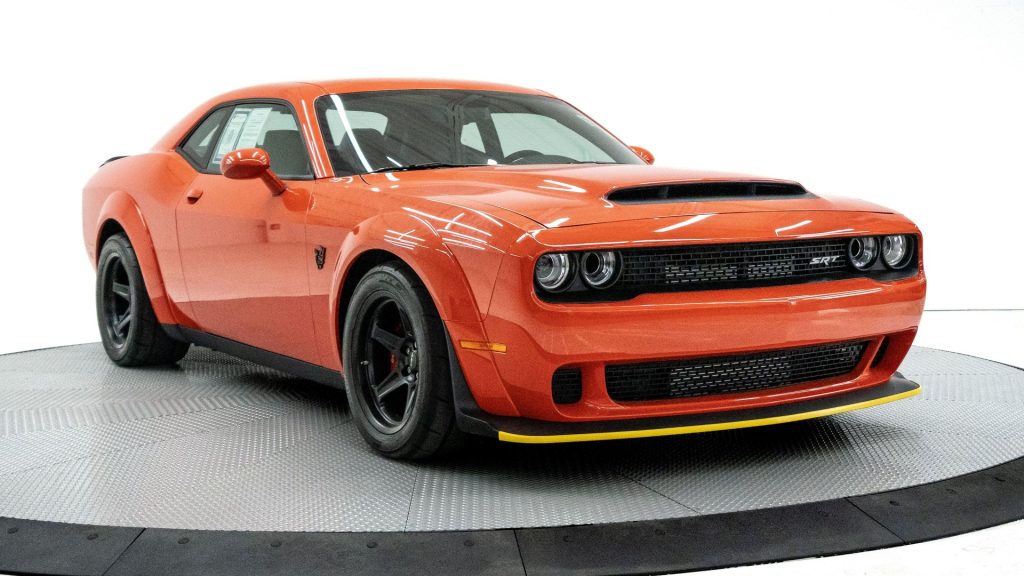
Auction results demonstrate the car’s long-term appeal. Low-mileage Demons with complete Demon Crate accessories have consistently achieved prices above their original MSRP through Mecum, Barrett-Jackson, and Bring a Trailer.
The Challenger SRT Demon proved that even in the modern era, Dodge could produce a muscle car capable of standing alongside its legendary HEMI ancestors.
Specifications
- Engine: Supercharged 6.2-liter HEMI V8
- Torque: 770 lb-ft
- Horsepower: 808 hp (840 hp on 100-octane calibration)
- Length/Width: 197.9 inches / 75.7 inches
8. 2023 Dodge Challenger SRT Demon 170
If the original Demon shocked the automotive world, the Demon 170 pushed factory muscle car performance to a level few thought possible. Introduced as Dodge’s farewell to the HEMI-powered Challenger, the Demon 170 became the most powerful production muscle car ever built by the company.
It represented the culmination of decades of Dodge performance engineering before the end of the LX-platform era.
The centerpiece was a heavily upgraded version of the supercharged 6.2-liter HEMI V8. Running on E85 fuel, the engine produced an incredible 1,025 horsepower and 945 lb-ft of torque.
Even on premium pump gasoline, output remained an impressive 900 horsepower. Dodge certified the car for a 0 to 60 mph time of just 1.66 seconds under prepared launch conditions and an NHRA-certified quarter-mile pass of 8.91 seconds at more than 151 mph, making it the first factory production car to break into the eight-second quarter-mile range.
Production was intentionally limited, adding to its instant collector status. Dodge announced a maximum production target of approximately 3,300 units, although actual output depended on customer orders and manufacturing capacity.
Demand dramatically exceeded supply, with many dealers reporting waiting lists and significant market adjustments above MSRP. That immediate demand reinforced the car’s position as one of the most sought-after modern American performance vehicles.
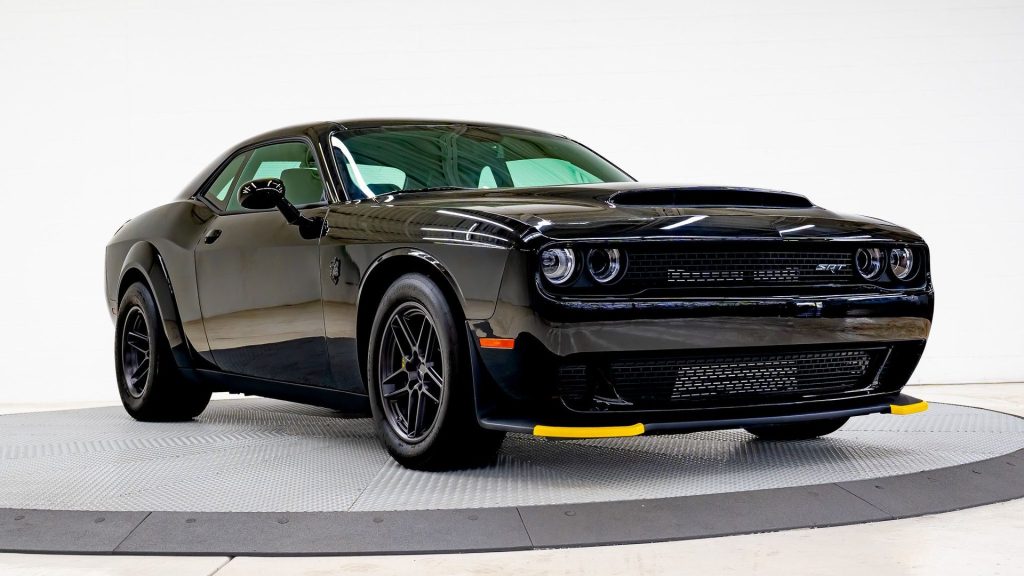
The Demon 170 is more than just a high-horsepower Challenger. It symbolizes the conclusion of Dodge’s supercharged HEMI era while setting performance benchmarks that may stand for years. Its documented acceleration, limited production, and historic significance ensure it will remain one of the greatest Dodge muscle cars ever produced.
Specifications
- Engine: Supercharged 6.2-liter HEMI V8
- Torque: 945 lb-ft
- Horsepower: 1,025 hp (on E85)
- Length/Width: 197.7 inches / 75.7 inches
9. 1969 Dodge Coronet Super Bee A12 Six Pack
While HEMI-powered Dodges often steal the spotlight, the 1969 Coronet Super Bee A12 proved that intelligent engineering could rival sheer engine size. Dodge introduced the A12 package midway through the 1969 model year as a purpose-built street and strip machine.
Instead of relying on the expensive 426 HEMI, engineers equipped the car with Chrysler’s 440 Six Pack V8, featuring three Holley two-barrel carburetors that delivered outstanding performance at a more attainable price.
Officially rated at 390 horsepower and 490 lb-ft of torque, the 440 Six Pack was intentionally underrated by Chrysler. Period road tests consistently recorded quarter-mile times in the low 13-second range, placing the A12 Super Bee among the quickest production muscle cars available in America.
Its fiberglass lift-off hood, heavy-duty suspension, Hurst four-speed transmission option, and 4.10:1 Dana 60 rear axle transformed the car into a favorite among drag racers looking for serious factory performance without the HEMI’s additional cost.
Production numbers further strengthen its reputation. Historical Chrysler records indicate that Dodge built approximately 1,907 Coronet Super Bee A12 models during 1969, making it considerably rarer than standard Super Bees but more attainable than ultra-rare HEMI variants.
Collectors value the A12 because it represents one of the purest expressions of Dodge’s late-1960s performance philosophy, delivering remarkable speed through carefully selected factory components.
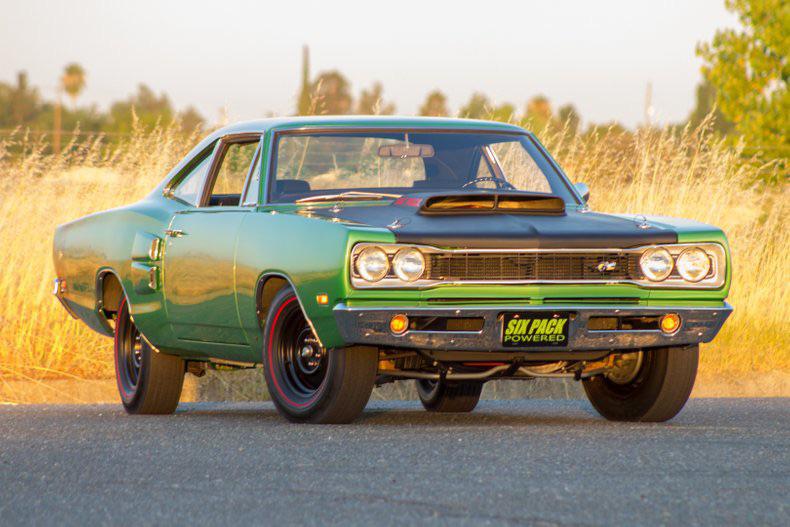
Auction houses including Mecum, Barrett-Jackson, and RM Sotheby’s have documented steadily increasing values for authentic A12 cars, particularly numbers-matching examples retaining their original drivetrains.
The Coronet Super Bee A12 remains a favorite among Mopar enthusiasts who appreciate its combination of documented production rarity, outstanding factory performance, and distinctive Six-Pack induction system.
Specifications
- Engine: 440 cubic-inch Six-Pack V8
- Torque: 490 lb-ft
- Horsepower: 390 hp
- Length/Width: 203.2 inches / 76.1 inches
10. 2015 Dodge Challenger SRT Hellcat
The modern muscle car revival reached a turning point when Dodge introduced the Challenger SRT Hellcat for the 2015 model year. Rather than simply building another V8-powered coupe, Dodge created the world’s most powerful production muscle car at the time.
Its arrival immediately reignited the American horsepower war and forced competing manufacturers to respond with even more powerful performance models.
At the heart of the Hellcat sits a supercharged 6.2-liter HEMI V8 producing 707 horsepower and 650 lb-ft of torque. Those figures were unprecedented for a mainstream production muscle car.
Independent testing by major automotive publications consistently recorded 0 to 60 mph times in approximately 3.6 seconds and quarter-mile runs in the high-10-second to low-11-second range with factory tires.
Despite its enormous output, the Challenger retained everyday usability, offering comfortable seating, modern infotainment technology, and available automatic or manual transmissions.
Many classic muscle cars earned their legendary reputations through scarcity and limited production runs. The Hellcat followed a different formula, becoming an icon by democratizing high-performance driving. Yet even with its broader appeal, early models remained difficult to obtain as Dodge struggled to meet the surge in buyer interest.
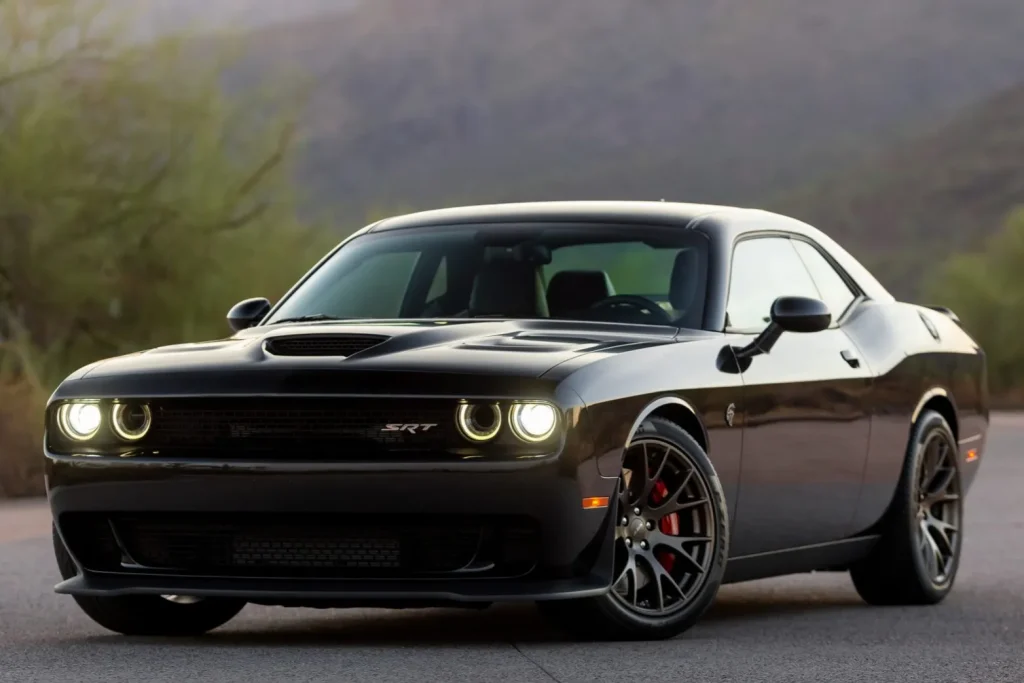
Dealer waiting lists stretched for months, and many cars sold above MSRP during the first model year. The Hellcat’s success also laid the foundation for later icons such as the Demon, Redeye, Super Stock, and ultimately the Demon 170.
Today, the 2015 Challenger SRT Hellcat is widely recognized as one of the most influential modern American performance cars. It revived Dodge’s performance image, redefined factory horsepower expectations, and secured its place alongside the brand’s greatest muscle cars from the golden era.
Specifications
- Engine: Supercharged 6.2-liter HEMI V8
- Torque: 650 lb-ft
- Horsepower: 707 hp
- Length/Width: 197.7 inches / 75.7 inches
Also Read: 10 Base Models Now More Collectible Than Their Top Trims
