The late 1970s weren’t exactly a golden age for American performance. Just a few years earlier, Detroit’s streets echoed with the thunder of big-block V8s, but by 1978, the muscle car era had all but faded.
Stricter emissions regulations, soaring insurance premiums, and the lingering effects of the 1973 oil crisis forced automakers to prioritize fuel economy over outright speed. Horsepower ratings plummeted, compression ratios dropped, and once-mighty performance icons struggled to recapture their former glory.
That makes one of 1978’s biggest performance stories all the more surprising. The fastest American production vehicle of the year wasn’t a Corvette, a Pontiac Trans Am, or a Camaro Z28. Instead, it was a pickup truck, specifically the Dodge Li’l Red Express.
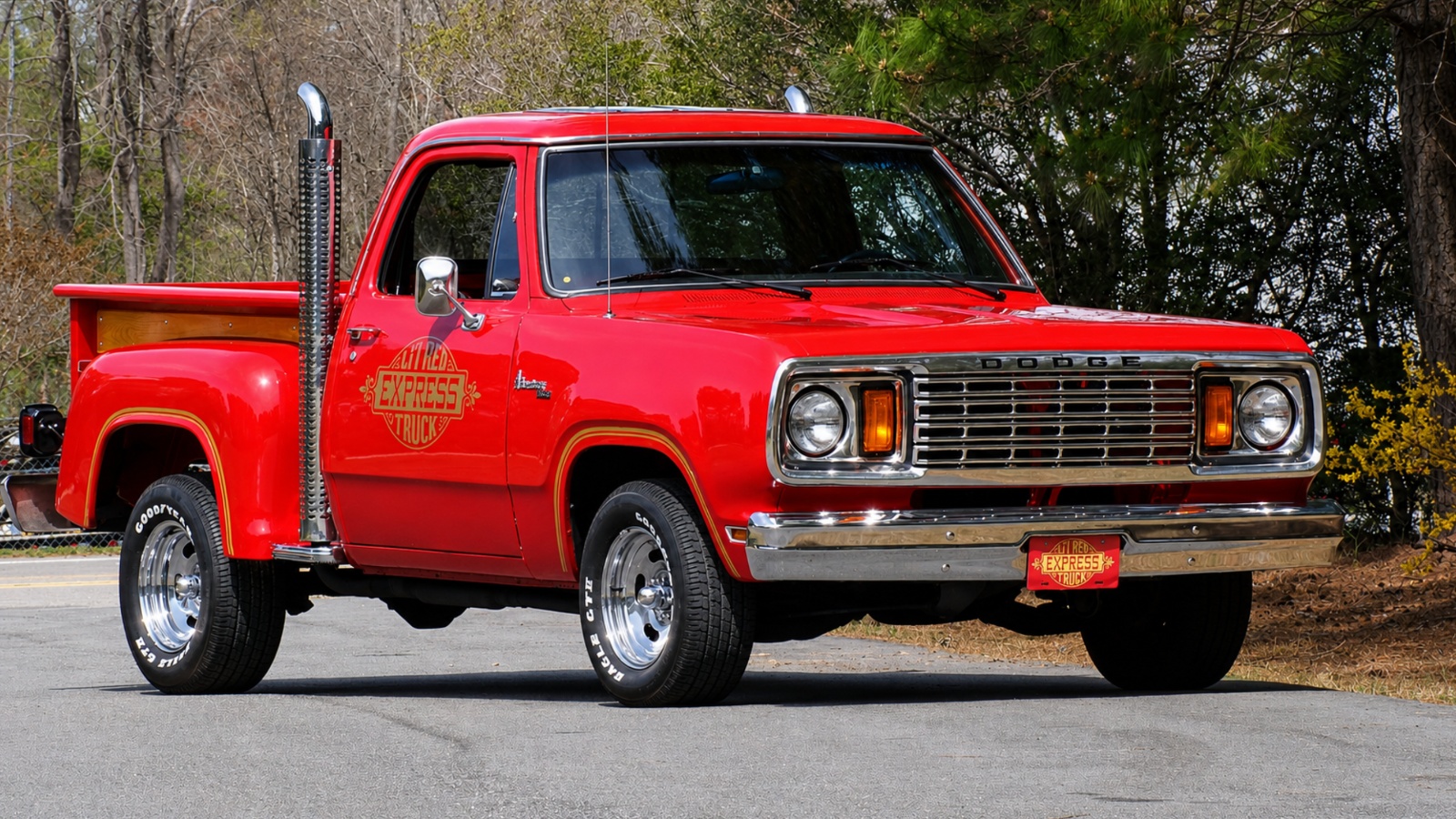
With its bright red paint, polished vertical exhaust stacks, oak bed trim, and unmistakable “adult toy” personality, it looked like a novelty. Underneath, however, was a cleverly engineered machine that exploited a unique loophole in federal emissions regulations, allowing Dodge to build a vehicle that could outperform America’s traditional performance cars.
How Dodge Built America’s Fastest Vehicle During the Malaise Era
By 1978, American performance cars were operating under a very different set of rules than they had just a few years earlier. The Environmental Protection Agency (EPA) had tightened emissions standards, forcing manufacturers to lower compression ratios and install restrictive emissions equipment.
At the same time, the Corporate Average Fuel Economy (CAFE) program encouraged automakers to improve efficiency across their lineups. Combined with high fuel prices and rising insurance costs for powerful cars, these changes transformed the American performance landscape.
Manufacturers that had once competed in a horsepower war were suddenly advertising comfort, fuel economy, and luxury instead. Chevrolet’s Corvette still carried the performance flag, but its output had fallen dramatically compared to earlier generations.
Pontiac’s Firebird Trans Am retained its aggressive styling, yet its power figures reflected the realities of the era. Ford’s Mustang II King Cobra looked sporty but couldn’t match the acceleration of its predecessors. Dodge saw an opportunity where others saw limitations.
Instead of trying to squeeze more performance from a passenger car burdened by increasingly strict emissions regulations, Dodge engineers turned to the D-Series pickup. Trucks in the late 1970s were subject to different federal emissions requirements than passenger cars, particularly for vehicles with higher gross vehicle weight ratings.
This regulatory distinction allowed Dodge to equip the Li’l Red Express with a less restrictive exhaust system and performance-oriented engine components that would have been difficult to certify in a conventional car.
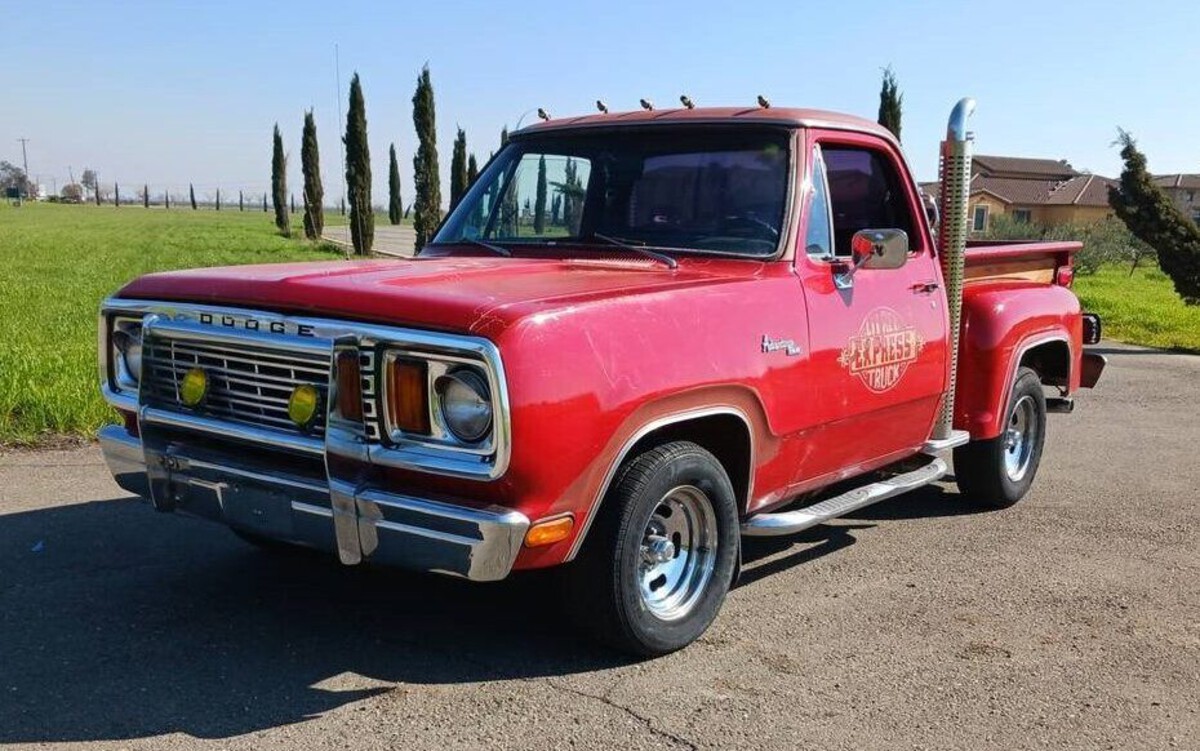
Introduced in 1978, the Li’l Red Express immediately stood out. Its bright Canyon Red paint, gold graphics, chrome bumpers, genuine oak cargo bed trim, and towering chrome exhaust stacks gave it a personality unlike anything else on American roads. The styling paid homage to classic semi-trucks while embracing the custom truck culture that was rapidly growing in popularity.
Under the hood sat Chrysler’s proven 360-cubic-inch V8 paired with a three-speed TorqueFlite automatic transmission. While its official horsepower rating of 225 hp might not seem extraordinary by earlier muscle car standards, the combination of freer breathing, strong low-end torque, and favorable gearing produced surprisingly impressive real-world performance.
Dodge leaned into the truck’s unconventional personality in its advertising, presenting it as a pickup for drivers who wanted more than basic utility. The message was clear that this was not simply another workhorse. It represented performance and excitement during a period when truly distinctive performance vehicles were becoming harder to find.
What initially seemed like a bold marketing experiment quickly became one of the most memorable vehicles of the decade. Backed by contemporary road tests and clever engineering, the Li’l Red Express proved that ingenuity could still deliver speed even during the height of the automotive malaise era. Decades later, it remains one of Dodge’s most fascinating creations and one of the most unusual performance legends ever built.
ALSO READ: Dodge Put a Viper V10 in a Pickup and Hit 154 MPH
The Engineering That Made the Li’l Red Express So Quick
The Li’l Red Express earned its reputation through smart engineering rather than overwhelming horsepower. Its heart was Chrysler’s 360-cubic-inch LA-series V8, producing 225 horsepower at 3,800 rpm and approximately 295 lb-ft of torque.
More important than the raw numbers was how efficiently the engine delivered that power. Dodge equipped the truck with heavy-duty police-spec cylinder heads, an aluminum intake manifold, and a Carter ThermoQuad four-barrel carburetor that improved airflow compared to many passenger-car applications.
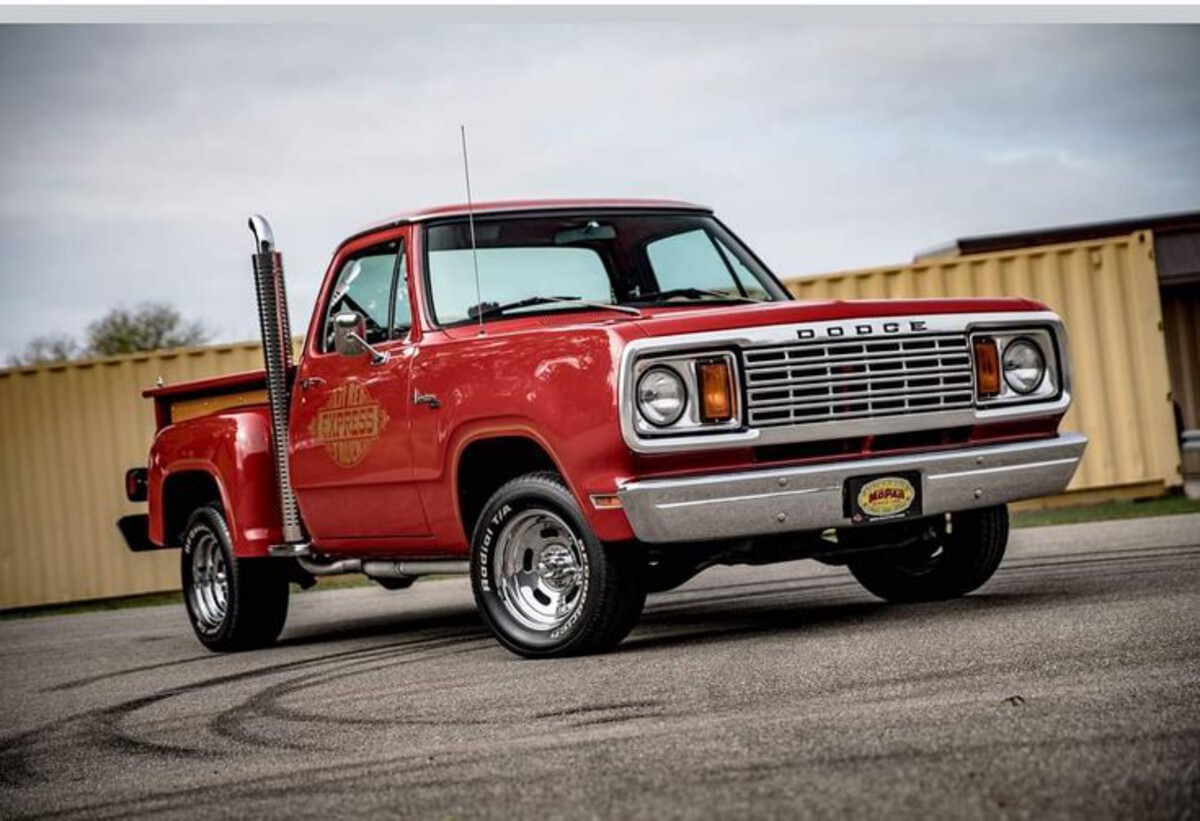
The exhaust system may have been one of the truck’s most significant performance advantages. Its emissions classification gave engineers more freedom to use a relatively unrestricted dual-exhaust setup, with two vertical stacks positioned directly behind the cab.
The tall chrome pipes became one of the truck’s defining visual features, but they served a practical purpose as well. Their design helped reduce exhaust backpressure, allowing the engine to move exhaust gases more efficiently and breathe more freely.
Power reached the rear wheels through Chrysler’s durable A727 TorqueFlite three-speed automatic transmission, widely regarded as one of the strongest automatic gearboxes of its era. Combined with a 3.55:1 rear axle ratio, the drivetrain delivered brisk acceleration from a standstill while maintaining usable highway performance.
Unlike many passenger cars from the same era, the Li’l Red Express benefited from thoughtful component choices that helped limit the impact of emissions restrictions. The result was a responsive and energetic engine that stood out during a period when performance was declining across much of the industry.
Dodge Li’l Red Express Specifications
- Engine: 360-cu-in (5.9L) LA V8
- Horsepower: 225 hp
- Torque: 295 lb-ft
- Transmission: 3-speed TorqueFlite automatic
- Carburetor: Carter ThermoQuad 4-barrel
- Rear Axle Ratio: 3.55:1
- Drive Layout: Rear-wheel drive
- Exhaust: Dual vertical chrome stacks
- Body Style: Regular cab pickup
Performance testing confirmed that the engineering worked.
In period testing, Car and Driver recorded the Li’l Red Express accelerating from 0–100 mph quicker than any American production vehicle available in 1978, an extraordinary accomplishment considering the competition.
The truck also posted quarter-mile times in the mid-16-second range, remarkable for a full-size pickup weighing well over two tons. While sports cars often enjoyed advantages in handling and braking, few could match the Dodge’s straight-line acceleration over longer distances.
The truck’s suspension wasn’t designed for canyon carving, nor was it intended to challenge European sports cars through corners. Instead, its mission was simple: provide effortless V8 torque, quick acceleration, and unmistakable character. It succeeded brilliantly.
How It Compared With America’s Other Performance Cars in 1978
The Li’l Red Express wasn’t simply fast “for a truck.” It was genuinely among the quickest American production vehicles buyers could purchase in 1978.
That fact surprised many enthusiasts then and continues to surprise collectors today.
Contemporary testing from Car and Driver found that the Dodge reached 100 mph faster than every other American-built production vehicle tested that year, including the Chevrolet Corvette. While the Corvette remained superior in handling and top speed, the truck’s powerful mid-range acceleration allowed it to dominate many real-world acceleration contests.
Performance figures vary slightly depending on publication, testing conditions, and vehicle specification.
What made the Dodge’s achievement even more impressive was its practicality. Buyers weren’t purchasing a stripped-down sports car with limited cargo space they were getting a fully functional pickup capable of hauling materials during the week and embarrassing sports cars at stoplights on the weekend.
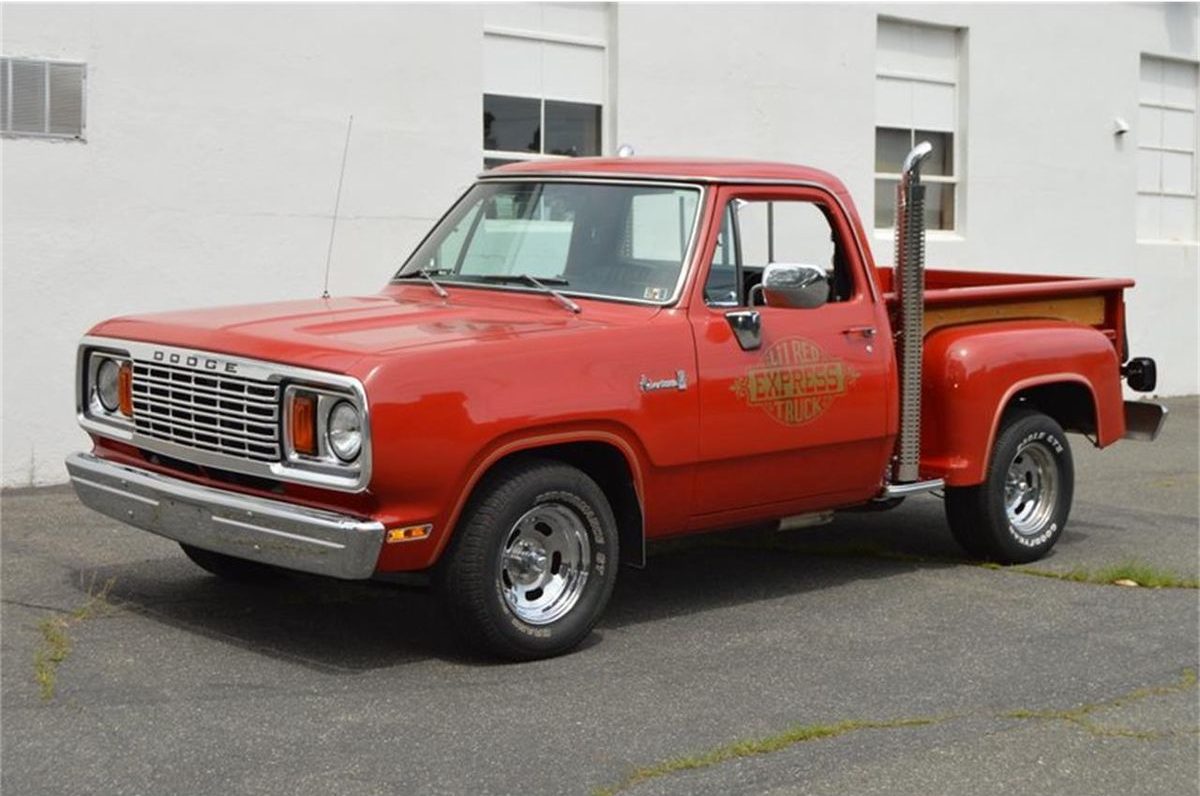
Its bold styling only added to the appeal. The polished exhaust stacks became an instant signature feature, while the bright red paint and wood bed trim made the truck impossible to mistake for an ordinary work vehicle.
Although some enthusiasts initially questioned whether a pickup deserved recognition as America’s quickest production vehicle, the stopwatch didn’t care. Contemporary testing consistently demonstrated that Dodge had built something genuinely special.
ALSO READ: 10 Greatest Dodge Muscle Cars Ever Built
Legacy, Production Numbers, and Why Collectors Love It Today
The Dodge Li’l Red Express wasn’t produced in huge numbers, which has only enhanced its appeal among collectors.
Dodge built 2,188 examples for the 1978 model year, followed by 5,118 units in 1979 before changing emissions requirements effectively ended the truck’s unique performance advantage. Its original base price was just under $7,400, making it an attainable performance vehicle compared to many sports cars of the day.
Reviews during its launch praised its acceleration and distinctive personality. While journalists acknowledged its truck-like handling and ride quality, most agreed that those compromises were part of its charm. After all, buyers weren’t expecting a Corvette in pickup form; they wanted something outrageous, and Dodge delivered.
Today, well-preserved Li’l Red Express trucks are highly sought after in the collector market. Their rarity, unmistakable appearance, and unique place in automotive history have made them one of the most recognizable performance trucks ever built. Enthusiasts also appreciate the truck for representing a creative solution to one of the most restrictive periods in American automotive history.
More importantly, the Li’l Red Express proved that performance wasn’t entirely dead during the late 1970s. While many manufacturers struggled under tightening regulations, Dodge found an unconventional path to building a vehicle that genuinely stood apart.
It wasn’t the last great muscle car, nor was it trying to be. Instead, it became something arguably even more memorable: a pickup that rewrote expectations and earned a permanent place in Mopar history.