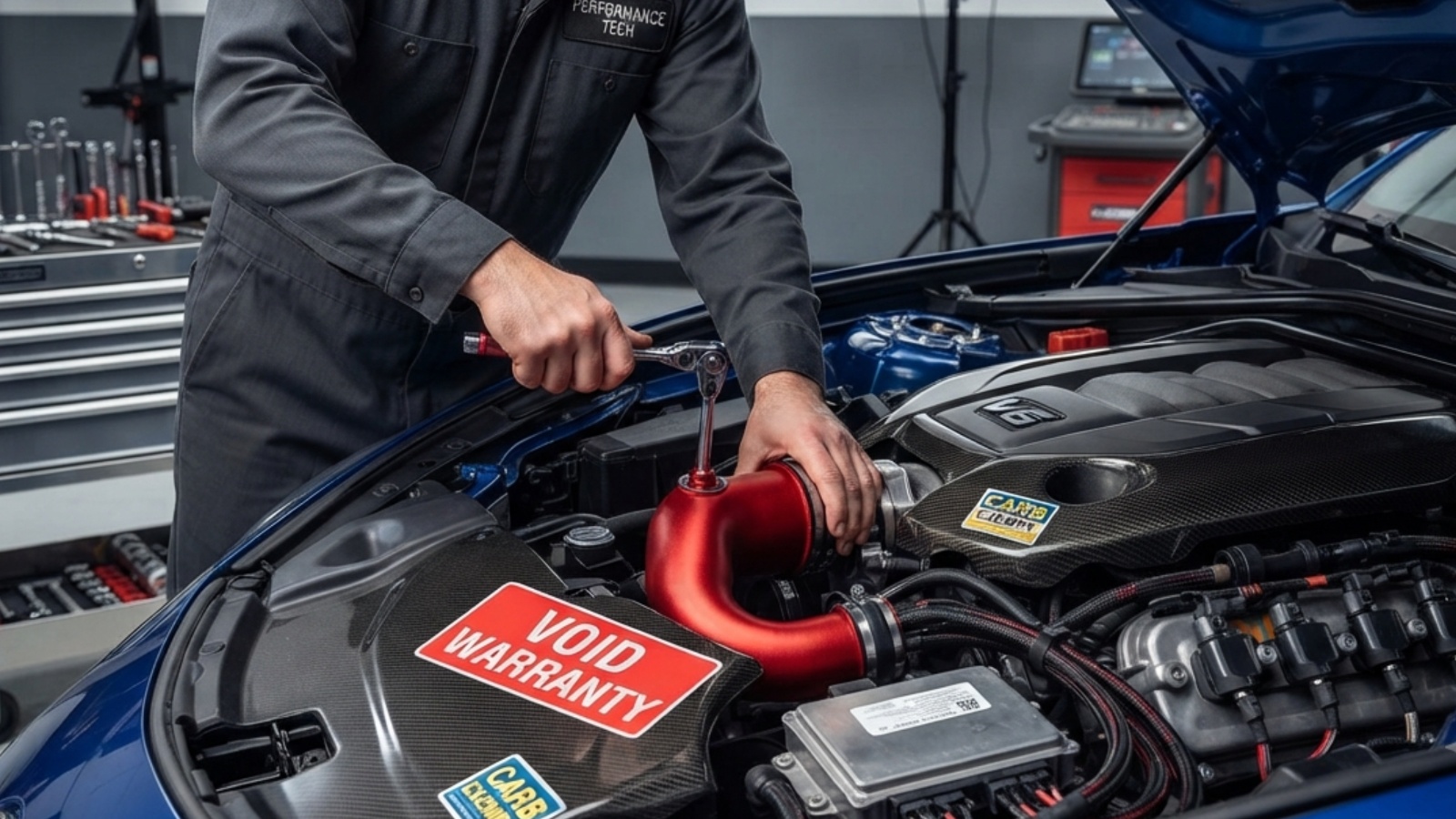
Installing aftermarket parts is one of the easiest ways to personalize a vehicle, improve performance, or change its appearance. However, not every modification is harmless when a factory warranty is involved.
In the United States, the Magnuson-Moss Warranty Act prevents manufacturers from voiding an entire vehicle warranty simply because aftermarket parts are installed. Instead, they may deny warranty coverage if they can demonstrate that a specific modification caused or contributed to the failure being claimed.
Some aftermarket upgrades have a well-documented history of triggering denied warranty claims because they directly affect engine, transmission, emissions, or drivetrain reliability. This article highlights ten modifications that create the greatest warranty risks.
Also Read: 10 Car Brands With the Highest Owner Loyalty, According to S&P Global
1. ECU Performance Tune or Engine Remap
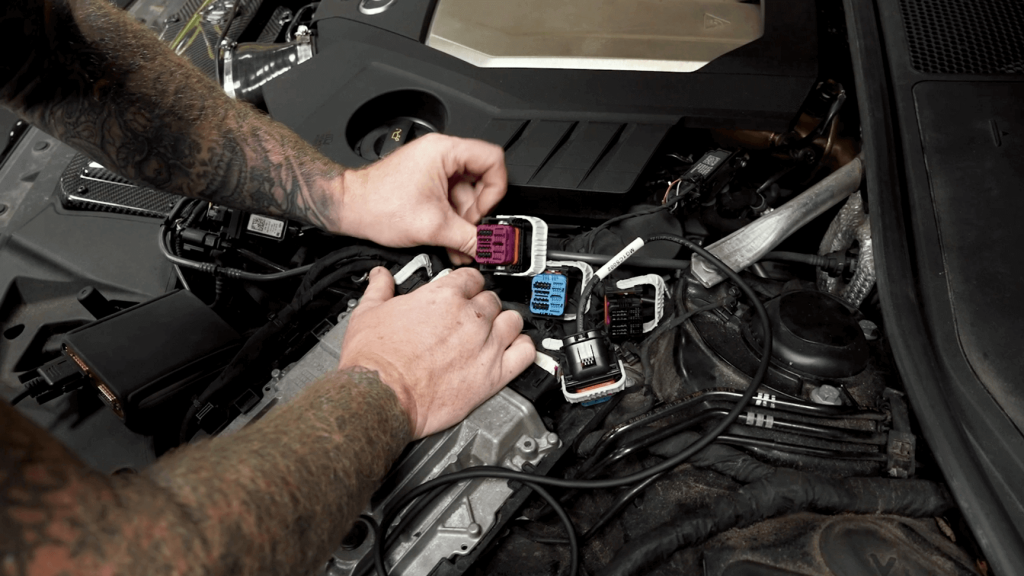
Among all aftermarket modifications available today, an Engine Control Unit (ECU) tune is one of the most likely to create warranty complications.
Modern vehicles rely on sophisticated software to control ignition timing, turbocharger boost pressure, fuel delivery, transmission behavior, emissions systems, and engine protection strategies. An aftermarket calibration changes many of these factory parameters in pursuit of additional horsepower and torque.
Manufacturers can often detect that the engine software has been altered, even if the owner restores the original calibration before visiting the dealership.
Many brands maintain flash counters or software history records inside the vehicle’s electronic modules. If a major engine or transmission failure occurs, technicians may compare these records with factory programming information during the warranty investigation.
Higher boost pressure and more aggressive ignition timing increase cylinder pressure, placing greater stress on pistons, connecting rods, bearings, turbochargers, cooling systems, and automatic transmissions.
While reputable tuning companies perform extensive testing, factory components were validated using the original software calibration, not aftermarket performance settings.
The Magnuson-Moss Warranty Act requires the manufacturer to demonstrate that the tune contributed to the failure before denying warranty coverage for that repair. However, because an ECU tune directly changes engine operation, manufacturers frequently have strong technical evidence supporting their decision when drivetrain failures occur.
Owners seeking more performance should carefully weigh the benefits against potential repair costs. A single denied engine or transmission claim can exceed several thousand dollars, making an aftermarket tune one of the highest-risk modifications for vehicles still covered by the factory warranty.
2. Aftermarket Turbocharger or Supercharger Kit
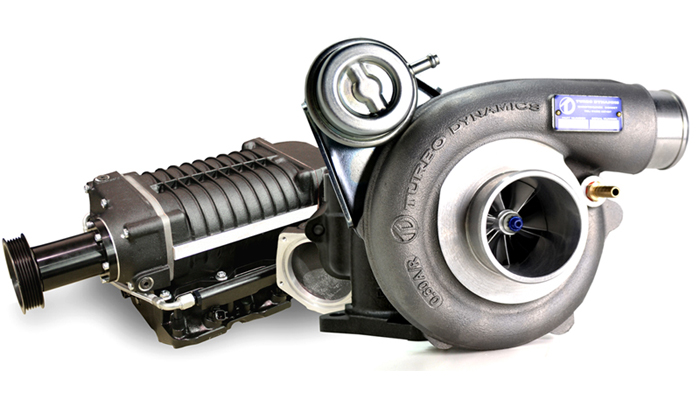
Adding forced induction transforms a naturally aspirated engine into a significantly more powerful machine, but it also introduces one of the biggest warranty risks for any new vehicle.
Turbocharger and supercharger kits dramatically increase the amount of air entering the engine, allowing additional fuel to be burned and producing substantial horsepower gains. The tradeoff is much higher mechanical and thermal stress.
Factory engineers spend years validating engines under thousands of hours of testing. Pistons, connecting rods, crankshafts, cooling systems, fuel injectors, and transmissions are designed around specific power levels. Installing an aftermarket forced induction system moves the engine far beyond those original engineering limits.
Higher combustion pressures increase the likelihood of piston damage, head gasket failure, connecting rod stress, and transmission wear. Additional heat also affects catalytic converters, intercoolers, engine oil, and cooling components.
Even when the installation is professionally completed, the vehicle is operating outside the conditions covered by factory validation testing.
From a warranty standpoint, these modifications are relatively straightforward for manufacturers to evaluate.
If an engine, transmission, or drivetrain component fails after a turbocharger or supercharger installation, the manufacturer can often demonstrate a direct relationship between the increased output and the damaged parts. That evidence commonly leads to denial of warranty coverage for the affected components.
Many aftermarket forced induction systems produce reliable performance when properly engineered, but owners should understand that the financial responsibility for future drivetrain repairs may shift from the manufacturer to the vehicle owner.
Before installing such a system, reviewing the warranty implications is just as important as considering the advertised horsepower increase.
3. High-Flow or Catless Exhaust System
A performance exhaust is often one of the first upgrades enthusiasts purchase because it can improve exhaust sound, reduce backpressure, and, in some cases, provide modest horsepower gains.
However, replacing or removing emissions-related components is one of the quickest ways to create warranty issues. In the United States, the Environmental Protection Agency (EPA) prohibits tampering with federally required emissions equipment on vehicles driven on public roads.
The biggest concern is the catalytic converter. A catless exhaust completely removes this critical emissions device, while some high-flow systems replace the original converter with an aftermarket unit that may not meet federal or California certification requirements.
Modern engine computers continuously monitor catalytic converter efficiency using upstream and downstream oxygen sensors. Any significant change can trigger diagnostic trouble codes, illuminate the check engine light, and prevent the vehicle from passing emissions inspections.
From a warranty perspective, manufacturers can deny repairs involving emissions systems, oxygen sensors, catalytic converters, turbochargers, or engine components if the modified exhaust contributed to the failure.
Increased exhaust flow may also alter turbocharger operating characteristics on turbocharged engines, creating additional technical considerations during warranty investigations.
Another overlooked issue is excessive exhaust heat. Poorly engineered aftermarket systems can change underbody temperatures or place additional stress on nearby wiring, sensors, and heat shields. These secondary effects may contribute to failures unrelated to the exhaust itself.
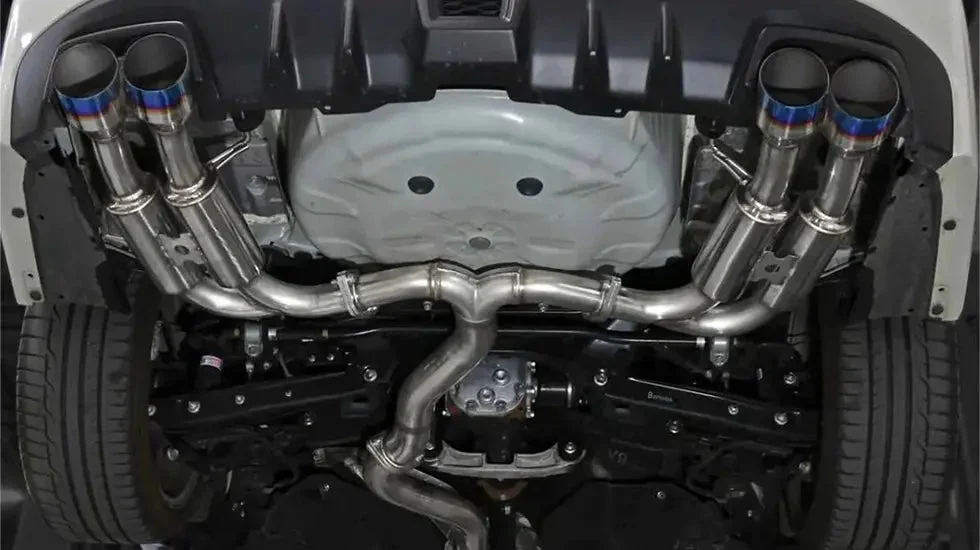
Cat-back exhaust systems that retain the factory catalytic converters generally present much lower warranty risk because they modify only the portion of the exhaust located behind the emissions equipment.
In contrast, systems that alter federally required emissions components create significantly greater exposure to denied warranty claims and potential violations of federal emissions regulations.
4. Cold Air Intake Without CARB or EPA Compliance
Cold air intake systems remain among the most popular aftermarket upgrades because they are relatively affordable and simple to install. Many manufacturers advertise increased airflow, improved throttle response, and small horsepower gains.
While some systems perform as advertised, not every intake is designed to meet emissions requirements or maintain factory calibration, which can create warranty complications.
Modern engines rely on carefully engineered intake systems that regulate airflow, filter contaminants, reduce intake noise, and provide accurate readings to the mass airflow sensor. Replacing the factory assembly with an aftermarket design changes the airflow characteristics that the engine control module expects.
If the mass airflow sensor receives unstable or inaccurate airflow measurements, fuel delivery can become less precise, increasing emissions and potentially affecting long-term engine performance.
The warranty risk becomes even greater if the intake is not approved for emissions compliance in states with stricter regulations, such as California. The California Air Resources Board requires many aftermarket performance parts affecting emissions to receive an Executive Order number demonstrating legal compliance for street use.
Installing a non-compliant intake on a vehicle registered in those states may create inspection problems in addition to warranty concerns.
Manufacturers evaluating engine, emissions, or fuel system failures may determine that an improperly designed intake contributed to abnormal engine operation. If they can establish that connection, warranty coverage for the affected repair may be denied under the terms of the factory warranty.
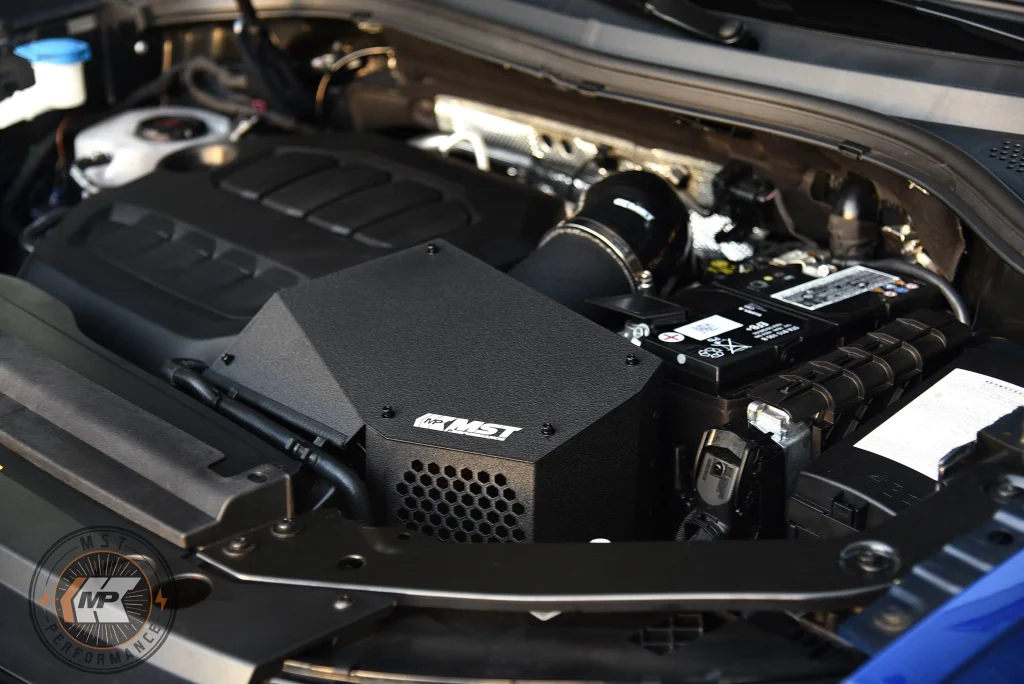
High-quality intake systems from established manufacturers that maintain proper airflow characteristics generally present lower risk than inexpensive designs with little engineering validation. Even so, owners should verify emissions compliance and understand how the modification may affect future warranty claims before making the upgrade.
5. Suspension Lift Kit or Leveling Kit
Installing a suspension lift kit is one of the most popular modifications for pickup trucks and SUVs in the United States. Larger tires, increased ground clearance, and a more aggressive appearance make lift kits attractive to off-road enthusiasts.
However, this upgrade also changes the vehicle’s factory suspension geometry, steering angles, and drivetrain operating conditions, making it a common source of warranty disputes.
Factory suspension systems are engineered with carefully calculated control arm angles, driveshaft operating angles, shock absorber travel, wheel alignment specifications, and electronic stability control calibration.
Raising the suspension by several inches alters these relationships. CV axles may operate at steeper angles, ball joints experience additional stress, and wheel bearings can carry different loading patterns than originally intended.
Lifted trucks fitted with oversized tires place even greater strain on steering components, front differentials, axle shafts, and braking systems. The additional rotating mass requires more torque to accelerate and increases stopping distances, particularly if the brake system remains stock.
Manufacturers generally cannot void the vehicle’s entire warranty simply because a lift kit has been installed. However, if a front differential, steering rack, wheel bearing, CV axle, or suspension component fails and the manufacturer demonstrates that the modified suspension contributed to the damage, warranty coverage for that repair may be denied.
Electronic driver assistance systems introduce another consideration. Features such as adaptive cruise control, lane-keeping assistance, automatic emergency braking, and forward-facing cameras often require recalibration after significant suspension modifications. Failure to perform these procedures can affect system performance.
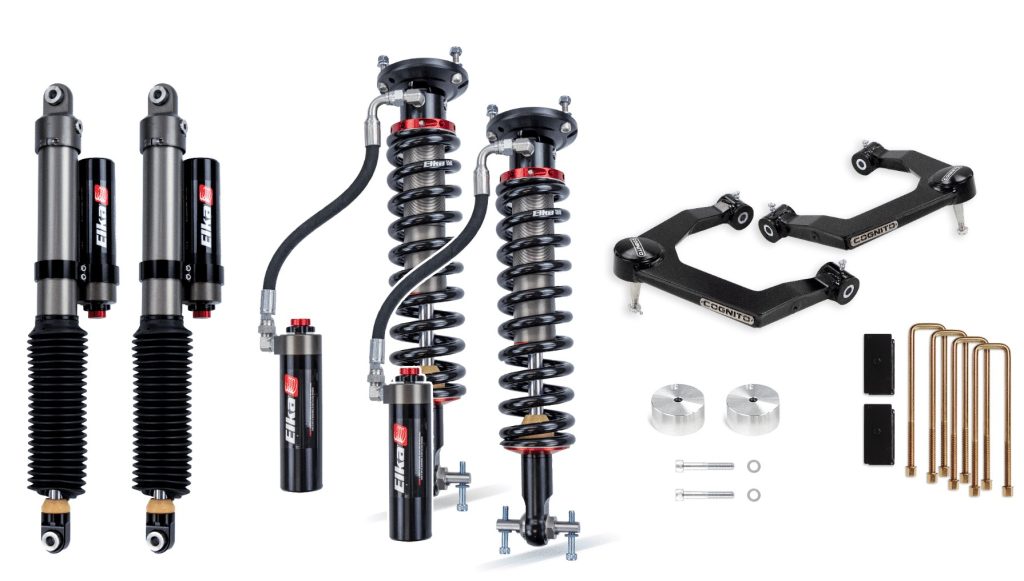
For owners who regularly drive off-road, a professionally engineered suspension kit installed with proper alignment and calibration is far less likely to create reliability issues than inexpensive lift kits installed without supporting modifications.
Understanding the possible warranty implications before making the change can prevent expensive surprises later.
6. Oversized Wheels and Tires
Larger aftermarket wheels can dramatically change a vehicle’s appearance, while oversized tires improve off-road traction and create a more aggressive stance. Despite their popularity, these modifications affect much more than styling.
They change unsprung weight, rotational inertia, gearing, braking performance, steering response, and drivetrain loads, making them another modification frequently examined during warranty claims.
Factory engineers select wheel and tire combinations after extensive testing for ride quality, durability, fuel economy, braking, and electronic safety systems. Increasing wheel diameter or installing much heavier tires forces the engine and transmission to work harder during acceleration.
Automatic transmissions may shift differently because the effective gear ratio changes, while differentials experience higher torque loads during launches and towing.
Wheel bearings, suspension bushings, tie rods, and steering racks also experience greater stress because of the added weight and leverage of larger wheel assemblies. These effects become even more significant when extremely wide tires or aggressive offset wheels are installed.
Electronic systems deserve attention as well. Anti-lock braking systems, traction control, stability control, and speedometers rely on precise wheel speed information. Significant changes in tire diameter can affect their calibration unless the vehicle is properly reprogrammed.
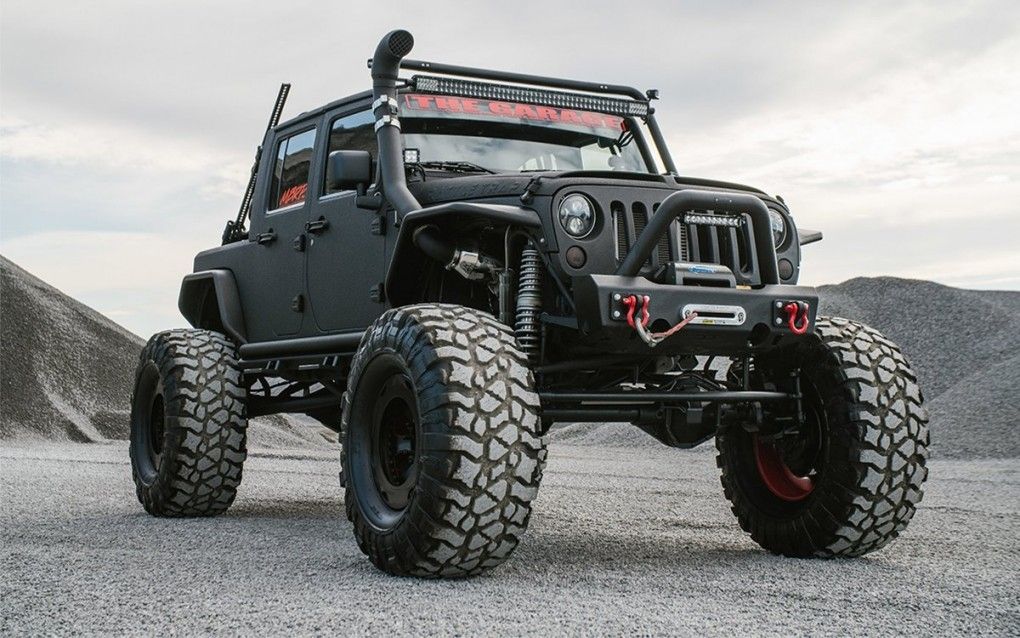
If a drivetrain or suspension component fails, manufacturers may inspect whether oversized wheels or tires contributed to the additional load that caused the damage. When technical evidence supports that conclusion, warranty coverage for the affected repair may be denied.
Choosing wheel and tire sizes that remain close to factory specifications typically presents much lower risk than extreme aftermarket combinations. Owners should also verify load ratings, maintain proper alignment, and ensure the new setup does not interfere with suspension travel or braking components.
7. Nitrous Oxide Injection System
Nitrous oxide systems have been part of American performance culture for decades because they offer one of the most cost-effective ways to gain substantial horsepower. By introducing nitrous oxide into the intake, the engine receives additional oxygen, allowing more fuel to burn during combustion.
The result can be an increase of 50 to well over 200 horsepower, depending on the system. While impressive, this modification also creates one of the highest warranty risks for any factory drivetrain.
Unlike many cosmetic upgrades, a nitrous system directly changes combustion pressures inside the engine. When activated, cylinder pressure rises sharply, placing greater loads on pistons, connecting rods, crankshaft bearings, head gaskets, and transmission components.
Factory engines are engineered with specific safety margins, and repeated exposure to significantly higher pressures can accelerate wear or cause catastrophic failures if supporting modifications are insufficient.
Manufacturers investigating engine failures can usually identify evidence of nitrous installation. Solenoids, plumbing, drilled intake components, wiring changes, bottle brackets, and fuel system modifications are all visible indicators that the engine has operated outside factory specifications.
If a piston melts, a connecting rod bends, or a transmission fails after nitrous use, establishing a relationship between the modification and the damage is often straightforward.
Nitrous systems can also affect emissions performance. Incorrect tuning may produce rich or lean air-fuel mixtures, increasing exhaust emissions and placing additional thermal stress on catalytic converters and oxygen sensors.
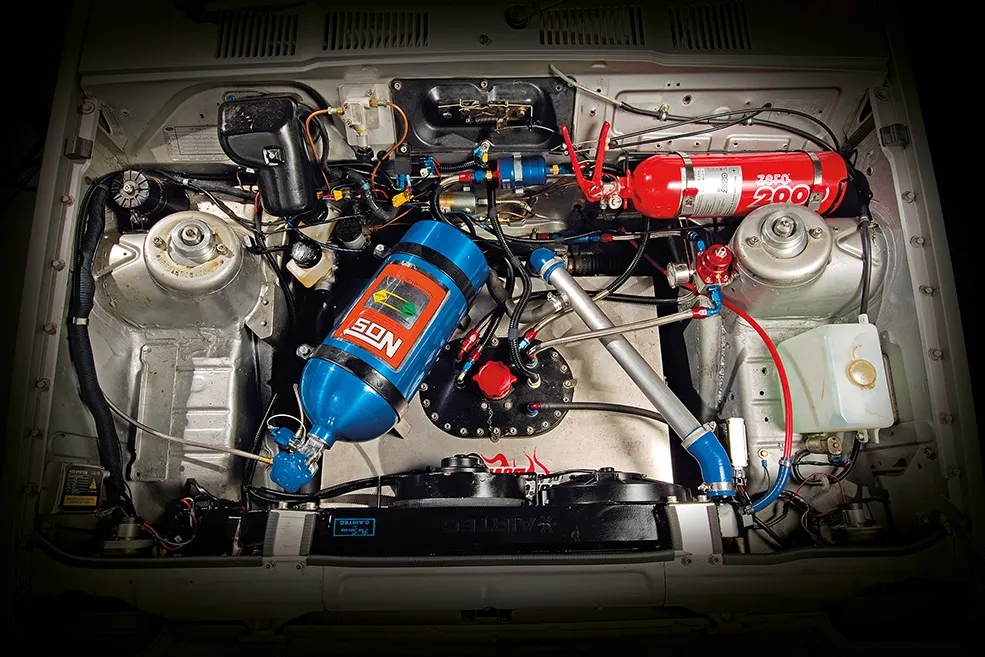
Although professionally installed systems with conservative power levels can operate reliably when used responsibly, they remain well beyond the conditions covered by factory durability testing.
Owners should assume that any engine or transmission failure occurring after nitrous installation will receive scrutiny during a warranty claim. For vehicles still protected by a factory warranty, the financial risk can far outweigh the performance benefit.
8. Fuel System Upgrades With Larger Injectors or High-Flow Fuel Pumps
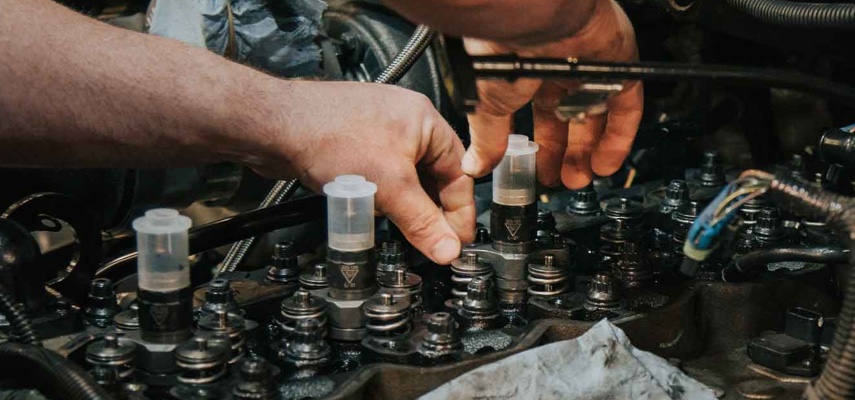
Fuel system modifications are common among enthusiasts building engines for significantly higher power levels. Larger fuel injectors and high-flow fuel pumps provide the additional fuel volume required for turbochargers, superchargers, ethanol blends, or aggressive engine tuning.
While these components are essential for heavily modified vehicles, they also introduce substantial warranty concerns because they directly affect engine operation.
Modern engine management systems are calibrated around precise injector flow rates and fuel pressure values. Installing injectors with greater capacity without appropriate software calibration can result in excessively rich mixtures, increased fuel consumption, rough idle, and upgraded hydrocarbon emissions.
Even when accompanied by proper tuning, the vehicle is no longer operating under factory calibration parameters.
High-flow fuel pumps may also change fuel pressure characteristics throughout the system. Excessive pressure can place additional stress on fuel rails, seals, regulators, and injectors. Manufacturers evaluating fuel system, engine, or emissions failures often review whether aftermarket components altered operating conditions beyond factory design limits.
Another consideration is emissions compliance. Rich combustion caused by improper calibration can reduce catalytic converter lifespan by exposing it to excessive unburned fuel. Oxygen sensors may also suffer contamination if the engine consistently operates outside the intended air-fuel ratio.
Under the Magnuson-Moss Warranty Act, manufacturers must demonstrate that these modifications contributed to the claimed failure before denying warranty coverage. However, when the modified parts directly control fuel delivery, establishing that connection is frequently possible.
Drivers planning substantial engine upgrades should recognize that supporting fuel system modifications are often necessary for reliability, but they also shift much of the responsibility for future engine repairs away from the manufacturer.
Careful installation, professional tuning, and realistic expectations are essential before making these changes.
9. Aftermarket Transmission Control Module (TCM) Tune
Engine tuning receives most of the attention in the performance world, but transmission tuning has become equally popular as modern automatic transmissions grow more sophisticated.
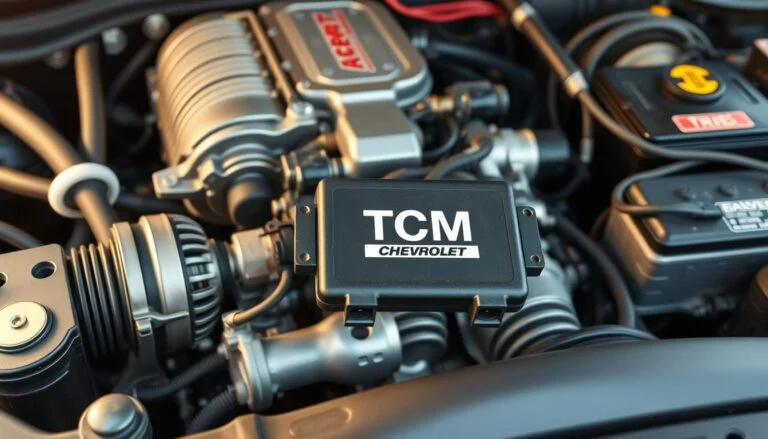
An aftermarket Transmission Control Module (TCM) tune modifies shift timing, clutch engagement pressure, torque converter behavior, launch characteristics, and shift firmness to improve acceleration and driving feel.
While these changes can noticeably enhance performance, they also increase the likelihood of warranty disputes involving the drivetrain.
Every factory automatic transmission is calibrated to balance performance, durability, fuel economy, and smooth operation. Engineers validate these calibrations through thousands of hours of testing under a wide range of temperatures, towing conditions, and driving styles.
An aftermarket tune changes those carefully developed parameters, often commanding quicker shifts and higher clutch pressures to reduce shift times.
Although firmer shifts may improve acceleration, they also place additional stress on clutch packs, valve bodies, torque converters, driveshafts, universal joints, and differentials. Repeated high-load operation can accelerate wear, particularly in trucks used for towing or vehicles producing increased engine output through separate performance modifications.
Manufacturers can often determine whether transmission software has been altered by reviewing diagnostic records stored in the vehicle’s electronic modules.
If an automatic transmission develops internal damage after software modifications, technicians may compare the installed calibration against factory specifications during the warranty review.
Another consideration is heat. Aggressive shift programming may increase transmission operating temperatures under certain driving conditions. Excessive heat remains one of the leading contributors to automatic transmission wear because it accelerates fluid degradation and reduces the lifespan of friction materials.
Owners interested in transmission tuning should understand that software modifications directly affect one of the most expensive assemblies in a modern vehicle.
If a transmission failure is linked to the altered calibration, warranty coverage for that repair may be denied, leaving the owner responsible for repairs that can cost several thousand dollars.
10. Emissions Delete Kits (EGR, DPF, DEF, or PCV Deletes)
Few aftermarket modifications create more serious legal and warranty consequences than emissions delete kits.
These kits remove or disable factory-installed emissions equipment such as the Exhaust Gas Recirculation (EGR) system, Diesel Particulate Filter (DPF), Diesel Exhaust Fluid (DEF) system, Positive Crankcase Ventilation (PCV) system, or other federally required emissions controls.
While some owners pursue these modifications for perceived performance or maintenance benefits, they create significant risks for both warranty coverage and legal compliance.
Federal law prohibits tampering with emissions equipment on vehicles operated on public roads. The EPA has taken enforcement actions against manufacturers, retailers, and installers of illegal emissions defeat devices, with civil penalties reaching substantial amounts depending on the violation.
Many states also require annual or periodic emissions inspections, where deleted emissions systems will generally result in an immediate failure.
From a warranty standpoint, these modifications directly alter systems designed to control emissions, combustion temperatures, and engine operation.
If an engine, turbocharger, exhaust system, fuel system, or emissions component fails after an emissions delete, manufacturers typically have strong technical grounds to deny warranty coverage for repairs related to those systems.
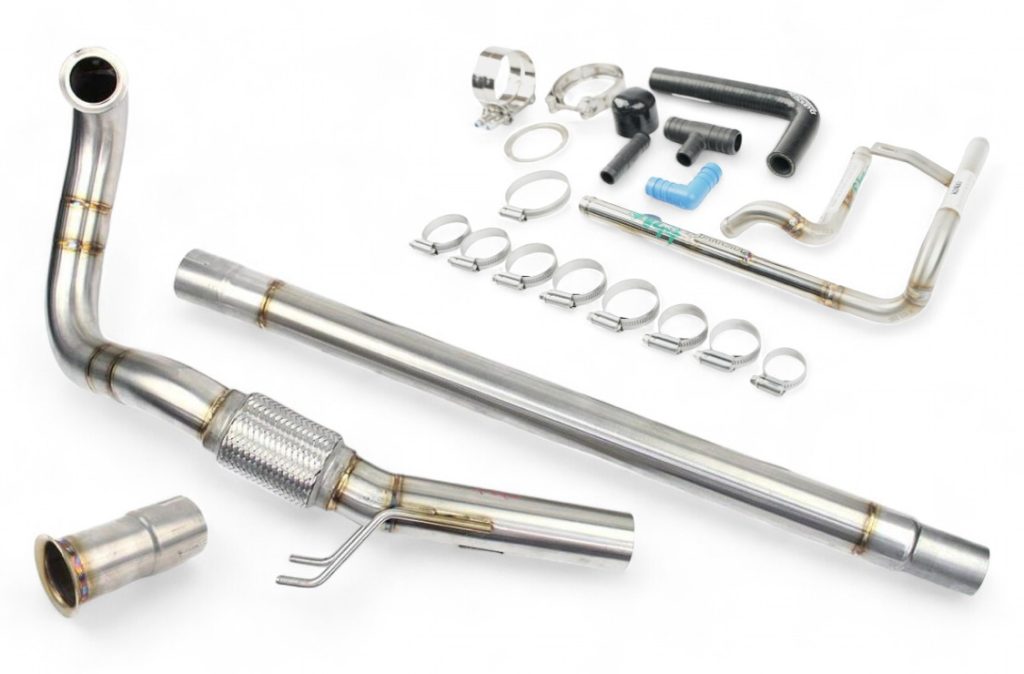
Modern diesel engines rely heavily on integrated emissions technology. Removing one component often affects the operation of several others because engine software continuously monitors sensors throughout the exhaust system.
Improper calibration following a delete can also increase soot production, exhaust temperatures, and long-term engine wear.
For owners considering aftermarket upgrades, emissions delete kits represent one of the highest-risk modifications available.
Besides the possibility of denied warranty claims, they can lead to failed inspections, reduced resale value, and potential violations of federal emissions regulations. Retaining factory emissions equipment remains the safest choice for vehicles that are driven on public roads and protected by a manufacturer’s warranty.
Also Read: 8 Luxury Sedans Cheaper to Insure Than a Honda Accord