
Texas has one of the largest vehicle populations in the United States, but not every vehicle can legally receive a title and registration for public roads. State and federal laws require vehicles to meet specific safety, identification, and equipment standards before they qualify for registration.
Some vehicles are built exclusively for off-road use, while others are prohibited because they lack mandatory safety equipment or do not comply with federal motor vehicle regulations.
Buyers are often surprised to learn that owning a vehicle does not automatically mean it can be driven legally on Texas highways. Here are eight vehicles that cannot normally be registered for road use in Texas.
Also Read: 8 Cars With Heater Cores That Need the Dash Removed
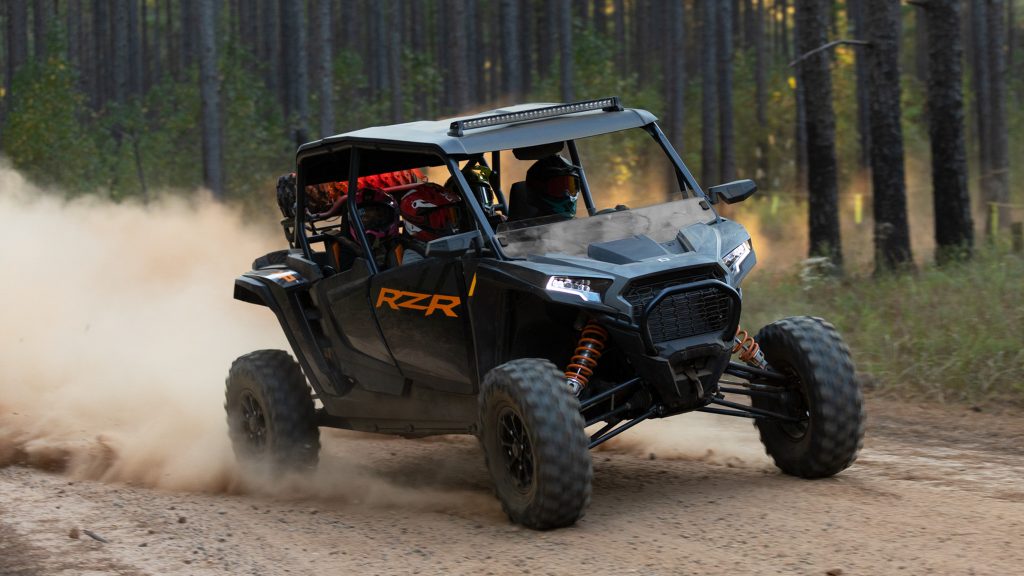
1. Polaris RZR Side-by-Side (Off-Road Models)
The Polaris RZR is one of the most popular side-by-side vehicles sold in the United States. Designed for trails, dunes, ranches, and recreational off-road driving, it delivers exceptional suspension travel and impressive performance across rough terrain.
Despite its capability, a standard Polaris RZR cannot be registered for normal road use in Texas because it is manufactured as an off-highway vehicle rather than a passenger automobile.
The primary reason is federal certification. Passenger vehicles sold for public roads must comply with the Federal Motor Vehicle Safety Standards (FMVSS), which cover crash protection, lighting, occupant restraints, braking performance, glazing, and numerous other requirements.
Most RZR models are not certified under these standards. Instead, they are labeled by the manufacturer for off-road use only.
Texas law generally limits the operation of off-highway vehicles to private property, designated trails, certain public lands, and specific roadways where local governments have authorized their use.
Even when local ordinances permit limited roadway operation, that does not make the vehicle eligible for standard passenger vehicle registration like a pickup or SUV.
Another limitation is safety equipment. Standard RZR models typically lack features required for highway-certified vehicles, including automotive crash testing, compliant airbags, and other federally mandated occupant protection systems.
Prospective buyers occasionally assume that adding mirrors, turn signals, or a windshield will make the vehicle street legal. While aftermarket accessories may improve convenience, they do not convert an off-road vehicle into one that meets federal certification standards for registration.
Anyone purchasing a Polaris RZR in Texas should understand that it is intended for recreational off-road use and should not expect to obtain regular highway registration.
Specifications
- Engine: 999 cc Parallel Twin
- Torque: Approximately 74 lb-ft
- Horsepower: 114 hp
- Length/Width: 119 inches / 64 inches
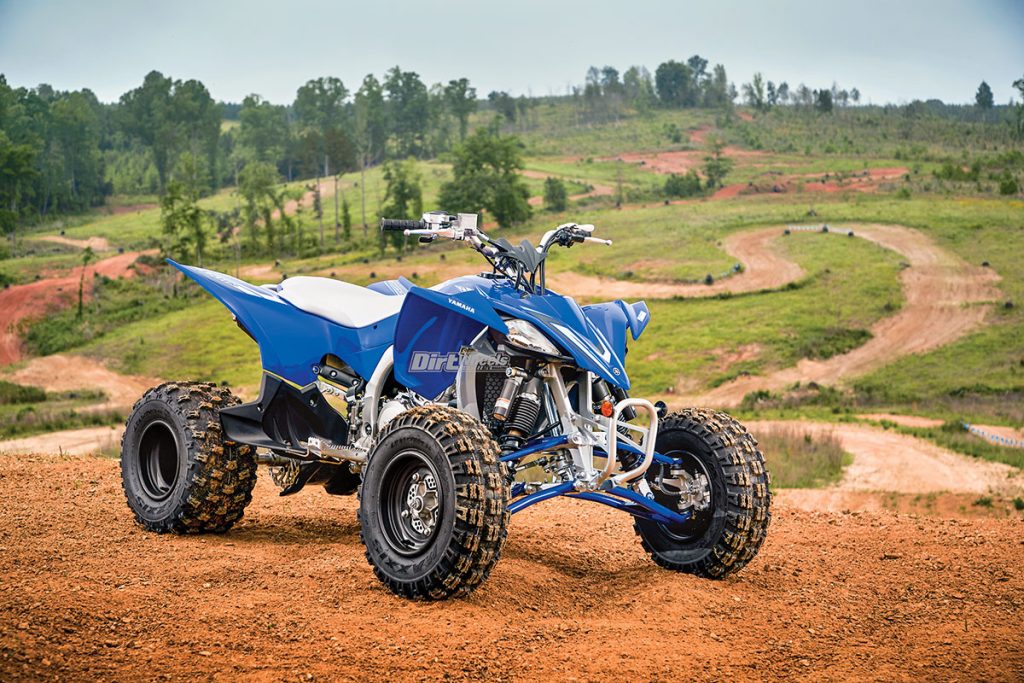
2. Yamaha YFZ450R ATV
High-performance all-terrain vehicles have long been favorites among off-road enthusiasts, and the Yamaha YFZ450R is considered one of the leading sport ATVs available in America.
Built for motocross tracks, dunes, and recreational trails, it delivers quick acceleration and responsive handling. Those same characteristics, however, do not qualify it for registration on Texas public roads.
Unlike motorcycles intended for highway travel, the YFZ450R is manufactured exclusively as an off-highway vehicle. It does not meet the Federal Motor Vehicle Safety Standards required for vehicles sold for public highway operation.
Consequently, the Texas Department of Motor Vehicles cannot issue a standard registration allowing unrestricted use on public streets.
The ATV also lacks several pieces of equipment required on highway vehicles. Most models do not include DOT-approved lighting systems, compliant mirrors, automotive-style braking systems, certified tires for highway use, or occupant protection features expected of registered motor vehicles.
These omissions reflect its intended operating environment rather than a design defect. Texas permits ATV operation in limited situations, such as private property, approved off-road parks, agricultural applications, or locations specifically authorized by local governments. Those exceptions should not be confused with normal passenger vehicle registration.
Owners sometimes invest considerable money installing headlights, turn signals, or horn kits. While those additions may satisfy certain local recreational requirements, they do not change the manufacturer’s federal certification status.
Registration decisions depend on how the vehicle was originally manufactured and certified, not simply on accessories added afterward.
Before purchasing a sport ATV with the intention of driving it on public highways, buyers should verify its legal status. In Texas, the Yamaha YFZ450R remains an off-road recreational vehicle and cannot normally receive standard road registration.
Specifications
- Engine: 449 cc Single Cylinder
- Torque: Approximately 37 lb-ft
- Horsepower: Approximately 39 hp
- Length/Width: 72.6 inches / 48.4 inches
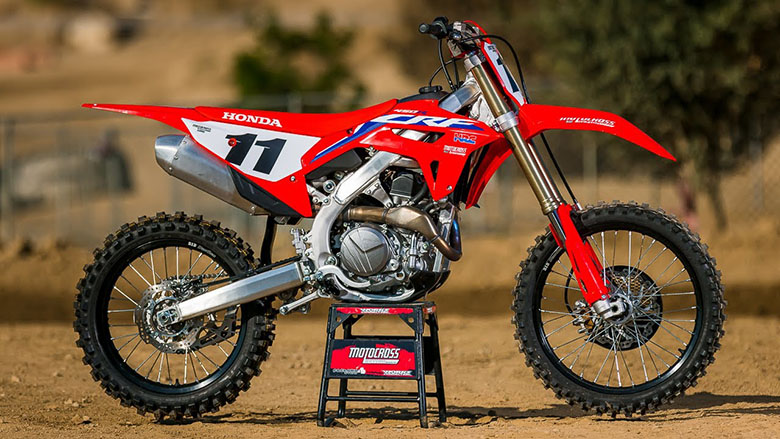
3. Honda CRF450R Motocross Motorcycle
The Honda CRF450R has dominated motocross tracks across the United States for years thanks to its lightweight chassis, powerful engine, and race-focused suspension.
Although it resembles a conventional motorcycle, it cannot normally be registered for highway use in Texas because it is manufactured strictly as a closed-course competition machine.
The distinction between a motocross motorcycle and a street-legal motorcycle is significant. The CRF450R is not certified to meet the Federal Motor Vehicle Safety Standards required for motorcycles intended for public roads. Instead, Honda designs this model for racing, where different engineering priorities take precedence over highway compliance.
Several required highway components are absent from the factory. A standard CRF450R does not include DOT-approved headlights, brake lights, turn signals, mirrors, horn, license plate mounting equipment, or emissions systems that comply with federal street-use regulations.
Even the tires supplied from the factory are intended for dirt competition rather than paved highways.
Texas registration authorities evaluate how the motorcycle was originally manufactured rather than simply whether owners install aftermarket accessories. While conversion kits exist that add lighting and other equipment, these modifications generally do not change the motorcycle’s original federal certification status.
Another consideration is emissions compliance. Competition motorcycles are often exempt from emissions requirements that apply to street motorcycles because they are designed exclusively for off-road competition. Registering such a machine for unrestricted highway operation would conflict with those original certifications.
The CRF450R remains an outstanding choice for motocross riders and off-road enthusiasts, but buyers should understand its intended purpose before making a purchase. Anyone seeking a Honda that can legally operate on Texas highways should instead consider dual-sport models specifically manufactured and certified for public road use.
Specifications
- Engine: 449.7 cc Liquid-Cooled Single Cylinder
- Torque: Approximately 36 lb-ft
- Horsepower: Approximately 56 hp
- Length/Width: 85.9 inches / 32.6 inches
4. Caterpillar 420 Backhoe Loader
Construction equipment occasionally appears for sale through auctions or private sellers at attractive prices, leading some buyers to wonder whether these machines can be titled and driven like large trucks.
The Caterpillar 420 Backhoe Loader provides a clear example of why ownership does not automatically qualify a vehicle for highway registration in Texas.
Although a backhoe loader is capable of traveling on public roads between job sites at relatively low speeds, it is classified as construction equipment rather than a passenger or commercial motor vehicle intended for unrestricted highway use. Its primary function is excavation, trenching, loading, and material handling, not transportation.
Federal Motor Vehicle Safety Standards governing road vehicles do not apply to machines such as the Caterpillar 420 in the same manner as passenger vehicles.
Equipment design prioritizes hydraulic performance, lifting capability, and durability instead of crash protection, occupant restraint systems, and highway safety features expected on registered motor vehicles.
Texas law generally allows construction equipment to travel short distances on public roads when necessary for work purposes and when operating under applicable regulations. That limited travel should not be confused with standard vehicle registration permitting unrestricted daily road use.
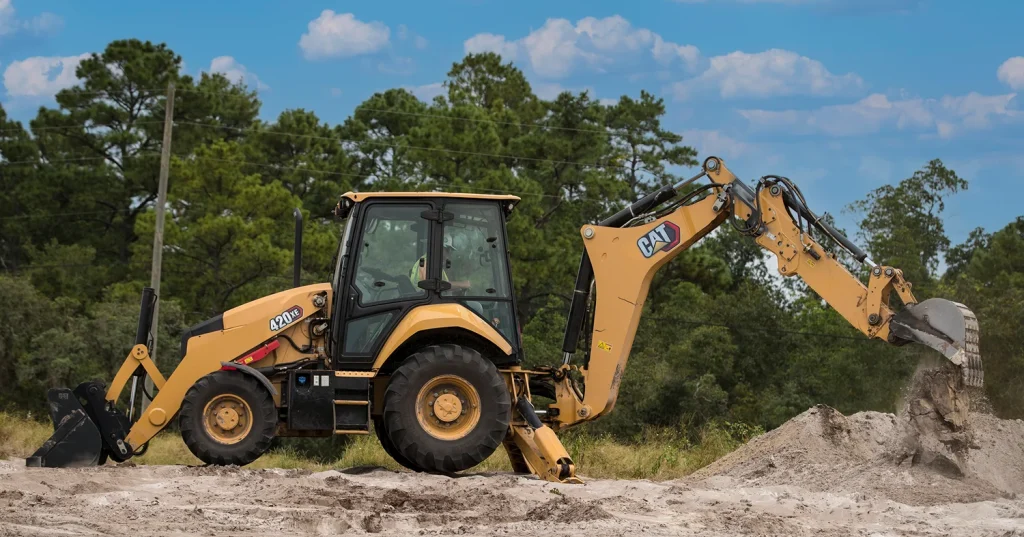
Another practical limitation involves speed. Backhoe loaders typically travel at speeds far below normal highway traffic, making them unsuitable for routine transportation. Their dimensions, weight distribution, and specialized tires are also designed around construction sites rather than sustained pavement travel.
Purchasing heavy equipment with the expectation of using it as a road-going vehicle often leads to disappointment. The Caterpillar 420 is an exceptional work machine, but its legal status reflects its industrial purpose, not passenger transportation.
Specifications
- Engine: 4.4-liter Turbocharged Diesel Inline Four
- Torque: Approximately 383 lb-ft
- Horsepower: 131 hp
- Length/Width: 283 inches / 93 inches
5. John Deere Gator XUV835M Utility Vehicle
Utility vehicles have become indispensable on farms, ranches, construction sites, and large private properties throughout Texas. The John Deere Gator XUV835M is one of the most capable examples, offering impressive payload capacity, four-wheel drive, and excellent off-road performance.
Despite its versatility, it cannot normally receive standard passenger vehicle registration for unrestricted road use in Texas.
The reason lies in its intended design. John Deere manufactures the Gator as a Utility Task Vehicle (UTV), not as a passenger automobile or light truck. It is engineered primarily for work applications where low-speed maneuverability, towing capability, and cargo hauling are more important than compliance with federal highway safety standards.
Unlike street-legal vehicles, the Gator is not certified under the Federal Motor Vehicle Safety Standards applicable to passenger vehicles.
It lacks many of the crashworthiness requirements expected for highway transportation, including federally certified occupant protection systems and other safety features required before a vehicle can receive unrestricted road registration.
Texas law allows utility vehicles to operate under limited circumstances, such as on private property or in certain areas where local governments specifically authorize their use. Those limited exceptions do not grant the same legal status as a pickup truck or SUV registered through the Texas Department of Motor Vehicles.
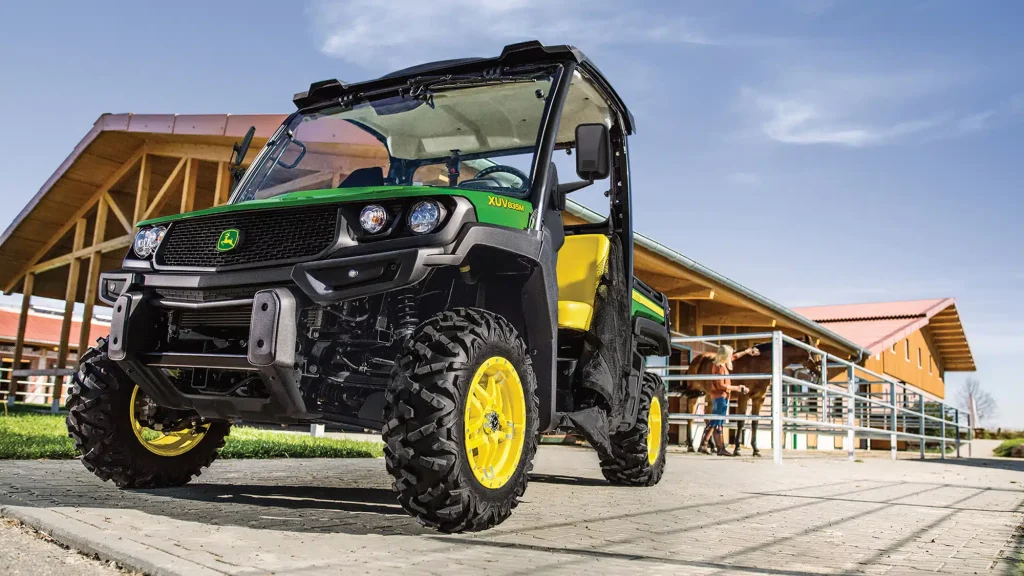
Many owners install windshields, mirrors, turn signals, or lighting kits, believing these upgrades automatically make the vehicle street legal. While such accessories improve convenience and visibility, they do not alter the manufacturer’s original certification or convert the Gator into a highway-compliant passenger vehicle.
For ranch work, agricultural operations, and recreational property management, the XUV835M remains one of the industry’s most respected utility vehicles. Buyers should simply recognize that its intended purpose is off-road work rather than unrestricted public highway transportation.
Specifications
- Engine: 812 cc Three-Cylinder Gasoline
- Torque: Approximately 47 lb-ft
- Horsepower: 54 hp
- Length/Width: 119 inches / 62 inches
6. Kubota RTV-X1140 Utility Vehicle
The Kubota RTV-X1140 is widely used across the United States for agriculture, landscaping, municipal maintenance, and commercial property management. Its ability to carry multiple passengers while transporting equipment makes it extremely practical in demanding work environments.
However, practical capability should not be confused with highway eligibility. In Texas, this utility vehicle cannot normally receive standard registration for unrestricted road use.
Kubota engineered the RTV-X1140 specifically as a work vehicle intended for off-road environments. Its hydrostatic transmission, heavy-duty suspension, and durable cargo bed prioritize reliability on farms and construction sites rather than compliance with passenger vehicle regulations established by the federal government.
A major distinction involves certification. Passenger cars and trucks sold for public highways must satisfy extensive Federal Motor Vehicle Safety Standards covering crash testing, lighting, braking performance, occupant protection, windshield glazing, and numerous other requirements.
The RTV-X1140 was never designed or certified under those standards because its intended operating environment is entirely different.
Speed is another limiting factor. Utility vehicles generally travel at much lower maximum speeds than ordinary highway traffic, making them unsuitable for normal transportation on public roads. Their steering characteristics, braking systems, and tire construction are also optimized for off-road surfaces instead of sustained pavement driving.
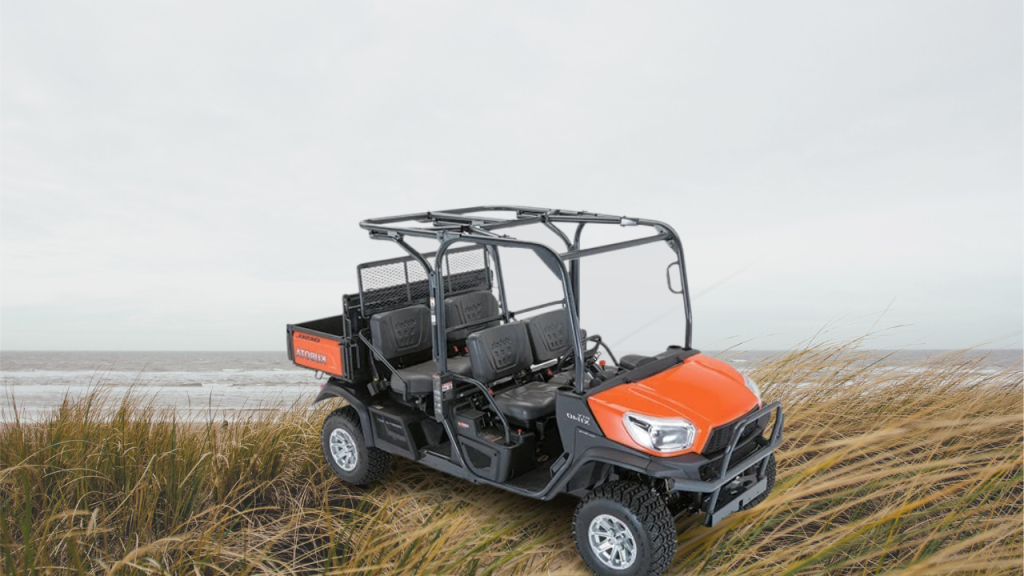
Certain Texas communities permit utility vehicles on specific low-speed roads under local ordinances, particularly in agricultural or rural areas. These limited allowances should not be interpreted as full passenger vehicle registration allowing unrestricted statewide highway operation.
For buyers needing dependable equipment on farms or large properties, the RTV-X1140 remains an excellent investment. Anyone expecting to use it like a conventional pickup truck, however, should understand that its legal status reflects its intended industrial role rather than everyday road transportation.
Specifications
- Engine: 1,123 cc Three-Cylinder Diesel
- Torque: Approximately 52 lb-ft
- Horsepower: 24.8 hp
- Length/Width: 123 inches / 63 inches
7. M998 AM General Humvee (Military Specification)
The military Humvee has developed a legendary reputation through decades of service with the U.S. Armed Forces. Its rugged construction, exceptional off-road capability, and unmistakable appearance make it highly desirable among collectors.
However, many buyers are surprised to learn that owning a military-specification M998 Humvee does not automatically mean it can be registered for unrestricted road use in Texas.
The key issue is how the vehicle was originally manufactured. Military Humvees were built for defense applications, not for sale as civilian passenger vehicles. They were never certified to meet the Federal Motor Vehicle Safety Standards required for highway vehicles sold to the public.
These standards include occupant crash protection, lighting requirements, windshield glazing, braking performance, and many additional safety regulations.
Military models also differ significantly from civilian Hummer H1 vehicles. While the Hummer H1 was engineered and certified for public road use, the M998 was designed to meet military operational requirements.
Features such as blackout lighting, specialized electrical systems, and tactical equipment illustrate its intended purpose rather than highway compliance.
Some surplus Humvees have been modified extensively and legally titled in certain states after meeting applicable requirements. However, many military-specification examples cannot qualify for standard registration because they lack the documentation and federal certification required by state motor vehicle agencies.
Buyers should verify the title status carefully before purchasing one at auction or through a private sale.
Another practical concern is safety. Early military Humvees were never designed with modern passenger vehicle crash standards in mind, making them fundamentally different from contemporary road vehicles.
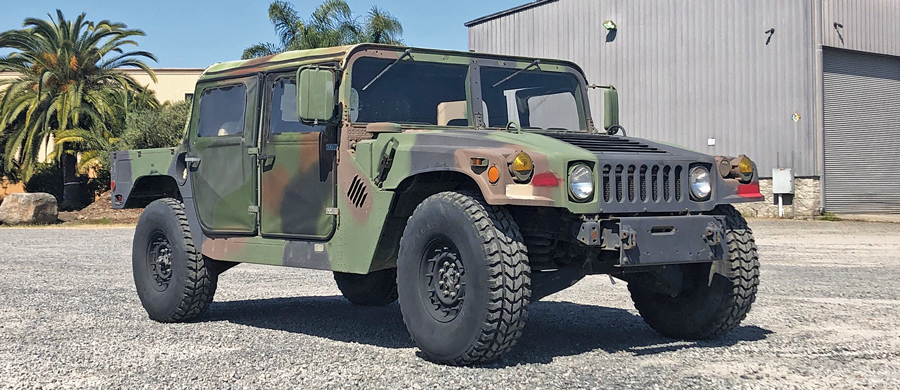
Collectors appreciate the M998 for its historical significance and off-road capability, but anyone intending to drive one regularly on Texas highways should carefully confirm its legal registration status before completing the purchase.
Specifications
- Engine: 6.5-liter Naturally Aspirated Diesel V8
- Torque: Approximately 290 lb-ft
- Horsepower: Approximately 190 hp
- Length/Width: 180.5 inches / 86.5 inches
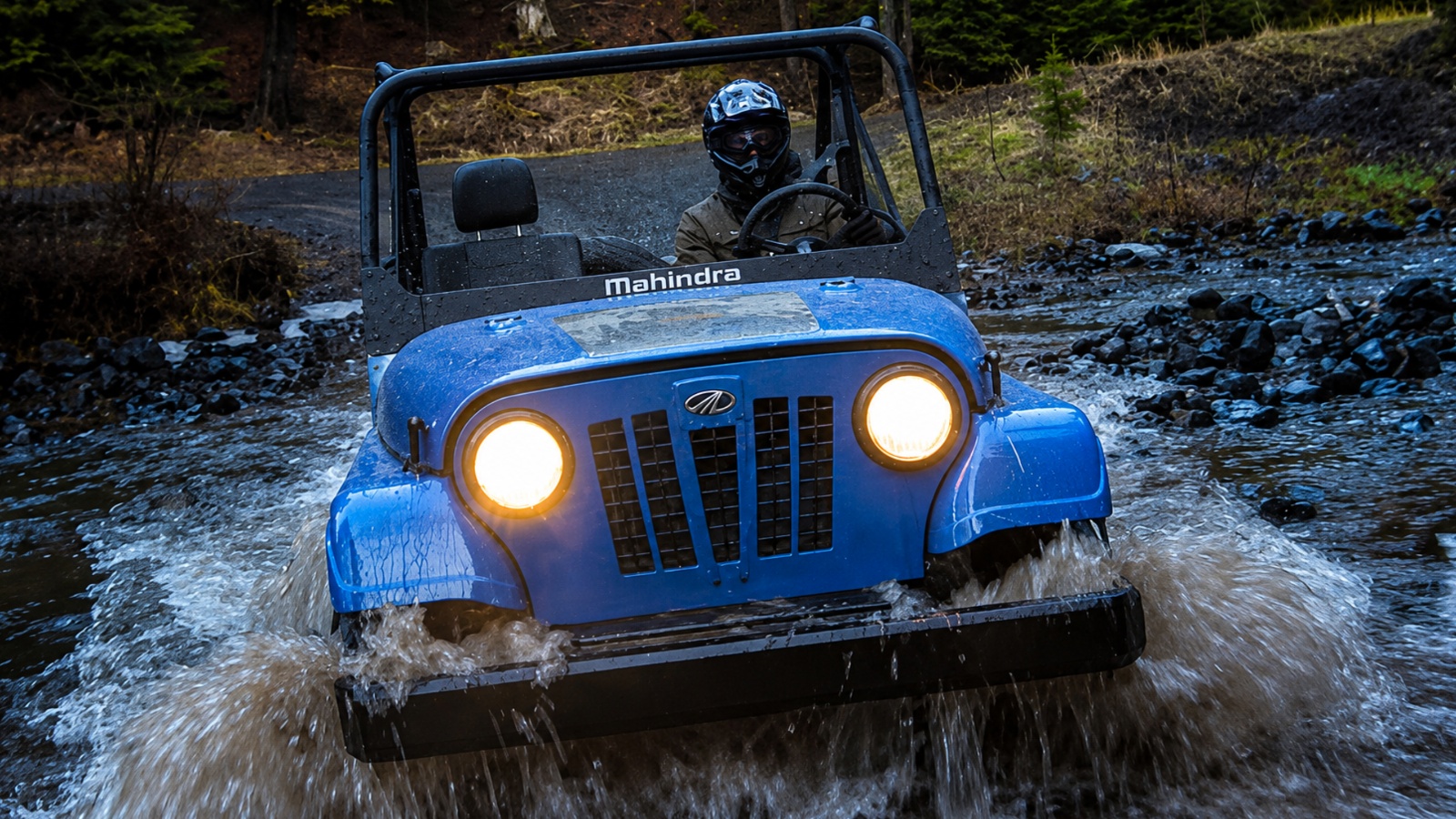
8. Mini Jeep (Imported Off-Road Models)
Compact imported mini Jeeps have become increasingly popular through online marketplaces and vehicle importers. Inspired by classic military Jeeps, these small vehicles are marketed for recreation, private property, hunting, and campground transportation.
Although they resemble road-going automobiles, most imported mini Jeeps cannot be registered for unrestricted highway use in Texas.
The primary reason is federal compliance. Many imported mini Jeeps are manufactured exclusively as off-road recreational vehicles and are not certified to comply with the Federal Motor Vehicle Safety Standards required for passenger vehicles in the United States.
Without this certification, obtaining standard registration through the Texas Department of Motor Vehicles is generally not possible.
Most of these vehicles also lack equipment expected on highway-certified automobiles. Depending on the model, deficiencies may include compliant lighting systems, airbags, certified seat belts, impact-resistant glazing, crash-tested structures, and emissions systems that satisfy federal requirements.
Their compact dimensions and relatively low top speeds further limit their suitability for public highways.
Import documentation is another important factor. Vehicles entering the United States must satisfy federal import regulations administered by agencies including the National Highway Traffic Safety Administration and the Environmental Protection Agency. Recreational off-road vehicles are subject to different certification standards than passenger automobiles.
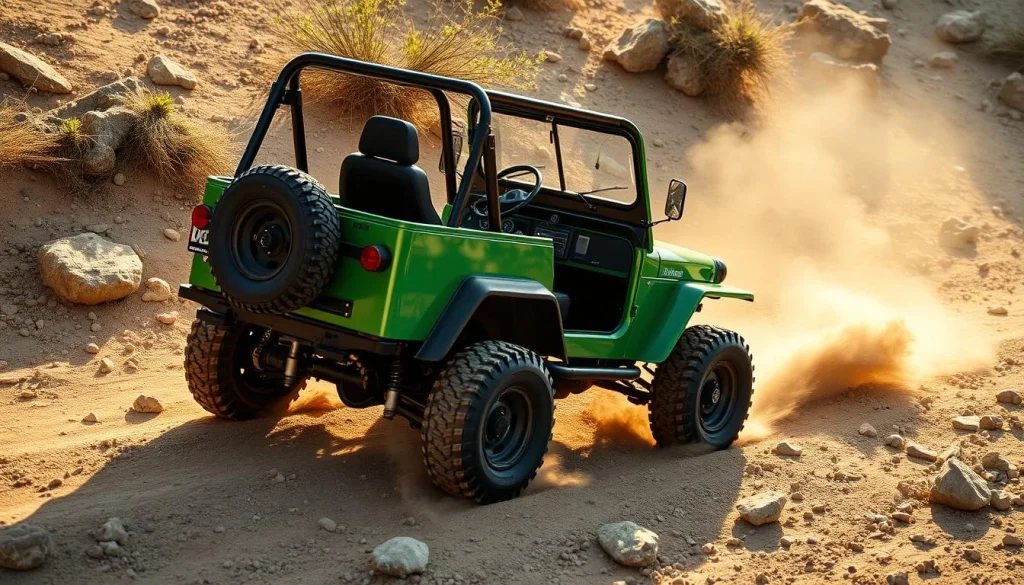
Some sellers advertise these vehicles as “street legal” after adding mirrors, turn signals, or other accessories. Buyers should not rely solely on those claims. Highway registration depends on the vehicle’s original certification and legal import status rather than cosmetic modifications.
Mini Jeeps can provide enjoyable transportation on private land and designated off-road areas, but purchasers expecting to register one for unrestricted use on Texas roads should carefully verify its eligibility before investing their money.
Specifications
- Engine: 125 cc Single-Cylinder Gasoline
- Torque: Approximately 7 lb-ft
- Horsepower: Approximately 9 hp
- Length/Width: 89 inches / 48 inches
Also Read: 10 SUVs With Rear Doors That Open Near 90 Degrees
