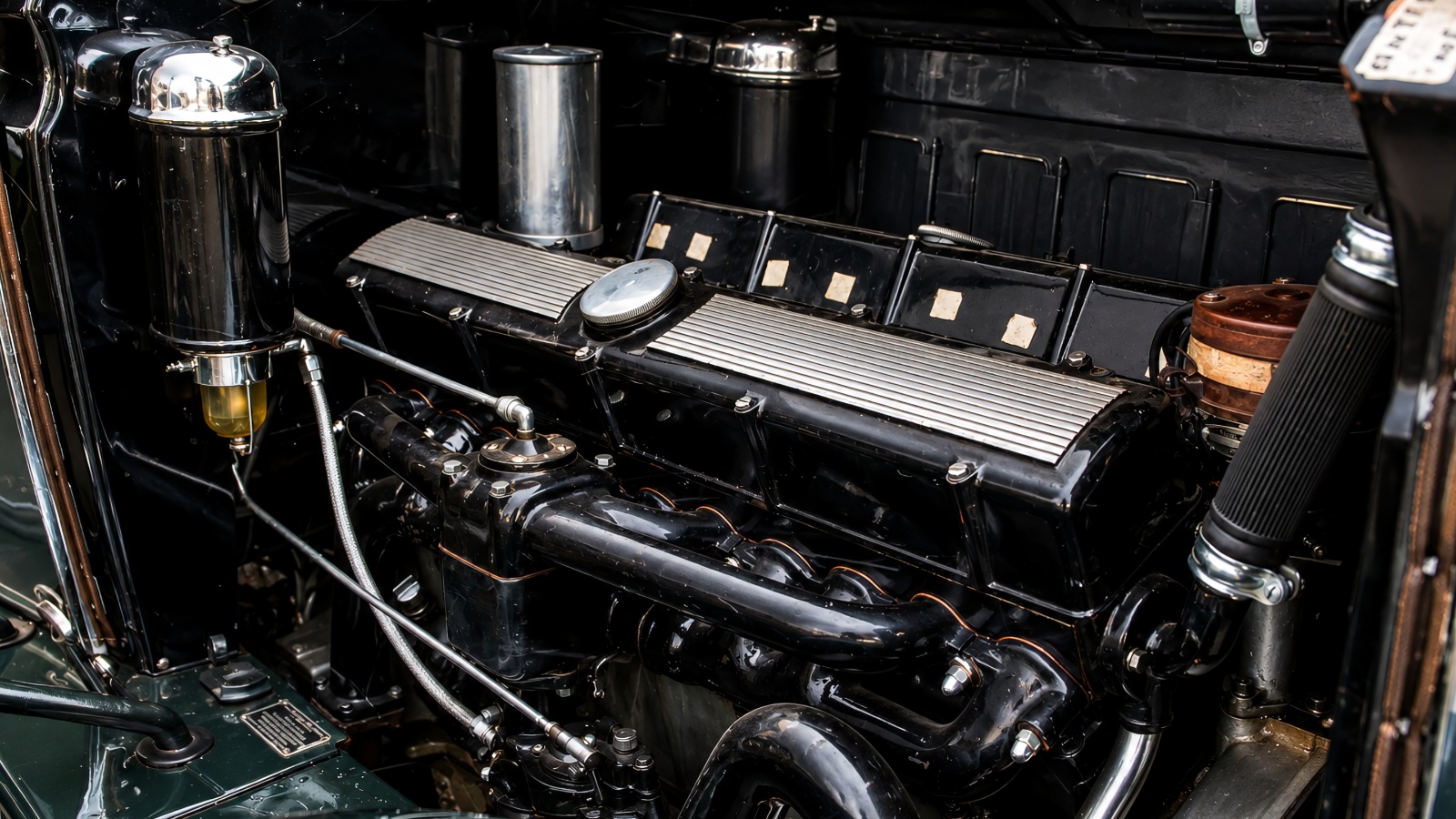
Long before Bugatti made headlines with a sixteen-cylinder hypercar, Cadillac had already achieved the feat decades earlier. In January 1930, General Motors’ luxury division launched the V16, an engine so advanced that competitors struggled to keep up. With sixteen cylinders and remarkable smoothness, it could reportedly idle smoothly enough to balance a coin on the hood.
Its timing, however, was unfortunate, arriving as America entered the Great Depression. Despite the economic crisis, Cadillac’s V16 became one of the most impressive engineering achievements of the pre-war automotive era. Its sophistication was so extraordinary that nearly seventy years passed before another manufacturer created a sixteen-cylinder car that genuinely matched its ambition.
Cadillac’s Race to Beat Packard
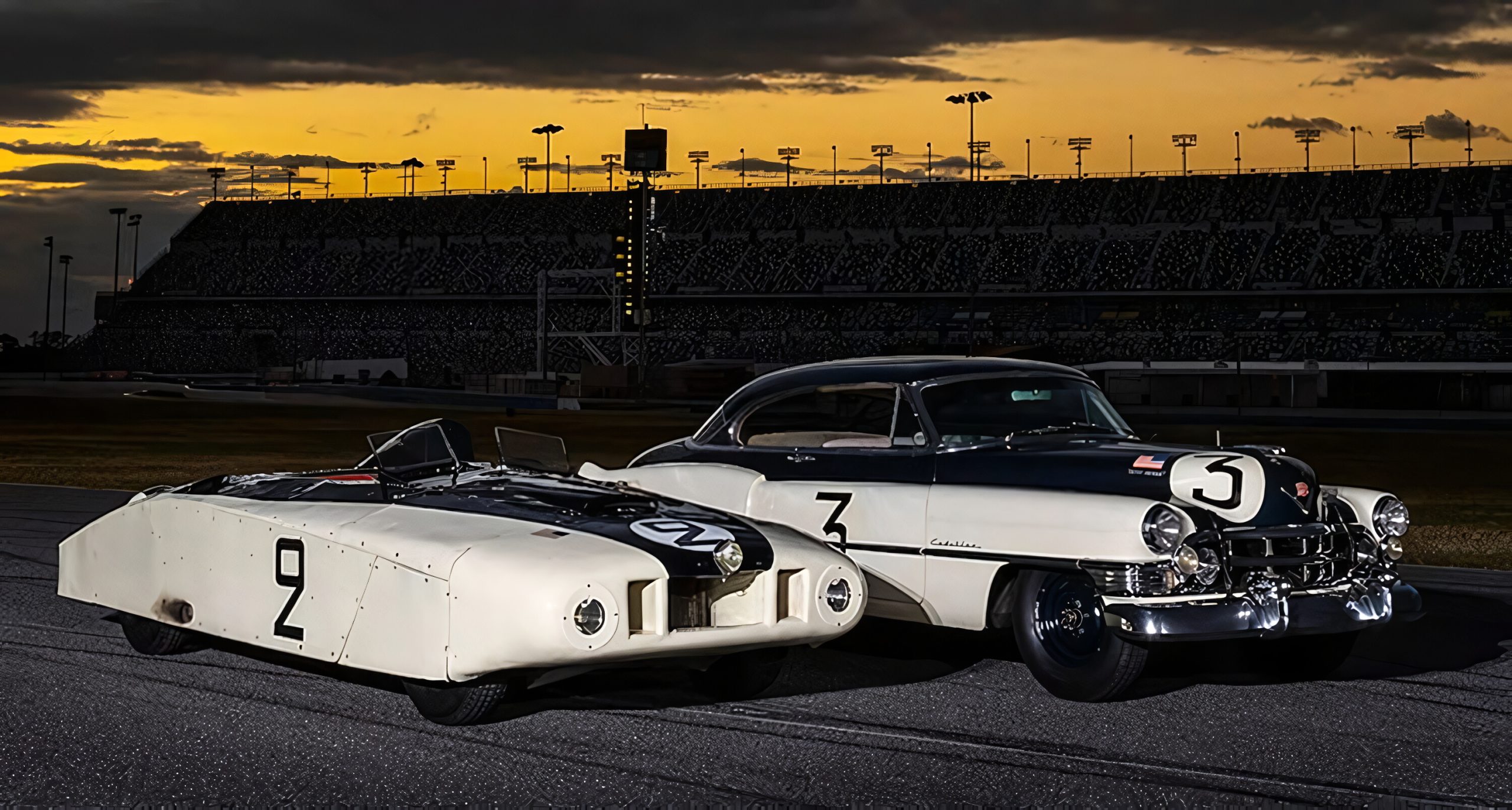
Every great engineering story needs a rival, and for Cadillac in the late 1920s, that rival was Packard. Before Cadillac’s breakthrough, Packard ruled the luxury-car market with a lineup of inline sixes and eights, plus its Twin Six, widely regarded as the world’s first V12, introduced back in 1916.
Cadillac needed something dramatic to leapfrog past that reputation, and its leadership knew exactly where to look for the talent to pull it off.
Cadillac president and general manager Lawrence Fisher orchestrated a sensational plan, starting by recruiting engineer Owen Nacker away from the Marmon Motor Company, a rival automaker also chasing its own sixteen-cylinder ambitions at the time.
Nacker had already been developing a sixteen-cylinder engine that Marmon itself would eventually introduce in 1931, but Cadillac moved faster, tapping his expertise to build its own version first. That timing wasn’t accidental. Cadillac wanted to beat Marmon to market just as badly as it wanted to outshine Packard, turning this into a genuine two-front competition.
Development stayed remarkably secretive, with internal paperwork at Cadillac deliberately describing the project as a coach or bus engine rather than revealing its true sixteen-cylinder nature to outsiders and even most employees.
Engineering a Sixteen-Cylinder Marvel
- Displacement: 452 cubic inches (7.4 liters)
- Bank Angle: 45 degrees
- Horsepower: Approximately 165 to 185 hp
- Torque: Roughly 271 to 318 lb-ft
- Configuration: Two straight-eight engines sharing a common crankcase and crankshaft
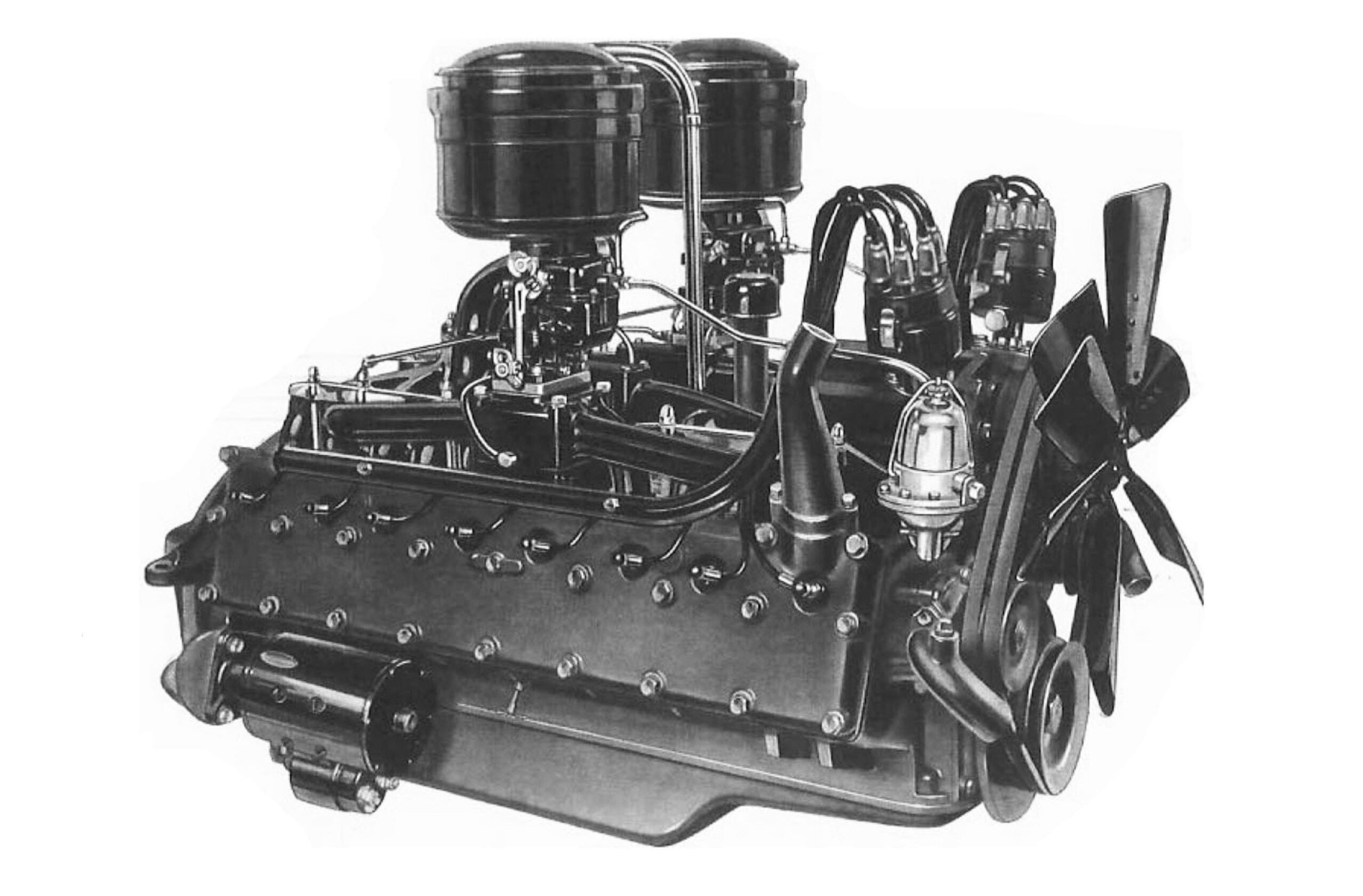
What Nacker and his team finally produced wasn’t simply about bragging rights over cylinder count. The engine was essentially built from two straight-eight units sharing a common crankcase and crankshaft, with each bank operating independently while sharing a single center-mounted camshaft.
That narrow 45-degree angle between the two banks wasn’t a random engineering choice either; it was unusually tight specifically so the entire engine could physically fit within the existing chassis dimensions.
Smoothness, not raw speed, drove every decision behind this design. With eight firing impulses occurring during each single crankshaft rotation, sixteen total across a complete four-stroke cycle, the engine ran remarkably smooth compared to anything else on American roads at the time.
Cadillac’s engineers even shaped the torque curve to closely mirror the characteristics of the standard Cadillac V8, allowing the V16 to share much of the same drivetrain hardware already in production. Visual presentation mattered just as much as mechanical performance.
The engine bay itself was treated almost like art, featuring concealed spark plug wires, polished aluminum ribbing, and generous black enamel detailing that turned the powerplant into a showpiece worth admiring with the hood open.
Also Read: The Engineering Marvel of Bugatti’s Giant V16 Engine
Launching Into the Great Depression
Timing rarely gets crueler than this. Cadillac launched the V16 on January 4, 1930, roughly two and a half months after the stock market crash that triggered the Great Depression, a moment when America’s economic confidence had just been shattered.
Despite that backdrop, Cadillac displayed genuine optimism that day, revealing an engine unlike anything the automotive world had ever seen. The reception, at least initially, matched that ambition.
When the V16 debuted at the New York Auto Show, the automotive world was thoroughly impressed, with General Motors widely regarded at the time as the greatest engineering company on the planet, backed by legendary minds including Charles Kettering, Owen Nacker, and Earl Thompson.
Rated at 175 horsepower upon introduction, the V16 outperformed nearly every other American car on the market at the time. Sales held up admirably at first too. Only 4,076 examples were built across the model’s full eleven-year production run, with the overwhelming majority produced during that debut year, right before the Depression truly tightened its grip on the American economy and luxury car sales everywhere.
Custom Coachwork Fit for Royalty
Buying a V16 Cadillac in 1930 meant far more than simply choosing a powerful engine. Customers could select from roughly seventy different available body styles, each elaborately finished and highly individualized down to the smallest detail.
For buyers who wanted something even more personal, Cadillac would supply a bare chassis to be fitted by an independent styling house of the customer’s own choosing, a level of customization almost unheard of from a mainstream American manufacturer.
Harley Earl’s design team produced some of the most striking automobile bodies of the era, drawing inspiration from European coachbuilders like Hispano-Suiza and Isotta Fraschini during overseas travels.
That European influence gave early V16 Cadillacs a genuinely international flair, blending American engineering muscle with continental elegance. Fleetwood, GM’s own coachbuilding division, produced particularly rare examples, including a 1933 Convertible Sedan featuring an integral trunk, one of the first designs of its kind on an American automobile.
Owning one of these cars wasn’t just about transportation. It was a rolling declaration of status, engineered by some of the sharpest minds in Detroit and dressed by some of the finest coachbuilders anywhere in the world.
Also Read: Bugatti Introduces First Series Production V16 Engine in Over Eight Decades
The V16’s Legacy on Modern Cadillacs
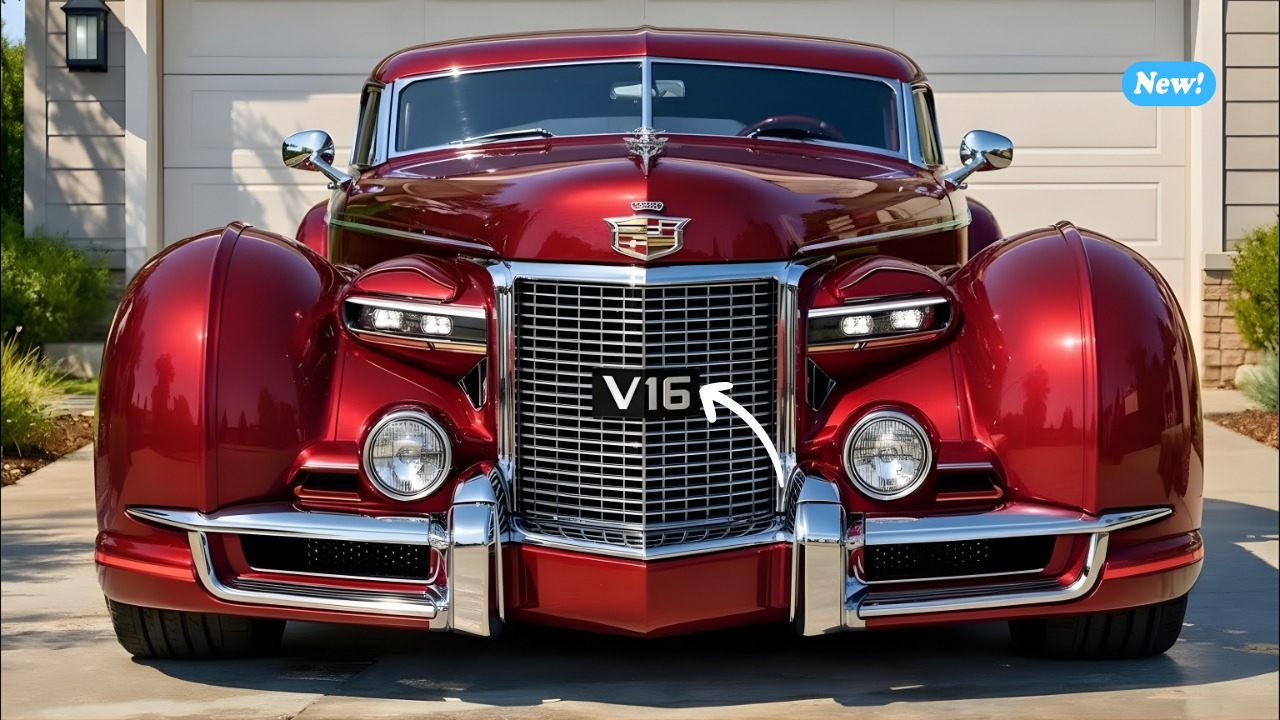
To this day, Cadillac remains responsible for producing two of only four gasoline-fueled V16 engines ever put into actual production anywhere in automotive history, a distinction that still carries weight among collectors and historians alike. That original achievement never entirely left Cadillac’s imagination either.
The company has twice attempted to revive a V16 engine since then, once during the 1980s and again in 2003 with the Cadillac Sixteen concept, though neither project reached production.
That 2003 concept alone speaks volumes about how much the original V16 still means to the brand. Built specifically for the Detroit Auto Show, the Sixteen Concept featured a massive 13.6-liter engine producing around 1,000 horsepower and 1,000 lb-ft of torque, created as part of a broader initiative to reestablish Cadillac as General Motors’ true flagship brand.
Original 1930s examples have aged into genuine automotive treasures too, with pristine, matching-numbers models now commanding well over a million dollars at auction among serious collectors. A silent, over-the-top gamble launched right as the economy collapsed somehow turned into one of the most respected engineering legacies in American automotive history.