
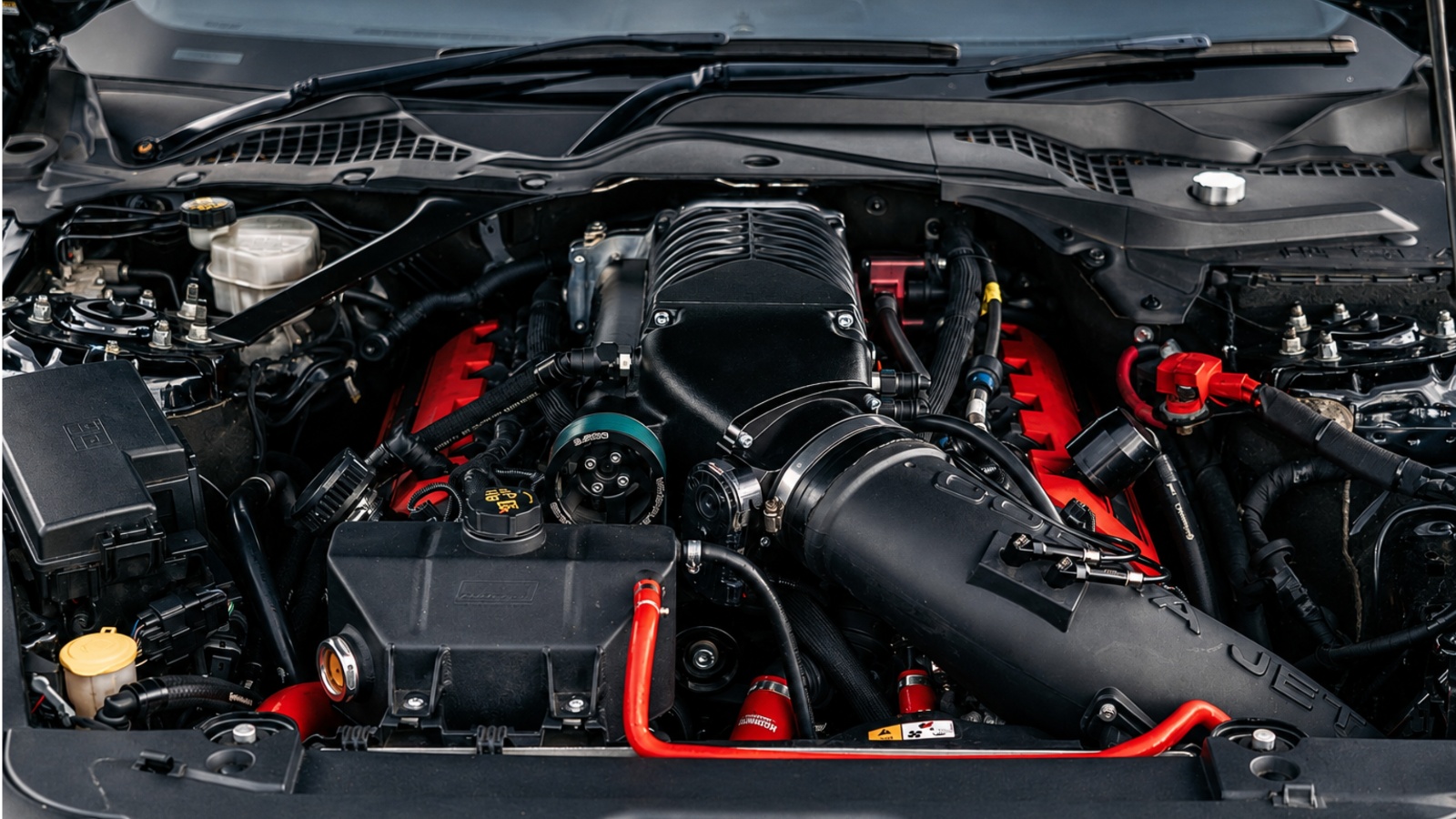
America’s horsepower race has produced some of the most outrageous factory engines ever fitted to street-legal vehicles. From supercharged muscle cars to twin-turbo supercars, manufacturers have pushed production power far beyond what once seemed practical for public roads.
These engines were not experimental concepts or modified builds; they were installed in vehicles customers could buy through authorized dealers. Each one reflects an approach to extracting extreme performance, whether through displacement, forced induction, high-revving design, or cooling and engine management.
America’s 10 Most Powerful Factory Engines, Ranked brings together the powerplants that defined this performance era. The list includes record-setting V8s, a naturally aspirated V10, a twin-turbo EcoBoost V6, and engines capable of producing four-digit horsepower from the factory.
Beyond the headline numbers, these machines reveal how automakers balanced torque, drivability, durability, and street legality while chasing bigger outputs. Ranked by horsepower, they show just how far factory engineering has come.
1. Chevrolet Corvette ZR1 (C8) – 1,064 HP
The C8 ZR1 sits at the top of American horsepower history. It uses a twin-turbocharged 5.5-liter flat-plane-crank V8 called the LT7. This engine borrows architecture from the Z06’s naturally aspirated unit. Chevrolet added two turbochargers to push output past the 1,000-horsepower mark. The result is 1,064 horsepower at 8,000 RPM.
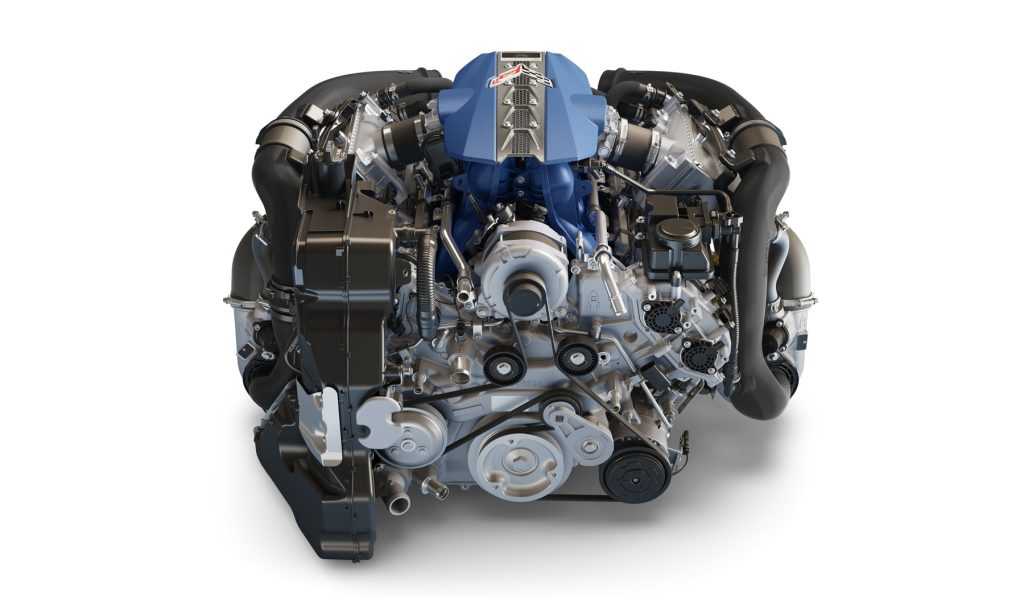
That makes it the most powerful production car GM has ever built. Torque checks in at 828 lb-ft, arriving in a wide, usable band. This isn’t a peaky, hard-to-drive engine despite its extreme output.
Specifications:
- Engine: 5.5L Twin-Turbo Flat-Plane V8 (LT7)
- Horsepower: 1,064 hp
- Torque: 828 lb-ft
- Length: 182.3 inches
- Width: 79.7 inches
The ZR1 hits 60 mph in roughly 2.3 seconds. Top speed is estimated near 215 mph, a Corvette record. Chevrolet engineers designed the LT7 to rev to 8,000 RPM despite forced induction.
Most turbo engines sacrifice high-RPM response for boost. This one keeps the flat-plane crank’s love of revs intact. The dry-sump oiling system was reinforced for sustained track use.
Chevrolet also added a wider carbon-fiber body kit for cooling and downforce. Quarter-mile times land in the low 9-second range from the factory.
That’s supercar territory from a car costing a fraction of European rivals. The ZR1 also comes in a ZTK Performance Package with more aero. This engine proves American V8 engineering can compete with anything globally.
It blends old-school displacement with new-school turbo technology. The result is a genuinely game-changing production engine. Chevrolet built this car to be the fastest Corvette in history, and it succeeded. The ZR1 name has always meant “most extreme,” and the C8 honors that legacy.
2. Dodge Challenger SRT Demon 170 – 1,025 HP
The Demon 170 is the most powerful muscle car engine ever sold in America. It’s a supercharged 6.2-liter HEMI V8 built specifically for drag strip dominance.
Dodge designed it to run on E85 fuel for maximum output. On E85, it produces a staggering 1,025 horsepower. On regular pump gas, it still makes 900 horsepower.
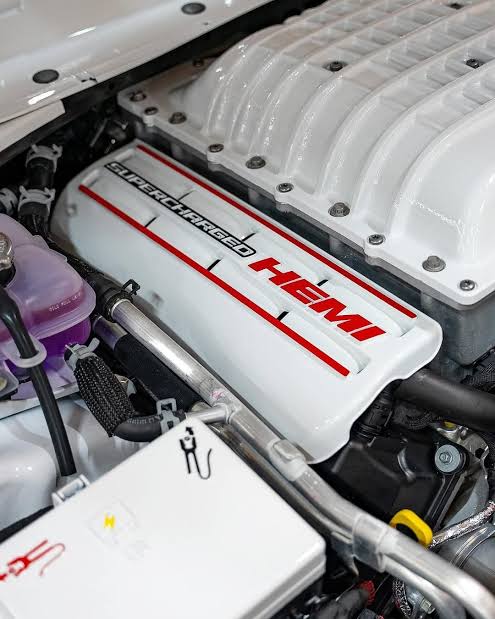
That’s more than most exotic supercars offer stock. Torque reaches 945 lb-ft, an enormous figure for a street car. The Demon 170 uses a larger 3.0-liter supercharger than the original Demon. This blower spins boost up to 21 psi at full tilt.
Specifications:
- Engine: 6.2L Supercharged HEMI V8
- Horsepower: 1,025 hp (E85) / 900 hp (91 octane)
- Torque: 945 lb-ft
- Length: 197.9 inches
- Width: 78.3 inches
Dodge reinforced the engine block, connecting rods, and crankshaft for the added stress. A wider Widebody chassis helps put power down through drag radials.
The factory quarter-mile time is an incredible 8.91 seconds. That makes it the first production car under nine seconds from the factory. Dodge built only 3,300 examples before ending Hemi V8 production.
It marked the final, loudest chapter of the modern muscle car era. The Demon 170 also includes a transbrake for perfect launches. This feature is normally found only in dedicated race cars.
Cooling upgrades include a bigger intercooler and reworked air intake. Despite the brutal power, it remained street legal and emissions compliant.
Dodge essentially built a drag car with license plates. It stands as a send-off to naturally aspirated and supercharged Hemi engineering. Few production engines will likely ever match its raw drag strip credentials.
3. Dodge Charger/Challenger SRT Hellcat Redeye – 797 HP
The Hellcat Redeye pushed the standard Hellcat formula even further. It uses the same supercharged 6.2-liter HEMI V8 platform.
But it borrows the larger supercharger from the Demon lineage. That upgrade bumps output to 797 horsepower.
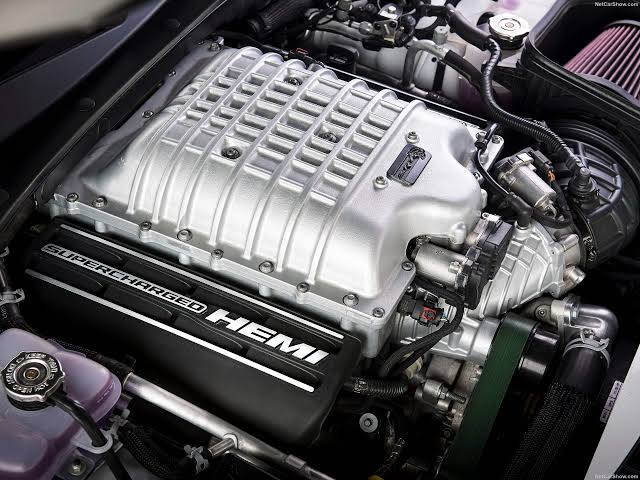
Torque sits at 707 lb-ft, delivered in a broad, aggressive curve. The Redeye name comes from its aggressive idle and glowing red supercharger badge. Dodge tuned the calibration for stronger low-end punch than the standard Hellcat.
Specifications:
- Engine: 6.2L Supercharged HEMI V8
- Horsepower: 797 hp
- Torque: 707 lb-ft
- Length: 197.9 inches (Challenger) / 206.6 inches (Charger)
- Width: 78.3 inches
It also includes launch control and adaptive damping suspension. Zero to 60 mph arrives in around 3.4 seconds. The quarter-mile comes in around 10.8 seconds from the factory.
Dodge offered this engine in both Challenger and Charger body styles. Widebody options added grip through wider fender flares and tires. The Redeye’s supercharger spins faster than the base Hellcat’s blower.
This creates more boost pressure and sharper throttle response. Despite the extreme power, it retained daily-driver comfort features. Heated seats, a large touchscreen, and a comfortable ride came standard.
That combination of brutality and comfort defined the modern Hellcat era. Dodge sold Redeye trims until the traditional Hemi lineup ended production in 2023.
It remains one of the most tunable, aftermarket-friendly engines ever sold. Many owners push Redeye engines past 1,000 horsepower with basic bolt-ons.
4. Ford Mustang Shelby GT500 – 760 HP
The GT500 represents Ford’s most powerful factory Mustang engine ever built. It uses a supercharged 5.2-liter V8 with a flat-plane-style crank design. Ford calls this engine the “Predator.” It produces 760 horsepower at 7,300 RPM.
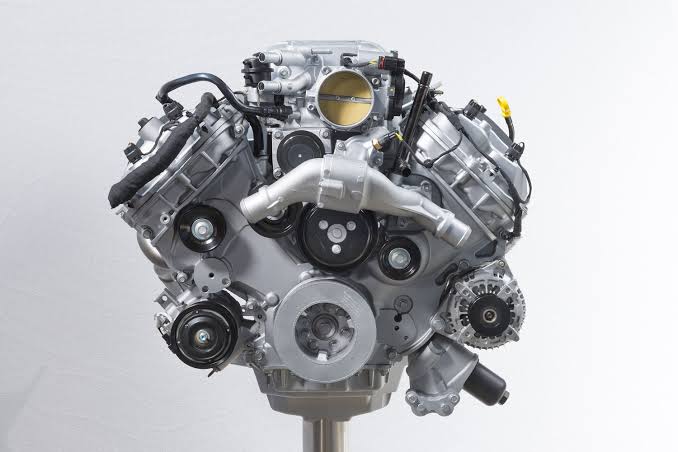
Torque reaches 625 lb-ft, arriving with sharp, immediate response. The GT500 uses a 2.65-liter Eaton supercharger for boost. Ford paired it exclusively with a 7-speed dual-clutch transmission.
Specifications:
- Engine: 5.2L Supercharged V8 (Predator)
- Horsepower: 760 hp
- Torque: 625 lb-ft
- Length: 189.4 inches
- Width: 81.9 inches
No manual gearbox was offered, unlike other Mustang trims. This let Ford extract quicker shift times for drag strip runs. Zero to 60 mph takes roughly 3.3 seconds.
The quarter-mile comes in around 10.7 seconds stock. Ford also fitted massive Brembo brakes to handle the added speed. A functional hood vent and wider grille improve cooling under hard use.
The Carbon Fiber Track Package adds even more aerodynamic downforce. This package includes a large rear wing for track-day stability. Ford engineers focused heavily on cooling given the supercharged output.
Oil coolers and dual radiators keep temperatures in check during repeated runs. The GT500 briefly held the title of most powerful Ford ever built. It remains one of the quickest quarter-mile Mustangs sold from a dealership. Production ended in 2022, closing out the sixth-generation Mustang’s flagship chapter.
Also Read: 8 Car Brands Blocked From US Showrooms by One Federal Rule
5. Chevrolet Corvette ZR1 (C7) – 755 HP
Before the C8 generation, the C7 ZR1 held Chevrolet’s horsepower crown. It used a supercharged 6.2-liter LT5 V8. This engine produced 755 horsepower at 6,400 RPM.
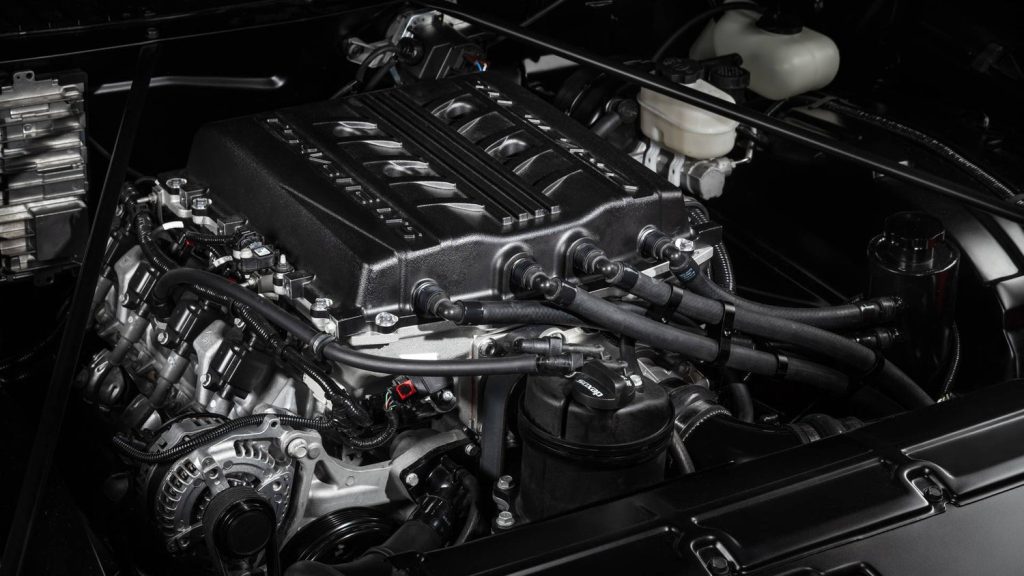
Torque reached 715 lb-ft, giving it massive mid-range pull. The LT5 used a larger 2.65-liter Eaton supercharger than previous Corvette engines. Chevrolet designed a unique dry-sump oiling system for track durability.
Specifications:
- Engine: 6.2L Supercharged V8 (LT5)
- Horsepower: 755 hp
- Torque: 715 lb-ft
- Length: 177.6 inches
- Width: 77.4 inches
This ZR1 could be equipped with either a manual or automatic transmission. That made it the last manual-equipped ZR1 Corvette produced. Zero to 60 mph took around 2.85 seconds with the automatic.
Top speed reached an official 212 mph, a Corvette record at the time. The ZR1 also featured a massive rear wing in its ZTK package. This package added stiffer springs and stickier Michelin tires.
Chevrolet built the C7 ZR1 to compete directly with European supercars. At a fraction of their price, it largely succeeded. The car used a carbon-fiber hood with a functional window to display the engine.
This became one of the most recognizable design details of the generation. Production ran from 2018 to 2019 before the mid-engine C8 replaced it. It remains a benchmark for front-engine American supercar performance.
6. Dodge Durango SRT Hellcat – 710 HP
The Durango SRT Hellcat brought supercharged power to a three-row SUV. It shares its 6.2-liter supercharged HEMI V8 with other Hellcat models. Output reaches 710 horsepower, an SUV segment record.
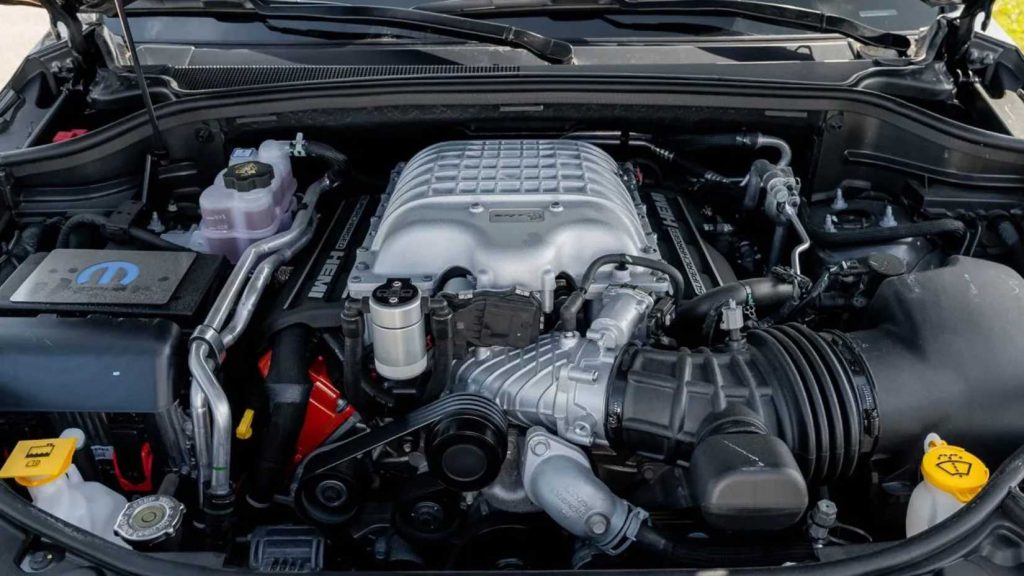
Torque comes in at 645 lb-ft. Dodge built only limited numbers of this SUV per model year. It became the fastest and most powerful SUV sold in America at launch.
Specifications:
- Engine: 6.2L Supercharged HEMI V8
- Horsepower: 710 hp
- Torque: 645 lb-ft
- Length: 201.2 inches
- Width: 84.6 inches
Zero to 60 mph takes just 3.5 seconds despite its size and weight. That’s supercar-quick for a vehicle that seats six passengers. The Durango Hellcat retained real towing capacity of up to 8,700 pounds.
Few performance vehicles combine that much power with genuine utility. Dodge reinforced the suspension, brakes, and cooling system for the added stress.
Launch control and adaptive damping suspension came standard. The quarter-mile time lands around 11.5 seconds from the factory. That’s remarkably close to sports car territory for a family hauler.
Dodge marketed it as proof that practicality and performance aren’t mutually exclusive. It sold out quickly each year it was offered. Production ended alongside other Hellcat-powered Dodge vehicles in 2023. The Durango Hellcat remains a unique chapter in SUV performance history.
7. Jeep Grand Cherokee Trackhawk – 707 HP
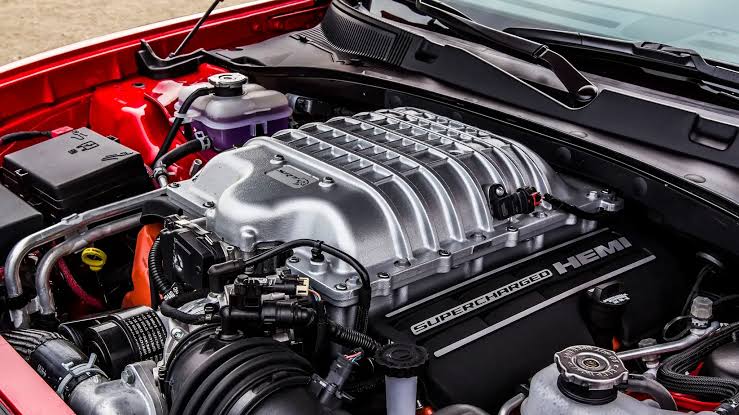
The Trackhawk brought Hellcat power to Jeep’s flagship SUV lineup. It uses the same 6.2-liter supercharged HEMI V8 architecture. Output reaches 707 horsepower and 645 lb-ft of torque. Jeep paired this engine with an all-wheel-drive system for the first time in a Hellcat vehicle.
Specifications:
- Engine: 6.2L Supercharged HEMI V8
- Horsepower: 707 hp
- Torque: 645 lb-ft
- Length: 189.8 inches
- Width: 84.8 inches
That gave the Trackhawk shocking traction off the line. Zero to 60 mph takes just 3.5 seconds, rivaling many sports cars. The quarter-mile comes in around 11.6 seconds stock.
This made the Trackhawk the quickest SUV at its debut. Jeep reinforced the transmission and drivetrain to handle the extra torque. Launch control allowed consistent, repeatable drag strip runs.
Brembo brakes with massive rotors handled stopping duties. The Trackhawk retained real off-road capability despite its performance focus. Selectable drive modes adjusted throttle, transmission, and suspension behavior.
Jeep built this model to prove its brand could compete in the horsepower wars. It succeeded in creating one of the most surprising performance vehicles of its era. Production ended in 2021 as Jeep shifted focus to electrified performance models. The Trackhawk remains a cult favorite among SUV enthusiasts.
8. Ram 1500 TRX – 702 HP
The Ram TRX brought Hellcat power to the full-size pickup truck segment. It uses a detuned version of the 6.2-liter supercharged HEMI V8. Output reaches 702 horsepower and 650 lb-ft of torque. Ram built the TRX to directly challenge Ford’s Raptor lineup. It won that battle on paper with far more horsepower.
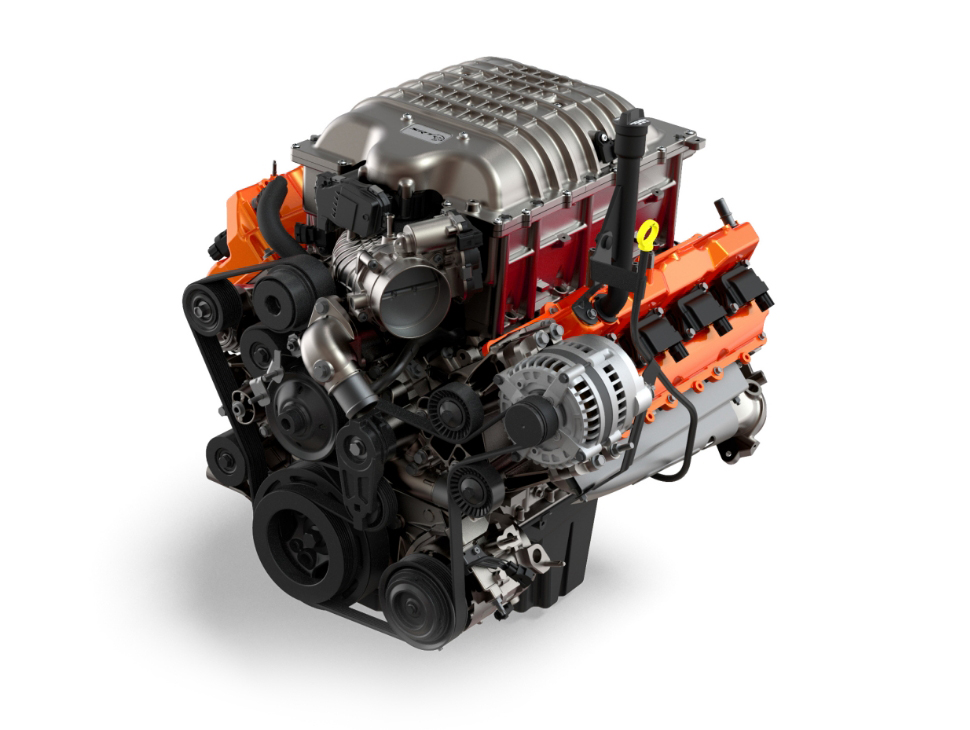
Specifications:
- Engine: 6.2L Supercharged HEMI V8
- Horsepower: 702 hp
- Torque: 650 lb-ft
- Length: 232.9 inches
- Width: 87.8 inches
Zero to 60 mph takes around 4.5 seconds despite its massive size. That’s remarkable for a truck weighing over 6,300 pounds. The TRX rides on a widened frame with long-travel Bilstein suspension.
This setup allows genuine high-speed desert running, not just straight-line speed. Dodge, Ram’s parent brand, tuned this engine for durability under repeated abuse. Off-road cooling packages keep the supercharged V8 running in extreme heat.
The TRX also includes 35-inch all-terrain tires as standard equipment. Ground clearance increases significantly over the standard Ram 1500. Ram built this truck as a halo model to showcase engineering capability.
It sold in strong numbers despite a premium price tag. Production wound down as Ram shifted toward electrified truck platforms. The TRX remains the most powerful factory pickup truck engine ever sold in America.
9. Ford GT – 647 HP
The modern Ford GT uses a very different approach from the others on this list. It’s powered by a 3.5-liter twin-turbocharged EcoBoost V6. Despite smaller displacement, it produces 647 horsepower.
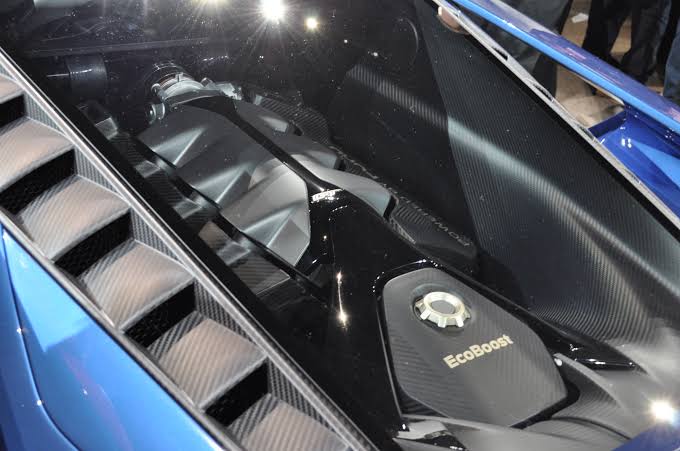
Specifications:
- Engine: 3.5L Twin-Turbo EcoBoost V6
- Horsepower: 647 hp
- Torque: 550 lb-ft
- Length: 182.8 inches
- Width: 78.9 inches
Torque reaches 550 lb-ft, delivered with strong turbo response. Ford built this engine using motorsport-derived technology from its racing programs.
It shares core architecture with Ford’s endurance racing EcoBoost engines. The GT’s carbon-fiber monocoque chassis kept weight remarkably low. That helped the smaller-displacement V6 compete with larger V8 supercars.
Zero to 60 mph takes around 2.9 seconds. Top speed reaches an impressive 216 mph. Ford limited production to just 1,350 units across the model’s run.
This scarcity made the GT one of the most exclusive American supercars ever sold. The car returned to Le Mans racing to celebrate Ford’s 1966 victory. Its road-going counterpart shared genuine engineering DNA with the race car. Active aerodynamics, including a deployable rear wing, improved high-speed stability.
Ford proved twin-turbo V6 power could rival traditional V8 supercars. This engine represents a turning point toward smaller-displacement, high-output American engineering. Production ended in 2022, closing out a limited and highly collectible run.
10. Dodge Viper ACR – 645 HP
The final generation Viper ACR remains an icon of naturally aspirated American power. It uses an 8.4-liter V10 engine, the largest displacement on this list. Output reaches 645 horsepower at 6,200 RPM. Torque is massive too, hitting 600 lb-ft. The Viper ACR stands for “American Club Racer,” built for track dominance.
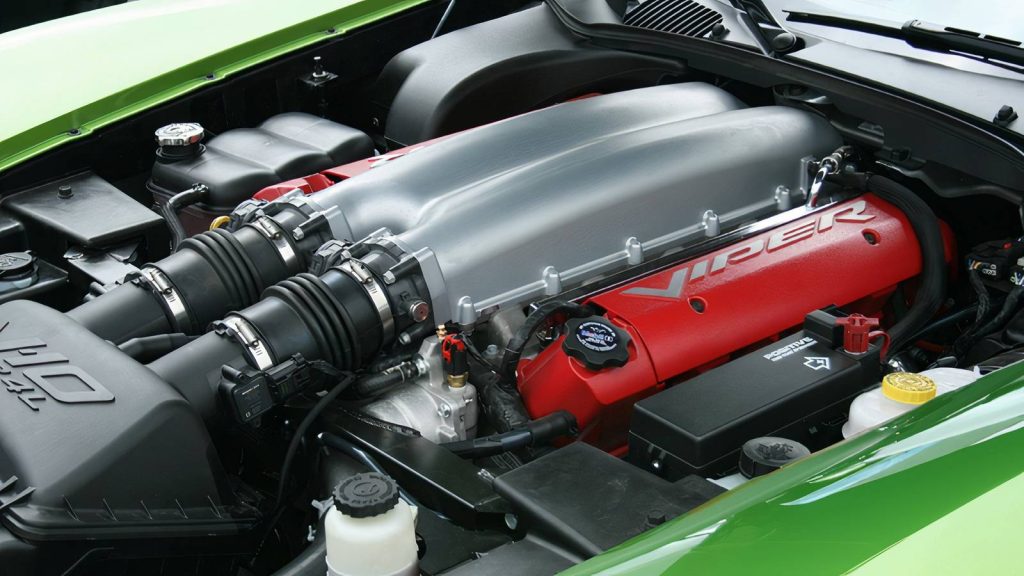
Specifications:
- Engine: 8.4L Naturally Aspirated V10
- Horsepower: 645 hp
- Torque: 600 lb-ft
- Length: 175.7 inches
- Width: 75.7 inches
It once held lap records at numerous American racetracks. Unlike others on this list, it relied purely on displacement, not forced induction. This gave it a distinct, linear power delivery unlike turbo or supercharged rivals.
Zero to 60 mph takes around 3.4 seconds. Top speed reaches roughly 177 mph, limited by aerodynamic downforce. Dodge fitted the ACR with adjustable carbon-fiber aero components.
These generated more downforce than any Viper before it. The engine used individual throttle bodies for sharper throttle response. A dry-sump oiling system prevented oil starvation during hard cornering.
Dodge ended Viper production in 2017, closing out a 25-year legacy. The ACR remains the most track-focused version ever built. Its naturally aspirated V10 represents a dying breed of American engineering. Few production engines will likely ever match its raw, mechanical character again.
Also Read: 11 Cars With Ultra Wideband Keys That Refuse a Relay
