
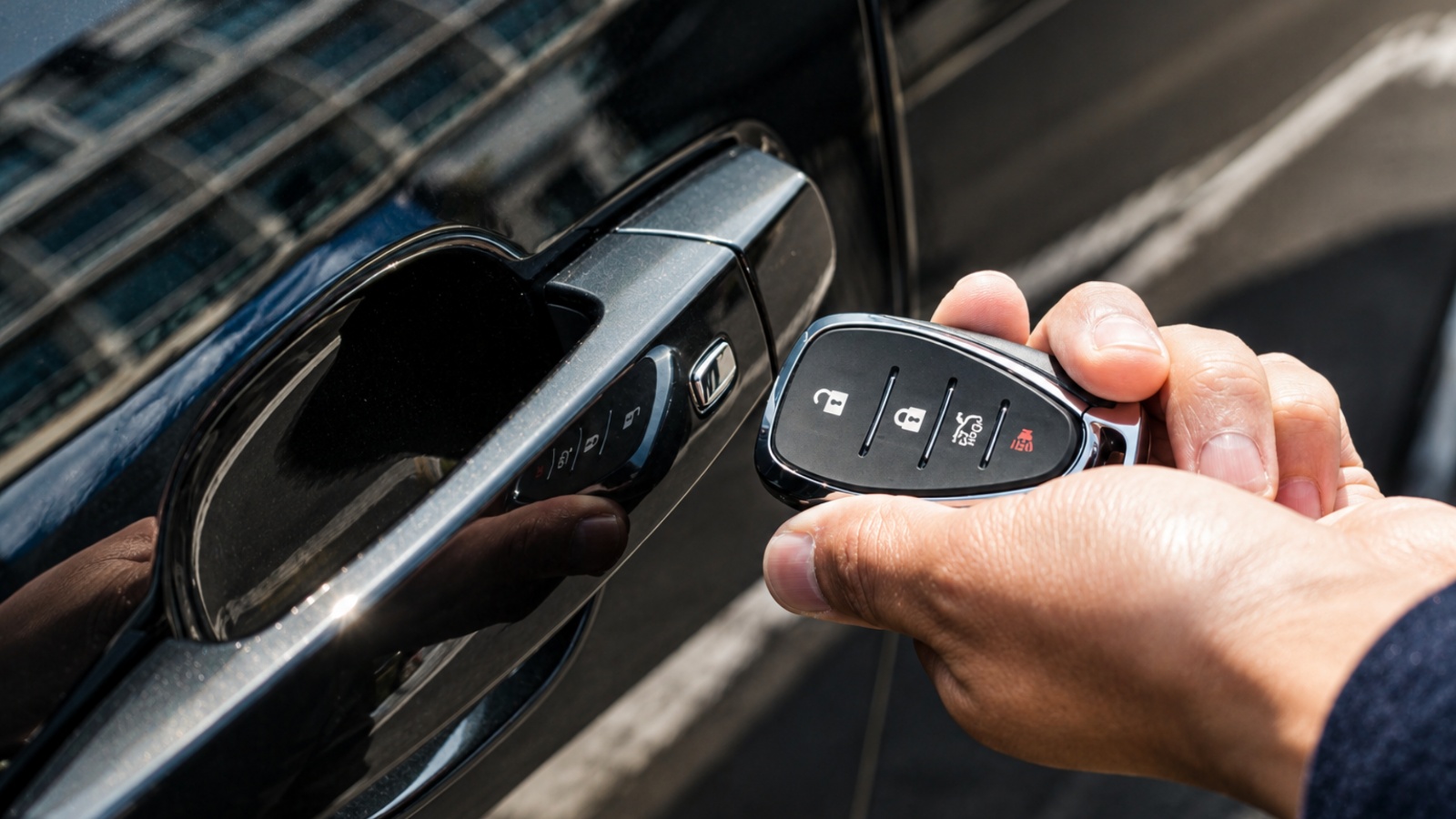
Car theft has evolved into a wireless arms race. Thieves no longer need to break a window or hot-wire an ignition. Instead, they use cheap relay devices to trick a key fob into thinking it’s near the car.
This “relay attack” has cost owners billions worldwide. Automakers responded with Ultra Wideband (UWB) technology. UWB measures distance using time-of-flight instead of simple signal strength.
It calculates the exact distance between key and car in nanoseconds. A relayed signal introduces a detectable delay, unlike older RF or Bluetooth systems. The Car Connectivity Consortium made UWB central to its Digital Key 3.0 and 4.0 standards.
Chipmakers like NXP, Qualcomm, and Bosch have pushed rapid adoption across premium brands. Below are eleven vehicles built with UWB-based digital keys designed to resist relay attacks.
Each pairs UWB ranging with cryptographic protection for genuine distance-bounding security. We also cover their real specifications so you understand the machines behind the tech. UWB security is still maturing, and no system is flawless. But these eleven represent the current frontier of relay-resistant automotive access.
1. BMW iX
The BMW iX was one of the first production cars with Digital Key Plus. This system uses UWB to measure precise distance between phone and vehicle. BMW cryptographically binds the ranging data to prevent spoofing. A relayed signal shows an inconsistent timestamp and gets rejected.
Owners can walk up, and the car unlocks without touching a button. Digital keys can also be shared remotely with family members. Because UWB works at the chip level, spoofed range extenders struggle against its timing checks.
Traditional key fobs have long been vulnerable to relay attacks, where thieves use cheap radio frequency amplifiers to capture and forward the weak broadcast signals of keys resting inside a home to a target vehicle parked outside.
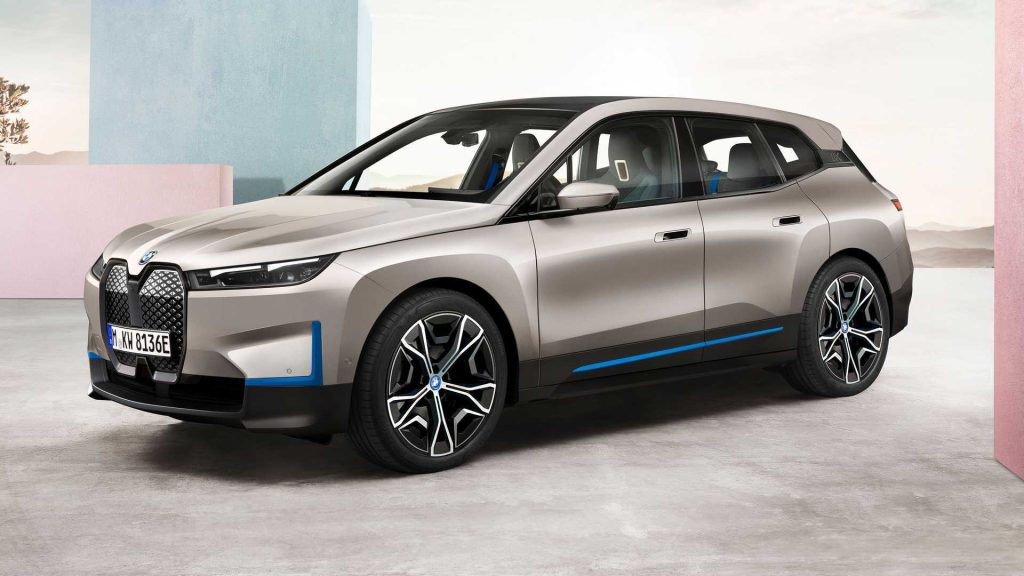
The car is tricked into thinking the physical key is right next to the door handle, allowing immediate unauthorized entry and vehicle theft. The BMW iX completely neutralizes this security exploit by replacing standard proximity sensing with advanced ultra-wideband communication architectures.
By calculating the exact time-of-flight of radio waves exchanged between the vehicle’s internal transceivers and a compatible smartphone or smartwatch, the system determines physical distance down to the centimeter.
Because electromagnetic waves travel at the speed of light, relay boxes attempting to trick the car introduce an unavoidable minuscule data transmission delay. The BMW iX immediately identifies this time discrepancy as invalid, locking out the relay attempt and refusing access to would-be thieves.
- Engine: Dual electric motors (xDrive50 trim)
- Horsepower: 516 hp combined
- Torque: 564 lb-ft
- Length: 195.6 inches
- Width: 76.2 inches
- Battery: 111.5 kWh usable
- Range: ~324 miles (EPA)
2. BMW X7
The X7 gained Digital Key Plus with its iDrive 8 update. BMW extended UWB ranging to its largest SUV for lineup-wide consistency. The system tracks the phone’s position using multiple UWB anchors in the body.
This multi-anchor approach beats single-antenna Bluetooth systems for accuracy. It also lets the car unlock only the door nearest the driver. Every ranging exchange uses rolling cryptographic keys.
This prevents attackers from replaying old captured signals. Protecting a massive, high-value luxury flagship requires an equally sophisticated perimeter defense mechanism that guards against modern electronic relay theft.
Traditional keyless entry systems are notoriously susceptible to wireless amplification tactics, but the integration of a multi-point ultra-wideband antenna array completely upends the traditional playbook used by organized vehicle theft rings.
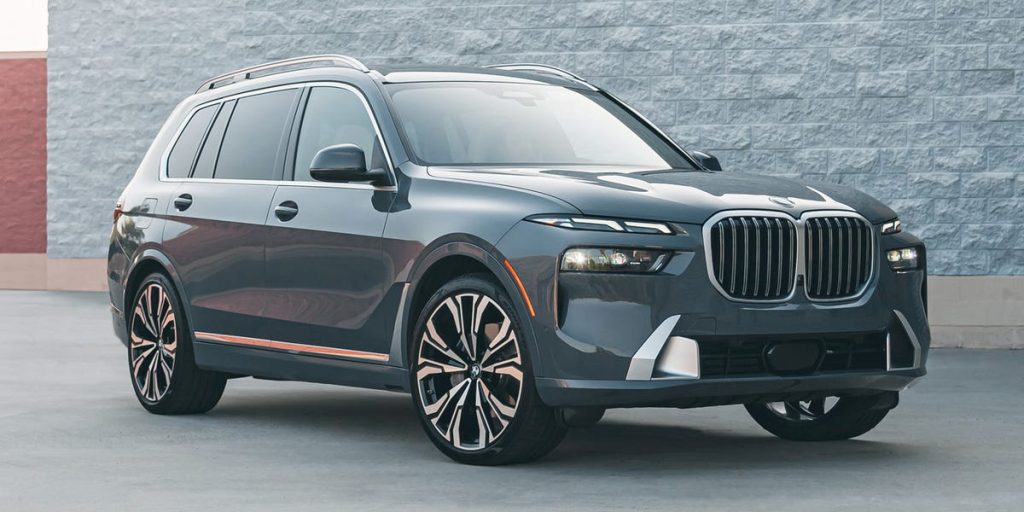
By strategically placing multiple UWB sensors throughout the front and rear chassis, the vehicle triangulation engine measures the exact physical trajectory and proximity of the key holder in real time.
If a malicious relay box attempts to intercept and forward the entry handshake from a distance, the physical time-of-flight validation fails instantly.
The vehicle’s security computer recognizes that the radio wave transit time violates the fundamental speed of light constraint for that calculated distance, stopping the attack dead in its tracks before an unauthorized door can ever be popped open.
- Engine: 3.0L turbocharged inline-six (xDrive40i)
- Horsepower: 375 hp
- Torque: 383 lb-ft
- Length: 203.3 inches
- Width: 78.7 inches
- Transmission: 8-speed automatic
- 0-60 mph: 5.8 seconds
3. BMW i7
The i7 is BMW’s electric flagship and carries its most advanced Digital Key Plus. It uses UWB alongside NFC as a backup method. If one system is compromised, the other still requires physical proximity.
BMW’s algorithm rejects any signal with abnormal latency. UWB ranging updates continuously, not just at the moment of unlock. This constant verification loop weakens static relay attacks significantly.
Owners can revoke digital keys instantly through the BMW app. As a technological showcase for the brand, this electric luxury sedan redefines how software security intersects with physical access control.
Relying purely on proximity is no longer enough in an era where tech-savvy criminals use sophisticated signal-transcoding equipment to bypass standard automotive locks.
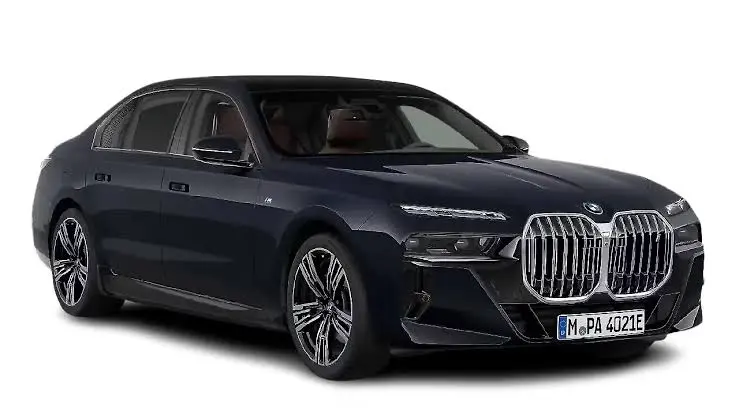
By deploying a dual-layer communication protocol combining ultra-wideband precision with near-field communication failsafes, the vehicle ensures that convenience never compromises absolute security.
Furthermore, the continuous background polling loop means the car is never lulled into a false sense of security once the initial entry handshake is completed.
Even after the driver steps inside, the internal UWB sensors constantly verify that the authorized device remains inside the cabin before allowing the start button to engage the high-voltage powertrain.
This multi-stage security verification completely neutralizes sophisticated relay attempts that try to trick the ignition system after the car has already been accessed, providing peace of mind for owners of high-end electric flagships.
- Engine: Dual electric motors (i7 xDrive60)
- Horsepower: 536 hp
- Torque: 549 lb-ft
- Length: 212.2 inches
- Width: 76.5 inches
- Battery: 101.7 kWh usable
- Range: ~318 miles (EPA)
4. Genesis GV60
The Genesis GV60 was among the first Hyundai Motor Group cars with a full digital key. It supports NFC card access plus UWB-based passive entry. The UWB layer verifies physical distance before unlocking or allowing ignition.
Genesis built this on the CCC’s Digital Key 3.0 framework. Fingerprint authentication adds a second layer beyond UWB ranging. Even a spoofed signal cannot start the car without biometric confirmation.
A physical NFC card serves as backup if the phone battery dies. As a forward-thinking electric crossover designed to showcase Hyundai Motor Group’s most innovative luxury tech, the vehicle integrates cutting-edge cybersecurity protocols directly into its everyday usability.
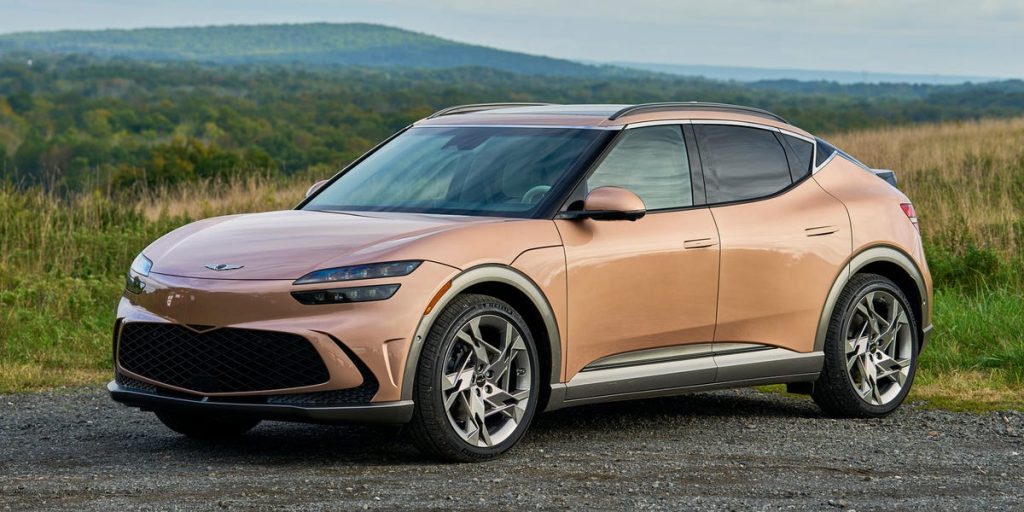
Traditional keyless entry exploits rely heavily on the assumption that a vehicle will blindly trust any amplified radio frequency it detects nearby. By implementing a sophisticated ultra-wideband architecture that strictly measures time-of-flight, the GV60 completely dismantles the core mechanism of wireless relay theft.
Beyond simple distance calculation, the vehicle takes security a step further by weaving biometric verification into the starting sequence, neutralizing scenarios where a thief manages to bypass the initial door-entry barrier.
Even if a sophisticated signal-relay rig somehow tricks the exterior UWB sensors into unlocking the door, the powertrain remains locked down until the internal biometric scanner confirms the driver’s unique fingerprint.
This multi-tiered defense strategy ensures that physical proximity alone is never enough to steal the car, establishing a new gold standard for electronic vehicle protection in the modern luxury segment.
- Engine: Dual electric motors (Performance AWD)
- Horsepower: 429 hp
- Torque: 446 lb-ft
- Length: 175.6 inches
- Width: 74.4 inches
- Battery: 77.4 kWh
- Range: ~235 miles (EPA)
Also Read: 4 Three-Row SUVs Worth the Money vs 4 Overpriced Ones
5. Genesis GV80
The GV80 brought UWB digital key tech to Genesis’s larger SUV lineup. It shares the GV60’s Digital Key 3.0 architecture. UWB anchors around the cabin triangulate the phone’s exact location.
This lets the SUV distinguish a phone inside from one just outside. Ranging checks continue even after the vehicle starts moving. If the phone suddenly leaves range, certain functions can be restricted.
Valets can receive temporary digital keys still governed by UWB distance-bounding. As luxury SUVs grow larger and more technologically integrated, securing their perimeter against electronic signal interception becomes paramount.
Traditional key fobs constantly broadcast low-frequency signals that criminal syndicates easily intercept and amplify using relay boxes, tricking vehicles into opening their doors.
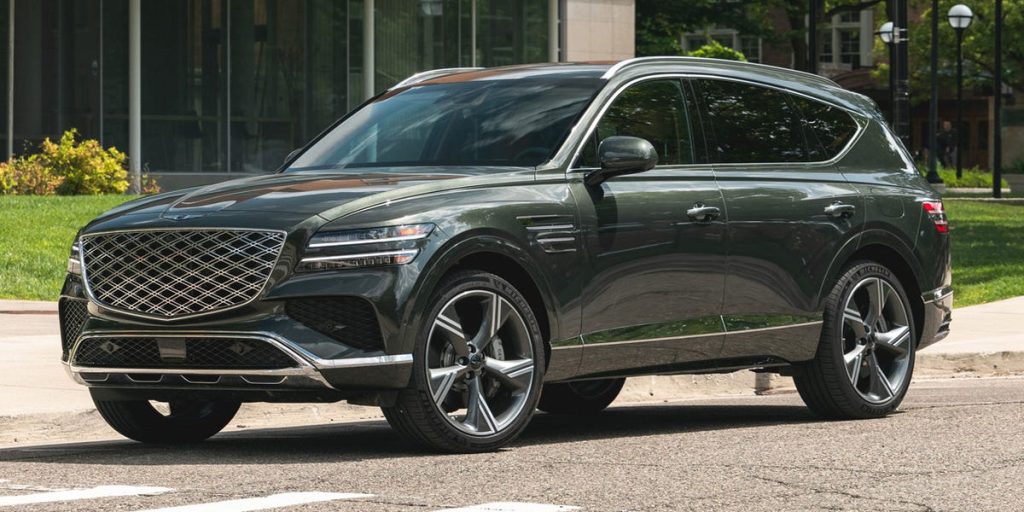
The Genesis GV80 bypasses this security loophole entirely by employing an intricate network of ultra-wideband transceivers that measure absolute spatial positioning rather than crude signal strength.
Because UWB relies on precise time-of-flight calculations, any attempt by a malicious relay device to artificially lengthen the travel time of the unlock request is instantly detected and invalidated by the vehicle’s onboard computer.
Furthermore, the system maintains a continuous spatial verification loop even after the engine has roared to life. If an authorized device moves away from the cabin while the vehicle is in motion, safety protocols ensure the car cannot be inadvertently left stranded or compromised, offering modern luxury owners impenetrable defense against relay-based automotive theft.
- Engine: 3.5L twin-turbo V6
- Horsepower: 375 hp
- Torque: 391 lb-ft
- Length: 194.7 inches
- Width: 77.8 inches
- Transmission: 8-speed automatic
- 0-60 mph: 5.5 seconds
6. Hyundai IONIQ 5
The IONIQ 5 introduced Hyundai’s Digital Key 2.0, combining NFC and UWB. UWB handles passive, hands-free unlocking with precise ranging. Hyundai cross-checks Bluetooth and UWB signals for consistency.
Any mismatch between the two triggers an automatic rejection. Simple Bluetooth-only relays cannot pass this dual check. Hyundai rolled this out starting with model year units featuring Digital Key 2.
Shared digital keys still require full UWB pairing from the recipient’s device. As a vanguard for Hyundai’s all-electric revolution, this retro-futuristic crossover showcases advanced software safeguards that render traditional wireless relay attacks completely obsolete.
Early keyless entry frameworks trusted single-channel radio waves blindly, allowing thieves to harvest and extend signals effortlessly from inside a nearby home. The IONIQ 5 counters this vulnerability by establishing a multi-layered cryptographic handshake that requires simultaneous verification across multiple wireless frequencies.
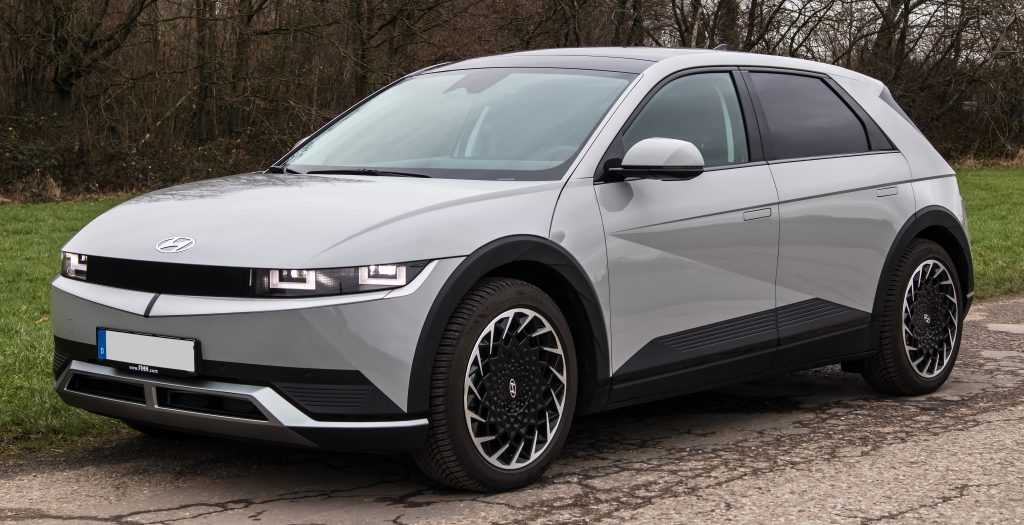
When a driver approaches the vehicle, the system doesn’t just listen for a stray ping; it actively cross-references high-precision ultra-wideband time-of-flight data with secondary Bluetooth Low Energy handshakes.
Because a standard relay box only amplifies specific radio bands without being able to legitimately replicate the nanosecond-accurate speed of light metrics required by UWB chips, the spoofed transmission fails instantly.
This dual-verification protocol guarantees that convenience never comes at the cost of security, ensuring that everyday electric vehicle owners can walk away from their cars with total peace of mind.
- Engine: Dual electric motors (AWD Limited)
- Horsepower: 320 hp
- Torque: 446 lb-ft
- Length: 182.5 inches
- Width: 74.4 inches
- Battery: 77.4 kWh
- Range: ~269 miles (EPA, RWD)
7. Hyundai IONIQ 6
The IONIQ 6 sedan carries the same Digital Key 2.0 UWB architecture as its SUV sibling. Its aerodynamic body integrates UWB antennas without disrupting the design.
Hyundai tuned ranging sensitivity to reduce false unlocks in dense parking areas. That same tuning improves resistance to attackers at moderate distances.
Digital keys can be stored in Apple or Google wallets. Keys stored this way live inside the phone’s encrypted secure element. Active cryptographic handshakes must complete before any distance measurement counts.
Bridging the gap between sleek aerodynamic design and uncompromising vehicle security required a sophisticated engineering approach. Traditional keyless entry systems are inherently flawed because they measure signal strength rather than physical distance, making them easy targets for low-cost radio frequency amplifiers.
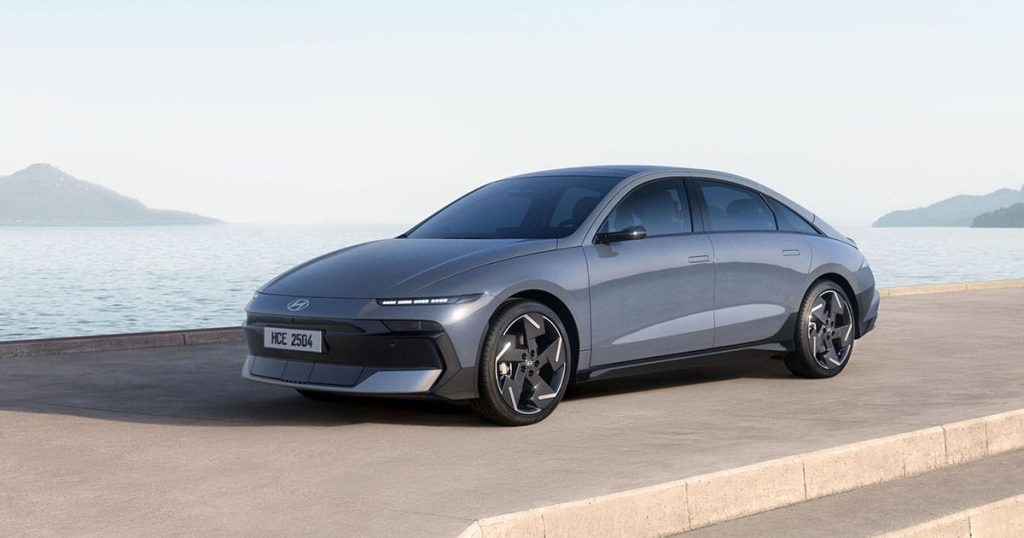
The IONIQ 6 eliminates this vulnerability by integrating ultra-wideband technology directly into its sleek exterior styling, ensuring that aesthetic appeal never compromises safety.
By measuring the exact time-of-flight of radio waves down to the nanosecond, the vehicle’s computer can instantly discern whether a digital key is standing right next to the door handle or being artificially relayed by thieves standing yards away.
Furthermore, housing the digital key within a smartphone’s hardware-encrypted secure element adds another layer of ironclad protection against digital cloning.
This combination of hardware-level encryption and precise spatial ranging ensures that sophisticated wireless relay attacks bounce off the vehicle completely empty-handed.
- Engine: Dual electric motors (AWD Limited)
- Horsepower: 320 hp
- Torque: 446 lb-ft
- Length: 191.1 inches
- Width: 74.0 inches
- Battery: 77.4 kWh
- Range: ~270 miles (EPA, RWD)
8. Kia EV9
The Kia EV9 brought UWB digital key tech to Kia’s three-row electric SUV. It shares Hyundai Motor Group’s Digital Key 2.0 backbone. Multiple UWB modules are placed around the vehicle body.
This multi-point setup improves triangulation accuracy over single antennas. Every ranging attempt gets logged for anomaly detection. Unusual latency patterns can trigger automatic key session termination.
Fingerprint start adds biometric verification on top of UWB access. Securing a large family-oriented flagship SUV against modern tech-savvy car thieves demands a defensive perimeter that goes far beyond standard key fobs.
Older keyless entry systems left family vehicles vulnerable to simple relay box schemes where criminals captured signals from keys left inside a house and forwarded them straight to the car in the driveway.
The Kia EV9 neutralizes this threat entirely by blanketing its massive body with a network of precision ultra-wideband transceivers. This multi-point sensor array allows the vehicle to triangulate the exact spatial coordinates of the driver’s smartphone in real time, completely ignoring any amplified or delayed signals coming from unauthorized relay hardware.
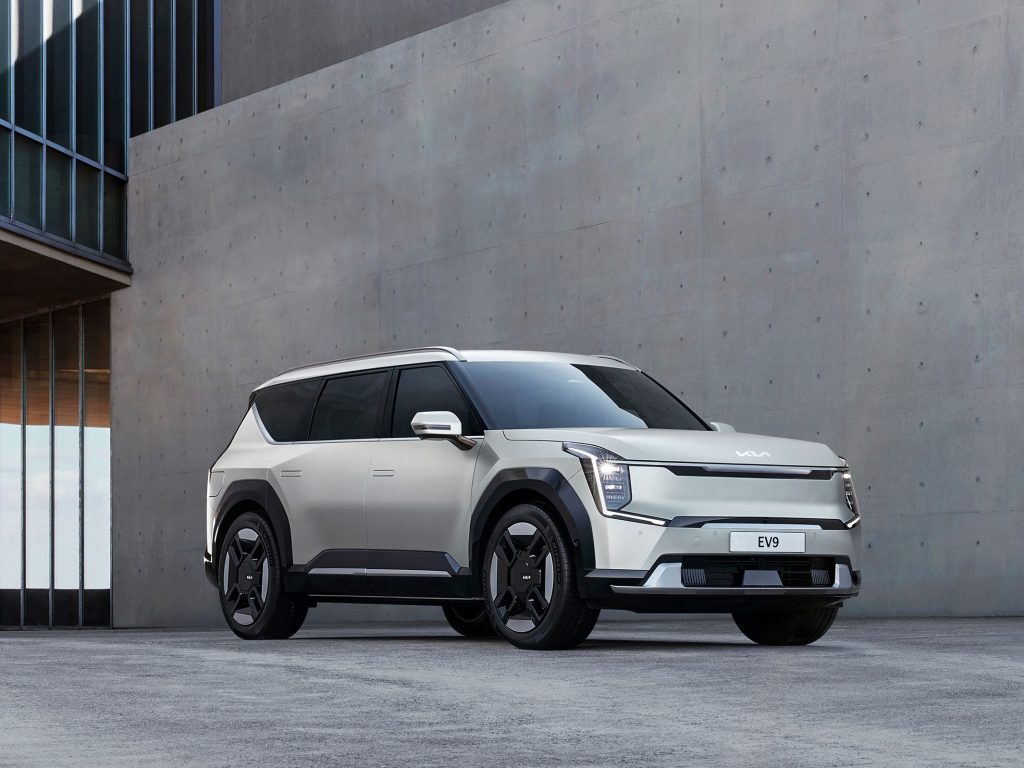
To push security even further, the vehicle incorporates an integrated biometric fingerprint scanner on the dashboard, requiring physical physical confirmation before the electric powertrain can be engaged.
This multi-layered defense guarantees that even if a criminal somehow bypasses the exterior proximity locks, the vehicle remains safely immobilized without the driver’s unique biometric signature.
- Engine: Dual electric motors (GT-Line AWD)
- Horsepower: 379 hp
- Torque: 516 lb-ft
- Length: 197.4 inches
- Width: 77.9 inches
- Battery: 99.8 kWh
- Range: ~270 miles (EPA)
9. Audi Q6 e-tron
The Audi Q6 e-tron uses NXP’s Trimension UWB chipset for handsfree secure access. A single UWB device precisely locates the driver relative to doors and tailgate.
The system responds differently depending on which side of the car is approached. This directional awareness is a key relay-attack countermeasure.
Ranging happens continuously, not just at the moment of unlock. Sustained relay attempts fail quickly under this constant check. Rotating cryptographic keys prevent attackers from reusing captured data.
Integrating state-of-the-art semiconductor technology into a luxury electric vehicle platform allows manufacturers to completely rethink how vehicle perimeters are defended against organized electronic theft.
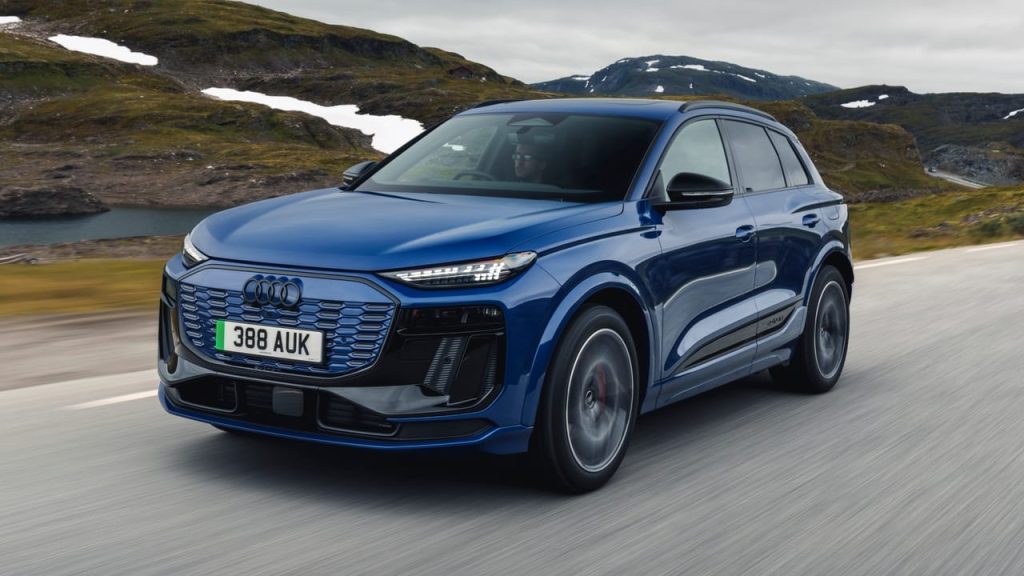
Traditional keyless entry systems are inherently vulnerable because they rely on signal strength measurement, which can easily be manipulated by cheap radio frequency amplifiers to trick a car into thinking a key is right next to the door handle.
The Audi Q6 e-tron replaces this outdated vulnerability with advanced ultra-wideband chipsets that calculate exact spatial coordinates in real time.
By evaluating the precise time-of-flight of radio impulses exchanged between the vehicle and the user’s digital device, the security system identifies even a microsecond of artificial delay introduced by a relay box.
This absolute time-bounding constraint ensures that any attempt to stretch or forward a wireless signal results in an immediate authentication failure.
Combined with dynamic rolling cryptographic keys, the vehicle ensures that modern tech-savvy thieves cannot capture, store, or replay access credentials, establishing an impenetrable digital shield around the luxury crossover.
- Engine: Dual electric motors (SQ6 e-tron)
- Horsepower: 509 hp (with launch control)
- Torque: 590 lb-ft
- Length: 191.5 inches
- Width: 76.1 inches
- Battery: 94.9 kWh usable
- Range: ~291 miles (EPA, base Q6)
10. Mercedes-Benz EQS
The Mercedes-Benz EQS integrates UWB into its smartphone app digital key system. It arrived with the 2024 model year update. UWB ranging works alongside the car’s existing Keyless-Go infrastructure.
Distance-bounding cryptography was added specifically to close relay loopholes. The system detects abnormal signal timing consistent with relay equipment. When detected, the vehicle simply refuses to unlock or start.
Temporary valet keys inherit the same UWB verification as the owner’s key. As an avant-garde flagship electric vehicle designed to push the boundaries of automotive luxury, safeguarding high-end digital features against sophisticated cyber threats is a top priority.
Older passive entry architectures left luxury sedans susceptible to wireless interception, where malicious actors could silently harvest key fob signatures from inside a home and beam them straight to a vehicle parked outside.
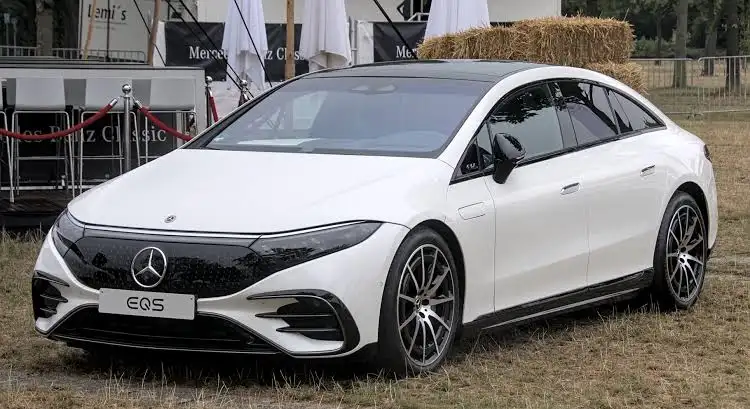
Mercedes-Benz neutralized this vector by embedding ultra-wideband proximity verification directly into its mobile app ecosystem. The incorporation of distance-bounding cryptography means that the vehicle doesn’t just listen for a valid authorization code; it actively measures the physical speed at which the radio waves travel back and forth.
If a criminal attempts to use a relay rig to bridge the physical gap between a distant phone and the car, the transmission latency breaches the laws of physics for that given distance, triggering an instant security lockdown.
This robust engineering approach ensures that the convenience of a digital smartphone key never comes at the expense of vehicle security, providing absolute protection for high-value owners.
- Engine: Dual electric motors (EQS 580 4MATIC)
- Horsepower: 536 hp
- Torque: 633 lb-ft
- Length: 205.4 inches
- Width: 76.8 inches
- Battery: 107.8 kWh usable
- Range: ~285 miles (EPA)
11. Volvo EX90
The Volvo EX90 is one of the newest entries with UWB-based secure access. Volvo partnered with Google and chip suppliers to integrate UWB into Android digital keys.
The system measures precise ranging before granting entry or ignition access. Volvo’s safety-first philosophy extends into its digital security design. UWB ties into Volvo’s over-the-air update system.
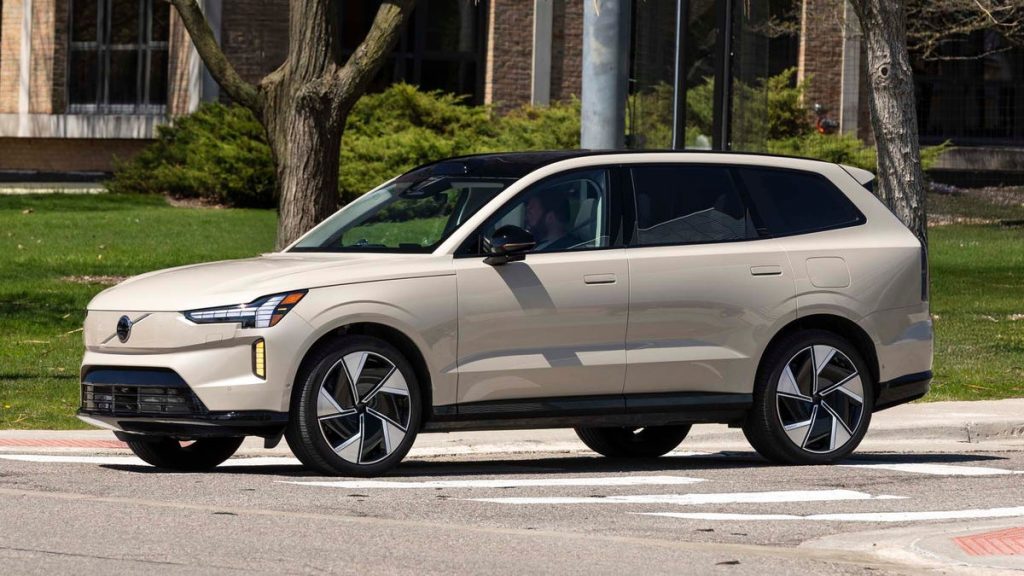
This lets the company patch ranging vulnerabilities remotely as new threats emerge. Owners can monitor key activity logs directly through the Volvo app.
- Engine: Dual electric motors (Twin Performance)
- Horsepower: 510 hp
- Torque: 671 lb-ft
- Length: 198.4 inches
- Width: 77.3 inches
- Battery: 111 kWh usable
- Range: ~300 miles (EPA)
