
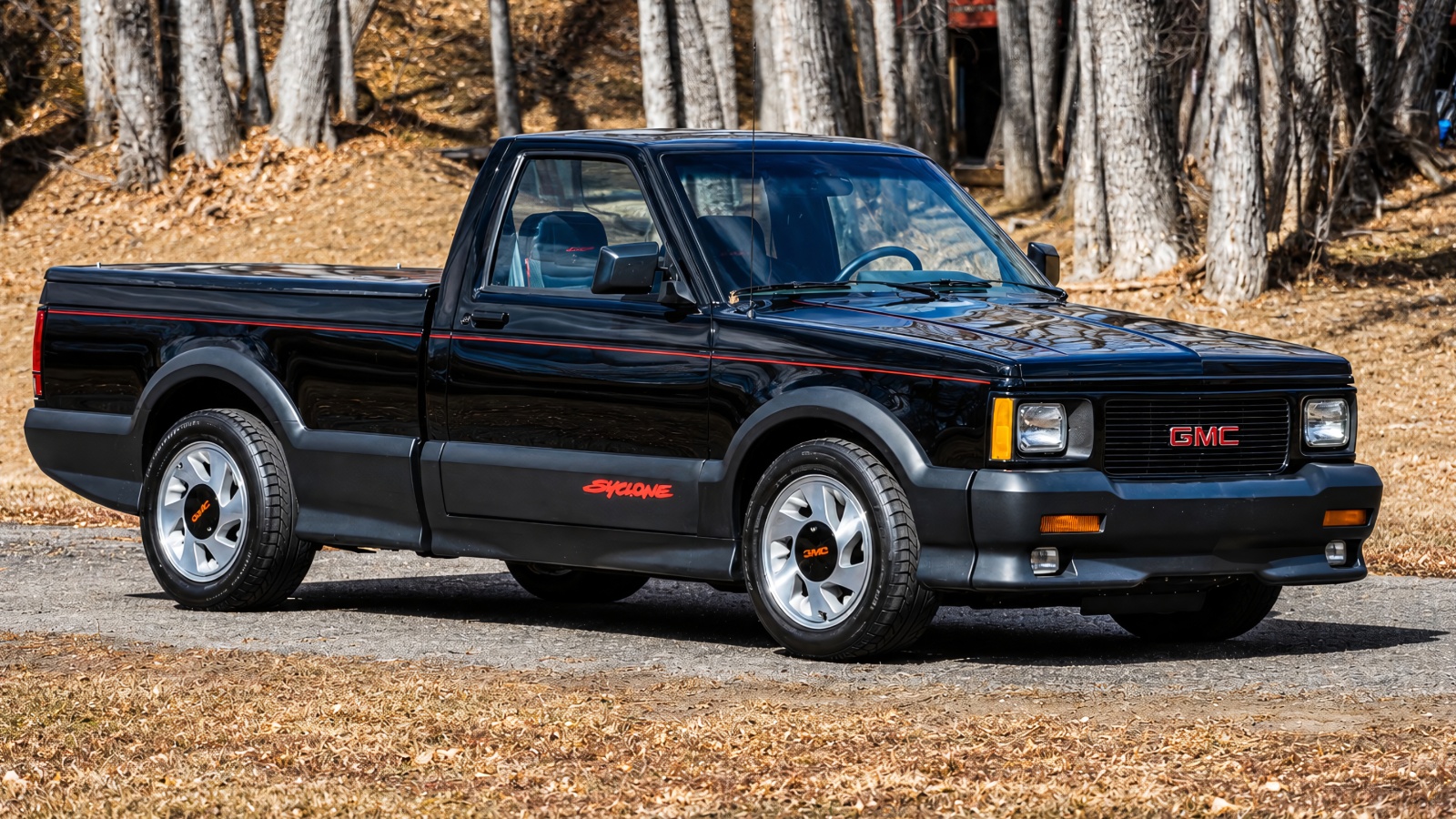
The GMC Syclone remains a remarkable chapter in American performance truck history. Introduced for 1991, this compact pickup combined a turbocharged V6, all-wheel drive, aggressive suspension tuning, and a lightweight body to deliver acceleration that embarrassed far more expensive sports cars.
Its unusual formula made the Syclone a sensation among performance enthusiasts and helped change perceptions of what a pickup could accomplish. With just 2,995 examples produced, the truck became rare almost immediately.
More than three decades later, its turbocharged powertrain, distinctive styling, and surprising speed continue to define its heritage and keep the Syclone firmly established among collectible performance vehicles.
How the GMC Syclone Changed the Meaning of a Performance Truck
The GMC Syclone arrived at a time when performance vehicles followed fairly predictable formulas. Sports cars were low, sleek, and built around rear-wheel drive. Muscle cars relied heavily on large displacement engines, while pickup trucks were primarily associated with hauling, towing, and practical transportation.
The Syclone ignored that traditional separation. Based on the GMC Sonoma compact pickup, it was transformed into a specialized performance machine with a turbocharged 4.3-liter V6 and all-wheel drive.
That combination gave the truck a character that was difficult to compare with anything else in the showroom. It looked like a small pickup, yet its acceleration belonged in conversations about sports cars.
The heart of the Syclone was its turbocharged 4.3-liter V6. The engine produced approximately 280 horsepower and 350 lb-ft of torque, figures that were serious for a compact truck in the early 1990s. GMC used specialized engine hardware to handle the added boost, including lower-compression pistons, revised intake and exhaust components, multipoint fuel injection, and a large throttle body derived from Corvette hardware.
A Mitsubishi TD06-17C turbocharger supplied the boost, while a Garrett water-to-air intercooler helped control intake temperatures. The result was an engine designed to produce strong torque and rapid acceleration rather than simply deliver a high peak horsepower figure.
The drivetrain was equally important to the Syclone’s performance. Power went through a four-speed automatic transmission and an all-wheel-drive system that sent torque to all four wheels. This gave the truck a major advantage when launching from a standstill.
Rather than struggling to put substantial torque through a pair of rear tires, the Syclone could use its four-wheel traction to accelerate hard with much less wheelspin. That characteristic helped explain why its straight-line performance was so shocking. The truck could reach 60 mph in around 5.3 seconds in period testing, an extraordinary result for a pickup at the start of the 1990s.
The chassis was also modified to match the engine. The Syclone received a lowered sport-tuned suspension, performance-oriented tires, distinctive 16-inch wheels, and factory aerodynamic additions. Four-wheel anti-lock brakes added an important safety feature to a truck capable of sports-car levels of acceleration.
Period testing even showed the Syclone stopping from 70 mph in less distance than a Ferrari 348ts, although the GMC used front disc brakes and rear drum brakes rather than an exotic high-performance braking setup.
Its engineering was not about copying a traditional sports car. It was about taking familiar truck components and adapting them into a machine built around speed.
The Ferrari 348 Connection That Made the Syclone Famous
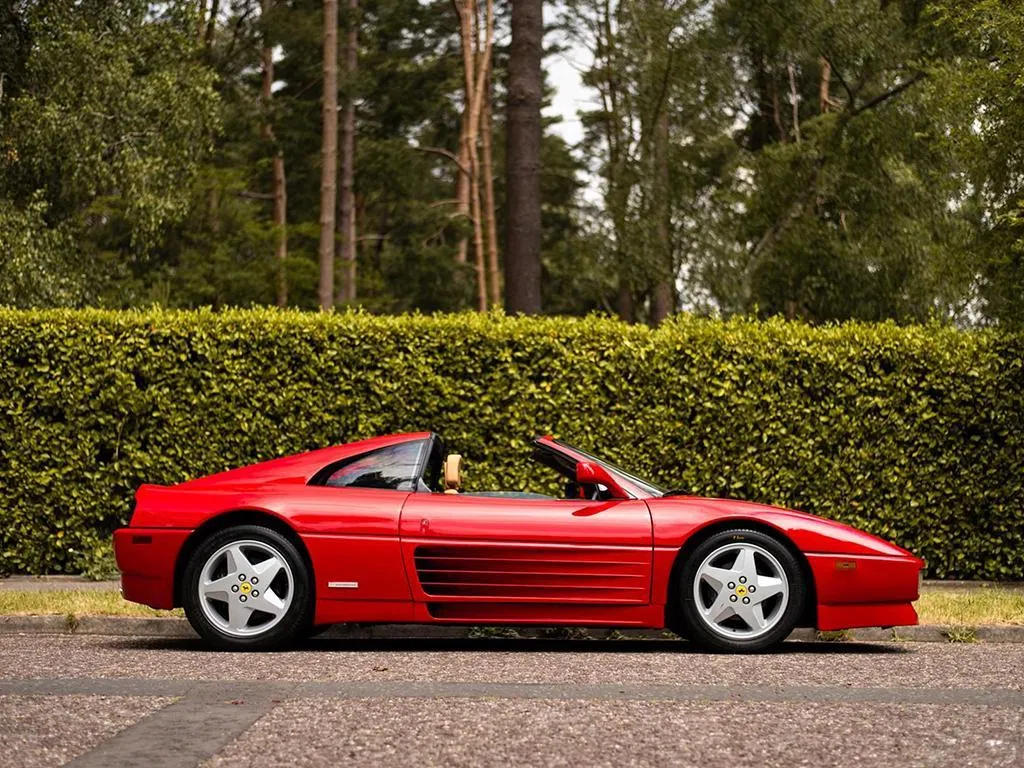
The Syclone’s reputation grew rapidly after automotive magazines began testing it against established performance cars. The most famous comparison involved a Ferrari 348ts, a machine that represented an entirely different approach to speed.
The Ferrari was a mid-engine Italian sports car with a much higher price and an exotic image. The GMC was a compact American pickup. On paper, the matchup sounded almost absurd. That was precisely what made the result so memorable for enthusiasts.
In a 1991 Car and Driver comparison, the Syclone competed against the Ferrari in quarter-mile testing. The GMC won the drag races, creating a headline-worthy moment in automotive history.
Period testing placed the Syclone in the low 14-second range for the quarter mile, while GMC had claimed a 13.7-second capability. The Ferrari had the prestige, styling, and traditional sports-car credentials, but the GMC had something extremely useful in a drag race: immediate traction and a strong wave of turbocharged torque.
The Ferrari comparison mattered because it changed the conversation surrounding the Syclone. It was no longer simply a fast truck that happened to have a turbocharger. It became a cultural symbol of unexpected performance.
Seeing a small black GMC challenge an Italian sports car made the truck memorable even to people who had never driven one.
The story also captured the attitude of early 1990s performance culture, when American manufacturers were experimenting with turbocharging, electronic engine management, all-wheel drive, and specialized factory performance packages.
The Syclone’s acceleration was particularly impressive because it achieved its results with only six cylinders. A 4.3-liter V6 might sound modest by modern performance standards, but the combination of forced induction and substantial torque made the engine highly effective.
Why the Turbocharged V6 Was So Important
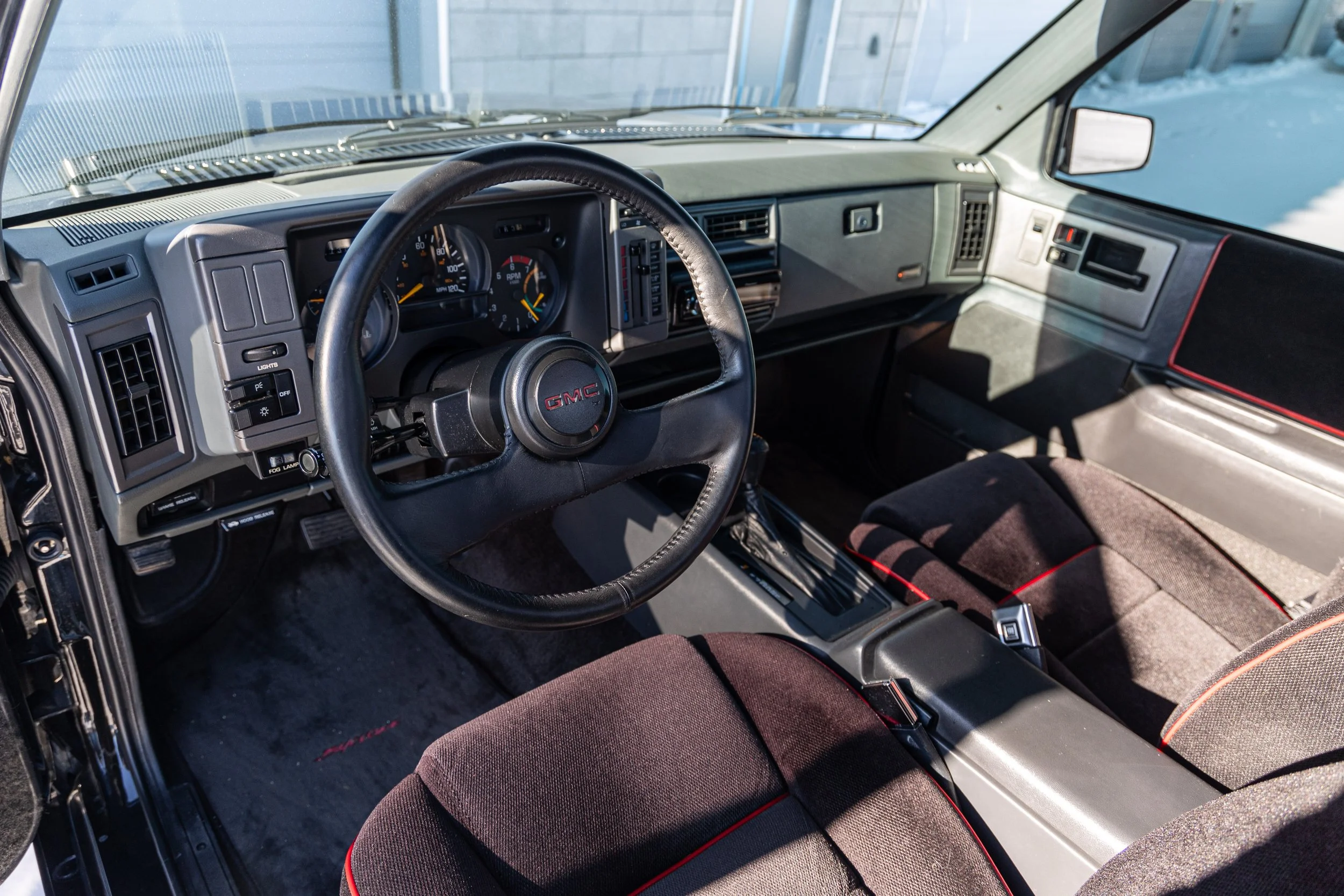
The turbocharged V6 deserves special attention because it gave the Syclone its unique identity. The engine was not simply a larger version of a naturally aspirated truck motor with a turbocharger attached. GMC and its engineering partners made a range of changes to support forced induction and produce the desired performance.
The lower-compression pistons, revised induction system, special manifolds, multipoint fuel injection, and intercooling system all worked together. The engine produced 280 horsepower at 4,400 rpm and 350 lb-ft of torque at 3,600 rpm according to period specifications.
The torque figure was particularly significant. Torque determines how strongly an engine can push a vehicle through acceleration, and the Syclone had plenty available for its compact size.
Turbocharging allowed the relatively small V6 to generate output that would have required considerably more displacement from a naturally aspirated engine.
The forced-induction system also suited the truck’s intended character. Drivers did not need to keep the engine at extreme rpm to experience strong acceleration. Once boost arrived, the Syclone could move with surprising urgency.
The water-to-air intercooler was another clever part of the package. Turbochargers compress incoming air, which increases its temperature. Hot intake air can reduce performance and make controlled combustion more difficult. Cooling the compressed air helps the engine maintain a more favorable intake charge.
The Syclone’s intercooling arrangement supported its ability to produce strong and repeatable power. This technology was not unusual in high-performance applications, but seeing it combined with a compact GMC pickup made the entire package unusual for its time.
The all-wheel-drive system gave the V6 an even greater advantage. Producing power is only half of the acceleration equation. The tires must transfer that force to the road.
The Syclone’s drivetrain distributed power across four driven wheels, reducing the likelihood that a hard launch would simply overwhelm the rear tires.
This was particularly valuable on street surfaces where grip could vary. The result was a pickup that could turn its turbocharged torque into forward motion with remarkable efficiency.
The Syclone’s Limited Production and Lasting Heritage
The Syclone was never intended to become a mass-market pickup. Production was extremely limited, with 2,995 examples built for the 1991 model year. A few additional trucks were reportedly assembled for the otherwise nonexistent 1992 production period, bringing the broader production count to 2,998 depending on how those examples are counted.
The limited numbers helped make the Syclone unusual from the beginning. Buyers were not purchasing a common trim package that could be found at every GMC dealership. They were buying a specialized performance vehicle produced in very small quantities.
The truck’s rarity has become an important part of its collector appeal. Its significance comes from more than production numbers, though. The Syclone represented a brief period when manufacturers were willing to create unusual performance machines that did not fit conventional categories.
A turbocharged pickup with all-wheel drive and sports-car acceleration was difficult to justify through ordinary market logic. That made the vehicle distinctive when new and historically interesting as the years passed.
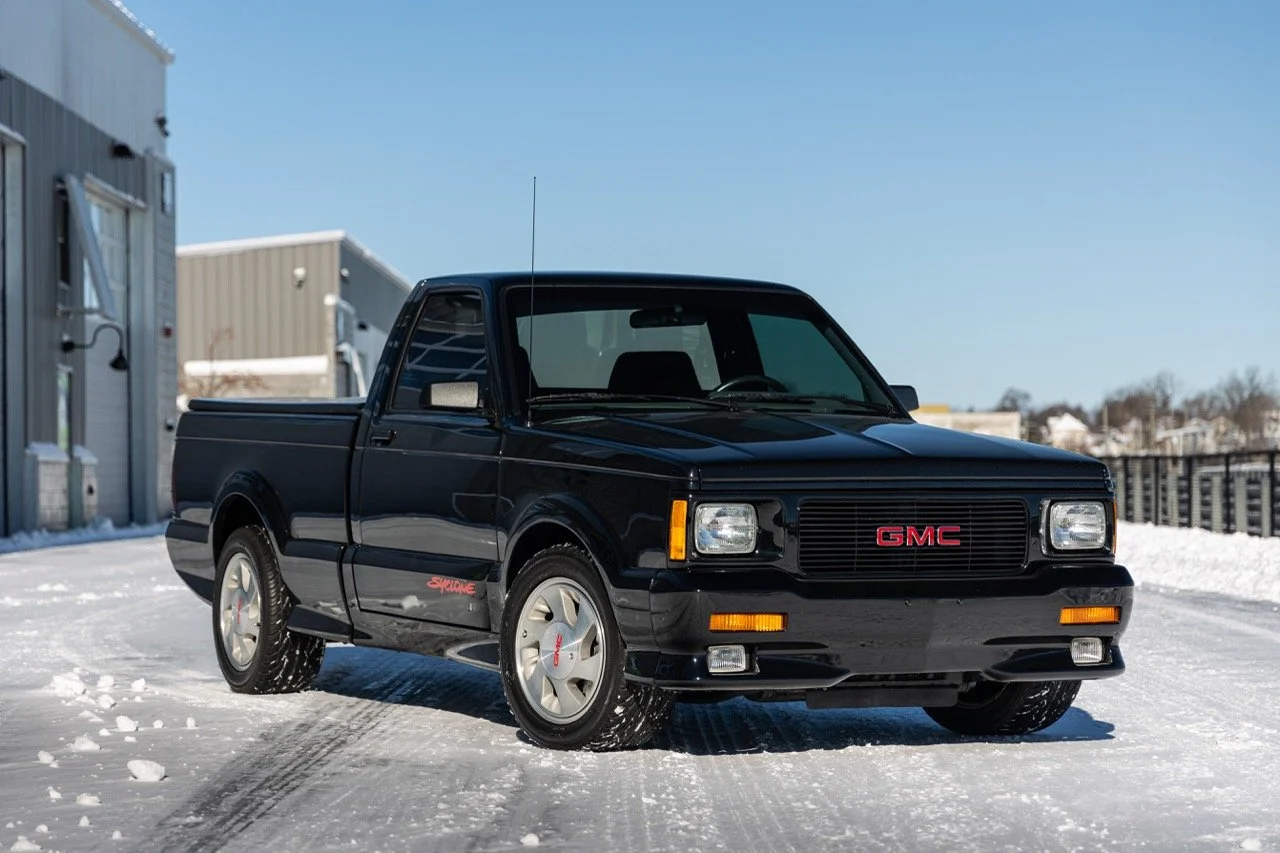
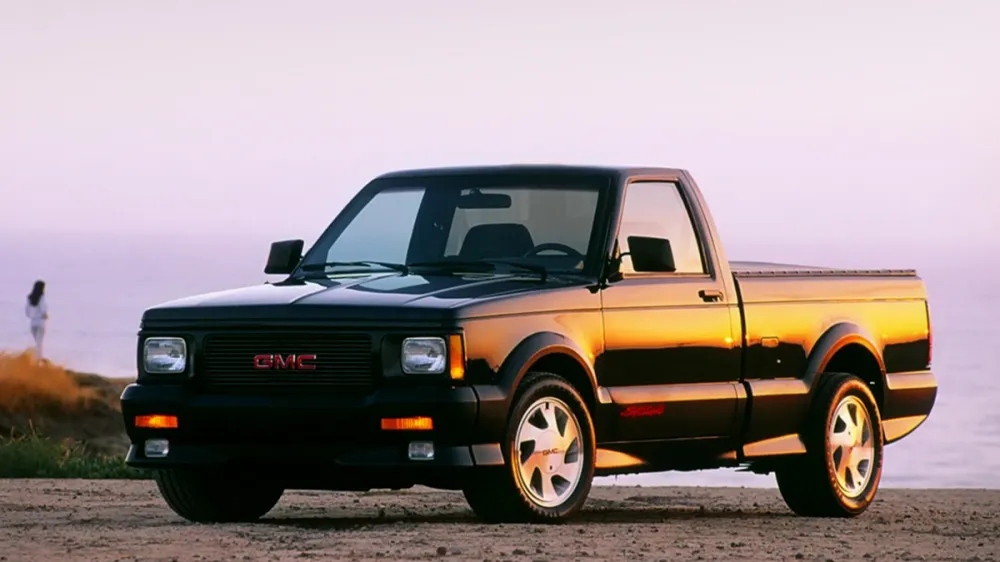
Its appearance also helped preserve its identity. The 1991 Syclone was offered in black, giving it a restrained but aggressive appearance. The lowered suspension, body additions, wide tires, and compact proportions created a visual style that differed from conventional work trucks.
Also read: 5 Cars With the Highest Theft Rates in New Mexico, 5 With the Lowest
