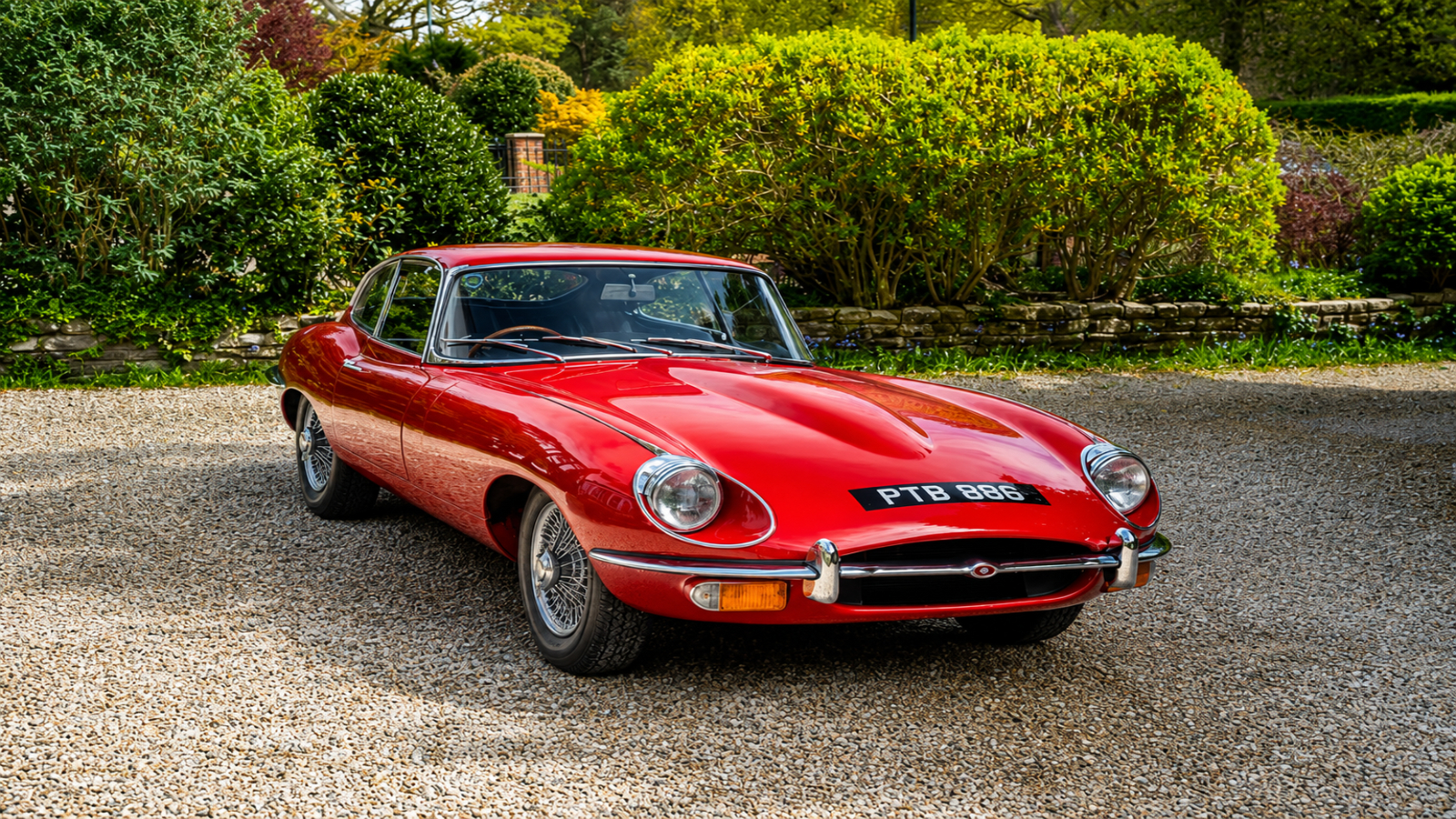
The Jaguar E-Type arrived at the 1961 Geneva Motor Show looking less like an ordinary British sports car and more like something that had escaped from a racing paddock. Long, low and almost impossibly smooth, it immediately became one of the defining shapes of the decade. Then came the line that helped turn the car into legend: Enzo Ferrari supposedly called the E-Type the “most beautiful car in the world.”
There is an important catch, though. The compliment is famous, but the original source is harder to pin down than the quote’s popularity suggests. That makes the story more interesting, not less. Whether Ferrari said those exact words or not, the E-Type had plenty of substance behind its beauty, with serious performance and engineering underneath Malcolm Sayer’s unforgettable bodywork.
Did Enzo Ferrari Really Call the Jaguar E-Type the Most Beautiful Car?
This is where the story needs a little honesty. Jaguar itself has repeated the famous claim, stating in its historical material that Enzo Ferrari admitted the E-Type was “the most beautiful car in the world.” That makes the quotation an established part of Jaguar’s own E-Type history.
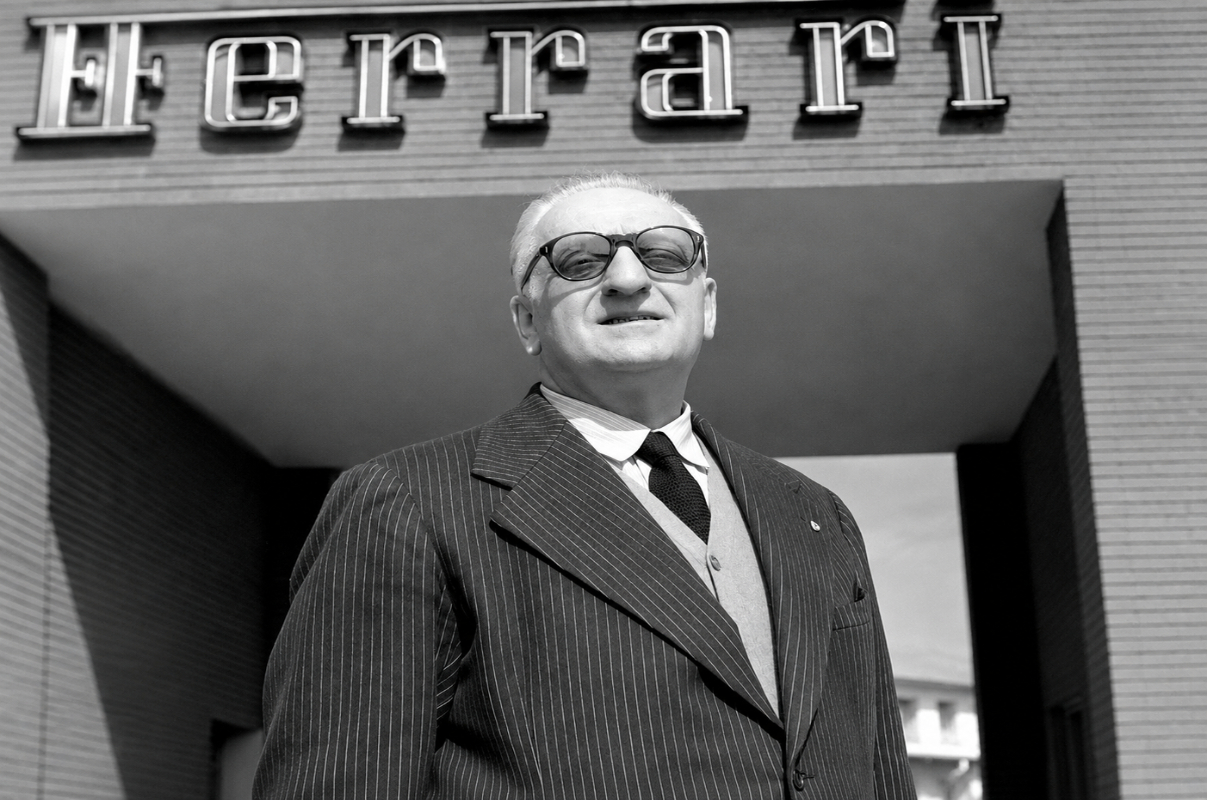
But there is no widely accepted recording, contemporary interview, or public speech in which Ferrari can be heard making those exact words. RM Sotheby’s examined the story and noted that the evidence is secondhand, with one important attribution appearing in Gino Rancati’s 1988 biography of Ferrari.
So the safest way to put it is this: Ferrari is widely credited with the compliment, but the precise wording and circumstances cannot be independently confirmed from a primary source. That distinction matters. The E-Type does not need a manufactured quotation to establish its credentials.
ALSO READ: Jaguar Land Rover to Fix Recall With Protective Lubricant Gel Instead of New Connector
Why Did the Jaguar E-Type Impress Enzo Ferrari?
Look at an early E-Type from the side, and it becomes obvious why the car caused such a stir. The bonnet seems to stretch forever, while the cabin sits unusually far back. The front fenders flow into the nose without the visual clutter that appeared on many contemporary sports cars. Even the fixed-head coupe’s roof seems to taper naturally into the rear bodywork.
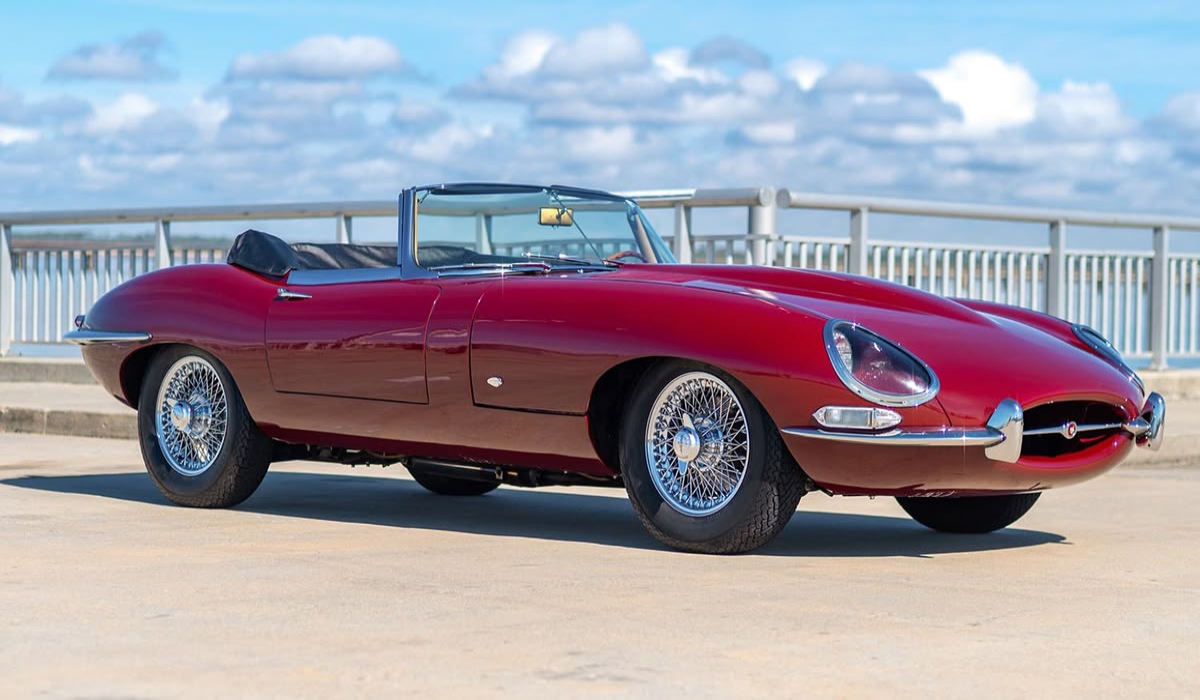
Much of that shape came from Malcolm Sayer, an aeronautical engineer who applied aerodynamic thinking to Jaguar’s road and racing cars. The E-Type’s visual relationship with the D-Type was no accident either. Jaguar’s Heritage Trust notes that the E-Type was developed from the company’s successful D-Type racer, which won Le Mans three times between 1955 and 1957.
That gave the E-Type something many beautiful cars lack: a believable mechanical reason for its shape. The long nose was not simply there to look dramatic. Underneath sat Jaguar’s XK straight-six. The car’s low stance, aerodynamic body and independent suspension helped create a machine that looked fast even when parked.
And that was probably the magic of the E-Type. It didn’t separate beauty and performance. The two seemed to be designed together.
What Made the 1961 Jaguar E-Type So Special?
The first E-Types used Jaguar’s 3.8-liter version of the XK six-cylinder engine. It was a proven powerplant with roots in Jaguar’s successful racing program, but in E-Type form it gave the car the numbers needed to back up its appearance.
Key 1961 Jaguar E-Type specifications:
- Engine: 3.8-liter inline-six
- Power: 265 hp
- Torque: 260 lb-ft
- Transmission: 4-speed manual
- Drive: Rear-wheel drive
- Top speed: Around 150 mph claimed
- 0–60 mph: About 7.1 seconds in Motor testing
- Wheelbase: 96.0 inches
- Length: 175.5 inches
- Width: 65.25 inches
- Curb weight: Around 2,700–2,800 lbs, depending on specification
- Body styles at launch: Roadster and fixed-head coupe
The figures varied slightly between cars and tests. Motor recorded 149.1 mph and 0–60 mph in 7.1 seconds with an early production roadster, while Jaguar’s own historical material described the car as capable of approximately 150 mph. Those weren’t merely impressive numbers for a pretty sports car. They were serious numbers for the early 1960s.
ALSO READ: 10 Best Jaguar Cars Ever Made & Ranked
How Fast Was the Jaguar E-Type in 1961?
The 150-mph claim is one of the most important parts of the E-Type story. Jaguar wasn’t introducing a slow grand tourer wearing a dramatic body. The company was claiming performance that put the E-Type in rare company. Contemporary testing largely backed up the idea, although the exact result depended on the car, tires, gearing and test conditions.
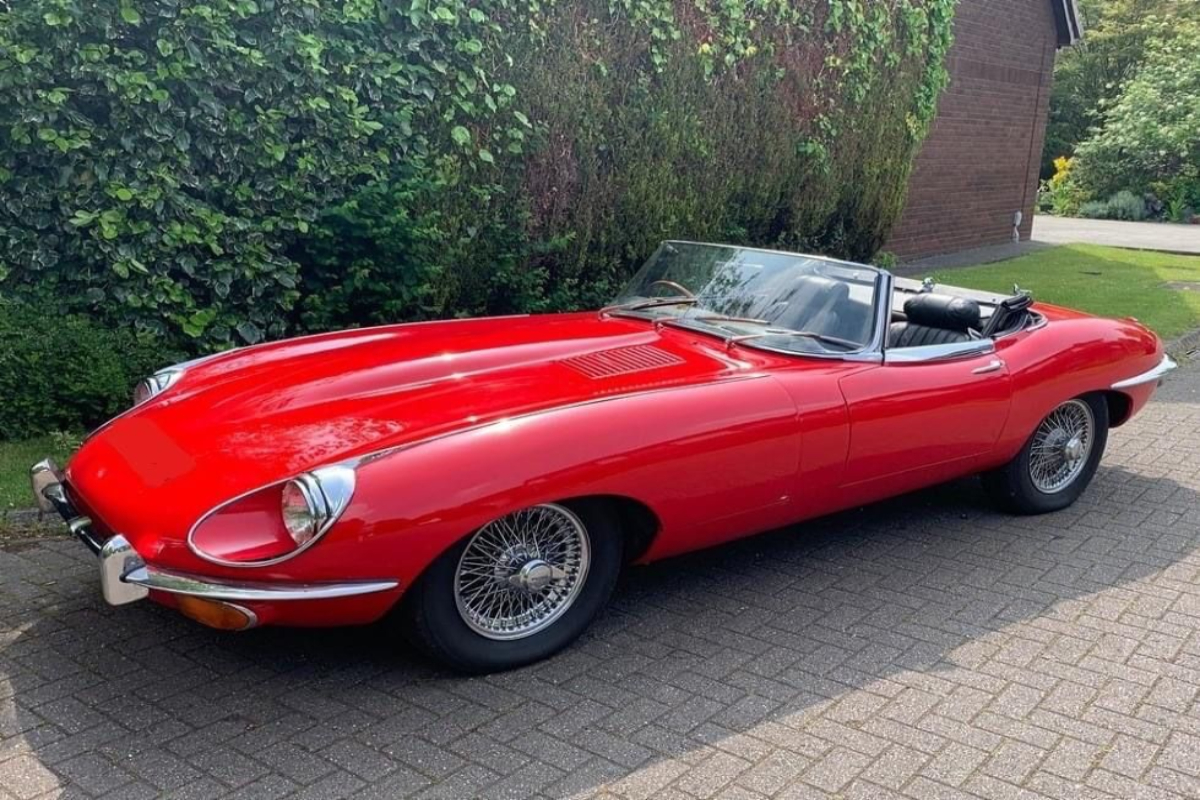
Motor Sport tested an E-Type in 1961 and recorded 0–60 mph in 7.4 seconds and 0–100 mph in 16.3 seconds. Its testers even saw the speedometer and timing equipment suggest speeds around 155 mph under their test conditions.
Other period testing produced different figures. Road & Track, for example, recorded 0–60 mph in 7.4 seconds with a standard 3.31 rear axle ratio. That’s why quoting one acceleration figure as if every E-Type performed identically misses the point. The remarkable thing was that a relatively affordable British sports car could genuinely run close to 150 mph.
How Much Did the Jaguar E-Type Cost When New?
The E-Type’s pricing was another major factor behind its immediate appeal. Jaguar’s historical records list the 1961 roadster at about $5,880 including tax, while the fixed-head coupe was priced at roughly $6,160.
Other Jaguar records put the launch price at approximately $6,330 when purchase tax and optional wire wheels were included. The difference reflects variations in how Jaguar documented the car’s original pricing and equipment.
Either way, the basic story remains the same: the E-Type offered extraordinary performance for the money. It wasn’t priced like an ultra-exclusive Italian exotic. That mattered enormously. A driver could walk into a Jaguar showroom and buy something with a genuine 150-mph capability and a body that looked like it belonged outside an Italian coachbuilder’s workshop.
The E-Type was exotic without requiring an exotic-car budget. That combination was almost impossible to resist.
ALSO READ: Jaguar Canceled Four New Cars Before Committing to an All-Electric Future
What Did Ferrari Think of the E-Type Compared With Its Own Cars?
This is where the Ferrari connection becomes particularly entertaining. Enzo Ferrari was not exactly short of beautiful cars. His company was producing machines such as the 250 GT series, cars that would eventually become some of the most coveted Ferraris ever built. For a man whose entire reputation was tied to performance and automotive design, praising a rival’s sports car would have carried plenty of weight.
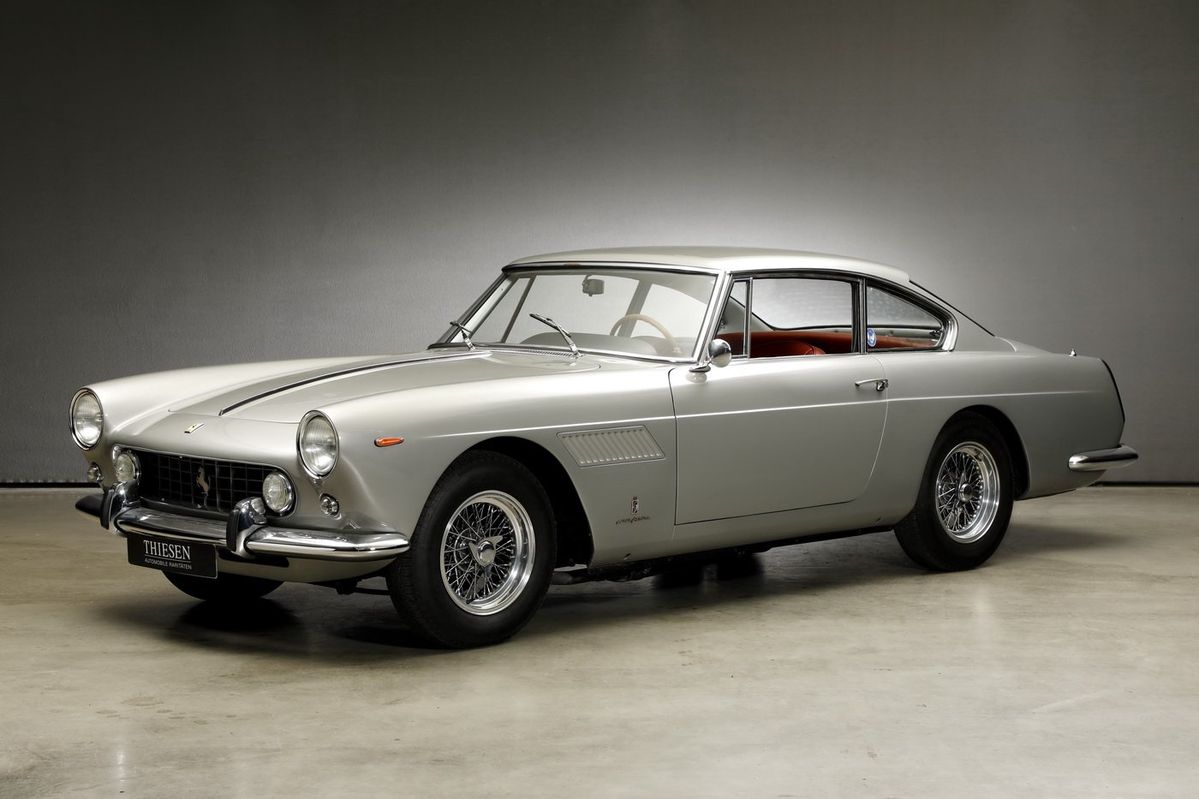
But the E-Type wasn’t really trying to be a Ferrari copy. Ferrari’s road cars generally had a distinctly Italian character, often emphasizing compact proportions and elegant coachwork. The Jaguar took a different route. Its proportions were more stretched and dramatic, with the nose dominating the visual profile.
Underneath, however, both philosophies valued speed. The E-Type’s four-wheel disc brakes, independent suspension and aerodynamic body gave it technology that was unusually advanced for its price. Jaguar Heritage specifically highlights the car’s monocoque construction with a front subframe and its development from the D-Type racing program.
So Ferrari’s alleged admiration makes sense even if the exact quote remains uncertain.
Why Is the E-Type Still Considered One of the Most Beautiful Cars?
Because its design has aged remarkably well, a lot of 1960s cars now look firmly trapped in their era. The E-Type doesn’t. Its curves still look deliberate rather than nostalgic, and there is very little unnecessary decoration.
The front end is especially important. The covered headlights, narrow grille opening and long hood give the car a face without making it look busy. Move toward the rear and the shape tightens around the cabin and rear wheels. It is also a rare example of a car where the engineering story strengthens the styling story.
Sayer’s aerodynamic background and Jaguar’s racing experience helped create a body that wasn’t merely attractive from one angle. The E-Type looks convincing from almost every direction. That is a big part of why Ferrari’s supposed compliment has survived.
Did the E-Type Change Jaguar’s Reputation?
Absolutely! Jaguar already had a strong performance reputation before 1961, particularly because of its Le Mans success. But the E-Type brought that racing credibility into a road car that ordinary enthusiasts could actually buy.
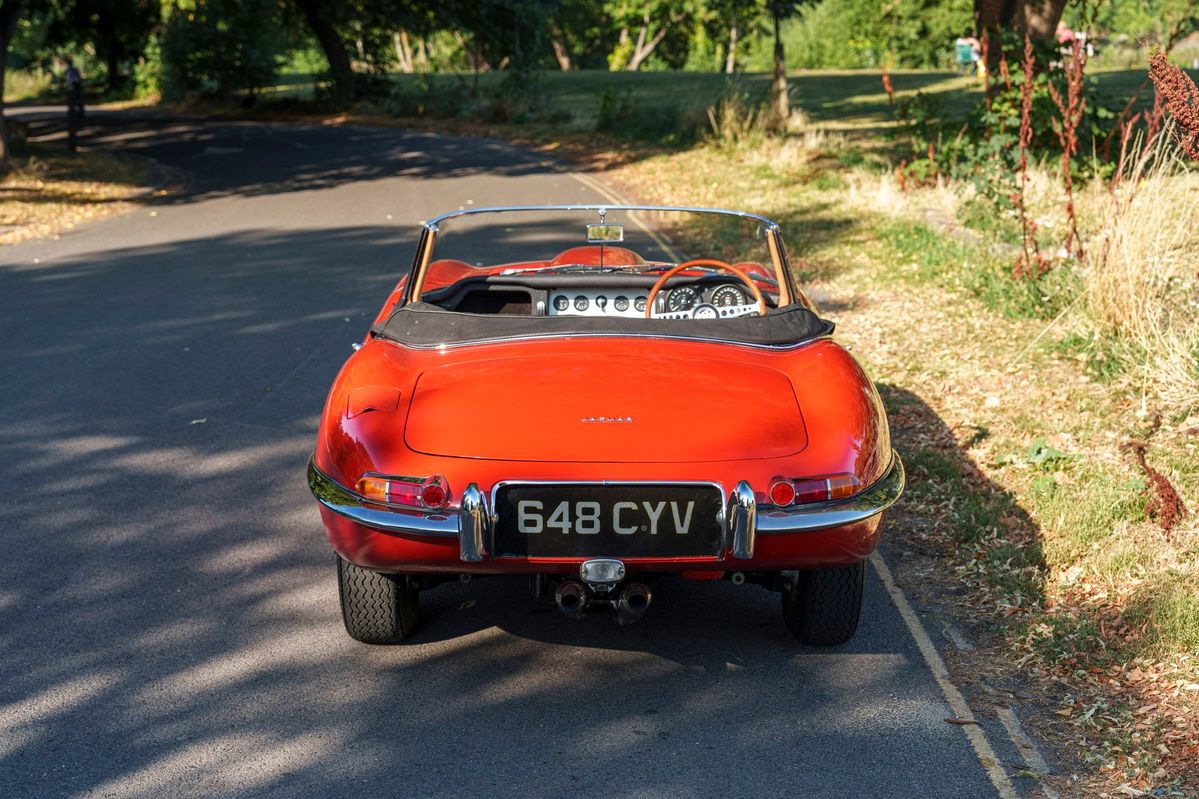
Jaguar says the model remained in production for 14 years and sold more than 70,000 examples. It also became an instant symbol of 1960s style. That combination of racing ancestry, performance, price and appearance made the E-Type much bigger than a single sports-car model.
It became the Jaguar that people remembered. Even today, someone who knows very little about classic cars can usually identify an E-Type. That’s an impressive achievement for a design introduced more than six decades ago.
ALSO READ: 10 Used Jaguars That Are Actually Worth Owning
What Is the Real Legacy of Enzo Ferrari’s E-Type Remark?
The most interesting part of the story may actually be the uncertainty surrounding the quote. It is tempting to repeat “Enzo Ferrari called the E-Type the most beautiful car in the world” as an unquestionable fact. Jaguar has certainly embraced the statement, and it has become firmly embedded in the car’s mythology.
But the stronger version of the story is more nuanced: Ferrari is widely credited with the remark, yet the original primary evidence for the exact quotation has not been established. RM Sotheby’s reaches essentially that conclusion after examining the history of the claim. And honestly, the E-Type doesn’t need the quote to make its case.
In 1961, Jaguar produced a sports car with a 3.8-liter XK six, 265 hp, four-wheel disc brakes, independent suspension and nearly 150-mph performance. It looked like a million-dollar exotic but was sold for a fraction of the price of many rivals. That is why the Ferrari story refuses to disappear.
Maybe Enzo Ferrari said those exact words. Maybe the remark was polished and passed down until it became the perfect sound bite. Either way, the fact that generations of enthusiasts have found the quote believable says something about the Jaguar E-Type.