
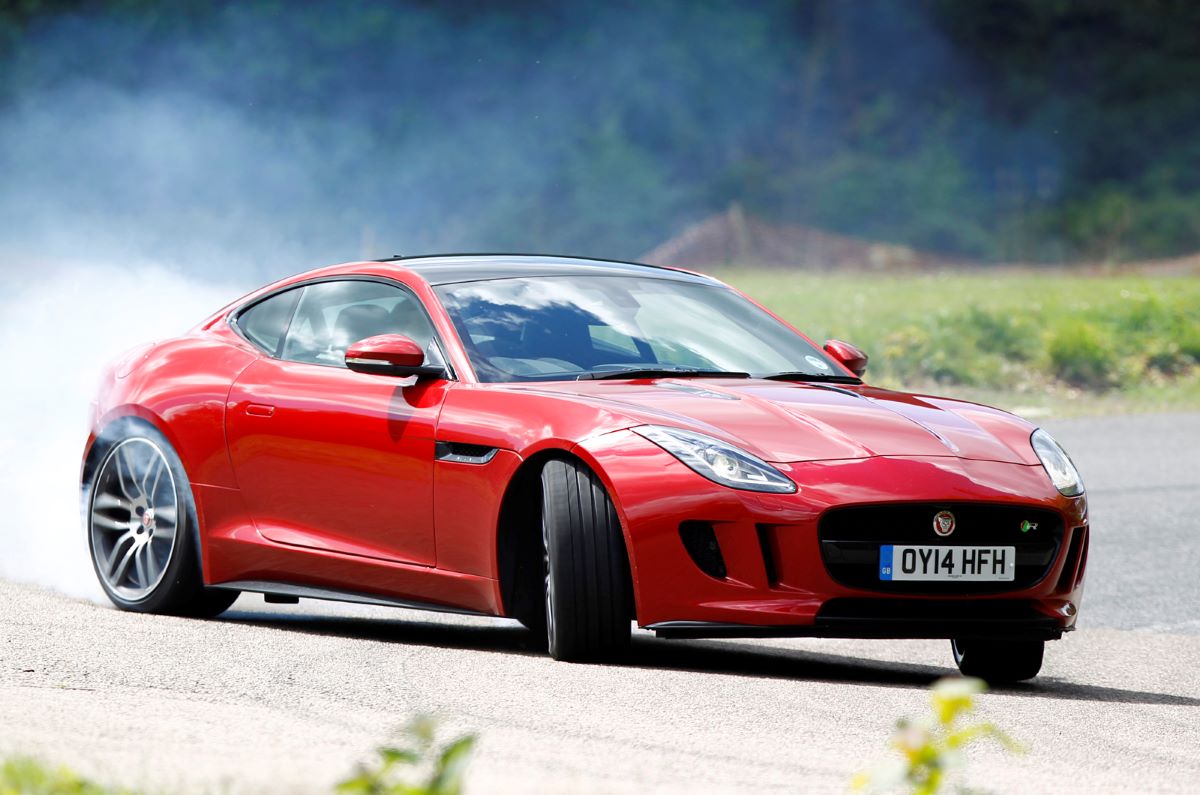
Jaguar has produced some of Britain’s most memorable cars, combining elegant styling, powerful engines, racing heritage, and a character that often feels very different from its German and Italian rivals.
From the 1980s onward, the company created everything from refined grand tourers and luxury sedans to limited-production supercars and track-focused performance machines.
Some Jaguar models became famous because of their beauty, while others earned their reputation through speed, competition success, or technical ambition.
This ranking focuses on Jaguar cars produced from around 1980 to the present day. The selection considers performance, design, historical importance, motorsport influence, engineering, rarity, and the way each model shaped Jaguar’s identity.
A few entries were produced in very small numbers, while others reached a much wider audience and helped keep the brand relevant during difficult periods.
Jaguar has not always followed the safest route. That is part of what makes its best cars memorable.
The company has built V12 grand tourers when rivals were moving toward smaller engines, created a 200 mph supercar during the early 1990s, and later developed high-performance sedans that challenged established German brands. Its strongest models often blend comfort with a sense of occasion.
The cars are ranked from tenth to first. Each one represents a different side of Jaguar, from old-school luxury to racing-inspired performance. The first two entries show why the brand’s modern history includes both refined road cars and rare machines built with serious competition influence.
Also Read: 10 Cars With the Most Comfortable Seats for Bad Backs
10. Jaguar XJR-S
The Jaguar XJR-S arrived in the late 1980s as a more focused version of the XJS grand tourer. Developed through JaguarSport, a partnership between Jaguar and Tom Walkinshaw Racing, it gave the long-running XJS a stronger performance identity while keeping the comfort and V12 character expected from a Jaguar coupe.
Its appearance immediately separated it from a standard XJS. The XJR-S used deeper bodywork, unique wheels, revised suspension, and a rear spoiler that made the car look lower and more purposeful.
Inside, it retained leather upholstery, wood trim, and the kind of long-distance comfort that made the XJS popular with grand-touring buyers. It was not a stripped-out track car. Instead, it blended luxury with a more aggressive driving attitude.
Later examples used a 6.0-liter V12 with Zytek engine management, producing 333 horsepower. That engine gave the XJR-S stronger acceleration and more effortless high-speed performance than earlier versions.
The suspension was also revised with firmer springs and Bilstein dampers, helping the large coupe feel more controlled through corners.
The XJR-S matters because it showed what Jaguar could achieve when it gave a traditional luxury coupe genuine motorsport input. It also helped establish the relationship between Jaguar and Tom Walkinshaw Racing, a partnership that would later produce some of the company’s most exciting road and race cars.
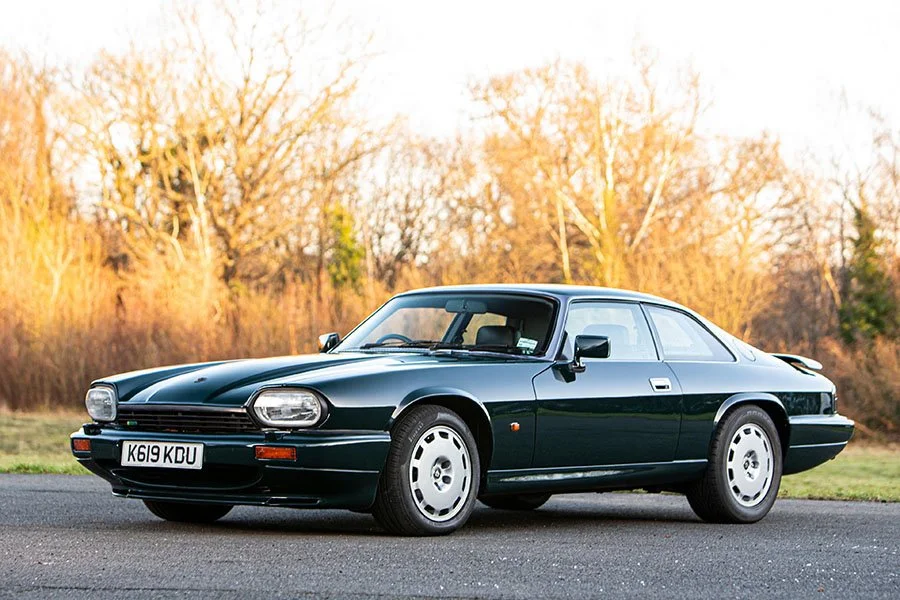
Today, the XJR-S is appreciated as a rare performance Jaguar from an era when large V12 coupes still had a place in the market. It remains an important bridge between Jaguar’s classic grand-tourer history and its later high-performance ambitions.
- Engine: 6.0-liter naturally aspirated V12
- Torque: 365 lb-ft
- Horsepower: 333 hp
- Length/Width: 191.7 inches / 70.8 inches
9. Jaguar XJR-15
The Jaguar XJR-15 was one of the most extraordinary road cars of the early 1990s. Built by JaguarSport and Tom Walkinshaw Racing, it was closely related to the Jaguar XJR-9 endurance racer and became the first production road car constructed entirely from carbon fiber and Kevlar composite materials.
Only 50 examples were produced, making the XJR-15 one of the rarest Jaguar models ever made. Its low body, dramatic side intakes, and race-car-inspired cockpit made it feel far removed from the luxury sedans usually associated with the brand. While its cockpit layout features traditional off-center seating rather than a central driving position, this was a road-legal machine unapologetically built around competition engineering rather than everyday comfort or convenience.
Mounted behind the driver was a 6.0-liter naturally aspirated V12 producing 450 horsepower. It sent power to the rear wheels through a manual transmission and gave the lightweight car remarkable performance for its era. The XJR-15 could reach 60 mph in about 3.9 seconds, a figure that placed it among the quickest road cars available at the time.
Its chassis used pushrod suspension and aerodynamic ideas taken from Group C racing. The engine formed part of the rear structure, while the flat underbody helped generate downforce. These were serious racing concepts adapted for a small production run rather than decorative features added for appearance.
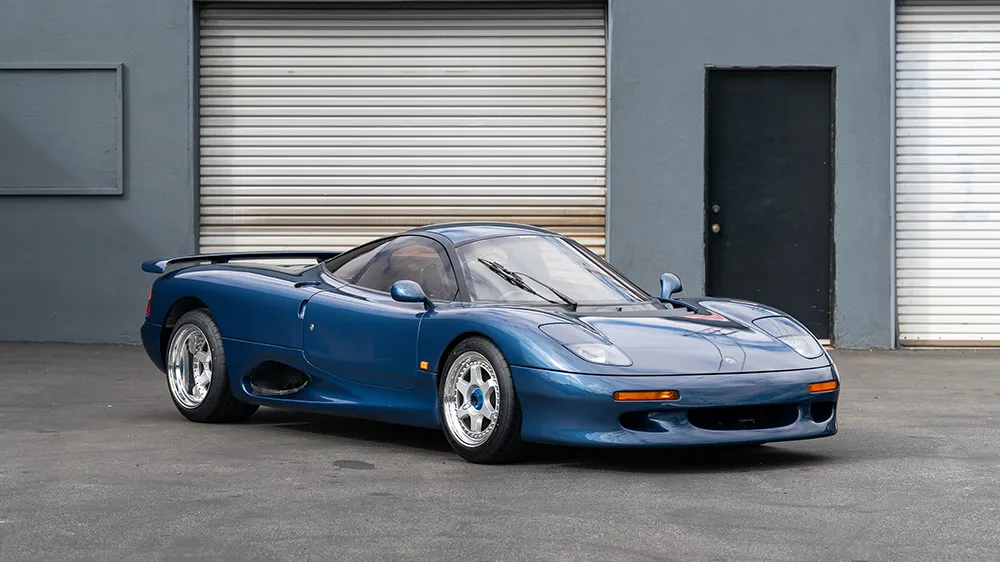
The XJR-15 did not have much luggage space, sound insulation, or everyday practicality. That was never its purpose. It exists as one of Jaguar’s boldest creations, proving that the company could build a mid-engine exotic with true competition DNA.
- Engine: 6.0-liter naturally aspirated V12
- Torque: 420 lb-ft
- Horsepower: 450 hp
- Length/Width: 189.0 inches / 74.8 inches
8. Jaguar XJ220
The Jaguar XJ220 remains one of the most ambitious cars ever to wear the Jaguar badge. Introduced in the early 1990s, it arrived during a period when manufacturers were competing to build the world’s fastest production car.
Jaguar had already returned to international endurance-racing success with Tom Walkinshaw Racing, and the XJ220 brought that renewed confidence to the road in dramatic form.
Its shape was unlike any Jaguar before it. The body sat extremely low, stretched nearly sixteen feet in length, and used smooth curves to guide air around the car at very high speed. Large side intakes, covered headlights, and a wide rear section gave it a futuristic look that still feels special today.
The XJ220 was designed to reach 220 mph, which inspired its name, although the production version used a different engine from the original concept.
The final road car received a 3.5-liter twin-turbocharged V6 instead of the proposed V12. Some early deposit holders disliked that change, but the production engine delivered huge performance.
With 542 horsepower and 475 lb-ft of torque, the XJ220 could accelerate with the force expected from a serious supercar and exceed 210 mph in standard form. Jaguar later recorded 217 mph during testing with a modified car, making it the fastest production car in the world for a brief period.
Only around 275 examples were built, partly because the early-1990s supercar market collapsed before production ended. That rarity has helped make the XJ220 a collector icon. Its importance comes from more than scarcity.
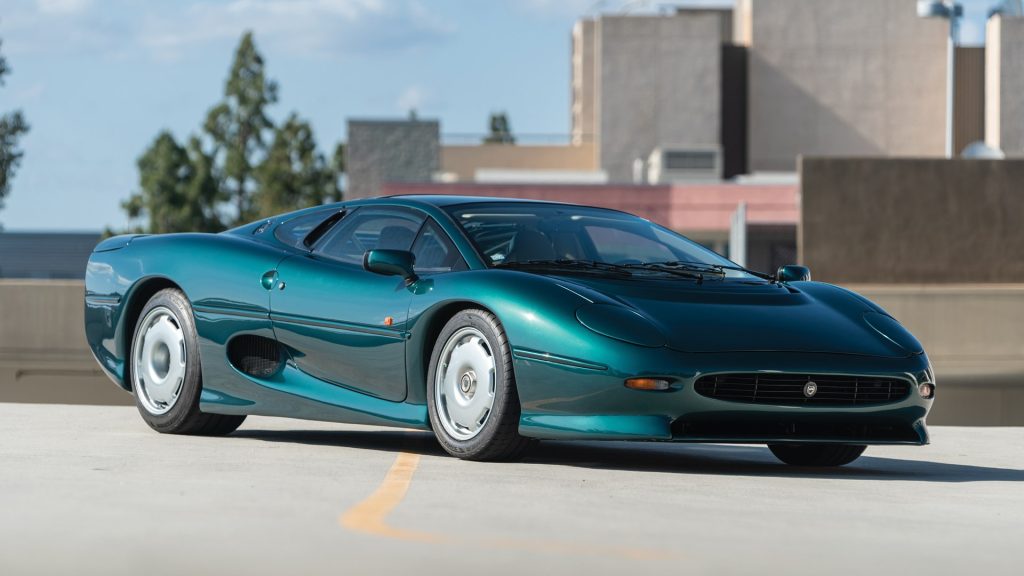
It showed Jaguar could create a genuine high-speed supercar with advanced aerodynamics, racing influence, and a road presence few cars could match.
- Engine: 3.5-liter twin-turbocharged V6
- Torque: 475 lb-ft
- Horsepower: 542 hp
- Length/Width: 194.1 inches / 79.1 inches
7. Jaguar XFR-S
The Jaguar XFR-S gave the traditional luxury sedan a far more aggressive personality. Launched in 2012, it was developed by Jaguar’s Special Vehicle Operations team as a high-performance version of the XFR.
Rather than merely adding extra power, Jaguar revised the suspension, steering, brakes, aerodynamics, and transmission programming to create a sedan capable of challenging serious German performance rivals.
Under the hood was a supercharged 5.0-liter V8 producing 550 horsepower and 502 lb-ft of torque. That output sent the XFR-S from 0 to 60 mph in about 4.4 seconds, an astonishing figure for a four-door luxury car with a spacious cabin and a large trunk.
The engine also delivered the deep, forceful sound that became a signature of Jaguar’s supercharged V8 era.
Jaguar made the XFR-S visually different from the standard XFR through a more aggressive front bumper, larger air intakes, carbon-fiber trim, side skirts, and a rear spoiler. These changes were not only for appearance.
The aerodynamic work helped reduce lift and improve stability at high speed. The suspension was lowered and stiffened, while the electronic differential and revised traction systems helped manage the rear-wheel-drive layout.
Inside, the XFR-S retained leather, performance seats, and luxury equipment, but the driving experience was the main attraction. It could cruise quietly on a highway, then become brutally fast when the driver used the full performance of its V8.
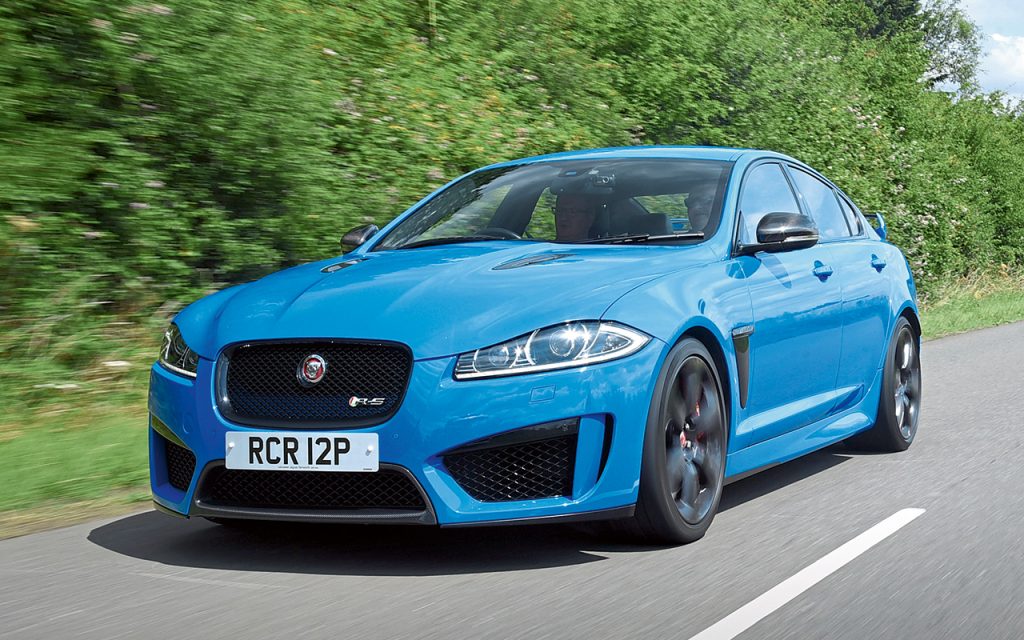
The XFR-S deserves its place because it captured a rare balance. It was a refined executive sedan, yet it had the speed and sound of a serious muscle car. It remains one of the most exciting modern Jaguar sedans.
- Engine: 5.0-liter supercharged V8
- Torque: 502 lb-ft
- Horsepower: 550 hp
- Length/Width: 195.0 inches / 74.6 inches
6. Jaguar F-Type R
The Jaguar F-Type R became the modern car that reminded many enthusiasts why the brand still mattered. When it arrived in 2013, Jaguar had not offered a true two-seat sports car for decades.
The F-Type changed that with a short wheelbase, long hood, rear-drive proportions, and an exhaust note that immediately separated it from quieter luxury rivals.
The R version took the formula much further. Its 5.0-liter supercharged V8 produced 550 horsepower and 516 lb-ft of torque, giving the car the kind of acceleration expected from serious high-performance machinery.
Early versions sent power to the rear wheels, while later models gained all-wheel drive for stronger traction and more confidence in poor weather. Either way, the F-Type R felt emotional rather than clinical.
Its appeal was not limited to straight-line speed. The steering was quick, the seating position was low, and the body felt compact around the driver. Jaguar gave the R larger brakes, firmer suspension, an active exhaust, and a limited-slip differential to make sure the chassis could match the engine’s force.
The exhaust system became a major part of the car’s personality, producing crackles and deep V8 noise during hard acceleration and downshifts.
The F-Type R also brought visual drama without becoming overly complicated. Its wide stance, muscular rear fenders, slim taillights, and central focus on the driver made it feel like a proper British sports car. It was not as precise as every German rival, but it had a sense of character that many competitors lacked.
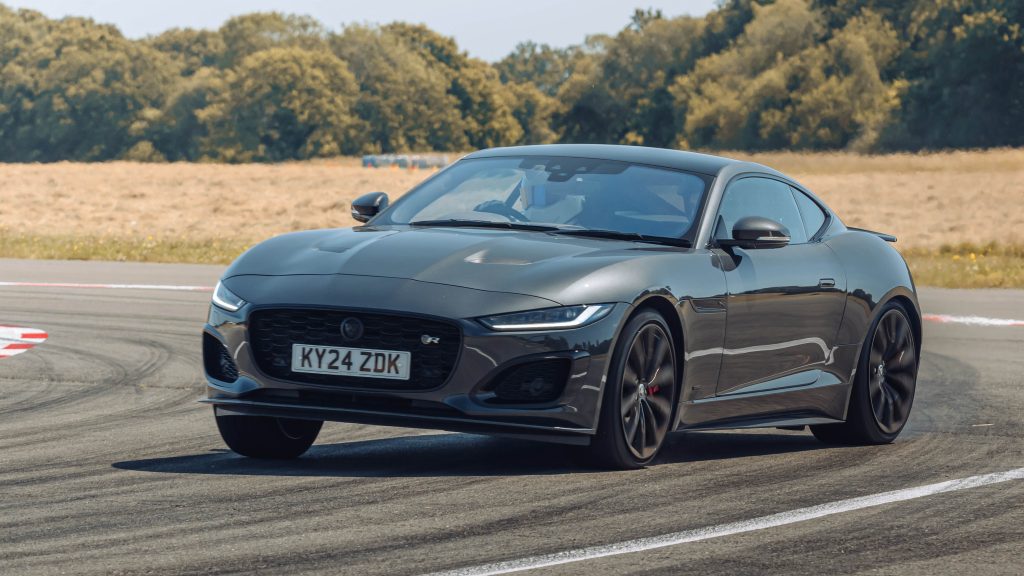
For Jaguar, the F-Type R was important because it revived the spirit of classic models such as the E-Type for a new generation. It proved that the company could still build a beautiful, powerful, and memorable sports car.
- Engine: 5.0-liter supercharged V8
- Torque: 516 lb-ft
- Horsepower: 550 hp
- Length/Width: 176.0 inches / 75.7 inches
5. Jaguar XJ220S
The Jaguar XJ220S took the already extreme XJ220 and turned it into an even rarer, more focused machine. Built by Tom Walkinshaw Racing in the early 1990s, it was developed for customers who wanted a lighter, more aggressive version of Jaguar’s famous supercar.
Only six examples were completed, giving it a place among the most exclusive road-going Jaguars ever made.
The standard XJ220 was designed for very high-speed road use, but the XJ220S pushed closer to race-car territory. Its body used more carbon fiber, while nonessential equipment was removed to reduce weight.
The car received revised aerodynamics, including a larger rear wing, more pronounced front bodywork, and improved airflow management. These changes made the XJ220S look sharper and more purposeful than the smoother standard model.
Power came from the same 3.5-liter twin-turbocharged V6 layout, but output rose to around 680 horsepower. That was an enormous figure for the period, especially in a lightweight mid-engine car.
The XJ220S had explosive acceleration and the kind of high-speed capability that placed it in the same conversation as the most serious supercars of the 1990s.
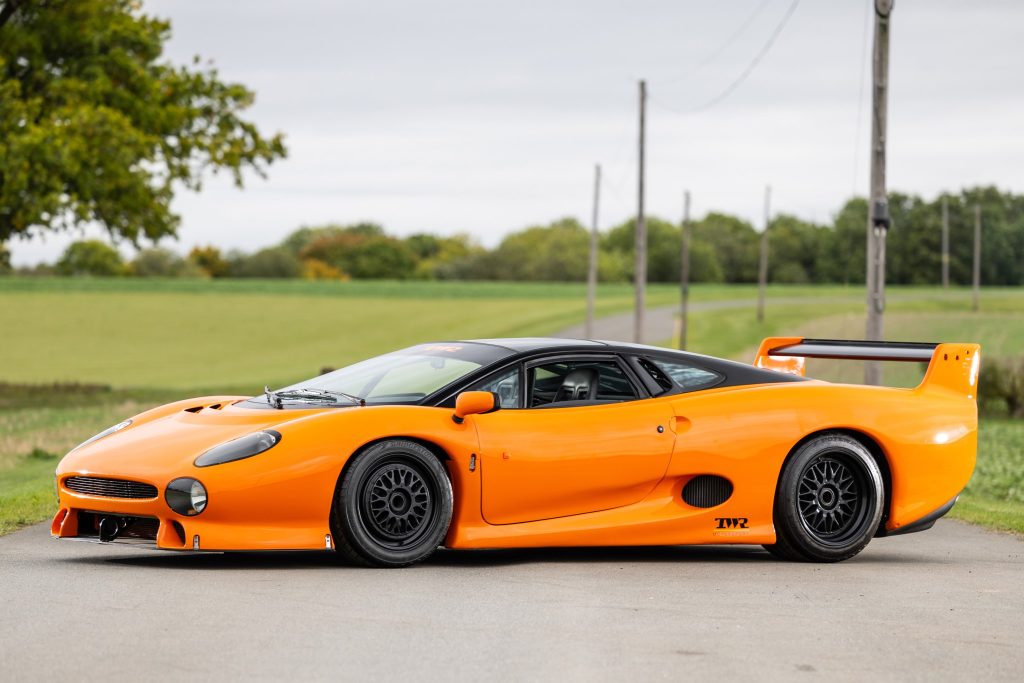
Its significance comes from its connection to Jaguar’s endurance-racing knowledge. Tom Walkinshaw Racing used experience from the XJR program to sharpen the chassis, cooling, and aerodynamic package.
The result was not designed for quiet highway travel or luxury comfort. It was created for drivers who wanted a road-legal Jaguar with a much stronger competition character.
The XJ220S ranks highly because it represents Jaguar at its boldest. It was expensive, rare, difficult to obtain, and built without compromise. Few Jaguar road cars have ever combined such dramatic styling, racing influence, and raw performance in one package.
- Engine: 3.5-liter twin-turbocharged V6
- Torque: 516 lb-ft
- Horsepower: 680 hp
- Length/Width: 194.1 inches / 79.1 inches
4. Jaguar XJR-9
The Jaguar XJR-9 was not a road car, but leaving it out of a list of Jaguar’s greatest creations would ignore one of the company’s defining modern achievements.
Built by Tom Walkinshaw Racing for Group C and IMSA competition, the XJR-9 brought Jaguar back to the top level of endurance racing and delivered the brand’s first victory at the 24 Hours of Le Mans since 1957.
Its most famous moment came in 1988. The Silk Cut-liveried XJR-9LM won Le Mans with drivers Jan Lammers, Johnny Dumfries, and Andy Wallace, ending Porsche’s long run of victories at the event.
Jaguar also won the World Sports Prototype Championship that year, proving that the result was not a one-race surprise. The car combined speed, reliability, and aerodynamic efficiency in a way that made it one of the defining Group C machines.
At its heart was a 7.0-liter naturally aspirated V12 based on Jaguar’s production V12 architecture. It produced about 750 horsepower in World Sportscar Championship form and delivered immense torque.
The engine sat in a carbon-fiber and Kevlar monocoque chassis, with a composite body shaped to generate downforce while still reaching huge speeds on long circuits.
The XJR-9’s racing success also had a direct effect on Jaguar’s road-car identity. Its chassis later helped form the basis of the XJR-15, while the partnership with Tom Walkinshaw Racing strengthened Jaguar’s performance image throughout the late 1980s and early 1990s.
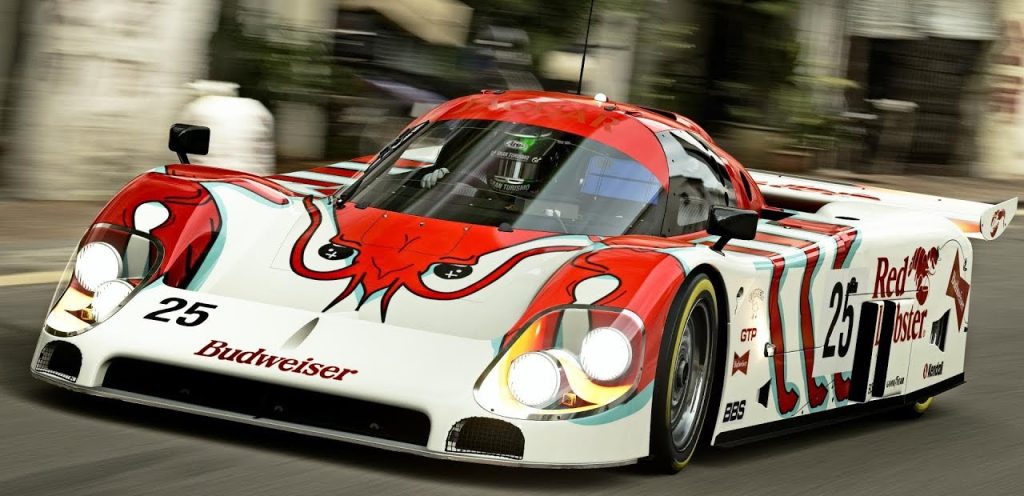
This car deserves a high ranking because it restored Jaguar’s status in international motorsport. It was fast, beautiful, and technically serious, but its greatest achievement was making Jaguar a Le Mans winner again after more than three decades.
- Engine: 7.0-liter naturally aspirated V12
- Torque: 611 lb-ft
- Horsepower: 750 hp
- Length/Width: 188.2 inches / 78.7 inches
3. Jaguar XE SV Project 8
The Jaguar XE SV Project 8 was one of the most extreme sedans ever produced. Created by Jaguar Special Vehicle Operations, it took the compact XE platform and transformed it into a limited-production performance machine with supercar power, extensive carbon-fiber bodywork, and track-focused engineering.
Only 300 examples were built, making the Project 8 far more exclusive than a normal sports sedan. Its 5.0-liter supercharged V8 produced 592 horsepower and 516 lb-ft of torque, sending power to all four wheels through an eight-speed automatic transmission. The car could reach 60 mph in about 3.3 seconds and had a top speed of 200 mph.
Project 8 was not just an XE with a larger engine. Jaguar widened the body, added carbon-fiber fenders, fitted a more aggressive front bumper, installed a huge adjustable rear wing, and revised the suspension with height-adjustable dampers.
It also used carbon-ceramic brakes and a sophisticated all-wheel-drive system with an active rear differential.
Its Nürburgring performance confirmed how serious it was. In 2017, the Project 8 set a lap record for a four-door production car at the Nordschleife, completing the circuit in 7 minutes and 21.23 seconds.
That achievement placed it ahead of many established German performance sedans and showed that Jaguar could still build a world-class track machine.
Inside, the Project 8 could be ordered with rear seats for road use or with a Track Pack that replaced the rear seating area with a harness bar. This gave buyers a choice between a brutal road car and something closer to a street-legal circuit machine.
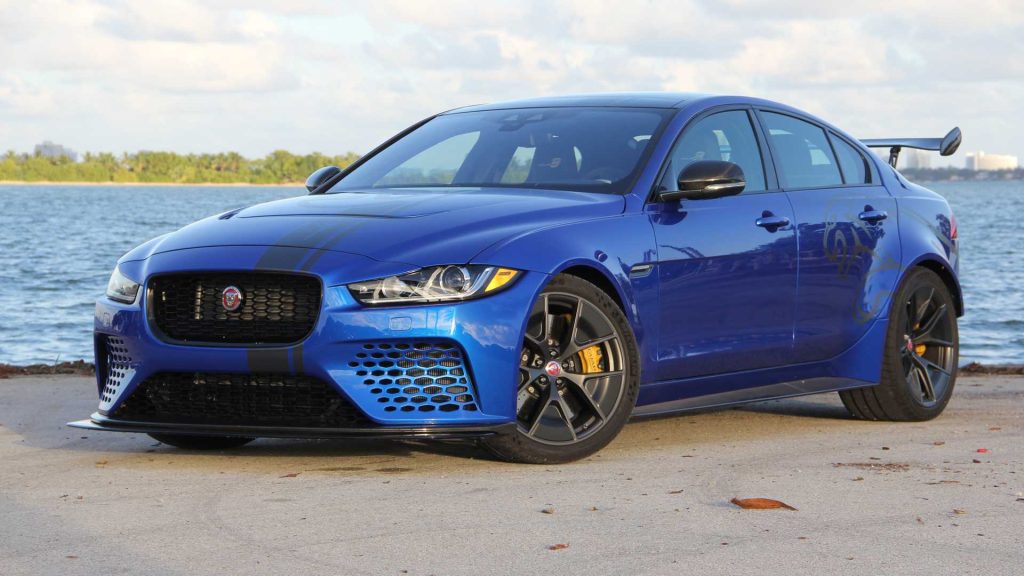
The Project 8 ranks highly because it represented Jaguar at its most fearless. It combined luxury sedan practicality with a level of performance, rarity, and engineering intensity that few four-door cars have matched.
- Engine: 5.0-liter supercharged V8
- Torque: 516 lb-ft
- Horsepower: 592 hp
- Length/Width: 184.6 inches / 74.6 inches
2. Jaguar XJR-12
The Jaguar XJR-12 deserves its place near the top because it represents one of the greatest moments in the brand’s modern racing history. Developed by Tom Walkinshaw Racing for the 1990 World Sportscar Championship and the 24 Hours of Le Mans, it was built to survive flat-out running for an entire day while competing against the strongest endurance-racing teams in the world.
Its defining achievement came at the 1990 24 Hours of Le Mans. The No. 3 Jaguar XJR-12, driven by John Nielsen, Price Cobb, and Martin Brundle, won after covering more than 4,800 kilometers. Jaguar had already won Le Mans in 1988 with the XJR-9, but the XJR-12 confirmed that the earlier success was not a one-time result. It gave Jaguar a second victory in three years and became the final Jaguar to win the famous race.
Power came from a purpose-built 7.0-liter naturally aspirated V12 race engine developed by TWR. It produced around 730 horsepower and delivered massive torque, which was vital on the long straights at Le Mans. Unlike its turbocharged rivals, the XJR-12 relied on smooth, immediate power delivery and bulletproof mechanical reliability to outlast the competition.
The car used a carbon-fiber and Kevlar monocoque chassis with a low-drag body designed for huge speeds on the Mulsanne Straight. Its aerodynamic package balanced straight-line efficiency with the stability needed through high-speed corners and heavy braking zones.
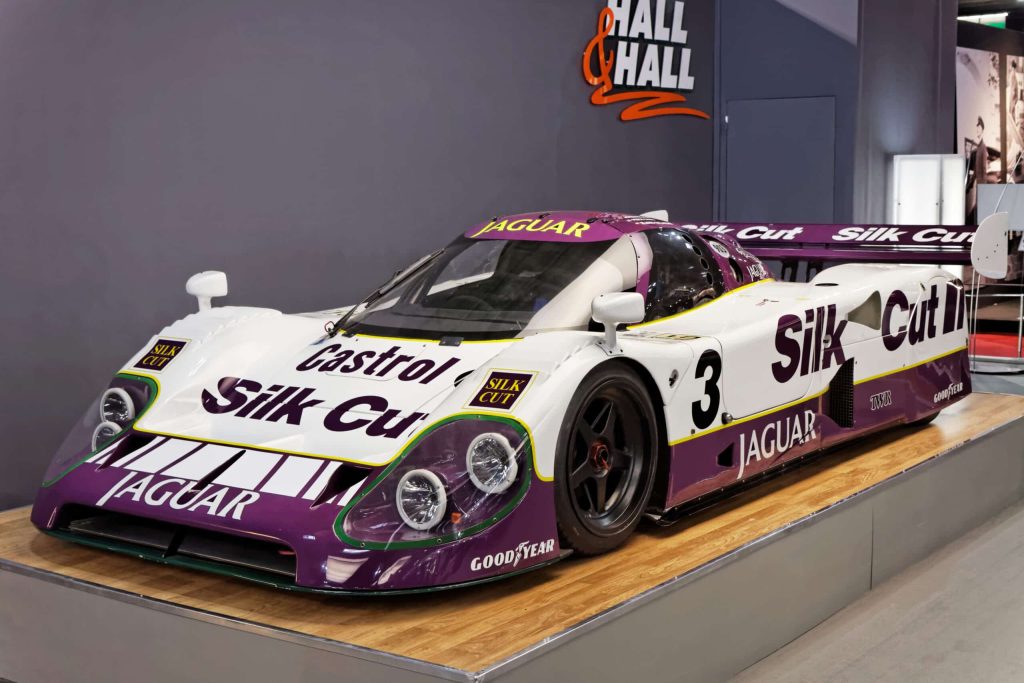
The XJR-12 was not created for comfort or public roads; it was a purpose-built endurance racer, but it carried Jaguar’s identity through its V12 sound, elegant body shape, and racing success. It remains one of the company’s most important competition cars.
- Engine: 7.0-liter naturally aspirated V12
- Torque: 590 lb-ft
- Horsepower: 730 hp
- Length/Width: 188.0 inches / 78.7 inches
1. Jaguar F-Type Project 7
The Jaguar F-Type Project 7 takes the top position because it combined Jaguar’s historic racing inspiration with modern supercharged V8 performance in one of the most dramatic road cars the company has produced. Introduced in 2014, it was built by Jaguar Special Vehicle Operations as a limited-production speedster based on the F-Type.
Only 250 examples were made, making it one of the rarest modern Jaguars. Its name came from Jaguar’s seven victories at the 24 Hours of Le Mans, and its design paid tribute to the D-Type race car.
The Project 7 had a single-seat-style fairing behind the driver, a low windscreen, unique front bodywork, a fixed rear wing, and a more aggressive aerodynamic package than the standard F-Type. It looked like a modern Jaguar created for a race paddock rather than a normal road.
The engine was a 5.0-liter supercharged V8 producing 575 horsepower and 516 lb-ft of torque. Power went to the rear wheels through an eight-speed automatic transmission, allowing the Project 7 to reach 60 mph in about 3.8 seconds.
Carbon-ceramic brakes, revised suspension, a limited-slip differential, and stickier tires gave it sharper responses than the regular F-Type.
Unlike the XJ220S or XJR-15, the Project 7 was not a mid-engine supercar. Its importance came from character. It was loud, visually striking, open-roofed, and built in very small numbers. It also brought Jaguar’s racing heritage into a modern road car without simply copying the past.
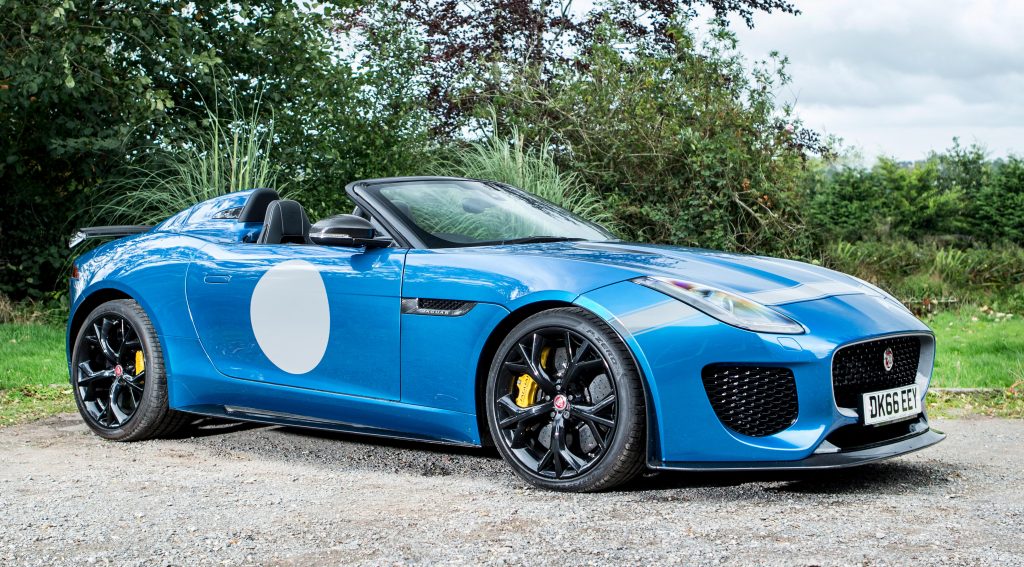
The Project 7 stands as the best Jaguar from the modern era because it delivered rarity, performance, emotional design, and a direct connection to the brand’s greatest motorsport achievements.
- Engine: 5.0-liter supercharged V8
- Torque: 516 lb-ft
- Horsepower: 575 hp
- Length/Width: 177.5 inches / 75.7 inches
Also Read: 10 All New 2027 SUVs Worth Waiting For
