

For decades, motorists have encountered aftermarket devices marketed as solutions for improving fuel economy. Some products claimed to magnetize or “energize” gasoline, while others introduced fuel vapors, changed airflow, or attempted to improve combustion through turbulence.
Rather than accepting these marketing claims at face value, the U.S. Environmental Protection Agency tested many of these products through its Aftermarket Retrofit Device Evaluation Program, also known as the Section 511 Program. The EPA’s archive continues to provide federal reports on devices evaluated from the 1970s through the 2000s.
EPA emphasizes that evaluation does not mean approval, certification, endorsement, or registration of a fuel-saving device. Its tests typically used controlled Federal Test Procedure and Highway Fuel Economy Test cycles, allowing engineers to compare the same vehicles before and after modification.
Again and again, supposedly revolutionary devices produced either no statistically meaningful mileage improvement or tradeoffs that made their claims difficult to defend.
1. Super-Mag Fuel Extender – The Fuel-Line Magnet
The Super-Mag Fuel Extender is a classic example of a product based on the idea that exposing gasoline to a magnetic field could somehow make it burn more efficiently. The device consisted of magnets and steel plates positioned around the vehicle’s fuel line near the carburetor.
Advertising claimed that the magnetic assembly transformed the molecular properties of liquid fuel to improve combustion efficiency, with promotions suggesting fuel savings of as much as 30 percent.
EPA did not simply dismiss the concept from a desk. The Metropolitan Denver District Attorney’s consumer-fraud office supplied Super-Mag units for testing, and EPA evaluated the device on three vehicles. Baseline fuel economy and emissions measurements were compared with results obtained after the device had been installed.
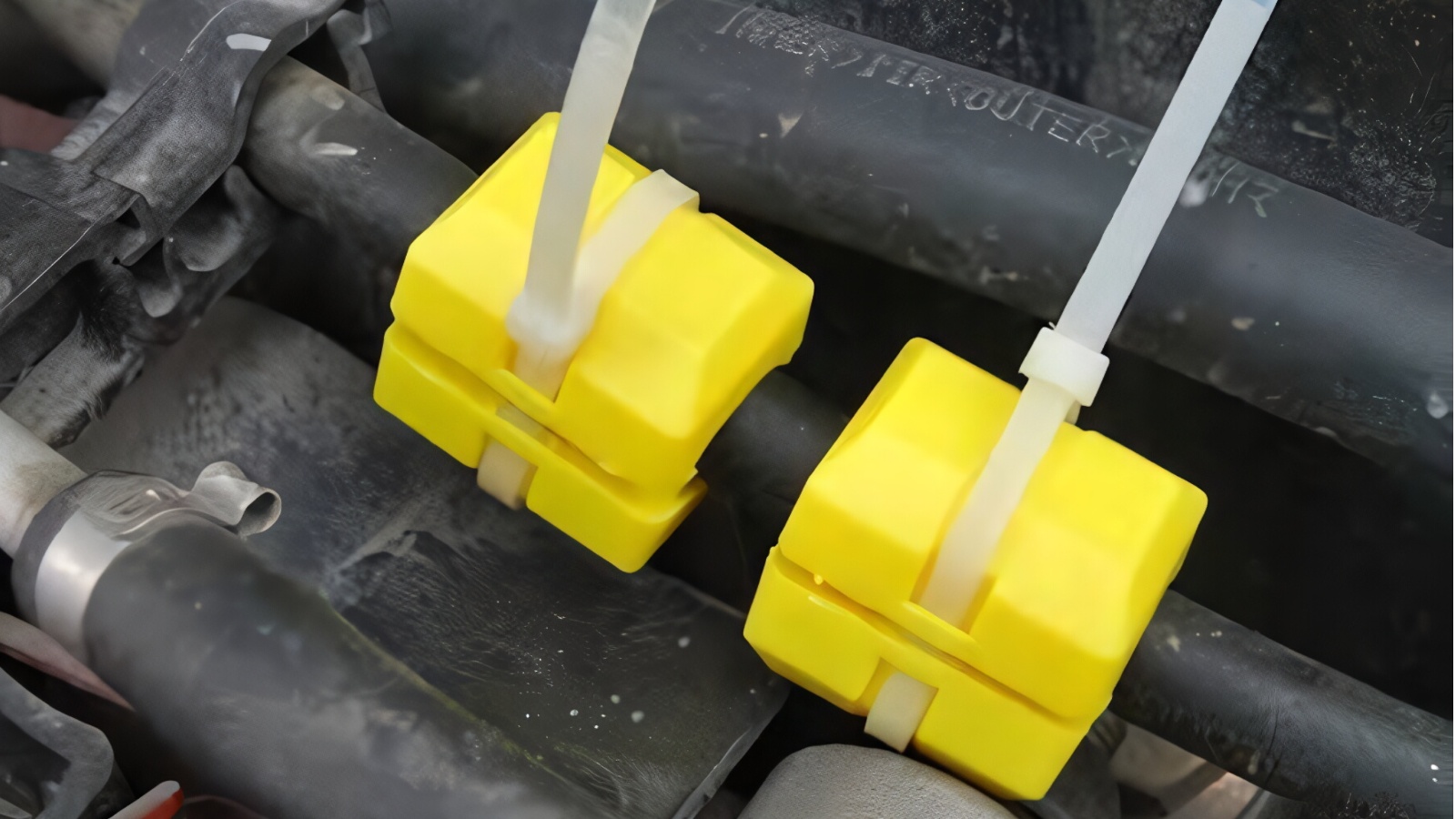
The dramatic advertising claim did not survive the controlled evaluation. EPA reported that neither fuel economy nor exhaust emissions were affected by installation of the Super-Mag. Differences between baseline runs and device-equipped tests remained within normal test variability. EPA’s formal conclusion was therefore straightforward: the Super-Mag Fuel Extender had no demonstrated effect on either exhaust emissions or fuel economy.
The significance extends beyond this particular brand. Fuel-line magnets have repeatedly resurfaced under different names and configurations. EPA later referenced the Super-Mag results when evaluating other magnet-type devices because there was no established technical explanation showing how briefly exposing hydrocarbon fuel to an external magnetic field would produce meaningful combustion improvements.
Super-Mag therefore became an early federal reality check for one of the longest-running fuel-saving gadget concepts.
2. Fuel Maximiser – The Battery-Terminal “Molecular” Device
The Fuel Maximiser offered an even more unusual explanation for its supposed fuel savings. It consisted of conductive coils enclosed in an insulating housing and positioned around or near the vehicle’s negative battery terminal. According to the theory presented with the product, the device created an electrical or ion-related effect capable of changing the molecular structure of the fuel and increasing combustion efficiency.
The U.S. Postal Service asked EPA to evaluate the Fuel Maximiser while investigating products advertised through the mail. EPA therefore performed controlled testing intended to determine whether the device produced the improvement its promoters claimed.

EPA evaluated two representative domestic vehicles using both dynamometer testing and road procedures. Emissions and fuel-economy measurements were taken with the vehicles in normal configuration and then repeated with the Fuel Maximiser fitted.
The result was not subtle.
EPA reported that laboratory testing showed the Fuel Maximiser had an insignificant effect on both fuel economy and emissions. The agency stated that the device failed to improve vehicle fuel economy under either road or dynamometer testing procedures. The vehicles were considered representative enough that EPA expected a claimed improvement to have been observable if the device genuinely produced one.
This result is particularly useful because the device was not merely another airflow restrictor that might plausibly alter mixture calibration. Its sales theory depended on an invisible electrical effect supposedly reorganizing fuel at the molecular level.
Controlled testing found no meaningful mileage benefit. Whatever was happening around the battery terminal, it was not translating into measurable savings at the fuel tank.
3. Platinum Gasaver – Claimed Gains Greater Than 20 Percent
The Platinum Gasaver was marketed with a more elaborate approach. It was connected to the positive crankcase ventilation system and used manifold vacuum to draw air through a liquid reservoir containing a proprietary solution described as including a “platinum concentrate.” The vapor was then introduced into the engine, where promoters claimed it enhanced combustion.
Claims associated with the device included better fuel economy, lower emissions, higher gasoline octane, and longer engine life. The mileage claims became significant enough that the Federal Trade Commission asked EPA to conduct another evaluation, specifically to investigate advertised fuel-economy benefits exceeding 20 percent.
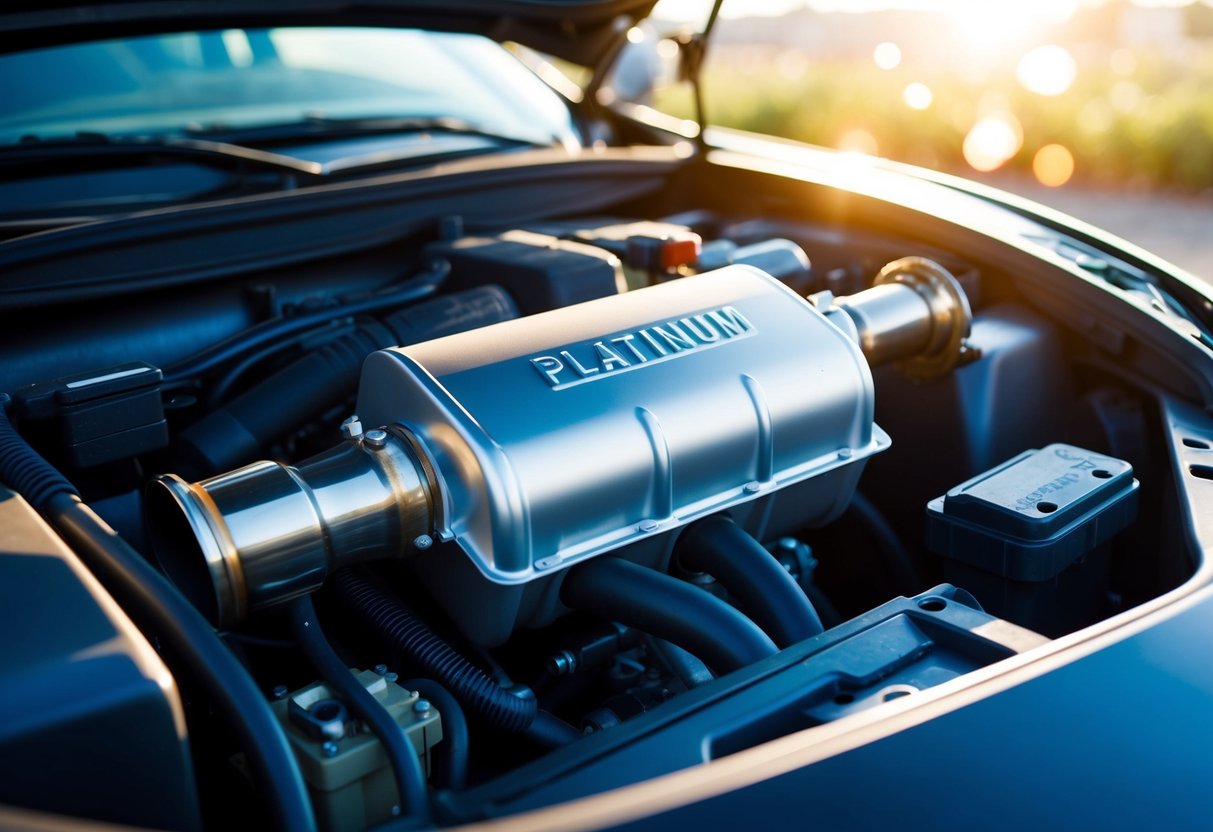
EPA’s program was substantial. Three representative vehicles were used, each accumulating about 2,000 miles as part of the procedure. Engineers performed replicate Federal Test Procedure and Highway Fuel Economy Test runs both without and with the Platinum Gasaver installed.
If an improvement exceeding 20 percent really existed, this type of controlled back-to-back testing should have made it easy to detect.
It did not.
EPA concluded that the Platinum Gasaver did not significantly change fuel economy or vehicle emissions on either the FTP or HFET. It specifically stated that the device clearly failed to produce the greater-than-20-percent mileage improvements being claimed. Vehicle operation and performance were essentially unchanged as well.
EPA therefore concluded that users should not expect either a fuel-economy or emissions benefit.
The Platinum Gasaver is especially instructive because EPA gave the concept more than a quick inspection. Mileage accumulation, multiple vehicles, repeated standardized tests, and direct before-and-after comparisons still failed to uncover the advertised savings.
4. FUEL-MAX – A Tiny Mileage Gain With a Huge Emissions Penalty
The FUEL-MAX produced one of the most interesting results in EPA’s archive because it did alter engine behavior but not in the way consumers would want from a supposedly beneficial fuel-saving product.
FUEL-MAX was an air-bleed device designed to replace the vehicle’s exhaust-gas-recirculation valve. The vacuum signal that previously controlled EGR operation instead controlled additional air entering the intake manifold. Its promoters claimed that the arrangement would conserve fuel.
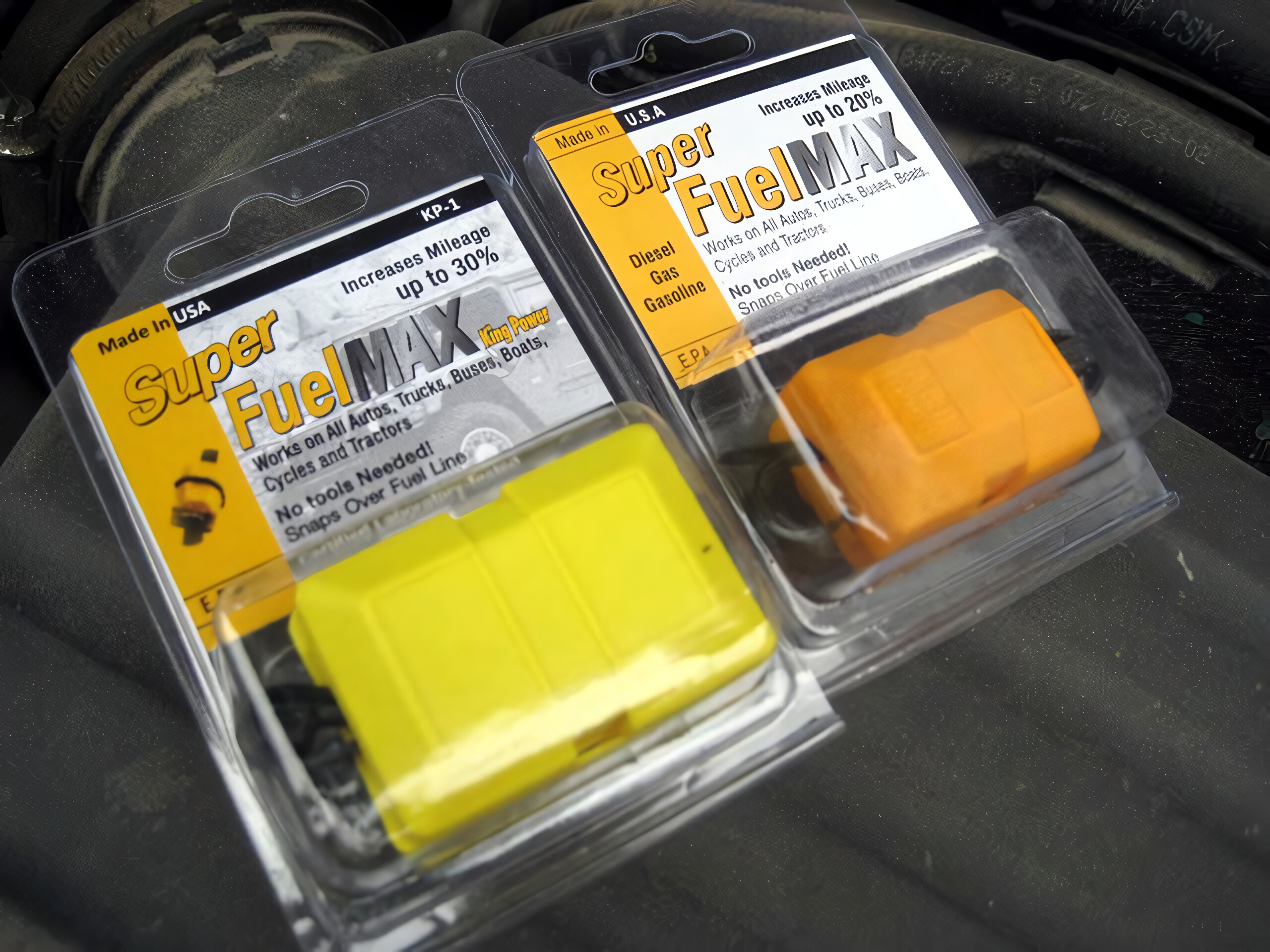
EPA tested FUEL-MAX on three 1979 passenger cars, performing Federal Test Procedure and Highway Fuel Economy Test cycles before and after installation.
The results initially contained a number that could look attractive in advertising: average fuel economy improved about 3 percent during the FTP city-type test. But on the highway test, EPA found essentially no fuel-economy improvement.
The bigger issue was emissions.
Hydrocarbon and carbon-monoxide emissions decreased, but nitrogen-oxide emissions exploded. EPA measured average NOx increases of approximately 480 percent on the FTP and 380 percent on the HFET. Two test vehicles also displayed obvious engine knock, while other drivability problems included hesitation and stumbling.
EPA concluded that installing FUEL-MAX constituted emissions-control tampering under the circumstances described in the report because the tested vehicles exceeded applicable emissions standards.
So FUEL-MAX did not prove that fuel-saving gadgets work. Instead, it demonstrated how artificially leaning an engine can occasionally improve one mileage number while creating unacceptable emissions and drivability consequences.
A legitimate efficiency improvement cannot simply trade away emissions compliance to produce a small city-cycle gain.
Also read: 8 Cars With Windshields That Cost $1,500 to Replace
5. Moleculetor Fuel Energizer – Advertised 10 to 23 Percent Gains
The Moleculetor Fuel Energizer was installed directly in a vehicle’s fuel line between the tank and fuel pump. The cylindrical aluminum device supposedly created an “energy field” that altered the molecular structure of gasoline, allowing the fuel to burn more efficiently.
Advertisements associated with the product claimed 10 to 23 percent improvements in fuel economy. The device required no moving parts or regular maintenance, and the manufacturer said maximum efficiency would be reached after approximately 500 miles of driving.
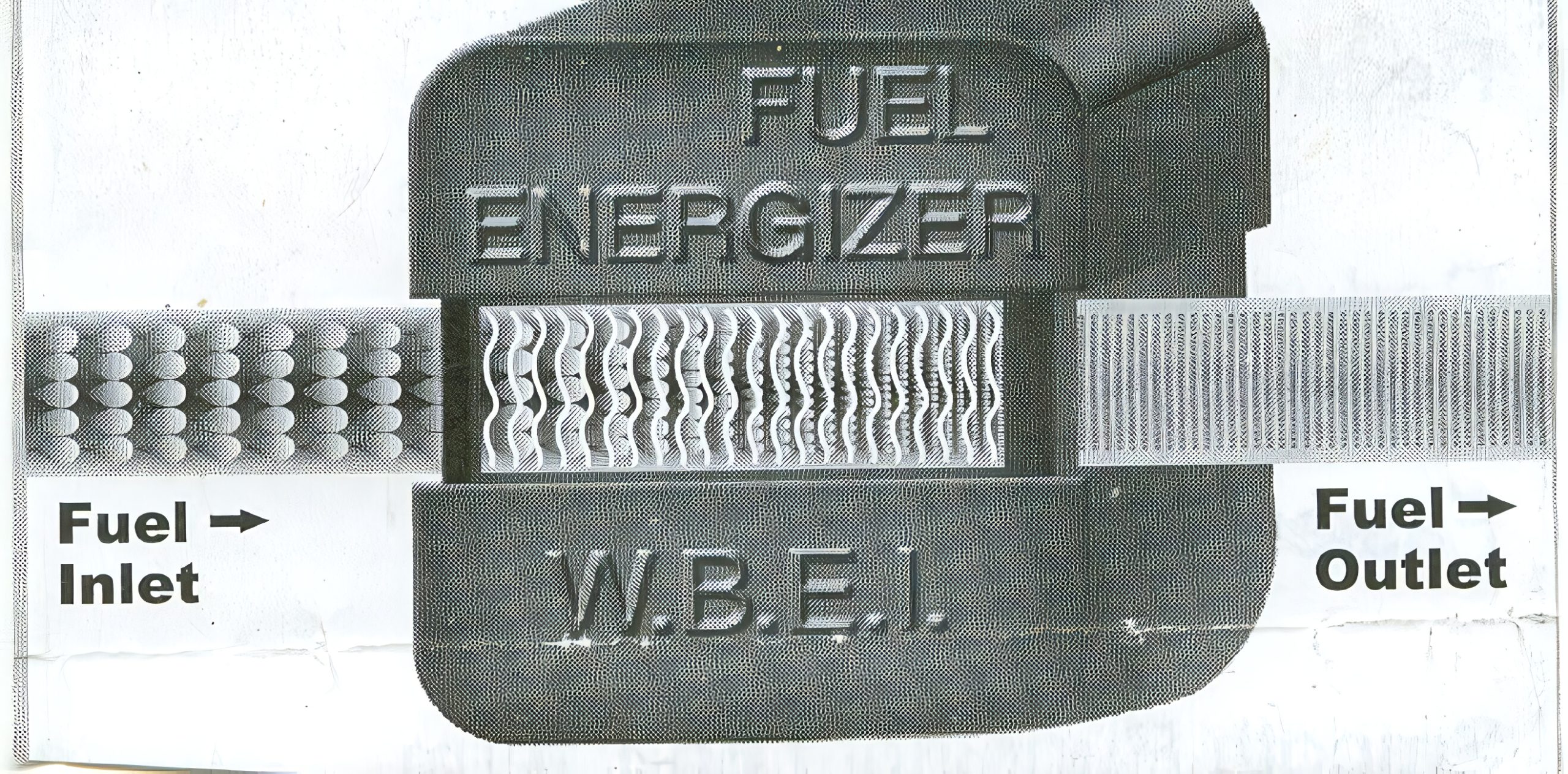
EPA conducted its own program using three late-model passenger cars. Each vehicle was inspected and adjusted to manufacturer specifications before testing. The test sequences included federal emissions procedures and the Highway Fuel Economy Test, with measurements taken before and after the Moleculetor was installed.
The results varied, but that variability was exactly the problem.
Two vehicles showed small increases during parts of the testing while another recorded decreases. EPA determined that the changes were small and consistent with the kinds of fluctuations already observed when ordinary vehicles accumulate mileage between test sequences.
The agency’s conclusion was that testing showed no consistent effect attributable to the Moleculetor on either fuel economy or emissions. Most importantly, the claimed 10-to-23-percent mileage increases were not substantiated.
This is a useful example of why isolated mileage improvements can be misleading. Almost any before-and-after test can produce a slightly different mpg result because of normal vehicle and measurement variation.
The question is whether the change appears repeatedly, consistently, and at a magnitude large enough to separate the device’s effect from ordinary noise. EPA found that the Moleculetor could not clear that bar.
6. Dresser Economizer – The Restrictive Intake Gasket
Not every fuel-saving device relied on mysterious molecular effects. The Dresser Economizer was mechanically straightforward. It replaced the normal gasket between the intake manifold and cylinder head with a specially designed unit whose passages were approximately half the area of the original openings.
The restriction increased intake velocity and turbulence. The theory was that this would produce a more homogeneous air-fuel mixture, improving combustion, fuel economy, and drivability particularly during cold operation.

EPA considered the preliminary evidence promising enough to perform confirmatory tests at its Motor Vehicle Emission Laboratory in Ann Arbor. Three vehicles were tested: a six-cylinder Plymouth Volare, a six-cylinder Oldsmobile Cutlass, and a V8 Chevrolet Nova.
Engineers performed duplicate FTP and Highway Fuel Economy Test sequences before installation, with the device installed, and again after returning the vehicles to their original configuration.
Rather than improving mileage, average fuel economy moved slightly in the opposite direction.
EPA measured approximately a 1 percent decrease on the FTP and a 2 percent decrease on the HFET. Regulated emissions generally increased slightly as well, although the changes were not statistically significant at the 95-percent confidence level. Average 5-to-60-mph acceleration time also increased by roughly 6 percent.
EPA concluded that the Dresser Economizer had no meaningful impact on emissions, fuel economy, or vehicle performance.
This test is important because the basic engineering idea was at least mechanically plausible. Increased mixture velocity can influence combustion under certain conditions. But an interesting theory is not the same as a measurable fuel-saving benefit when installed on real production vehicles.
7. Inset Fuel Stabilizer – “Aligning” Fuel Molecules
The Inset Fuel Stabilizer brought the molecular-treatment idea into a much newer era. EPA tested the device in the late 1990s, long after electronic fuel injection and computerized engine controls had become standard.
Inset Industries claimed that passing fuel through its metal in-line device would align fuel molecules before they entered the engine, supposedly creating an optimum burn. EPA tested the product at the National Vehicle and Fuel Emissions Laboratory using standard federal procedures.

Three vehicles formed the valid test fleet: a 1996 Chevrolet Lumina, 1994 Ford Probe, and 1998 Pontiac Bonneville. Each was returned to manufacturer specifications before evaluation.
The testing was unusually thorough. EPA measured the cars in stock configuration, installed the Inset device, accumulated mileage, performed repeated emissions and fuel-economy testing, removed the device, and tested the vehicles again. Duplicate, triplicate, and in some circumstances additional runs were used to separate real effects from normal measurement variation.
At the 95-percent confidence level, EPA found no effect on FTP or Highway Fuel Economy Test mileage for any of the three vehicles when analyzed individually. When data from all three cars were combined, the conclusion remained the same: no statistically significant fuel-economy change attributable to the device.
One Lumina analysis showed a reduction in NOx emissions, but EPA found it was the only statistically significant result among many comparisons. The agency concluded that the finding did not translate into a meaningful benefit across the fleet.
Decades after similar molecular-fuel claims had appeared, modern engines and rigorous statistical analysis produced essentially the same answer: fuel flowing through a special metal cylinder did not suddenly become measurably more efficient.
8. Vitalizer III – Tiny Gains That Disappeared Under Statistical Analysis
The Vitalizer III provides one of the later EPA examples of a fuel-line device being subjected to controlled testing. Its manufacturer claimed statistically significant improvements in fuel economy along with reductions in hydrocarbon and carbon-monoxide emissions.
EPA’s own background discussion was already cautious. The agency noted that it had evaluated several fuel-line devices previously and had not found statistically significant improvements in emissions or fuel economy. Nevertheless, manufacturer-supplied preliminary data were sufficient for the Vitalizer III to enter the federal evaluation program.
That gave the product an opportunity to prove its claims under controlled conditions.
EPA recorded some increases in fuel economy during its testing, but each improvement was less than 1 percent. Six observations showed higher fuel economy, yet when the results were analyzed together using a Student’s t-test, the differences were not statistically significant. The findings therefore did not show a measurable fuel-economy benefit from the Vitalizer III.
After extended mileage accumulation, EPA again found fuel-economy improvements of approximately 1 percent or less. Meanwhile, emissions increased by amounts ranging from roughly 1.3 to 11.6 percent in the comparison discussed by the agency, running contrary to the manufacturer’s claimed cleaning-cycle explanation.
The emissions results were similarly unconvincing. EPA recorded higher emissions in 72 percent of the observations, but the combined results did not show a statistically significant difference.
The Vitalizer III therefore illustrates why simply pointing to a positive mpg number is insufficient. A fraction-of-a-percent improvement can occur through ordinary test variation. Controlled experiments and statistical analysis are required to determine whether a device actually caused it, and EPA could not establish a meaningful fuel-economy benefit here.
Also read: 5 Cars With Cheap Radiator Jobs and 5 Over $1,300
