
Selling a car involves more than washing it, taking photos, and posting an advertisement. Buyers increasingly expect documentation that confirms the vehicle’s ownership, mileage, maintenance history, accident record, and recall status.
Missing paperwork can slow down a private-party transaction, give buyers additional reasons to negotiate the price, or reveal an unresolved lien only after both parties believe they are ready to complete the sale. Some records are also legally required depending on the state and vehicle age.
Gathering the important documents before listing the car gives you time to correct errors rather than discovering them with a buyer standing in the driveway. A clean title, documented repairs, accurate vehicle-history information, and proof that recalls were addressed can also make a well-maintained car easier to distinguish from similar listings. These eight records are worth pulling before handing over the keys.
1. Certificate of Title and Lien Status
Start with the most important document: the vehicle title. Before advertising the car, physically locate the title or verify how your state handles electronic titles. Check that the owner name, VIN, and other identifying information match the vehicle and your current records.
A title establishes legal ownership and is normally central to transferring the vehicle to the buyer. State procedures vary, but ownership transfers generally require the seller to properly complete and sign the title or corresponding electronic-transfer paperwork. For example, California describes its Certificate of Title as the document proving ownership and used to transfer or update ownership information.
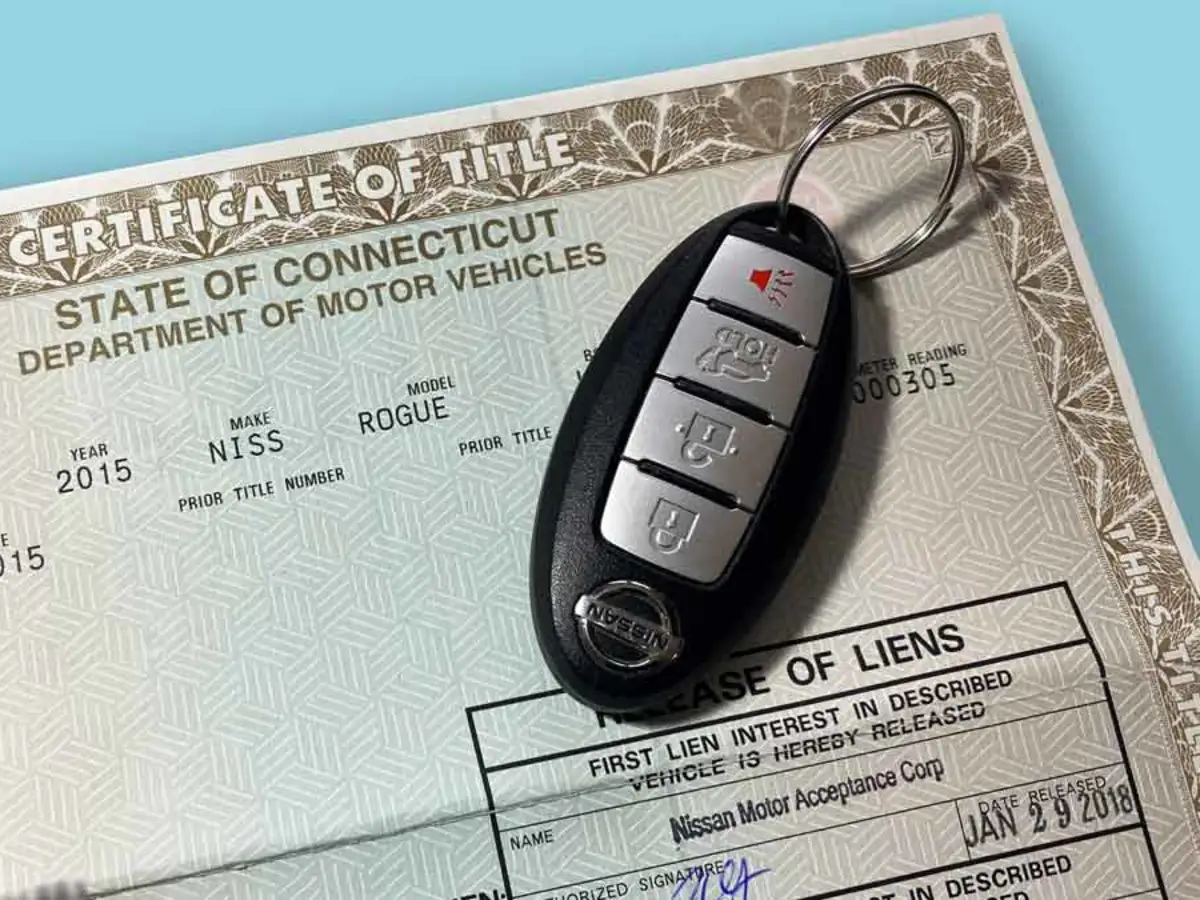
Pay particular attention to the lienholder section. If an old bank or finance company is still listed even though you paid the loan years ago, obtain the appropriate lien release before attempting the sale. A buyer may reasonably refuse to hand over money for a vehicle whose title still shows another party’s financial interest.
Also inspect the title for mistakes, crossed-out information, inconsistent names, or branding such as salvage or rebuilt status. Do not start casually writing on the title until you understand your state’s transfer instructions. Some jurisdictions require additional forms if information is altered.
If the title has been lost, request a replacement early. Waiting until you already have a committed buyer can turn a straightforward transaction into a delay of days or weeks.
A desirable car with questionable ownership paperwork can quickly become difficult to sell. Get the title situation completely clear before discussing payment.
2. Current Loan Payoff Statement
If the vehicle is still financed, pull a current payoff quote, not merely the remaining balance displayed on your latest monthly statement.
Those two numbers may differ. A payoff quote can include interest accrued through a specific date and other amounts required to completely satisfy the loan. It also normally has an expiration date, after which a new amount must be requested.
The Consumer Financial Protection Bureau recommends finding out how much remains on an auto loan before selling a financed vehicle. If the vehicle is worth more than the outstanding balance, the sale proceeds can potentially be used to satisfy the loan.
Knowing the exact payoff is especially important in a private-party transaction because the lender may still control the title. Ask the lender exactly how a sale should be handled. Some lenders can complete the payoff and title-release process at a branch, while others require electronic payment or additional processing time.
Calculate your equity before listing the vehicle. If a buyer offers $22,000 and the lender requires $16,500 to release its interest, the transaction is relatively straightforward. If you owe $25,000, however, you have negative equity and need a plan for paying the difference.
The CFPB also advises consumers to consider whether their loan contract includes any applicable prepayment terms when paying the balance early.
Bring the payoff document when discussing the transaction with a serious buyer. It replaces vague statements such as “I think I owe about $15,000” with a verified amount and helps both parties understand how the title will eventually become clear.
3. NMVTIS Vehicle History Report
Pull a vehicle-history report on your own car before the buyer does.
For U.S. vehicles, the National Motor Vehicle Title Information System is a particularly useful source. NMVTIS reports can contain information about title history, the most recently reported odometer reading, title brands, and certain salvage, junk, insurance total-loss, and theft-related records.
The purpose is not simply to create another document for your listing. You want to know what buyers are likely to discover when they research the VIN.
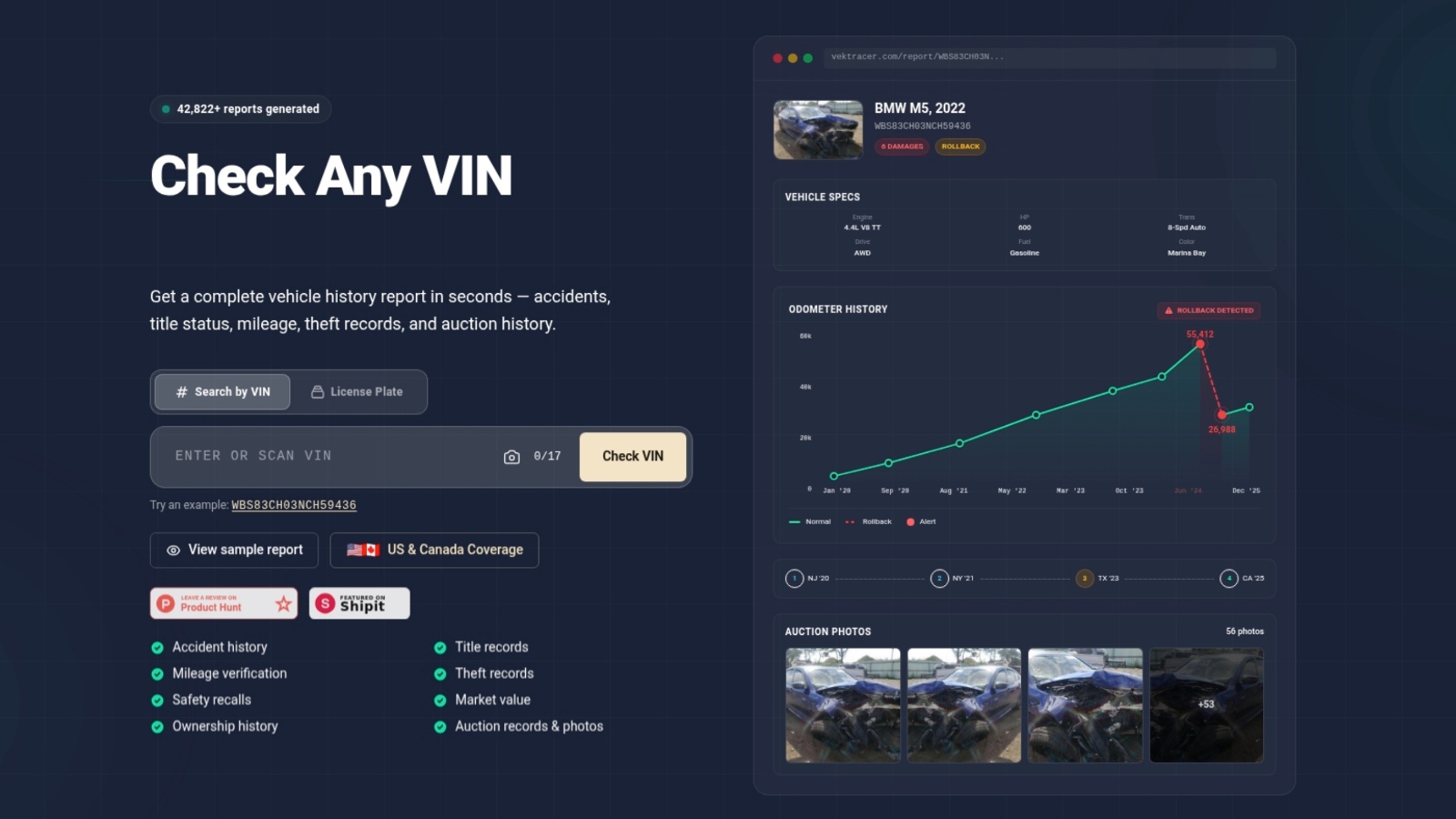
Suppose you have owned a vehicle for six years and considered it clean-title throughout that period. A history check might reveal a title brand from another state dating back to an earlier owner. Alternatively, a mileage entry might be inconsistent because someone previously entered an odometer reading incorrectly.
Discovering the problem before listing gives you an opportunity to investigate rather than being surprised when a prospective buyer accuses you of hiding something.
A clean report can also support the sale. If it shows consistent mileage and no reported salvage or total-loss history, you can make the report available to serious buyers alongside your maintenance documentation.
However, do not oversell what a vehicle-history report proves. No database contains every repair, collision, or damage event. A clean history report should never be described as proof that the vehicle has never been damaged.
NMVTIS itself is designed to help identify potentially unsafe vehicles and title inconsistencies, but its information should be combined with physical inspection and other records.
Treat the report as a preview of what the buyer will see, not as a marketing certificate guaranteeing a perfect past.
4. Open Recall Report
Before selling, run the VIN through the NHTSA recall lookup and determine whether any safety recalls remain unrepaired.
NHTSA allows owners to search using the vehicle’s VIN and see currently open safety recalls. If an applicable recall appears, the manufacturer generally provides the recall remedy through an authorized dealer without charging the vehicle owner.
That creates a strong reason to handle the recall before listing the car.
Imagine choosing between two otherwise identical used vehicles. One has an unresolved airbag or fuel-system recall; the other has documentation showing the recall was completed. Most buyers will prefer the second vehicle simply because one fewer issue remains to be dealt with.
Print or save the VIN search result. If you complete an outstanding recall before selling, keep the dealership repair order showing the campaign number and work performed.
Be careful when interpreting a result showing no unrepaired recalls. NHTSA explains that its VIN tool displays unrepaired recalls associated with the entered VIN. If questions remain about previous recall completion, NHTSA advises contacting the manufacturer.
That means a zero result is not necessarily a complete historical list of every recall the vehicle has ever experienced.
Also check the manufacturer’s owner portal when possible. Automakers sometimes maintain service campaigns or warranty programs that are not the same as federal safety recalls.
From a seller’s perspective, completing a free repair before handing over the car makes sense. You may improve safety, remove an objection from the buyer’s inspection, and potentially avoid negotiating hundreds of dollars off the price for something the manufacturer would have repaired at no charge anyway.
Also read:5 Cars With Cheap Radiator Jobs and 5 Over $1,300
5. Maintenance and Major Repair Records
Pull together every useful maintenance and repair invoice you have accumulated during ownership.
Oil changes are helpful, but the strongest file includes larger scheduled services and expensive mechanical repairs: transmission fluid, coolant, spark plugs, timing belts, brakes, suspension components, water pumps, batteries, tires, wheel bearings, air-conditioning work, engine repairs, and transmission repairs.
Buyers frequently hear sellers claim that a vehicle was “always maintained.” Receipts turn that statement into evidence.
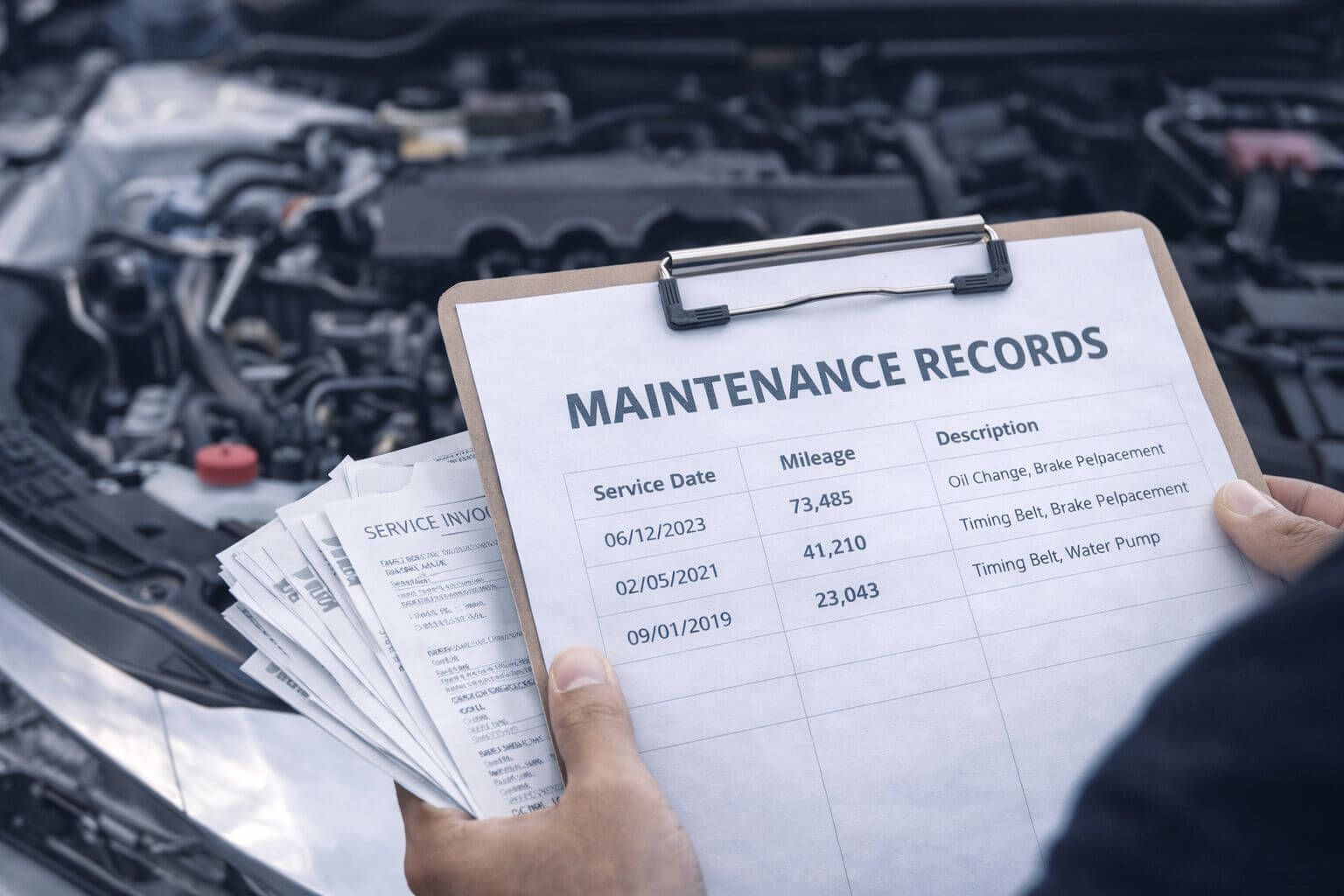
Arrange the records chronologically and make sure mileage appears whenever possible. A buyer reviewing invoices at 31,000, 47,000, 62,000, and 79,000 miles can see a maintenance pattern much more clearly than someone handed a random stack of receipts.
Major repairs deserve special attention. Suppose the vehicle received a replacement transmission 12,000 miles ago. That information can materially influence how a buyer evaluates the car, but only if you can document which transmission was installed, who performed the work, and when it happened.
Do not necessarily hand over documents containing unnecessary personal information. Make copies or redact credit-card numbers, home addresses, phone numbers, and other details that the next owner does not need.
Digital service records are useful too. Many dealership owner portals allow owners to view previous work performed within that manufacturer’s network.
Organized maintenance history does not guarantee a higher selling price, but it can reduce uncertainty. A buyer comparing two cars at similar prices may reasonably prefer the one accompanied by documented service.
This is especially valuable as mileage climbs. At 100,000 miles, proof that major scheduled work has already been completed can be considerably more persuasive than simply saying the car “runs great.”
6. Collision and Body-Repair Records
If the vehicle has been involved in an accident, pull the repair estimate, supplemental estimates, final body-shop invoice, parts documentation, and alignment or calibration reports.
Trying to hide previous collision work is risky. Buyers may discover it through a history report, paint-depth inspection, pre-purchase inspection, or simply by noticing inconsistent panel gaps and paintwork.
Documentation lets you explain what actually happened.
There is an important difference between a bumper being replaced after a low-speed parking incident and major structural damage requiring frame repair, airbags, suspension components, and extensive bodywork. Without paperwork, a buyer encountering evidence of repainting may assume the worst.

The final body-shop invoice can show exactly which panels and components were replaced or repaired. If the shop performed structural measurements, four-wheel alignment, or advanced driver-assistance-system calibration, keep those reports as well.
Photos taken immediately after the accident and during repair can also provide useful context. They allow a prospective buyer to see the original extent of damage rather than relying entirely on an accident entry that might provide few details.
Do not claim that repaired damage has “never been in an accident.” Instead, disclose the event accurately and support your explanation with records.
If a professional repair carried a transferable parts or workmanship warranty, include that documentation too. The remaining warranty could have real value to the next owner.
Transparency can actually strengthen the transaction. A well-documented repaired accident may be less concerning to a knowledgeable buyer than mysterious paintwork with no explanation.
The goal is not to make previous damage disappear. It is to give the next owner enough information to understand exactly what was repaired.
7. Odometer and Mileage Documentation
Before selling, gather records that establish the vehicle’s current and historical mileage.
Start with the odometer itself. Photograph the mileage clearly close to the date the vehicle is listed and again when ownership changes. Then compare that reading with maintenance invoices, registration records, inspection certificates, and the vehicle-history report.
You are looking for inconsistencies before the buyer finds them.
Odometer disclosure requirements are governed by federal and state rules and can vary depending on the vehicle’s age and transaction. State DMV procedures commonly require mileage information during qualifying transfers. California, for example, requires odometer disclosure in many ownership-transfer situations and specifies where the information must be recorded depending on the title document being used.
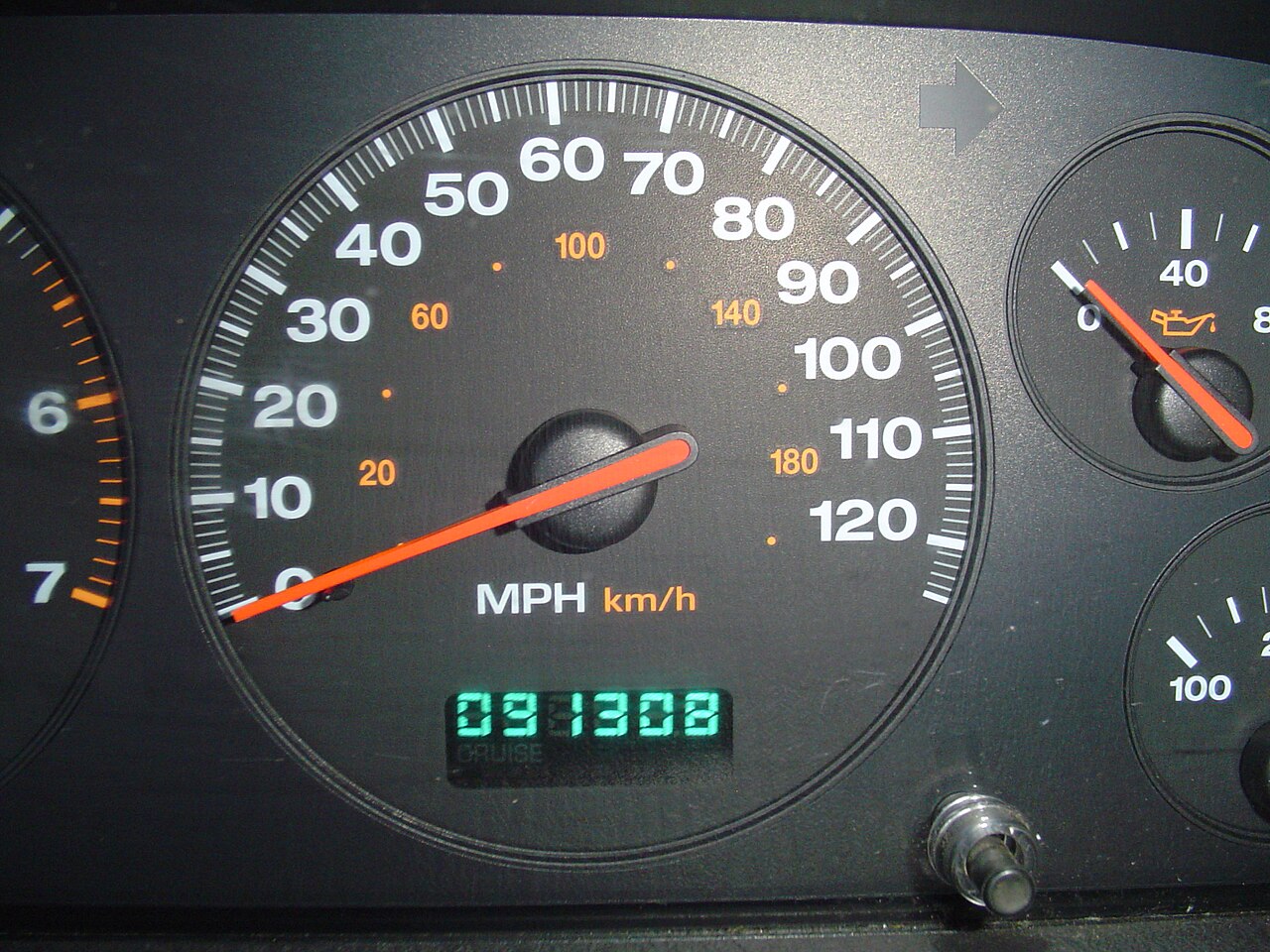
The practical reason is obvious: mileage strongly affects used-car value.
A history report showing 78,000 miles two years ago while the dashboard now displays 64,000 miles is a serious problem even if the discrepancy resulted from a clerical error rather than intentional rollback.
If you discover an incorrect historical mileage entry, investigate it before listing. Keep paperwork showing what happened, especially if an instrument cluster or odometer was replaced.
Do not significantly round the mileage stated in legal documents simply because an advertisement described the vehicle as having “about 80k” miles. Instead, use the exact odometer reading required by the applicable transfer paperwork.
Mileage documentation also strengthens maintenance claims. If a receipt proves that a timing belt was replaced at 92,000 miles and the vehicle now has 101,000 miles, the buyer knows the component has only about 9,000 miles of use.
A consistent mileage trail is one of the simplest ways to make an older vehicle’s history easier for a buyer to trust.
8. Registration, Inspection and Emissions Records
Finally, pull the vehicle’s current registration and any applicable inspection or emissions documentation required in your state.
Registration confirms important identifying information and can help you verify the VIN, license plate, registered owner, and expiration date before completing a sale.
Inspection requirements vary dramatically across the United States. Some jurisdictions require safety inspections, emissions tests, or both, while others have eliminated periodic inspections entirely. Responsibility for obtaining a fresh certificate before a private-party sale also varies, so check the DMV or environmental-agency requirements where the vehicle is registered rather than relying on generic online advice.
If your state requires an emissions or smog certificate for the sale, deal with it before finding a buyer. A failed test can expose expensive problems involving catalytic converters, oxygen sensors, evaporative-emissions equipment, check-engine lights, or readiness monitors.
Even when a current inspection certificate is not legally required for the transaction, recent documentation can make the car easier to evaluate. A buyer may feel more comfortable seeing that the vehicle recently passed the applicable state test rather than immediately wondering whether it will require repairs after purchase.
Also pull any documentation needed to report the completed sale to your DMV. Some states require sellers to submit a notice of transfer, release of liability, or similar form after handing over the vehicle. California, for example, requires a seller to file a Notice of Transfer and Release of Liability within its specified post-sale period.
Do not leave that final step to the buyer. Until state records are properly updated, parking tickets, tolls, towing notices, or other problems associated with the old registration can become unnecessarily complicated.
Also read: 10 Cars That Outsold Every Rival for a Full Decade