
Factory pickup trucks were once built mainly for hauling, towing, and hard work, but modern performance engineering has changed that image completely. Today, some production trucks can accelerate to 60 mph in times that rival sports cars, while several legendary models from earlier decades remain impressive by modern standards.
From the turbocharged GMC Syclone to the supercharged Ram TRX and electric Ford F-150 Lightning, these machines prove that a truck can deliver serious straight-line performance without becoming a custom project.
This list ranks ten remarkably quick factory-built pickups by their tested 0 to 60 mph acceleration, with figures varying by test conditions, trim, and equipment.
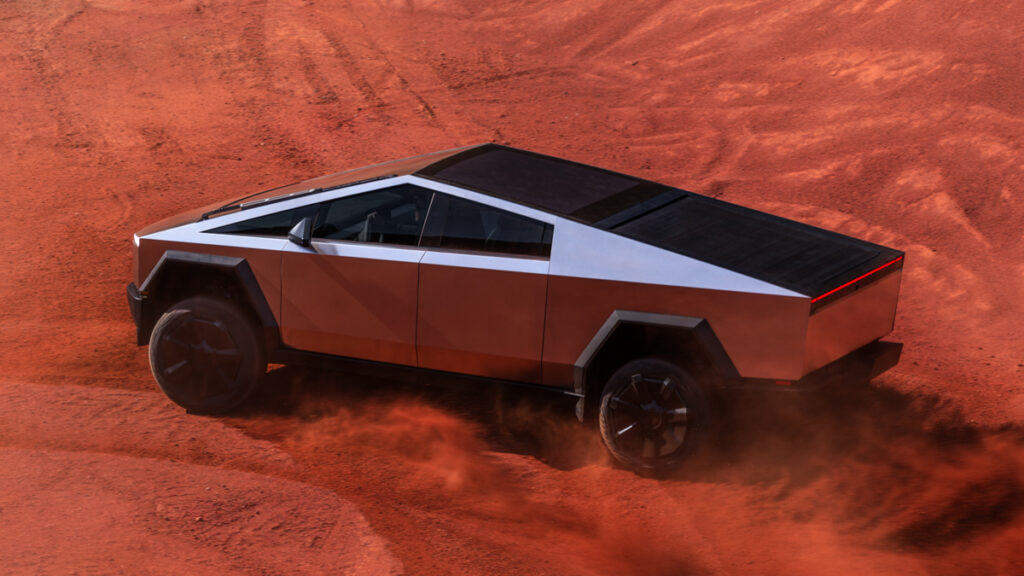
1. Tesla Cybertruck Beast – 0 to 60 MPH in 2.5 Seconds
The Tesla Cybertruck Beast represents a major change in what buyers can expect from a factory pickup. Its tri-motor electric powertrain produces enormous output and sends power through all four wheels. MotorTrend recorded a remarkable 2.5-second run to 60 mph, making it vastly quicker than the traditional performance trucks that once dominated this category.
The key to the Cybertruck’s acceleration is its electric drivetrain. Internal-combustion engines need to build power through combustion, gearing, and rising engine speed.
Electric motors can deliver substantial torque almost immediately. With multiple motors working together, the truck can launch hard while maintaining traction across all four wheels.
Its acceleration is particularly striking because the Cybertruck is not a lightweight sports machine. It remains a large pickup with substantial mass, a usable cargo area, and serious towing capability. The combination of size and acceleration creates a driving experience that would have seemed almost impossible for a factory truck several decades ago.
The Beast version uses three electric motors and has been tested with 845 horsepower. MotorTrend’s testing placed its quarter-mile performance firmly in sports-car territory as well. That level of performance makes the Cybertruck unusual even among high-output electric vehicles, since its body still provides the basic utility expected from a pickup.
The Cybertruck Beast therefore sets the modern benchmark for factory pickup acceleration among the trucks covered here.
Its 2.5-second sprint is not simply quicker than the old-school street trucks. It belongs to a completely different performance era, where battery power, sophisticated traction control, and multiple electric motors have rewritten expectations for pickup acceleration.
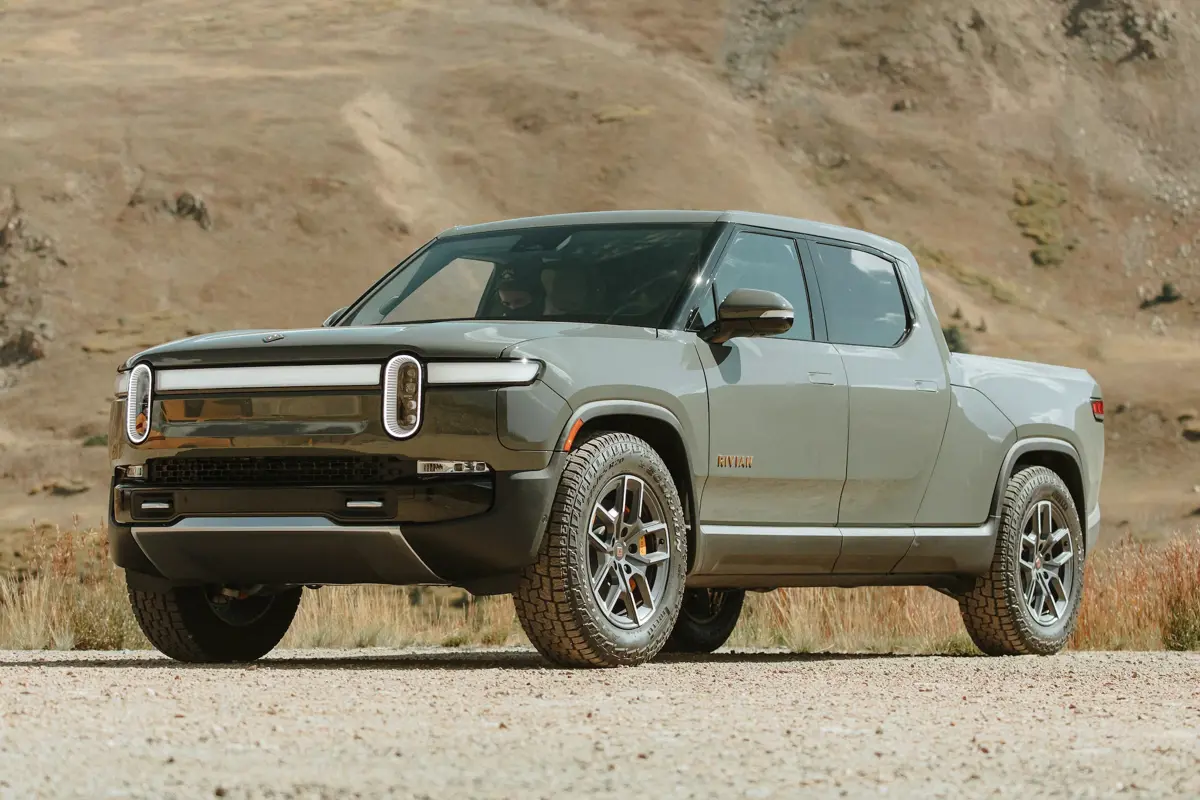
2. Rivian R1T Quad-Motor – About 3.0 Seconds
The Rivian R1T helped establish that an electric pickup could combine everyday utility with extraordinary acceleration. MotorTrend recorded a 3.0-second 0 to 60 mph time for a quad-motor R1T, placing it among the quickest production pickups ever tested. Its four-motor layout gives the truck exceptional control over how power reaches each wheel.
Unlike traditional four-wheel-drive systems, a quad-motor electric setup can manage each wheel with remarkable precision. Software continuously monitors wheel speed, traction, and driver inputs.
That ability helps the R1T put its substantial power onto the road without relying on the mechanical compromises associated with older truck drivetrains.
The R1T also benefits from the instant response associated with electric motors. There is no conventional transmission shifting through multiple gears during the launch. The motors can respond almost immediately when the accelerator is pressed, giving the driver a strong and consistent surge of acceleration.
What makes the R1T particularly interesting is that its performance does not eliminate its usefulness as a pickup. It has a practical bed, storage compartments, a comfortable cabin, and an electric platform designed for daily driving.
Its acceleration is therefore not simply a laboratory achievement. It comes from a vehicle intended to function as a genuine pickup.
The R1T shows how quickly the pickup segment changed during the electric era. The GMC Syclone made headlines in 1991 by reaching 60 mph in roughly 4.3 seconds.
More than three decades later, trucks such as the R1T can reach the same speed in roughly three seconds, demonstrating just how dramatically power delivery and traction technology have advanced.
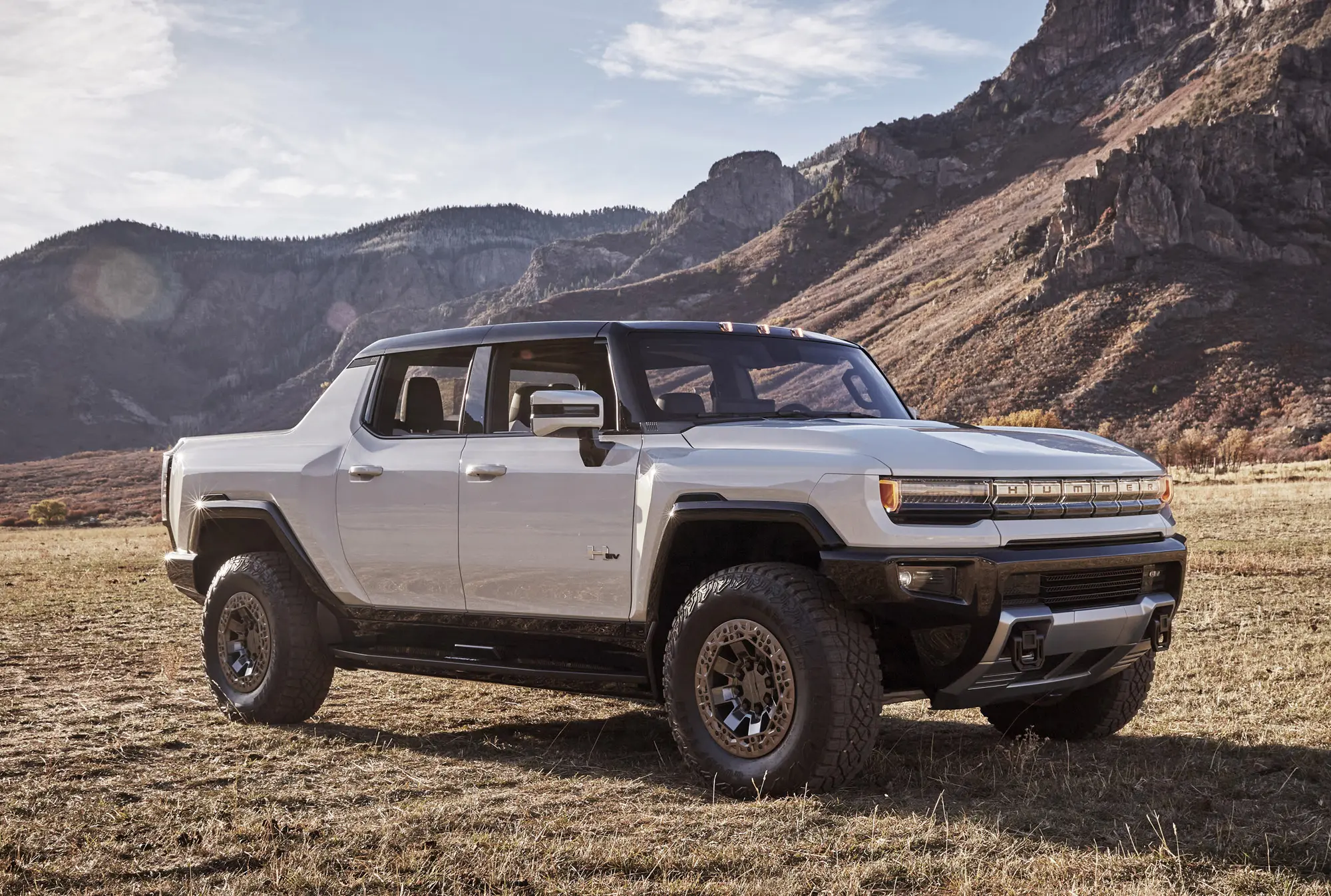
3. GMC Hummer EV Pickup – About 3.0 Seconds
The GMC Hummer EV Pickup is another example of extraordinary acceleration wrapped in a massive truck body. MotorTrend recorded a 3.0-second 0 to 60 mph run for the Hummer EV, placing it near the very top of its tested pickup rankings. Its huge size makes that number especially surprising.
The Hummer EV uses multiple electric motors and a large battery pack to produce its performance. Electric torque allows the truck to launch with tremendous force, while all-wheel drive helps distribute that output.
The result is acceleration that would be difficult to achieve with a traditional gasoline engine in such a large vehicle.
Its personality differs from the lightweight street-truck formula used by the GMC Syclone. The Syclone was compact, relatively simple, and designed around the idea of turning a small pickup into a performance weapon.
The Hummer takes the opposite approach, using extreme size, substantial battery capacity, and sophisticated electronics.
The Hummer also brings a strong off-road focus. Its engineering is intended to handle rough terrain, steep obstacles, and challenging surfaces while still providing startling road performance. That combination gives it a broader performance envelope than a truck designed solely for drag-strip acceleration.
The 3.0-second figure puts the Hummer EV in territory once reserved for exotic sports cars. Its importance extends beyond the number itself. It demonstrates how electric propulsion can make even very heavy utility vehicles exceptionally quick, changing the traditional relationship between vehicle size, weight, and acceleration.
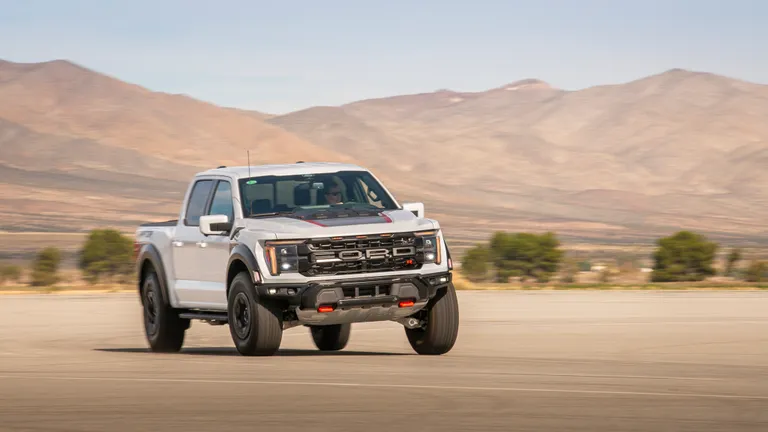
4. Ford F-150 Raptor R – 0 to 60 MPH in 3.7 Seconds
The Ford F-150 Raptor R brought the supercharged V8 back into the high-performance off-road pickup fight. MotorTrend tested a 2023 Raptor R at 3.7 seconds from 0 to 60 mph, beating the Ram TRX in that particular test. The Raptor R uses a supercharged 5.2-liter V8 derived from Ford’s performance-car technology.
The Raptor R was developed as a direct answer to the Ram TRX. Ford had already created the regular Raptor with a twin-turbocharged V6, but the TRX’s 702-horsepower supercharged V8 raised the performance stakes. The Raptor R answered with a high-output V8 and a chassis designed to survive aggressive off-road driving.
Its acceleration comes from more than horsepower alone. Four-wheel drive, an automatic transmission, sophisticated traction management, and performance-oriented suspension all contribute to its ability to launch effectively. A truck with enormous power can easily overwhelm its tires, so managing that power is just as important as producing it.
The Raptor R also has a different mission from street-oriented performance pickups. Its suspension travel, tires, ground clearance, and chassis tuning are designed for high-speed desert driving. It can accelerate quickly on pavement, then continue performing when the surface becomes rough, loose, or uneven.
That combination makes the Raptor R a significant chapter in modern performance-truck history. Its 3.7-second tested sprint showed that a large gasoline-powered pickup could still compete with increasingly powerful electric trucks.
It also demonstrated that the internal-combustion engine remained highly relevant for enthusiasts who value sound, character, and sustained performance.
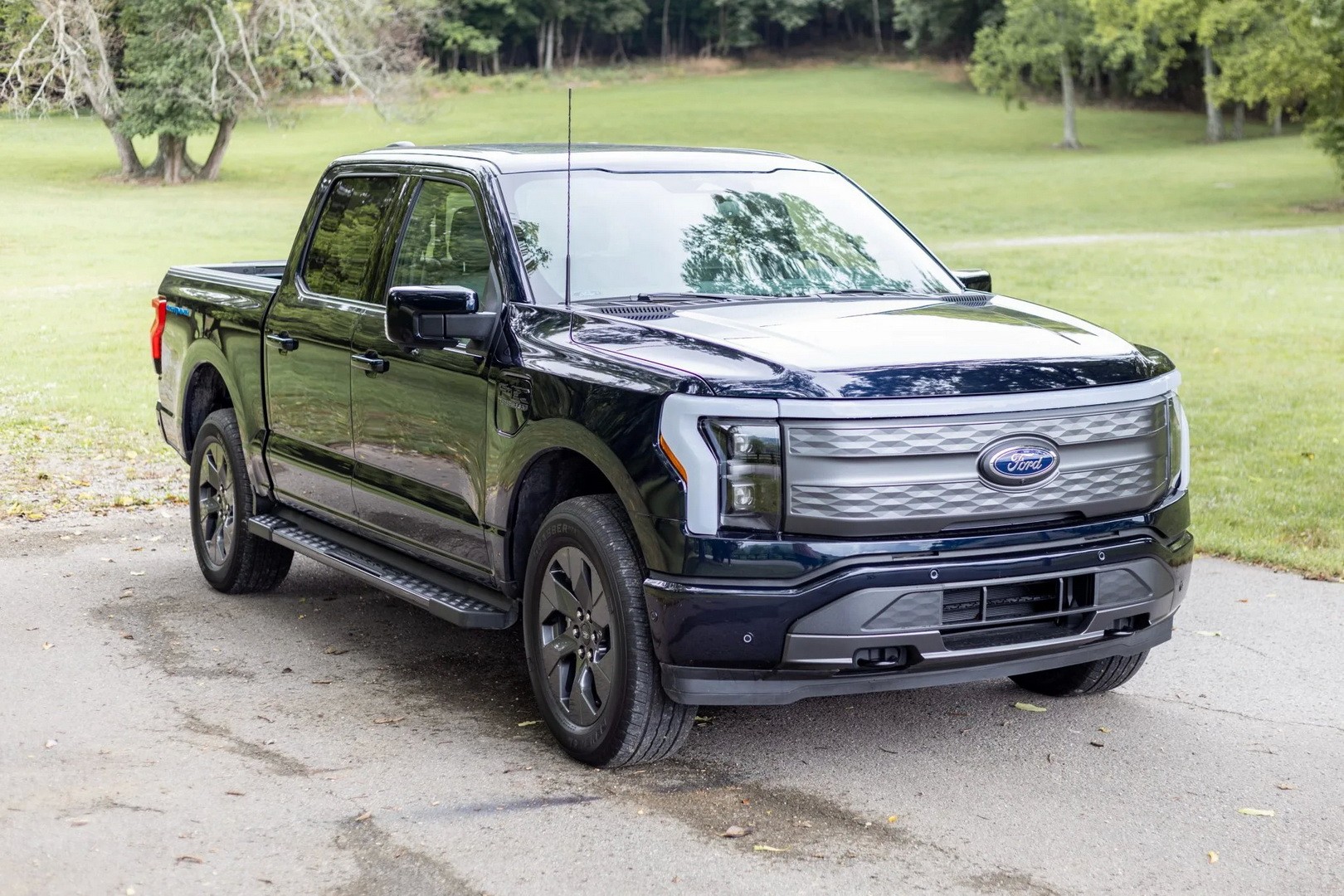
5. Ford F-150 Lightning Lariat Extended Range – 0 to 60 MPH in 3.8 Seconds
The Ford F-150 Lightning changed expectations for the F-150 nameplate. MotorTrend tested an extended-range Lightning Lariat at 3.8 seconds to 60 mph, making it dramatically quicker than conventional F-150 models. Ford itself has advertised a 3.8-second 0 to 60 mph time for the Lightning Lariat.
The Lightning achieves this performance through dual electric motors and all-wheel drive. Its extended-range configuration produces 580 horsepower and 775 lb-ft of torque, according to MotorTrend’s testing information.
More importantly, that torque arrives immediately, allowing the truck to leave the line with very little hesitation.
The Lightning’s greatest surprise is how normal it feels before the accelerator is pressed hard. It retains the familiar shape, cabin layout, cargo bed, and basic utility of the F-150. There is no exotic bodywork announcing its performance potential. The speed arrives quietly and with very little mechanical drama.
Battery placement also gives the Lightning a low center of gravity compared with many conventional pickups. That helps the truck feel more planted through corners. The electric powertrain adds considerable weight, but the chassis benefits from having that mass positioned low in the vehicle.
The Lightning is historically important because it brought serious performance to an electric version of a mainstream American pickup.
Earlier Lightnings were quick street trucks, but the electric model moved the nameplate into a different performance category. A factory F-150 reaching 60 mph in under four seconds would have been extraordinary at any earlier point in the model’s history.
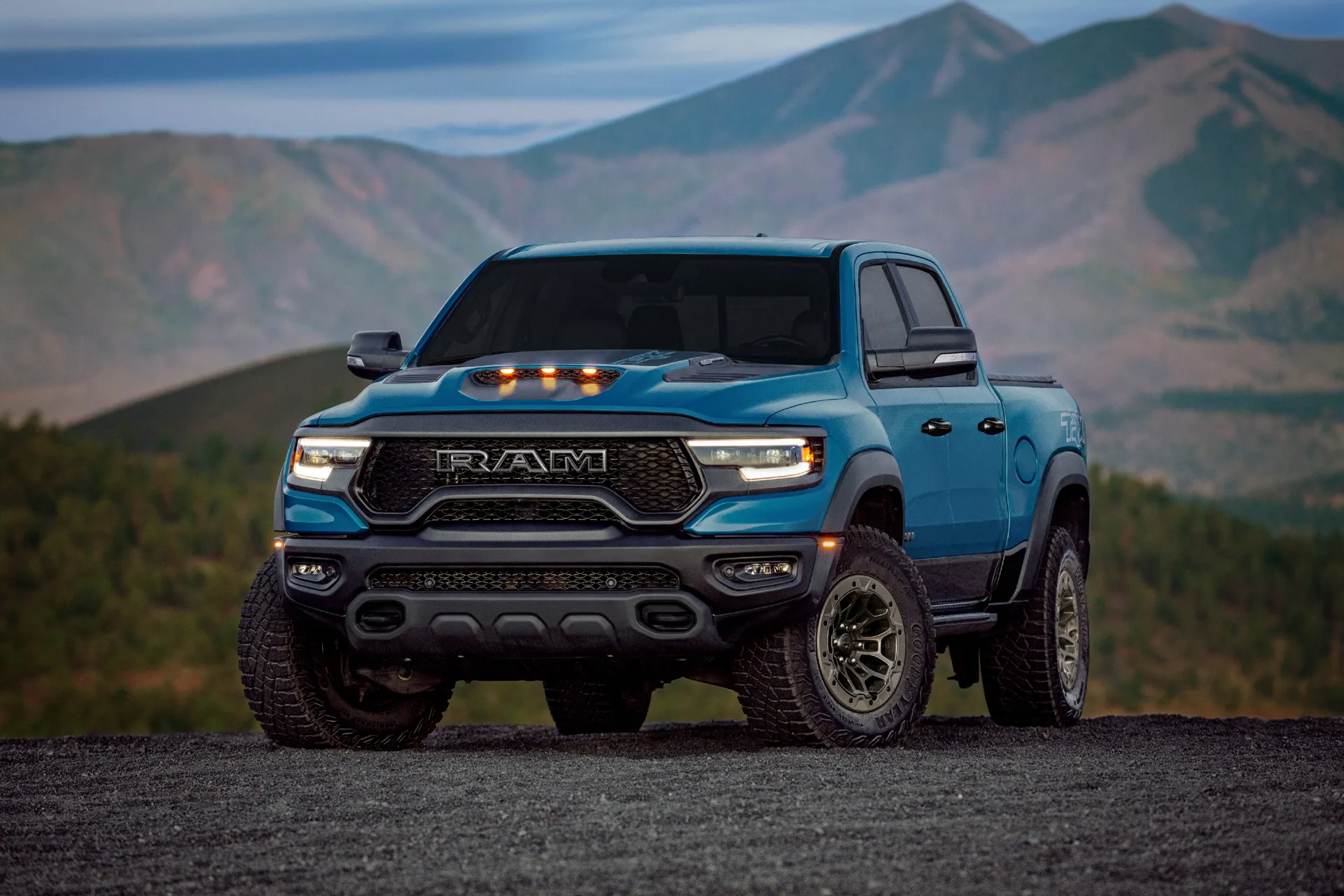
6. Ram 1500 TRX – 0 to 60 MPH in About 3.9 Seconds
The Ram 1500 TRX became a performance icon almost immediately after its arrival. Its supercharged 6.2-liter V8 produced 702 horsepower, giving the truck enough power to launch from 0 to 60 mph in 3.9 seconds in MotorTrend testing. The TRX was designed to challenge the Ford Raptor with much greater engine output.
The TRX’s engine is closely related to the supercharged V8 family used in other high-performance Stellantis vehicles. In the TRX, however, the powerplant is paired with a chassis capable of handling high-speed off-road abuse.
That required careful attention to cooling, suspension strength, drivetrain durability, and tire performance.
Acceleration is only part of the TRX’s appeal. Its suspension was developed for desert-style driving, where the truck can encounter large jumps, rough surfaces, and repeated impacts. The engineering challenge was creating a vehicle that could handle those conditions without sacrificing its road manners.
The TRX also revived the idea of the factory muscle truck at a time when performance pickups were becoming increasingly sophisticated. Earlier models such as the Ram SRT-10 relied on large displacement and rear-wheel drive.
The TRX used forced induction, four-wheel drive, advanced suspension technology, and modern electronic controls to achieve a far broader range of performance.
Its 3.9-second test result remains remarkable because the TRX is a large, heavy pickup with substantial off-road equipment. The truck showed that extreme acceleration and serious terrain capability could coexist in a factory vehicle. Its rivalry with the Raptor R also helped create a modern performance-truck arms race.
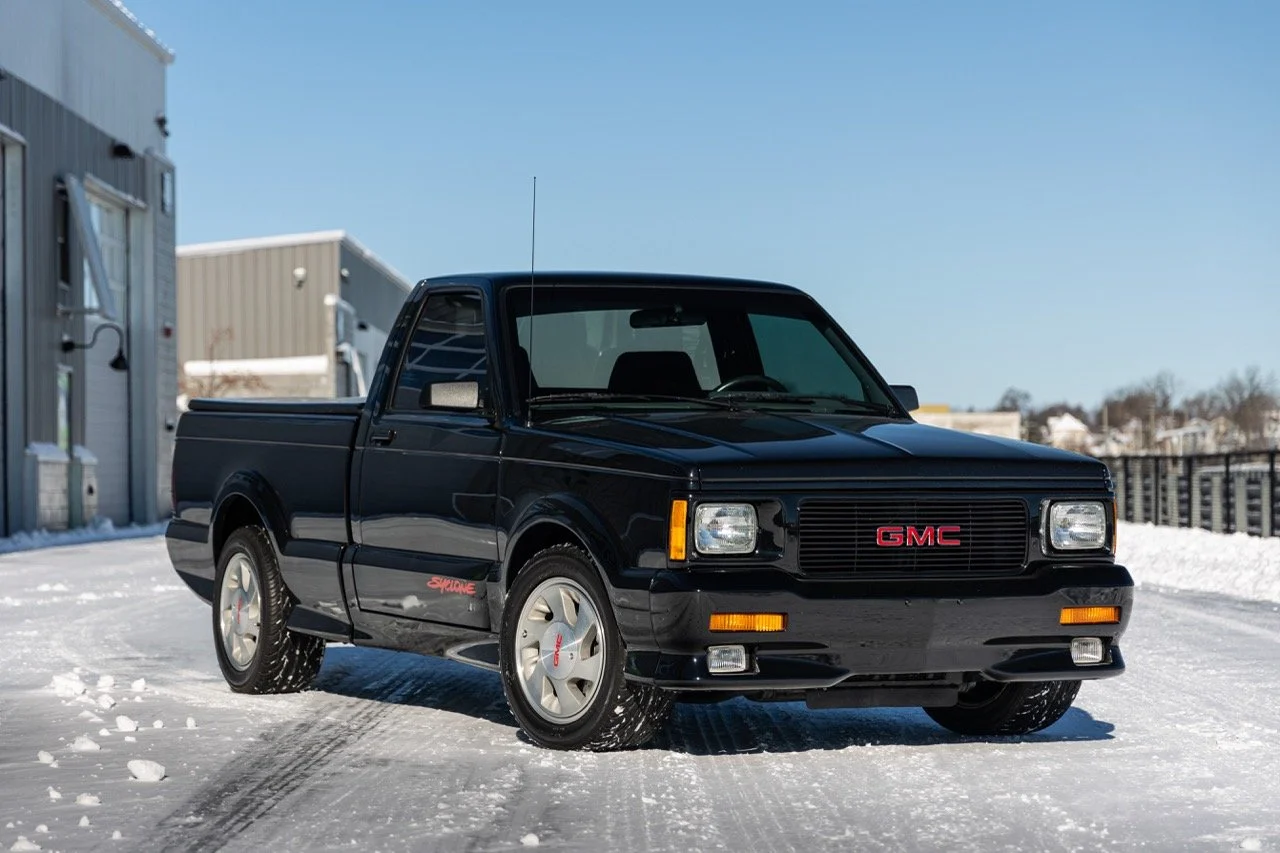
7. GMC Syclone – 0 to 60 MPH in About 4.3 Seconds
The 1991 GMC Syclone is perhaps the most legendary truck on this list relative to its age. It used a turbocharged 4.3-liter V6, all-wheel drive, and a compact pickup body.
Period testing and later automotive references commonly place its 0 to 60 mph time at about 4.3 seconds, an extraordinary result for the early 1990s.
The Syclone did not rely on a giant V8 to achieve its performance. Its turbocharged V6 produced 280 horsepower, while the all-wheel-drive system helped the truck convert that power into forward motion. At a time when most pickups were associated with work rather than acceleration, the Syclone looked and behaved like something completely different.
Its compact dimensions were another advantage. Compared with today’s full-size performance pickups, the Syclone was small and relatively light.
That allowed its powertrain to produce a strong power-to-weight ratio. The turbocharged engine also provided substantial torque, helping the truck launch hard from a standstill.
The Syclone became famous for embarrassing sports cars in straight-line acceleration. Its performance was so unusual that it helped establish the idea that a factory pickup could be a legitimate performance vehicle rather than merely a modified work truck. The model also became a major influence on the sport-truck movement that followed.
Only 2,995 Syclones were produced, adding to its rarity and collector appeal. Its 4.3-second acceleration figure remains impressive because it came from technology that now looks relatively simple.
The Syclone proved that clever drivetrain engineering could make a compact truck extremely quick without needing today’s enormous horsepower figures.
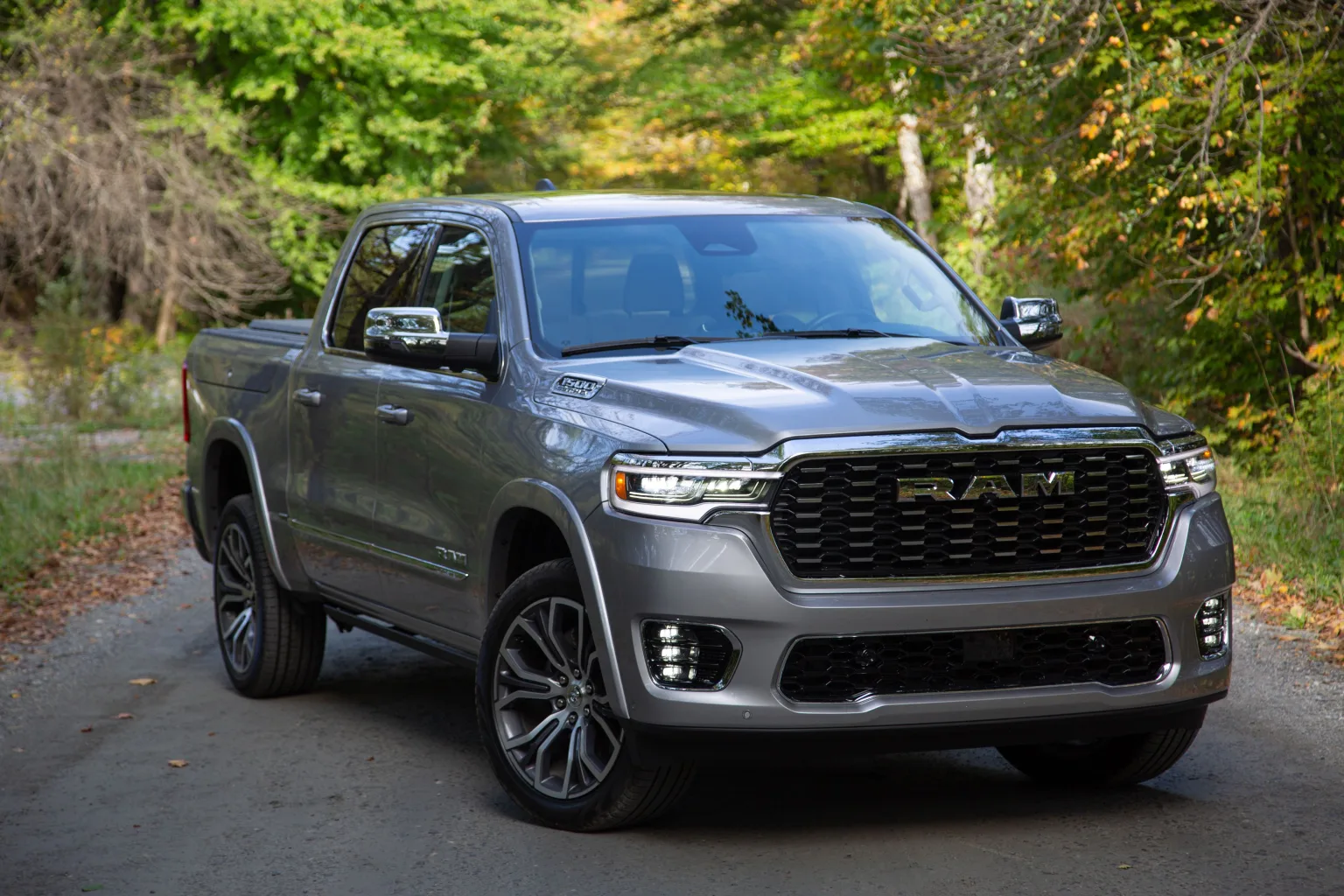
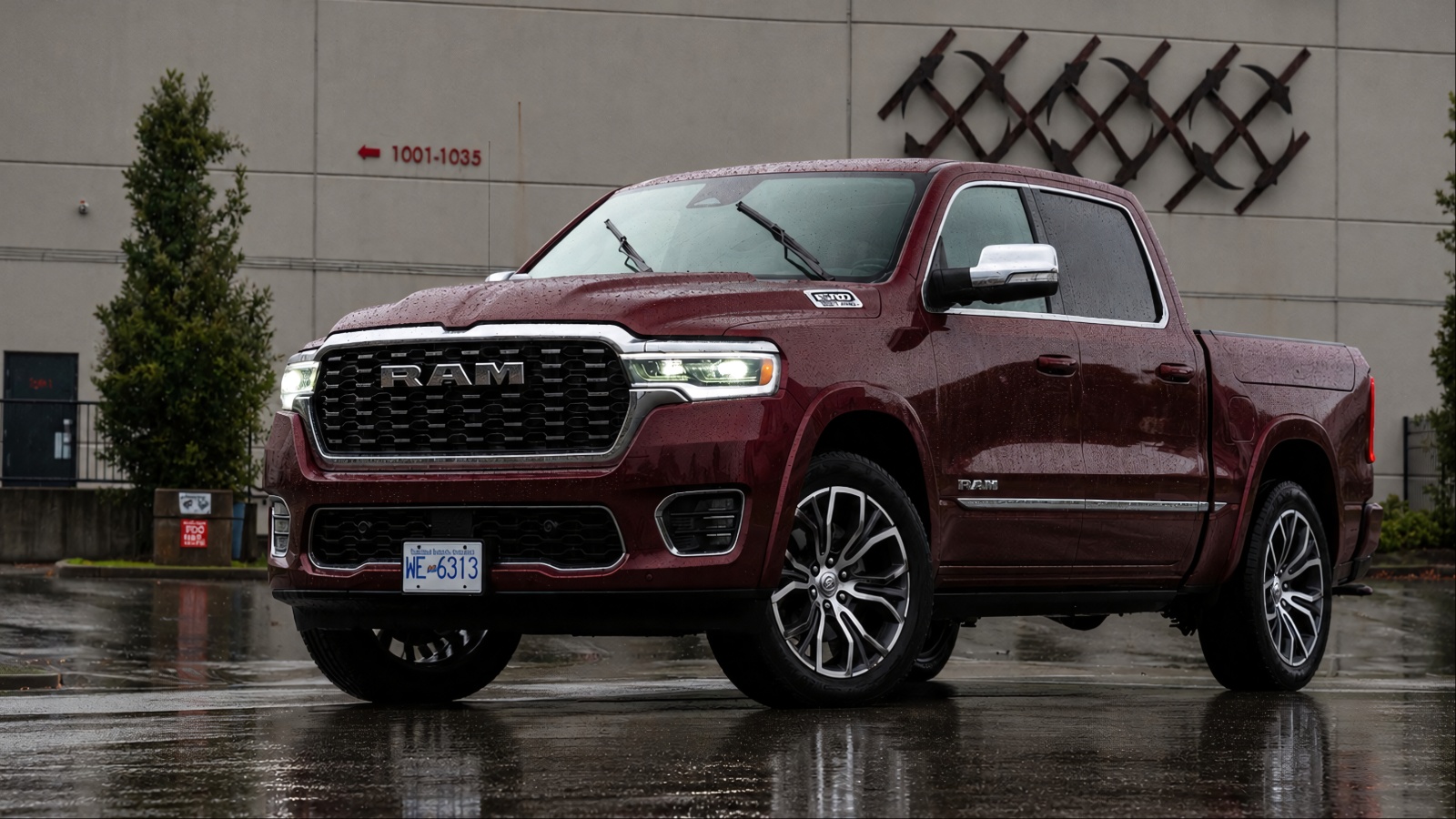
8. 2025 Ram 1500 Tungsten H.O. – 0 to 60 MPH in 4.4 Seconds
The modern Ram 1500 Tungsten H.O. demonstrates how performance has filtered into luxury-oriented pickup configurations. MotorTrend recorded a 4.4-second 0 to 60 mph time for a 2025 Ram 1500 Tungsten equipped with the high-output Hurricane engine. The engine produces 540 horsepower and 521 lb-ft of torque.
The Hurricane H.O. is a twin-turbocharged inline-six rather than a V8. Its relatively compact engine architecture provides strong power while using forced induction to generate substantial torque. The result is a modern powertrain that can deliver acceleration comparable with much more dramatic performance engines from previous generations.
What makes this truck particularly interesting is its luxury focus. The Tungsten trim includes substantial equipment and comfort features, adding weight compared with a basic work truck. Yet the truck still managed a 4.4-second sprint in MotorTrend’s testing, showing how effectively the engine, transmission, and traction systems work together.
This performance also highlights how quickly mainstream pickup technology has progressed. A luxury pickup that can carry passengers in comfort while accelerating to 60 mph in roughly four seconds would have been an unusual concept in earlier decades. Today, high-output turbocharged engines can provide that capability without requiring a huge-displacement V8.
The Ram 1500 Tungsten H.O. is therefore important for a different reason than the TRX or Syclone. It does not look like a dedicated street racer or desert machine.
Instead, it demonstrates that serious acceleration can exist inside a comfortable, premium pickup package. The performance arrives without sacrificing the practical qualities expected from a full-size truck.
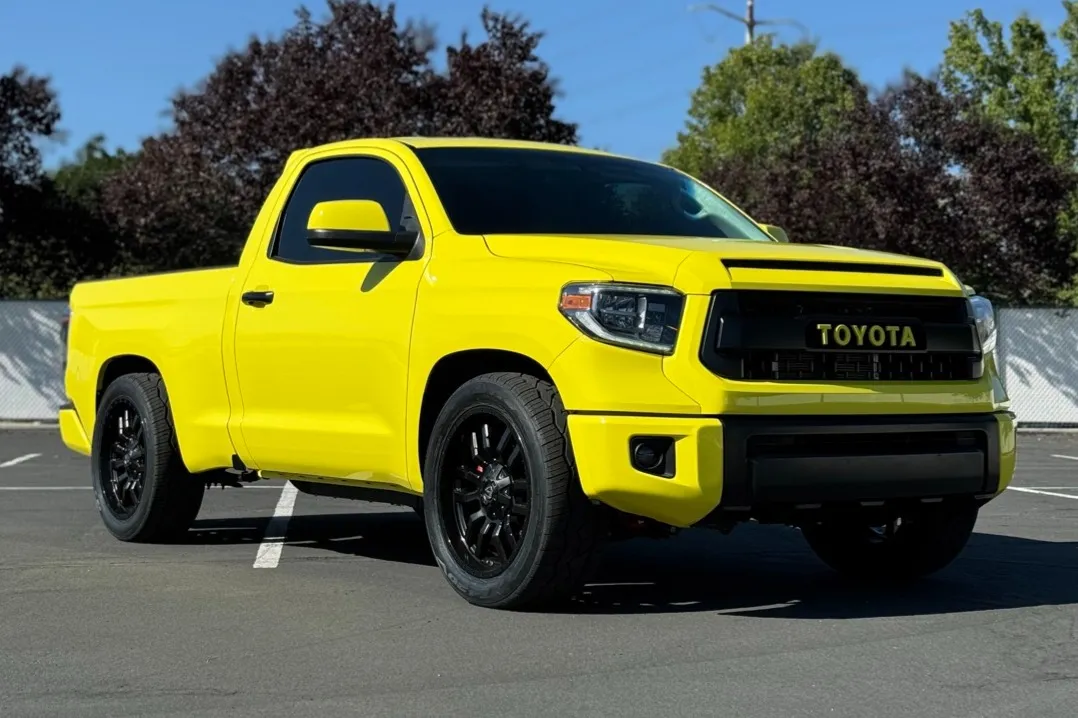
9. 2008 Toyota Tundra TRD Supercharged – 0 to 60 MPH in 4.4 Seconds
The 2008 Toyota Tundra TRD Supercharged remains a fascinating entry because its performance package was closely connected with Toyota’s dealership network. The supercharged 5.7-liter V8 produced 504 horsepower and 550 lb-ft of torque, and MotorTrend recorded a 4.4-second run to 60 mph.
The supercharger transformed the naturally aspirated V8 into a much more aggressive powerplant. Forced induction allowed the engine to produce substantially greater output without relying solely on increased displacement. The additional torque also gave the Tundra strong acceleration throughout the rev range.
The TRD package was particularly notable because it did not simply represent a backyard modification. The supercharger was available through Toyota’s performance parts program and could be installed through dealerships.
That gave buyers a factory-supported path to serious additional power while retaining a connection to the Toyota warranty and dealer network.
The Tundra’s acceleration was remarkable for its time. A 4.4-second 0 to 60 mph run was sports-car territory in the late 2000s, especially for a full-size pickup. The truck also produced a 13.0-second quarter-mile time at 106.3 mph in MotorTrend’s testing, reinforcing the strength of its powertrain.
This Tundra illustrates how supercharging became an effective bridge between traditional pickup engineering and modern performance expectations.
It lacked the instant response of today’s electric motors, but its supercharged V8 delivered a dramatic rush of power. More than a decade later, its 4.4-second figure still places it comfortably among quick factory-supported performance pickups.
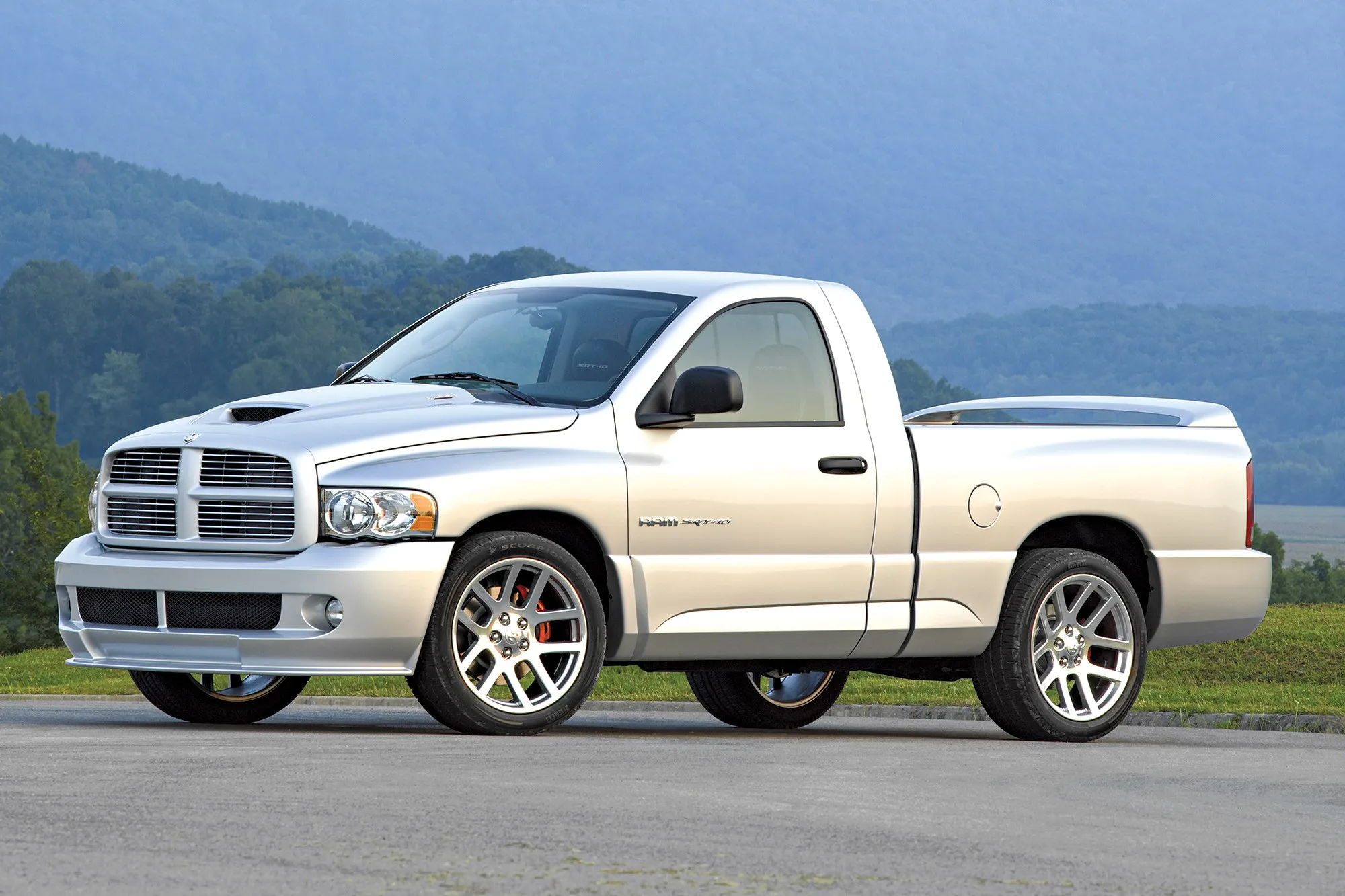
10. 2004 Dodge Ram SRT-10 – 0 to 60 MPH in 4.9 Seconds
The Dodge Ram SRT-10 took a completely different approach to pickup performance. Rather than using a turbocharged V6 or supercharged V8, Dodge installed an 8.3-liter V10 derived from the Dodge Viper. MotorTrend tested the truck at 4.9 seconds from 0 to 60 mph, making it an extraordinary factory pickup for its era.
The SRT-10 produced 500 horsepower and 525 lb-ft of torque. Its engine gave the truck a distinctive character that modern turbocharged and electric powertrains cannot easily replicate. The large-displacement V10 produced a broad wave of power accompanied by an unmistakable exhaust note.
Dodge also offered the SRT-10 with a six-speed manual transmission related to the gearbox used in the Viper.
That made the truck particularly unusual because buyers could experience the performance through a manual transmission rather than relying exclusively on an automatic. It was a rare combination of pickup practicality and sports-car hardware.
The truck was also capable of serious high-speed performance. MotorTrend recorded a 13.2-second quarter-mile time in its testing, showing that the SRT-10 was not merely quick away from a traffic light. Its performance continued through the quarter mile, giving it credibility as a genuine muscle truck rather than a novelty vehicle.
The SRT-10 remains memorable because of its sheer mechanical excess. The Syclone showed what could be achieved through compact size and turbocharging, while the SRT-10 went in the opposite direction with ten cylinders and massive displacement.
Its 4.9-second 0 to 60 mph time may no longer look shocking beside modern electric pickups, but its personality and engineering make it an important chapter in the history of fast factory trucks.
