
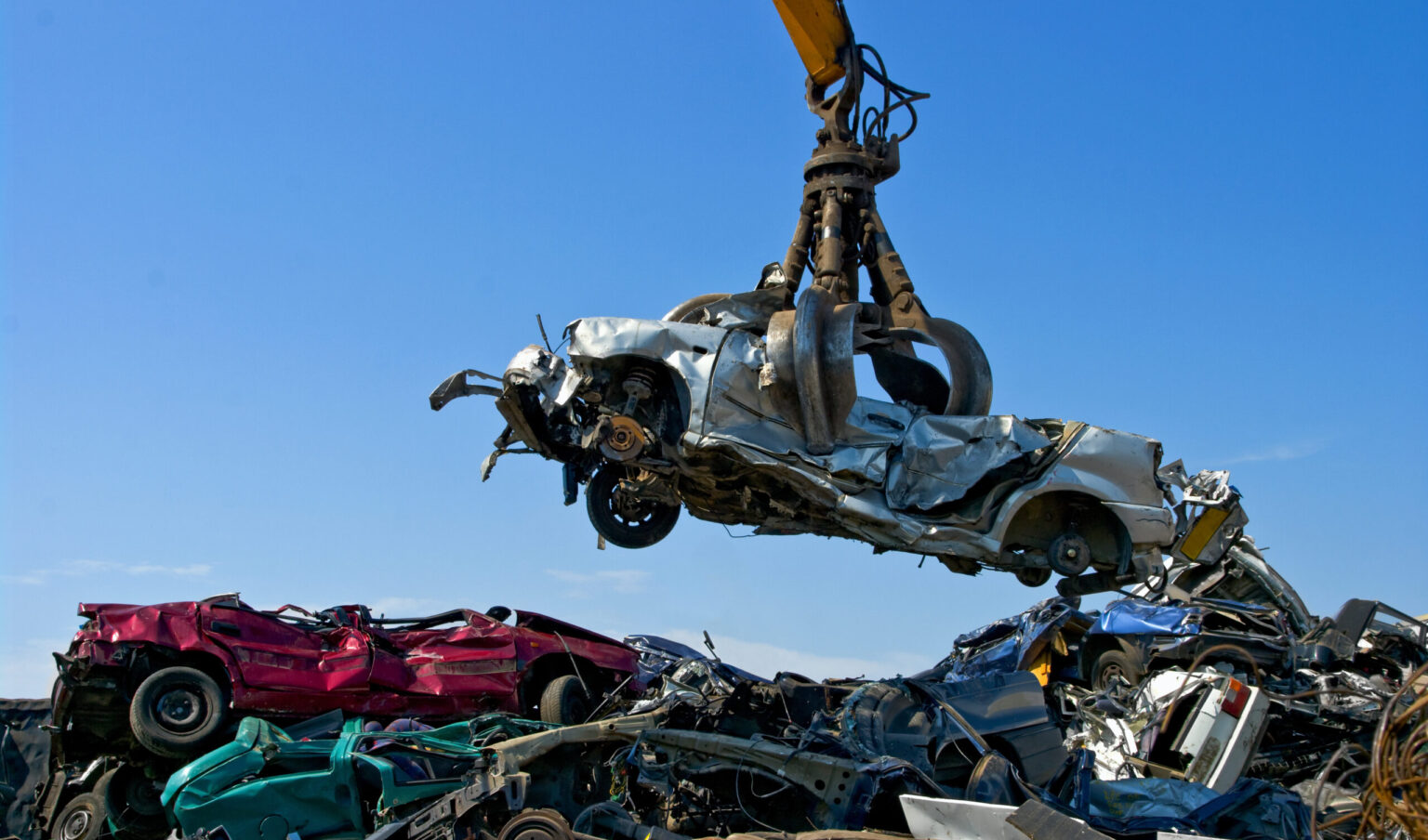
Every minute, roughly 26 vehicles in America reach the end of their useful life and enter the recycling system. That adds up to about 12 to 15 million vehicles each year, creating a vast network of dismantlers, salvage yards, scrap processors, and shredding facilities.
More than 9,000 automotive recycling locations operate across the country, while hundreds of shredders process vehicle hulks and recover valuable metals. The process does far more than remove unwanted cars. It returns steel, aluminum, copper, and usable components to the economy while reducing the amount of material sent to landfills.
The Scale of America’s Vehicle Recycling Industry
America’s vehicle recycling industry handles an enormous flow of cars and trucks every year. Industry estimates commonly place the number of vehicles reaching the end of their useful lives at roughly 12 to 15 million annually. When that yearly figure is converted into a minute-by-minute rate, the result is close to 23 to 29 vehicles per minute.
The frequently cited figure of about 26 cars per minute therefore provides a useful picture of the industry’s scale. These vehicles do not simply disappear into scrap piles. They enter an organized chain in which usable components and recyclable materials are separated before the remaining vehicle shell moves toward metal recovery.
The Automotive Recyclers Association reports that the professional automotive recycling sector employs more than 140,000 people in the United States and operates at more than 9,000 locations across the country.
Those facilities support a large network of related businesses, including towing companies, parts suppliers, transportation providers, equipment manufacturers, waste-management companies, and metal processors.
This means an unwanted vehicle can generate economic activity long after its final journey on a public road. A damaged car that cannot be repaired may still contain an engine, transmission, doors, mirrors, wheels, electronics, and thousands of smaller components that have value as replacement parts.
The number of shredding facilities is much smaller than the number of dismantling and recycling locations. Recycling Today reported 286 operating shredders in the United States in fall 2024, with additional installations bringing the installed total close to 300.
Its reporting also showed that the industry changes over time as companies open, acquire, close, idle, or relocate shredding operations.
This helps explain why a figure such as 297 shredding facilities may appear in discussions about American vehicle recycling. The number is best treated as a count of installed shredder operations from a particular industry survey rather than a permanent figure.
The distinction between dismantlers and shredders is important. A dismantler focuses on extracting valuable parts and materials before the vehicle is reduced to scrap. Once economically useful components have been removed, the remaining vehicle shell, commonly called a hulk, can be sold to a shredder.
The shredder then reduces that hulk into smaller pieces and separates metals for further processing. This division of labor allows specialists to recover different forms of value from the same automobile rather than treating the entire vehicle as ordinary waste.
The sheer volume also demonstrates why vehicle recycling has become an important part of America’s material supply chain. Cars contain large quantities of steel and other metals that can be recovered and returned to manufacturing.
Older research from Argonne National Laboratory estimated that U.S. shredders processed more than 12 million vehicles annually, recovering millions of tons of ferrous and non-ferrous scrap.
Vehicle designs and recycling methods have evolved since that research was conducted. However, the fundamental idea remains unchanged. An end-of-life vehicle still contains a significant amount of valuable material that can be recovered and reused.
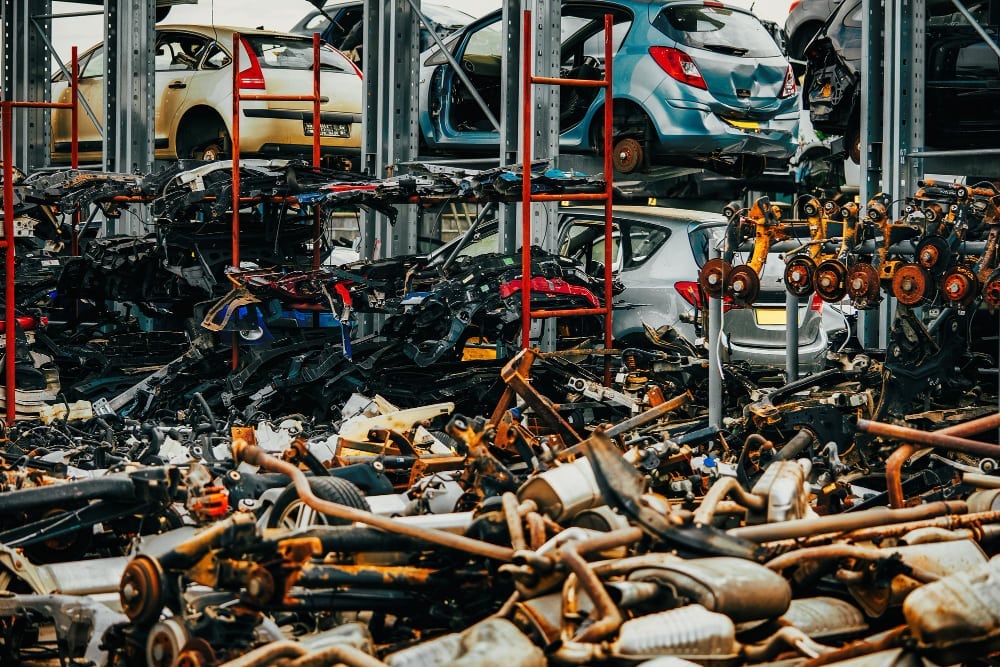
What Happens to a Car After It Is Scrapped
The recycling process generally begins when a vehicle is collected by a salvage yard, dismantler, recycler, or related business. The car may have reached the end of its useful life because of age, mechanical failure, accident damage, flood exposure, or repair costs that exceed its market value.
Before the vehicle can move toward shredding, workers assess its condition and identify components that can be sold or reused. Documentation and vehicle identification are also important because recyclers must establish legal ownership and follow applicable state requirements for handling end-of-life vehicles.
Dismantling can recover a surprisingly wide range of components. Engines and transmissions may be sold when they remain usable, while alternators, starters, wheels, body panels, lights, seats, mirrors, suspension components, and electronic modules can also find buyers.
Some parts are sold directly for reuse, while others may be rebuilt or remanufactured. This approach extends the useful life of components and can provide consumers with less expensive alternatives to new replacement parts. It also means that recycling a vehicle is not limited to melting its metal content.
Fluids and hazardous components require careful handling before a vehicle reaches the shredder. Gasoline, engine oil, coolant, brake fluid, refrigerants, batteries, and other materials cannot simply be released into the environment.
Regulations governing these materials vary by jurisdiction, while federal requirements also apply to certain substances and activities. Refrigerant recovery is particularly important because vehicle air-conditioning systems can contain substances regulated under environmental laws. Proper dismantling therefore involves environmental controls as well as mechanical knowledge.
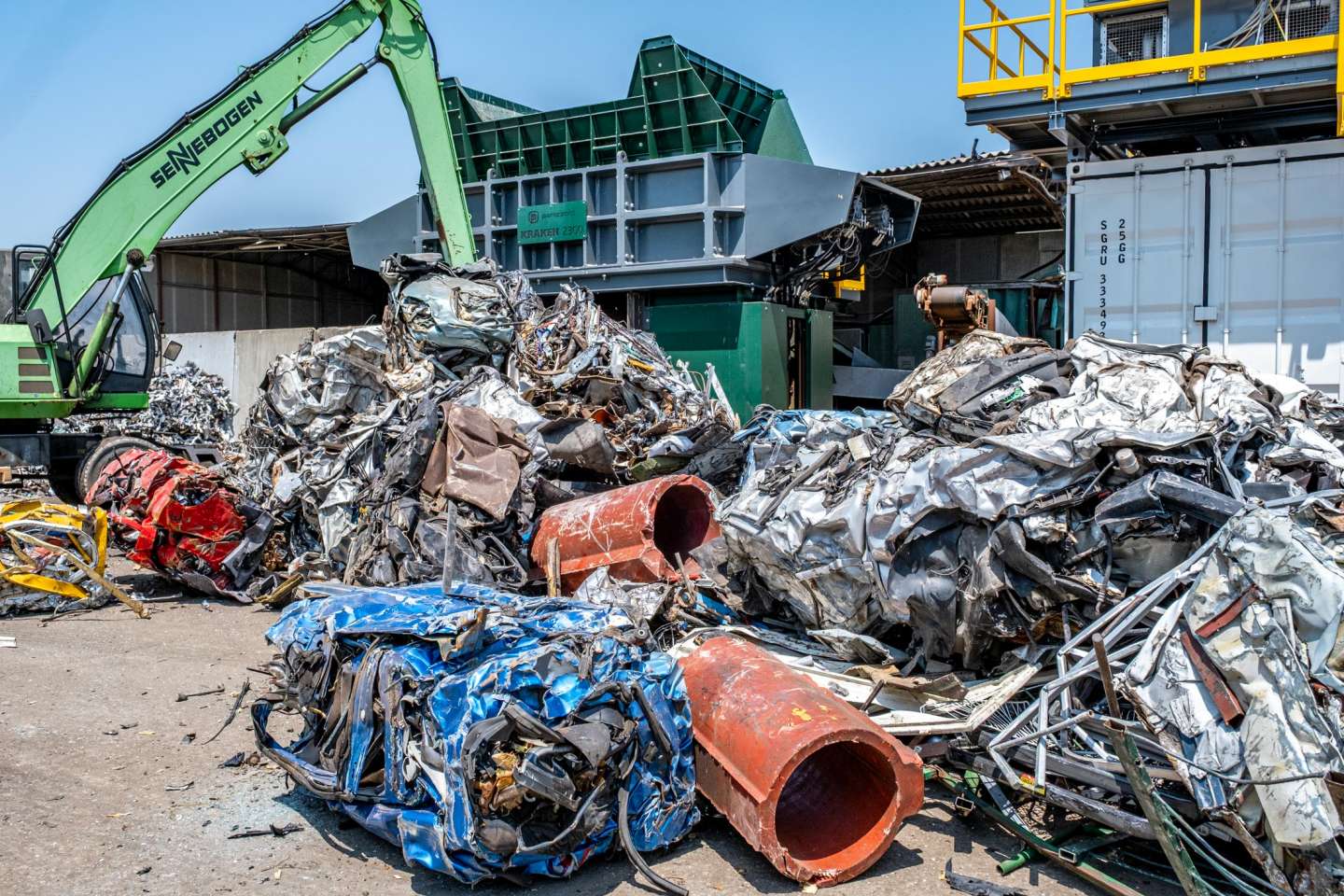
After reusable parts and regulated materials have been removed, the remaining vehicle may be crushed or transported to a shredding facility. Crushing reduces the vehicle’s physical size and makes transportation more efficient. At the shredder, powerful machinery tears the vehicle into small fragments.
Magnetic systems can separate ferrous metals such as steel and iron from other materials, while additional sorting technologies can help recover aluminum, copper, and other non-ferrous metals. The recovered metals can then enter manufacturing supply chains rather than remaining buried in a landfill.
The final stage produces more than just useful metals. Shredding creates a material commonly known as automotive shredder residue, or ASR. It can contain plastics, foam, glass, rubber, fibers, dirt, and other non-metallic materials.
Historically, much of this residue has been sent to landfills, though research and technology continue to examine ways to recover more material from it. Improving residue recovery is important because modern vehicles contain a growing mixture of materials, making the recycling process more complex than simply separating steel from everything else.
Why Old Cars Are Valuable After Their Final Drive
A vehicle that has lost its value as transportation can still hold considerable material value. Steel is particularly important because it represents a large share of a conventional vehicle’s mass and can be recovered through shredding and magnetic separation.
Recycled steel can then be used as a raw material in steelmaking. Recycling this material reduces the need to obtain every ton of metal from newly mined resources and keeps valuable material circulating through industrial supply chains.
Aluminum has also become increasingly important as vehicle manufacturers use lightweight materials to improve efficiency and meet changing performance requirements. Aluminum components can be recovered during vehicle recycling and returned to metal-processing operations.
Copper from wiring and electrical components also has value. As cars become more electronically sophisticated, the number and variety of electrical and electronic components present in vehicles can increase, creating new opportunities as well as new challenges for recyclers.
Reusable parts provide a second source of value. A vehicle may be declared a total loss by an insurance company because repairing it would cost too much relative to its market value, yet many components can remain perfectly functional.
A recycler can inspect, test, catalog, and sell these parts to customers who need replacements. This activity can reduce demand for newly manufactured replacement components while helping vehicle owners keep older cars operating at reasonable cost.
The environmental value of recycling extends beyond material recovery. Manufacturing products from recovered materials can reduce the need for virgin resources in certain applications. Recycling also prevents millions of end-of-life vehicles from being abandoned or improperly disposed of.
The U.S. automotive recycling system has developed into a structured industry partly because automobiles contain valuable commodities that can be recovered economically.
Historical research has described vehicle recycling as an economically driven system in which financial incentives help move material through the recovery chain.
The industry also supports employment and regional manufacturing. More than 9,000 automotive recycling locations create jobs in dismantling, parts sales, inventory management, transportation, administration, environmental compliance, equipment operation, and metal processing.
The recovered materials then move to downstream businesses, including metal producers and manufacturers. This creates a circular flow in which an old vehicle can become a source of raw material for future products rather than ending its useful contribution at the scrapyard.
