
Tires play a major role in vehicle safety, handling, braking, and fuel efficiency. When one or more tires become worn or damaged, many drivers wonder whether replacing all four is necessary. The answer depends on several factors, including your vehicle’s drivetrain, tire condition, tread depth, age, and budget.
Replacing a complete set can provide balanced performance and predictable handling, but buying four new tires may not always be required. Understanding how tires wear and how differences between old and new tires affect your vehicle can help you make a practical decision that protects both your car and your wallet.
When Should You Replace All Four Tires?
Replacing all four tires at the same time is often the best choice when the existing set has similar wear and is approaching the end of its useful life. Installing a complete set gives your vehicle four tires with comparable tread depth, rubber condition, and handling characteristics.
This consistency can make the car feel more stable, particularly when cornering, braking, or driving on wet roads. If all four tires are already worn, replacing only two usually means you will soon need to spend money on the remaining pair anyway.
Tread depth is an important factor when deciding whether a complete replacement makes sense. Tires gradually lose their ability to move water away from the contact patch as their tread becomes shallow.
A tire with significantly less tread may have less wet-weather grip than a new tire. If two tires have substantial wear while the other two are close to the end of their service life, replacing all four can restore a more uniform level of traction. Regular tread inspections can help identify this situation before it becomes a safety concern.
Age also matters. Tires can deteriorate with time, even when they have plenty of tread remaining. Exposure to sunlight, heat, moisture, temperature changes, and normal use can affect the rubber compounds. Cracks in the sidewall or tread area, bulges, unusual vibration, or repeated loss of air pressure can indicate that a tire needs professional inspection.
If all four tires are several years old and showing signs of aging, replacing the entire set may be more sensible than mixing older tires with a new pair.
Your driving conditions should also influence the decision. Someone who regularly drives on highways, through heavy rain, in mountainous areas, or at higher speeds may benefit more from having four tires with similar performance characteristics.
Drivers who mainly use their vehicles for short trips in mild conditions may have different priorities. Still, tire condition should never be judged solely by how often the vehicle is driven. A car that sits unused for long periods can still develop tire problems caused by age and environmental exposure.
The vehicle manufacturer’s recommendations are worth checking before buying replacement tires. Your owner’s manual may specify tire size, load rating, speed rating, pressure requirements, and recommendations related to tire replacement. Following those specifications helps maintain the vehicle’s intended handling characteristics.
If you are unsure whether all four tires need replacement, a qualified tire professional can measure tread depth, inspect the rubber, and assess wear patterns. That inspection can provide a clearer answer than appearance alone.
Why Matching Tires Matters
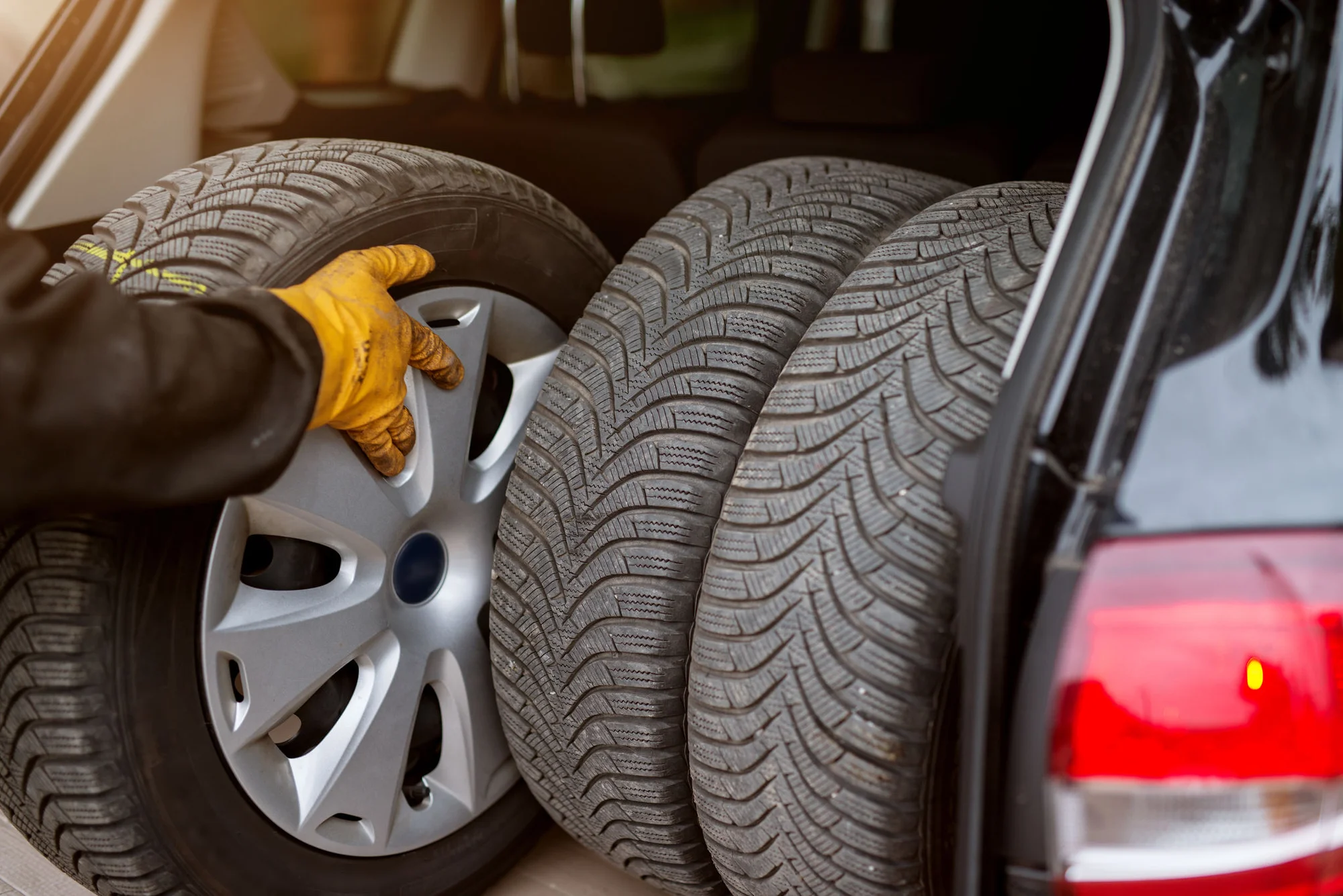
Having four matching tires can provide more predictable handling because each corner of the vehicle responds in a similar way. Differences in tread design, rubber compound, size, or wear can change how tires grip the road.
These differences may become more noticeable during emergency braking, sharp turns, or wet conditions. Matching tires is particularly useful when a vehicle is designed around a specific tire specification. Keeping the four tires as consistent as reasonably possible helps maintain balanced performance.
Replacing only two tires can create a difference in tread depth between the front and rear axles. Whether that difference is acceptable depends on the vehicle and its drivetrain.
For many vehicles, tire manufacturers recommend placing new tires on the rear axle when only two are replaced. The reason is related to maintaining rear-end stability, particularly on wet roads. A loss of grip at the rear can cause the vehicle to oversteer, which may be difficult for an inexperienced driver to control.
All-wheel-drive vehicles require additional attention. Their systems can be sensitive to differences in tire circumference because the tires are connected through the drivetrain. A significantly different rolling circumference between tires can cause additional stress within the system or affect how it operates.
For this reason, some all-wheel-drive manufacturers recommend replacing all four tires together or keeping differences in tread depth within a specified limit. Always check the vehicle manufacturer’s guidance before replacing only one or two tires.
Front-wheel-drive and rear-wheel-drive vehicles can sometimes accommodate replacing only two tires when the other pair remains in good condition. However, this does not mean that any combination is acceptable.
Tire size, construction, tread pattern, load rating, and speed rating should remain compatible with the vehicle. If the remaining tires are significantly worn, aged, damaged, or mismatched, installing two new tires may not provide the balanced performance you expect.
Using four tires from the same model can also make tire rotation and maintenance easier. Different tire designs may have different traction characteristics, noise levels, steering response, and wear patterns.
Mixing brands is not automatically unsafe, but compatibility should be considered carefully. Ideally, tires on the same axle should match in size and type, while the complete vehicle should remain within the manufacturer’s specifications. A tire shop can help determine whether your current setup is suitable or whether a full replacement would be preferable.

Can You Replace Only One or Two Tires?
Replacing a single tire can make sense when the other three tires are relatively new and have very similar tread depth. For example, if a tire is damaged by a puncture or road hazard shortly after the complete set was installed, replacing just that tire may be practical.
The replacement should match the existing tires as closely as possible in size, construction, tread design, load rating, and speed rating. The tire manufacturer may also provide guidance about permissible tread-depth differences.
A single replacement becomes less attractive when the other tires have substantial wear. Installing a brand-new tire beside three heavily worn tires creates a noticeable difference in tread depth and grip.
That difference may affect handling and braking performance. In some cases, a tire professional can shave a replacement tire to match the tread depth of the existing tires, but this is not appropriate for every tire or vehicle. The cost and availability of such a service also vary.
Replacing two tires can be a reasonable compromise when two tires are worn while the other pair remains in good condition. The new tires should generally be installed on the rear axle when replacing only two, following common tire-industry recommendations and vehicle-specific guidance.
Moving the older tires to the front can help reduce the chance of losing rear traction on wet surfaces. Your vehicle’s manufacturer or tire manufacturer should have the final say when recommendations differ.
Cost is often the main reason drivers consider replacing fewer than four tires. A complete set can represent a significant expense, especially for larger vehicles, premium tires, or specialty sizes.
However, choosing cheaper or incompatible tires simply to reduce the initial bill can create problems later. It is better to compare the condition of all four tires and consider the expected remaining service life. If two tires are nearly finished, buying four may provide better value than purchasing two now and returning shortly afterward for another pair.
What Are the Benefits of Replacing All Four Tires?
Four new tires can restore consistent traction across the vehicle. When the entire set has similar tread depth and construction, the tires generally respond more uniformly to steering, acceleration, and braking inputs. This can produce a more predictable driving experience.
Consistency becomes especially valuable when road conditions change quickly, such as during heavy rain or sudden braking situations. New tires cannot eliminate every driving risk, but balanced tire performance can help the vehicle behave more predictably.
A complete replacement can also improve ride quality and steering response. Tires lose tread over time, and their rubber changes as they age.
New tires can feel more responsive and may reduce vibration or road noise if the old tires had developed irregular wear. The difference will depend on the tire model, vehicle suspension, road surface, and condition of the previous set. A proper wheel alignment may also be necessary if the old tires show uneven wear.
Replacing all four tires at once simplifies maintenance. The tires begin their service life at roughly the same point, making future rotation schedules easier to manage.
You can monitor their tread depth together and plan for replacement as a complete set. This approach can also reduce the likelihood of having two very old tires mixed with two newer tires several years down the road.
